Archive for the ‘peace’ Category

Slimming down

I was a three-sport athlete in high school.  In college in 1975 I joined a “health club” called the US Army and stayed strong and fit there for the next 26 years.  Through challenging “Arrrmy training” (Bill Murray fans will get it), we stayed physically and mentally ready to defend our nation.  I retired from the Army in 2001. Like so many of the Army buddies I served with, I put on a few pounds after retirement.  In fact, over the course of two decades I went from a retirement weight of 209 lbs. to a maximum of 242. About two years ago, through a combination of illness, dieting, and lifestyle changes, I lost a dramatic amount of weight. Today my weight hovers around a comfy 200 lbs.

Slimming down came with a lot of benefits.  Among these are being able to fit into clothes I hadn’t worn for years, improved sleep, increased energy levels, and all around better physical health as indicated by my vital signs and blood chemistry tests, which today look like those of a healthy twenty-something. Slimming down has many other great benefits, more than we can cover here.

There’s another type of slimming down that’s very good for you. Commonly called “downsizing,” it refers to both reducing the amount of space one lives in and the quantity of personal possessions one owns. Such reducing can be healthy both mentally and spiritually.

Now don’t get me wrong.  I’m not some overzealous lifestyle minimalist that believes in possessing only the bare essentials necessary for living and rejects the rest. I’m not the type of person who could live my life in a “Tiny Home” like one sees on HGTV. But my wife and I have downsized our living space four times since I retired from the army, slimming down from a 3,200 sq ft house to 2,000, to 1,500 and finally to 1,200 sq ft condo, which we have today. We both agree that downsizing is cathartic. Here are just a few potential benefits of lifestyle downsizing which, if you’re not ready for now, might become of greater interest to you as you grow older.   

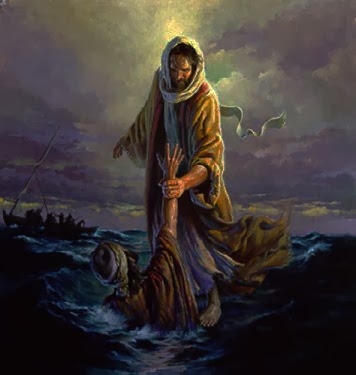
Reducing Chaos. Chaos is truly the devil’s workshop. Jesus calmed the storm on the Sea of Galilee by commanding, “Peace, be still.”  He can do the same for you and me. God wants us to have peace. A beautiful car, a sleek sailboat, and a humongous house and/or garage crammed with a lot of “stuff” (substitute a gigantic storage unit crammed with stuff) can contribute to a chaotic life.  Each of these comes with a price, and I’m not talking about money. Beautiful cars beg to be washed, waxed, and detailed.  A sleek boat requires a lot of time and effort to keep it safe and seaworthy. Big houses typically have big lots.  Big lots beg to be manicured until the grass looks as good or better than a putting green. A big house crammed with a lot of stuff can became a chaotic ball and chain for you and/or for your children who are trying to sort things out after their parents pass away. Oh yeah, and who is going to remove the snow from that lovely 50-yard curving driveway? Been there and done that! It’s not fun.

Avoiding Anxiety and Distractions.  Have you ever been sitting in a pew on a Sunday morning, taking a mental inventory of all the things, you need to do when you when you get home or in the week to come, instead of listening to what was being said in the sermon? There is a time to do and a time to listen. Sermon time in church is a time to listen.

You might recall this story in Luke chapter 10. Martha and Mary were the sisters of Lasarus. On one occasion that Luke describes, Martha invited Jesus into her house. While Mary sat at Jesus’ feet, listening to him talk, Mary fluttered all about, presumably preparing a meal for Jesus.  After a while Martha became annoyed and asked Jesus to tell Mary to come and help her with the work.  Jesus’ response to Martha’s urging was a gentle rebuke, “Martha, Martha, you are worried and upset about many things, but few things are needed—or indeed only one. Mary has chosen what is better, and it will not be taken away from her.” (v. 41-42). Jesus wants to be the top priority in our lives.  Endeavor to keep Jesus at the center of your thoughts.

Avoiding Comparison. You’ve probably heard the expression “Keeping up with the Joneses.” It refers to a selfish urge or social pressure to match or exceeded the material possessions of one’s neighbors.  Colossians 3 compares covetousness to “idolatry.” When it came to material possessions, King Solomon, the presumed writer of the Book of Ecclesiastes and a man renowned for both his wisdom and his wealth, made the Joneses look like rank amateurs.  Listen to what he had to say about material wealth:

I undertook great projects: I built houses for myself and planted vineyards. I made gardens and parks and planted all kinds of fruit trees in them. I made reservoirs to water groves of flourishing trees. I bought male and female slaves and had other slaves who were born in my house. I also owned more herds and flocks than anyone in Jerusalem before me. I amassed silver and gold for myself, and the treasure of kings and provinces. I acquired male and female singers, and a harem as well—the delights of a man’s heart. I became greater by far than anyone in Jerusalem before me. In all this my wisdom stayed with me. I denied myself nothing my eyes desired; I refused my heart no pleasure. My heart took delight in all my labor, and this was the reward for all my toil. Yet when I surveyed all that my hands had done and what I had toiled to achieve, everything was meaningless, a chasing after the wind; nothing was gained under the sun. –Ecclesiastes 2:4-11

After much experimentation, Soloman finally figured it out! Now see what Jesus said to his disciples:

Then he (Jesus) said to them, “Watch out! Be on your guard against all kinds of greed; life does not consist in an abundance of possessions.” –Luke 12:15

Matthew 19:16-23

Just then a man came up to Jesus and asked, “Teacher, what good thing must I do to get eternal life?”

“Why do you ask me about what is good?” Jesus replied. “There is only One who is good. If you want to enter life, keep the commandments.”

“Which ones?” he inquired.

Jesus replied, “‘You shall not murder, you shall not commit adultery, you shall not steal, you shall not give false testimony, 19 honor your father and mother,’ and ‘love your neighbor as yourself.’”

“All these I have kept,” the young man said. “What do I still lack?”

Jesus answered, “If you want to be perfect, go, sell your possessions, and give to the poor, and you will have treasure in heaven. Then come, follow me.”

When the young man heard this, he went away sad, because he had great wealth.

Then Jesus said to his disciples, “Truly I tell you; it is hard for someone who is rich to enter the kingdom of heaven. Again I tell you, it is easier for a camel to go through the eye of a needle than for someone who is rich to enter the kingdom of God.”

Leaving a Christian Legacy. To those who are believers, I ask “What is your greatest regret since you became a Christian?”  I hope your response isn’t something like, “I wish I had worked more” or “I wish I had bought that 1966 Corvette when I had the chance.”

Will you leave a Christian legacy? What might that look like? Will those who come after you even know you were a Christian given the way that you lived? This is worth thinking about.    

Surely everyone goes around like a mere phantom; in vain they rush about, heaping up wealth without knowing whose it will finally be.  –Psalm 39:6

“‘And I (a wealthy man) will say to my soul, “Soul, you have ample goods laid up for many years; relax, eat, drink, be merry.”’ But God said to him, ‘Fool! This night your soul is required of you, and the things you have prepared, whose will they be?’”—Luke 12:18-20

But godliness with contentment is great gain. For we brought nothing into the world, and we can take nothing out of it. But if we have food and clothing, we will be content with that. —1 Timothy 6:6-8

“Let your light shine before others, that they may see your good deeds and glorify your Father in heaven.” —Matthew 5:16

Legacy isn’t measured by wealth, titles, or accolades—it’s measured by the impact your faith has on others. A Christian legacy is built day by day, through quiet obedience, generous love, and intentional discipleship. When we live with integrity, invest in relationships, and give freely of what God has entrusted to us, we leave behind more than memories—we leave behind a testimony.

A Christian legacy doesn’t end with you or me. It multiplies through the lives we touch, the prayers we pray, and the truths we pass on. And the goal isn’t to be remembered—it’s to make Christ known.  May our respective legacies draw others closer to Jesus Christ.

Leaving Things Behind. Back to lifestyle downsizing, there is nothing bad about wealth in and of itself.  I’ve known many Christians who were wealthy and unselfishly used their wealth for the furtherment of God’s kingdom.  A problem with wealth begins when we forget that everything we possess belongs to God and we are merely stewards of what he has given us. 

 We are born naked and penniless and in death our physical bodies return to dust. Don’t let accumulating “stuff” become a goal in your life. Even though many have tried and failed (Egyptian Pharaohs and Viking Chieftains come to mind), you just can’t take it with you. I hope you enjoy the short poem below by Judy Dykstra-Brown

Relocation Dreams

I’ve so many things that there’s no place to stack them in.
No drawers to hold them, no cupboards to pack them in.
So many things stowed away from detection.
My fireplace houses its own art collection.

My wardrobe suffers from costumes aplenty.
I’ve boxes of sizes from nine up to twenty.
My jewelry box is stuffed to the gills,
my medicine drawer is spilling out pills.

When I try to cull them, they all want to stay.
The only solution’s to just move away
to find a small island with palm trees and sky
where there is simply nothing to buy!

I’ll live in a hut with floors of swept dirt.
One pair of flip flops, a simple grass skirt.
I won’t feel that shopping should be my main duty.
I’ll look out the window if I require beauty.

No buying new paintings whenever I please.
No little nicknacks and no DVD’s.
No drawers of makeup or tea towels or spoons.
No tarot cards, horoscopes, Ouija boards, runes.

I will not need things to determine my fate,
that day I walk out, simply locking my gate,
taking one suitcase, computer and cables,
and scanner and backup drives, printers and tables,

an internet router and energy backup—
just these few items to locate and pack up.
Then I’m off to a life that’s simpler by far
if these bare necessities fit in my car.

*All Bible quotations are NIV

These fearful times

Jesus calming the storm

On January 20th Donald Trump was sworn in (again) as President of the United States.  For some Americans it was a day of celebration, while for others it was a day of dread and fear. This is not uncommon when the political pendulum makes a big swing to the left or right in this country. The media circus on both left and right during the presidential campaign and since has been enough to depress just about anyone who listens or reads too much news.

Just in case the noise of partisan politics hasn’t depressed you, we’ve been bombarded lately with news of torrential rains, mudslides, hail storms, wildfires in LA, tornados and hurricanes in places they don’t belong, and snow on our Gulf coast beaches. Then there are wars and rumors of war around the globe, like in Israel, Lebanon, Yemen, Somalia, Ukraine, Nagorno-Karabakh, and elsewhere.

These are indeed fear-provoking times. Sometimes it looks like no one is in charge. The good news is that there’s one great master plan in motion for all mankind, and neither Donald Trump, Vladimir Putin, Xi Jinping or any other man is in control. God is still in control of everything in creation and always will be. 

Not long before he died, the Rev. Dr. Charles Stanley, Pastor Emeritus of the First Baptist Church of Atlanta, recorded a homily titled, A Comforting Message in Fearful Times. Just as the Apostle Paul encourages believers to “put on the full armor of God” in Ephesians 6, Dr. Stanley’s message encourages us to “soak” our minds and hearts in the word of God, where believers can find peace, comfort, and courage in the midst of the spiritual warfare surrounding our daily lives. Dr. Stanley cites a treasure trove of scripture during the homily, which I have listed below. I encourage you to read through the entire list, then go back and look at each passage in the context of the full chapter it comes from.   

Philippians 4:6-7 — “Be anxious for nothing, but in everything by prayer and supplication, with thanksgiving, let your requests be made known to God; and the peace of God, which surpasses all comprehension, will guard your hearts and minds in Christ Jesus”.

Psalm 16:7-8 — “I will bless the Lord who has counseled me; indeed, my mind instructs me in the night. I have set the Lord continually before me; because He is at my right hand, I will not be shaken”.

Psalm 4:8 — “In peace I will both lie down and sleep, For You, O Lord, make me to dwell in safety”.

Psalm 27:1 — “The Lord is my light and my salvation; Whom shall I fear? The Lord is the defense of my life; Whom shall I dread”?

Psalm 139:23 — “Search me, O God, and know my heart; try me and know my anxious thoughts; and see if there’s any hurtful way in me, and lead me in the everlasting way”.

Psalm 138:7 — “Though I walk in the midst of trouble, You will revive me; You will stretch forth Your hand against the wrath of my enemies, and Your right hand will save me”.

Psalm 138:8 — “The Lord will accomplish what concerns me; Your lovingkindness, O Lord, is everlasting”.

Psalm 138:3 — “On the day I called, You answered me; You made me bold with strength in my soul”.

Philippians 4:19 — “My God will supply all your needs according to His riches in glory in Christ Jesus”.

Isaiah 41:10 — “Do not fear for I am with you; do not anxiously look about you, for I am your God. I will strengthen you, surely I will help you with my righteous right hand”.

John 3:16 — “For God so loved the world that He gave His only begotten Son, that whoever believes in Him shall not perish, but have everlasting life”.

1 John 1:9 — “If we confess our sins He is faithful and just to forgive us our sins and to cleanse us from all unrighteousness”.

Psalm 121:1-8 — “I will lift up my eyes to the mountains; From where shall my help come? My help comes from the Lord, Who made heaven and earth. He will not allow your foot to slip; He will keep you and He will not slumber. Behold, He who keeps Israel will neither slumber nor sleep. The Lord is your keeper, the Lord is your shade on your right hand. The sun will not smite you by day, nor the moon by night. The Lord will protect you from all evil; He will keep your soul. The Lord will guard your going out and your coming in from this time forth and forever”.

Isaiah 54:17 — “No weapon that is formed against you will prosper; and every tongue that accuses you in judgment, you will condemn. This is the heritage of the servants of the Lord, and their vindication is from Me”, declares the Lord.

Psalm 32:7 — “You are my hiding place; You preserve me from trouble. You surround me with songs of deliverance”.

Psalm 94:19 — “When my anxious thoughts multiply within me, Your consolations delights my soul”.

Psalm 23:4 — “Even though I walk through the shadow of death, I fear no evil, for You are with me. Your rod and Your staff they comfort me”.

Psalm 139:3 — “You scrutinize my path and my lying down, and are intimately acquainted with all my ways”.

All in all, the difference between the believers and non-believers is this: in tough situations the believer accepts God’s wisdom and control. His prayer is for patience and to say as Jesus said, “Not My will, but Yours, be done” (Luke 22:42b). On the other hand, the non-believer challenges God, neglecting to believe in Him unless he has proof. (Based on a sermon by Rev. Dr. Ken Klaus, former Speaker of The Lutheran Hour).

A comforting message in fearful times – by Dr. Charles Stanley. Safe Link: https://www.youtube.com/watch?v=V2OKUg8NQY8

So thankful

Our nation has endured an extraordinary series of natural disasters over the past few months, including hurricanes, tornados, torrential rains, devastating floods, and enormous wildfires. If you’ve tuned in to the evening news lately you’ve probably seen disaster victims who have lost nearly all of their material possessions. Despite suffering tremendously, many of these people express gratitude for the simple fact that they are alive and still have their family and friends. They get it!

As I grow older, the things that truly matter in my life have become crystal clear. These are Faith, Family, Friends, and Freedom. I call them the 4Fs and I’ve written about them several times over the decade that I’ve written this blog. 

Today, as we mark the annual Thanksgiving holiday, I’m offering a special thanks for my friends. I’ve heard it said that families are issued to you, but you choose your friends. This is just one of the many things that makes true friends so special.

So, what is a true friend?  I don’t have all the answers, but here are some characteristics of my true friends that I’ve observed over the years:

  • They are there for you when others walk away.
  • They meet you where you are, warts, wrinkles, and all.
  • They are forgiving.
  • They will make time for you, even when they haven’t the time to spare.
  • They expect nothing in return and do not keep score.
  • They are good listeners.
  • They respect confidentiality.
  • They tell you what you need to hear, not what you want to hear.
  • They say, “Wow, you really made a mess of this! Now how can I help you fix it?”
  • They walk beside you in the demon filled valleys, propping you up.
  • They are at their best when you are at your worst.

A number of my dear friends are currently struggling with serious life challenges. These include the early onset of dementia, the death of a spouse, a spouse developing dementia, a spouse with cancer, a child abusing alcohol, and a child suffering with seizures. The longer one lives the more frequently such challenges seem to occur. So now I lift them up to the Lord.

Lord, hear my prayer.  Father God, I pray for my friends who are struggling.  I pray that you will grant them mercy and peace. You know exactly what they need at this moment. Draw near to them and let them feel your presence. Open their eyes, ears, and hearts to you. Protect them from the attacks of the evil one and shelter them in your loving arms.  I pray this in the name of the Father, and the Son, and the Holy Spirit.  Amen.  

Sirach 6:14-16 (RSV)

Faithful friends are a sturdy shelter:
    whoever finds one has found a treasure.
Faithful friends are beyond price;
    no amount can balance their worth.
Faithful friends are life-saving medicine;
    and those who fear the Lord will find them.

Scary times

I am the Lord your God who takes hold of your right hand and says to you, Do not fear; I will help you. —Isaiah 41:13

Many people today fear a wide variety of things they see and hear around them. Fear is running rampant right here in America. Polls indicate that the majority of Americans now believe that their children’s lives will be harder than their own. They worry about unemployment and the economy. Many fear illegal immigration. Others are afraid to gather in public places for fear of violence. We see campus protests turn violent. School shootings don’t surprise us anymore.

On a cosmic scale we hear about giant solar flares that could destroy technology, pushing humankind back into the Stone Age. A large meteor or asteroid collision could destroy life on Earth.

In the natural world, we hear that a major eruption of a super volcano, like the one beneath Yellowstone National Park, could cause destruction and death on a planetary scale. Earthquakes and tsunamis in diverse places threaten millions of people. Climate change is blamed for killer storms, droughts, melting polar ice, coastal flooding, wildfires and more.

On the human plane, we read and hear about flesh eating bacteria, brain eating amoebas, and drug resistant bacteria and viruses. Abortion rights are a hot button topic that can trigger anger and rage. Some people hunker down in their homes, worried about riots, violence by and against the police, and other street violence. Others fear that computer hackers or scammers will steal their identities and wealth.  

There are wars in Ukraine and Gaza, and rumors of a global war that’s coming. Religious persecution is increasing around the globe. There is a growing wave of antisemitism right here in America. There are ample reasons for fear.

The Bible mentions two very different types of fear. The first is fear of the Lord. This fear is not associated with being scared. It is an awe and reverence of God and is to be encouraged. According to Psalm 111, fear of the Lord is the beginning of wisdom and leads to rest and peace.

The second type of fear is detrimental. In the first chapter of 2 Timothy it is described as a “spirit of fear.” A person can be completely overcome by a spirit of fear, virtually frozen and unable to function. Such fear weighs a person down physically, emotionally and/or mentally.

Unfortunately, many Christians have succumbed to living with a spirit of fear. Some fear those of other religions and are reluctant to reach out to them in Christian love. Some fear those who are different from them culturally or racially. Others are hesitant to invite those in need into their lives for fear they might lose something or it might cost something. Some are afraid to leave the comfort of their homes and familiar surroundings in order to reach out to the needy. Others are hesitant to give of their wealth for fear they might later find themselves in need.

Many Christian fears boil down to a fear of losing something—possessions, comfort, safety, security. In Philippians chapter 3, verses 7-8, Paul describes how he has let go of the things of this world in order to focus on what is truly important:

But whatever gain I had, I counted as loss for the sake of Christ. Indeed, I count everything as loss because of the surpassing worth of knowing Christ Jesus my Lord.

One can’t grasp Christ’s outstretched hand while clinging to things of this world. As David tells us in Psalm 34, verses 4-7:

I sought the Lord, and he answered me and delivered me from all my fears.
Those who look to him are radiant, and their faces shall never be ashamed.
This poor man cried, and the Lord heard him and saved him out of all his troubles.
The angel of the Lord encamps around those who fear him, and delivers them
.

You may be facing a health crisis, unemployment, divorce, a call to Christian service, or other difficult challenges. Don’t live in fear. Take the fears you struggle with today and give them to the Lord in prayer. Make this a habit. I will not tell you to “let go and let God” because it makes letting go of fear sound so simple. Instead, I encourage you to explore the Bible and learn what it says about fear. Read and believe!

Begin with Psalm 23. Then read Psalm 118. Other relevant Psalms include 27, 34, 46, 61, 91, 103, and 121. Once you have read these Psalms, locate a red letter edition New Testament and read every word spoken by Jesus. Then read Paul’s epistles. Become steeped in scripture. Do this and you will be well on the way to giving your fears to the Lord.

The remarkable thing about God is that when you fear God, you fear nothing else, whereas if you do not fear God, you fear everything else.   —Oswald Chambers

*All Bible quotes are ESV.

Separation Anxiety

Canine separation anxiety is a complex psychological disorder affecting many dogs and their owners. When left alone, the otherwise wonderful pets affected by the disorder experience overwhelming distress, displaying a wide range of associated harmful behaviors. These range from incessant barking and destructive chewing to house soiling, total home wrecking and attempts to escape. Dogs are social creatures that thrive on the human companionship, which can make the absence of their owners highly disturbing.

My wife and I live in a multigenerational household comprised of grandparents, parents, children, and grandkids. It’s not uncommon for our daughter, son-in-law, and grandsons to be away for a weekend or longer vacation. When this occurs the family dog Mars, a large Labrador, is visibly moved. Mainly, he lies motionless on the floor or bed, and lets out big lonely sighs. My wife and I say that he “misses his humans.” While Mars doesn’t display destructive behaviors, family separation clearly makes him lonely for those he loves.

Loneliness is a key element of separation anxiety. It is not simply the absence of company, but rather a deep sense of isolation that can envelop practically anyone. It’s possible to feel lonely even while surrounded by a host of others. As a career Army officer, I endured multiple long deployments to Africa, the Middle East and the Balkans.  In addition to the deployments, there were many other extended periods of family separation when I was required to attend training, exercises, and formal schools. In each instance, I suffered bouts of loneliness caused by being separated from those whom I love most, my wife and children. I sometimes became increasingly anxious as anticipated periods of separation approached.

The Apostle Paul looked forward to death, but not because he was depressed.  He simply wished to again be in the physical presence of his first love, Jesus. In the first chapter of his letter to the Philippians (v. 21-24*) he wrote, “For to me, to live is Christ and to die is gain. If I am to go on living in the body, this will mean fruitful labor for me. Yet what shall I choose? I do not know! I am torn between the two: I desire to depart and be with Christ, which is better by far; but it is more necessary for you that I remain in the body.”   

In Mark chapter 14 the disciples eat the Passover meal with Jesus and then go to the garden of Gethsemane. In Gethsemane, Jesus went off by Himself to pray. As fully man and fully God, He knew exactly what was in store for Him—torture, crucifixion, and death. Just a few days prior to this Jesus had told his disciples plainly, “We are going up to Jerusalem, and the Son of Man will be delivered over to the chief priests and the teachers of the law. They will condemn him to death and will hand him over to the Gentiles to be mocked and flogged and crucified. On the third day he will be raised to life!” (Matthew 20:18-19)

Despite this foreknowledge, Jesus’ prayer in Gethsemane shows He was not distressed over any of the coming physical violence. He was in agony knowing that when the sins of the world were laid on Him, God the Father would turn away. Jesus dreaded the coming separation from God!  We are reminded of this later when we hear His impassioned cry from the cross, “My God, my God, why have you forsaken me?” (Matthew 27:46)

After the crucifixion, Jesus’ disciples suffered with separation anxiety. John 20:10 describes them hiding in fear of the Jewish leaders. No doubt they feared the Romans too!  After all, they’d been hanging out with this “criminal” who was perceived by some as a threat to Roman authority. Their teacher and master had, by all practical appearances, made a bunch of empty promises and then left them alone. But it was not so.  Behind the locked doors where they hid, the resurrected Jesus appears to His disciples in the flesh (John 20:19-20).

During his ministry, Jesus devoted a lot of time and effort to preparing His disciples for the day when He would be physically absent from them. He reassures them in John 14:15-18, saying “If you love me, keep my commands. And I will ask the Father, and he will give you another advocate to help you and be with you forever—the Spirit of truth. The world cannot accept him, because it neither sees him nor knows him. But you know him, for he lives with you and will be in you. I will not leave you as orphans, I will come to you.” Jesus final reassuring words to his disciples in Matthew 28:20b are, “and surely I am with you always, to the very end of the age.”

Isaiah 26:9 – “My soul yearns for you in the night; in the morning my spirit longs for you. When your judgments come upon the earth, the people of the world learn righteousness.

Psalm 42:1-2 – “As the deer pants for streams of water, so my soul pants for you, my God. My soul thirsts for God, for the living God. When can I go and meet with God?”

Psalm 143:6 – “I spread out my hands to you; I thirst for you like a parched land.”

Psalm 73:24 – “Whom have I in heaven but you? And earth has nothing I desire besides you.”

Thank God for leaving the Spirit of Truth with all believers. We need only to listen for His still, small voice to find Him. Thank God that He loves all of us so much that our foolish fears and anxieties don’t upset Him. Thank God He’s so patient with me, and that He is patient with all of us, even when we are impatient with Him. He loves us unconditionally, so much that he stretched out His arms on the cross to suffer and die for all of us. He will not send us anywhere He is not going; and when it comes to death, He’s been there and done that already. No matter how anxious, frightened, and lonely we may become, the Holy Spirit will keep us in His grip until the day Jesus bring us safely home. We are never alone.

*All Bible quotations are NIV

A breath of life

Anyone who has spent some time in a deep swimming pool probably knows the feeling of diving a little too deep and then having to hold their breath while struggling towards the water’s surface, lungs aching for oxygen. The urge to breathe in such a situation is nearly irresistible. Breathing is such a natural part of life that most healthy people do it unconsciously.  Breath and breathing hold a special place in the Bible.

2 Timothy 3:16 says, “All Scripture is God-breathed and is useful for teaching, rebuking, correcting and training in righteousness,” i.e., Scripture comes straight from the mouth of God!

In Genesis 2:7, God’s breath equates to life, “Then the Lord God formed a man from the dust of the ground and breathed into his nostrils the breath of life, and the man became a living being.”

We see this again in Ezekiel 37:9, the story of the Valley of Dry Bones. We read, “Then he said to me (Ezekiel), ‘Prophesy to the breath; prophesy, son of man, and say to it, ‘This is what the Sovereign Lord says: Come, breath, from the four winds and breathe into these slain, that they may live.’”

In Luke 23:46, the absence of God’s breath equates to death. We read, “Jesus called out with a loud voice, ‘Father, into your hands I commit my spirit.’ When he had said this, he breathed his last.” Many places in the scriptures tell us someone “breathed his last” and died.

John 20:21-22, in a passage we call the Great Commission, equates the Holy Spirit to Jesus’ breath. It reads, “Again Jesus said, ‘Peace be with you! As the Father has sent me, I am sending you.’ And with that he breathed on them and said, ‘Receive the Holy Spirit.’”

 There’s no denying that there is power in the breath of God!

Breath Prayer

I have a friend who recently took a new job in counseling. A lot of his work is done via phone calls. Yesterday he told me, “I finally have a full case load and so I’m frequently very busy… but relearning to breathe and talk to the Lord as I’m dialing a call.”  My friend is on to something. Wittingly or unwittingly, he has learned the value of breath prayer. I only learned this lesson recently.

Nancy S. Wiens wrote this about breath prayer:

Within the Orthodox tradition, Breath Prayer appears perhaps as early as the 3rd century. Known as the “Jesus Prayer” or “Prayer of the Heart,” it draws from Mark 10:47, where a blind man, Bartimaeus, calls Jesus to heal him. A common form is, “Jesus Christ, Son of God, have mercy on me.” By placing a few words on the inhale and a few on the exhale, it unites the prayer with the body. (Breath Prayer: An Ancient Spiritual Practice Connected with Science. As found at biologos.org)

Breath prayer focuses on speaking, aloud or silently in one’s heart, a short phrase or prayer while coordinating it with one’s breathing. It can be useful in reducing anxiety, cultivating mindfulness, centering, and forming a deeper connection with God.

To engage in breath prayer, one typically chooses a brief phrase or prayer that is personally significant to them. It can be a simple affirmation, a biblical verse, or a sacred word or name. For example, in Christianity, a common breath prayer is “Lord Jesus Christ, have mercy on me.” Below is a beginner’s list of breath prayers. I highly recommend you give them a try.

As we breathe without ceasing, so should we pray!

*Peace. Be still. – from Mark 4:39

Speak Lord. I am listening. – from 1 Samuel 3:9

You are the Potter. I am the Clay. – from Isaiah 64:8

You, Lord are my shield. And the lifter of my head. – from Psalm 3:3

I am anxious for nothing. I give thanks and make my needs known to you. – from Philippians 4:6

You satisfy me with good things. And I am renewed. – from Psalm 103:1-5

I serve with the strength God provides. To God be the glory. – from 1 Peter 4:11

My flesh and heart may fail. But God is my strength forever. – from Psalm 73:26

You are doing a new thing. Let me perceive it! – from Isaiah 43:19

Keeping my eyes on what is unseen // I do not lose heart. – from 2 Corinthians 4:16-18

Lord, shine your face on me. Lord, give me peace. – from Numbers 6:25-28

When I am afraid // I put my trust in you. – from Psalm 56:3

My heart trusts in God alone. I have no fear of bad news. – from Psalm 112:7-8

* I hope that some of my readers will find this list useful. Thanks to Rachel Mayew for providing it in her “Holistic Faith” blog. 

A psalm for facing adversity

David Praying – Hungarian Gradual 1500-1520

Along the wilderness journey we call life, one will inevitably face periods of adversity. They can begin in a multitude of ways. Some of the most common causes are the death of a loved one, a bad medical diagnosis, the breakup of a love relationship, losing a job, or a personal financial crisis just to name a few. In extreme cases, severe adversity can make one wonder whether their life is worth living anymore.

My life has been overflowing with adversity recently, including the deaths of a beloved uncle and a beloved brother-in-law in rapid succession, and my own health concerns. Prayer and meditation on God’s word can be a great source of comfort when facing adversity. The Lord Jesus has given his followers a model for prayer in what today we generally refer to as “the Lord’s Prayer.” The most familiar form of His prayer is found in chapter 11 of Luke’s Gospel.

It is Jesus model for daily prayer and focuses on approaching life with faith in God, one day at a time. I suspect that Jesus prayed a similar prayer daily.  I have found Psalm 143 to be a wonderful companion to the Lord’s Prayer, particularly when believers are navigating periods of adversity. This psalm is attributed to David and is one of the Seven Penitential Prayers found in the Book of Psalms. Below I share some thoughts on how this psalm speaks to me.

Psalm 143 (a form used in the Scottish Episcopal Church)

1 Lord, hear my prayer, and in your faithfulness heed my supplications;
answer me in your righteousness
.  

This is an opening petition acknowledging that God listens to my prayers and takes them to heart. Our God is a good listener and is never too busy to pay attention when one of His children prays. He seriously considers each prayer I lift up to Him, and he answers each according to His holy will.

2 Enter not into judgement with your servant, for in your sight shall no one living be justified. Verse 2 asks God not to judge me by my actions, as all have sinned against Him and fallen short of the total obedience He requires. I can rest assured that I don’t have to earn the right to pray to God. Christ has already paid the price of admission for a space where I may kneel before the throne of God the Father and offer my heartfelt prayers. Jesus is my advocate before the Father and the Holy Spirit prays for me when I lack the proper words to make my own petitions.   

3 For my enemy has sought my life; he has crushed me to the ground; he has made me live in dark places like those who are long dead. 4 My spirit faints within me; my heart within me is desolate.

These verses remind me of 1 Peter 5, which describes Satan as a roaring lion that is on the prowl looking for someone to devour. For me it paints a dark picture of the adversity I am facing, as if I were hiding in a tomb, filled with a spirit of fear and hopelessness, abandoned by God.  Jesus must have felt like this hanging on the cross, asking why God had forsaken him.

5 I remember the time past; I muse upon all your deeds; I consider the works of your hands.
Verse 5 steps back and from the darkness and depression of the two preceding verses as the Psalmist recalls how God has led him through adversity and saved him. As I read this verse, I recall the many times in my life God has rescued me from adversity.

6 I spread out my hands to you; my soul gasps to you like a thirsty land.7 O Lord, make haste to answer me; my spirit fails me; do not hide your face from me or I shall be like those who go down to the Pit.

Like a small child reaching for the outstretched hands of a loving parent, I trust in my God for comfort and sustenance. My spirit thirsts for God like the desert thirsts for water. I ask God to respond quickly, as I feel like I’m standing on the brink of disaster.

8 Let me hear of your loving-kindness in the morning, for I put my trust in you; show me the road that I must walk, for I lift up my soul to you.

As I begin a new day, I ask God to reassure me of his loving presence.  I trust in God to sustain me throughout the day.

9 Deliver me from my enemies, O Lord, for I flee to you for refuge.

I ask God to foil the plans of my enemies, both spiritual and physical ones.  Seeking refuge from my enemies, I turn to God’s word and prayer for comfort.

10 Teach me to do what pleases you, for you are my God; let your good Spirit lead me on level ground.

I ask the Holy Spirit to lead me along a safe path where I may understand God’s will for my life and learn how to do His will. I pray that the Holy Spirit will move the mountains of adversity that are in my way.

11 Revive me, O Lord, for your name’s sake; for your righteousness’ sake, bring me out of trouble.

My spirit grows weary and I need God to renew and refresh me. In accordance with His holy will, I ask him to rescue me from all adversity that troubles me.

12 Of your goodness, destroy my enemies and bring all my foes to naught, for truly I am your servant.

This closing verse echoes verse 9, reiterating my need for God’s protection from my enemies.  I am reminded that as God’s servant, I am owned and protected in His holy service.  

So do not fear, for I am with you;
    do not be dismayed, for I am your God.
I will strengthen you and help you;
    I will uphold you with my righteous right hand.

—Isaiah 41:10

Do not fear!

I am the Lord your God who takes hold of your right hand and says to you, Do not fear; I will help you. —Isaiah 41:13 (ESV)

Note: I periodically turn to previous blog entries for content that is relevant today. This entry is based upon an article I wrote in 2015.

Many people today are scared. Constant fear is slowly become part of the human condition. It’s running rampant right here in America. The majority of Americans now believe that their children’s lives will be harder than their own. They worry about unemployment and the economy. Many fear illegal immigrants. Others are afraid to gather in public places for fear of violence. Why wouldn’t people be afraid? Many media outlets and politicians survive by instilling fear in the public.

On a cosmic scale we hear about giant solar flares that could destroy technology, pushing humankind back into the Stone Age. A large meteor or asteroid collisions could destroy the Earth.

In the natural world, super volcanoes threaten to cause destruction on a planetary scale. Earthquakes like the recent one in Haiti and tsunamis in diverse places threaten thousands of lives. Many fear that global warming will cause killer storms, droughts, melting polar ice, coastal flooding and forest fires.

On the human plane, we have just just witnessed the rapid collapse of the US-backed government in Afghanistan and the ensuing chaos and death. Many fear the threat of terrorism in the homeland as a result of Afghanistan’s demise. Others fear home grown terrorists. Yet others worry about flesh eating bacteria, brain eating amoebas, the CORONA-virus Delta variant, and a growing list of drug resistant bacteria and viruses. Some hunker down in their homes, worried about wearing masks, riots, violence by/against the police, and mass murders making public places unsafe. Some fear that computer hackers will steal their identities and wealth.  Others fear hackers will disrupt our critical national infrastructure, as we recently saw with the hack on the Colonial pipeline.  There are wars and rumors of wars. Religious persecution is increasing around the globe. It can all be paralyzing.

Do not fear.

There are two types of fear mentioned in the Bible. The first is fear of the Lord. This fear is not associated with being frightened. It is a reverential awe of God and is to be encouraged. According to Psalm 111, fear of the Lord is the “beginning of wisdom” and leads to rest and peace.

The second type of fear is detrimental. In the first chapter of 2 Timothy it is described as a “spirit of fear.” A person can be completely overcome by a spirit of fear, virtually frozen and unable to function. Such fear weighs a person down physically, emotionally and mentally.

Unfortunately, many Christians have succumbed to a spirit of fear. Some fear those of other religions and are reluctant to reach out to them in Christian love. Some fear those who are different from them culturally or racially. Some of us are hesitant to invite those in need into their lives for fear they might lose something or it might cost something. Some are afraid to leave the comfort of their homes and familiar surroundings in order to reach out to the needy. Others are hesitant to give of their wealth for fear they might later find themselves in need. A few are afraid of just about everything.

Christian fears often boils down to a fear of losing something—possessions, comfort, safety, security. In Philippians chapter 3, verses 7-8 (ESV), St. Paul describes how he has let go of the things of this world in order to focus on what is truly important: ” But whatever gain I had, I counted as loss for the sake of Christ. Indeed, I count everything as loss because of the surpassing worth of knowing Christ Jesus my Lord.”

It is impossible to grasp the outstretched hand of Christ as long as we tightly cling to things of this world. David tells us in Psalm 34 verses 4-7 (ESV):

“I sought the Lord, and he answered me and delivered me from all my fears.
Those who look to him are radiant, and their faces shall never be ashamed.
This poor man cried, and the Lord heard him and saved him out of all his troubles.
The angel of the Lord encamps around those who fear him, and delivers them.”

Take the fears before you today and give them to the Lord. You may paralyzed by a fearful nature, facing a health crisis, unemployment, divorce, a call to missionary service, or other difficult challenges. The best first step in any situation is to cast aside your fears—let go and let God!

Finally, be strong in the Lord and in the strength of his might. Put on the whole armor of God, that you may be able to stand against the schemes of the devil. For we do not wrestle against flesh and blood, but against the rulers, against the authorities, against the cosmic powers over this present darkness, against the spiritual forces of evil in the heavenly places. Ephesians 6: 10-12 (ESV)

“The remarkable thing about God is that when you fear God, you fear nothing else, whereas if you do not fear God, you fear everything else.”    —Oswald Chambers

The joy of the Lord

The Joy of the Lord

If you’re a user of Facebook or YouTube, you’ve probably seen videos of military service members who have been on deployments reuniting with family members.  These are moments of pure joy and happiness.  They seem to say, “everything is going to be OK now.” This type of joy is a wonderful mountaintop experience, but it is fleeting.  It’s simply not possible to sustain such temporal joy, but there is another type of joy that’s eternal.  

Joy is the simplest form of gratitude.  Karl Barth

Did you ever meet somebody you just knew was a Christian without being told?  There are some people whose face and disposition simply can’t hide the joy of Christ that dwells inside them. Often, this kind of person will invite you to visit their church. Christians want to share their joy with others. They are thankful for the joy that dwells within.  In Galatians 5:22, the Apostle Paul calls joy a fruit of the Holy Spirit. In 2 Corinthians 2:3, Paul describes how he wants to share his joy with the people of the young church in Corinth.

Describing Christian joy to a non-believer can be difficult. When I was a young captain serving in the Army, I had a battalion commander who assigned me a special project.  I listened to his instructions, but they weren’t clear to me.  I asked specifically what sort of product he expected me to give him when I had completed the project. His surprising response was, “I’m not sure, but I’ll know it when I see it.” Christian joy is like that, you’ll never fully understand it until you’ve experienced it.

Joy may include happiness, but happiness is not a precondition for Christian joy.  The Apostle Peter describes joy as gladness not based on circumstances (1Peter 1:8-9). Paul says in 2 Corinthians 7:4, “In all our affliction, I am overflowing with joy.”  Clearly, Christian joy does not depend on being happy.  It is founded in the assurance that:

  • Jesus has paid for all your sins, past, present, and future.
  • You have been freed from the power of sin and can choose to obey.
  • You live under God’s grace and mercy.
  • You are an adopted child of God.
  • You have eternal life.
  • God knows you by name and hears your prayers.
  • You are part of God’s church family and joined by the Holy Spirit to fellow Christians.

In Romans 15:13 Paul says, “May the God of hope fill you with all joy and peace as you trust in him, so that you may overflow with hope by the power of the Holy Spirit. Joy and peace are yours for the taking if you will put your trust in God today.

Doxology: To him who is able to keep you from stumbling and to present you before his glorious presence without fault and with great joy— to the only God our Savior be glory, majesty, power and authority, through Jesus Christ our Lord, before all ages, now and forevermore! Amen.  –Jude 1:24-25

Do not let your hearts be troubled

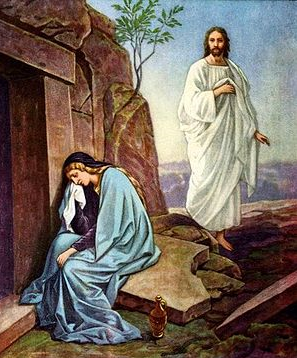
Jesus Watches Mary of Bethany Weeping at His Tomb

In John 14, Jesus’ disciples are troubled by the Lord’s words and behavior.  In John 13, Jesus washes His disciples’ feet and tells them that one who wishes to be a leader must be the servant of all.  He informs them that he is going away to a place where they cannot follow, foreshadowing his crucifixion, death and resurrection. Jesus tells them that one of the disciples will betray him. Finally, he tells Peter that he will deny Jesus three times. By this time, all the disciples are pretty shaken.  But next Jesus reassures and comforts them saying, “Do not let your hearts be troubled” (John 14:1) *.  He then goes on to explain that He is going away to prepare a place for them in heaven.

Such comforting words are needed today. The entire country is politically supercharged over the upcoming election.  Harsh words are spoken on both sizes of the aisle. Violent protests fill the streets of many major cities nightly. I continually hear people from the left, right, and middle expressing fears and worries over the future of America. This shouldn’t be a concern for Christians.

Here’s a news flash. The upcoming election has already been decided. The future of America has already been decided. Despite the hate and chaos, God’s divine plan is unfolding just as he wills it. The Father’s plan for Christ followers is the same as Jesus plan for His disciples.  He is preparing a place for Christians in Heaven. This plan was established before the Earth was created. It may seem to sometimes that God is moving slowly, but he isn’t.

But do not forget this one thing, dear friends: With the Lord a day is like a thousand years, and a thousand years are like a day. The Lord is not slow in keeping his promise, as some understand slowness. Instead he is patient with you, not wanting anyone to perish, but everyone to come to repentance. –2 Peter:8-9

Time is a perception that humans use to help wrap their minds around what occurs in life, but time is meaningless to God.  We see this clearly in Exodus 3:14, when God tells Moses that God’s name is “I am.”  We see this in Revelation 1:8, “I am the Alpha and the Omega,” says the Lord God, “who is, and who was, and who is to come, the Almighty.”  Mike Bennett, who writes for the Christian website Life, Hope and Truth, explains it like this:

The Bible tells us God “calls those things which do not exist as though they did” (Romans 4:17). In other words, God’s plans are so sure that it is as if they had already happened. So, when the One who became Jesus Christ volunteered to die for our sins from the foundation of the world (Revelation 13:8), it was as if He had already been slain. Jesus also described other things that were planned “from the foundation of the world,” and they are just as sure. “Then the King will say to those on His right hand, ‘Come, you blessed of My Father, inherit the kingdom prepared for you from the foundation of the world’” (Matthew 25:34).

“My spirit shakes with terror. How long God, how long? from Psalm 6

Rest assured that God is in control and nothing can change that. No matter what appears to be happening, God’s divine plan is unfolding just as He conceived it before creation. For many this is a difficult concept to grasp. Jesus is the key to God’s plan.  This is stated plainly in John 1:1-5, where John describes Jesus like this: “In the beginning was the Word, and the Word was with God, and the Word was God. He was with God in the beginning. Through him all things were made; without him nothing was made that has been made. In him was life, and that life was the light of all mankind. The light shines in the darkness, and the darkness has not overcome it.

If you are a Christian and find yourself fretting over the coming election or other events occurring in the nation, I encourage you to read (or reread) the Gospel of John.  I guarantee you will find great comfort in its words.  Even if you are not a Christ follower, I encourage you to read the Gospel of John and carefully consider its words, for it is a guide to eternity.

“Lord, to whom shall we go? You have the words of eternal life.” –John 6:68.

* All Bible passages are NIV.