Archive for the ‘materialism’ Category

Slimming down

I was a three-sport athlete in high school.  In college in 1975 I joined a “health club” called the US Army and stayed strong and fit there for the next 26 years.  Through challenging “Arrrmy training” (Bill Murray fans will get it), we stayed physically and mentally ready to defend our nation.  I retired from the Army in 2001. Like so many of the Army buddies I served with, I put on a few pounds after retirement.  In fact, over the course of two decades I went from a retirement weight of 209 lbs. to a maximum of 242. About two years ago, through a combination of illness, dieting, and lifestyle changes, I lost a dramatic amount of weight. Today my weight hovers around a comfy 200 lbs.

Slimming down came with a lot of benefits.  Among these are being able to fit into clothes I hadn’t worn for years, improved sleep, increased energy levels, and all around better physical health as indicated by my vital signs and blood chemistry tests, which today look like those of a healthy twenty-something. Slimming down has many other great benefits, more than we can cover here.

There’s another type of slimming down that’s very good for you. Commonly called “downsizing,” it refers to both reducing the amount of space one lives in and the quantity of personal possessions one owns. Such reducing can be healthy both mentally and spiritually.

Now don’t get me wrong.  I’m not some overzealous lifestyle minimalist that believes in possessing only the bare essentials necessary for living and rejects the rest. I’m not the type of person who could live my life in a “Tiny Home” like one sees on HGTV. But my wife and I have downsized our living space four times since I retired from the army, slimming down from a 3,200 sq ft house to 2,000, to 1,500 and finally to 1,200 sq ft condo, which we have today. We both agree that downsizing is cathartic. Here are just a few potential benefits of lifestyle downsizing which, if you’re not ready for now, might become of greater interest to you as you grow older.   

Reducing Chaos. Chaos is truly the devil’s workshop. Jesus calmed the storm on the Sea of Galilee by commanding, “Peace, be still.”  He can do the same for you and me. God wants us to have peace. A beautiful car, a sleek sailboat, and a humongous house and/or garage crammed with a lot of “stuff” (substitute a gigantic storage unit crammed with stuff) can contribute to a chaotic life.  Each of these comes with a price, and I’m not talking about money. Beautiful cars beg to be washed, waxed, and detailed.  A sleek boat requires a lot of time and effort to keep it safe and seaworthy. Big houses typically have big lots.  Big lots beg to be manicured until the grass looks as good or better than a putting green. A big house crammed with a lot of stuff can became a chaotic ball and chain for you and/or for your children who are trying to sort things out after their parents pass away. Oh yeah, and who is going to remove the snow from that lovely 50-yard curving driveway? Been there and done that! It’s not fun.

Avoiding Anxiety and Distractions.  Have you ever been sitting in a pew on a Sunday morning, taking a mental inventory of all the things, you need to do when you when you get home or in the week to come, instead of listening to what was being said in the sermon? There is a time to do and a time to listen. Sermon time in church is a time to listen.

You might recall this story in Luke chapter 10. Martha and Mary were the sisters of Lasarus. On one occasion that Luke describes, Martha invited Jesus into her house. While Mary sat at Jesus’ feet, listening to him talk, Mary fluttered all about, presumably preparing a meal for Jesus.  After a while Martha became annoyed and asked Jesus to tell Mary to come and help her with the work.  Jesus’ response to Martha’s urging was a gentle rebuke, “Martha, Martha, you are worried and upset about many things, but few things are needed—or indeed only one. Mary has chosen what is better, and it will not be taken away from her.” (v. 41-42). Jesus wants to be the top priority in our lives.  Endeavor to keep Jesus at the center of your thoughts.

Avoiding Comparison. You’ve probably heard the expression “Keeping up with the Joneses.” It refers to a selfish urge or social pressure to match or exceeded the material possessions of one’s neighbors.  Colossians 3 compares covetousness to “idolatry.” When it came to material possessions, King Solomon, the presumed writer of the Book of Ecclesiastes and a man renowned for both his wisdom and his wealth, made the Joneses look like rank amateurs.  Listen to what he had to say about material wealth:

I undertook great projects: I built houses for myself and planted vineyards. I made gardens and parks and planted all kinds of fruit trees in them. I made reservoirs to water groves of flourishing trees. I bought male and female slaves and had other slaves who were born in my house. I also owned more herds and flocks than anyone in Jerusalem before me. I amassed silver and gold for myself, and the treasure of kings and provinces. I acquired male and female singers, and a harem as well—the delights of a man’s heart. I became greater by far than anyone in Jerusalem before me. In all this my wisdom stayed with me. I denied myself nothing my eyes desired; I refused my heart no pleasure. My heart took delight in all my labor, and this was the reward for all my toil. Yet when I surveyed all that my hands had done and what I had toiled to achieve, everything was meaningless, a chasing after the wind; nothing was gained under the sun. –Ecclesiastes 2:4-11

After much experimentation, Soloman finally figured it out! Now see what Jesus said to his disciples:

Then he (Jesus) said to them, “Watch out! Be on your guard against all kinds of greed; life does not consist in an abundance of possessions.” –Luke 12:15

Matthew 19:16-23

Just then a man came up to Jesus and asked, “Teacher, what good thing must I do to get eternal life?”

“Why do you ask me about what is good?” Jesus replied. “There is only One who is good. If you want to enter life, keep the commandments.”

“Which ones?” he inquired.

Jesus replied, “‘You shall not murder, you shall not commit adultery, you shall not steal, you shall not give false testimony, 19 honor your father and mother,’ and ‘love your neighbor as yourself.’”

“All these I have kept,” the young man said. “What do I still lack?”

Jesus answered, “If you want to be perfect, go, sell your possessions, and give to the poor, and you will have treasure in heaven. Then come, follow me.”

When the young man heard this, he went away sad, because he had great wealth.

Then Jesus said to his disciples, “Truly I tell you; it is hard for someone who is rich to enter the kingdom of heaven. Again I tell you, it is easier for a camel to go through the eye of a needle than for someone who is rich to enter the kingdom of God.”

Leaving a Christian Legacy. To those who are believers, I ask “What is your greatest regret since you became a Christian?”  I hope your response isn’t something like, “I wish I had worked more” or “I wish I had bought that 1966 Corvette when I had the chance.”

Will you leave a Christian legacy? What might that look like? Will those who come after you even know you were a Christian given the way that you lived? This is worth thinking about.    

Surely everyone goes around like a mere phantom; in vain they rush about, heaping up wealth without knowing whose it will finally be.  –Psalm 39:6

“‘And I (a wealthy man) will say to my soul, “Soul, you have ample goods laid up for many years; relax, eat, drink, be merry.”’ But God said to him, ‘Fool! This night your soul is required of you, and the things you have prepared, whose will they be?’”—Luke 12:18-20

But godliness with contentment is great gain. For we brought nothing into the world, and we can take nothing out of it. But if we have food and clothing, we will be content with that. —1 Timothy 6:6-8

“Let your light shine before others, that they may see your good deeds and glorify your Father in heaven.” —Matthew 5:16

Legacy isn’t measured by wealth, titles, or accolades—it’s measured by the impact your faith has on others. A Christian legacy is built day by day, through quiet obedience, generous love, and intentional discipleship. When we live with integrity, invest in relationships, and give freely of what God has entrusted to us, we leave behind more than memories—we leave behind a testimony.

A Christian legacy doesn’t end with you or me. It multiplies through the lives we touch, the prayers we pray, and the truths we pass on. And the goal isn’t to be remembered—it’s to make Christ known.  May our respective legacies draw others closer to Jesus Christ.

Leaving Things Behind. Back to lifestyle downsizing, there is nothing bad about wealth in and of itself.  I’ve known many Christians who were wealthy and unselfishly used their wealth for the furtherment of God’s kingdom.  A problem with wealth begins when we forget that everything we possess belongs to God and we are merely stewards of what he has given us. 
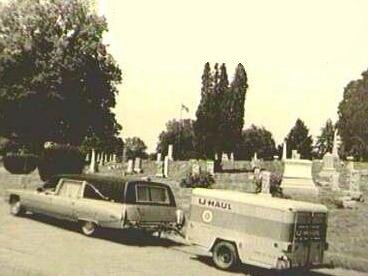
 We are born naked and penniless and in death our physical bodies return to dust. Don’t let accumulating “stuff” become a goal in your life. Even though many have tried and failed (Egyptian Pharaohs and Viking Chieftains come to mind), you just can’t take it with you. I hope you enjoy the short poem below by Judy Dykstra-Brown

Relocation Dreams

I’ve so many things that there’s no place to stack them in.
No drawers to hold them, no cupboards to pack them in.
So many things stowed away from detection.
My fireplace houses its own art collection.

My wardrobe suffers from costumes aplenty.
I’ve boxes of sizes from nine up to twenty.
My jewelry box is stuffed to the gills,
my medicine drawer is spilling out pills.

When I try to cull them, they all want to stay.
The only solution’s to just move away
to find a small island with palm trees and sky
where there is simply nothing to buy!

I’ll live in a hut with floors of swept dirt.
One pair of flip flops, a simple grass skirt.
I won’t feel that shopping should be my main duty.
I’ll look out the window if I require beauty.

No buying new paintings whenever I please.
No little nicknacks and no DVD’s.
No drawers of makeup or tea towels or spoons.
No tarot cards, horoscopes, Ouija boards, runes.

I will not need things to determine my fate,
that day I walk out, simply locking my gate,
taking one suitcase, computer and cables,
and scanner and backup drives, printers and tables,

an internet router and energy backup—
just these few items to locate and pack up.
Then I’m off to a life that’s simpler by far
if these bare necessities fit in my car.

*All Bible quotations are NIV

Debt relief

The United States is a debtor nation. The US Congress regularly borrows money to keep the government running.  The national debt is the grand total of money the government owes, either to investors or to itself (source: USAfacts.org). The current national debt is approaching $35 trillion. That’s 35 followed by 12 zeros! 

There is an intriguing concept of debt forgiveness in Jewish law that relates to the Shemitah year, which occurs every seven years. According to the Torah, in the Shemitah year, all personal loans between Jews are canceled, and lenders must release their debtors from their obligations. This is known as Shemitat Kesafim, or “release of money.” The purpose of this law is to foster generosity, faith, and social justice among the Jewish people, and to remind them that everything ultimately belongs to God. Imagine how different our lives would be if this form of debt relief were practiced in America today.

Average American citizens are debtors. Per the website Statista.com, the average American had $21,800 in non-mortgage debt in 2023. Much of this amount was accrued on credit cards used to fund consumer spending…I just had to have that new iPhone!  Unlike older generations, younger consumers today often buy on credit those things that older generations would have saved up for and purchased in cash, like a new car…Why wait, you can have it now.  You deserve it!

Today, the idea of saving enough money to buy a new car is as outdated as the idea of working one’s way through college.  While not impossible, the skyrocketing cost of new cars and attending a four-year college make paying cash as one goes out of reach for most people.

According to a July 2023 article on Forbes.com (https://www.forbes.com/advisor/student-loans/average-student-loan-debt-statistics/), total student loan debt was $1.75 trillion.  Around 55% of students from public four-year institutions had student loans. The average student loan debt for students coming out of public four-year institutions was $28,950.   

There’s an old adage that says, “The borrower is slave to the lender.” There’s a lot of truth in this. The Bible describes our sins as debts to God. Sin debt to God is a concept describing the moral obligation that humans have to obey God’s law and the penalty that they incur when they fail to obey. Sin is disobedience to God’s will and commands. King David acknowledges in Psalm 51:3-4, that his sins are offenses against God, not man:

For I know my transgressions, and my sin is always before me.
Against you, you only, have I sinned and done what is evil in your sight; so you are right in your verdict and justified when you judge.

Sin separates humans from God’s presence and favor. The consequence of sin is death, both physical and spiritual, which means eternal separation from God.

The Bible teaches that God is merciful and gracious, and He has provided a way for humans to be forgiven and reconciled to Him. God sent His Son, Jesus Christ, to die on the cross as a substitute for sinners, paying the debt that they could not pay themselves. By trusting in Christ’s death and resurrection, sinners can receive God’s forgiveness and eternal life. This is the Good News (Gospel), of God’s salvation for sinners. God cancels the sin debt of those who believe in His Son and restores them to a right relationship with Him. While you may not receive government relief from your student loans or other debts, thanks be to God that forgiveness for our sin debt against Him is available.

Ephesians 2:1-10   As for you, you were dead in your transgressions and sins, in which you used to live when you followed the ways of this world and of the ruler of the kingdom of the air, the spirit who is now at work in those who are disobedient. All of us also lived among them at one time, gratifying the cravings of our flesh and following its desires and thoughts. Like the rest, we were by nature deserving of wrath. But because of his great love for us, God, who is rich in mercy, made us alive with Christ even when we were dead in transgressions—it is by grace you have been saved. And God raised us up with Christ and seated us with him in the heavenly realms in Christ Jesus, in order that in the coming ages he might show the incomparable riches of his grace, expressed in his kindness to us in Christ Jesus. For it is by grace you have been saved, through faith—and this is not from yourselves, it is the gift of God— not by works, so that no one can boast. 10 For we are God’s handiwork, created in Christ Jesus to do good works, which God prepared in advance for us to do.

*All Bible quotes are NIV

Hitting the Jackpot*

* All Bible citations are NIV

What would you do if suddenly you became very wealthy?  What, you say you’re already very wealthy?  Then I urge you to read on anyway. Imagine hitting a big jackpot.  Maybe you pull the arm on a slot machine in Las Vegas and suddenly the grand prize lights start flashing and bells start ringing. Or could it be that the white Publishers Clearing House van turns into your driveway carrying a very large check with your name on it. Perhaps you hit all the numbers in the Powerball drawing.  Or maybe you won the multimillion dollar “Dream House” giveaway on the HGTV network.

I’ve tried to imagine what it would be like to hit it big.  With no more concerns for my personal financial needs, I’d share some of the winnings with family members to pay off mortgages, car loans, student debt and such.  Then I’d set up a nonprofit foundation to help the needy and give it all away.  What fun it would be to help change lives for the better. How easy it would be to give away money from an abundance of wealth.  Jesus commented on this to his disciples in the story of the Widow’s Mite.

Jesus sat down opposite the place where the offerings were put and watched the crowd putting their money into the temple treasury. Many rich people threw in large amounts. But a poor widow came and put in two very small copper coins, worth only a few cents. Calling his disciples to him, Jesus said, “Truly I tell you, this poor widow has put more into the treasury than all the others. They all gave out of their wealth; but she, out of her poverty, put in everything—all she had to live on.”  –Mark 12:41-44

I’ve wondered how being rich might change me.  Would I become more materialistic and spend on a massive house (or houses) and expensive cars?  Would I travel the world? Would I suddenly doubt the motives of people who tried to be friendly with me?  Would I change my phone number, delete this blog, delete my LinkedIn and Facebook accounts, and seek anonymity? Would I play the stock market and try to make even more money?  How much more would I need to satisfy me? Would I become miserly and try to hold on to all my wealth? Jesus cautioned about hoarding wealth in what is sometimes called as the parable of the Rich Fool.

And he (Jesus) told them this parable: “The ground of a certain rich man yielded an abundant harvest. He thought to himself, ‘What shall I do? I have no place to store my crops.’ “Then he said, ‘This is what I’ll do. I will tear down my barns and build bigger ones, and there I will store my surplus grain. And I’ll say to myself, “You have plenty of grain laid up for many years. Take life easy; eat, drink and be merry.”’ “But God said to him, ‘You fool! This very night your life will be demanded from you. Then who will get what you have prepared for yourself?’ “This is how it will be with whoever stores up things for themselves but is not rich toward God.”  –Luke 12:16-21

An abundance of wealth can make one feel very content, very secure, and very self-reliant. How easy would it be to lose touch with God in such circumstances—to forgo daily communion with God through prayer and the reading of the Word? If all my worldly needs were already provided for, would I still be inclined to pray to the Father, “Give us this day our daily bread.”  Perhaps that’s why Jesus taught his disciples:

“Again, I tell you, it is easier for a camel to go through the eye of a needle than for someone who is rich to enter the kingdom of God.” Matthew 19:24

It is a blessing to kneel and sincerely ask God to provide for one’s daily needs.  I am an Anglican. Anglicans follow a Christian tradition that evolved out of the practices, liturgy and identity of the Church of England following the Protestant Reformation. It should come as no surprise that the fastest growing group of Anglicans in the world are in the African churches—places like Rwanda, Uganda, Nigeria and South Africa. Many African Anglicans have suffered terribly from poverty, disease, famine, ethnic cleansing, and multiple forms of discrimination. Some were forced from their homes and lived for a time as displaced persons in their own countries or even spent long periods in refugee camps in a neighboring country.  

Many of these people became believers when they discovered hope in God when they had little else remaining. For many of them, losing everything led to a deep-rooted faith in God. How sweet it is to depend upon the Father for one’s daily needs.

“And why do you worry about clothes? See how the flowers of the field grow. They do not labor or spin. Yet I tell you that not even Solomon in all his splendor was dressed like one of these. If that is how God clothes the grass of the field, which is here today and tomorrow is thrown into the fire, will he not much more clothe you—you of little faith? So do not worry, saying, ‘What shall we eat?’ or ‘What shall we drink?’ or ‘What shall we wear?’ For the pagans run after all these things, and your heavenly Father knows that you need them. But seek first his kingdom and his righteousness, and all these things will be given to you as well. Therefore, do not worry about tomorrow, for tomorrow will worry about itself. Each day has enough trouble of its own.  Matthew 6:28-34

Do we expect God to come to us with His blessings and save us? He says, “Look to Me, and be saved….” The greatest difficulty spiritually is to concentrate on God, and His blessings are what make it so difficult. Troubles almost always make us look to God, but His blessings tend to divert our attention elsewhere. The basic lesson of the Sermon on the Mount is to narrow all your interests until your mind, heart, and body are focused on Jesus Christ. –Oswald Chambers in My Utmost for His Highest

Helping those in need

Whoever gives to the poor will not want, but he who hides his eyes will get many a curse. —Proverbs 28:27*

The COVID-19 pandemic has had a devastating effect on US and global economies. Hundreds of thousands of businesses have closed for varying pandemic-related reasons. The food service industry here at home has been hit particularly hard.  Thousands of restaurants have closed, with most having no hope of reopening. The middle class is shrinking, leaving a fractured nation that is increasingly becoming a land of haves and have nots. History has demonstrated that as the middle class shrinks and the lower class grows, civil unrest often increases.

To survive, many American families have had to dip into retirement savings, placing the future in question.  When savings are exhausted, losing a job can mean losing nearly everything.  The ability to pay a big mortgage, something common for young working couples today, often depends on the salaries of both spouses.  If even one of them loses their job, foreclosure becomes a distinct possibility! To stay afloat they must negotiate with lenders, which in the long run usually means increasing the size of their mortgages and/or tapping into short term savings and retirement accounts. Early retirement withdrawals are usually accompanied by additional fees.

On top of pandemic problems, even before COVID-19 economic globalization had given rise to thousands of large companies that are loyal to neither to their country of origin nor to their employees.   Workers, especially blue collar ones, are increasingly being treated like disposable commodities that are brushed into the trash bin like rubbish on a picnic table. Highly educated and skilled working professionals who lose their jobs and end up turning to the government for assistance are common today.  In my job working with the unemployed, I heard many lament, “I never imagined that I could end up in this situation.”  This can and must change.

Churches, especially those in large urban areas, are often unaware of the financial struggles of individuals and families in their area—even when those affected are members of the church. Many churches have lost touch with early traditions. The scriptures speak frequently about caring for those who share the faith.  This is an essential part of discipleship that helps the church set its own house in order.  In Acts chapter 6, the Apostles appointed seven deacons to assist in the distribution of food to local widows, who were followers of Christ.  James 1:27 tell us, “Religion that is pure and undefiled before God the Father, is this: to visit orphans and widows in their affliction, and to keep oneself unstained from the world.”

Even clearer instruction comes straight from the mouth of our Lord in John 13:34-35: “A new commandment I give to you, that you love one another: just as I have loved you, you also are to love one another. By this all people will know that you are my disciples, if you have love for one another.”

Building a healthy church family is essential to serving those in need outside the church.  Brett Eastman has served as the small groups champion in several of the largest mega churches in the country including Pastor Rick Warren’s Saddleback Church.  Eastman writes:

“If you want to create a church community that really cares for one another, the best way to do it is through small groups. When small groups become the vehicle for care-giving, the whole church gets involved in sharing one another’s burdens—a much more personal approach than relegating the task to a committee.  The whole congregation should be making hospital visits, taking meals to people when they’re sick or something’s happened, doing childcare when someone’s in crisis and giving money when somebody’s lost a job.”

Small groups in churches set the conditions for encouraging personal intimacy and trust building—essential elements of loving Christian relationships.  Only by sharing our hopes, fears, cares and concerns do we really get to know other believers well.

Small groups also enable churches to develop outreach ministries. One way for small groups to quickly make a difference is by reaching out to Christian charities in their church’s local area.  Charities are always in need of volunteers, financial supporters, prayer warriors and other resources.  The possibilities are endless. You can’t take care of everybody, but you can take care of somebody.  The closest ministry filed for any church is the one inside its doors. The largest ministry field for every church is the one just outside the church doors.   

Whoever is generous to the poor lends to the Lord, and he will repay him for his deed. —Proverbs 19:17

*All Bible quotes are ESV.

Rescue the Weak and Needy

Homeless

 Whoever gives to the poor will not want, but he who hides his eyes will get many a curse.

                                                                                                                                   —Proverbs 28:27

After enduring over 10 years with a dismal economy, many Americans today find themselves in perilous positions far exceeding anything they could have imagined. The middle class is quickly shrinking, leaving a fractured nation that is increasingly becoming a land of haves and have-nots.

The average American family has somewhere around $5,000 in savings, placing them in a position where losing a job can mean losing nearly everything.  Paying big mortgages, which is common for young working couples today, often depends on the salaries of two working spouses. Only two or three missed paychecks can lead to foreclosure! To stay afloat they tap into savings and then into retirement accounts, darkening their prospects for the future while also paying the federal government large tax bills for early retirement withdrawals.

The global economy has given rise to large companies having loyalty neither to their country of origin nor to their employees.   Workers are increasingly becoming disposable commodities that are brushed into the trash bin like rubbish on a picnic table.

Highly educated and experienced working professionals who lose their jobs and end up turning to the government for assistance are common today.  In my job working with the unemployed, I’ve heard far too many lament, “I never imagined that I could end up in this situation.”  This must change.

Churches, especially those in large urban areas, are often unaware of the financial struggles of individuals and families in their area—even when the strugglers are members of the church. Too many churches have lost touch with early traditions.

The scriptures speak frequently about caring for those who share the faith.  This is an essential part of discipleship that helps the church set its own house in order.  In Acts chapter 6, the Apostles appointed seven deacons to assist in the distribution of food to local widows, who were followers of Christ.  James 1:27 tells us,

Religion that is pure and undefiled before God, the Father, is this: to visit orphans and widows in their affliction, and to keep oneself unstained from the world.” (ESV)

Even clearer guidance comes straight from the mouth of our Lord in John 13:34-35:

 “A new commandment I give to you, that you love one another: just as I have loved you, you also are to love one another. By this all people will know that you are my disciples, if you have love for one another.”

Building a healthy church family is essential.  Brett Eastman has served as the small groups champion in several of the largest mega churches in the country including Pastor Rick Warren’s Saddleback Church.  Eastman writes:

“If you want to create a church community that really cares for one another, the best way to do it is through small groups. When small groups become the vehicle for care-giving, the whole church gets involved in sharing one another’s burdens—a much more personal approach than relegating the task to a committee.  The whole congregation should be making hospital visits, taking meals to people when they’re sick or something’s happened, doing childcare when someone’s in crisis and giving money when somebody’s lost a job.”

Small groups in churches set the conditions for encouraging personal intimacy and trust building—essential elements of loving Christian relationships.  Only by sharing our hopes, fears, cares and concerns do we really get to know other believers well.

Small groups also enable churches to develop many outreach ministries. One way to quickly make a difference is by reaching out to Christian charities in your church’s local area.  These organizations are always in need of volunteers, financial supporters, prayer warriors and other resources.  The possibilities are endless. You can’t take care of everybody, but you can take care of somebody.

Look closely and see that behind the face of every downtrodden man and woman is the face of Christ.

                                                                                                                                        –Oswald Chambers

A Christmas Alternative

Christmas Gifts

The cornucopia (or horn of plenty), a symbol from Greek mythology, is widely recognized as representing food and abundance.  Over the years, it has become associated with certain religious holidays in Christianity, Judaism and Islam—Christmas, Hanukkah and Eid al-Fitr respectively.

Most Americans enjoy a cornucopia of blessings every day.  The majority of us have enough to eat and adequate clothing and shelter to meet our basic needs. Some have far more than they need. Unfortunately, not everyone is so blessed.

Have you ever struggled with selecting a holiday gift for a relative or friend who has almost everything he or she needs?  Far too many people end up purchasing unneeded or unwanted gifts that eventually get stuffed in a drawer, tossed in the trash or simply set aside and forgotten. There’s a better way!

Alternative Gifts International (AGI) is a way to give meaningful presents to people who have virtually everything they need.  The AGI movement was begun in 1980 by Harriet Prichard, director of a Presbyterian children’s ministry in Pasadena, Calif. AGI started in a small market where shares of goods and livestock for needy people in Third World countries were sold.

The idea was to give gifts that could make a real difference to an individual, family or village. For instance, a present of a milk cow or a means to purify water can truly change lives for impoverished people living in remote areas of Africa.

Prichard’s idea was so popular that five Pasadena-area churches held markets the next year. By 2004, there were more than 325 Alternative Gifts markets in the United States. The movement has now spread to Britain, the Netherlands, Japan and Korea.  There are opportunities to give both domestically and in foreign countries.

Here is how Alternative Gifts works:  Instead of buying that symbolic gift that might soon be put away or discarded, consider making a donation to AGI on behalf of a friend or loved one. Instructions are located on the “give a gift” tab of AGI’s website at www.alternativegifts.org.

When you make a donation through the website you can write a short message to the individual you want to honor. AGI will send that person a card announcing your alternative gift.

Perhaps you would prefer helping people in your local community; the needs are great and the opportunities plentiful in whatever town you live in.  During this Advent season, when some of us tend to overeat, there are many who haven’t enough food.  You might consider supporting a local food pantry. Many of these are experiencing significant shortages.  Many local churches host food pantries that could use your support as well.  The Salvation Army also offers gifts of food, clothing, shelter and various other services to the needy in most areas.  Donations of time and treasure are all welcome.

Even if you’re short on money, you can still give a gift of time. Consider spending Christmas day volunteering at a local soup kitchen or homeless shelter.  I promise you will find it rewarding—a gift to yourself more than a gift to others.

For those who are able, I encourage you to share your blessings with others and consider giving alternative gifts this Christmas. Make a donation to AGI or one of the many worthy charities in your area. Better yet, consider alternative gifts throughout the year and make a real difference in someone’s life the next time you give.

Whatever you do, never forget the real meaning of Christmas as expressed in John 3:16:

“For God so loved the world, that he gave his only begotten Son, that whosoever believeth on him should not perish, but have eternal life.” (ASV)

May God bless us all in the coming year!

Recalling Some Life Lessons

Traffic Jam

Normal is getting dressed in clothes you buy for work and driving through traffic in a car that you are still paying for – in order to get to the job you need to pay for the clothes and the car, and the house you leave vacant all day so you can afford to live in it.   ―Ellen Goodman

Time has been called “a great healer” because it helps ease the pain of physical and emotional wounds.  Unfortunately, time also sometimes causes us to forget some of the best lessons life teaches—lessons we ought to have held on to.

Such was the case for a life lesson I recently recalled—something I originally learned while serving as a Civil-Military Operations Officer in southern Somalia some 20 years ago.

In 1993, Somalia was engulfed in civil war, much like today.  One day I visited a refugee camp run by the United Nations. Hundreds of Bantu people were housed there in small, igloo-like huts made from long bent sticks covered with plastic sheeting.

???????????????????????????????

The Bantus were brought to Somalia as slaves in the 19th century and remain so to this day. They are a small people of very different ethnicity and appearance than the Somalis.

The Bantus I saw that day were living in absolute squalor. Yet despite their situation they seemed remarkably happy.  When I asked a UN worker about the reason for the Bantus’ apparent joy, he provided a life lesson.  “These people were once slaves,” he said, “but now they’re free, well fed and together.”  The things they held dearest were freedom, family and a full belly.  They enjoyed all of these in the squalid camp where they were living.

Over the course of my time in Somalia and several other deployments during my Army career, I learned other lessons about how little we humans truly need.  For months at a time I lived with no possessions beyond what would fit in my rucksack and duffel bag.

With no car to wash, no lawn to mow, no gutters to clean, no leaves to rake, no Internet, no TV and no long commute to work, one has freedom to discover the gift of time.  Personal productivity can increase significantly in such situations, as can relaxation and renewal.

My unscientific observations suggest that as possessions increase, freedom decreases. A multitude of possessions tend to chip away at the gift of time. While I am not a practicing minimalist, I do believe it would behoove most Americans to consider reducing their material possessions.  Garages were designed for cars, not unopened moving boxes. The primary purpose of an attic is to allow proper ventilation of a house, not to store a lot of stuff.   According to the Wall Street Journal, only about 20 percent of the clothes in a person’s closet are regularly worn. You get the picture.

Relearning Some Past Life Lessons

After each long military deployment, I returned home with renewed enthusiasm for life and a deeper appreciation for my freedom, family and the many blessings God had given us. Unfortunately, the enthusiasm and appreciation always slowly faded as I became increasingly re-engaged in the daily, mundane distractions of life and work. After awhile, many life lessons just seem to vanish.  Some of us are fortunate enough to be have an opportunity to relearn some of them.

About a year ago, two major changes in my life occurred.  First, my wife and I moved from a house in Johnstown into a condo near Pittsburgh. Then, only four weeks later, I lost my job.

I had wanted more free time and I got it.  Sometimes God has a real sense of humor!

Laughing Jesus

Two of the main reasons we moved into a condo were to reduce our material possessions and to escape the workload that accompanies owning and maintaining a house. We simply wanted more freedom to do the things we enjoy.  Losing my job wasn’t part of the plan.

However, over the course of the past year I’ve relearned some valuable life lessons, ones I should never have forgotten.

First of all, I remembered that I really don’t need a lot to make me happy.  We have a lot less space and a lot fewer possessions than a year ago, but we also have more time and more freedom to enjoy life.  It has been a great tradeoff—so much, in fact, that my wife and I are already discussing another major downsizing.

Living without abundance makes one more aware of God’s daily provisions.  Instead of asking Him for specific blessings, I’ve learned to pray each day that God will provide my family and me just enough to satisfy our needs and that His perfect will may be done in our lives.

During the past year I also remembered how little it takes to make me truly happy.  We have adjusted to living on my military pension, something that seemed nearly impossible a year ago.  I also have remembered that it doesn’t take much more than my freedom, family and a full belly to make me happy–just like the joyful Bantu people I observed in Somalia many years ago,

Well, there is one other thing. The gift of time has allowed me to dig deeper into the Scriptures than ever before, bringing me closer to the only true source of joy. As the Rev. Dr. Sam Storms so clearly explains, “Joy is not necessarily the absence of suffering, it is the presence of God.”

May you find true joy and peace in your pilgrim’s journey!

“Lay not up for yourselves treasures upon the earth, where moth and rust consume, and where thieves break through and steal: but lay up for yourselves treasures in heaven, where neither moth nor rust doth consume, and where thieves do not break through nor steal: for where thy treasure is, there will thy heart be also.”  —Matthew 6:19-21 (ASV)

Christians are partly to blame!

St Francis

“Preach the Gospel and if necessary use words.”
                     —Attributed to St. Francis of Assisi

As the book of Ecclesiastes tells us, there is truly nothing new under the sun. Listen to the words of Psalm 12 (NKJV):

Help, LORD, for the godly man ceases!
For the faithful disappear from among the sons of men.
2 They speak idly everyone with his neighbor;
With flattering lips and a double heart they speak.
3 May the LORD cut off all flattering lips,
And the tongue that speaks proud things,
4 Who have said,
“With our tongue we will prevail;
Our lips are our own;
Who is lord over us?”
5 “For the oppression of the poor, for the sighing of the needy,
Now I will arise,” says the LORD;
“I will set him in the safety for which he yearns.”
6 The words of the LORD are pure words,
Like silver tried in a furnace of earth,
Purified seven times.
7 You shall keep them, O LORD,
You shall preserve them from this generation forever.
8 The wicked prowl on every side,
When vileness is exalted among the sons of men.

Things in King David’s time sound remarkably similar to today. I hear many fellow believers complain that our country is slowly slipping into the cultural/social abyss—pick one. They use countless examples to justify their positions: the staggering divorce rate; rampant abortion; sexual promiscuity; widespread drug abuse; trashy movies and TV shows; endless wars; political corruption; greed; and extensive fraud, waste and abuse in government spending.

We Christians are free to blame anyone we choose for America’s current woes, but we should start by taking a good look in the mirror. We are partly to blame. Many of today’s social and cultural problems could be reduced and in some cases even eliminated if Christians would just start living like Christ taught us.

Once a person accepts God’s gift of salvation by placing faith in Christ as his personal Savior, something important happens. Like it or not, that person becomes a walking billboard for Christ to all of the unbelievers he knows. What unbelievers see in this Christian’s behavior serves to either honor or dishonor Christ. Does the Christian strive to be more Christlike, as the Bible teaches, or does he simply fall in and conform to the secular world’s pursuit of wealth, position, power and other forms of self-gratification?

A Christian’s behavior should reflect the Gospel to unbelievers. As the saying goes, “actions speak louder than words.” Christ teaches us we should love one another and we should love our neighbors as ourselves. This requires work—getting one’s hands dirty from time to time. It’s usually messy dealing with human problems.  It’s not the sort of work that earns one a place in eternity. Christ did that for us and presented it as a free gift to those who accept him as Savior. Rather, it’s the kind of work that exemplifies the wisdom attributed to St. Francis, “Preach the Gospel and if necessary use words.”

According to an article I recently read , there are approximately 350,000 Christian church congregations in the United States. That figure amounts to a staggering 27 times more Christian congregations than McDonald’s restaurants. Just imagine how much different our country could be if each of these congregations dedicated itself to performing relational ministry in its surrounding community. We could change the direction of America’s social and cultural decline. The biggest mission field in the world is waiting just outside the door of your church.

There are millions of people in this country who need a helping hand and more importantly, need to hear the Gospel. Helping others can be a risky business. Are you willing to take a risk for Christ?  Know that He will provide you all the help you need.  Recall St. Paul’s words to the Philippians: “I can do all things through Christ who strengthens me.” Take the gifts God has given you and put them to work outside the walls of your church. We can change the world!

The Trouble With Stuff

“A house is just a pile of stuff with a cover on it.”  –George Carlin  

The final casualty reports are in:  one dead and over 40 seriously injured by a combination of hostile fire, chemical irritants and hand to hand combat.  In case you’re wondering, this isn’t a report from Afghanistan. It’s the end results of America’s obsession for stuff that was so graphically acted out on Black Friday last week.  The casualties occurred in malls and big box stores across the country as American consumers, driven into a greedy frenzy by the mere thought of cheap stuff, attacked each other with guns, pepper spray and fisticuffs, all in the name of shopping.

From the women’s intimate apparel section to the aisle with the XBox 360’s, tempers were boiling over and fists were flying.  Things were so bad that the media broadcast images of  American greed  around the globe.  My barber, an immigrant from Italy, even received a phone call from his brother-in-law in Sicily who asked him, “are you Americans crazy?”

That’s a great question, because by all indications our overly materialistic society is slowly slipping into some sort of psychotic consumer abyss.  We just can’t seem to get enough stuff. Like the late comedian George Carlin, who is quoted at the beginning of this post, I have lots of stuff.  I bet you do too.  I used to have more stuff, but I got rid of a lot of it before I moved back to Pennsylvania. I used to have a two-car garage, but I could only fit one car into it because I had too much stuff.

I didn’t want to get rid of any of my stuff, because deep inside me there was a small voice whispering that I might need some of that stuff someday.  Most of my neighbors had two-car garages too. Many of them couldn’t fit even one car into their garage because of their stuff.  After I had accumulated enough stuff, I realized that weekends were made for taking care of my stuff.  But most weekends weren’t long enough to take care of all of my stuff, so I had to take care of some of it in the evenings when I got home from work. I even took an occasional vacation day so I could take care of my stuff.

Unfortunately, our society tends to measure success by the amount of stuff one possesses–big boats, fancy cars, gigantic homes, and corner offices. Truth is you can have all of these and still be the most miserable person on Earth. The Scottish theologian Oswald Chambers said, “The test of the life of a saint is not success, but faithfulness in human life as it actually is. We will set up success in Christian work as the aim; the aim is to manifest the glory of God in human life, to live the life hid with Christ in God in human conditions. Our human relationships are the actual conditions in which the ideal life of God is to be exhibited.” 

I challenge you to avoid buying a bunch of stuff for friends and family this Christmas season. Sure, go ahead and get those special toys for the kids, but don’t buy “stuff” for the adults on your list.  Who hasn’t struggled with buying a gift for a friend or loved one who has almost everything he or she needs?  Here’s a suggestion.

Alternative Gifts International (AGI) was begun in 1980 by Harriet Prichard, director of a Presbyterian children’s ministry in Pasadena, California.  AGI began as a small market where shares of goods and livestock for needy people in the Third World were sold.  The idea was to give gifts that could make a real difference to an individual, family, or village.  For instance, a gift of a milk cow or a means to purify water can truly change lives for impoverished people living in remote areas of Africa.  Ms. Prichard’s idea was so popular that five Pasadena area churches held markets the next year.  By 2004 there were over 325 Alternative Gifts markets in the United States. The movement has now spread to England, the Netherlands, Japan and Korea.

Here is how AGI works.  Instead of buying that symbolic gift (scarf, gloves, socks, tie etc. ) that might soon be put away or discarded, consider making a donation to AGI on behalf of your friend or loved one. Instructions on how to donate are on the “projects” section of AGI’s web site at www.alternativegifts.org. When you make a donation through the web site you can write a short message to the individual you want to remember.  AGI will send that person a card announcing your alternative gift. Gifting in this fashion will significantly simplify your Christmas shopping and will provide gifts that truly impact the lives of the recipients.

May you and yours enjoy the true spirit of Christmas this year.