Archive for the ‘Adversity’ Category

Separation Anxiety

Canine separation anxiety is a complex psychological disorder affecting many dogs and their owners. When left alone, the otherwise wonderful pets affected by the disorder experience overwhelming distress, displaying a wide range of associated harmful behaviors. These range from incessant barking and destructive chewing to house soiling, total home wrecking and attempts to escape. Dogs are social creatures that thrive on the human companionship, which can make the absence of their owners highly disturbing.

My wife and I live in a multigenerational household comprised of grandparents, parents, children, and grandkids. It’s not uncommon for our daughter, son-in-law, and grandsons to be away for a weekend or longer vacation. When this occurs the family dog Mars, a large Labrador, is visibly moved. Mainly, he lies motionless on the floor or bed, and lets out big lonely sighs. My wife and I say that he “misses his humans.” While Mars doesn’t display destructive behaviors, family separation clearly makes him lonely for those he loves.

Loneliness is a key element of separation anxiety. It is not simply the absence of company, but rather a deep sense of isolation that can envelop practically anyone. It’s possible to feel lonely even while surrounded by a host of others. As a career Army officer, I endured multiple long deployments to Africa, the Middle East and the Balkans.  In addition to the deployments, there were many other extended periods of family separation when I was required to attend training, exercises, and formal schools. In each instance, I suffered bouts of loneliness caused by being separated from those whom I love most, my wife and children. I sometimes became increasingly anxious as anticipated periods of separation approached.

The Apostle Paul looked forward to death, but not because he was depressed.  He simply wished to again be in the physical presence of his first love, Jesus. In the first chapter of his letter to the Philippians (v. 21-24*) he wrote, “For to me, to live is Christ and to die is gain. If I am to go on living in the body, this will mean fruitful labor for me. Yet what shall I choose? I do not know! I am torn between the two: I desire to depart and be with Christ, which is better by far; but it is more necessary for you that I remain in the body.”   

In Mark chapter 14 the disciples eat the Passover meal with Jesus and then go to the garden of Gethsemane. In Gethsemane, Jesus went off by Himself to pray. As fully man and fully God, He knew exactly what was in store for Him—torture, crucifixion, and death. Just a few days prior to this Jesus had told his disciples plainly, “We are going up to Jerusalem, and the Son of Man will be delivered over to the chief priests and the teachers of the law. They will condemn him to death and will hand him over to the Gentiles to be mocked and flogged and crucified. On the third day he will be raised to life!” (Matthew 20:18-19)

Despite this foreknowledge, Jesus’ prayer in Gethsemane shows He was not distressed over any of the coming physical violence. He was in agony knowing that when the sins of the world were laid on Him, God the Father would turn away. Jesus dreaded the coming separation from God!  We are reminded of this later when we hear His impassioned cry from the cross, “My God, my God, why have you forsaken me?” (Matthew 27:46)

After the crucifixion, Jesus’ disciples suffered with separation anxiety. John 20:10 describes them hiding in fear of the Jewish leaders. No doubt they feared the Romans too!  After all, they’d been hanging out with this “criminal” who was perceived by some as a threat to Roman authority. Their teacher and master had, by all practical appearances, made a bunch of empty promises and then left them alone. But it was not so.  Behind the locked doors where they hid, the resurrected Jesus appears to His disciples in the flesh (John 20:19-20).

During his ministry, Jesus devoted a lot of time and effort to preparing His disciples for the day when He would be physically absent from them. He reassures them in John 14:15-18, saying “If you love me, keep my commands. And I will ask the Father, and he will give you another advocate to help you and be with you forever—the Spirit of truth. The world cannot accept him, because it neither sees him nor knows him. But you know him, for he lives with you and will be in you. I will not leave you as orphans, I will come to you.” Jesus final reassuring words to his disciples in Matthew 28:20b are, “and surely I am with you always, to the very end of the age.”

Isaiah 26:9 – “My soul yearns for you in the night; in the morning my spirit longs for you. When your judgments come upon the earth, the people of the world learn righteousness.

Psalm 42:1-2 – “As the deer pants for streams of water, so my soul pants for you, my God. My soul thirsts for God, for the living God. When can I go and meet with God?”

Psalm 143:6 – “I spread out my hands to you; I thirst for you like a parched land.”

Psalm 73:24 – “Whom have I in heaven but you? And earth has nothing I desire besides you.”

Thank God for leaving the Spirit of Truth with all believers. We need only to listen for His still, small voice to find Him. Thank God that He loves all of us so much that our foolish fears and anxieties don’t upset Him. Thank God He’s so patient with me, and that He is patient with all of us, even when we are impatient with Him. He loves us unconditionally, so much that he stretched out His arms on the cross to suffer and die for all of us. He will not send us anywhere He is not going; and when it comes to death, He’s been there and done that already. No matter how anxious, frightened, and lonely we may become, the Holy Spirit will keep us in His grip until the day Jesus bring us safely home. We are never alone.

*All Bible quotations are NIV

A psalm for facing adversity

David Praying – Hungarian Gradual 1500-1520

Along the wilderness journey we call life, one will inevitably face periods of adversity. They can begin in a multitude of ways. Some of the most common causes are the death of a loved one, a bad medical diagnosis, the breakup of a love relationship, losing a job, or a personal financial crisis just to name a few. In extreme cases, severe adversity can make one wonder whether their life is worth living anymore.

My life has been overflowing with adversity recently, including the deaths of a beloved uncle and a beloved brother-in-law in rapid succession, and my own health concerns. Prayer and meditation on God’s word can be a great source of comfort when facing adversity. The Lord Jesus has given his followers a model for prayer in what today we generally refer to as “the Lord’s Prayer.” The most familiar form of His prayer is found in chapter 11 of Luke’s Gospel.

It is Jesus model for daily prayer and focuses on approaching life with faith in God, one day at a time. I suspect that Jesus prayed a similar prayer daily.  I have found Psalm 143 to be a wonderful companion to the Lord’s Prayer, particularly when believers are navigating periods of adversity. This psalm is attributed to David and is one of the Seven Penitential Prayers found in the Book of Psalms. Below I share some thoughts on how this psalm speaks to me.

Psalm 143 (a form used in the Scottish Episcopal Church)

1 Lord, hear my prayer, and in your faithfulness heed my supplications;
answer me in your righteousness
.  

This is an opening petition acknowledging that God listens to my prayers and takes them to heart. Our God is a good listener and is never too busy to pay attention when one of His children prays. He seriously considers each prayer I lift up to Him, and he answers each according to His holy will.

2 Enter not into judgement with your servant, for in your sight shall no one living be justified. Verse 2 asks God not to judge me by my actions, as all have sinned against Him and fallen short of the total obedience He requires. I can rest assured that I don’t have to earn the right to pray to God. Christ has already paid the price of admission for a space where I may kneel before the throne of God the Father and offer my heartfelt prayers. Jesus is my advocate before the Father and the Holy Spirit prays for me when I lack the proper words to make my own petitions.   

3 For my enemy has sought my life; he has crushed me to the ground; he has made me live in dark places like those who are long dead. 4 My spirit faints within me; my heart within me is desolate.

These verses remind me of 1 Peter 5, which describes Satan as a roaring lion that is on the prowl looking for someone to devour. For me it paints a dark picture of the adversity I am facing, as if I were hiding in a tomb, filled with a spirit of fear and hopelessness, abandoned by God.  Jesus must have felt like this hanging on the cross, asking why God had forsaken him.

5 I remember the time past; I muse upon all your deeds; I consider the works of your hands.
Verse 5 steps back and from the darkness and depression of the two preceding verses as the Psalmist recalls how God has led him through adversity and saved him. As I read this verse, I recall the many times in my life God has rescued me from adversity.

6 I spread out my hands to you; my soul gasps to you like a thirsty land.7 O Lord, make haste to answer me; my spirit fails me; do not hide your face from me or I shall be like those who go down to the Pit.

Like a small child reaching for the outstretched hands of a loving parent, I trust in my God for comfort and sustenance. My spirit thirsts for God like the desert thirsts for water. I ask God to respond quickly, as I feel like I’m standing on the brink of disaster.

8 Let me hear of your loving-kindness in the morning, for I put my trust in you; show me the road that I must walk, for I lift up my soul to you.

As I begin a new day, I ask God to reassure me of his loving presence.  I trust in God to sustain me throughout the day.

9 Deliver me from my enemies, O Lord, for I flee to you for refuge.

I ask God to foil the plans of my enemies, both spiritual and physical ones.  Seeking refuge from my enemies, I turn to God’s word and prayer for comfort.

10 Teach me to do what pleases you, for you are my God; let your good Spirit lead me on level ground.

I ask the Holy Spirit to lead me along a safe path where I may understand God’s will for my life and learn how to do His will. I pray that the Holy Spirit will move the mountains of adversity that are in my way.

11 Revive me, O Lord, for your name’s sake; for your righteousness’ sake, bring me out of trouble.

My spirit grows weary and I need God to renew and refresh me. In accordance with His holy will, I ask him to rescue me from all adversity that troubles me.

12 Of your goodness, destroy my enemies and bring all my foes to naught, for truly I am your servant.

This closing verse echoes verse 9, reiterating my need for God’s protection from my enemies.  I am reminded that as God’s servant, I am owned and protected in His holy service.  

So do not fear, for I am with you;
    do not be dismayed, for I am your God.
I will strengthen you and help you;
    I will uphold you with my righteous right hand.

—Isaiah 41:10

Jesus: God of the Impossible

Jesus raises a young girl from the dead (Luke 8:40-42)

“Never let an impossible situation intimidate you.  Let it motivate you—to pray more, trust more, expect More.” —Pastor Rick Warren

Have you ever felt like you were in an impossible situation? Maybe it was a scary medical diagnosis.  Or perhaps a loved one died. Maybe a job was lost and it took a long time to find the next one. Or perhaps a child was gravely ill. Regardless of the cause, countless people have experienced this feeling. I have certainly been there.

This feeling can be scary and may lead to any number of problems, including sadness, depression, loneliness, and feelings of isolation. Left unchecked, it can lead to thoughts about harming oneself or others, and even suicidal thoughts.   

I can do all this through him who gives me strength. Philippians 4:13*

Fortunately, God has the perfect way of dealing with impossible situations.  Jesus Christ is the God of the impossible. The Merriam-Webster dictionary defines “miracle” as, “an extraordinary event manifesting divine intervention in human affairs.” The Gospels have numerous accounts of miracles performed by Jesus.  Here are a number of them.   

Early in his ministry on Earth, Jesus turned water into wine at a wedding in Cana of Galilee (John 2). He calmed a storm on the Sea of Galilee (Luke 8) and walked on water (Matthew 14). Following a long day of preaching, Jesus fed a crowd of 5,000 with seven loaves of bread and a few small fish (Mark 6). He healed the lame (John 5) and cleansed Lepers of their disease (Luke 17). Jesus cured a woman suffering with a fever (Matthew 8) and he cast out demons (Luke 8). He gave sight to the blind (John 9) and cured a woman with a bleeding disorder (Matthew 9). Jesus raised his friend Lazarus from the dead (Matthew 11). And finally, on the third day following his own death by crucifixion, Jesus rose from the dead, defeating sin and death forever.

Jesus was and remains the God of the Impossible for those who come to him as their Lord and Savior. I believe this in my heart.  Believing is easy when things are going my way. I am trying to learn how to put this into action when the going gets too tough for me to handle. Every morning I meditate on Psalm 143 as part of my daily devotion time. I find verses 8 – 10 to be a great source of encouragement and comfort, especially when I feel overwhelmed by life. I hope you might find them equally useful.

 Let the morning bring me word of your unfailing love,
    for I have put my trust in you.
Show me the way I should go,
    for to you I entrust my life.
Rescue me from my enemies, Lord,
    for I hide myself in you.
Teach me to do your will,
    for you are my God;
may your good Spirit
    lead me on level ground.  

God can do nothing for me until I recognize the limits of what is humanly possible, allowing Him to do the impossible. —Oswald Chambers

*All Bible quotes are NIV.

A longing for God

The following people have something in common: Cleopatra, Pontius Pilate, Ernest Hemingway, Adolph Hitler, Marilyn Monroe, Freddy Prinze, Kurt Cobain, Anthony Bourdain, and Naomi Judd. Can you guess what it is? If you said all are famous dead people you would be correct, but you would be omitting a key detail. All died by suicide! The number of celebrities who kill themselves is truly astounding.

Clearly, wealth and fame do not come with a promise of personal peace or happiness. Neither does good looks or talent. Yet many people pursue all these.  Some people are attracted to celebrities like flies drawn to a sweaty horse.  Whether it is Megan and Harry, the Kardashians, or one of the seemingly countless reality shows that fill the nation’s television screens. Speaker of the Lutheran Hour, the Rev. Dr. Martin Zeiglar, writes, “Some people who bemoan our celebrity culture long for the old days. But were the old days any different? Modern mass media has changed our expectations for knowing others and being known by them. But our core human problem is the same. We expect humans to give us what we need-whether we are delivering ourselves to a celebrity in a crate (as a Burt Reynolds fan purportedly did) or asking for a selfie with them, whether we’re looking to fans and friends for recognition or looking to ourselves for fulfillment, the problem is the same.”

In addition to celebrities, humans are naturally drawn to feel-good experiences; the wealthier one is, the more these experiences are available. How we love to spend money on a fun week at Disney World, or going on a cruise, or basking in the sun and surf on Waikiki Beach, or maybe you would prefer a week of skiing in the Austrian Alps. Maybe your feel-good definition is a big shopping spree with credit card in hand. Perhaps you follow music, television, movie, and sports celebrities in the media and seek vicarious pleasure from following their lives. Unfortunately, many people who take so-called dream vacations experience feelings of sadness or emptiness as soon the vacation ends when they are thrust back into the realities of their daily lives. Shopping sprees may satisfy for the moment, but bring trouble when the bills come due.  And following the lives of famous celebrities is as likely to make one sad as happy.

At the Transfiguration of Jesus Christ (Luke 9:28-36), Jesus’ disciples Peter, John and James did not want to their experience on the mount to end. They had just seen Jesus’ countenance transfigured, his skin and clothing taking on a radiant glow as He spoke with Moses and Elijah. And they had heard the voice of God proclaim that Jesus is His beloved son.  They wanted to extend their own mountaintop experience, saying to Jesus, “Master, it is good for us to be here. Let us put up three shelters—one for you, one for Moses and one for Elijah (verse 33).”

Unlike vacationers depressed and saddened at their end of vacation, the Apostles on the mount of transfiguration understood that God is the true source of happiness, not feel-good experiences, or certain human beings.  In 2 Peter 1:16-18 we read, “For we did not follow cleverly devised stories when we told you about the coming of our Lord Jesus Christ in power, but we were eyewitnesses of his majesty. He received honor and glory from God the Father when the voice came to him from the Majestic Glory, saying, ‘This is my Son, whom I love; with him I am well pleased.’ We ourselves heard this voice that came from heaven when we were with him on the sacred mountain.”

To be certain, all people are born with a natural longing that only God can truly satisfy. Putting one’s faith and hope in anything besides God and His son Jesus Christ will ultimately end in disappointment; and it is a form of idolatry. Is your mind focused on the face of an idol? Is the idol yourself? Is it your work? Are you chasing feel-good moments that fade? When one becomes mired in idolatry it impairs their ability to see God, rendering them powerless in the midst of adversity, when their soul most longs for God. Turn to God and find true fulfillment for all your inner longing.    

Isaiah 26:9 – “My soul yearns for you in the night; in the morning my spirit longs for you. When your judgments come upon the earth, the people of the world learn righteousness.

Psalm 42:1-2 – “As the deer pants for streams of water, so my soul pants for you, my God. My soul thirsts for God, for the living God. When can I go and meet with God?”

Psalm 73:24 – “Whom have I in heaven but you? And earth has nothing I desire besides you.”

Psalm 143:6 – “I spread out my hands to you; I thirst for you like a parched land.”

*All Bible quotes are NIV

A wounded spirit

Have you ever experienced a wounded spirit?  By that I mean something that grieves the very Holy Spirit dwelling inside you, leaving you in despair and feeling hopeless. Personal, unconfessed sin can leave a Christian wounded, as can sins committed against a Christian by a fellow believer. I imagine that Peter felt wounded when Jesus turned and looked him in the face after Peter had denied knowing Jesus three times (Luke 22). This was the same Peter who, at least for a short time, had walked on the water with Jesus (Matthew 14). Imagine what Peter must have thought at that moment he denied Jesus the third time—he had followed the Lord through thick and thin, watching, listening, and learning from Him, only to seemingly throw it all away in a brief, fearful moment. How does one overcome having made such a grave error?

I imagine that King David felt the same way when he sinned with Bathsheba. Filled with lust for Bathsheba after spying her bathing on a rooftop, David arranged to have her husband killed on the battlefield so David could have Bathsheba for himself (2 Samuel 11). David and Bathsheba’s sinful union resulted in the birth of a child (2 Samuel 12). David eventually took Bathsheba for his own wife. Not long afterwards, God struck the child with a serious illness as punishment for David’s sin.  Despite his desperate pleas begging God to save the child, it eventually died. Psalm 51, which is attributed to David, clearly reveals his wounded spirit in verses 1-4, as he confessed that he had sinned against God and God alone:

1Have mercy on me, O God,

    according to your unfailing love;

according to your great compassion

    blot out my transgressions.

2 Wash away all my iniquity

    and cleanse me from my sin.

3 For I know my transgressions,

    and my sin is always before me.

4 Against you, you only, have I sinned

    and done what is evil in your sight;

so you are right in your verdict

    and justified when you judge.

Imagine how wounded Jesus’ disciples must have felt to see him hanging on a cross, naked, bleeding, and slowly dying.  They had thought He was the promised Messiah who would free the Jews from Roman oppression and restore the Kingdom of Israel. After Jesus died, they hid themselves out of fear for the Jewish authorities. Juxtapose this scene of death and despair with the joy and relief experienced when the risen Lord appeared to his disciples (John 20).  

No matter how wounded your spirit is, you are never too broken to be healed by Jesus Christ. This is clear in the story of Peter’s restoration before Jesus (John 21). After having denied Jesus three times, Peter showed true repentance while declaring his love for Jesus three times; and Jesus gave immediate forgiveness. Peter was fully restored to his ministry by Jesus and just a few weeks later preached an extraordinarily powerful sermon on the day of Pentecost (Acts 2). Jesus is the Great Physician who can heal any wound, whether it was caused by a personal sin committed by you or by someone committing a grievous sin against you.

Only One can heal the spiritual wounds of mankind, rebuild broken spirits, feed famished soulsChrist, our blessed Savior. He has been down the road we’re traveling; He has experienced what it means to be human. He has “borne our griefs and carried our sorrows”; “He was crushed for our iniquities; upon Him was the chastisement that brought us peace, and with His wounds we are healed” (Isaiah 53:4a, 5b). Taken from “Christ Solves the Mystery of Our Sorrow,” a sermon by Rev. Dr. Walter A. Maier, the first Speaker of The Lutheran Hour

Political Solutions

The Lord foils the plans of the nations; he thwarts the purposes of the peoples. But the plans of the Lord stand firm forever, the purposes of his heart through all generations. Blessed is the nation whose God is the Lord, the people he chose for his inheritance.  –Psalm 33:10-12*

The November midterm elections will soon be here and the political theater being played out in the media is growing more intense by the day. We live in an age of great political division. Many national leaders and prominent politicians think that they have all the answers, but they’re wrong. As the above passage from Psalm 33 notes, “The Lord foils the plans of the nations.” God remains in charge. There are no political solutions to America’s woes.  What we need is more Jesus!

Here in America, those on the political right condemn the activities of the political left. Those on the left condemn the right.  We hear and see it every day.  “Our way is best for the American people.” “They’re weak on defense.” “They trample on the Constitution.” “They only know how to tax and spend.”  “Their policies are destroying the environment.” “Their policies are destroying the economy.”  Politics pits friend against friend, men against women, husbands against wives, parents against children, nation against nation, religion against religion, and Christian against Christian.  The latter saddens me deeply—it just shouldn’t be. Christians should be kind to everyone, especially fellow believers. The Apostle Paul tells us:

“There is neither Jew or Greek, slave or free, male or female, (insert Republican or Democrat), but we are one in Christ Jesus.”  Galatians 3:28

Jesus told Pontius Pilate in John 18:36, “My kingdom is not of this world.” This wisdom reminds all Christians that we, including politicians, answer to a higher authority than the government or political leaders.  In 1 Kings 22, the story is told of the time the King of Israel had to decide whether or not to go to war against Syria. Jehoshaphat, the King of Judah, advised his fellow ruler, “First seek the counsel of the Lord” before making a decision,” (verse 5). This is sound advice that Christians, and especially Christian politicians, would do well to take to heart. Seek God’s guidance before seeking the guidance of man.  We should also note Matthew 5:16, “…let your light shine before others, that they may see your good deeds and glorify your Father in heaven.” Christians should be the living face and hands of Christ to the world.

God “makes nations great, and He destroys them; He enlarges nations, and leads them away,” (Job 12:23). Political leaders rule because God allows them to, “for there is no authority except from God, and those that exist have been instituted by God,” (Romans 13:1b). God can upset human plans, but no one can thwart His plans or purpose. God loves the world and sent His only begotten Son to suffer and die to atone for the sins of every person of every political ilk.

Pastor Eugene Cho is CEO of Bread for the World, a non-partisan, Christian advocacy organization based in the USA. I highly recommend an article he penned a decade ago titled, “The 10 Commandments of Engaging Politics.” It contains a wealth of sound advice for Christians today as we approach the November elections. His article is available at this safe link:

Give praise to the Lord, proclaim his name; make known among the nations what he has done. Sing to him, sing praise to him; tell of all his wonderful acts. Glory in his holy name; let the hearts of those who seek the Lord rejoice. Look to the Lord and his strength; seek his face always.  –Psalm 105:1-4

*All Bible quotes are NIV.

Give thanks to God

Give thanks to the Lord, for he is good; his love endures forever.  –Psalm 107:1*

Recently I’ve been pondering what it means to give thanks to God. The Bible is full of examples of thanksgiving being lifted up to the Lord.  After giving it much thought, I’ve come to several conclusions. First and foremost, thanking God is my way of acknowledging His supreme authority and position in my life.  God gave me life! Everything that is good in my life is a gift from Him.

I will praise God’s name in song and glorify him with thanksgiving. –Psalm 69:30

Second, there are multiple ways to give thanks to God.  These include praying; through the written, recorded and spoken work; in song; in giving of one’s time and treasure; and in prayerfully doing good works for others with no motive other than serving God. I write this blog as a thank offering to God. There are many other ways of thanking God that area not listed here. It occurs to me that we can thank God in almost any situation we encounter throughout the day. Continually thanking God can help one remain cognizant of God’s endless presence in his or her life.

Rejoice always, pray continually, give thanks in all circumstances; for this is God’s will for you in Christ Jesus.  –I Thessalonians 5:16-18

Third, we are to thank God in all circumstances, both the easy times, the difficult ones and those in between.  In Philippians 4, the Apostle Paul tells us he has learned to be content whatever his circumstances. This is a tough one. In my lifetime I’ve had some real tragedies. When tragedy strikes, it is particularly difficult to discern any good at the time.  Over the years I’ve learned to pray to God for strength to get me though the difficulties and to give me wisdom to understand.  While it was difficult to discern the good at the time, in retrospect each difficult period of my life was a time of learning and spiritual growth that helped prepare me for God’s eternal kingdom.   

Thanks be to God for his indescribable gift!  –2 Corinthians 9:15

Finally, give thanks to the lord for his grace in offering us salvation through Jesus Christ.

Doxology

I thank you, God, for your grace, the gift of life and my salvation through Jesus Christ.  Thank you for the Godly women who helped lead me to the Savior in my childhood. Thank you for loving aunts, uncles, and grandparents who helped raise and care for me after my parents divorced. Thank you for the churches and teachers who helped nurture and train me along the way. Thank you for giving me a godly wife to share my life with. Thank you for my children and grandchildren who bring joy to my life. Thank you for friends and family who have added richness to my life. Thank you for protecting and shielding me during times of trouble. Thank you for the work that enables me to sustain my family. Thank you for this day and all my days to come. Thanks be to God!

Now thank we all our God, with heart and hands and voices,

Who wondrous things has done, in Whom this world rejoices;

Who from our mothers’ arms has blessed us on our way,

With countless gifts of love, and still is ours today. 

Hymn – Now Thank We All Our God:

*All Bible quotes are NIV.

Lessons Learned

As I reported in April, I recently underwent major surgery.  Having never been under general anesthesia before, I was more than a little bit anxious about the entire procedure. It has been nearly two months since the surgery and I’m still in the healing process.  The procedure was conducted robotically and left seven scars on my abdomen.  The first time I showed the scars to my youngest grandson he said it looks like I was in a gunfight. I try to learn from every experience, whether good or bad.

I spent 24 years of my adult life as a commissioned officer in the US Army. During my military career, I learned a lot of life lessons—things that continue to help me today.  A wise Field Artillery battalion commander once told me, “It’s ok to make mistakes, but learn from them and avoid repeating them.”  Imagine a world where everyone lived by this axiom!

A lot of Army training events and operations conclude an After-Action Review, or AAR.  The AAR is a very open discussion about how the execution of an event went. The ultimate aim is to do better next time. AARs can be soul searching experiences. To understand my surgery experience, I ended up doing a lot of soul and scripture searching. Here’s what I learned from my surgery and the leadup to it.    

I spent a lot of time praying about this surgery. I suffered doubt more than once.  Should I do it?  Will it work?  Could I die on the operating table?  My faith was put to the test. Knowing my prayers were insufficient, I enlisted the support from a host of prayer warriors I knew I could count on.  I received many words of encouragement from these friends and I was comforted just knowing they were praying for me.  Lesson learned – don’t worry!

God is in Control: “Do not be anxious about anything, but in every situation, by prayer and petition, with thanksgiving, present your requests to God. And the peace of God, which transcends all understanding, will guard your hearts and your minds in Christ Jesus.” Philippians 4:6*

Psalm 55

22 Cast your cares on the Lord
and he will sustain you;
he will never let
the righteous be shaken.

God shows Himself in many ways and places.  You never know when He’s going to pop up and remind you that he’s present.  As I lay in the surgical ward around 9pm, still a little groggy from the lingering effects of anesthesia, I was surprised when a beep sounded from the hospital intercom and some kind soul began reading an evening prayer—I was in a Catholic hospital. What a wonderful way to mark my first night in hospital. Lesson learned – we shouldn’t need an intercom announcement to remind us that God is always there.  Just stop, look and listen.

Psalm 139

Where can I go from your Spirit?
   Where can I flee from your presence?
If I go up to the heavens, you are there;
    if I make my bed in the depths, you are there.
If I rise on the wings of the dawn,
    if I settle on the far side of the sea,
10 even there your hand will guide me,
    your right hand will hold me fast.
11 If I say, “Surely the darkness will hide me
    and the light become night around me,”
12even the darkness will not be dark to you;
    the night will shine like the day,
    for darkness is as light to you.

Within six weeks of highly invasive surgery, I was nearly back to normal. Lesson learned: The human body’s ability to heal itself is remarkable. God’s incredible design of the human body is so amazing that it is beyond human comprehension. The hand of God our creator is clearly evident in human anatomy.

            Psalm 139

13For you created my inmost being;
you knit me together in my mother’s womb.

My wonderful wife was my sole caregiver for nearly a month, while I was significantly incapacitated from the surgery. I could not have survived on my own. Early Christians stood out in Roman society for their willingness to serve the sick and outcast, including lepers.  Lesson learned: Christians are called to be caregivers.

            Psalm 2

3 Do nothing out of selfish ambition or vain conceit.                                                                         Rather, in humility value others above yourselves, 

4 not looking to your own interests but each of you to the interests of the others.

The robotic surgery performed by my surgeon was truly remarkable, but it pales in comparison to the abilities of our Lord. While a surgeon can help your physical needs, Jesus offers spiritual healing for broken hearts and souls. He is truly the “Great Physician.”

The Great Physician Now is Near – https://www.youtube.com/watch?v=PDfHFaJaTwk

*All Bible quotations are from the NIV.

Abandoned to God

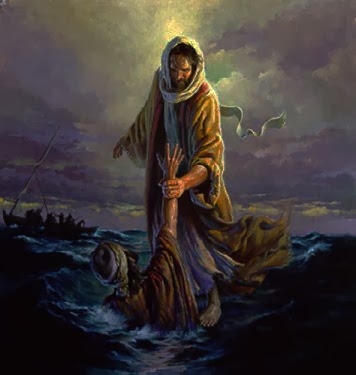
Jesus walking on the water

“Come,” he said. Then Peter got down out of the boat, walked on the water and came toward Jesus. But when he saw the wind, he was afraid and, beginning to sink, cried out, “Lord, save me!” Immediately Jesus reached out his hand and caught him. “You of little faith,” he said, “why did you doubt?” Matthew 14:29-31

I’m scheduled for major surgery in a few days. The procedure will necessitate a long convalescence period. While I’ve had several surgeries during my life, this marks the first time that I’ll be under general anesthesia. I’m not looking forward to it. To be truthful, my dread of this surgery has tested my faith.  Yep, I’m a little bit scared.  

For many years I have enjoyed the writings of Scottish theologian Oswald Chambers. I first discovered him through his famous daily devotional, “My Utmost for His Highest.”  You might have noticed that I frequently quote Chambers in this blog. One of my favorite pieces of his wisdom is:   

The great word of Jesus to His disciples is Abandon. When God has brought us into the relationship of disciples, we have to venture on His word; trust entirely to Him and watch that when He brings us to the venture, we take it. 

The Apostle Paul is a great example of living a life abandoned to God. In Acts 20:22-24, Paul tells the elders of the Church at Ephesus, “And now, compelled by the Spirit, I am going to Jerusalem, not knowing what will happen to me there. I only know that in every city the Holy Spirit warns me that prison and hardships are facing me. However, I consider my life worth nothing to me; my only aim is to finish the race and complete the task the Lord Jesus has given me—the task of testifying to the good news of God’s grace.”

Throughout history, many people have chosen to abandon a sinking ship when the situation became so bad that an act of desperation appeared to be their only way out. Being abandoned to God is like jumping off a sinking ship and finding Jesus there, walking on the water and offering his hand to pull you above the dangerous waves as he whispers, “You of little faith, why did you doubt?”

A life of abandon is content with God, not with circumstances.  That’s how I want to live.  I close asking for your prayers as I undergo surgery on April 29. Until the next time!

I promise

The Miriam Webster Dictionary defines the word promise as “a statement telling someone that you will definitely do something or that something will definitely happen in the future.”  In Western culture, a promise is not something to be taken lightly (unless perhaps you’re a politician).  Anyone who has raised a child knows that a promise carries weight.

If you’ve ever planned to do something with a child—say a Saturday afternoon trip to the zoo—and subsequently had to cancel, then you have probably had a conversation like this:

Dad: “Sweetie I’m sorry, but we won’t be able to go to the zoo tomorrow.  Something came up at work.”

Child: “When are you going to take me?”

Dad: “How about next Saturday?”

Child: “Do you promise?”

Dad: “We’ll see.”

The “We’ll see” response is a rather hollow attempt at not having to break a promise the dad made to the child. No parent wants to break a promise made to their child.

There is a special kind of promise called a covenant.  Covenants typically entail a personal relationship between the various parties to the promises made.  If you’ve ever been a member of a home owners association (HOA), you’ve probably read, or at least heard of, the HOA covenants.  These are the rules and regulations that all home owners belonging to the association agree to follow.  Human covenants typically contain stipulations, a condition or requirement that is specified or demanded as part of an agreement.  For example, your mailbox must match the color of your house, or boats are not to be parked in driveways for more than 24 hours. For breaking or violating these covenants, there is usually some sort of penalty that must be paid.  In the case of a HOA, this is often a monetary fine.

For Christ followers, marriage vows are a form of covenant and a pretty demanding, “for better or for worse…in sickness and in health…until death do us part.”

The Bible contains many covenants.  While the exact number is a point of debate, there are five core covenants forming the foundation of God’s plan for the redemption of mankind through faith in Jesus Christ. These covenants were made with Noah, Abraham, Moses/Israel, David and finally the New Covenant of salvation through Jesus Christ.

Noahic Covenant God promises to never again destroy mankind or other living creatures. This covenant was without stipulations. Instead, God will fulfill the redemptive promise of Genesis 3:15.

 Abrahamic Covenant – God promises to make a great nation out of childless Abraham, assuring him that his descendants will outnumber the stars. Abraham is to forsake his land and follow God wherever he leads.  All the while, Abraham and his family are to walk blamelessly before God and to follow the practice of circumcision in every Generation.

Mosaic Covenant (with Israel) – God rescues the Hebrew people from the bondage of slavery in Egypt and promises to make them his own people and a nation of priests.  In turn, the people must abide by the laws given to Moses by God on Mount Sinai.

Davidic Covenant – God establishes David as Israel’s king. Through David’s royal lineage he will fulfill the promises He made to Abraham and Israel. In return, David and his lineage must remain faithful to God and obey God’s covenantal laws.

The New Covenant of Jesus Christ –   Jesus is the culmination of God’s saving grace for his people. Christ is, as John the Baptist called him, “the Lamb of God who takes away the sins of the world.” This is a covenant of Grace without stipulations.

There is a major difference between the covenants of man and the covenants of God. People routinely violate the covenants, while God never breaks a promise.  The covenants of God do not replace the ones that came before—they build upon them, because it is impossible for God to lie or break a promise. Before the foundation of the world, our omniscient God made a plan for the redemption of sinful mankind.  Jesus is the fulfillment of God’s promise of man’s redemption, which was planned out through the five covenants discussed herein.  Thanks be to God that his promises are faithful and true!

 But when the set time had fully come, God sent his Son, born of a woman, born under the law, to redeem those under the law, that we might receive adoption to sonship. Because you are his sons, God sent the Spirit of his Son into our hearts, the Spirit who calls out, “Abba, Father.”  So, you are no longer a slave, but God’s child; and since you are his child, God has made you also an heir. –Galatians 4:4-7