Posts Tagged ‘life’

Growing old and grateful

He who finds a wife finds what is good and receives favor from the Lord. –Proverbs 18:22*

*All bible quotes are NIV.

I’m old enough to get senior discounts in restaurants and movie theaters, and AARP rates on hotel rooms. These are all good, but one of the greatest benefits of getting older is that I’ve developed a clearer understanding of what really matters in my life. When I was young, most of my attention was focused inwardly, which I suppose if fairly normal. 

I was commissioned a second lieutenant in the U.S. Army in May 1977, at the tender age of 21. Fresh out of college and newly married, I loved the excitement of a soldier’s life.  I loved the comradery and having fun with friends. I also enjoyed playing all kinds of sports and outdoor recreation like skiing and cycling. Sadly, there were many things I neglected during this phase of my life. One of these was my sweet wife.

As I grew a bit older, I began to pay more attention to the incredible woman I married. I grew to realize that Linda’s physical beauty was exceeded by even greater inner beauty. I grew to admire her patience—especially with me and my antics—and her fortitude.  When she sets her mind on something, it’s going to get done.  I also began to comprehend how wise Linda is—blessed with more common sense than anyone I’ve ever known. She is also blessed with the gift of spiritual discernment. On top of all this, Linda is one of the humblest and most generous people I’ve ever known.

For me, having our first child was a wake-up call greater than any drill instructor ever delivered to a barracks full of sleepy-eyed soldiers.  It was one of those ‘blinding glimpse of the obvious’ moments when selfish me suddenly realized I’m responsible for more than just myself.  While a wife is easily neglected, a screaming newborn is an entirely different matter.  Sad that I didn’t figure this out earlier!

My newfound sense of responsibility led me back to the Church, something I’d managed to neglect since the time I entered college some seven years earlier. This sudden change of direction came as quite a surprise to my then, non-Christian wife.  Thankfully, she was eventually steered towards God. Sadly, it happened without much help on my part.  Thank you, Holy Spirit!

Over the course of my 24-year Army career there were many long deployments and other periods away from home.  During these busy years Linda faithfully kept the home fires burning, managing a busy household and doing the lion’s share of parenting our two daughters. My military travels around the world helped me develop a deep appreciation for the blessings we enjoy as Americans—something that many of us simply don’t recognize.

Fast forward to the present and I feel blessed. I thank God daily for my family, friends, freedom, and faith.  Linda and I are reaping the benefits of having honored our marriage vows all these years; we recently celebrated our 45th wedding anniversary. Our amazing daughters are both grown and successful; we have a wonderful son-in-law who is a pastor; and we’ve been blessed with three delightful grandsons. We’re fortunate to be able to see our grandsons daily. We have loving, extended families living in diverse locations around the world. We’ve made many lifelong friends along the way, all of whom have blessed and enriched our lives. Most of all, we’ve been blessed by a loving God who was willing to sacrifice His only Son to redeem our souls.

Proverbs 31:10b-31

[b]A wife of noble character who can find?
    She is worth far more than rubies.
11 Her husband has full confidence in her
    and lacks nothing of value.
12 She brings him good, not harm,
    all the days of her life.
13 She selects wool and flax
    and works with eager hands.
14 She is like the merchant ships,
    bringing her food from afar.
15 She gets up while it is still night;
    she provides food for her family
    and portions for her female servants.
16 She considers a field and buys it;
    out of her earnings she plants a vineyard.
17 She sets about her work vigorously;
    her arms are strong for her tasks.
18 She sees that her trading is profitable,
    and her lamp does not go out at night.
19 In her hand she holds the distaff
    and grasps the spindle with her fingers.
20 She opens her arms to the poor
    and extends her hands to the needy.
21 When it snows, she has no fear for her household;
    for all of them are clothed in scarlet.
22 She makes coverings for her bed;
    she is clothed in fine linen and purple.
23 Her husband is respected at the city gate,
    where he takes his seat among the elders of the land.
24 She makes linen garments and sells them,
    and supplies the merchants with sashes.
25 She is clothed with strength and dignity;
    she can laugh at the days to come.
26 She speaks with wisdom,
    and faithful instruction is on her tongue.
27 She watches over the affairs of her household
    and does not eat the bread of idleness.
28 Her children arise and call her blessed;
    her husband also, and he praises her:
29 “Many women do noble things,
    but you surpass them all.”
30 Charm is deceptive, and beauty is fleeting;
    but a woman who fears the Lord is to be praised.
31 Honor her for all that her hands have done,
    and let her works bring her praise at the city gate.

I promise

The Miriam Webster Dictionary defines the word promise as “a statement telling someone that you will definitely do something or that something will definitely happen in the future.”  In Western culture, a promise is not something to be taken lightly (unless perhaps you’re a politician).  Anyone who has raised a child knows that a promise carries weight.

If you’ve ever planned to do something with a child—say a Saturday afternoon trip to the zoo—and subsequently had to cancel, then you have probably had a conversation like this:

Dad: “Sweetie I’m sorry, but we won’t be able to go to the zoo tomorrow.  Something came up at work.”

Child: “When are you going to take me?”

Dad: “How about next Saturday?”

Child: “Do you promise?”

Dad: “We’ll see.”

The “We’ll see” response is a rather hollow attempt at not having to break a promise the dad made to the child. No parent wants to break a promise made to their child.

There is a special kind of promise called a covenant.  Covenants typically entail a personal relationship between the various parties to the promises made.  If you’ve ever been a member of a home owners association (HOA), you’ve probably read, or at least heard of, the HOA covenants.  These are the rules and regulations that all home owners belonging to the association agree to follow.  Human covenants typically contain stipulations, a condition or requirement that is specified or demanded as part of an agreement.  For example, your mailbox must match the color of your house, or boats are not to be parked in driveways for more than 24 hours. For breaking or violating these covenants, there is usually some sort of penalty that must be paid.  In the case of a HOA, this is often a monetary fine.

For Christ followers, marriage vows are a form of covenant and a pretty demanding, “for better or for worse…in sickness and in health…until death do us part.”

The Bible contains many covenants.  While the exact number is a point of debate, there are five core covenants forming the foundation of God’s plan for the redemption of mankind through faith in Jesus Christ. These covenants were made with Noah, Abraham, Moses/Israel, David and finally the New Covenant of salvation through Jesus Christ.

Noahic Covenant God promises to never again destroy mankind or other living creatures. This covenant was without stipulations. Instead, God will fulfill the redemptive promise of Genesis 3:15.

 Abrahamic Covenant – God promises to make a great nation out of childless Abraham, assuring him that his descendants will outnumber the stars. Abraham is to forsake his land and follow God wherever he leads.  All the while, Abraham and his family are to walk blamelessly before God and to follow the practice of circumcision in every Generation.

Mosaic Covenant (with Israel) – God rescues the Hebrew people from the bondage of slavery in Egypt and promises to make them his own people and a nation of priests.  In turn, the people must abide by the laws given to Moses by God on Mount Sinai.

Davidic Covenant – God establishes David as Israel’s king. Through David’s royal lineage he will fulfill the promises He made to Abraham and Israel. In return, David and his lineage must remain faithful to God and obey God’s covenantal laws.

The New Covenant of Jesus Christ –   Jesus is the culmination of God’s saving grace for his people. Christ is, as John the Baptist called him, “the Lamb of God who takes away the sins of the world.” This is a covenant of Grace without stipulations.

There is a major difference between the covenants of man and the covenants of God. People routinely violate the covenants, while God never breaks a promise.  The covenants of God do not replace the ones that came before—they build upon them, because it is impossible for God to lie or break a promise. Before the foundation of the world, our omniscient God made a plan for the redemption of sinful mankind.  Jesus is the fulfillment of God’s promise of man’s redemption, which was planned out through the five covenants discussed herein.  Thanks be to God that his promises are faithful and true!

 But when the set time had fully come, God sent his Son, born of a woman, born under the law, to redeem those under the law, that we might receive adoption to sonship. Because you are his sons, God sent the Spirit of his Son into our hearts, the Spirit who calls out, “Abba, Father.”  So, you are no longer a slave, but God’s child; and since you are his child, God has made you also an heir. –Galatians 4:4-7

Do not fear!

I am the Lord your God who takes hold of your right hand and says to you, Do not fear; I will help you. —Isaiah 41:13 (ESV)

Note: I periodically turn to previous blog entries for content that is relevant today. This entry is based upon an article I wrote in 2015.

Many people today are scared. Constant fear is slowly become part of the human condition. It’s running rampant right here in America. The majority of Americans now believe that their children’s lives will be harder than their own. They worry about unemployment and the economy. Many fear illegal immigrants. Others are afraid to gather in public places for fear of violence. Why wouldn’t people be afraid? Many media outlets and politicians survive by instilling fear in the public.

On a cosmic scale we hear about giant solar flares that could destroy technology, pushing humankind back into the Stone Age. A large meteor or asteroid collisions could destroy the Earth.

In the natural world, super volcanoes threaten to cause destruction on a planetary scale. Earthquakes like the recent one in Haiti and tsunamis in diverse places threaten thousands of lives. Many fear that global warming will cause killer storms, droughts, melting polar ice, coastal flooding and forest fires.

On the human plane, we have just just witnessed the rapid collapse of the US-backed government in Afghanistan and the ensuing chaos and death. Many fear the threat of terrorism in the homeland as a result of Afghanistan’s demise. Others fear home grown terrorists. Yet others worry about flesh eating bacteria, brain eating amoebas, the CORONA-virus Delta variant, and a growing list of drug resistant bacteria and viruses. Some hunker down in their homes, worried about wearing masks, riots, violence by/against the police, and mass murders making public places unsafe. Some fear that computer hackers will steal their identities and wealth.  Others fear hackers will disrupt our critical national infrastructure, as we recently saw with the hack on the Colonial pipeline.  There are wars and rumors of wars. Religious persecution is increasing around the globe. It can all be paralyzing.

Do not fear.

There are two types of fear mentioned in the Bible. The first is fear of the Lord. This fear is not associated with being frightened. It is a reverential awe of God and is to be encouraged. According to Psalm 111, fear of the Lord is the “beginning of wisdom” and leads to rest and peace.

The second type of fear is detrimental. In the first chapter of 2 Timothy it is described as a “spirit of fear.” A person can be completely overcome by a spirit of fear, virtually frozen and unable to function. Such fear weighs a person down physically, emotionally and mentally.

Unfortunately, many Christians have succumbed to a spirit of fear. Some fear those of other religions and are reluctant to reach out to them in Christian love. Some fear those who are different from them culturally or racially. Some of us are hesitant to invite those in need into their lives for fear they might lose something or it might cost something. Some are afraid to leave the comfort of their homes and familiar surroundings in order to reach out to the needy. Others are hesitant to give of their wealth for fear they might later find themselves in need. A few are afraid of just about everything.

Christian fears often boils down to a fear of losing something—possessions, comfort, safety, security. In Philippians chapter 3, verses 7-8 (ESV), St. Paul describes how he has let go of the things of this world in order to focus on what is truly important: ” But whatever gain I had, I counted as loss for the sake of Christ. Indeed, I count everything as loss because of the surpassing worth of knowing Christ Jesus my Lord.”

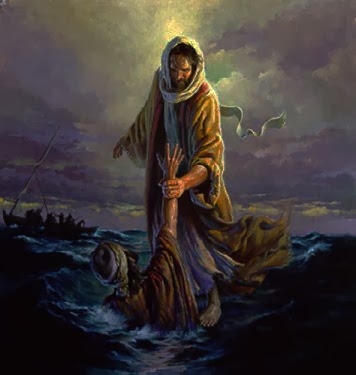
It is impossible to grasp the outstretched hand of Christ as long as we tightly cling to things of this world. David tells us in Psalm 34 verses 4-7 (ESV):

“I sought the Lord, and he answered me and delivered me from all my fears.
Those who look to him are radiant, and their faces shall never be ashamed.
This poor man cried, and the Lord heard him and saved him out of all his troubles.
The angel of the Lord encamps around those who fear him, and delivers them.”

Take the fears before you today and give them to the Lord. You may paralyzed by a fearful nature, facing a health crisis, unemployment, divorce, a call to missionary service, or other difficult challenges. The best first step in any situation is to cast aside your fears—let go and let God!

Finally, be strong in the Lord and in the strength of his might. Put on the whole armor of God, that you may be able to stand against the schemes of the devil. For we do not wrestle against flesh and blood, but against the rulers, against the authorities, against the cosmic powers over this present darkness, against the spiritual forces of evil in the heavenly places. Ephesians 6: 10-12 (ESV)

“The remarkable thing about God is that when you fear God, you fear nothing else, whereas if you do not fear God, you fear everything else.”    —Oswald Chambers

The joy of the Lord

The Joy of the Lord

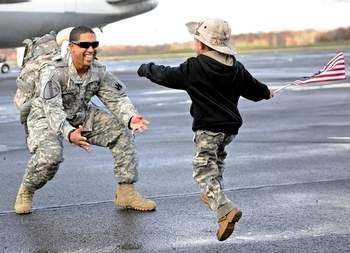
If you’re a user of Facebook or YouTube, you’ve probably seen videos of military service members who have been on deployments reuniting with family members.  These are moments of pure joy and happiness.  They seem to say, “everything is going to be OK now.” This type of joy is a wonderful mountaintop experience, but it is fleeting.  It’s simply not possible to sustain such temporal joy, but there is another type of joy that’s eternal.  

Joy is the simplest form of gratitude.  Karl Barth

Did you ever meet somebody you just knew was a Christian without being told?  There are some people whose face and disposition simply can’t hide the joy of Christ that dwells inside them. Often, this kind of person will invite you to visit their church. Christians want to share their joy with others. They are thankful for the joy that dwells within.  In Galatians 5:22, the Apostle Paul calls joy a fruit of the Holy Spirit. In 2 Corinthians 2:3, Paul describes how he wants to share his joy with the people of the young church in Corinth.

Describing Christian joy to a non-believer can be difficult. When I was a young captain serving in the Army, I had a battalion commander who assigned me a special project.  I listened to his instructions, but they weren’t clear to me.  I asked specifically what sort of product he expected me to give him when I had completed the project. His surprising response was, “I’m not sure, but I’ll know it when I see it.” Christian joy is like that, you’ll never fully understand it until you’ve experienced it.

Joy may include happiness, but happiness is not a precondition for Christian joy.  The Apostle Peter describes joy as gladness not based on circumstances (1Peter 1:8-9). Paul says in 2 Corinthians 7:4, “In all our affliction, I am overflowing with joy.”  Clearly, Christian joy does not depend on being happy.  It is founded in the assurance that:

  • Jesus has paid for all your sins, past, present, and future.
  • You have been freed from the power of sin and can choose to obey.
  • You live under God’s grace and mercy.
  • You are an adopted child of God.
  • You have eternal life.
  • God knows you by name and hears your prayers.
  • You are part of God’s church family and joined by the Holy Spirit to fellow Christians.

In Romans 15:13 Paul says, “May the God of hope fill you with all joy and peace as you trust in him, so that you may overflow with hope by the power of the Holy Spirit. Joy and peace are yours for the taking if you will put your trust in God today.

Doxology: To him who is able to keep you from stumbling and to present you before his glorious presence without fault and with great joy— to the only God our Savior be glory, majesty, power and authority, through Jesus Christ our Lord, before all ages, now and forevermore! Amen.  –Jude 1:24-25

Managing Change

Changes“There are far better things ahead than any we leave behind.” –C.S. Lewis


(Note: All Bible quotes are NIV.)

Most people naturally resist change. Some scientists have theorized this is caused by an innate survival response programmed into human beings at the genetic level. Businesses desiring to grow and remain competitive are often forced to change or face failure.   Change Management is a business discipline used to bring about organizational change while minimizing the impact on the affected individuals (employees, suppliers,  customers etc.).  Dr. Rosabeth Moss Kanter is a professor at the Harvard Business School.  She has written about the 10 common reasons people resist business change. They are:

  1. Loss of Control – Change interferes with autonomy and can make people feel that they’ve lost control over their territory.
  2. Excess Uncertainty – If change feels like walking off a cliff blindfolded, then people will reject it.
  3. Surprise, Surprise – Decisions imposed on people suddenly, with no time to get used to the idea or prepare for the consequences, are generally resisted.
  4. Everything Seems Different – Change is meant to bring something different, but how different? We are creatures of habit.
  5. Loss of Face (dignity) – By definition, change is a departure from the past.
  6. Concerns About Competence – Can I do it? Change is resisted when it makes people feel stupid.
  7. More Work – Here is a universal challenge. Change is indeed more work.
  8. Ripple Effects – Like tossing a pebble into a pond, change creates ripples, reaching distant spots in ever-widening circles.
  9. Past Resentment – The ghosts of the past are always lying in wait to haunt us. As long as everything is steady state, they remain out of sight.
  10. Real Threats – Now we get to true pain and politics. Change is resisted because it can hurt.

Fortunately, the business world has amassed a substantial body of knowledge describing effective methods for managing organizational change. Change Management consulting is a lucrative field of business and can be very effective in ushering in change.   

The seasons of our lives are full of changes as well. People resist life changes for many of the same reasons they resist business change. Human lives are in a constant state of flux. Ecclesiastes 3:1-8 describes this quite poetically:

There is a time for everything,

and a season for every activity under the heavens:

a time to be born and a time to die,

a time to plant and a time to uproot,

a time to kill and a time to heal,

a time to tear down and a time to build,

a time to weep and a time to laugh,

a time to mourn and a time to dance,

a time to scatter stones and a time to gather them,

a time to embrace and a time to refrain from embracing,

a time to search and a time to give up,

a time to keep and a time to throw away,

a time to tear and a time to mend,

a time to be silent and a time to speak,

a time to love and a time to hate,

 a time for war and a time for peace.  

Life changes come in two overarching categories. The first encompasses personal lifestyle changes one might need to make, like losing weight, exercising more, eating healthier, quitting tobacco, eliminating or reducing alcohol consumption, getting more sleep, spending more time with family, reducing social media time and the like. These changes often never come about because they usually involve great individual effort, sacrifice and self-discipline. When one accomplishes such a change, it can be one of the most exhilarating experiences in their life.

The second category of life changes consists of unplanned/unexpected events that life seems to drop on one’s head. Each morning one awakes never knowing what the day might bring—a serious accident, grim medical diagnosis, stroke, heart attack or other life changing event might occur. This category also includes external influences such as political upheaval and societal changes. Unfortunately, the body of knowledge for managing this sort of change is very broad, continually evolving and is riddled with disagreements between the so-called “experts.”  Several fields of study offer solutions for managing the changes of life. These include psychology, psychiatry, sociology and their related disciplines.  

Fortunately, for believers there is a body of knowledge for managing life changes that is totally reliable, one-hundred percent accurate, and immutable. Of course, I’m referring to the Bible. Biblical truth never changes because God never changes. Jesus Christ is a solid rock, an unalterable holy alter upon which we may lay all our hopes and fears.

Every good and perfect gift is from above, coming down from the Father of the heavenly lights, who does not change like shifting shadows.  James 1:17

God is not human, that he should lie, not a human being, that he should change his mind.  Does he speak and then not act?  Does he promise and not fulfill?  Numbers 23:19

Jesus Christ is the same yesterday and today and forever.  Hebrews 13:8

Believers have no reason to fear changes in their circumstances.  Scripture assures of this:

Have I not commanded you? Be strong and courageous. Do not be afraid; do not be discouraged, for the Lord your God will be with you wherever you go. Joshua 1:9

The Lord himself goes before you and will be with you; He will never leave you nor forsake you. Do not be afraid; do not be discouraged.  Deuteronomy 31:8   

Trust in the Lord with all your heart and lean not on your own understanding; in all your ways submit to him, and he will make your paths straight.  Proverbs 3:5-6

The Lord is my rock, my fortress and my deliverer; my God is my rock, in whom I take refuge, my shield and the horn of my salvation, my stronghold. Psalm 18:2

Peace I leave with you; my peace I give you. I do not give to you as the world gives. Do not let your hearts be troubled and do not be afraid. John 14:27

Do not be anxious about anything, but in every situation, by prayer and petition, with thanksgiving, present your requests to God. And the peace of God, which transcends all understanding, will guard your hearts and your minds in Christ Jesus. Philippians 4:6-7

As children of God, believers have no reason be afraid of life changes. Oswald Chambers said it like this, “If your faith is in experiences, anything that happens is likely to upset that faith. But nothing can ever change God or the reality of redemption. Base your faith on that, and you are as eternally secure as God Himself. Once you have a personal relationship with Jesus Christ, you will never be moved again.” 

Blessed is the one who trusts in the Lord, who does not look to the proud, to those who turn aside to false gods.  Psalm 40:4

Prayer: the Greater Work

Prayer

Prayer does not equip us for greater works— prayer is the greater work. Yet we think of prayer as some commonsense exercise of our higher powers that simply prepares us for God’s work. In the teachings of Jesus Christ, prayer is the working of the miracle of redemption in me, which produces the miracle of redemption in others, through the power of God. The way fruit remains firm is through prayer, but remember that it is prayer based on the agony of Christ in redemption, not on my own agony. We must go to God as His child, because only a child gets his prayers answered; a “wise” man does not.  –Oswald Chambers

As if this time of pandemic isn’t bad enough, one can hardly look at the news without seeing a “peaceful” protest turned violent in another one of our cities. The Rev. Canon Phil Ashley of the American Anglican Council has explained the situation like this. We face a culture that is “…increasingly shaped by the forces of aggressive secularism, moral relativism, religious pluralism, individual autonomy and a Utopian hope in secular authority.” As more and more Americans push God out of their lives, social, cultural and spiritual chaos is filling the vacuum. When a country or society pushes God out, it opens the door for the enemy to come in.

It’s easy to despair in situations such as this, but hopelessness is not a state of mind Christians should possess.  The same Jesus who calmed the storm by saying “Peace, be still” on the Sea of Galilee is in control of our lives today. Hebrews 12:28-29 says we live in an unshakable kingdom: “Therefore, since we are receiving a kingdom that cannot be shaken, let us be thankful, and so worship God acceptably with reverence and awe, for our God is a consuming fire.” 

Christians have nothing to fear in the midst of today’s chaos.  Our kingdom is unshakable. As the late Rev. Dr. Billy Graham said, “I’ve read the last page of the Bible. It’s all going to turn out all right.” It doesn’t matter whether you believe “Black Lives Matter,” or “Blue Lives Matter,” or “All Lives Matter.” These are all summed up in two words, “Jesus Matters.” Politicians will tell you that we need this or that, but all we need is Jesus. Now is the time for Christians to focus on the greater work and pray to almighty God for the revival of our nation, while we share our faith with those we encounter who have lost all hope.  

A Prayer for the Nation

Lord God, we have not been faithful people in these recent times. As a result, our peaceful and quiet nation has turned into a chaotic one. So many bad things are happening all around because we have given the enemy a footing over our lives and nation. O heavenly Father, turn our hearts towards you. Help us to live peaceful and quiet lives. Let our leaders advocate for peace and love instead of chaos. May the words that come from their mouths be words that edify the nation. May we find peace within our borders. In Jesus’ name, I believe and pray, Amen.

Pressing Towards the Goal

Pressing Towards the Goal

Brothers and sisters, I do not consider myself yet to have taken hold of it. But one thing I do:  Forgetting what is behind and straining toward what is ahead, I press on toward the goal to win the prize for which God has called me heavenward in Christ Jesus.  —Philippians 3:13-14

Aging provides a multitude of reality checks, reminding one they’re not the same person he/she used to be. These reminders come in many forms, for example waning physical strength, dimming eyesight, thinning hairlines, dental challenges, gaining unwanted weight, and a host of other complaints.  I recently received such a reminder when my Medicare card arrived in the mail. I started feeling older when people began automatically offering me senior discounts at restaurants and movies.  But a Medicare care? Yep, I’m getting old.

When young it’s easy to be carefree.  Just look at the videos of college students frolicking on Florida’s beaches during spring break 2020, at the height of the COVID-19 outbreak.  Many of those interviewed in the media appeared to have no cares in this world.  Acknowledging one’s mortality is an important step in life. Realizing there’s an end in sight encourages people to take stock of what they’ve done and what remains.

Leaving a legacy behind is important. I believe my greatest accomplishment is having helped instruct my children in the knowledge of Jesus Christ as their personal savior.  However, I fear that when history judges me and my generation, we will be most remembered for abandoning Judeo-Christian values and leading the United States into the post-Christian era. These values shaped the great experiment we call America. As the values go, so goes the country.  The Christians of my generation have let our values be replaced by a cultural relativism that says “anything goes.”

Blessed are the peacemakers, for they will be called children of God. –Psalm 5:9

The violence and rioting we’ve seen in many American cities in the wake of the George Floyd murder sadden me, because these acts will not lead to greater social justice. The most successful social justice movement in America was exemplified in the teaching of the Reverend Dr. Martin Luther King Jr., who advocated peaceful change.  The divisions in American society today are caused not as much by racial injustice as by sin. Today’s racial injustice is one of many symptoms of our sin. 

As I have written in the past, most people are repulsed by being called a sinner.  Yet sin is a condition we all live in. Martin Luther described it eloquently in a letter to his fellow theologian Philip Melanchthon on August 1, 1521:

Be a sinner, and let your sins be strong, but let your trust in Christ be stronger, and rejoice in Christ who is the victor over sin, death, and the world.  We will commit sins while we are here, for this life is not a place where justice resides.  We, however, says Peter (2 Peter 3:13) are looking forward to a new heaven and a new earth where justice will reign.  It suffices that through God’s glory we have recognized the Lamb who takes away the sin of the world. No sin can separate us from Him, even if we were to kill or commit adultery thousands of times each day.  Do you think such an exalted Lamb paid merely a small price with a meager sacrifice for our sins?  Pray hard for you are quite a sinner.

I wish more of our church leaders would speak up about sin and forgiveness.  Rioting and tearing down statues cannot heal our country—prayer, repentance and turning back towards Christ can. President Mike Pence recently spoke at the First Baptist Church of Dallas.  He said, “Even when things don’t seem like they’re going the way we expected, they’re going a way [God] expected.” He continued, “if we will but hold fast to Him, we’ll see our way through these challenging times, we will restore our nation’s health, we will renew our freedom, and we will inspire people across this land with our witness of the love and compassion and strength that comes in a personal relationship with Jesus Christ.” 

While the past is important, what happens today and beyond is what matters the most in our lives. I pray that every Christian in America would strive to lead a Christ-like life—one reflecting the glory of our Savior. This is the surest and shortest path to healing the nation.  

Since my youth, God, you have taught me, and to this day I declare your marvelous deeds. Even when I am old and gray, do not forsake me, my God, till I declare your power to the next generation, your mighty acts to all who are to come.  Psalm 71:17-18

Please see: Undermining Racism, a talk by English theologian N.T. Wright.

*All Bible quotes are NIV

The blessings of quarantine (and being out of control)

Quarantine

Just as every dark cloud has a silver lining, so too does a COVID-19 quarantine have its own hidden blessings.  Without question, the greatest blessing I’ve received so far in a self-imposed quarantine is the daily reminder that I’m not in control of my situation.  The Army trained me as a planner—to plan every detail and for every imaginable contingency.  But who could have anticipated this?  Remembering that I’m no longer in control helps me focus on almighty God, the source of all goodness and blessings in our lives.  

The gift of time is a common topic for many people these days.  I’ve heard numerous folks commenting on this—more time to read a book; to clean up clutter in garages, storerooms, and drawers; cook healthy meals; exercise; write letters and cards; sleep; and pray.

I’ve also heard a lot of discussion about more time spent together with loved ones—having sit down dinners with the family; helping the kids with their school lessons; taking family walks; popping popcorn and having a movie night; playing board games around a table; playing outdoor games in the backyard; having long phone calls with family and friends; and simply walking the dog.

I’ve been reminded how fortunate we Americans are that, even in the midst of this major crisis, our supply chains and critical infrastructures continue to function, providing for our basic needs like groceries, pharmaceuticals, telecommunications, electricity, water, and fuel. During my military career I witnessed firsthand in the Hurricane Andrew aftermath, Somalia, and Bosnia how quickly social order deteriorates when supply chains and critical infrastructures are disrupted and a population must depend upon the government, military and relief agencies for their basic needs.

I’ve also been reminded of the many wonderful people it takes to keep our daily lives running smoothly. I live in a household with three generations.  It’s been wonderful watching my daughter teach her middle school science students online while she sits on a bar stool at the island in the kitchen.  It’s been delightful watching our grand kids busily doing their school lessons on iPads while sitting around the dining room table. It’s been amazing watching my tireless wife keeping the grand kids focused, helping them with their lessons, and refereeing their occasional bouts.

I’ve also been reminded how many people are placing their own lives on the line to ensure we beat this pandemic.  Let us lift up our voices in prayer for all of them:

O Holy Spirit, we thank you for the advancements that have led to improving the health of so many. We beg you to inspire new breakthroughs in overcoming the coronavirus and all serious flu viruses. Protect, we pray, health care professionals from the illnesses they are treating, and make them instruments of your healing. Protect, we pray, emergency medical workers on the front line of the Coronavirus battle.  Protect, we pray, police, firefighters and other first responders engaged in this battle. Protect, we pray, the men and women of the armed forces who are daily receiving orders to join this battle. Pray for those who fly the planes, drive the trains, the trucks and work in the grocery stores to keep us fed and keep critical supplies moving. Dear God, as you led Moses, Joshua and David in battles against the Israel’s enemies, guide our leaders and all of us today as we fight this unseen enemy. Amen.

As we prepare to observe the most Holy Christian day of Easter and celebrate the resurrection of Jesus Christ from the dead, I pray that God will bless, protect, comfort and strengthen you all.  Lift up your voices in prayer to the Most Holy Redeemer.

Prayer to the Most Holy Redeemer

 (Anima Christi)

Soul of Christ, sanctify me.

Body of Christ, save me.

Blood of Christ, embolden me.

Water from the side of Christ, wash me.

Passion of Christ, strengthen me.

O good Jesus, hear me.

Within thy wounds hide me.

Never permit me to be parted from you.

From the evil Enemy defend me.

In the hour of my death call me.

and bid me come to thee,

that with your saints I may praise thee

for age upon age. Amen.

May the Lord God strengthen your faith as we pass through these troubled waters. I offer you this prayer in closing.

A Celtic Prayer of Faith

We arise each day through a mighty strength:

God’s power to guide us,

God’s might to uphold us,

God’s eyes to watch over us,

God’s ear to hear us,

God’s word to give us speech,

God’s hand to guard us,

God’s way to lie before us,

God’s shield to shelter us,

God’s host to secure us.

—St. Brigid of Gael, (c.451–525)

These trying times

King David stretches out his hands in prayerKing David stretches out his hands in prayer,  Hungarian Gradual 1500-20


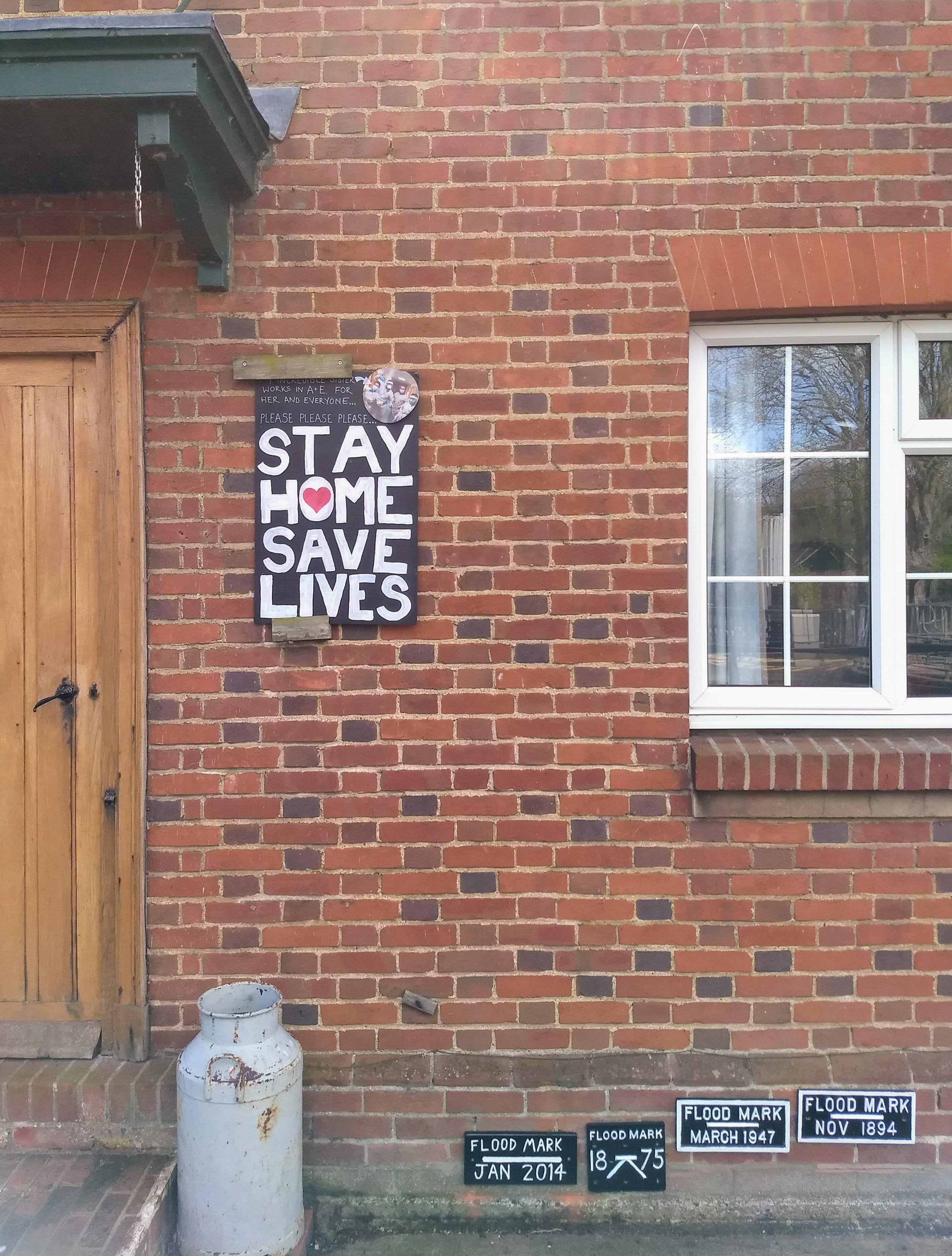
“These are the times that try men’s souls.”  American patriot, poet, philosopher, and political activist Thomas Paine penned these words in December 1776, referring to the difficulties associated with America’s Revolutionary War.  Paine’s words couldn’t ring truer today. These are tough times. The global Coronavirus (COVID-19) pandemic has caused rapid, fundamental changes in the lives of Americans and millions of people around the world. The pandemic effects are cascading and could affect us for a generation.

Christians have special responsibilities during times like these.  My recommendations for all who profess Christ as their Savior are as follows:

Trust in God: Viruses are a natural part of this world. Remaining informed, preparing and not panicking are vital when facing contagion, just like we plan for natural disasters like hurricanes and blizzards. No matter how dire the situation might appear, the Lord remains our refuge and strength, “an ever-present help in trouble” (Psalm 46:1). When Christians put their trust in God, it bears witness to the power of Jesus Christ to all those around us.

Pray Without Ceasing: Be aware of God’s presence and have an ongoing conversation with Him throughout the day. Pray for the sick, those who are frightened, and those who are alone. Pray for public health officials, for doctors and nurses, researchers, caregivers, emergency management personnel and police. Pray for our elected leaders, especially those who will be making important decisions that will impact many lives. Pray for those who have lost their jobs and whose continued employment is at risk.  Pray for those who have lost their child care.  Pray for those who have had their school year disrupted.

A Prayer for Protection

Since you, O God, are with us,
nothing that has happened, nothing still to come,
can rob us of our hope in Christ.
Sustain us, we beg you,
during this time of uncertainty.
Bless all the emergency and medical personnel
who are caring for the sick and working to contain the outbreak.
Grant swift recovery to those who are affected
and comfort to their families and loved ones.
Encourage those who are afraid.
Bind us now, more than ever,
to you and to each other,
so that we may triumph
by the power of him who loves us,
our Lord Jesus Christ, your Son,
who lives and reigns with you in the unity of the Holy Spirit,
one God for ever and ever.

Social Distancing, not Social Disconnection: Caring for the sick and dying is a fundamental calling of Christians. Early Christians were noted for caring for the sick and dying, sometime risking their lives. John 15:13 says, “Greater love has no one than this, that someone lay down his life for his friends. Even if a pandemic prevents Christians from gathering as congregations to worship, they can still support one another in caregiving. This can be in the form of prayer, verbal encouragement in person or by phone, and coming alongside others to provide help. Each individual’s personal situation will dictate the level of risk he or she is willing to accept.

Be Informed, not Misinformed: Today we live in the Information Age.  Unlike previous times, where people may have suffered from a paucity of information, today people are bombarded by information from thousands of sources on a 24/7 basis. Many of these sources are not accurate or reliable. It is more important than ever to get your information from reliable sources.  Here are some good sources.   


Crises come and crises go.

When they’ll happen you never know!

But rest assured that God is there,

to keep you in his loving care.

This will pass!

Therefore, I tell you, do not be anxious about your life, what you will eat or what you will drink, nor about your body, what you will put on. Is not life more than food, and the body more than clothing? Look at the birds of the air: they neither sow nor reap nor gather into barns, and yet your heavenly Father feeds them. Are you not of more value than they? And which of you by being anxious can add a single hour to his span of life? –Matthew 6:25–27


Distracted Living

Zombie ApocalypseHas the Zombie apocalypse begun!

We’ve all heard tragic stories about distracted driving, where someone texting on a cell phone lost control of their car and caused a great tragedy. When driving, it’s absolutely crucial to keep one’s eye on the road ahead.  The advent of the internet and subsequently cell phones has created millions of distracted people.  You’ve probably seen some of them sitting at a family dinner in a restaurant—all heads down, focused on their phones and no family interaction at all.  How very sad!

According to a January 2020 article in The Guardian, a study conducted in 2014 indicated that mobile phone users receive an average of 63.5 alerts every day, most viewed within minutes whether the phone is on silenced or not. A 2016 study by Deloitte corporation found that people checked their phones an average 47 times a day, often in response to alerts. Many people are bombarded by cell phone beeps, blips and buzzes nearly every waking moment.  These distractions can even continue through the night for those who sleep with cell phones by their beds.

Unfortunately, many Christians today suffer from another form of distraction—distracted living. Distracted living is a byproduct of other distractions and cares of this world, for example partying, obsessive fitness, substance abuse, emails, texting, internet browsing, social media, television, movies, sports, and many others that that steal our time daily.

The Bible story of Mary and Martha is a perfect example of distracted living (Luke 10:38-42).  Mary and Martha were the sisters of Lazarus, whom Jesus raised from the dead. They were all beloved friends of Jesus. On one particular occasion, Jesus visited their home in Bethany. There were others present as well. Mary chose to sit at Jesus’ feet and listen to him teach, while her sister Martha busied herself serving their guests. Martha became irritated with Mary and asked Jesus to send Mary to help her. Jesus responded with a mild rebuke, saying, “Martha, Martha, you are worried and troubled about many things. But one thing is needed, and Mary has chosen that good part, which will not be taken away from her.” Mary was laser focused on Jesus, while Martha was living a distracted life.

People with distracted lives may become easily agitated, they often feel overwhelmed, and they frequently neglect the essential “four-F’s” of things that really matter in this life—faith, family, friends and freedom.  Christians shouldn’t allow any of these areas to suffer neglect, but they must be especially cautious about neglecting their faith. Renowned Scottish theologian Oswald Chambers said, “Starvation of the mind, caused by neglect, is one of the chief sources of exhaustion and weakness in a servant’s life.” Evidence of faith neglect often includes finding reasons to skip church, not finding the time to read and study scripture, not praying, feeling rushed while praying, and even sometimes falling asleep while praying.

Christian churches around the globe will soon begin commemorating the holy season of Lent, which begins on Ash Wednesday (2/26/2020) and runs through sunset on Holy Saturday, the day before Easter.  I blogged about this very special church season in February last year  (https://divinesimplicity.wordpress.com/2019/02/26/lent-a-season-of-penitence-and-prayer/).   

For Christians, Lent is traditionally a season of fasting, penitence and prayer. It’s a wonderful time for Christians to practice disciplines to help them reconnect with their faith.  One of my Lenten disciplines is to prayerfully read the Seven Penitential Psalms the first thing each morning during Lent. I also find a good Lenten devotional and read a morning devotion daily. A wonderful version of the Seven Penitential Psalms can be found at this link: http://www.edgeofenclosure.org/intro7penitentialpsalms.html.  Lutheran Hour Ministries provides a new series of daily Lenten devotions each year.  Beginning on February 26, they can be found at this link: https://www.lhm.org/dailydevotions/default.asp.  I encourage you to take part in a Lenten discipline this year and, if you’re leading a distracted life, begin turning your attention back to God.