“Worthy is the Lamb who was slain, to receive power and wealth and wisdom and might and honor and glory and blessing!”
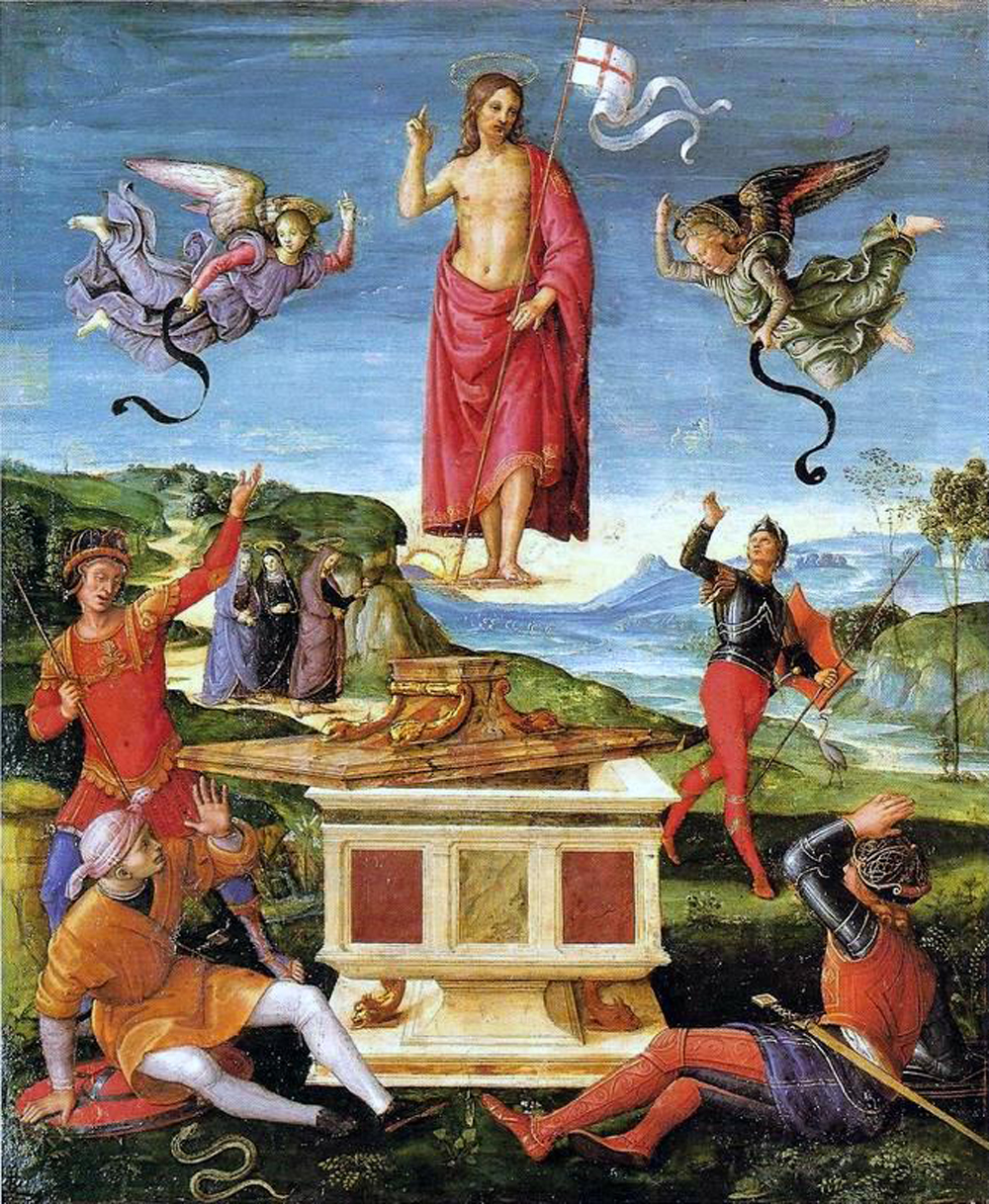
The resurrection of Christ by Raphael
1 Corinthians 15 (ESV)
The Resurrection of Christ
15 Now I would remind you, brothers, of the gospel I preached to you, which you received, in which you stand, 2 and by which you are being saved, if you hold fast to the word I preached to you—unless you believed in vain. 3 For I delivered to you as of first importance what I also received: that Christ died for our sins in accordance with the Scriptures, 4 that he was buried, that he was raised on the third day in accordance with the Scriptures, 5 and that he appeared to Cephas, then to the twelve. 6 Then he appeared to more than five hundred brothers at one time, most of whom are still alive, though some have fallen asleep. 7 Then he appeared to James, then to all the apostles. 8 Last of all, as to one untimely born, he appeared also to me. 9 For I am the least of the apostles, unworthy to be called an apostle, because I persecuted the church of God. 10 But by the grace of God I am what I am, and his grace toward me was not in vain. On the contrary, I worked harder than any of them, though it was not I, but the grace of God that is with me. 11 Whether then it was I or they, so we preach and so you believed.
The Resurrection of the Dead
12 Now if Christ is proclaimed as raised from the dead, how can some of you say that there is no resurrection of the dead? 13 But if there is no resurrection of the dead, then not even Christ has been raised. 14 And if Christ has not been raised, then our preaching is in vain and your faith is in vain.15 We are even found to be misrepresenting God, because we testified about God that he raised Christ, whom he did not raise if it is true that the dead are not raised. 16 For if the dead are not raised, not even Christ has been raised. 17 And if Christ has not been raised, your faith is futile and you are still in your sins. 18 Then those also who have fallen asleep in Christ have perished. 19 If in Christ we have hope in this life only, we are of all people most to be pitied. 20 But in fact Christ has been raised from the dead, the firstfruits of those who have fallen asleep.21 For as by a man came death, by a man has come also the resurrection of the dead. 22 For as in Adam all die, so also in Christ shall all be made alive.
May God bless you and keep you on this holiest of days!
The New Year has arrived and for many it’s a time for making resolutions and new beginnings—trying to set aside bad habits and/or adopt new, beneficial routines. Unfortunately, for most people it’s nearly impossible to succeed in such endeavors.
A Forbes Magazine article published in January 2013 reported on a study conducted at the University of Scranton. It indicated that only about 8 percent of people who make New Year’s resolutions achieve their goals. Looking at this a different way, 92 percent fail! Despite the slim chance of succeeding, many will continue to make New Year’s resolutions year after year.
The Bible is full of promises and stories about new beginnings.
Jeremiah 29:11 – “For I know the plans I have for you, declares the Lord, plans for welfare and not for evil, to give you a future and a hope.”
Ezekiel 36:26 – “And I will give you a new heart, and a new spirit I will put within you. And I will remove the heart of stone from your flesh and give you a heart of flesh.”
John 3:16 – “For God so loved the world, that he gave his only Son, that whoever believes in him should not perish but have eternal life.”
2 Corinthians 5:17 – “Therefore, if anyone is in Christ, he is a new creation. The old has passed away; behold, the new has come.”
Ephesians 4:22-24 – “…the truth is in Jesus, to put off your old self, which belongs to your former manner of life and is corrupt through deceitful desires, and to be renewed in the spirit of your minds, and to put on the new self, created after the likeness of God in true righteousness and holiness.”
1 Peter 1:3 – “Blessed be the God and Father of our Lord Jesus Christ! According to his great mercy, he has caused us to be born again to a living hope through the resurrection of Jesus Christ from the dead.”
Revelation 21:5 – “And he who was seated on the throne said, ‘Behold, I am making all things new.’ Also he said, ‘Write this down, for these words are trustworthy and true’.”
Fortunately for us all, God makes new beginnings and he never fails if we will simply let him do His work. His greatest new beginning was foretold in the Old Testament, described in the Gospels, and recounted in the Epistles. It was God’s gift of His son Jesus to save us from our sins.
Christ’s salvation of mankind was completed over 2,000 years ago through Jesus’ crucifixion. His resurrection from the dead on the third day is evidence of Jesus’ victory over Sin and Death.
Jesus died to cleanse all mankind from their sins. For those who don’t already know him, that salvation is like a beautifully wrapped present sitting beneath a Christmas tree. The present has no owner until someone picks up the package, opens it, takes the gift inside, and makes it their own.
St. Paul describes how to do this in his epistle to the Romans. There is no long list of do’s and don’ts. God’s plan of salvation is beautiful in its simplicity, requiring only confession and sincere belief.
“…because, if you confess with your mouth that Jesus is Lord and believe in your heart that God raised him from the dead, you will be saved. For with the heart one believes and is justified, and with the mouth one confesses and is saved.” Romans 10:9-10
Martin Luther wrote about what it means to be “justified” before god, saying that justification is a “… righteousness that God gives freely by His grace to people who don’t have righteousness of their own.” Even though those who have accepted Jesus’ gift of salvation will continue to sin, because of Christ’s sacrifice they remain righteous in the eyes of God. It is my hope that you have already received this free gift. If not, however, please consider making it your own today!
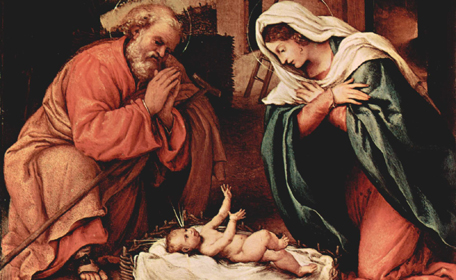
For to us a child is born, to us a son is given; and the government shall be upon his shoulder, and his name shall be called Wonderful Counselor, Mighty God, Everlasting Father, Prince of Peace. Of the increase of his government and of peace there will be no end, on the throne of David and over his kingdom, to establish it and to uphold it with justice and with righteousness from this time forth and forevermore. The zeal of the Lord of hosts will do this.Isaiah 9:6-7
“My dear friends, on this Christmas . . . let us seek, in the Babe of Bethlehem, the One who came to us in order to bear with us everything that weighs heavily upon us. . . . God Himself has built a bridge from Himself to us! A dawn from on high has visited us!”
1But there will be no gloom for her who was in anguish. In the former time he brought into contempt the land of Zebulun and the land of Naphtali, but in the latter time he has made glorious the way of the sea, the land beyond the Jordan, Galilee of the nations.
2 The people who walked in darkness have seen a great light; those who dwelt in a land of deep darkness, on them has light shone. 3 You have multiplied the nation; you have increased its joy; they rejoice before you as with joy at the harvest, as they are glad when they divide the spoil. 4 For the yoke of his burden, and the staff for his shoulder, the rod of his oppressor, you have broken as on the day of Midian. 5 For every boot of the tramping warrior in battle tumult and every garment rolled in blood will be burned as fuel for the fire. 6 For to us a child is born, to us a son is given; and the government shall be upon[d] his shoulder, and his name shall be called[e] Wonderful Counselor, Mighty God, Everlasting Father, Prince of Peace. 7 Of the increase of his government and of peace there will be no end, on the throne of David and over his kingdom, to establish it and to uphold it with justice and with righteousness from this time forth and forevermore. The zeal of the Lord of hosts will do this.
The phrase “Help my unbelief” comes from Mark 9:24, where a desperate father pleads with Jesus to heal his son, saying, “I do believe; help my unbelief!”. This powerful request acknowledges the human struggle with doubt, while expressing a desire to be faithful.
How can anyone who is identified with Jesus Christ suffer from doubt or fear! Our lives in him should be psalms of irrepressible, triumphant belief. –Oswald Chambers
I live by faith in the Son of God, who loved me and gave himself for me. –Galatians 2:20*
So how does a Christian live by faith in Jesus? I’ve often asked myself this question as I ponder life. I think I might be getting closer to finding the answer.
“Keep the faith baby!” We’ve all heard this or something similar. So how much faith is enough? In Matthew 17, Jesus tells us that faith “the size of a mustard seed” is enough to move a mountain. Hmmm, I have a couple of pretty big mountains in my life that I want to move, but so far, they’re still there to greet me every morning when I awake. Apparently, I lack the ability to muster even a tiny mustard seed worth of faith—and this frustrates and disappoints me.
Happily, I believe I might have found the root cause of my failure. My faith lacks persistence. Paul points to persistence in 1 Thessalonians 5: 16-18, which exhorts us to, “Rejoice always, pray continually, give thanks in all circumstances; for this is God’s will for you in Christ Jesus.” If one meditates on this short passage, I believe they’ll find that it contains some pretty tough marching orders.
Persistent faith is surrendering one’s will to God’s will, not a product of personal willpower, but a result of trusting His plan for your life, even when it’s unclear to you. This act of surrender means relinquishing personal control and aligning one’s life with a higher purpose, leading to strength and peace found in God’s wisdom rather than one’s own. It is an ongoing process of daily submission, acknowledging one’s own limitations and trusting in God’s provision.
Matthew 14:29-31 is a wonderful example of impersistent faith. As Jesus is walking on the water in the Sea of Galilee, he approaches the boat where his disciples are struggling in a violent storm. “Come,” he said (to Peter). Then Peter got down out of the boat, walked on the water and came toward Jesus. But when he saw the wind, he was afraid and, beginning to sink, cried out, “Lord, save me!” Immediately Jesus reached out his hand and caught him. “You of little faith,” he said, “why did you doubt?”
In this lesson, Peter was doing fine while he focused on Jesus, but when he shifted his focus from Jesus to the great wind of the storm he began to doubt. Like a new military recruit struggling to qualify with his weapon on a rifle range, Peter failed because he took his eye off the target, Jesus.
Consider it pure joy, my brothers and sisters, whenever you face trials of many kinds,because you know that the testing of your faith produces perseverance. James1:2-3
As I’ve noted before, Jesus was and remains the God of the Impossible for those who come to him as their Lord and Savior. I believe this in my heart. Believing is easy when things are going my way. I’m trying hard to learn how to put this into action when the going gets too tough for me to handle. Every day I try to meditate on Psalm 143 as part of my daily devotions. I find verses 8 – 10 to be a great source of encouragement and comfort, especially when I feel overwhelmed by life. I hope you might find them equally useful.
Let the morning bring me word of your unfailing love, for I have put my trust in you. Show me the way I should go, for to you I entrust my life. Rescue me from my enemies, Lord, for I hide myself in you. Teach me to do your will, for you are my God; may your good Spirit lead me on level ground.
On this national holiday dedicated to giving thanks, let us give thanks to the Lord our God for all his blessings and provision in the past year and in the years to come. May He lead us all on level ground.
I was a three-sport athlete in high school. In college in 1975 I joined a “health club” called the US Army and stayed strong and fit there for the next 26 years. Through challenging “Arrrmy training” (Bill Murray fans will get it), we stayed physically and mentally ready to defend our nation. I retired from the Army in 2001. Like so many of the Army buddies I served with, I put on a few pounds after retirement. In fact, over the course of two decades I went from a retirement weight of 209 lbs. to a maximum of 242. About two years ago, through a combination of illness, dieting, and lifestyle changes, I lost a dramatic amount of weight. Today my weight hovers around a comfy 200 lbs.
Slimming down came with a lot of benefits. Among these are being able to fit into clothes I hadn’t worn for years, improved sleep, increased energy levels, and all around better physical health as indicated by my vital signs and blood chemistry tests, which today look like those of a healthy twenty-something. Slimming down has many other great benefits, more than we can cover here.
There’s another type of slimming down that’s very good for you. Commonly called “downsizing,” it refers to both reducing the amount of space one lives in and the quantity of personal possessions one owns. Such reducing can be healthy both mentally and spiritually.
Now don’t get me wrong. I’m not some overzealous lifestyle minimalist that believes in possessing only the bare essentials necessary for living and rejects the rest. I’m not the type of person who could live my life in a “Tiny Home” like one sees on HGTV. But my wife and I have downsized our living space four times since I retired from the army, slimming down from a 3,200 sq ft house to 2,000, to 1,500 and finally to 1,200 sq ft condo, which we have today. We both agree that downsizing is cathartic. Here are just a few potential benefits of lifestyle downsizing which, if you’re not ready for now, might become of greater interest to you as you grow older.
Reducing Chaos. Chaos is truly the devil’s workshop. Jesus calmed the storm on the Sea of Galilee by commanding, “Peace, be still.” He can do the same for you and me. God wants us to have peace. A beautiful car, a sleek sailboat, and a humongous house and/or garage crammed with a lot of “stuff” (substitute a gigantic storage unit crammed with stuff) can contribute to a chaotic life. Each of these comes with a price, and I’m not talking about money. Beautiful cars beg to be washed, waxed, and detailed. A sleek boat requires a lot of time and effort to keep it safe and seaworthy. Big houses typically have big lots. Big lots beg to be manicured until the grass looks as good or better than a putting green. A big house crammed with a lot of stuff can became a chaotic ball and chain for you and/or for your children who are trying to sort things out after their parents pass away. Oh yeah, and who is going to remove the snow from that lovely 50-yard curving driveway? Been there and done that! It’s not fun.
Avoiding Anxiety and Distractions. Have you ever been sitting in a pew on a Sunday morning, taking a mental inventory of all the things, you need to do when you when you get home or in the week to come, instead of listening to what was being said in the sermon? There is a time to do and a time to listen. Sermon time in church is a time to listen.
You might recall this story in Luke chapter 10. Martha and Mary were the sisters of Lasarus. On one occasion that Luke describes, Martha invited Jesus into her house. While Mary sat at Jesus’ feet, listening to him talk, Mary fluttered all about, presumably preparing a meal for Jesus. After a while Martha became annoyed and asked Jesus to tell Mary to come and help her with the work. Jesus’ response to Martha’s urging was a gentle rebuke, “Martha, Martha, you are worried and upset about many things, but few things are needed—or indeed only one. Mary has chosen what is better, and it will not be taken away from her.” (v. 41-42). Jesus wants to be the top priority in our lives. Endeavor to keep Jesus at the center of your thoughts.
Avoiding Comparison. You’ve probably heard the expression “Keeping up with the Joneses.” It refers to a selfish urge or social pressure to match or exceeded the material possessions of one’s neighbors. Colossians 3 compares covetousness to “idolatry.” When it came to material possessions, King Solomon, the presumed writer of the Book of Ecclesiastes and a man renowned for both his wisdom and his wealth, made the Joneses look like rank amateurs. Listen to what he had to say about material wealth:
I undertook great projects: I built houses for myself and planted vineyards. I made gardens and parks and planted all kinds of fruit trees in them. I made reservoirs to water groves of flourishing trees. I bought male and female slaves and had other slaves who were born in my house. I also owned more herds and flocks than anyone in Jerusalem before me. I amassed silver and gold for myself, and the treasure of kings and provinces. I acquired male and female singers, and a harem as well—the delights of a man’s heart. I became greater by far than anyone in Jerusalem before me. In all this my wisdom stayed with me. I denied myself nothing my eyes desired; I refused my heart no pleasure. My heart took delight in all my labor, and this was the reward for all my toil. Yet when I surveyed all that my hands had done and what I had toiled to achieve, everything was meaningless, a chasing after the wind; nothing was gained under the sun. –Ecclesiastes 2:4-11
After much experimentation, Soloman finally figured it out! Now see what Jesus said to his disciples:
Then he (Jesus) said to them, “Watch out! Be on your guard against all kinds of greed; life does not consist in an abundance of possessions.” –Luke 12:15
Matthew 19:16-23
Just then a man came up to Jesus and asked, “Teacher, what good thing must I do to get eternal life?”
“Why do you ask me about what is good?” Jesus replied. “There is only One who is good. If you want to enter life, keep the commandments.”
“Which ones?” he inquired.
Jesus replied, “‘You shall not murder, you shall not commit adultery, you shall not steal, you shall not give false testimony, 19 honor your father and mother,’ and ‘love your neighbor as yourself.’”
“All these I have kept,” the young man said. “What do I still lack?”
Jesus answered, “If you want to be perfect, go, sell your possessions, and give to the poor, and you will have treasure in heaven. Then come, follow me.”
When the young man heard this, he went away sad, because he had great wealth.
Then Jesus said to his disciples, “Truly I tell you; it is hard for someone who is rich to enter the kingdom of heaven. Again I tell you, it is easier for a camel to go through the eye of a needle than for someone who is rich to enter the kingdom of God.”
Leaving a Christian Legacy. To those who are believers, I ask “What is your greatest regret since you became a Christian?” I hope your response isn’t something like, “I wish I had worked more” or “I wish I had bought that 1966 Corvette when I had the chance.”
Will you leave a Christian legacy? What might that look like? Will those who come after you even know you were a Christian given the way that you lived? This is worth thinking about.
Surely everyone goes around like a mere phantom; in vain they rush about, heaping up wealth without knowing whose it will finally be. –Psalm 39:6
“‘And I (a wealthy man) will say to my soul, “Soul, you have ample goods laid up for many years; relax, eat, drink, be merry.”’ But God said to him, ‘Fool! This night your soul is required of you, and the things you have prepared, whose will they be?’”—Luke 12:18-20
But godliness with contentment is great gain. For we brought nothing into the world, and we can take nothing out of it. But if we have food and clothing, we will be content with that. —1 Timothy 6:6-8
“Let your light shine before others, that they may see your good deeds and glorify your Father in heaven.”—Matthew 5:16
Legacy isn’t measured by wealth, titles, or accolades—it’s measured by the impact your faith has on others. A Christian legacy is built day by day, through quiet obedience, generous love, and intentional discipleship. When we live with integrity, invest in relationships, and give freely of what God has entrusted to us, we leave behind more than memories—we leave behind a testimony.
A Christian legacy doesn’t end with you or me. It multiplies through the lives we touch, the prayers we pray, and the truths we pass on. And the goal isn’t to be remembered—it’s to make Christ known. May our respective legacies draw others closer to Jesus Christ.
Leaving Things Behind. Back to lifestyle downsizing, there is nothing bad about wealth in and of itself. I’ve known many Christians who were wealthy and unselfishly used their wealth for the furtherment of God’s kingdom. A problem with wealth begins when we forget that everything we possess belongs to God and we are merely stewards of what he has given us.
We are born naked and penniless and in death our physical bodies return to dust. Don’t let accumulating “stuff” become a goal in your life. Even though many have tried and failed (Egyptian Pharaohs and Viking Chieftains come to mind), you just can’t take it with you. I hope you enjoy the short poem below by Judy Dykstra-Brown
Relocation Dreams
I’ve so many things that there’s no place to stack them in. No drawers to hold them, no cupboards to pack them in. So many things stowed away from detection. My fireplace houses its own art collection.
My wardrobe suffers from costumes aplenty. I’ve boxes of sizes from nine up to twenty. My jewelry box is stuffed to the gills, my medicine drawer is spilling out pills.
When I try to cull them, they all want to stay. The only solution’s to just move away to find a small island with palm trees and sky where there is simply nothing to buy!
I’ll live in a hut with floors of swept dirt. One pair of flip flops, a simple grass skirt. I won’t feel that shopping should be my main duty. I’ll look out the window if I require beauty.
No buying new paintings whenever I please. No little nicknacks and no DVD’s. No drawers of makeup or tea towels or spoons. No tarot cards, horoscopes, Ouija boards, runes.
I will not need things to determine my fate, that day I walk out, simply locking my gate, taking one suitcase, computer and cables, and scanner and backup drives, printers and tables,
an internet router and energy backup— just these few items to locate and pack up. Then I’m off to a life that’s simpler by far if these bare necessities fit in my car.
God has blessed my wife Linda and me with four precious grandsons who are a continual source of delight for us. The youngest is six months old and lives on the east coast. His three older cousins on his mother’s side (B1, B2, & B3) are teenagers ranging in age from 13 to 17 years. They live in South Dakota.
For almost 10 years it was our privilege to live under the same roof with the three oldest boys and their parents, a family arrangement that is becoming more and more rare in the mobile society we live in today. All three boys are blessed to be smart, tall, strong, fit, and athletic. They are steadily progressing towards manhood. What a blessing it has been watching them grow and mature.
I pen this message to the three teenagers in the hope that someday, if not now, they might give my words some thought and gain some personal inspiration from them. I write it at this time for two reasons. First, I will turn 70 soon. God only knows how many years I have remaining. Second, Linda and I recently moved back east where we will be close to our new grandson, saying a bittersweet farewellto our three teens for now. Here’s a letter from me to the three teenagers. I hope that their young cousin might also read this someday when he is old enough to understand.
A gift for my grandsons
Psalm 127:3-5* Children are a heritage from the Lord, offspring a reward from him. Like arrows in the hands of a warrior are children born in one’s youth. Blessed is the man whose quiver is full of them. They will not be put to shame…
Psalm 128:6 May you live to see your children’s children…
My dear grandsons,
You will never know how much I love each of you unless you are fortunate enough to have a grandchild of your own someday. I hope that you do because children and grandchildren are truly gifts from God.
Your Nana and I have finally moved back to the east coast. Over the past nearly 10 years we’ve grown accustomed to living under the same roof with you. Although we love living near our new grandson, at the same time it is bittersweet not having daily personal contact with each of you. I write this letter to the three of you as a gift. I hope that someday, if not now, my advice will do you some good. Please spend some time thinking about the words of advice I give you today.
Honor your parents
Ephesians 6:2-3 “Honor your father and mother”—which is the first commandment with a promise—“so that it may go well with you and that you may enjoy long life on the earth.”
Honor your parents and be grateful for all they do for you. You’re still too young to fully understand the sacrifices they have made to make your lives happier and easier. They have fed you, dressed you, and provided a comfortable and safe place for you to live. They have worked extra jobs to ensure you always had enough. They have nursed you through sickness and injuries. They have lost countless hours of sleep for you. They have driven you countless miles to church, school, appointments, ball practices, ball games, adventures, and other places. Never miss an opportunity to say “thanks” to them.
Get your priorities in order
2 Timothy 2:22 Flee the evil desires of youth and pursue righteousness, faith, love, and peace, along with those who call on the Lord out of a pure heart.
Psalm 127:1 Unless the Lord builds the house, the builders labor in vain.
Many things in life will vie for your attention, including family responsibilities, work, girls, sports, school and much more. You have to determine which of these you will invest your precious time and attention in. You will never have enough time to focus on all, so it’s important to set priorities and spend your time wisely.
When it comes to setting priorities, you can’t go wrong if you make God your very last priority—but don’t stop there. You should also make Him your first priority, and everything in between. If you make God your all-in-all, everything you do will be easier. You will not be filled with unwarranted fears and you will find it easier to please God. Strive to please God in all that you do. You will not always succeed at this. When you fail to please Him, the Holy Spirit that dwells inside you will let you know through a still small voice (1 Kings 19:11-13) that you will be unable to ignore. When this occurs act quickly and ask God for His forgiveness.
Get to know God
Study the scriptures and learn them. Wherever life leads you, seek out a good church home, one that preaches the Gospel of Jesus Christ. Make time to pray and talk to God every day. He wants to be your friend and companion. He will have your back. Pray and then pray some more. Have a daily conversation with God. Tell Him how you’re feeling. Thank him for every new day. Pray to Him for the needs of others. Take time to stop and listen to what he is saying to you.
I Thessalonians 5:16-18 Rejoice always, pray continually, give thanks in all circumstances; for this is God’s will for you in Christ Jesus.
Be kind to others
You know what it’s like to be ignored; be harshly treated; be lied or gossiped about; or have your feelings hurt by some other kind of cruelty. Make a point to be kind to others, without expecting that your kindness will be returned. Whenever possible, help the unfortunate and downtrodden. A simple kind work or making eye contact and smiling can make someone’s day. Jesus was criticized by his enemies for hanging out with “sinners” like tax collectors, prostitutes, lepers, foreigners, and others who the Jews considered socially unacceptable. Model the way you treat others by trying to imitate Christ. Beware of modeling yourself after what society finds acceptable.
Hebrews 13:2 Do not forget to show hospitality to strangers, for by so doing some people have shown hospitality to angels without knowing it.
Matthew 7:17 So in everything, do to others what you would have them do to you, for this sums up the Law and the Prophets.
The ladies
When it comes to girls (and women someday), honor the ones in your life. Treat them with respect, dignity, and equality. For the female company you keep, seek companionship with fellow Christ followers, and let Christ be at the center of any romantic relationship you form. Don’t gossip, especially about your romantic interests. Words can be weapons. Once you pull a gun’s trigger you can’t stop the bullet. Once a word leaves your mouth you can never take it back. Let the words you speak honor the girls and women in your life.
Marriage
You are likely to fall deeply in love someday and perhaps this love will lead to marriage. So how does marriage work? First, remember these God inspired word from the Apostle Paul:
1 Corinthians 13:4-7 Love is patient, love is kind. It does not envy, it does not boast, it is not proud. It does not dishonor others, it is not self-seeking, it is not easily angered, it keeps no record of wrongs. Love does not delight in evil but rejoices with the truth.It always protects, always trusts, always hopes, always perseveres.
Wait a minute. It sounds like love is hard work—and indeed it is. True love requires you to love someone more than you love yourself. Marriage is a contract between you, your prospective spouse, and God. Marriage requires a lot of work. Never enter into a contract you don’t understand or one that you have doubts about your ability to keep the terms. In God’s eyes, marriage is for life. Jesus loved the church sacrificially. Work hard to model your marriage after Christ’s love of the church. He gave His all for her!
Ephesians 5:25 Husbands, love your wives, just as Christ loved the church and gave himself up for her.
Honor your wife. Talk with her. Listen to what she says. Share your innermost thoughts with her—your concerns, struggles, fears, hopes, and dreams. Make sure to tell her how much you love her and tell her frequently.
Work
Aside from sleeping, work will probably occupy more hours of your life than anything else. Some people absolutely love their work, but for many it’s little more than a way to pay the bills. If you love your work, praise God. If you don’t, endeavor to work with enthusiasm so those who observe might see the evidence of Jesus in your life. Accepting a job means submitting to the authority of those placed over you. Learn to work within this system. Along the way you’ll probably have bosses you don’t like. Learn to respect the position, if not the individual.
Absent but not gone
In closing I want to remind you that I may be absent from your house, but I’m not gone. I’m as close as a Facetime, phone call, email, or text. I want to be a part of your lives and look forward seeing you become men. For as long as I live, I will be here for you.
Thirteen years ago I wrote an article for my newspaper column with some advice for recent grads. It has become one of the most popular pieces I ever wrote. I’ve received dozens of emails thanking me for writing it. Therefore, I decided to republish it annually around graduation time. I hope some of you might find it useful. Although I wrote it specifically for recent high school graduates, I believe it is equally applicable to recent college graduates.
For those who are graduating high school this year and beginning the long transition into adulthood, I’d like to offer you a gift. Here are five enduring truths I have learned. They will help you through life’s journey.
Choices
“If you decide to just go with the flow, you’ll end up where the flow goes, which is usually downhill, often leading to a big pile of sludge and a life of unhappiness. You’ll end up doing what everyone else is doing.” ― Sean Covey, The 7 Habits of Highly Effective Teens
Life will deal you an endless string of choices along the way. Some will be trivial, like deciding what to wear today. Others will be weighty and their outcomes will affect you forever. Weighty decisions should always be preceded by much thought and soul searching. This includes decisions about who you date or marry, what you put into your body, bringing children into the world, what you do for a living, how much debt you incur and who you associate with.
All of these decisions will have a lasting effect on your life. Therefore, make them slowly and deliberately. Often you’ll discover that the right choice is not the easiest one. A habit of making poor choices will, as the Sean Covey quote suggests, drag your life downhill.
I was recently contacted by a young man who had just received a bad conduct discharge from the Navy. He asked me how the discharge would impact his future employability. His mistake was choosing to drive a car while intoxicated and hitting a pedestrian. Fortunately, the victim wasn’t seriously injured. Had it been otherwise, the young sailor would probably be in prison. It was my sad responsibility to inform him that with some employers the discharge would be a black mark for life. Choices matter!
Learning
“Experience is a hard teacher because she gives the test first, the lesson afterwards.” ―Vernon Saunders Law, former professional baseball pitcher and Cy Young Award winner
Some of you will go on to college or technical school. Others will enter the workforce. Even if your formal education is over, don’t quit learning. Make learning a lifelong adventure. I did my undergraduate work at the University of Kentucky. The school offers a fellowship program for individuals aged 65 and older to attend classes tuition free. Every year numerous senior citizens walk the stage to receive degrees ranging from Associate of Arts to Doctor of Philosophy. It’s never too late to learn.
Even if you don’t choose to continue formal learning, make it point to learn from life. Observe others; note their successes and failures; then learn from their experiences. More importantly, learn from your own mistakes.
Some of the greatest lessons I’ve learned, particularly those while serving in uniform, were the result of having made a terrible mistake. This sort of lesson sticks, like the first time you grab the handle of a hot iron skillet with your bare hand. The key to learning from mistakes is owning them. Admit your mistakes and then move on, having learned something from the experience. Don’t let, “It wasn’t my fault,” be part of your vocabulary.
Work
“A dream doesn’t become reality through magic; it takes sweat, determination and hard work.” ―Colin Powell, retired U.S. Army four-star general and former U.S. Secretary of State
Work isn’t always fun. If it were, they’d call it play. Work can be downright unpleasant, but it’s an essential element of life! Along the way you’re going to have jobs you won’t like. Note what you don’t like and make it a point to improve yourself, so you’ll never again have to work at such a job.
Accepting a job means submitting to the authority of those placed over you. Learn to work within this system. You’ll inevitably have bosses you don’t like. Learn to respect the position, if not the individual.
Fairness
“Life is not fair; get used to it.” ―Bill Gates, founder and former CEO, Microsoft Corporation
You will hear much discussion about fairness in this life. It’s all hot air. Life isn’t fair. Some good people die young, while some bad people live a long life. Disease sometimes strikes arbitrarily, for no apparent reason. Some people prosper while others suffer failure. A death or accident can change your life forever.
There is randomness to life that can’t be avoided. Don’t expect kindness to be returned with kindness. Don’t expect generosity to be returned with generosity. The best choice is to be fair and kind to others and learn to accept what they return to you.
A wise man named Harry Browne ran for president of the United States on the Libertarian Party ticket. On Christmas day in 1966, Browne wrote his young daughter a letter aptly titled, “A Gift for My Daughter.” I encourage every graduating senior to read it and digest it. In the letter, he explains to his daughter that, “Nobody owes you anything.” Understanding what Browne meant can truly bless you. You can find it at: https://independentpoliticalreport.com/2015/12/harry-brownes-christmas-letter-to-his-daughter/ .
Faith
“A faith is a necessity to a man. Woe to him who believes in nothing.” ―Victor Hugo
I once had a senior Army officer tell me he preferred to work with men who possessed spiritual values, regardless of their religion. He explained that having faith in a power higher than one’s self was an indicator of how one will perform under pressure; in this instance, the pressure meant combat.
Too many people place their faith in all the wrong places. It might be in wealth, celebrity, good looks, talent, or even government. Whatever the case, misplaced faith leads to disappointment after disappointment.
To avoid these disappointments, put your faith in God alone. You, your loved ones and your friends will all inevitably let you down, but God will never fail you.
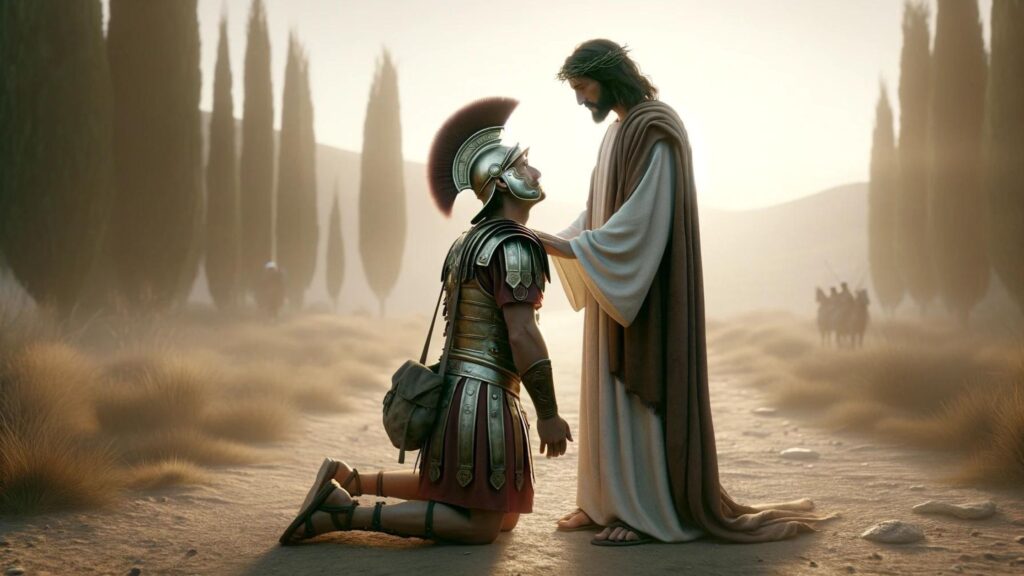
The Apostle Paul frequently emphasized the importance of declaring Jesus as “Lord” and believing in His resurrection from the dead for salvation. This declaration might sound fairly straightforward at first, but upon closer examination it raises deep theological and spiritual questions regarding the early Church as it existed in the Roman Empire. In his letter to the Romans, Paul says plainly, “If you declare with your mouth, ‘Jesus is Lord,’ and believe in your heart that God raised him from the dead, you will be saved” (Romans 10:9*). So, what does Paul teach us about declaring Jesus as one’s personal Lord?
Context
The early Christian church grew up in a Roman-dominated world that was highly influenced by Greek literature, philosophy, art, and other lesser facets of Greek culture. The term “lord” (Greek: kyrios) was generally used to denote authority and ownership. It was a title often bestowed upon emperors, kings, gods, and other figures of ultimate authority. Those who watched Game of Thrones might recall hearing someone commanded to “bend the knee,” i.e. bow before another, often under a threat of death, and swear to faithfully serve them.
By urging believers to declare Jesus as “Lord,” Paul was challenging Roman culture and Rome’s political good order. This declaration was a direct affront to a large number of Romans who professed Caesar as the ultimate “lord.” Paul’s assertion that Jesus is Lord was a declaration of His ultimate authority, above all earthly rulers and powers.
In this context, Paul’s message becomes a threat of insurrection. To declare Jesus as “Lord” was to “bend the knee” to Him above all other authority. It demands a complete makeover of one’s life and priorities, aligning them with Jesus’ teachings and the example of how He lived. For early Christians, declaring Jesus “Lord” was much more than a public profession of faith. It was a dangerous political declaration that invited Roman persecution and risked ostracism in public, religious, and political sectors.
Pronouncing Jesus as “Lord” encompasses several key aspects of Christian beliefs. Foremost, it acknowledges Jesus’ divinity. In Philippians 2:9-11, Paul describes how God exalted Jesus and bestowed upon Him “the name that is above every name,” such that “at the name of Jesus every knee should bow… and every tongue acknowledge that Jesus Christ is Lord, to the glory of God the Father.” This passage highlights the divine authority and honor accorded to Jesus, reinforcing His central role in God’s plan of salvation that has existed from God’s foundation of the world.
Pronouncing Jesus “Lord” affirms His sovereignty over every facet of one’s life. It implies a surrender to Jesus’ will and guidance, trusting in His lordship to guide and transform one’s life. This declaration is inseparably linked to the believer’s acknowledgment of Jesus’ resurrection from the dead. Paul points to the resurrection as definitive proof of Jesus’ divine power and authority. The resurrection is a transformative truth in that it enables believers to live in accordance with Jesus’ teachings.
Personal Transformation
On an individual level, declaring Jesus as “Lord” signifies a deep internal transformation. It requires a conscious decision to turn away from sin and self-centeredness and embrace a life of discipleship. Christian discipleship is marked by love, humility, and service. Paul describes this transformation in terms of a “new creation” in 2 Corinthians 5:17 and “putting on the new self” in Ephesians 4:24. These highlight the radical change in personal priorities and purpose that occur when one becomes abandoned to Jesus.
Declaring Jesus “Lord” is the central point of unity and shared identity among believers, who are often referred to as “brothers and sisters in Christ.” With Jesus as “Lord” Christians are joined together in a common faith and mission. This communal aspect is evident in Paul’s frequent use of the metaphor of the body of Christ, where each believer is a member with unique gifts and roles, all contributing to the health and growth of the whole (1 Corinthians 12:12-27). The lordship of Jesus rises above cultural, social, racial, and ethnic divisions, creating a diverse yet highly cohesive community of faith. Praise the Lord!
Doxology
“For I am convinced that neither death nor life, neither angels nor demons, neither the present nor the future, nor any powers, neither height nor depth, nor anything else in all creation, will be able to separate us from the love of God that is in Christ Jesus our Lord.”—Romans 8:38-39
* All Bible quotations are NIV unless otherwise noted.
Copilot AI was used to assist with historical research for this article.
On January 20th Donald Trump was sworn in (again) as President of the United States. For some Americans it was a day of celebration, while for others it was a day of dread and fear. This is not uncommon when the political pendulum makes a big swing to the left or right in this country. The media circus on both left and right during the presidential campaign and since has been enough to depress just about anyone who listens or reads too much news.
Just in case the noise of partisan politics hasn’t depressed you, we’ve been bombarded lately with news of torrential rains, mudslides, hail storms, wildfires in LA, tornados and hurricanes in places they don’t belong, and snow on our Gulf coast beaches. Then there are wars and rumors of war around the globe, like in Israel, Lebanon, Yemen, Somalia, Ukraine, Nagorno-Karabakh, and elsewhere.
These are indeed fear-provoking times. Sometimes it looks like no one is in charge. The good news is that there’s one great master plan in motion for all mankind, and neither Donald Trump, Vladimir Putin, Xi Jinping or any other man is in control. God is still in control of everything in creation and always will be.
Not long before he died, the Rev. Dr. Charles Stanley, Pastor Emeritus of the First Baptist Church of Atlanta, recorded a homily titled, A Comforting Message in Fearful Times. Just as the Apostle Paul encourages believers to “put on the full armor of God” in Ephesians 6, Dr. Stanley’s message encourages us to “soak” our minds and hearts in the word of God, where believers can find peace, comfort, and courage in the midst of the spiritual warfare surrounding our daily lives. Dr. Stanley cites a treasure trove of scripture during the homily, which I have listed below. I encourage you to read through the entire list, then go back and look at each passage in the context of the full chapter it comes from.
Philippians 4:6-7 — “Be anxious for nothing, but in everything by prayer and supplication, with thanksgiving, let your requests be made known to God; and the peace of God, which surpasses all comprehension, will guard your hearts and minds in Christ Jesus”.
Psalm 16:7-8 — “I will bless the Lord who has counseled me; indeed, my mind instructs me in the night. I have set the Lord continually before me; because He is at my right hand, I will not be shaken”.
Psalm 4:8 — “In peace I will both lie down and sleep, For You, O Lord, make me to dwell in safety”.
Psalm 27:1 — “The Lord is my light and my salvation; Whom shall I fear? The Lord is the defense of my life; Whom shall I dread”?
Psalm 139:23 — “Search me, O God, and know my heart; try me and know my anxious thoughts; and see if there’s any hurtful way in me, and lead me in the everlasting way”.
Psalm 138:7 — “Though I walk in the midst of trouble, You will revive me; You will stretch forth Your hand against the wrath of my enemies, and Your right hand will save me”.
Psalm 138:8 — “The Lord will accomplish what concerns me; Your lovingkindness, O Lord, is everlasting”.
Psalm 138:3 — “On the day I called, You answered me; You made me bold with strength in my soul”.
Philippians 4:19 — “My God will supply all your needs according to His riches in glory in Christ Jesus”.
Isaiah 41:10 — “Do not fear for I am with you; do not anxiously look about you, for I am your God. I will strengthen you, surely I will help you with my righteous right hand”.
John 3:16 — “For God so loved the world that He gave His only begotten Son, that whoever believes in Him shall not perish, but have everlasting life”.
1 John 1:9 — “If we confess our sins He is faithful and just to forgive us our sins and to cleanse us from all unrighteousness”.
Psalm 121:1-8 — “I will lift up my eyes to the mountains; From where shall my help come? My help comes from the Lord, Who made heaven and earth. He will not allow your foot to slip; He will keep you and He will not slumber. Behold, He who keeps Israel will neither slumber nor sleep. The Lord is your keeper, the Lord is your shade on your right hand. The sun will not smite you by day, nor the moon by night. The Lord will protect you from all evil; He will keep your soul. The Lord will guard your going out and your coming in from this time forth and forever”.
Isaiah 54:17 — “No weapon that is formed against you will prosper; and every tongue that accuses you in judgment, you will condemn. This is the heritage of the servants of the Lord, and their vindication is from Me”, declares the Lord.
Psalm 32:7 — “You are my hiding place; You preserve me from trouble. You surround me with songs of deliverance”.
Psalm 94:19 — “When my anxious thoughts multiply within me, Your consolations delights my soul”.
Psalm 23:4 — “Even though I walk through the shadow of death, I fear no evil, for You are with me. Your rod and Your staff they comfort me”.
Psalm 139:3 — “You scrutinize my path and my lying down, and are intimately acquainted with all my ways”.
All in all, the difference between the believers and non-believers is this: in tough situations the believer accepts God’s wisdom and control. His prayer is for patience and to say as Jesus said, “Not My will, but Yours, be done” (Luke 22:42b). On the other hand, the non-believer challenges God, neglecting to believe in Him unless he has proof. (Based on a sermon by Rev. Dr. Ken Klaus, former Speaker of The Lutheran Hour).
Our nation has endured an extraordinary series of natural disasters over the past few months, including hurricanes, tornados, torrential rains, devastating floods, and enormous wildfires. If you’ve tuned in to the evening news lately you’ve probably seen disaster victims who have lost nearly all of their material possessions. Despite suffering tremendously, many of these people express gratitude for the simple fact that they are alive and still have their family and friends. They get it!
As I grow older, the things that truly matter in my life have become crystal clear. These are Faith, Family, Friends, and Freedom. I call them the 4Fs and I’ve written about them several times over the decade that I’ve written this blog.
Today, as we mark the annual Thanksgiving holiday, I’m offering a special thanks for my friends. I’ve heard it said that families are issued to you, but you choose your friends. This is just one of the many things that makes true friends so special.
So, what is a true friend? I don’t have all the answers, but here are some characteristics of my true friends that I’ve observed over the years:
They are there for you when others walk away.
They meet you where you are, warts, wrinkles, and all.
They are forgiving.
They will make time for you, even when they haven’t the time to spare.
They expect nothing in return and do not keep score.
They are good listeners.
They respect confidentiality.
They tell you what you need to hear, not what you want to hear.
They say, “Wow, you really made a mess of this! Now how can I help you fix it?”
They walk beside you in the demon filled valleys, propping you up.
They are at their best when you are at your worst.
A number of my dear friends are currently struggling with serious life challenges. These include the early onset of dementia, the death of a spouse, a spouse developing dementia, a spouse with cancer, a child abusing alcohol, and a child suffering with seizures. The longer one lives the more frequently such challenges seem to occur. So now I lift them up to the Lord.
Lord, hear my prayer. Father God, I pray for my friends who are struggling. I pray that you will grant them mercy and peace. You know exactly what they need at this moment. Draw near to them and let them feel your presence. Open their eyes, ears, and hearts to you. Protect them from the attacks of the evil one and shelter them in your loving arms. I pray this in the name of the Father, and the Son, and the Holy Spirit. Amen.
Sirach 6:14-16 (RSV)
Faithful friends are a sturdy shelter: whoever finds one has found a treasure. Faithful friends are beyond price; no amount can balance their worth. Faithful friends are life-saving medicine; and those who fear the Lord will find them.








 Divine Simplicity

Recent Comments