I am the Lord your God who takes hold of your right hand and says to you, Do not fear; I will help you. —Isaiah 41:13
Many people today fear a wide variety of things they see and hear around them. Fear is running rampant right here in America. Polls indicate that the majority of Americans now believe that their children’s lives will be harder than their own. They worry about unemployment and the economy. Many fear illegal immigration. Others are afraid to gather in public places for fear of violence. We see campus protests turn violent. School shootings don’t surprise us anymore.
On a cosmic scale we hear about giant solar flares that could destroy technology, pushing humankind back into the Stone Age. A large meteor or asteroid collision could destroy life on Earth.
In the natural world, we hear that a major eruption of a super volcano, like the one beneath Yellowstone National Park, could cause destruction and death on a planetary scale. Earthquakes and tsunamis in diverse places threaten millions of people. Climate change is blamed for killer storms, droughts, melting polar ice, coastal flooding, wildfires and more.
On the human plane, we read and hear about flesh eating bacteria, brain eating amoebas, and drug resistant bacteria and viruses. Abortion rights are a hot button topic that can trigger anger and rage. Some people hunker down in their homes, worried about riots, violence by and against the police, and other street violence. Others fear that computer hackers or scammers will steal their identities and wealth.
There are wars in Ukraine and Gaza, and rumors of a global war that’s coming. Religious persecution is increasing around the globe. There is a growing wave of antisemitism right here in America. There are ample reasons for fear.
The Bible mentions two very different types of fear. The first is fear of the Lord. This fear is not associated with being scared. It is an awe and reverence of God and is to be encouraged. According to Psalm 111, fear of the Lord is the beginning of wisdom and leads to rest and peace.
The second type of fear is detrimental. In the first chapter of 2 Timothy it is described as a “spirit of fear.” A person can be completely overcome by a spirit of fear, virtually frozen and unable to function. Such fear weighs a person down physically, emotionally and/or mentally.
Unfortunately, many Christians have succumbed to living with a spirit of fear. Some fear those of other religions and are reluctant to reach out to them in Christian love. Some fear those who are different from them culturally or racially. Others are hesitant to invite those in need into their lives for fear they might lose something or it might cost something. Some are afraid to leave the comfort of their homes and familiar surroundings in order to reach out to the needy. Others are hesitant to give of their wealth for fear they might later find themselves in need.
Many Christian fears boil down to a fear of losing something—possessions, comfort, safety, security. In Philippians chapter 3, verses 7-8, Paul describes how he has let go of the things of this world in order to focus on what is truly important:
But whatever gain I had, I counted as loss for the sake of Christ. Indeed, I count everything as loss because of the surpassing worth of knowing Christ Jesus my Lord.
One can’t grasp Christ’s outstretched hand while clinging to things of this world. As David tells us in Psalm 34, verses 4-7:
I sought the Lord, and he answered me and delivered me from all my fears. Those who look to him are radiant, and their faces shall never be ashamed. This poor man cried, and the Lord heard him and saved him out of all his troubles. The angel of the Lord encamps around those who fear him, and delivers them.
You may be facing a health crisis, unemployment, divorce, a call to Christian service, or other difficult challenges. Don’t live in fear. Take the fears you struggle with today and give them to the Lord in prayer. Make this a habit. I will not tell you to “let go and let God” because it makes letting go of fear sound so simple. Instead, I encourage you to explore the Bible and learn what it says about fear. Read and believe!
Begin with Psalm 23. Then read Psalm 118. Other relevant Psalms include 27, 34, 46, 61, 91, 103, and 121. Once you have read these Psalms, locate a red letter edition New Testament and read every word spoken by Jesus. Then read Paul’s epistles. Become steeped in scripture. Do this and you will be well on the way to giving your fears to the Lord.
The remarkable thing about God is that when you fear God, you fear nothing else, whereas if you do not fear God, you fear everything else. —Oswald Chambers
As I began penning this piece, it was January 1st, a day traditionally associated with resolutions. According to the American Heritage dictionary, a resolution is “a firm decision to do something.” Common resolutions people make for the New Year include exercising more, losing weight, curbing alcohol consumption, and paying off credit cards. Making a New Year’s resolution requires one to recognize they’ve failed in some facet of their life and need a second chance to set things right.
Everybody needs a second chance at one time or another. Fortunately for Christians, we serve a God of second chances, who shows His grace and mercy to sinners who repent and turn to Him. The Bible is full of second chance stories. Here are just a few, starting with the book of Genesis.
In Genesis 2, we are introduced to Adam and Eve, who God created man and woman and placed in a beautiful garden in Eden. There they tended the garden and enjoyed its magnificent food and natural beauty. God made only one rule for the garden. The couple was not to eat from the tree of the Knowledge of Good and Evil. You’ve likely heard the story—in Genesis 3, Adam and Eve break the rule and as punishment they are forever cast out of the garden and forced to work the soil to raise food by the sweat of their labor. In chapter 4, Eve gave birth to two sons, Cain and Abel. Out of jealousy, the older brother Cain murdered his brother Abel. Yet by the end of chapter 4, Eve gives birth to another son named Seth, to replace Abel. Seth was surely a second chance for Adam and Eve, even though there is no evidence they ever repented of their sins against God.
In Genesis 6, begins the story of Noah and the great flood. By this point in time mankind has become evil and rebellious towards God. It is so bad that God actually regrets having made man. Yet there remains Noah, a righteous man who is favored by God. God tells Noah he is going to cause a flood to destroy every living thing on the surface of the Earth. He instructs Noah to build a giant ark (or ship) and to fill it with certain animals that will repopulate the Earth after the flood waters recede. Noah obeys God’s instructions. In addition to the animals, Noah takes his wife, his sons, and his sons’ wives into the ark. Noah’s entire family received a second chance and survived the flood. From this small group, the entire Earth was repopulated with humans.
In Genesis 12, God calls Abram, a keeper of flocks and herds, out of Babylon to go to the land of Caanan, which God pledges to give Abram’s descendants. Abram takes his wife Sarai and brother-in-law Lot and departs for Caanan along with his animals and servants. Sarah was barren and could not give Abraham an heir. Years later, with Sarai and Abram growing old and fearful Abram might die without an heir, Sarai convinces him to take Sarai’s Egyptian slave Hagar as his wife to bear an heir for Abram. Hagar bore him a son named Ishmael when Abram was 86 years old.
But God had plans for Abram and Sarai. When Abram was 99 years old, God made a covenant with him, changing his name to Abraham, meaning “father of many nations.” God also changed Sarai’s name to Sarah, meaning “princess” and promised that she would bear a son, Isaac, who would be the heir of the covenant. Sarah conceived in her old age. Abraham was 100 years old when Isaac was born. As a natural born heir, Isaac was a second chance for Abraham some 14 years after Ishmael, Abraham’s son by a slave, was born.
The Apostle Peter’s denial of Jesus is described in all four Gospels. Just before Jesus was arrested, He warned His disciples of what is going to happen. Peter boasts in John 13, that he would lay down his life for Jesus. Jesus counters and declares Peter will deny him three times. After Jesus’ is arrested, Peter denies Jesus three times out of fear of His captors. This is described in John 18. Jumping to John 21, the resurrected Jesus forgives Peter and reinstates him to his former position of leadership, commanding Peter to care for Jesus’ flock (people).
Like Peter, it is easy for us to believe we are more righteous than we really are. Like Jesus forgave Peter, so we ought to forgive those who sin against us. Christians serve a God of second chances. While I have given only a few examples, God gave second chances to many people in the Bible, forgiving and restoring them after they sinned or disobeyed Him. As Peter learned firsthand, God offers the ultimate second chance to all humanity through His Son Jesus Christ, who died on the cross for our sins and rose again to give us eternal life. God invites us to respond to His second chance by repenting of our sins, trusting in His grace, and following His will.
Look up from the situation you lament and let it become the pleasant place where God comes to save you.–Rev. Tim Fountain
But God demonstrates his own love for us in this:While we were still sinners, Christ died for us. –Romans 5:8 (NIV)
During this church season of Advent, Christians anxiously await the celebration of Jesus’ birth. We commemorate His arrival in this world on December 25, the Feast of the Nativity of Our Lord Jesus Christ.
As we await the arrival of the Christ child, my wife and I recently said goodbye to a departing friend who moved to another state to be near family. I’ll call him John for the sake of privacy. John was diagnosed with Autism Spectrum Disorder (ASD) about two years ago, but has displayed ASD symptoms most of his life. According to the Centers for Disease Control, an estimated 5,437,988 (2.21%) adults in the United States have ASD.
For the past three and a half years my wife and I walked alongside John, providing him companionship, counsel, and a small lifeboat to climb into during frequent storms he encountered. John first came into our lives by means of our church. One day our priest asked us if we would be willing to help a single man who had recently arrived in our community. We said yes without really knowing what to expect. I share the details below not to glorify my wife and me; give all the glory to God! I share this to make a point which I’ve discussed before—being a follower of Jesus Christ can be messy.
We answered 2 a.m. phone calls so John could rant about whatever was bothering him at the time. We shared meals with him and checked periodically on his welfare and the state of his small apartment. We tried to help smooth the situation when John irritated his neighbors. We helped him move to a new apartment.
We drove him to appointments and to help him tend to his local business affairs when something needed fixing. We provided in-person support when John’ family could not contact him because his phone was (frequently) broken or lost, or when he was simply not answering calls or emails.
We invested many conversations with some of his family members who are active stakeholders in John’s life–over lunch, dinner, coffee, phone calls, and Zoom meetings. We supported John and these same family members during the complex endeavor to have him evaluated for ASD. We coordinated the dedication of funds from our church’s rummage sale to help defer the costs of the evaluation; printed forms and obtained John’s signatures; and prayed for the process. We coordinated with our church members to provide overnight accommodations for John’s family members when they periodically visited the area to check on his welfare.
Walking with John was not easy, but it was very spiritually rewarding and has made us three new friends, including John and two very special members of his family—they know who I mean. As we anxiously await the Feast of the Nativity and the celebration of the Christ child’s birth, Christians should recall that following Christ can get messy—Just read the book of Acts and see.
Prayer is like a battle. The enemy is constantly placing barriers in your way to keep you from reaching your final objective.
Life is a series of continual distractions that make it difficult to find time to commune with God. Even if one manages to slip away to a quiet place for a few minutes, odds are they will find themselves distracted by thoughts about what lies ahead in their day or week. I’ve heard so many people complain, “My days are so busy I just can’t find time to pray.” In reality, if you have a busy day ahead you can’t afford not to pray. Paul’s epistle to the Church at Philippi says:
Do not be anxious about anything, but in every situation, by prayer and petition, with thanksgiving, present your requests to God. And the peace of God, which transcends all understanding, will guard your hearts and your minds in Christ Jesus. –Philippians 4:6-7
This is tough advice! Who, after all, is not anxious about something, especially in the midst of the COVID-19 pandemic? And how difficult is it to present your prayers to God with thanksgiving in every situation? “Dear God, I thank you for allowing me to crash my car into that tree yesterday.” Prayer is tough work indeed.
The nation has just gone through a painful, extraordinarily divisive presidential election process. The political rhetoric is still turned up to near the boiling point. Political disagreements have resulted in many friendships ending and have even caused divorces. Sometime it feels like the entire world has gone mad amidst the name calling, threats, riots, burning and looting. Many politicians will tell you that they have the answers to all our problems, but they don’t. Only God can fix this mess!
I lift up my eyes to the mountains—where does my help come from? My help comes from the Lord, the Maker of heaven and earth. —Psalm 121:1-2
More than any time in recent history, America’s Christians need to join together in praying for our nation and those whom have been elected to serve. So, what about that politician from the “other” party? Should you pray for him or her? “God, please help this idiot to see how wrong he is.” Well, not exactly. You can certainly pray that the Holy Spirit would convict the individual politician to make decisions that honor God, especially politicians who profess to be Christ followers.
If you have a beef with a particular politician—get over it. I don’t mean this in the traditional fashion that contemporary culture says “get over it.” I mean that, as Christians, we are obliged to forgive those who have trespassed against us, just as we pray to God to forgive us our own sins.
“In Jesus, we experience freedom not only from sin and its hold on us but also from guilt, shame, worry, Satan’s lies, superstitions, false teaching, and eternal death. No longer hostages, we have freedom to show love to enemies, walk in kindness, live with hope, and love our neighbors. As we follow the Holy Spirit’s leading, we can forgive as we’ve been forgiven” —Patricia Raybon, Our Daily Bread
Now here’s where it really gets difficult. Not only are we told to “forgive as we’ve been forgiven,” but in Matthew 5, Jesus tells us to love our enemies:
You have heard that it was said, ‘Love your neighbor and hate your enemy.’ But I tell you, love your enemies and pray for those who persecute you, that you may be children of your Father in heaven. He causes his sun to rise on the evil and the good, and sends rain on the righteous and the unrighteous. —Matthew 5:43-45
Is there a politician or other leader whose behavior absolutely disgusts you? If so, think of that person, then pray for him or her. Really! Pray that God will soften their heart. It they profess to be a Christian, ask God to fill them with the Holy Spirit.
Since 2001, The Presidential Prayer Team has been the source thousands of Americans have turned to for encouragement and inspiration to pray for America’s leaders. It is a non-partisan organization. I encourage you click the “About Us” link below to visit their website and sign up for the daily prayer alerts.
Father God, good leaders, come from you. Lord, this nation needs leaders with discerning hearts and wise minds. I beseech you today asking you today to give us wise leaders that will lead this nation in the right direction. Remove wrong people that are corrupt and living against your word from influential positions. Let our leaders be people who honor your holy name for it is only from you that they will get true wisdom. It is in the mighty name of Jesus that we believe and pray, Amen. —Anonymous
“What are we to make of Christ?” There is no question of what we can make of Him; it is entirely a question of what He intends to make of us. You must accept or reject the story.
—C.S. Lewis
I’m a member of a parish of the Anglican Church in North America (ACNA). Each week during Sunday worship we recite the words of the Nicene Creed, a widely accepted collective statement of faith in the triune God. I’ve been reciting the creed for so many years that now it is memorized and literally flows effortlessly out of my mouth each Sunday.
I enjoy communal prayers, but with this form of prayer comes a risk—the words become so familiar they can lose personal meaning. The renowned Scottish theologian Oswald Chambers said, “When we become advocates of a creed, something dies; we do not believe God, we only believe our belief about Him.”
This begs the question, “What does it mean to believe something?” I’ve provided two definitions above. I prefer the second one. This leads to another question, “What is the difference in believing something and believing in something.” Surely Satan believes in God, as he has seen God face to face.
“You believe that there is one God. Good! Even the demons believe that—and shudder.” James 2:19 (NIV)
With all this in mind, I’d like to challenge each reader who calls him- or herself a Christian to examine your beliefs in the coming year. Do you believe God? If so, what exactly do you believe and what is the source of your beliefs? Let me preface the remaining discussion by confessing that I have many more questions on this subject than answers.
A Gallup poll conducted in May 2017 indicated that a record few Americans (24%) believe the Bible is the literal word of God (Gallup poll). A 2020 Barna Group survey published by the American Bible Society indicated that “Mainline Protestant denominations had the largest proportion of unchurched adherents (50%) with one in every two members being unchurched, followed by 46% of Catholics, 37% of Evangelicals, and 36% of Historically Black Protestants.” (Barna Group Survey).
Where do you stand on this? If you believe the Bible is the inspired word of God, do you read it frequently? If you answered “no,” why not? How well versed are you in the scriptures? If the Bible isn’t the source of your Christian beliefs, what is? If you profess to be a Christian and don’t regularly attend church, why don’t you?
The bottom line of my thought process can be summed up like this: “If you can’t articulate what you believe, how can you live what you believe?” In the coming year, I challenge each reader to answer the following questions for themselves. Take time to research the scriptures and other authoritative sources as you formulate your answers. Try to discuss “why” or “why not” in each of your answers.
Do you “believe” God or do you “believe in” God?
Do you believe the Bible is the inspired word of God or just a book of wisdom?
Proverbs 9:10 says, “The fear of the Lord is the beginning of wisdom.” What does it mean to fear the Lord?
Do you believe the creation story in Genesis 1 is literal or figurative?
Is Jesus the son of God or simply a great moral teacher?
Do you believe in the virgin birth?
What is sin and what is salvation?
Do you believe Jesus died for your sins?
Did Jesus really rise from the dead?
Is Jesus the only pathway to God, as He said, or are there other paths?
Many people claim we’re presently living in a “post-Christian” era today, where Western cultures are increasingly embracing secularism and turning their backs on their original Judeo-Christian roots. More and more, we see Christians accused of being racists, bigots, homophobes, transphobes and a host of other slurs because of their beliefs. This is occurring both before the law, in the media, and in the court of public opinion. When your faith is eventually questioned by a non-Christian, as it inevitably will be, will you be prepared to articulate what you believe or will you silently submit to their accusations?
I sought the Lord, and he answered me;he delivered me from all my fears.
Those who look to him are radiant; their faces are never covered with shame.
This poor man called, and the Lord heard him; he saved him out of all his troubles.
The angel of the Lord encamps around those who fear him,and he delivers them.
Taste and see that the Lord is good;blessed is the one who takes refuge in him.
—Psalm 34:4-8 (NIV)
Until I come, devote yourself to the public reading of Scripture, to preaching and to teaching. Do not neglect your gift, which was given you through prophecy when the body of elders laid their hands on you. Be diligent in these matters; give yourself wholly to them, so that everyone may see your progress. Watch your life and doctrine closely. Persevere in them, because if you do, you will save both yourself and your hearers. —1 Timothy 4:13-16 (NIV)
Until this year, Veterans Day had become a relatively mundane affair for me. As a 24-year veteran of the US Army, I’ve had my share of “Thank you for your service,” free meals from a special menu at (name your restaurant), and 10% discounts “for one day only” at various stores. However, after this year Veteran’s Day will never be the same, as it is henceforth the day I said goodbye to a brother in arms.
In 1981 my wife and I were assigned military quarters in a duplex on a hilltop overlooking Godman Army Airfield at Fort Knox, Kentucky. I was a young captain serving in the Field Artillery. The couple living on the other side of the unit was approaching the end of their tour of duty at Fort Knox. It wasn’t long before they were gone and a new family moved in. Although we were unaware at the time, God’s hand was moving in our lives by giving us these new neighbors.
Bill and Susan were a unique couple. Susan was a former Army officer and a member of the last generation of the Women’s Army Corps—the women’s element of the US Army. The WAC, as it was called, was disbanded in 1978, and all units were integrated with male units. Bill, or “Flip” as he was better known to many of his friends, was a figure larger than life. He was a soldier’s soldier—what every professional soldier aspires to be. Commissioned as an Infantry officer, Flip was highly decorated in Vietnam, winning a Silver Star for valor in action against the enemy, two Purple Hearts in recognition of his status as a twice-wounded soldier, the Legion of Merit, and two Vietnam Crosses of Gallantry. He also earned the Ranger tab and a coveted Combat Infantryman Badge, or C.I.B., in recognition as his service as an Infantryman in combat. When I met him, Flip was an officer in the Army’s Aviation Branch, a helicopter pilot flying Bell UH-1 Iroquois helicopters, better known as “the Huey.” I was in awe!
Despite my being 10+ years younger and of lesser rank, Flip never let that stand between us. He quickly became both a friend and mentor. Most importantly, he was a man of God. Flip had a deep faith that he was not shy about sharing with others. He and Susan introduced my wife Linda and me to the Anglican form of liturgical worship, which eventually led to us becoming Anglicans ourselves. What a wonderful gift! Bill and Susan would later become the godparents of our two daughters and, in turn, their two children would become like daughters to us.
My friend Flip died on August 21, 2020. During this time of pandemic, we were fortunate to participate in his online memorial service on Veterans Day. Like too many Vietnam veterans, late in life Flip suffered numerous ailments connected with his military service. The brave men and women who served in Vietnam are quickly declining in numbers today—many have reached their 70’s and 80’s and there are even a few in their 90’s. They deserve our thanks and admiration, as well as the Veterans Administration’s medical support and other services that a grateful nation owes them.
For those who might have served as Army officers at Ft. Knox, KY in the early 1980’s, you’ll understand when I tell you that Flip and I often shared time together at the Fiddler’s Green. But unlike forlorn cavalrymen in the poem by the same name, who are eternally destined to quench their thirst at an old-time canteen, the passing of my friend is no cause for sorrow or melancholy. It’s a time for celebrating a life lived for God, family and country. As with the passing of every Christian brother in arms whom I’ve bid a similar farewell, I rest assured knowing that I’ll see Flip again on that day when Christ restores all things on Earth to the original order that God intended. His departure leaves us with an emptiness which only Flip could fill, but we take comfort in assurance of the glorious reunion to come. Until that day, rest in peace brother!
The Good Shepherd (C.1650-60) by Philippe de Champaigne
My recent work with a struggling young man in my community has provided me a stark reminder of the reality of hunger in America. The US Department of Agriculture (USDA) defines food security as “having access, at all times, to enough food for an active, healthy life for all household members.” According to USDA figures, 10.5 percent of American households in 2019 lacked proper food security. While the government’s 2020 food security figures are not yet available, indications are that this year’s numbers will be much higher. The primary reason for this is the sharp increase in national unemployment due to the COVID-19 pandemic. As the map below shows, the food insecurity problem is widespread.
As a state workforce developer in Pennsylvania, I worked with hundreds of clients who had recently lost their jobs. Food security was often a major concern of these displaced workers. Many had small children at home, making their situations even more dire. More recently, as a volunteer job coach working with the elderly, I discovered that food security is a major concern for many of my clients. My typical client is age 70 or older, dependent upon a Social Security check of less than a thousand dollars a month as their primary income, and frequently has to decide between purchasing expensive prescription drugs or food, as they lack sufficient income to pay for both with what remains after paying the rent or mortgage.
While the mission of Christ’s church is to spread the Gospel, it’s difficult to convey the Good News to someone with a growling, empty stomach. Jesus clearly recognized this. By feeding the five thousand in the miracle of the loaves described in John 6, Jesus provided for the physical needs of the crowd. The very next day, he called Himself the “Bread of Life.” (John 6:35). Clearly, one needs food in the belly in order to be more open to partaking of the Bread of Life. The level of involvement in feeding the needy varies significantly from church to church. Many get involved in collecting and distributing holiday food baskets for the needy. While this is a wonderful thing, such baskets only cover a few days of the annual 365 that people need to eat. Much more is needed.
Food banks and pantries exist across the country to help support food security. Typically, a food bank supports a region (such as a county), while local food pantries serve small towns or communities within larger towns/cities. According to the non-profit organization Feeding America, a food bank is a non-profit that safely stores thousands to millions of pounds of food for bulk distribution to local food programs, like food pantries. Food banks come in all different sizes. In contrast, food pantries receive food shipments from food banks and run food distribution programs where hungry families can receive food directly. Pantries feed hundreds of people per week! Because every community is different, there are many different types of pantries. It is common for a food pantry to operate from inside a community school or church. Some areas even have mobile food pantries to serve seniors with limited mobility or rural communities with little transportation. Some pantries require the clients to demonstrate financial need, while others serve anyone who shows up. Some communities also have food kitchens, where the needy can eat a hot, nutritious meal.
Churches and individuals can help their local food banks, pantries and kitchens in a number of ways by donating money and by volunteering their time. Check directly with your local organizations to ascertain the best way to help each. A general rule of thumb is that monetary donations are preferable to food, as it enables the organization to spend where the need is greatest. Another general rule is that volunteers are always needed; this is particularly so during the COVID-19 pandemic. Many food banks, pantries and kitchens have adopted special precautions for COVID-19. Those who might wish to volunteer should check with their local organization(s) to determine if they are comfortable volunteering in light of the precautions that have been adopted. In any case, I encourage you to reach out as you can to support food security in America. As James 2:15-16 tells us, “Suppose a brother or a sister is without clothes and daily food. If one of you says to them, “Go in peace; keep warm and well fed,” but does nothing about their physical needs, what good is it?
Jesus feeds the five thousand, John 6:1-13 (NIV). Some time after this, Jesus crossed to the far shore of the Sea of Galilee (that is, the Sea of Tiberias), and a great crowd of people followed him because they saw the signs he had performed by healing the sick. Then Jesus went up on a mountainside and sat down with his disciples. The Jewish Passover Festival was near. When Jesus looked up and saw a great crowd coming toward him, he said to Philip, “Where shall we buy bread for these people to eat?” He asked this only to test him, for he already had in mind what he was going to do.
Philip answered him, “It would take more than half a year’s wages to buy enough bread for each one to have a bite!” Another of his disciples, Andrew, Simon Peter’s brother, spoke up, “Here is a boy with five small barley loaves and two small fish, but how far will they go among so many?”
Jesus said, “Have the people sit down.” There was plenty of grass in that place, and they sat down (about five thousand men were there). Jesus then took the loaves, gave thanks, and distributed to those who were seated as much as they wanted. He did the same with the fish.
When they had all had enough to eat, he said to his disciples, “Gather the pieces that are left over. Let nothing be wasted.” So, they gathered them and filled twelve baskets with the pieces of the five barley loaves left over by those who had eaten.
The Democrats and Republicans have chosen their presidential candidates and, no surprise, Hillary Clinton and Donald Trump both profess they are Christians.
Clinton attended a town hall meeting in Knoxville, Tn. on January 25, 2016. The New York Times quoted her saying, “I am a person of faith. I am a Christian. I am a Methodist. I have been raised Methodist.”
The Religion News Service (RNS) quoted Donald Trump on June 25, 2016 saying he is a “Presbyterian and Protestant,” and a “Sunday church person.” During an interview in June, Focus on the Family founder James Dobson, who knows Trump, called him a “born again Christian.”
This is an open letter to both Hillary Clinton and Donald Trump. Let me begin by suggesting the single most important rule for Christians who are public figures—especially politicians—is they need to behave like Christians. Former slave and abolitionist Frederick Douglass once said, “Between the Christianity of this land and the Christianity of Christ, I recognize the widest possible difference.” Douglass was speaking of the institution of slavery in America, but his words still ring true when it comes to American politics today.
Christianity gets a bad rap when people claiming to be Christians don’t act like it. Mrs. Clinton and Mr. Trump, you have labeled yourselves Christians. The way you behave as candidates will reflect on all Christians. Frankly, neither of you has behaved well thus far. You’re both given to name-calling and mud-slinging that reflects poorly on your character and your faith. Please stick to criticism of your opponent’s policies and dispense with character assassination.
Presidents and presidential candidates must seek wisdom. As Christians, you needn’t look far; just open the Bible. Jesus told Pontius Pilate, “My kingdom is not of this earth.” This is great wisdom. Even if elected president, as Christians you still have a higher authority.
1Kings, chapter 22 describes a time when the King of Israel had to decide whether or not to go to war with Syria. Jehoshaphat, the King of Judah, advised him, “Inquire first for the word of the Lord” before making a decision. Sound advice you should take to heart! Seek God’s guidance before seeking the guidance of man. You should also note Matthew, chapter 5, “…let your light shine before others, so that they may see your good works and give glory to your Father who is in heaven.”
For Mr. Trump, sir, you seem to have a difficult time keeping your mouth shut. You frequently blurt out opinions and ideas before thinking them fully through. Then you have to “walk them back” as the media calls it, leaving yourself open to criticism of being a flip-flopper.
One of my old Army battalion commanders liked to remind his officers, “Engage your brain before operating your mouth.” Ecclesiastes, chapter 5 says it even better: “Be not rash with your mouth, nor let your heart be hasty to utter a word before God, for God is in heaven and you are on earth. Therefore let your words be few. For a dream comes with much business, and a fool’s voice with many words.”
Also, Mr. Trump, you anger quickly at comments from your opponents. Proverbs, chapter 12 says, “The vexation of a fool is known at once, but the prudent ignores an insult.” Proverbs, chapter 17 says, “Whoever restrains his words has knowledge, and he who has a cool spirit is a man of understanding.” Don’t take your opponent’s words personally and become angry. Instead, keep a cool head and explain clearly to the American people why you disagree with your opponent’s assertions. Otherwise you end up looking like a spoiled, rich brat.
This is for you Mrs. Clinton. You appear to have difficulty telling the truth. This business about your unauthorized, personal email server when you were the U.S. Secretary of State has made you look very untrustworthy, as many national polls indicate. Your story has changed so many times that it I actually feel sorry for you when I see yet another version of your weak explanations. Ecclesiastes, chapter 5 says, “Let not your mouth lead you into sin, and do not say before the messenger that it was a mistake.” It’s time to admit you were wrong and ask the American public for forgiveness. We Americans tend to be very tolerant and forgiving to those who show genuine contrition.
Then there’s your problem with a string of seemingly shady deals for personal financial gain. From receiving hundreds of thousands of dollars in speaking fees from Wall Street banks to receiving hundreds of millions of dollars pumped into the Clinton Foundation by individual investors and foreign entities seeking favors when you were the Secretary of State. By all appearances you value money over honesty and integrity. Ecclesiastes, chapter 5 says, “He who loves money will not be satisfied with money, nor he who loves wealth with his income.” 1 Timothy, chapter 6 says, “…the love of money is a root of all kinds of evil.” Steer clear of evil Mrs. Clinton.
In closing, I offer both candidates a final word of advice from Ecclesiastes, chapter 12: “Fear God and keep his commandments, for this is the whole duty of man. For God will bring every deed into judgment, with every secret thing, whether good or evil.” As candidates and, if elected, as president you must answer to a higher authority. You can do as you please for now, but your Christian faith promises there will be a day of reckoning. How will you rate?
Note: All Bible quotes were taken from the English Standard Version (ESV).
The Carina Nebula as photographed by the Hubble Space Telescope (Photo: NASA)
I recently watched a video of the late NASA astronaut Edgar Mitchell discussing alien life. Mitchell, who passed away in 2016, was the sixth man to walk on the moon during America’s Apollo space program. In the video, Mitchell explained his belief in intelligent alien life and encouraged the United States Government to declassify all of its UFO data. Mitchell contended that aliens are already among us and have been in contact with humans for centuries.
There has been much speculation about the possible consequences for humanity if we should suddenly find out Earth is not the only place in the universe inhabited by intelligent beings. Some of the discussions focus on mass panic, loss in faith of political systems and global conflict. One discussions suggests that the discovery would either enrich our religious beliefs or completely destroy them. I tend to believe Christianity might ultimately be enriched once the initial shock subsided.
English clergyman and Bible scholar J.B. Phillips is probably best known for his epic book, “Your God is Too Small.” Published in 1952, it might have just as easily been titled, “Your Mind is Too Small.” Phillips encourages us to set aside the limits human reason places on God and instead embrace Him as the omnipotent, omnipresent creator of the universe. Rather than having God conform to our understanding of the universe, we should conform to His reality—the Creator who is unconstrained by our linear concepts of time, speed, distance and space. The publisher’s book review says:
“Phillips explains that the trouble facing many of us today is that we have not found a God big enough for our modern needs. In a world where our experience of life has grown in myriad directions and our mental horizons have been expanded to the point of bewilderment by world events and scientific discoveries, our ideas of God have remained largely static.”
One of the book’s chapters is titled “God-In-a-Box.” It discusses the absurdity of the narrow-minded belief that God favors certain churches and denominations. Scottish Theologian Oswald Chambers also cautioned against focusing on creeds instead of on Christ and the atonement. St. Paul discusses this in 1 Corinthians 2:1-5, saying:
“And I, when I came to you, brothers, did not come proclaiming to you the testimony of God with lofty speech or wisdom. For I decided to know nothing among you except Jesus Christ and him crucified. And I was with you in weakness and in fear and much trembling, and my speech and my message were not in plausible words of wisdom, but in demonstration of the Spirit and of power, so that your faith might not rest in the wisdom of men but in the power of God.”
The respected American clergyman and theologian Ray Stedman said, “When religion becomes complex, it is a sign that it is departing from Christ.” I would like to think that the discovery of intelligent life elsewhere in the universe might end the squabbling between Christian churches and denominations, making us focus instead on the power and majesty of our Creator.
Who is to stay that Christ’s story of atonement has not already been played out on billions of planets in the universe? To think otherwise truly puts God in a box.
“Can you find out the deep things of God? Can you find out the limit of the Almighty? It is higher than heaven—what can you do? Deeper than Sheol—what can you know? Its measure is longer than the earth and broader than the sea.” Job 11:7-9 (NIV)
When I was working as a management consultant, one of my favorite lessons to convey to clients was the Pareto Principle, which is also known as the 80-20 Rule. The principle was named for the 19th century Italian economist Vilfredo Pareto, who observed that an 80-20 percent relationship applied to many practical aspects of life. For instance, about 80 percent of nonprofit donations come from 20 percent of the donor base. About 80 percent of sales come from 20 percent of your client base.
The application of the 80-20 Rule I most like is that about 80 percent of the work on a project is accomplished through 20 percent of the effort. For example, if it takes five hours to detail a car, you can finish 80 percent of the job in about an hour. The remaining 20 percent of the tasks will take four hours to complete. The lesson learned is that if you can accept something less than perfection in a practical task like vacuuming your house or maintaining your lawn, you can save yourself a lot of time and significantly simplify your life.
The Rev. Dr. Alexander Whyte (1836-1921), was a popular Scottish theologian in his day. His biographer, G.F. Barbour tells an interesting story about Whyte’s encounter with a particular female parishioner who told him, “Dr. Whyte, I just love being in your presence. You are so saintly.” Whyte replied, “Madam, if you could look into my soul, what you would see would make you spit in my face.”
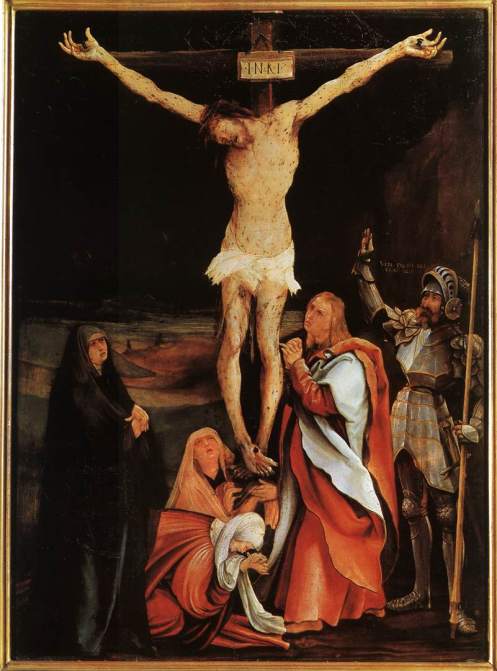
While the Pareto Principle has many practical applications in everyday life, Rev. White knew that when it comes to God, giving 20 percent of yourself is not enough. Whyte understood what Jesus means in Matthew 10:37-39 when he says, “Whoever loves father or mother more than me is not worthy of me, and whoever loves son or daughter more than me is not worthy of me. And whoever does not take his cross and follow me is not worthy of me. Whoever finds his life will lose it, and whoever loses his life for my sake will find it.” (ESV)
Jesus wants all of you—not 20, or 80, or even 99 percent of you. He makes this clear when He tells his disciples “If anyone would come after me, let him deny himself and take up his cross and follow me. For whoever would save his life will lose it, but whoever loses his life for my sake will find it. For what will it profit a man if he gains the whole world and forfeits his soul?” (Matthew 16:24-26, ESV)
It’s easy to give part of yourself to God. You can attend church every Sunday, pray to Him every morning, and tithe 10 percent of your income. Outwardly you might appear saintly, as the Rev. Whyte appeared to his parishioner, but God sees inside us all. Scottish Theologian Oswald Chambers said, “We are only what we are in the dark; all the rest is reputation. What God looks at is what we are in the dark—the imaginations of our minds, the thoughts of our heart, the habits of our bodies; these are the things that mark us in God’s sight.” This is why, St. Paul tells us in Philippians 2:12 (ESV), “work out your own salvation with fear and trembling.”
God wants all of you. Therefore endeavor constantly to place Him first in every aspect of your life. And when you fail, as you inevitably will, seek His forgiveness. As St. Paul encourages us in 2 Timothy 4:7, continue to fight the good fight.





 The Carina Nebula as photographed by the Hubble Space Telescope (Photo: NASA)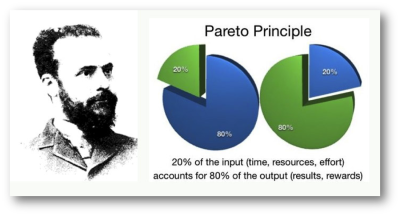
 Divine Simplicity
Recent Comments