Posts Tagged ‘church’

Holy Week

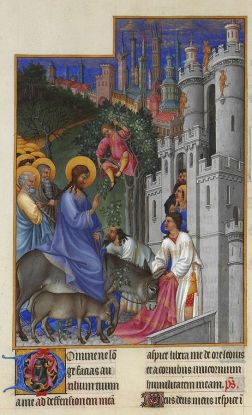
Triumphal Enter into Jerusalem - HosannaJesus entering Jerusalem

Traditionally, the week before Easter is called Holy Week. It starts on Palm Sunday. Holy week began today.  It is the last week of the penitential church Season of Lent. 

Palm Sunday
In the Bible, Holy Week begins with a religious festival. People have flocked to Jerusalem to celebrate Passover and see the controversial prophet Jesus. Many come to cheer him on as Jesus rides into Jerusalem. They wave palm Branches and shout “Hosanna,” which means “save us,” a Jewish call of lamentation that has since become a call of praise. Jesus enters Jerusalem riding on a Donkey.  Jesus’ triumphal entry fulfills an Old Testament prophecy and is seen as a sign of humility. Some who cheer him that day will inevitably cry “Crucify him” only a few days later, so the memory of Christ’s entrance into Jerusalem is a time of mixed joy and sadness.

Maundy Thursday
In the evening of this day Jesus met with his disciples for the last time before his death. Before the meal, he washes their feet, another sign of humility. During the meal, he prophesies that one of the disciples will betray him. On this evening, Christians are thinking of Christ’s establishment of the sacrament of Holy Communion. In many congregations, a worship service occurs in the evening, in which the congregants come together for a Eucharist meal, just as the first Christians celebrated it. Often after the communion, the altar is cleared, and left unadorned on Good Friday.

Good Friday
On Good Friday, Jesus was crucified. He was tortured and killed. His suffering is therefore at the heart of this day. But it also commemorates the suffering of mankind in general, because through Jesus, God has sided with the suffering. The day is quietly celebrated as Christians contemplate Jesus’ suffering and death. Together with Easter, Good Friday forms the centerpiece of the Christian message of good news: God is stronger than Death! On that day Jesus suffered all that a man can suffer to atone for the sins of mankind. Sin and Death did not have the last word. God raised Jesus as he will one day raise all believers who die in Christ.

Holy Saturday
On the evening of Good Friday, Jesus was taken down from the cross and buried. On Saturday, the Sabbath, that would not have been allowed. So Saturday is the full day that he was dead. In the creed, this means Jesus descended into Hell, or the realm of the dead. We aren’t sure what that is and what it is like there, but the message that Jesus was “resurrected on the third day” provides confidence that at the end of the age God will resurrect Christian believers.

Easter Night
The Bible doesn’t describe the physical resurrection of Jesus. On Easter morning, the women find the empty tomb and are told by an angel that Jesus was resurrected. That might have occurred at night, because in the Jewish Tradition the day begins with the night (“It was evening and it was morning, the first day”). Easter (Saturday) night belongs to Easter Sunday. The resurrection is celebrated on this “night,” mostly in the early hours of the morning, but in some places it is celebrated on Saturday evening. It is a celebration that, in its design, leads from darkness to light. At its climax many congregations light the new Pascal candle declaring “Hallelujah, Christ is risen; He is risen indeed.”

Easter Sunday
The women who discover Jesus empty tomb are the first to spread the Good News of Jesus’ resurrection. In the course of this and the next few days many people meet Jesus and witness the resurrected Son of God. In the early church congregations met regularly for a common Sacrament the day after the Sabbath to commemorate the resurrection. In the Christian context, Sunday was thus marked as the most important day of the week and as a day of rest.

An invitation:
Easter occurs on April 21st this year. For readers in the Sioux Falls area, you are invited to attend an Easter Sunrise service conducted by Church of the Resurrection (www.resurrectionsf.com). The service will begin at 7a.m. at the McKennan Park bandshell. Bring lawn chairs. The service will occur rain or shine.


The Seven Penitential Psalms


Saint Peter in Penitence by El Greco

St. Peter in Penitence, El Greco, (ca. 1580)

We are currently celebrating the church season of Lent, a 40-day period before Easter when Christians reflect upon the passion and sacrifice of Jesus Christ, who was crucified and died as atonement for our sins, setting believers free from sin and death. Easter celebrates Christ’s resurrection from the dead and the promise of eternal life for His believers.  Penitence, a solemn contemplation of one’s sins and request for God’s forgiveness, is foundational to Lent.

One Lenten discipline that I recommend is the prayerful reading of the Seven Penitential Psalms—Psalms 6, 32, 38, 51, 102, 130 and 143. These psalms (prayers) are generally attributed to David.  Psalm 51 is probably the most widely read of the seven. In Anglican and Catholic traditions, it is often recited by congregations on Ash Wednesday and at other times during the Lenten season.

Christian tradition suggests several possible reasons behind the writing of these psalms. Probably the most widely accepted explanation is they were King David’s prayers of repentance for his sins against Uriah and Uriah’s beautiful wife Bathsheba. David’s sinful lust for Bathsheba drove him to conspire to have Uriah killed in battle. With Uriah out of the way, David took Bathsheba for his wife.  She conceived and bore a baby son, but the child died shortly after birth.  Recalling the words of condemnation delivered to him by the prophet Nathan regarding David’s sin with Bathsheba (2 Samuel 12: 4-7), David believed the baby’s death was God’s punishment for his transgressions. Nathan said to David:

“Now a traveler came to the rich man, but the rich man refrained from taking one of his own sheep or cattle to prepare a meal for the traveler who had come to him. Instead, he took the ewe lamb that belonged to the poor man and prepared it for the one who had come to him.”David burned with anger against the man and said to Nathan, “As surely as the Lord lives, the man who did this must die! He must pay for that lamb four times over, because he did such a thing and had no pity.”  Then Nathan said to David, “You are the man! (NIV)

Another Christian tradition associate’s the Seven Penitential Psalms with the Seven Deadly Sins. We first encounter the Seven Deadly Sins in the writings of Pope Gregory I around the year 600.  The sins are pride, greed, lust, wrath, gluttony, envy, and sloth.

The writings of  French Roman Catholic theologian Cardinal Pierre d’Ailly (1351-1420) associates certain spiritual virtues with the Seven Penitential Psalms: Psalm 6, fear of punishment; Psalm32, sorrow and confession for sin; Psalm 38, hope;  Psalm 51, love of purity and mercy; Psalm102, longing for heaven, Psalm 130, distrust of one’s own strength and hope for mercy; and Psalm 143: joy.

During this year’s season of Lent, I’ve committed to prayerfully reading the Seven Penitential Psalms daily as part of my morning devotion.  It has been a deep spiritual experience, one that I plan to make part of my future Lenten discipline.  I encourage readers to give this a try.  You can find the Seven Penitential Psalms online at the following URL:

http://www.usccb.org/prayer-and-worship/liturgical-year/lent/seven-penitential-psalms-songs-of-suffering-servant.cfm

Lent: a Season of Penitence and Prayer

Lenten Journey 3

As an Anglican, I follow a Church liturgical calendar, celebrating each of its many seasons.  Very soon the season of Lent will be upon us.  Lent this year is the period of 40 days from Ash Wednesday (March 6th) to Easter Sunday, commemorating Christ’s 40 days of fasting and temptation in the wilderness, His final journey to Jerusalem, where He was crucified, and His last hours with His disciples before His crucifixion. For believers, it is a period of penitence and alms giving. On Ash Wednesday, many Christians have their foreheads marked with ashes in the sign of the cross.  The ashes are often collected from burning the palm fronds used in the celebration of Psalm Sunday.

The Catholic and Anglican traditions regarding Lent are very similar.  In the Anglican tradition, which I practice, Lent is sometimes called the Paschal season (relating to Passover or Easter). It is a preparation time intimately connected to the most important Festival of the Church year, Easter, which marks Christ’s resurrection from the dead and His victor over sin and death. In celebration of the so-called Easter Triduum, Christians commemorates the passion (suffering), death, and resurrection of Jesus and thus the origin of the all Christian belief and the source of our faith and salvation. So, as Jesus spent 40 days fasting and praying in the desert, Anglicans prepare for 40 days for the encounter with Him in the Easter celebration. Traditionally, the Easter season begins with Ash Wednesday and ends on Holy (or Maundy) Thursday, a day we recall Jesus washing the feet of his disciples and having his last meal with them before his crucifixion.  Maundy Thursday reminds believers of their hunger for God by refraining from food and intensifying one’s prayer life and charitable giving. 

In the Orthodox tradition, Lent is an invitation to learn the salvation story  by studying the death and the resurrection of Christ. It is an exercise in which believers partake of suffering and resurrection of the Lord. The cross and resurrection are daily realities: we die every day in all trials of life with Christ, but we experience our resurrection every day when we unite with him in faith and prayer. It is important in the Orthodox tradition to recognize that the cross is symbolic of the resurrection, not death. Fasting during Lent is an exercise of self-restraint, by which believers overcome their physical passions and win true freedom. It helps us to the internalization, especially when we pray. The believers should fast and avoid meat. They should intensify their prayer life and dig deeper into the scriptures than usual.  On Wednesdays and Fridays during Lent, many Orthodox churches celebrate an evening service called “liturgy of the pre-sanctified gifts”. During these services, no elements are sanctified for the Holy Eucharist.  Instead, the bread and wine sanctified on the precious Sunday are used.  On these days, many Orthodox believers fast until evening.

Protestant denominations observe Lent in a wide variety of ways. Sadly, many traditional Protestant denominations barely observe Lent or the Church Calendar at all.  However, for some, fasting during Lent is a time for reflecting on the essentials of Christianity. The original purpose is to prepare one’s self internally for the coming of Easter. Many Protestants avoid certain things during Lent in a quest to learn the true necessities in life. They may deprive themselves of dependency-related risks such as alcohol, chocolate and other sweets, and even the consumption of social media. The Lenten season is a good time to reorder one’s life—restacking priorities.  

For those readers who have no set way of observing Lent, I urge you to consider adopting a Lenten tradition.  One simple way to begin is to read a daily Lenten devotion.  There are many available on the web, but my favorite is published by Lutheran Hour Ministries.  Beginning March 6 you will be able to find the devotions at this link:  https://www.lhm.org/lent/.

“…special (church) holidays give rise to various liturgical calendars that suggest we should mark our days not only with the cycles of the moon and seasons, but also with occasions to tell our children the stories of our faith community’s past so that this past will have a future, and so that our ancient way and its practices will be rediscovered and renewed every year.” 
         ― Brian D. McLaren,  Finding our Way Again: The Return of Ancient Practices


My Superhero

Superheroes

Superheroes are all the rage these days.  They’re winning at the box office with blockbuster movies like “Wonder Woman,” “Black Panther”  “Aquaman” and yet another new episode in the Spiderman series.  Older superheroes like Superman and Batman remain tremendously popular too.

With Christmas approaching, the aisles of toy stores and toy departments are lined with superhero kitsch, mainly over-hyped, over-priced superhero-themed stuff that will make the kiddies giggle on Christmas morning and eventually be tossed into a corner with a dozen similar forgotten toys.  Superhero figures also fill the pages of comic books; some of these books are sold for incredible amounts of money—literally worth their weight in gold.

Many adults and kids alike are attracted to these imaginary superheroes, yet they pay little attention to a real superheroes in their midst.  This superhero is powerful.   He is fearless and always defeats his many enemies.  He never makes mistakes. He can’t be outsmarted. He never tells a lie. He is a clear thinker and never loses his cool. Millions of people have purchased figurines of the real superhero.

So far the real superhero sounds about the same as the imaginary ones doesn’t he?  However, there are really many differences between my superhero and the imaginary ones.

Unlike the imaginary superheroes, my superhero isn’t handsome.  According to one writer, there’s nothing about his appearance one would find particularly attractive.  The same writer described my superhero as a sad man. He doesn’t sound very exciting or charismatic does he?   

My superhero did the unthinkable.  He surrendered to the enemy!  Only a short time after his surrender he was violently put to death and buried in a tomb.  End of story?  Not quite!

My superhero has performed many miracles. He turned plain water into wine and controls all of nature. He gives sight to the blind and makes the lame walk again.  He can control the wind and the sea, calming storms and raging waves. He can walk on water. 

Headline:  Man surrenders himself in exchange for hostages.  Billions saved!

Yes, my superhero surrendered to the enemy, but it was done voluntarily. He freely sacrificed himself to free billions of hostages.  He was put to death by the enemy, but he rose from the dead after three days and now lives forever.  He has already raised men from the dead and will raise many more in the future. 

My superhero doesn’t wear a mask, he wears a golden crown.  He has been called the King of Kings, Lord of Lords, and the Prince of Peace. He is Immanuel—God with us, fully man and fully God! His name is Jesus. During this period of Advent Christians around the world reflect on the promised return of their Savior.  The book of Revelation describes him like this:

I saw heaven standing open and there before me was a white horse, whose rider is called Faithful and True. With justice he judges and wages war. His eyes are like blazing fire, and on his head are many crowns. He has a name written on him that no one knows but he himself. He is dressed in a robe dipped in blood, and his name is the Word of God.  –Revelation 19:11-13 (NIV)

The first chapter of the Gospel of John tells us that Jesus, the “Word of God” is the author of all creation.  All things were made by Him: 

In the beginning was the Word, and the Word was with God, and the Word was God. He was with God in the beginning. Through him all things were made; without him nothing was made that has been made. In him was life, and that life was the light of all mankind.  The light shines in the darkness, and the darkness has not overcome it.  –John 1:1-5 (NIV)

Darkness has never overcome my superhero and it never will.  He cannot be defeated.  Jesus sacrifice of himself defeated sin and death forever.  Jesus offers redemption freely to those who claim him as savior. His story is told in this passage of the Nicene Creed:

We believe in one Lord, Jesus Christ,

the only-begotten Son of God,

eternally begotten of the Father,

God from God, Light from Light,

true God from true God,

begotten, not made,

of one Being with the Father;

through Him all things were made.

 For us and for our salvation He came down from heaven,

was incarnate from the Holy Spirit and the Virgin Mary,

and was made man.

 For our sake he was crucified under Pontius Pilate;

he suffered death and was buried.

 On the third day He rose again in accordance with the Scriptures;

He ascended into heaven and is seated at the right hand of the Father.

 He will come again in glory to judge the living and the dead,

and his kingdom will have no end.

Now that’s what a real Superhero looks like!

…to him who loves us and has freed us from our sins by his blood, and has made us to be a kingdom and priests to serve his God and Father—to him be glory and power for ever and ever! Amen.  –Revelation 1: 5b-6 (NIV)

Too much to pray for!

Prayer

Renowned Scottish theologian Oswald Chambers said, ‘Prayer does not equip us for greater works— prayer is the greater work. Yet we think of prayer as some commonsense exercise of our higher powers that simply prepares us for God’s work. In the teachings of Jesus Christ, prayer is the working of the miracle of redemption in me, which produces the miracle of redemption in others, through the power of God.’

The older I grow, the more it seems like I have more to pray for than I can handle.  Is this is a common dilemma for Christians as they grow older?  I’d like to hear from readers who share the same or a similar problem.  

My prayer list is getting too long to manage.  It includes numerous categories including family (spouse, children, grandchildren, siblings, cousins, aunts, uncles, in-laws and extended family members); friends; colleagues at work; clergy; those persecuted for their Christian faith; my church; my former churches; local leaders; state leaders; national leaders; military service members; and even the abused and missing children on the evening TV network news.  Where should I begin praying on a prayer like this?

 I’ve tried ‘checklist’ praying–simply going down the list and asking God’s blessing for each category, but that feels very hollow. I’ve tried lifting up specific prayers for everyone and everything on the list, but my ability to concentrate usually fails after five or 10 minutes into the prayers.  I’ve segmented my prayers to pray for one category at a time on my prayer list.

When Jesus’ disciples asked him to teach them to pray, he gave them (and us) the ‘Lord’s Prayer’. It’s a beautiful model for praying, but should not be the only prayer we pray; one of the purposes of prayer is simply for us to be with God and to listen and experience the glory of his presence. Our Lord’s prayer goes like this:

Our Father who are in heaven (recognition of God’s supreme authority in all creation),

Hallowed be thy name (affirmation of God’s perfect nature),

Thy kingdom come, Thy will be done on Earth as it is in heaven (a petition for God to restore the perfect order on Earth that he has intended since creation),

Give us this day our daily bread (recognition that God sustains us),

And forgive us our trespasses (a plea for God’s forgiveness through Jesus Christ),

As we forgive those who trespass against us (an acknowledgement that we have all sinned and fall short of the glory of God and a reminder to forgive others),

And lead us not into temptation (a plea to God to spare us from testing, as Job, Jesus and so many Christian martyrs have been tested),

But deliver us from evil (protect us from Satanic forces),

For Thine is the kingdom, and the power, and glory forever, amen (a final acknowledgement of God’s supreme authority in all creation).

The Lord’s Prayer is a beautiful way to begin or end any prayer! 

St. Paul’s epistle to the Romans (8:26-27) tells us, ‘…We do not know what we ought to pray for, but the Spirit himself intercedes for us through wordless groans. And he who searches our hearts knows the mind of the Spirit, because the Spirit intercedes for God’s people in accordance with the will of God (NIV).’  I try to apply this wisdom when I’m feeling overwhelmed.  Sometimes my daily prayer is simply, “Holy Spirit, please pray for me and my family.”  I also pray this prayer for individuals, when I feel troubled about/for them, but I don’t know how to pray for them.

One thing I’ve learned is not to pray too much for myself.  When I do pray for myself, it usually entails asking God for forgiveness.  Psalm 51 and the Lord’s Prayer are my ‘go to’ prayers when I pray for myself. They are more than sufficient!

So how should we pray?  I would love to hear your comments and ideas on prayer. Please consider leaving a comment. 

To Be a Christian without prayer is no more possible than to be alive without breathing.    —Martin Luther

Hurry up and slow down!

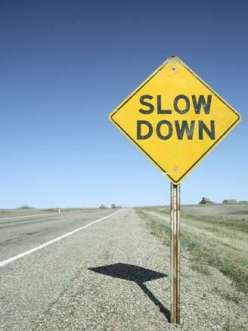
Slow Down

Be still, and know that I am God.  —Psalm 46:10a (ESV)

We live in a world of high-speed escape artists.  Everywhere one looks, people are rushing to and fro to get the next thing on their long list done. When they grow weary, many turn to adrenalin-pumping extremes to “relax.” There is extreme biking, extreme running (Parkour), building- and rock-climbing without safety equipment (free-climbing), half-pipe skiing and snowboarding, and base jumping, which is free fall parachuting from cliffs or high structures.

We watch extreme television entertainment, like American Ninja Warrior and Mixed Martial Arts (MMA) fighting.  If sports is not your thing, there are extreme game shows with names like Wipeout, where contestants crash and burn on crazy obstacle courses, and Fear Factor where contestants, among other feats, eat large volumes of worms and bugs.

Many escape reality through physical addictions, turning to drugs, alcohol or sex to remove them from reality. Others simply unplug from their daily grind, spending long periods of the day disconnected from the world. Video games are one way of escaping reality. The most extreme “unplugging” involves new virtual reality technology.  With this technology, one can don a pair of goggles and be instantly transported to a new 3-D “world.”  Anything goes on these virtual playgrounds, including extreme sports, extreme violence and extreme sexual fantasies.

For some, cell phone addiction provides a different kind of virtual reality.  Have you spoken with someone who constantly looks down at their phone? It’s like they don’t have time for you. It’s annoying, not to mention downright rude.  Or perhaps you’ve observed a family seated in a restaurant waiting for their orders to arrive—everyone is heads down playing with their phone instead of interacting with other family members.  In 2014, Charit Taneja wrote in “The Psychology of Excessive Cellular Phone Use” that:

Cell phones enable behavioral problems and disorders, particularly in adolescents. This fact has become more and more evident in communications media, inspiring new pathologies, such as “Nomophobia” (No-Mobile-Phobia), “FOMO” (Fear Of Missing Out) – the fear of being without a cell phone, disconnected or off the Internet, “Textaphrenia” and “Ringxiety” – the false sensation of having received a text message or call that leads to constantly checking the device, and “Textiety” – the anxiety of receiving and responding immediately to text messages. 

Some people escape auditory reality. In the fitness center where I exercise, about half of the people wear headphones or ear buds while using an exercise bike, treadmill, elliptical machine, stair-stepper or other exercise device. I assume most listen to music, hoping it will carry away them to another, less painful place as they push their bodies to the physical limit.  While such auditory isolation might reduce the agony of a heavy workout, it hinders socializing with others and can even be dangerous. At certain times of the year here in South Dakota it’s a good idea to keep one’s ears peeled for the sound of a tornado warning siren.   

A frantic pace combined with isolation can lead to perilous situations. Anyone who lives in a big city has seen drivers who dangerously weave in and out of traffic, desperately trying to get ahead a couple of car lengths while putting their own and other people’s safety at risk. Many of these drivers have so much on their “to do” lists that feel a need to constantly rush. Others live in their own private worlds where it’s all about satisfying their own needs, with no regard for the needs and safety of those around them.

 Far too often, erratic driving results in road rage.  According to analysis by performed by Trace, an independent, nonprofit news organization dedicated to expanding coverage of guns in the United States, instances of road rage where someone in a car brandished a gun or fired a gun at another driver or passenger more than doubled over the a three-year period, increasing from 247 in 2014 to a high of 620 in 2016.

The high-speed, escape mentality is tearing away the very fabric of our society. We’re becoming a bunch of one-armed jugglers with our eyes and ears covered. It’s easy to get caught up in the race and lose sight of what really matters in life.  Christians aren’t immune to this.  It’s easy to become distracted and let the day slip by without a thought of God.  I think Islam gets it right on one point—stopping to pray five times per day.  Christians would do well to adopt a similar practice. 1 Thessalonians: 5 encourages us to “pray without ceasing.” (ESV)

Psalm 46:10a (ESV) says, “Be still and know that I am God.” God wants us to slow down and focus on him in the midst of our daily hustle.  It’s during times of stillness that we can, if just for a moment, look God in the face and begin to gain a deeper understanding of Him. In Mark 4:39, Jesus is with his disciples in a small boat when a great storm occurs.  The terrified disciples appeal to Jesus to do something to save them.  He utters the simple command, “Peace! Be still.” Immediately the weather becomes calm.

This beautiful story is about much more than Jesus calming the weather.  It is about Jesus giving up a sense of Peace in Him that helps us through the storms that occur in our daily lives. In 1 Kings: 19 (ESV), God speaks to Elijah in “a low whisper.” My advice to you—slow down, be still, unplug, hear God’s whisper, and discover His peace. 

 “Rejoice in the Lord always; again I will say, rejoice. Let your reasonableness be known to everyone. The Lord is at hand; do not be anxious about anything, but in everything by prayer and supplication with thanksgiving let your requests be made known to God. And the peace of God, which surpasses all understanding, will guard your hearts and your minds in Christ Jesus.” —Philippians 4:4-7 (ESV)


Bluegrass in my Blood

Pine Mountain Kentucky

Pine Mountain, Kentucky

I was born in the small town of Harlan, deep in the Appalachian Mountains of southeastern Kentucky. Southeastern Kentucky has close ties to parts of western West Virginia, southwestern Virginia; western North Carolina; and eastern Tennessee.  The entire region has a distinct culture that includes its own spoken dialect, cuisine and music. The mountains, culture and good people living there get in your blood and they’re impossible to forget, no matter how long or far one roams.  The regional music, widely known as Bluegrass, traces its roots back to Ireland, Scotland and England.

I find the music particularly enjoyable.  Bluegrass is notable for its combination of stringed instruments—specifically the banjo, mandolin and fiddle. Acoustic guitar and upright bass are common as well.  The music is also notable for many singers who care more about belting out the lyrics than staying in tune.  My affinity for Bluegrass music is something my wife tolerates, but doesn’t quite understand.  I’m particularly fond of the Bluegrass Gospel subgenre.  I grew up hearing it at home, at church and places all around our home.

Gospel Bluegrass tells the story of Jesus Christ as only mountain people can tell it.   If you’re not familiar with this music, it’s only fitting that I introduce you to it with a piece by Bill Monroe, who is commonly recognized as the “Father of Bluegrass.”  Since this is Holy Week, a good place to begin exploring is:

Were you there (when they crucified my Lord), performed by Bill Monroe.  It describes the feelings that many of the onlookers at Jesus’ crucifixion must have felt.

https://youtu.be/5EHP5Nj2BdE

Power in the Blood, performed by Dolly Parton.  It’s impossible to discuss Bluegrass music without the name of Dolly Parton coming up.  Dolly is a Tennessee girl whose voice is perfectly suited for the genre.  Her song of redemption discusses the power of Jesus’ blood to wash away our sins. “There’s power in the blood of the Lamb.”

https://youtu.be/B1CV-HtsMvc

I’m ready to go, performed by Ricky Skaggs and Kentucky Thunder. Ricky Skaggs, a Kentucky native, is a multi-talented musician with a Bluegrass legacy dating back to the days of Lester Flat and Earl Scruggs.  Skaggs’ group Kentucky Thunder has a powerful, fast-paced style.  The group’s rendition of I’m ready to go is about salvation through Jesus Christ.  I promise it’ll get stuck in our head. “Jesus came in and saved my soul from sin, Hallelujah I’m ready to go.”

 https://youtu.be/pjrJKnVmQwQ

The darkest hour is just before dawn, performed by Emmylou Harris. Alabama native Emmylou Harris has proven herself in a variety of genres, including folk, rock, country and Bluegrass.  She slows down the tempo with a Ralph Stanley salvation song. “Lay down your soul, let Jesus in.”

https://youtu.be/_r0FtxqR9Pc

One can’t listen to Gospel Bluegrass without hearing a song about eternal life in heaven that’s promised to Christ’s believers.  Here are two examples.  The Stanley brothers slow it down with their rendition of Angel Band.   Alison Kraus and Gillian Welch pick it up with I’ll Fly Away.

Angel Band, performed by the Stanley Brothers. “Bear me away on your white wings to my immortal home.”

https://www.youtube.com/watch?v=WIHFxIQfSxc

I’ll fly away, performed by Alison Krauss and Gillian Welch. “Some glad morning when this life is o’er, I’ll fly away, to a home on God’s celestial shore.”

https://youtu.be/sdRdqp4N3Jw?list=PL3BDAEBE555FB3CBF

Go Rest High on that Mountain, performed by Vince Gill, Ricky Skaggs, and Alison Krauss. No discussion of Gospel Bluegrass music is complete without Vince Gill’s epic Go Rest High on That Mountain, a song he penned in response to the death of country music singer Keith Whitley. Gill, an Oklahoma boy, is a talented songwriter, singer and guitarist whose work spans Bluegrass, country and rock.  His Bluegrass skills come out in this performance. “Go to heaven a shoutin’ love for the Father and the Son.”

https://youtu.be/NwFiWCUkk4M

So there you go—my guided tour through some of my favorite Bluegrass music that just happens to be Gospel.  If you’re having trouble deciding how to introduce someone to the Gospel message of Jesus Christ, just head to YouTube, Spotify or one of your favorite streaming services and play them some Gospel Bluegrass music.  “Hallelujah, I’m ready to go!”

Living by the Calendar

Calendar.jpg

The here-and-now is no mere filling of time, but a filling of time with God.         

I work in the tech industry on a virtual business team.  We have people located across the country from Virginia to Hawaii and many places in between.  The team is run by the calendar.  It’s difficult scheduling conference calls with a team spread across five time zones, so we have to schedule carefully and stick closely to the schedule.

Personally, I would be pretty lost without the Microsoft Outlook calendar on my laptop. Between my work, volunteering, doctor appointments, shuttling grand kids around, birthday reminders, weddings, funerals and the like I simply couldn’t keep track of where to be when without a calendar.

While most adults in the Western World are familiar with calendars, there is one calendar that’s terribly overlooked in many circles.  I’m speaking about the Christian liturgical calendar.  The liturgical year (or Church year) is a continuous cycle of Christian seasons that include various feast days that mark celebrations of the Church.  The liturgical year also has a set list of readings for every day of the year.  Observing the liturgical calendar is highly enriching, providing a continuous commemoration of key events in the life of Christ and the church.  Sadly, many Christian denominations hardly recognize the liturgical calendar at all. 

According to the website The Voice, “The Christian calendar is organized around two major centers of Sacred Time: Advent, Christmas, and Epiphany; and Lent, Holy Week, and Easter, concluding at Pentecost. The rest of the year following Pentecost is known as Ordinary Time, from the word “ordinal,” which simply means counted time (First Sunday after Pentecost, etc.)  (http://www.crivoice.org/chyear.html).

liturgical-calendar.jpg

Let’s take a short tour of the Church liturgical year.  It begins with Advent, which occurs in December.  Advent commemorates Israel’s wait for the birth of the Messiah, which was promised in prophecy.  For modern Christians, it is symbolic of our waiting for Christ to “come again in glory to judge the living and the dead,” as many Christians frequently recite in the words of the Nicene Creed.

Advent is followed by Christmas on December 25, and Epiphany in January.  Christmas is the celebration of the birth of Jesus Christ, Israel’s promised Messiah and God’s only begotten son–the savior of the world.   It is followed by Epiphany, which is translated “appearance.”  Epiphany commemorates the visit by the Magi (or three wise men) to baby Jesus, when they reveal that Jesus is the Messiah and bring him gifts of gold, frankincense and myrrh.  Gold represents the kingship of Jesus.  Frankincense, which is sweet incense, represents His earthly priesthood.  Myrrh, a sweet spice used in preparing bodies for burial, represents Jesus’ coming crucifixion and death on the cross for the forgiveness of the sins of the world. The later part of January and the month of February are ordinary time on the liturgical calendar.

Lent, Easter and Pentecost follow the ordinary time in February. Lent is the period of 40 days from Ash Wednesday to Easter Sunday, commemorating Christ’s final journey to Jerusalem, where he will be crucified. It is a period of penitence and alms giving for the church.  On Ash Wednesday, many Christians have their foreheads marked with ashes in the sign of the cross.  

Palm Sunday occurs the Sunday before Easter.  It commemorates Jesus’ Triumphal Entry into Jerusalem and his final journey to the cross. He rode into the city on a donkey while the crowds shouted “Hosanna,” which is translated “save us,” and they laid palm leaves in his path. Modern day Christians often celebrate Palm Sunday by waving palm leaves during a processional at the beginning of their church service.  Palm leaves from the Palm Sunday service are burned and the ashes collected to be used during Ash Wednesday of the following year.

At the end of Lent comes a period of three days called the Paschal Triduum, which begins on Maundy Thursday, proceeds through Good Friday, and ends with a liturgy on the evening of Easter Sunday.  These all fall inside Holy Week, the week ending with Easter.  

Maundy Thursday marks the night before Christ’s crucifixion, when he celebrates the Last Supper with his disciples, giving us the gift of the Holy Eucharist.  Good Friday commemorates the crucifixion of Christ for the forgiveness of our sins and his burial.  Easter celebrates Christ’s glorious resurrection and his victory over sin and death.  Christ taught his disciples for 40 days following the resurrection, then he miraculously allowed them to see his Ascension into heaven, which occurred before their eyes; meanwhile, angels promised the disciples that just as they saw him ascend into heaven, they will also him descend back to the Earth to reign in glory forever.

Following the Ascension comes Pentecost. Pentecost commemorates God’s gift of the Holy Spirit to his disciples and marks the beginning of the Church.  Following the season of Pentecost, the months of June through November are ordinary time on the liturgical calendar.  At the end of November, on the Sunday before Advent begins, we celebrate Christ the King Sunday, a day reminding Christians that they owe their first allegiance to Christ, not earthly powers or rulers.

So there you have it.  Observing the Church liturgical calendar is a beautiful way of celebrating Christ’s birth, crucifixion, resurrection and the establishment of Christ’s Church on Earth.  If your personal tradition doesn’t observe the liturgical calendar, consider adopting it to add a new level of richness to your worship.  In doing so you you’ll find inspiration and hope.


Everyone Needs a Savior

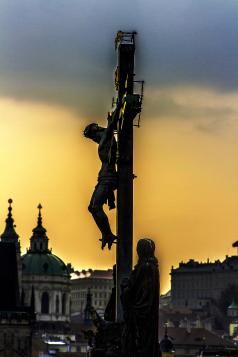
Jesus on Cross

Watching the evening news these days can be seriously disturbing.  It seems like every day there’s a new name or two on the list of politicians, Hollywood celebrities and officers of large corporations accused of sexual misbehavior of one type or another.  It sometimes seems like it will never end.

It’s easy to become angry at these individuals—to wag an accusatory finger in their direction. If the truth be told, however, few of us would survive intact after having our lives laid bare before the court of public opinion. Virtually everyone has something in their past or present that they wouldn’t want exposed to public scrutiny, or even to a spouse or other loved one.

While some of us escape public scrutiny of our lives, it’s a sobering thought to know that everything we do is seen by God. 

We are only what we are in the dark; all the rest is reputation. What God looks at is what we are in the dark—the imaginations of our minds; the thoughts of our heart; the habits of our bodies; these are the things that mark us in God’s sight. Oswald Chambers

The Apostle Paul tells us, “All have sinned and fallen short of the glory of God.” (Romans 3:23, ESV).  This begs the question, “Then who can be saved?”  It’s important to understand Romans 3:23 in context, because it answers this worried question.  Taken in context, we see:

… there is no distinction: for all have sinned and fall short of the glory of God, and are justified by His grace as a gift, through the redemption that is in Christ Jesus, whom God put forth as propitiation by His blood, to be received by faith.   Romans 3:22b-25a

An act of propitiation is a redeeming sacrifice that atones for sin.  In the Bible, this term always refers to an act of God, not a sacrifice offered by man to God. 

In a just a few days we will celebrate the nativity of our Lord Jesus Christ.  While we are taking joy in the celebration of the Lord’s birth, we must not forget that he was born for only one purpose—to redeem us from our sins and return us to a natural relationship with God. This return to the natural order as God originally planned it was made possible by Christ’s death on the cross and his resurrection from the dead. This redemption cannot be earned.  It is offered as a free gift to all that place their faith in Jesus as savior.  Through Him we are made blameless before God.

Now to him who is able to keep you from stumbling and to present you blameless before the presence of his glory with great joy,  to the only God, our Savior, through Jesus Christ our Lord, be glory, majesty, dominion, and authority, before all time and now and forever. Amen.  Jude 1:24-25

May God bless and keep us all during the coming Christmas season and New Year!

Give Thanks to God

Thanksgiving Turkey.jpg

May love and laughter light your days, and warm your heart and home.

May good and faithful friends be yours, wherever you may roam.

May peace and plenty bless your world with joy that long endures.

May all life’s passing seasons bring the best to you and yours!

                                                                             An Irish Blessing

Father Desmond O’Donnell, a Roman Catholic Priest in Northern Ireland, recently told the Belfast Telegraph newspaper that Christians should abandon the word “Christmas,” noting that the name has been “hijacked by Santa and reindeer” and commercialized to the point that it is virtually meaningless.  “We’ve lost Christmas, just like we lost Easter, and should abandon the word completely,” O’Donnell said.  

Just go to a mall today and see what he means.  You’ll find Christmas on display everywhere, even though we’ve yet to celebrate Thanksgiving. Check your mailbox today and you’re apt to find a pile of Christmas sale catalogs and flyers.  The Christmas theme is clear—buy, buy, buy!

Sadly, we can say the same thing about losing Thanksgiving.   What was originally a day set aside for Americans to thank God for our many blessings is now often referred to as “Turkey Day,” a time to overeat, over indulge in alcohol, and watch football on television. Indeed, a number of Thanksgiving Day football matches across the country are referred to as the “Turkey Bowl.” Thanksgiving has become irreversibly connected with Black Friday, the day Christmas buyers literally battle one another in malls and big box stores to get super bargain prices on anything and everything.  Some stores have even resorted to open at midnight on Thanksgiving to maximize the Black Friday “spend fest.”    

For many Americans, it might appear that there isn’t too much to be thankful for.  We see reports of multiple mass shootings; police officers are gunned down in our streets; there are dozens of reports of sexual misconduct by politicians and Hollywood celebrities; natural disasters hammer the land; and we have a government run by two feckless political parties that seemingly can’t even agree on when to hold the next meeting.  Sometimes it seems as if our whole system, our entire way of life, could be swept away in an instant (and it can, but that’s the Book of Revelation, which I won’t go into today).

So what does America have to be thankful for?  The answer is truly simple, although not necessarily obvious.  What a pity more Americans don’t travel abroad to Third World countries and countries with oppressive regimes like Afghanistan, Iran, and North Korea.  In such places it takes very little time to recognize how truly blessed we are.  I was blessed that my military career allowed me to see so much of the world. It changed me forever.

America isn’t perfect, but it is great enough that many people around the globe dream of coming here.  If you take time to thank God this coming Thursday, thank Him for these simple blessings:

  • We can go to the faucet and fill a glass with clear, clean water. In Somalia I watched people drink water drawn straight from the muddy Jubba River, where it was not uncommon to see the carcass of a hippopotamus or other large animal floating down the river. Diarrheic disease kills Somalis and other Third World citizens by the score.
  • Our country is relatively free of deadly infectious diseases like plague, cholera, and malaria that devastate many other countries.
  • We light our homes with the flip of a switch. Following the long civil war in the Former Yugoslavia, I was deployed to Sarajevo, Bosnia-Herzegovina. Most of the city was without electricity when I arrived, and much of it was still without when I returned home 13 months later.
  • We are well-fed compared with much of the world. Even many people living below the poverty level in America are better fed than people in some Third World countries.
  • One can travel freely in America. Oppressive regimes around the world control movement of the population. They use checkpoints with armed officials to prevent unrestricted movement about the country.
  • Americans can speak freely without fear of reprisal by the government. Sure, sometimes there are bad consequences for speaking freely, such as libel suites, but we aren’t silenced by the government.
  • While there is a problem with homelessness in America, most of us have a roof over our heads nevertheless. In Kuwait, Iraq, Somalia and Bosnia I saw thousands of people who had been violently forced from their homes or had their homes destroyed by war.
  • We have the freedom to worship God in the way we choose. While many Christians grumble about losing religious freedom (and some rightfully so), we enjoy more religious liberty than most of the world.

Truly America has its problems, but our country is blessed in many ways.  Despite its faults, it is still a place where many oppressed people dream of coming to.  Take time to pause and thank God for blessing America. May he continue to do so in the coming year!

‘Tis the gift to be simple, ’tis the gift to be free

‘Tis the gift to come down where we ought to be,

And when we find ourselves in the place just right,

‘Twill be in the valley of love and delight.*

*Lyrics from “Simple Gifts,” a traditional Quaker Tune