

UFOs, or Unidentified Flying Objects, have gotten a lot of headlines lately due to coverage of the ongoing Congressional hearings. I thought it a good time to reblog this piece I wrote in 2016. I hope you enjoy it. –Zack
30 Jul
UFOs, or Unidentified Flying Objects, have gotten a lot of headlines lately due to coverage of the ongoing Congressional hearings. I thought it a good time to reblog this piece I wrote in 2016. I hope you enjoy it. –Zack
19 Jul

Samaritan woman and the living well
Women serving in church clergy has been a hot topic in the news of late. This is driven by the Southern Baptist Convention’s decision last month to uphold the expulsion of two member churches with female pastors—paving the way to speculation that many more could follow. The churches were Saddleback Church in southern California, and Fern Creek Baptist Church in Louisville, KY. The former is a megachurch, reportedly the largest church in California, that is widely known for its popular cofounder, pastor Rick Warren. Warren authored the bestselling book The Purpose Driven Life. Fern Creek Baptist Church has been led by Rev. Linda Barnes Popham for 30 years.
Galatians 3:27-28 …for all of you who were baptized into Christ have clothed yourselves with Christ. There is neither Jew nor Gentile, neither slave nor free, nor is there male and female, for you are all one in Christ Jesus. (NIV)
My aim in writing this piece is not to argue for or against women in the clergy. I will, however, note that women have historically been an important part of the Christian church from its beginning and they remain so today.
The Gospels and book of Acts identify many women who were actively involved in the Lord’s ministry. At the time of Jesus earthly ministry, the Jews regarded a disciple as one who followed the teachings and lifestyle of a particular Jewish rabbi (teacher). Listed below are some notable women followers of Christ. I believe all can accurately be described as Christ’s disciples.
These are just a few examples of women who can rightly be called disciples of Jesus. Their roles varied, but they were actively involved in Jesus’ ministry and played important roles in helping spread the Gospel.
Looking at the roles played by the women above led me reflect on and give thanks for several key women in my family who significantly shaped my personal Christian formation. I was born in the Appalachian Mountains of southeastern Kentucky. My father and most of my uncles were World War II veterans. For the most part, mountain men worked while women stayed home to raise kids and manage the household. It was a maternally-centered culture. All the ladies below played instrumental roles in raising me.
Granny Myrtle: my maternal grandmother was born in 1900 in southwestern Virginia, near the town of Rose Hill. She had an 8th grade education which was typical for the time and place she was born. A Southern Baptist, Granny was a Bible scholar and memorized hundreds of Bible passages. She read me Bible stories at bedtime and taught me to pray. She cared for me in her home during school summer recess. She loved to witness for Christ and helped lead many people to accept Jesus as their personal savior, including me.
Mother Phyllis: my mother was born in Wallins Creek, Kentucky, a small town deep in the Appalachian Mountains. Her family lived in a large beautiful log home by a creek. She and my father Jack divorced when I was six years old. Following the divorce, mom worked as a nurse’s aide and put herself through night classes at the University of Louisville, eventually earning certification as a medical technician and landing a good job in the Veterans Administration medical system. She taught me the importance of worshipping regularly and ensured that I attended Sunday school, worship services on Sunday mornings and evenings, prayer meetings on Wednesday evenings, and Vacation Bible School in the summer. She lived a life of selfless sacrifice, ensuring our basic needs for food, clothing and shelter were always met, no matter how hard she had to work.
Aunt Sarah: my mother’s sister Aunt Sarah was always there for me, along with her husband, Uncle Carl. Their home was a second home to me and a place of refuge at times when my working mother wasn’t available to solve my “crisis du jour.” Aunt Sarah had three miscarriages and was never able to have children of her own, but she mothered me continually. She took me to church and told me Bible stories. She gifted me a plane ride on my 8th birthday—it was my first. Aunt Sarah suffered from multiple sclerosis for over 60 years, but I never heard her complain about it. She taught me love of family.
Aunt Betty: my mother’s sister, Aunt Betty lived in a small town in northern Alabama together with Uncle John and my cousins John III, David, and Philip. Philip and I were only a year apart in age. We fished, swam, biked, and played games together. Over a period of about six years, I visited every summer, staying 2-4 weeks. Having me there during school summer recess was a great help to my divorced, working mother. Aunt Betty was a stern but loving disciplinarian who ran a tight ship. She made sure the family went to church on Sundays. She taught us cousins to make our beds, dust our rooms, clean our shoes, clear dishes from the dinner table. Moreover, she taught us self-discipline, something that was invaluable during my military career.
Wife Linda: Linda and I met in college in Munich, Germany, exactly 50 years ago next month. I was just shy of my 18th birthday. We’ve been together ever since. She never ceases to amaze me. Throughout my 24-year military career, she was my strong right arm and remains so today. Linda is a powerful example of faith and peace in the midst of spiritual storms. She is a fountain of generosity and has a servant’s heart. She is blessed with an abundance of common sense and the gift of discernment. I thank God for bringing us together. (Proverbs 31:10-31)
All these women had several traits in common, including a love of God, a daily walk with Jesus, and an unconditional, steadfast love for me. By the grace of God, the man I am today is due, in large part, to the love, teaching, and care I received from these steadfast disciples of Christ. I couldn’t have made it this far without them.
“…nor is there male or female, for you are all one in Christ Jesus.”
Note: I used ChatGPT AI to research some of the Bible passages mentioned in this piece. I typically use BibleGateway. The AI was much faster, but I can’t vouch for its accuracy.
10 Jun

Anyone who has spent some time in a deep swimming pool probably knows the feeling of diving a little too deep and then having to hold their breath while struggling towards the water’s surface, lungs aching for oxygen. The urge to breathe in such a situation is nearly irresistible. Breathing is such a natural part of life that most healthy people do it unconsciously. Breath and breathing hold a special place in the Bible.
2 Timothy 3:16 says, “All Scripture is God-breathed and is useful for teaching, rebuking, correcting and training in righteousness,” i.e., Scripture comes straight from the mouth of God!
In Genesis 2:7, God’s breath equates to life, “Then the Lord God formed a man from the dust of the ground and breathed into his nostrils the breath of life, and the man became a living being.”
We see this again in Ezekiel 37:9, the story of the Valley of Dry Bones. We read, “Then he said to me (Ezekiel), ‘Prophesy to the breath; prophesy, son of man, and say to it, ‘This is what the Sovereign Lord says: Come, breath, from the four winds and breathe into these slain, that they may live.’”
In Luke 23:46, the absence of God’s breath equates to death. We read, “Jesus called out with a loud voice, ‘Father, into your hands I commit my spirit.’ When he had said this, he breathed his last.” Many places in the scriptures tell us someone “breathed his last” and died.
John 20:21-22, in a passage we call the Great Commission, equates the Holy Spirit to Jesus’ breath. It reads, “Again Jesus said, ‘Peace be with you! As the Father has sent me, I am sending you.’ And with that he breathed on them and said, ‘Receive the Holy Spirit.’”
There’s no denying that there is power in the breath of God!
Breath Prayer
I have a friend who recently took a new job in counseling. A lot of his work is done via phone calls. Yesterday he told me, “I finally have a full case load and so I’m frequently very busy… but relearning to breathe and talk to the Lord as I’m dialing a call.” My friend is on to something. Wittingly or unwittingly, he has learned the value of breath prayer. I only learned this lesson recently.
Nancy S. Wiens wrote this about breath prayer:
Within the Orthodox tradition, Breath Prayer appears perhaps as early as the 3rd century. Known as the “Jesus Prayer” or “Prayer of the Heart,” it draws from Mark 10:47, where a blind man, Bartimaeus, calls Jesus to heal him. A common form is, “Jesus Christ, Son of God, have mercy on me.” By placing a few words on the inhale and a few on the exhale, it unites the prayer with the body. (Breath Prayer: An Ancient Spiritual Practice Connected with Science. As found at biologos.org)
Breath prayer focuses on speaking, aloud or silently in one’s heart, a short phrase or prayer while coordinating it with one’s breathing. It can be useful in reducing anxiety, cultivating mindfulness, centering, and forming a deeper connection with God.
To engage in breath prayer, one typically chooses a brief phrase or prayer that is personally significant to them. It can be a simple affirmation, a biblical verse, or a sacred word or name. For example, in Christianity, a common breath prayer is “Lord Jesus Christ, have mercy on me.” Below is a beginner’s list of breath prayers. I highly recommend you give them a try.
As we breathe without ceasing, so should we pray!
*Peace. Be still. – from Mark 4:39
Speak Lord. I am listening. – from 1 Samuel 3:9
You are the Potter. I am the Clay. – from Isaiah 64:8
You, Lord are my shield. And the lifter of my head. – from Psalm 3:3
I am anxious for nothing. I give thanks and make my needs known to you. – from Philippians 4:6
You satisfy me with good things. And I am renewed. – from Psalm 103:1-5
I serve with the strength God provides. To God be the glory. – from 1 Peter 4:11
My flesh and heart may fail. But God is my strength forever. – from Psalm 73:26
You are doing a new thing. Let me perceive it! – from Isaiah 43:19
Keeping my eyes on what is unseen // I do not lose heart. – from 2 Corinthians 4:16-18
Lord, shine your face on me. Lord, give me peace. – from Numbers 6:25-28
When I am afraid // I put my trust in you. – from Psalm 56:3
My heart trusts in God alone. I have no fear of bad news. – from Psalm 112:7-8
* I hope that some of my readers will find this list useful. Thanks to Rachel Mayew for providing it in her “Holistic Faith” blog.
30 May

Across the country it’s graduation time. Here in South Dakota many schools have already closed for the summer. Most of those that remain open will close in the coming days. Everywhere one turns there’s another grad party. What awaits all these new grads? A decade ago I wrote an articlefor my newspaper column with some advice for recent graduates.While it was aimed at high school graduates, it is also highly relevant to recent college grads. The article hasbecome one of the most popular pieces Iever wrote. I’ve received hundreds of emails thanking me fortaking the time to shareit. Therefore, I decided to republish it annually around graduation time. I hope some of you might find it useful.You can view the original article in the Tribune-Democrat news at this link:http://goo.gl/LtN72
For those who are graduating high school this year and beginning the long transition into adulthood, I’d like to offer…
View original post 952 more words
21 May

David Praying – Hungarian Gradual 1500-1520
Along the wilderness journey we call life, one will inevitably face periods of adversity. They can begin in a multitude of ways. Some of the most common causes are the death of a loved one, a bad medical diagnosis, the breakup of a love relationship, losing a job, or a personal financial crisis just to name a few. In extreme cases, severe adversity can make one wonder whether their life is worth living anymore.
My life has been overflowing with adversity recently, including the deaths of a beloved uncle and a beloved brother-in-law in rapid succession, and my own health concerns. Prayer and meditation on God’s word can be a great source of comfort when facing adversity. The Lord Jesus has given his followers a model for prayer in what today we generally refer to as “the Lord’s Prayer.” The most familiar form of His prayer is found in chapter 11 of Luke’s Gospel.
It is Jesus model for daily prayer and focuses on approaching life with faith in God, one day at a time. I suspect that Jesus prayed a similar prayer daily. I have found Psalm 143 to be a wonderful companion to the Lord’s Prayer, particularly when believers are navigating periods of adversity. This psalm is attributed to David and is one of the Seven Penitential Prayers found in the Book of Psalms. Below I share some thoughts on how this psalm speaks to me.
Psalm 143 (a form used in the Scottish Episcopal Church)
1 Lord, hear my prayer, and in your faithfulness heed my supplications;
answer me in your righteousness.
This is an opening petition acknowledging that God listens to my prayers and takes them to heart. Our God is a good listener and is never too busy to pay attention when one of His children prays. He seriously considers each prayer I lift up to Him, and he answers each according to His holy will.
2 Enter not into judgement with your servant, for in your sight shall no one living be justified. Verse 2 asks God not to judge me by my actions, as all have sinned against Him and fallen short of the total obedience He requires. I can rest assured that I don’t have to earn the right to pray to God. Christ has already paid the price of admission for a space where I may kneel before the throne of God the Father and offer my heartfelt prayers. Jesus is my advocate before the Father and the Holy Spirit prays for me when I lack the proper words to make my own petitions.
3 For my enemy has sought my life; he has crushed me to the ground; he has made me live in dark places like those who are long dead. 4 My spirit faints within me; my heart within me is desolate.
These verses remind me of 1 Peter 5, which describes Satan as a roaring lion that is on the prowl looking for someone to devour. For me it paints a dark picture of the adversity I am facing, as if I were hiding in a tomb, filled with a spirit of fear and hopelessness, abandoned by God. Jesus must have felt like this hanging on the cross, asking why God had forsaken him.
5 I remember the time past; I muse upon all your deeds; I consider the works of your hands.
Verse 5 steps back and from the darkness and depression of the two preceding verses as the Psalmist recalls how God has led him through adversity and saved him. As I read this verse, I recall the many times in my life God has rescued me from adversity.
6 I spread out my hands to you; my soul gasps to you like a thirsty land.7 O Lord, make haste to answer me; my spirit fails me; do not hide your face from me or I shall be like those who go down to the Pit.
Like a small child reaching for the outstretched hands of a loving parent, I trust in my God for comfort and sustenance. My spirit thirsts for God like the desert thirsts for water. I ask God to respond quickly, as I feel like I’m standing on the brink of disaster.
8 Let me hear of your loving-kindness in the morning, for I put my trust in you; show me the road that I must walk, for I lift up my soul to you.
As I begin a new day, I ask God to reassure me of his loving presence. I trust in God to sustain me throughout the day.
9 Deliver me from my enemies, O Lord, for I flee to you for refuge.
I ask God to foil the plans of my enemies, both spiritual and physical ones. Seeking refuge from my enemies, I turn to God’s word and prayer for comfort.
10 Teach me to do what pleases you, for you are my God; let your good Spirit lead me on level ground.
I ask the Holy Spirit to lead me along a safe path where I may understand God’s will for my life and learn how to do His will. I pray that the Holy Spirit will move the mountains of adversity that are in my way.
11 Revive me, O Lord, for your name’s sake; for your righteousness’ sake, bring me out of trouble.
My spirit grows weary and I need God to renew and refresh me. In accordance with His holy will, I ask him to rescue me from all adversity that troubles me.
12 Of your goodness, destroy my enemies and bring all my foes to naught, for truly I am your servant.
This closing verse echoes verse 9, reiterating my need for God’s protection from my enemies. I am reminded that as God’s servant, I am owned and protected in His holy service.
So do not fear, for I am with you;
do not be dismayed, for I am your God.
I will strengthen you and help you;
I will uphold you with my righteous right hand.
—Isaiah 41:10
23 Apr

This is the word that came to Jeremiah from the Lord: “Go down to the potter’s house, and there I will give you my message.” So I went down to the potter’s house, and I saw him working at the wheel. But the pot he was shaping from the clay was marred in his hands; so the potter formed it into another pot, shaping it as seemed best to him. Then the word of the Lord came to me. He said, “Can I not do with you, Israel, as this potter does?” declares the Lord. “Like clay in the hand of the potter, so are you in my hand, Israel. If at any time I announce that a nation or kingdom is to be uprooted, torn down and destroyed, and if that nation I warned repents of its evil, then I will relent and not inflict on it the disaster I had planned. –Jeremiah 18:1-8
If you have ever watched an artisan blowing glass you will probably agree that it is an amazing skill. If you walk around a glass blowing studio, you are likely to see a lot of beautiful finished examples of the artisan’s craft. You are also likely to see are a lot of broken glass fragments from failed attempts to craft a work of art. Glass blowing is very unforgiving and correcting a mistake often proves impossible.
Making clay pottery, on the other hand, is very forgiving. When a skillful potter makes an error, it can often be corrected without abandoning the piece and having to start over. Even when a piece is a total flop the fresh clay can be rolled into a ball and used to start a new piece. Like the potter reshaping a new piece of pottery from a failed one, so is the loving Savior I serve. Jesus is truly a God of the second chance. The bible abounds with examples of people given second chances. Here are just a few from the New Testament.
A woman caught in the act of adultery
John chapter 8 tells of a Jewish woman was caught in the act of adultery. Her accusers—teachers of the law and Pharisees—brought her to Jesus, asserting that the law of Moses dictated she should be stoned for her transgressions. Hoping to trap Jesus with his own words, they asked him what they should do with her. Jesus remains silent for a long time, stooping down and writing in the dirt. He finally responds, “Let any one of you who is without sin be the first to throw a stone at her.” Slowly her accusers departed one by one until there was none remaining. Neither did Jesus accuse her. Instead, he commanded her, “Go now and leave your life of sin.”
Jesus raises the son of a widow from the dead
In Luke chapter 7, beginning at verse 11, we find Jesus traveling through a city called Na’in. Along the way, Jesus observed a funeral procession carry a funeral bier bearing the body of a man who was the only son of a widow. In Jewish society of the day, the man’s death would almost certainly have sentenced his mother to a life of poverty of worse. Having compassion for her, Jesus stopped the procession, touched the bier, and commanded the dead man to rise, upon which the man sat up and began to speak. The people in the crowd were astonished and said, “A great prophet has arisen among us!” and “God has visited his people!”
The demon possessed man
Luke 8:25 begins the story of a demon possessed man. Upon arriving in the country of the Ger′asenes, which is opposite Galilee, Jesus encountered the man, who was naked. We are told he lived among the tombs and was possessed by many demons. When Jesus approached the man, the demons recognized the Son of God and cast the man to the ground while begging Jesus not to destroy them. Jesus cast out the demons drove them into a herd of swine; the herd subsequently rushed down a steep slope and fell into a lake (Sea of Galilee), where they drowned. Afterwards, the formerly possessed man, now clothed and in his right mind, wanted to follow Jesus in his journey. Jesus forbade him, telling him, “Return to your home, and declare how much God has done for you.” We are told, “he went away, proclaiming throughout the whole city how much Jesus had done for him.”
A 12-year-old girl raised from the dead
Luke 8:40 begins the story of a man named Jairus, who is described as a ruler of the Synagogue. Jairus came to Jesus, falling at his feet, and begged him to go and heal his young daughter, who was very ill and near death. Before they can reach Jairus’ house, a messenger comes with news that the girl has died. Despite the news, Jesus continued to Jairus’ house. When he was led to the place where the dead girl lay, Jesus took her by the hand and commanded, “Child arise.” Immediately her spirit returned to her and she stood up.
A thief on the cross next to Jesus’ cross
Luke 23:32 begins the story of two criminals who were crucified at the same time Jesus was—one on His left and one on His right. One criminal railed against Jesus, while the other confessed his sins and pleaded, “Jesus, remember me when you come into your kingdom.” Jesus replied to him, “Truly, I say to you, today you will be with me in Paradise.”
The Prodigal Son
Luke chapter 15, beginning with verse 11, tells the familiar story of the “Prodigal Son.” The young man in the story displayed the utmost disrespect for his father, demanding that his father give him his portion of the old man’s estate while the father was still living. The father acquiesced and gave his son his inheritance. The prodigal consequently went away to a far land, where he squandered his wealth. So complete was his fall that he eventually ended up barely surviving by working a job feeding pigs. He longed to return home. One day, having reached the bottom of the abyss of poverty, he came to his senses and decided to return home and beg his father to let him live there, not as a son, but as a hired servant. Verse 20 describes how his father, who is a figurative character representing God, seeing the returning son from a long way off, ran to meet him, embraced him, and kissed him. The son said, “Father, I have sinned against heaven and before you; I am no longer worthy to be called your son.” But the father said to his servants, “Bring quickly the best robe, and put it on him; and put a ring on his hand, and shoes on his feet; and bring the fatted calf and kill it, and let us eat and make merry; for this my son was dead, and is alive again; he was lost, and is found.”
Repentance
Why does God give us second chances? Because it is His nature to forgive and it is our nature to continually sin. King David exploited Bathsheba sexually. He arranged circumstances so that her husband Uriah would be killed in battle. He betrayed the trust of the people of Israel. Despite the three offended parties, in Psalm 51:4, David confessed that he had sinned against God and God alone.
Luke 15 contains three parables describing how heaven rejoices when a sinner repents and (re)turns to God. 2 Peter 3:9 says, The Lord is not slow about his promise as some count slowness, but is forbearing toward you, not wishing that any should perish, but that all should reach repentance. Mark 1:14-15 says, “Now after John was arrested, Jesus came into Galilee, preaching the gospel of God, and saying, ‘The time is fulfilled, and the kingdom of God is at hand; repent, and believe in the gospel’.” Repentance, while not a prerequisite for receiving a second chance from God, is essential to living a Christ-like life and receiving the gift of salvation through Jesus Christ.
God is the God of the second chance—and the hundredth chance, and the thousandth chance! No matter how rebellious and sinful we’ve been, He always stands ready to forgive us and welcome us home if we truly repent and commit our lives to Jesus Christ. –Billy Graham
*All Bible references are NIV
9 Apr
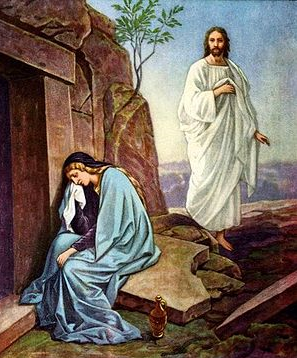
Christ is Risen: The world below lies desolate.
Christ is Risen: The spirits of evil are fallen.
Christ is Risen: The angels of God are rejoicing.
Christ is Risen: The tombs of the dead are empty.
Christ is Risen indeed from the dead, the first of the sleepers, Glory and power are his forever and ever.
— St. Hippolytus of Rome
7 Apr
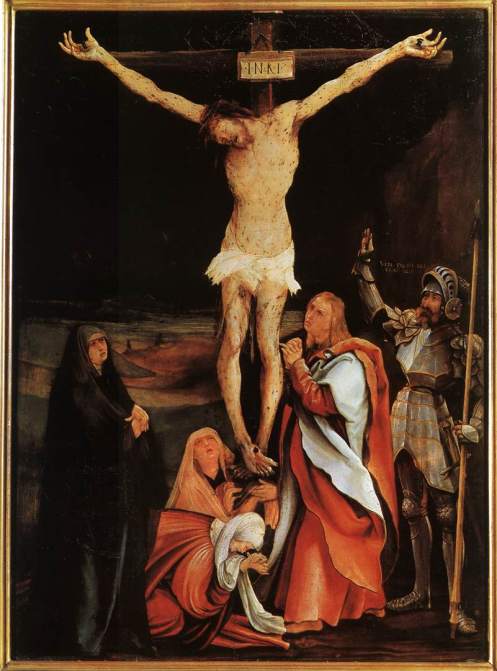
Behold the Lamb of God who takes away the sins of the world!
5 Mar
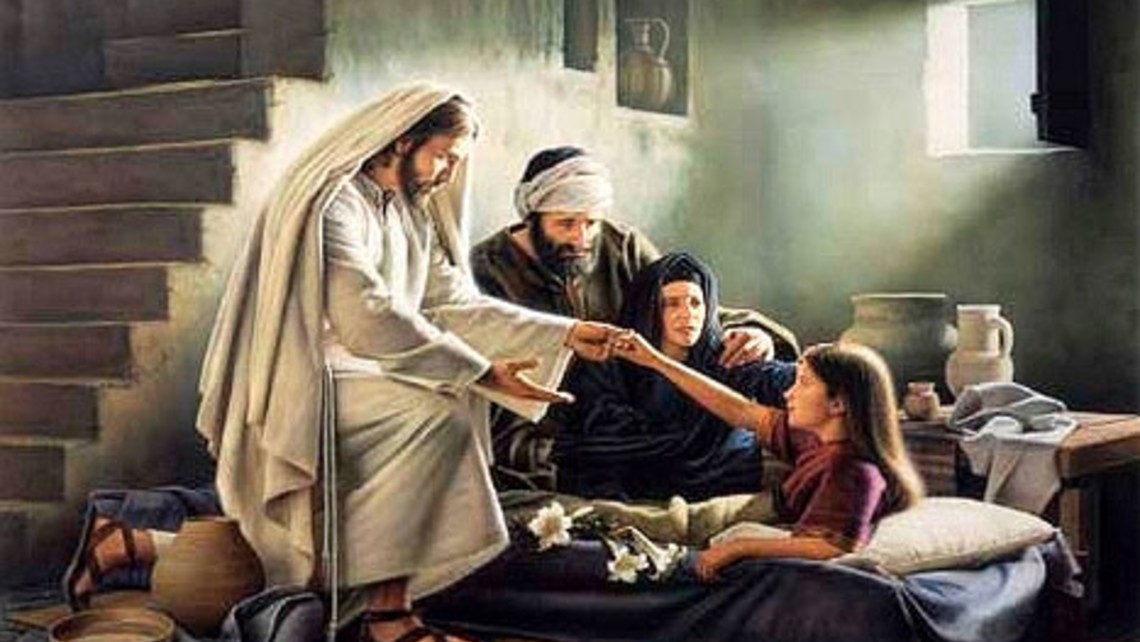
Jesus raises a young girl from the dead (Luke 8:40-42)
“Never let an impossible situation intimidate you. Let it motivate you—to pray more, trust more, expect More.” —Pastor Rick Warren
Have you ever felt like you were in an impossible situation? Maybe it was a scary medical diagnosis. Or perhaps a loved one died. Maybe a job was lost and it took a long time to find the next one. Or perhaps a child was gravely ill. Regardless of the cause, countless people have experienced this feeling. I have certainly been there.
This feeling can be scary and may lead to any number of problems, including sadness, depression, loneliness, and feelings of isolation. Left unchecked, it can lead to thoughts about harming oneself or others, and even suicidal thoughts.
I can do all this through him who gives me strength. —Philippians 4:13*
Fortunately, God has the perfect way of dealing with impossible situations. Jesus Christ is the God of the impossible. The Merriam-Webster dictionary defines “miracle” as, “an extraordinary event manifesting divine intervention in human affairs.” The Gospels have numerous accounts of miracles performed by Jesus. Here are a number of them.
Early in his ministry on Earth, Jesus turned water into wine at a wedding in Cana of Galilee (John 2). He calmed a storm on the Sea of Galilee (Luke 8) and walked on water (Matthew 14). Following a long day of preaching, Jesus fed a crowd of 5,000 with seven loaves of bread and a few small fish (Mark 6). He healed the lame (John 5) and cleansed Lepers of their disease (Luke 17). Jesus cured a woman suffering with a fever (Matthew 8) and he cast out demons (Luke 8). He gave sight to the blind (John 9) and cured a woman with a bleeding disorder (Matthew 9). Jesus raised his friend Lazarus from the dead (Matthew 11). And finally, on the third day following his own death by crucifixion, Jesus rose from the dead, defeating sin and death forever.
Jesus was and remains the God of the Impossible for those who come to him as their Lord and Savior. I believe this in my heart. Believing is easy when things are going my way. I am trying to learn how to put this into action when the going gets too tough for me to handle. Every morning I meditate on Psalm 143 as part of my daily devotion time. I find verses 8 – 10 to be a great source of encouragement and comfort, especially when I feel overwhelmed by life. I hope you might find them equally useful.
Let the morning bring me word of your unfailing love,
for I have put my trust in you.
Show me the way I should go,
for to you I entrust my life.
Rescue me from my enemies, Lord,
for I hide myself in you.
Teach me to do your will,
for you are my God;
may your good Spirit
lead me on level ground.
God can do nothing for me until I recognize the limits of what is humanly possible, allowing Him to do the impossible. —Oswald Chambers
*All Bible quotes are NIV.
22 Feb

Out of the depths I cry to You, O LORD! O Lord, hear my voice! Let Your ears be attentive to the voice of my pleas for mercy! If You, O LORD, should mark iniquities, O Lord, who could stand? But with You there is forgiveness, that You may be feared. I wait for the LORD, my soul waits, and in His Word I hope; my soul waits for the Lord more than watchmen for the morning, more than watchmen for the morning. O Israel, hope in the LORD! For with the LORD there is steadfast love, and with Him is plentiful redemption. And He will redeem Israel from all his iniquities. (Psalm 130)
Lent begins today, a 40 day season of penitence and prayer. It’s a good time to meditate on the Seven Penitential Psalms:http://www.edgeofenclosure.org/intro7penitentialpsalms.html.

 Divine Simplicity
Recent Comments