A God of second chances

As I began penning this piece, it was January 1st, a day traditionally associated with resolutions. According to the American Heritage dictionary, a resolution is “a firm decision to do something.” Common resolutions people make for the New Year include exercising more, losing weight, curbing alcohol consumption, and paying off credit cards. Making a New Year’s resolution requires one to recognize they’ve failed in some facet of their life and need a second chance to set things right.

Everybody needs a second chance at one time or another.  Fortunately for Christians, we serve a God of second chances, who shows His grace and mercy to sinners who repent and turn to Him. The Bible is full of second chance stories.  Here are just a few, starting with the book of Genesis.

In Genesis 2, we are introduced to Adam and Eve, who God created man and woman and placed in a beautiful garden in Eden.  There they tended the garden and enjoyed its magnificent food and natural beauty. God made only one rule for the garden.  The couple was not to eat from the tree of the Knowledge of Good and Evil. You’ve likely heard the story—in Genesis 3, Adam and Eve break the rule and as punishment they are forever cast out of the garden and forced to work the soil to raise food by the sweat of their labor. In chapter 4, Eve gave birth to two sons, Cain and Abel.  Out of jealousy, the older brother Cain murdered his brother Abel. Yet by the end of chapter 4, Eve gives birth to another son named Seth, to replace Abel. Seth was surely a second chance for Adam and Eve, even though there is no evidence they ever repented of their sins against God.

In Genesis 6, begins the story of Noah and the great flood. By this point in time mankind has become evil and rebellious towards God.  It is so bad that God actually regrets having made man.  Yet there remains Noah, a righteous man who is favored by God. God tells Noah he is going to cause a flood to destroy every living thing on the surface of the Earth.  He instructs Noah to build a giant ark (or ship) and to fill it with certain animals that will repopulate the Earth after the flood waters recede. Noah obeys God’s instructions. In addition to the animals, Noah takes his wife, his sons, and his sons’ wives into the ark. Noah’s entire family received a second chance and survived the flood.  From this small group, the entire Earth was repopulated with humans.

In Genesis 12, God calls Abram, a keeper of flocks and herds, out of Babylon to go to the land of Caanan, which God pledges to give Abram’s descendants. Abram takes his wife Sarai and brother-in-law Lot and departs for Caanan along with his animals and servants. Sarah was barren and could not give Abraham an heir. Years later, with Sarai and Abram growing old and fearful Abram might die without an heir, Sarai convinces him to take Sarai’s Egyptian slave Hagar as his wife to bear an heir for Abram. Hagar bore him a son named Ishmael when Abram was 86 years old.

But God had plans for Abram and Sarai. When Abram was 99 years old, God made a covenant with him, changing his name to Abraham, meaning “father of many nations.” God also changed Sarai’s name to Sarah, meaning “princess” and promised that she would bear a son, Isaac, who would be the heir of the covenant. Sarah conceived in her old age. Abraham was 100 years old when Isaac was born. As a natural born heir, Isaac was a second chance for Abraham some 14 years after Ishmael, Abraham’s son by a slave, was born.

The Apostle Peter’s denial of Jesus is described in all four Gospels.  Just before Jesus was arrested, He warned His disciples of what is going to happen. Peter boasts in John 13, that he would lay down his life for Jesus.  Jesus counters and declares Peter will deny him three times. After Jesus’ is arrested, Peter denies Jesus three times out of fear of His captors. This is described in John 18. Jumping to John 21, the resurrected Jesus forgives Peter and reinstates him to his former position of leadership, commanding Peter to care for Jesus’ flock (people).

Like Peter, it is easy for us to believe we are more righteous than we really are. Like Jesus forgave Peter, so we ought to forgive those who sin against us. Christians serve a God of second chances. While I have given only a few examples, God gave second chances to many people in the Bible, forgiving and restoring them after they sinned or disobeyed Him. As Peter learned firsthand, God offers the ultimate second chance to all humanity through His Son Jesus Christ, who died on the cross for our sins and rose again to give us eternal life. God invites us to respond to His second chance by repenting of our sins, trusting in His grace, and following His will.

Look up from the situation you lament and let it become the pleasant place where God comes to save you.–Rev. Tim Fountain

But God demonstrates his own love for us in this: While we were still sinners, Christ died for us. –Romans 5:8 (NIV)

Walking alongside a friend

During this church season of Advent, Christians anxiously await the celebration of Jesus’ birth. We commemorate His arrival in this world on December 25, the Feast of the Nativity of Our Lord Jesus Christ.

As we await the arrival of the Christ child, my wife and I recently said goodbye to a departing friend who moved to another state to be near family. I’ll call him John for the sake of privacy. John was diagnosed with Autism Spectrum Disorder (ASD) about two years ago, but has displayed ASD symptoms most of his life. According to the Centers for Disease Control, an estimated 5,437,988 (2.21%) adults in the United States have ASD.

For the past three and a half years my wife and I walked alongside John, providing him companionship, counsel, and a small lifeboat to climb into during frequent storms he encountered. John first came into our lives by means of our church. One day our priest asked us if we would be willing to help a single man who had recently arrived in our community. We said yes without really knowing what to expect. I share the details below not to glorify my wife and me; give all the glory to God! I share this to make a point which I’ve discussed before—being a follower of Jesus Christ can be messy.

We answered 2 a.m. phone calls so John could rant about whatever was bothering him at the time. We shared meals with him and checked periodically on his welfare and the state of his small apartment. We tried to help smooth the situation when John irritated his neighbors. We helped him move to a new apartment.

We drove him to appointments and to help him tend to his local business affairs when something needed fixing. We provided in-person support when John’ family could not contact him because his phone was (frequently) broken or lost, or when he was simply not answering calls or emails. 

We invested many conversations with some of his family members who are active stakeholders in John’s life–over lunch, dinner, coffee, phone calls, and Zoom meetings. We supported John and these same family members during the complex endeavor to have him evaluated for ASD. We coordinated the dedication of funds from our church’s rummage sale to help defer the costs of the evaluation; printed forms and obtained John’s signatures; and prayed for the process.  We coordinated with our church members to provide overnight accommodations for John’s family members when they periodically visited the area to check on his welfare.

Walking with John was not easy, but it was very spiritually rewarding and has made us three new friends, including John and two very special members of his family—they know who I mean. As we anxiously await the Feast of the Nativity and the celebration of the Christ child’s birth, Christians should recall that following Christ can get messy—Just read the book of Acts and see. 

In June, 2019 I published a blog piece titled “Messy Christianity.”  I invite the readers to read it again or discover it for the first time. https://divine-simplicity.com/2019/06/08/messy-christianity/

I wish you all a very blessed Christmas and a prosperous New Year. –Zack

Advent 2023

Almighty God, as we begin this season of Advent,

we thank you for your grace and mercy in sending your son Jesus

to be our Savior and Lord.

We confess that we have not always lived in the light of His coming,

and we have often wandered from your ways.

Forgive us, we pray, and renew us by your Spirit,

that we may watch and pray for His glorious return,

and follow Him in holiness and love.

Grant us, O Lord, the wisdom to discern the signs of the times,

and the courage to proclaim the good news of His kingdom

to a world in need of hope.

In Jesus name we pray. Amen.

Now thank we all our God*

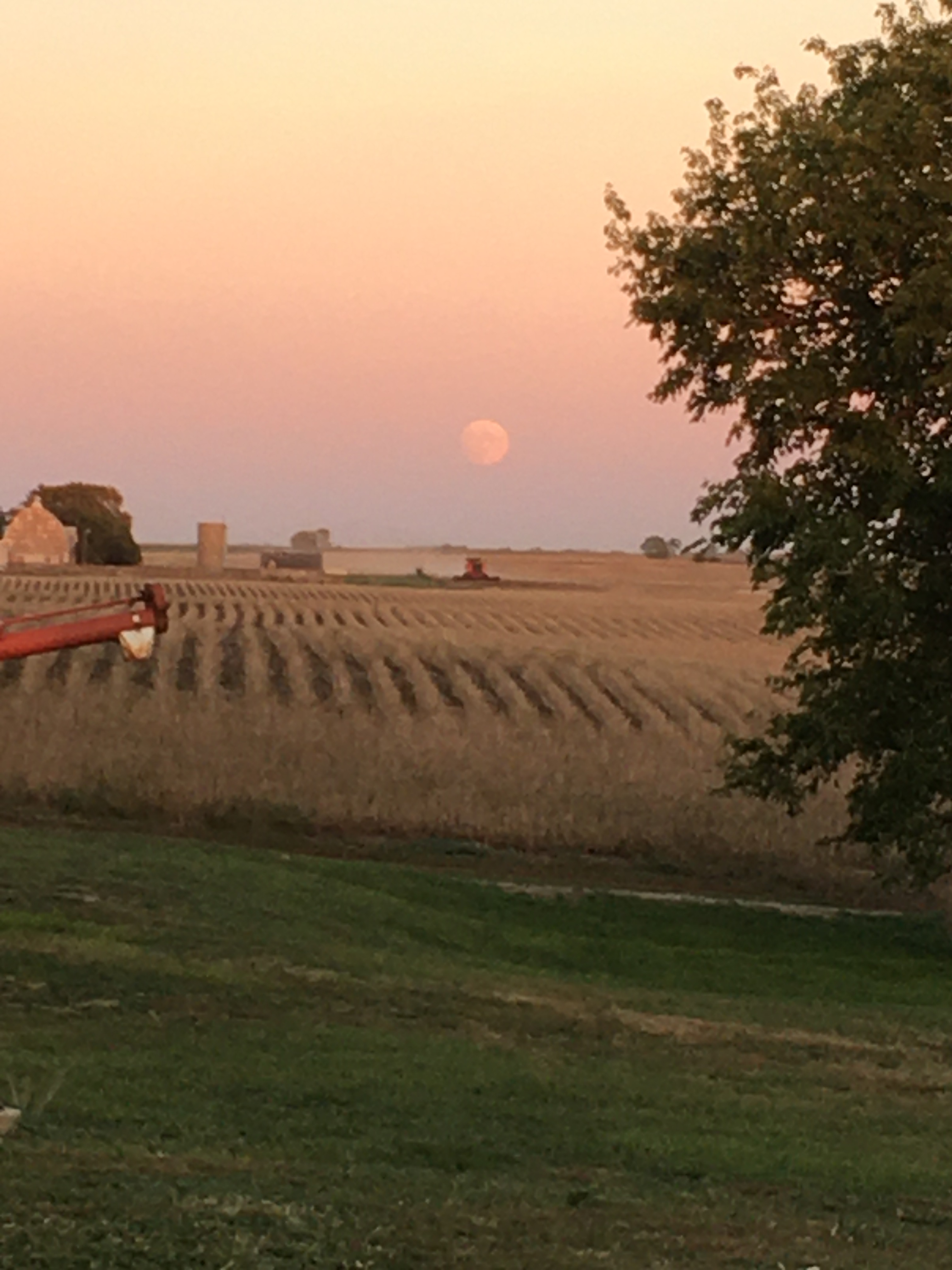
Harvest moon near Sioux Falls, South Dakota

Thanksgiving Day 2023 – Pause for a moment today and thank God for all His blessings!

1. Now thank we all our God
with heart and hands and voices,
who wondrous things has done,
in whom God’s world rejoices,
who from our mother’s arms
has blessed us on our way
with countless gifts of love,
and still is ours today.

2. Oh may this bounteous God
through all our life be near us,
with ever joyful hearts
and blessed peace to cheer us,
and keep us all with grace,
and guide us when perplexed,
and free us from all ills
in this world and the next.

3. All praise and thanks to God
who reigns in highest heaven,
the Father and the Son
and Spirit now be given,
the one eternal God,
whom heaven and earth adore,
for thus it was, is now
and shall be evermore.

*Nun danket alle Gott (Now thank we all our God), BWV 192 is a church cantata composed by Johann Sebastian Bach in 1730. https://www.youtube.com/watch?v=quYd7qJzsAE

Heavenly homes

“You can’t take it with you” is an adage often used in discussions surrounding money and death. Similarly, if you’ve been a church going Christian for a while, you might have heard a preacher say something akin to, “You never seen a hearse pulling a U-Haul trailer.” Well, perhaps the person in the photo never got the word, but the spirit of the idea remains valid. Naked we were born and naked we will stand before God’s judgement seat after we depart this world.

I recently heard a sermon where the preacher suggested that maybe there is something we can take with us when we die—souls. By this, he meant that in heaven we will see the one’s we’ve led to faith in Jesus Christ. I believe the preacher got it right. In death, we can take something with us after all.

Dear friends, since God so loved us, we also ought to love one another. 1 John 4:11

God has surrounded each of us with people we ought to love and want to take to heaven with us—family, loved ones, friends and other acquaintances. This got me thinking about how can we make our homes a little more heaven-like for our children.

I accepted Christ as my Savior when I was eight years old. For the next 10 years I did my best to follow Him as I was able. Then came college, where I drifted away from the church. I married just before graduating and continued my journey “in the wilderness” with my then non-Christian wife. 

My period of wandering away from Christ ended abruptly some seven years after it started.  It happened on the occasion of the birth of my wife’s and my first child. The first time I gazed at this tiny new human that God had gifted us was a wakeup call from the Holy Spirit. I literally heard, “she’s your responsibility.” I took this as a commission to raise our new daughter in a Christ-centered home. Like the Prodigal Son, I had come to my senses. My new insistence on raising the child in a Christian home came as a shock to my wife, but thanks be to God she slowly became a believer herself, as did our daughter.

Now I understand our greatest responsibility as Christian parents is to raise children who are Christ followers. How to go about that differs from family to family.  As Christian author and radio host Susie Larson has written, “Refuse the temptation to form your children into your own image.  They are the handiwork of God. He will show you how to love them, lead them and pray for them.” My advice would be that you should make decisions for your children based on Godly principles. You need search no farther than the Holy Bible to find sound child rearing instruction.

For many Christian homes, the concept of Sunday as the Sabbath has fallen by the wayside.  Sundays have become days for children’s sports league competitions, watching NFL football games, doing household chores, and almost anything but worshiping our Creator. The fast-paced life found in many modern-day households is a challenge to living Christ-centered lives. Observing the Sabbath establishes the perfection conditions for enjoying the Christ-centered, fellowship that God desires for each of our families.

Be forewarned! Deciding to create a “heavenly” home environment, one that is Christ-focused, won’t come without a price. It’s almost certain to create conflict. This can be extremely challenging, as those we love the most are often the ones who hurt us the worst. Fortunately, God has given us the perfect example of forgiveness in Jesus Christ. God so loves us that he forgave all of our sins through the death and glorious resurrection of his beloved Son. The pathway to building heavenly homes begins and ends with the Son.

Start children off on the way they should go, and even when they are old, they will not turn from it. –Proverbs 22:6

*All Bible quotes are NIV

Finding work is hard work

Prayer does not fit us for the greater works; prayer is the greater work. –Oswald Chambers

I once was employed under contract as a workforce developer for the Commonwealth of Pennsylvania. During the course of serving in this role I performed as a case manager for several hundred men and women who had lost their jobs. For the most part, my clients were blue collar workers from manufacturing industries in the Greater Pittsburgh area. If there’s one lesson I learned from this experience, it is that the only thing a worker complains more about than his or job is complaining about not having a job to go to each day.

For the past 12 years I’ve helped job seekers as a volunteer job coach. Many of those I assist are Christians.  I encourage believers to put God at the center of their job search. Christians job seekers can approach the process with the same principles that guide their faith and values. The following discusses some tips and guidance I give them.

Prayer: Begin by seeking God’s guidance through prayer. Ask for wisdom, discernment, and clarity in your job search. Pray for guidance on what kind of work aligns with your skills, interests, and values.

A prayer – Heavenly Father, you know my needs before I speak them. I come to You humbly seeking guidance and mercy in my job search. Provide suitable opportunities and lead me through a journey aligned with Your will. Grant me strength, wisdom, and favor as I seek employment.

When you are unemployed: I encourage unemployed job seekers to make the job search process their full-time job. Try to work at it at least six hours per day, five days per week. Make church, prayer and scripture reading part of your routine. Set aside time for family, fitness, recreation, and rest.   

Reflection: Reflect on your skills, interests, and values. Consider what type of work aligns with your talents and passions. This self-assessment can help you identify job opportunities that resonate with your God-given abilities.

Networking: Build and leverage your network of friends, family, and fellow believers. Networking can often lead to job opportunities and provide valuable insights into companies and industries. Attend church events and gatherings to connect with others who might have job leads or advice. Search the Internet for job networking groups near you.

A prayer – Heavenly Father, Guide and bless me as I network for my job search. May the connections I make be in accordance with Your will for my life. Help me to build meaningful relationships leading to opportunities.

Resume and cover letter: Build a well-written resume and cover letter that highlight your skills and experience. Be honest and accurate about yourself.

Online job search: Use online job search platforms to find job openings. Websites like LinkedIn, Indeed, and others can help you identify job opportunities matching your qualifications.

Employer values: Research potential employers to ensure their corporate values and culture align with your beliefs and principles. Investigate their mission statement, corporate social responsibility, and work environment.

Christian Ethics Check: Ensure that the job you’re pursuing doesn’t involve unethical practices or conflicts with your Christian beliefs. For example, consider the ethical implications of the products or services the company provides.

Interview preparation: Prepare for job interviews by practicing common interview questions and formulating answers that reflect your values and experiences. Be honest and transparent during the interview process.

A prayer – God of all wisdom, you have promised to give wisdom to anyone who asks. As I approach my interview, please give me wisdom in my speech. Guide my thoughts and direct my steps. When I experience uncertainty and confusion, may I lean on your limitless wisdom. May your Holy Spirit be at work in me like a lamp to my feet and shield to my mind. Help me to think clearly and calmly. Help me to speak with confidence and clarity. Help me to glorify you in this interview.

Work-life balance: Prioritize work-life balance. Overworking can be detrimental to your spiritual and personal lives. Seek employers who offer flexibility and understand the importance of maintaining a healthy work-life balance.

Patience and Trust: Job searches are marathons, not sprints. Trust in God’s plan for your life and exercise patience in the job search process. Sometimes, it may take time to find the right opportunity that aligns with your values and skills.

Seek advice: Consult with mentors, pastors, or other trusted individuals in your Christian circles for guidance and support during your job search. They can provide valuable insights and spiritual advice.

Remember that the job search process can be challenging, and it’s important to remain faithful to your principles and values throughout. Seek opportunities that allow you to be a positive influence in your workplace and community, and always strive to honor God in your work.

A prayer – Heavenly Father, help me to remain diligent in my job search because I know it is only with Your guidance that I can truly succeed.  Thank You, Holy Father, because I have faith that you are leading me toward the perfect employment opportunity.

*AI was used to search for the prayers used in this piece.

Israel at War

Pray for the peace of Jerusalem: ‘May those who love you be secure. May there be peace within your walls and security within your citadels.’ -Psalm 122:6-7 (NIVUK)

Eternal God, in whose perfect kingdom no sword is drawn but the sword of righteousness, no strength known but the strength of love: Strengthen and protect those affected by the Israel-Hamas war, and so mightily spread abroad your Spirit, that all peoples may be gathered under the banner of the Prince of Peace; to whom be dominion and glory, now and for ever.

What do you believe?

King David stretches out his hands in Prayer

Late in the spring of 2022 I had highly invasive surgery that laid me low for about 90 days.  It was miserable. Fast forward to the present and I’m currently recovering from another surgical procedure that left me feeling, weak, bruised and even despairing. In both instances, I found it comforting to meditate on the word of God. In my weakened state from the most recent surgery, I found time to meditate on what being a Christian means to me and how I could best explain it to an unbeliever. There are dozens of examples of similar attempts on the Internet, so please allow me to add to the discussion. If nothing else, I hope some readers might be motivated by my awkward musings and take a moment to dwell upon their own Christian beliefs.   

There are several key Christian principles and values that hold great significance and guide the faith and actions of a believer, or Christ follower as I like to call myself. While interpretations and emphasis vary between various individuals and denominations, the following are some fundamental aspects of Christianity that matter to me and seem to be widely accepted amongst fellow believers.

Faith in Jesus Christ – Central to being a Christian is having faith in Jesus Christ as the Son of God and the Savior of the world (Ephesians 2:8). All believers are encouraged to confess their sins to Jesus, ask his forgiveness, and receive the free gift of salvation. The Scriptures encourage us to have a personal relationship with Jesus and to endeavor to follow His teachings (Galatians 2:20).

The Bible as the Word of God – I believe the Bible is the inspired Word of God, written by the hands of men who were guided by God’s Holy Spirit (2 Timothy 3:16). It serves as a guide for faith and practice. Studying and applying its teachings is a vital aspect of life as a Christ follower.

Prayer – Prayer is the means of communication between believers and God. Christians are encouraged to pray regularly for guidance, thanksgiving, supplication, and fellowship with God. Prayer is the pathway to God’s peace (Philippians 4:6-7). We are also taught by the Scriptures to say prayers of intercession for others. Both believers and unbelievers, both friends and enemies (Matthew 5:44). 

Love and Compassion – Following Jesus’ command to love one another (John 13:34-35), Christians are called to show love and compassion to their neighbors, both fellow believers and others. This includes acts of kindness, charity, and forgiveness. These acts are not a means of earning salvation.  Rather, they are an outward expression of thanksgiving for the gift of salvation I have received from God through the death of God’s Son Jesus, that purchased the forgiveness of my sins.

Worship and Fellowship – Regular worship services, communal prayer, and fellowship with other believers are important for spiritual growth and building a sense of community. As the living body of Christ, the church requires many different parts to make it function efficiently (1 Corinthians 12:12-27).  There’s a role in the church for everyone.

Repentance and Forgiveness – Christians are taught to acknowledge and repent of their sins, seeking forgiveness through the grace of God. Forgiving others is also emphasized as a key aspect of Christian life (Matthew 18:21-22).

The Great Commission – Following Jesus’ command to “go and make disciples of all nations” (Matthew 28:19-20), I and many other Christians consider evangelism and spreading the Gospel as a central mission. This is one reason I write this blog.

Stewardship – Believers are encouraged to be responsible stewards (Matthew 25:14-30). This includes not only stewardship of our finances, but stewardship of God’s creation.

Mysteries – There are many mysteries in Christianity that remind us faith is not about having all the answers. Among these are the virgin birth of Jesus; whether Christ is physically present in the Holy Communion; and the doctrine of the Holy Trinity. These mysteries invite believers to explore the unknown and cultivate a deeper trust in God. They stretch the limits of human reason and promote a realization that there are aspects of God’s nature and plan that exceed our understanding. These will be explained to us in heaven one day.  Paul sums it up in 1 Corinthians 13:12 like this, “For now we see only a reflection as in a mirror; then we shall see face to face. Now I know in part; then I shall know fully, even as I am fully known.” I challenge fellow Christians to explore these mysteries and consider how you would attempt to explain them to a non-believer.

Thanks for taking the time to read this.  I hope it encourages you to explore your own faith.

*All Bible quotes are NIV.

Separation Anxiety

Canine separation anxiety is a complex psychological disorder affecting many dogs and their owners. When left alone, the otherwise wonderful pets affected by the disorder experience overwhelming distress, displaying a wide range of associated harmful behaviors. These range from incessant barking and destructive chewing to house soiling, total home wrecking and attempts to escape. Dogs are social creatures that thrive on the human companionship, which can make the absence of their owners highly disturbing.

My wife and I live in a multigenerational household comprised of grandparents, parents, children, and grandkids. It’s not uncommon for our daughter, son-in-law, and grandsons to be away for a weekend or longer vacation. When this occurs the family dog Mars, a large Labrador, is visibly moved. Mainly, he lies motionless on the floor or bed, and lets out big lonely sighs. My wife and I say that he “misses his humans.” While Mars doesn’t display destructive behaviors, family separation clearly makes him lonely for those he loves.

Loneliness is a key element of separation anxiety. It is not simply the absence of company, but rather a deep sense of isolation that can envelop practically anyone. It’s possible to feel lonely even while surrounded by a host of others. As a career Army officer, I endured multiple long deployments to Africa, the Middle East and the Balkans.  In addition to the deployments, there were many other extended periods of family separation when I was required to attend training, exercises, and formal schools. In each instance, I suffered bouts of loneliness caused by being separated from those whom I love most, my wife and children. I sometimes became increasingly anxious as anticipated periods of separation approached.

The Apostle Paul looked forward to death, but not because he was depressed.  He simply wished to again be in the physical presence of his first love, Jesus. In the first chapter of his letter to the Philippians (v. 21-24*) he wrote, “For to me, to live is Christ and to die is gain. If I am to go on living in the body, this will mean fruitful labor for me. Yet what shall I choose? I do not know! I am torn between the two: I desire to depart and be with Christ, which is better by far; but it is more necessary for you that I remain in the body.”   

In Mark chapter 14 the disciples eat the Passover meal with Jesus and then go to the garden of Gethsemane. In Gethsemane, Jesus went off by Himself to pray. As fully man and fully God, He knew exactly what was in store for Him—torture, crucifixion, and death. Just a few days prior to this Jesus had told his disciples plainly, “We are going up to Jerusalem, and the Son of Man will be delivered over to the chief priests and the teachers of the law. They will condemn him to death and will hand him over to the Gentiles to be mocked and flogged and crucified. On the third day he will be raised to life!” (Matthew 20:18-19)

Despite this foreknowledge, Jesus’ prayer in Gethsemane shows He was not distressed over any of the coming physical violence. He was in agony knowing that when the sins of the world were laid on Him, God the Father would turn away. Jesus dreaded the coming separation from God!  We are reminded of this later when we hear His impassioned cry from the cross, “My God, my God, why have you forsaken me?” (Matthew 27:46)

After the crucifixion, Jesus’ disciples suffered with separation anxiety. John 20:10 describes them hiding in fear of the Jewish leaders. No doubt they feared the Romans too!  After all, they’d been hanging out with this “criminal” who was perceived by some as a threat to Roman authority. Their teacher and master had, by all practical appearances, made a bunch of empty promises and then left them alone. But it was not so.  Behind the locked doors where they hid, the resurrected Jesus appears to His disciples in the flesh (John 20:19-20).

During his ministry, Jesus devoted a lot of time and effort to preparing His disciples for the day when He would be physically absent from them. He reassures them in John 14:15-18, saying “If you love me, keep my commands. And I will ask the Father, and he will give you another advocate to help you and be with you forever—the Spirit of truth. The world cannot accept him, because it neither sees him nor knows him. But you know him, for he lives with you and will be in you. I will not leave you as orphans, I will come to you.” Jesus final reassuring words to his disciples in Matthew 28:20b are, “and surely I am with you always, to the very end of the age.”

Isaiah 26:9 – “My soul yearns for you in the night; in the morning my spirit longs for you. When your judgments come upon the earth, the people of the world learn righteousness.

Psalm 42:1-2 – “As the deer pants for streams of water, so my soul pants for you, my God. My soul thirsts for God, for the living God. When can I go and meet with God?”

Psalm 143:6 – “I spread out my hands to you; I thirst for you like a parched land.”

Psalm 73:24 – “Whom have I in heaven but you? And earth has nothing I desire besides you.”

Thank God for leaving the Spirit of Truth with all believers. We need only to listen for His still, small voice to find Him. Thank God that He loves all of us so much that our foolish fears and anxieties don’t upset Him. Thank God He’s so patient with me, and that He is patient with all of us, even when we are impatient with Him. He loves us unconditionally, so much that he stretched out His arms on the cross to suffer and die for all of us. He will not send us anywhere He is not going; and when it comes to death, He’s been there and done that already. No matter how anxious, frightened, and lonely we may become, the Holy Spirit will keep us in His grip until the day Jesus bring us safely home. We are never alone.

*All Bible quotations are NIV

UFO hearings stir curiosity

UFOs, or Unidentified Flying Objects, have gotten a lot of headlines lately due to coverage of the ongoing Congressional hearings. I thought it a good time to reblog this piece I wrote in 2016. I hope you enjoy it. –Zack