My heart is stirred by a noble theme as I recite my verses for the king; my tongue is the pen of a skillful writer. –Psalm 45:1*
A large portion of my wife’s family tree is rooted in Lancaster County, Pennsylvania. Lancaster County is Amish country. Having rejected the modern world, these plain Christians, the descendants of Swiss-German Anabaptists, struggle to maintain an 18th century existence in fast-paced, 21st century America. The county has well over 30,000 Amish residents today.
The Amish are farmers and craftsmen. Stout work horses pull their plows through the fertile fields. They build their own houses and barns and heat them with stoves fired by wood and coal. They make their own furniture. Their houses have no electricity. They have neither television, radio, cell phones, computers, cars nor tractors. They educate their children in one-room schoolhouses. They hold church services in private homes. They know their neighbors and help them when needed. They revere God!
While I’m not ready to give up 21st century conveniences, I must admit there’s a part of me that envies the simple existence of the Amish. Inspired by Amish simplicity, I began writing this Divine Simplicity blog in September 2011 as a Christ-inspired self-help guide on simplifying one’s life.
My blog has evolved considerably over the years, with the topics growing ever broader, but all the while aiming to maintain a focus on Christ and scripture. When I started this blog, I never figured I’d still be at if after a decade. I don’t have many followers, which led me to question the blog’s value. Why I should continue to write it at all. After considerable thinking on this, it all boils down to three things.
I endeavor to ensure that every entry I write honors and glorifies Jesus.I write prayerfully, hoping to inspire serious thought and holy conversation. Billy Graham had this to say:
“Our dress, our posture, our actions should all be for the honor and glory of Christ. Much of our talk as Christians is secular, not spiritual. It is easy to fall into conversational conformity of the world and spend an evening discussing politics, new cars, and the latest entertainment. We often forget that we are to edify one another with holy conversation and that our conversation should be on heavenly, and not exclusively on earthly things.”
Create in me a pure heart, O God, and renew a steadfast spirit within me. –Psalm 51:10
I also write for my own spiritual renewal. Writing a blog entry almost always causes me to search through the Bible, seeking relevant passages supporting the topic I have chosen. For me, searching and studying scripture is cathartic. It draws me closer to God by shifting my thoughts from earthly cares and concerns to Godly thoughts inspired by the Holy Spirit. Writing about the scripture passages I discover reinforces what I learn from them.
I planted the seed, Apollos watered it, but God has been making it grow. So neither the one who plants nor the one who waters is anything, but only God, who makes things grow. –1 Corinthians 3:6-7
Finally, I write to sow seed containing the Good News of Jesus Christ. Perhaps if I, through my blogging, can plant a seed with the Gospel message in a reader’s heart, then maybe another will water it so that God will make it grow. I did some rough math and figure that during the course of nearly 13 years I’ve spent around 1,500 hours researching and writing this blog. If it has helped even one person find his or her way to Christ’s salvation, then I’m satisfied that it has done its job. Soli Deo gloria.
Whatever subject I preach, I do not stop until I reach the Savior, the Lord Jesus, for in Him are all things. –Charles Spurgeon
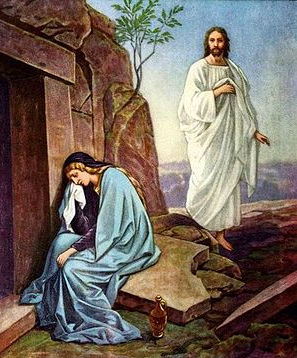
Now after the Sabbath, as the first day of the week began to dawn, Mary Magdalene and the other Mary came to see the tomb. 2 And behold, there was a great earthquake; for an angel of the Lord descended from heaven, and came and rolled back the stone from the door, and sat on it. 3 His countenance was like lightning, and his clothing as white as snow. 4 And the guards shook for fear of him, and became like dead men.
5 But the angel answered and said to the women, “Do not be afraid, for I know that you seek Jesus who was crucified. 6 He is not here; for He is risen, as He said. Come, see the place where the Lord lay. 7 And go quickly and tell His disciples that He is risen from the dead, and indeed He is going before you into Galilee; there you will see Him. Behold, I have told you.”
8 So they went out quickly from the tomb with fear and great joy, and ran to bring His disciples word.
The Women Worship the Risen Lord
9 And as they went to tell His disciples, behold, Jesus met them, saying, “Rejoice!” So they came and held Him by the feet and worshiped Him. 10
As I began penning this piece, it was January 1st, a day traditionally associated with resolutions. According to the American Heritage dictionary, a resolution is “a firm decision to do something.” Common resolutions people make for the New Year include exercising more, losing weight, curbing alcohol consumption, and paying off credit cards. Making a New Year’s resolution requires one to recognize they’ve failed in some facet of their life and need a second chance to set things right.
Everybody needs a second chance at one time or another. Fortunately for Christians, we serve a God of second chances, who shows His grace and mercy to sinners who repent and turn to Him. The Bible is full of second chance stories. Here are just a few, starting with the book of Genesis.
In Genesis 2, we are introduced to Adam and Eve, who God created man and woman and placed in a beautiful garden in Eden. There they tended the garden and enjoyed its magnificent food and natural beauty. God made only one rule for the garden. The couple was not to eat from the tree of the Knowledge of Good and Evil. You’ve likely heard the story—in Genesis 3, Adam and Eve break the rule and as punishment they are forever cast out of the garden and forced to work the soil to raise food by the sweat of their labor. In chapter 4, Eve gave birth to two sons, Cain and Abel. Out of jealousy, the older brother Cain murdered his brother Abel. Yet by the end of chapter 4, Eve gives birth to another son named Seth, to replace Abel. Seth was surely a second chance for Adam and Eve, even though there is no evidence they ever repented of their sins against God.
In Genesis 6, begins the story of Noah and the great flood. By this point in time mankind has become evil and rebellious towards God. It is so bad that God actually regrets having made man. Yet there remains Noah, a righteous man who is favored by God. God tells Noah he is going to cause a flood to destroy every living thing on the surface of the Earth. He instructs Noah to build a giant ark (or ship) and to fill it with certain animals that will repopulate the Earth after the flood waters recede. Noah obeys God’s instructions. In addition to the animals, Noah takes his wife, his sons, and his sons’ wives into the ark. Noah’s entire family received a second chance and survived the flood. From this small group, the entire Earth was repopulated with humans.
In Genesis 12, God calls Abram, a keeper of flocks and herds, out of Babylon to go to the land of Caanan, which God pledges to give Abram’s descendants. Abram takes his wife Sarai and brother-in-law Lot and departs for Caanan along with his animals and servants. Sarah was barren and could not give Abraham an heir. Years later, with Sarai and Abram growing old and fearful Abram might die without an heir, Sarai convinces him to take Sarai’s Egyptian slave Hagar as his wife to bear an heir for Abram. Hagar bore him a son named Ishmael when Abram was 86 years old.
But God had plans for Abram and Sarai. When Abram was 99 years old, God made a covenant with him, changing his name to Abraham, meaning “father of many nations.” God also changed Sarai’s name to Sarah, meaning “princess” and promised that she would bear a son, Isaac, who would be the heir of the covenant. Sarah conceived in her old age. Abraham was 100 years old when Isaac was born. As a natural born heir, Isaac was a second chance for Abraham some 14 years after Ishmael, Abraham’s son by a slave, was born.
The Apostle Peter’s denial of Jesus is described in all four Gospels. Just before Jesus was arrested, He warned His disciples of what is going to happen. Peter boasts in John 13, that he would lay down his life for Jesus. Jesus counters and declares Peter will deny him three times. After Jesus’ is arrested, Peter denies Jesus three times out of fear of His captors. This is described in John 18. Jumping to John 21, the resurrected Jesus forgives Peter and reinstates him to his former position of leadership, commanding Peter to care for Jesus’ flock (people).
Like Peter, it is easy for us to believe we are more righteous than we really are. Like Jesus forgave Peter, so we ought to forgive those who sin against us. Christians serve a God of second chances. While I have given only a few examples, God gave second chances to many people in the Bible, forgiving and restoring them after they sinned or disobeyed Him. As Peter learned firsthand, God offers the ultimate second chance to all humanity through His Son Jesus Christ, who died on the cross for our sins and rose again to give us eternal life. God invites us to respond to His second chance by repenting of our sins, trusting in His grace, and following His will.
Look up from the situation you lament and let it become the pleasant place where God comes to save you.–Rev. Tim Fountain
But God demonstrates his own love for us in this:While we were still sinners, Christ died for us. –Romans 5:8 (NIV)
During this church season of Advent, Christians anxiously await the celebration of Jesus’ birth. We commemorate His arrival in this world on December 25, the Feast of the Nativity of Our Lord Jesus Christ.
As we await the arrival of the Christ child, my wife and I recently said goodbye to a departing friend who moved to another state to be near family. I’ll call him John for the sake of privacy. John was diagnosed with Autism Spectrum Disorder (ASD) about two years ago, but has displayed ASD symptoms most of his life. According to the Centers for Disease Control, an estimated 5,437,988 (2.21%) adults in the United States have ASD.
For the past three and a half years my wife and I walked alongside John, providing him companionship, counsel, and a small lifeboat to climb into during frequent storms he encountered. John first came into our lives by means of our church. One day our priest asked us if we would be willing to help a single man who had recently arrived in our community. We said yes without really knowing what to expect. I share the details below not to glorify my wife and me; give all the glory to God! I share this to make a point which I’ve discussed before—being a follower of Jesus Christ can be messy.
We answered 2 a.m. phone calls so John could rant about whatever was bothering him at the time. We shared meals with him and checked periodically on his welfare and the state of his small apartment. We tried to help smooth the situation when John irritated his neighbors. We helped him move to a new apartment.
We drove him to appointments and to help him tend to his local business affairs when something needed fixing. We provided in-person support when John’ family could not contact him because his phone was (frequently) broken or lost, or when he was simply not answering calls or emails.
We invested many conversations with some of his family members who are active stakeholders in John’s life–over lunch, dinner, coffee, phone calls, and Zoom meetings. We supported John and these same family members during the complex endeavor to have him evaluated for ASD. We coordinated the dedication of funds from our church’s rummage sale to help defer the costs of the evaluation; printed forms and obtained John’s signatures; and prayed for the process. We coordinated with our church members to provide overnight accommodations for John’s family members when they periodically visited the area to check on his welfare.
Walking with John was not easy, but it was very spiritually rewarding and has made us three new friends, including John and two very special members of his family—they know who I mean. As we anxiously await the Feast of the Nativity and the celebration of the Christ child’s birth, Christians should recall that following Christ can get messy—Just read the book of Acts and see.
Thanksgiving Day 2023 – Pause for a moment today and thank God for all His blessings!
1. Now thank we all our God with heart and hands and voices, who wondrous things has done, in whom God’s world rejoices, who from our mother’s arms has blessed us on our way with countless gifts of love, and still is ours today.
2. Oh may this bounteous God through all our life be near us, with ever joyful hearts and blessed peace to cheer us, and keep us all with grace, and guide us when perplexed, and free us from all ills in this world and the next.
3. All praise and thanks to God who reigns in highest heaven, the Father and the Son and Spirit now be given, the one eternal God, whom heaven and earth adore, for thus it was, is now and shall be evermore.
Anyone who has spent some time in a deep swimming pool probably knows the feeling of diving a little too deep and then having to hold their breath while struggling towards the water’s surface, lungs aching for oxygen. The urge to breathe in such a situation is nearly irresistible. Breathing is such a natural part of life that most healthy people do it unconsciously. Breath and breathing hold a special place in the Bible.
2 Timothy 3:16 says, “All Scripture is God-breathed and is useful for teaching, rebuking, correcting and training in righteousness,” i.e., Scripture comes straight from the mouth of God!
In Genesis 2:7, God’s breath equates to life, “Then the Lord God formed a man from the dust of the ground and breathed into his nostrils the breath of life, and the man became a living being.”
We see this again in Ezekiel 37:9, the story of the Valley of Dry Bones. We read, “Then he said to me (Ezekiel), ‘Prophesy to the breath; prophesy, son of man, and say to it, ‘This is what the Sovereign Lord says: Come, breath, from the four winds and breathe into these slain, that they may live.’”
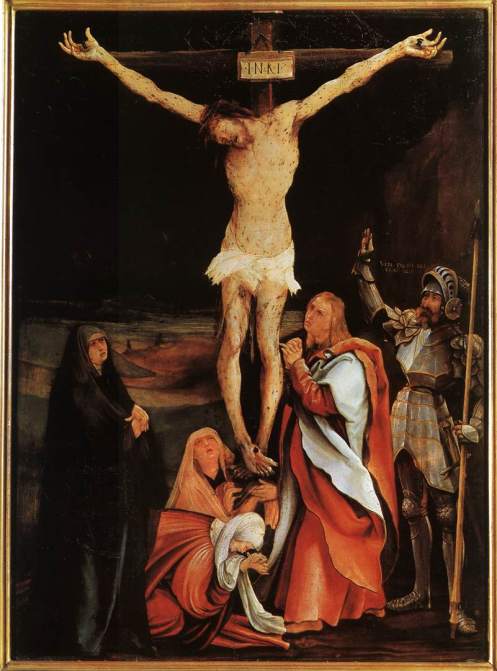
In Luke 23:46, the absence of God’s breath equates to death. We read, “Jesus called out with a loud voice, ‘Father, into your hands I commit my spirit.’ When he had said this, he breathed his last.” Many places in the scriptures tell us someone “breathed his last” and died.
John 20:21-22, in a passage we call the Great Commission, equates the Holy Spirit to Jesus’ breath. It reads, “Again Jesus said, ‘Peace be with you! As the Father has sent me, I am sending you.’ And with that he breathed on them and said, ‘Receive the Holy Spirit.’”
There’s no denying that there is power in the breath of God!
Breath Prayer
I have a friend who recently took a new job in counseling. A lot of his work is done via phone calls. Yesterday he told me, “I finally have a full case load and so I’m frequently very busy… but relearning to breathe and talk to the Lord as I’m dialing a call.” My friend is on to something. Wittingly or unwittingly, he has learned the value of breath prayer. I only learned this lesson recently.
Nancy S. Wiens wrote this about breath prayer:
Within the Orthodox tradition, Breath Prayer appears perhaps as early as the 3rd century. Known as the “Jesus Prayer” or “Prayer of the Heart,” it draws from Mark 10:47, where a blind man, Bartimaeus, calls Jesus to heal him. A common form is, “Jesus Christ, Son of God, have mercy on me.” By placing a few words on the inhale and a few on the exhale, it unites the prayer with the body. (Breath Prayer: An Ancient Spiritual Practice Connected with Science. As found at biologos.org)
Breath prayer focuses on speaking, aloud or silently in one’s heart, a short phrase or prayer while coordinating it with one’s breathing. It can be useful in reducing anxiety, cultivating mindfulness, centering, and forming a deeper connection with God.
To engage in breath prayer, one typically chooses a brief phrase or prayer that is personally significant to them. It can be a simple affirmation, a biblical verse, or a sacred word or name. For example, in Christianity, a common breath prayer is “Lord Jesus Christ, have mercy on me.” Below is a beginner’s list of breath prayers. I highly recommend you give them a try.
As we breathe without ceasing, so should we pray!
*Peace. Be still. – from Mark 4:39
Speak Lord. I am listening. – from 1 Samuel 3:9
You are the Potter. I am the Clay. – from Isaiah 64:8
You, Lord are my shield. And the lifter of my head. – from Psalm 3:3
I am anxious for nothing. I give thanks and make my needs known to you. – from Philippians 4:6
You satisfy me with good things. And I am renewed. – from Psalm 103:1-5
I serve with the strength God provides. To God be the glory. – from 1 Peter 4:11
My flesh and heart may fail. But God is my strength forever. – from Psalm 73:26
You are doing a new thing. Let me perceive it! – from Isaiah 43:19
Keeping my eyes on what is unseen // I do not lose heart. – from 2 Corinthians 4:16-18
Lord, shine your face on me. Lord, give me peace. – from Numbers 6:25-28
When I am afraid // I put my trust in you. – from Psalm 56:3
My heart trusts in God alone. I have no fear of bad news. – from Psalm 112:7-8
* I hope that some of my readers will find this list useful. Thanks to Rachel Mayew for providing it in her “Holistic Faith” blog.
Along the wilderness journey we call life, one will inevitably face periods of adversity. They can begin in a multitude of ways. Some of the most common causes are the death of a loved one, a bad medical diagnosis, the breakup of a love relationship, losing a job, or a personal financial crisis just to name a few. In extreme cases, severe adversity can make one wonder whether their life is worth living anymore.
My life has been overflowing with adversity recently, including the deaths of a beloved uncle and a beloved brother-in-law in rapid succession, and my own health concerns. Prayer and meditation on God’s word can be a great source of comfort when facing adversity. The Lord Jesus has given his followers a model for prayer in what today we generally refer to as “the Lord’s Prayer.” The most familiar form of His prayer is found in chapter 11 of Luke’s Gospel.
It is Jesus model for daily prayer and focuses on approaching life with faith in God, one day at a time. I suspect that Jesus prayed a similar prayer daily. I have found Psalm 143 to be a wonderful companion to the Lord’s Prayer, particularly when believers are navigating periods of adversity. This psalm is attributed to David and is one of the Seven Penitential Prayers found in the Book of Psalms. Below I share some thoughts on how this psalm speaks to me.
Psalm 143 (a form used in the Scottish Episcopal Church)
1 Lord, hear my prayer, and in your faithfulness heed my supplications; answer me in your righteousness.
This is an opening petition acknowledging that God listens to my prayers and takes them to heart. Our God is a good listener and is never too busy to pay attention when one of His children prays. He seriously considers each prayer I lift up to Him, and he answers each according to His holy will.
2 Enter not into judgement with your servant, for in your sight shall no one living be justified. Verse 2 asks God not to judge me by my actions, as all have sinned against Him and fallen short of the total obedience He requires. I can rest assured that I don’t have to earn the right to pray to God. Christ has already paid the price of admission for a space where I may kneel before the throne of God the Father and offer my heartfelt prayers. Jesus is my advocate before the Father and the Holy Spirit prays for me when I lack the proper words to make my own petitions.
3For my enemy has sought my life; he has crushed me to the ground; he has made me live in dark places like those who are long dead. 4My spirit faints within me; my heart within me is desolate.
These verses remind me of 1 Peter 5, which describes Satan as a roaring lion that is on the prowl looking for someone to devour. For me it paints a dark picture of the adversity I am facing, as if I were hiding in a tomb, filled with a spirit of fear and hopelessness, abandoned by God. Jesus must have felt like this hanging on the cross, asking why God had forsaken him.
5I remember the time past; I muse upon all your deeds; I consider the works of your hands. Verse 5 steps back and from the darkness and depression of the two preceding verses as the Psalmist recalls how God has led him through adversity and saved him. As I read this verse, I recall the many times in my life God has rescued me from adversity.
6I spread out my hands to you; my soul gasps to you like a thirsty land.7 O Lord, make haste to answer me; my spirit fails me; do not hide your face from me or I shall be like those who go down to the Pit.
Like a small child reaching for the outstretched hands of a loving parent, I trust in my God for comfort and sustenance. My spirit thirsts for God like the desert thirsts for water. I ask God to respond quickly, as I feel like I’m standing on the brink of disaster.
8Let me hear of your loving-kindness in the morning, for I put my trust in you; show me the road that I must walk, for I lift up my soul to you.
As I begin a new day, I ask God to reassure me of his loving presence. I trust in God to sustain me throughout the day.
9Deliver me from my enemies, O Lord, for I flee to you for refuge.
I ask God to foil the plans of my enemies, both spiritual and physical ones. Seeking refuge from my enemies, I turn to God’s word and prayer for comfort.
10Teach me to do what pleases you, for you are my God; let your good Spirit lead me on level ground.
I ask the Holy Spirit to lead me along a safe path where I may understand God’s will for my life and learn how to do His will. I pray that the Holy Spirit will move the mountains of adversity that are in my way.
11Revive me, O Lord, for your name’s sake; for your righteousness’ sake, bring me out of trouble.
My spirit grows weary and I need God to renew and refresh me. In accordance with His holy will, I ask him to rescue me from all adversity that troubles me.
12Of your goodness, destroy my enemies and bring all my foes to naught, for truly I am your servant.
This closing verse echoes verse 9, reiterating my need for God’s protection from my enemies. I am reminded that as God’s servant, I am owned and protected in His holy service.
So do not fear, for I am with you; do not be dismayed, for I am your God. I will strengthen you and help you; I will uphold you with my righteous right hand.
This is the word that came to Jeremiah from the Lord: “Go down to the potter’s house, and there I will give you my message.” So I went down to the potter’s house, and I saw him working at the wheel. But the pot he was shaping from the clay was marred in his hands; so the potter formed it into another pot, shaping it as seemed best to him. Then the word of the Lord came to me. He said, “Can I not do with you, Israel, as this potter does?” declares the Lord. “Like clay in the hand of the potter, so are you in my hand, Israel. If at any time I announce that a nation or kingdom is to be uprooted, torn down and destroyed, and if that nation I warned repents of its evil, then I will relent and not inflict on it the disaster I had planned. –Jeremiah 18:1-8
If you have ever watched an artisan blowing glass you will probably agree that it is an amazing skill. If you walk around a glass blowing studio, you are likely to see a lot of beautiful finished examples of the artisan’s craft. You are also likely to see are a lot of broken glass fragments from failed attempts to craft a work of art. Glass blowing is very unforgiving and correcting a mistake often proves impossible.
Making clay pottery, on the other hand, is very forgiving. When a skillful potter makes an error, it can often be corrected without abandoning the piece and having to start over. Even when a piece is a total flop the fresh clay can be rolled into a ball and used to start a new piece. Like the potter reshaping a new piece of pottery from a failed one, so is the loving Savior I serve. Jesus is truly a God of the second chance. The bible abounds with examples of people given second chances. Here are just a few from the New Testament.
A woman caught in the act of adultery
John chapter 8 tells of a Jewish woman was caught in the act of adultery. Her accusers—teachers of the law and Pharisees—brought her to Jesus, asserting that the law of Moses dictated she should be stoned for her transgressions. Hoping to trap Jesus with his own words, they asked him what they should do with her. Jesus remains silent for a long time, stooping down and writing in the dirt. He finally responds, “Let any one of you who is without sin be the first to throw a stone at her.” Slowly her accusers departed one by one until there was none remaining. Neither did Jesus accuse her. Instead, he commanded her, “Go now and leave your life of sin.”
Jesus raises the son of a widow from the dead
In Luke chapter 7, beginning at verse 11, we find Jesus traveling through a city called Na’in. Along the way, Jesus observed a funeral procession carry a funeral bier bearing the body of a man who was the only son of a widow. In Jewish society of the day, the man’s death would almost certainly have sentenced his mother to a life of poverty of worse. Having compassion for her, Jesus stopped the procession, touched the bier, and commanded the dead man to rise, upon which the man sat up and began to speak. The people in the crowd were astonished and said, “A great prophet has arisen among us!” and “God has visited his people!”
The demon possessed man
Luke 8:25 begins the story of a demon possessed man. Upon arriving in the country of the Ger′asenes, which is opposite Galilee, Jesus encountered the man, who was naked. We are told he lived among the tombs and was possessed by many demons. When Jesus approached the man, the demons recognized the Son of God and cast the man to the ground while begging Jesus not to destroy them. Jesus cast out the demons drove them into a herd of swine; the herd subsequently rushed down a steep slope and fell into a lake (Sea of Galilee), where they drowned. Afterwards, the formerly possessed man, now clothed and in his right mind, wanted to follow Jesus in his journey. Jesus forbade him, telling him, “Return to your home, and declare how much God has done for you.” We are told, “he went away, proclaiming throughout the whole city how much Jesus had done for him.”
A 12-year-old girl raised from the dead
Luke 8:40 begins the story of a man named Jairus, who is described as a ruler of the Synagogue. Jairus came to Jesus, falling at his feet, and begged him to go and heal his young daughter, who was very ill and near death. Before they can reach Jairus’ house, a messenger comes with news that the girl has died. Despite the news, Jesus continued to Jairus’ house. When he was led to the place where the dead girl lay, Jesus took her by the hand and commanded, “Child arise.” Immediately her spirit returned to her and she stood up.
A thief on the cross next to Jesus’ cross
Luke 23:32 begins the story of two criminals who were crucified at the same time Jesus was—one on His left and one on His right. One criminal railed against Jesus, while the other confessed his sins and pleaded, “Jesus, remember me when you come into your kingdom.” Jesus replied to him, “Truly, I say to you, today you will be with me in Paradise.”
The Prodigal Son
Luke chapter 15, beginning with verse 11, tells the familiar story of the “Prodigal Son.” The young man in the story displayed the utmost disrespect for his father, demanding that his father give him his portion of the old man’s estate while the father was still living. The father acquiesced and gave his son his inheritance. The prodigal consequently went away to a far land, where he squandered his wealth. So complete was his fall that he eventually ended up barely surviving by working a job feeding pigs. He longed to return home. One day, having reached the bottom of the abyss of poverty, he came to his senses and decided to return home and beg his father to let him live there, not as a son, but as a hired servant. Verse 20 describes how his father, who is a figurative character representing God, seeing the returning son from a long way off, ran to meet him, embraced him, and kissed him. The son said, “Father, I have sinned against heaven and before you; I am no longer worthy to be called your son.” But the father said to his servants, “Bring quickly the best robe, and put it on him; and put a ring on his hand, and shoes on his feet; and bring the fatted calf and kill it, and let us eat and make merry; for this my son was dead, and is alive again; he was lost, and is found.”
Repentance
Why does God give us second chances? Because it is His nature to forgive and it is our nature to continually sin. King David exploited Bathsheba sexually. He arranged circumstances so that her husband Uriah would be killed in battle. He betrayed the trust of the people of Israel. Despite the three offended parties, in Psalm 51:4, David confessed that he had sinned against God and God alone.
Luke 15 contains three parables describing how heaven rejoices when a sinner repents and (re)turns to God. 2 Peter 3:9 says, The Lord is not slow about his promise as some count slowness, but is forbearing toward you, not wishing that any should perish, but that all should reach repentance. Mark 1:14-15 says, “Now after John was arrested, Jesus came into Galilee, preaching the gospel of God, and saying, ‘The time is fulfilled, and the kingdom of God is at hand; repent, and believe in the gospel’.” Repentance, while not a prerequisite for receiving a second chance from God, is essential to living a Christ-like life and receiving the gift of salvation through Jesus Christ.
God is the God of the second chance—and the hundredth chance, and the thousandth chance! No matter how rebellious and sinful we’ve been, He always stands ready to forgive us and welcome us home if we truly repent and commit our lives to Jesus Christ. –Billy Graham
The following people have something in common: Cleopatra, Pontius Pilate, Ernest Hemingway, Adolph Hitler, Marilyn Monroe, Freddy Prinze, Kurt Cobain, Anthony Bourdain, and Naomi Judd. Can you guess what it is? If you said all are famous dead people you would be correct, but you would be omitting a key detail. All died by suicide! The number of celebrities who kill themselves is truly astounding.
Clearly, wealth and fame do not come with a promise of personal peace or happiness. Neither does good looks or talent. Yet many people pursue all these. Some people are attracted to celebrities like flies drawn to a sweaty horse. Whether it is Megan and Harry, the Kardashians, or one of the seemingly countless reality shows that fill the nation’s television screens. Speaker of the Lutheran Hour, the Rev. Dr. Martin Zeiglar, writes, “Some people who bemoan our celebrity culture long for the old days. But were the old days any different? Modern mass media has changed our expectations for knowing others and being known by them. But our core human problem is the same. We expect humans to give us what we need-whether we are delivering ourselves to a celebrity in a crate (as a Burt Reynolds fan purportedly did) or asking for a selfie with them, whether we’re looking to fans and friends for recognition or looking to ourselves for fulfillment, the problem is the same.”
In addition to celebrities, humans are naturally drawn to feel-good experiences; the wealthier one is, the more these experiences are available. How we love to spend money on a fun week at Disney World, or going on a cruise, or basking in the sun and surf on Waikiki Beach, or maybe you would prefer a week of skiing in the Austrian Alps. Maybe your feel-good definition is a big shopping spree with credit card in hand. Perhaps you follow music, television, movie, and sports celebrities in the media and seek vicarious pleasure from following their lives. Unfortunately, many people who take so-called dream vacations experience feelings of sadness or emptiness as soon the vacation ends when they are thrust back into the realities of their daily lives. Shopping sprees may satisfy for the moment, but bring trouble when the bills come due. And following the lives of famous celebrities is as likely to make one sad as happy.
At the Transfiguration of Jesus Christ (Luke 9:28-36), Jesus’ disciples Peter, John and James did not want to their experience on the mount to end. They had just seen Jesus’ countenance transfigured, his skin and clothing taking on a radiant glow as He spoke with Moses and Elijah. And they had heard the voice of God proclaim that Jesus is His beloved son. They wanted to extend their own mountaintop experience, saying to Jesus, “Master, it is good for us to be here. Let us put up three shelters—one for you, one for Moses and one for Elijah (verse 33).”
Unlike vacationers depressed and saddened at their end of vacation, the Apostles on the mount of transfiguration understood that God is the true source of happiness, not feel-good experiences, or certain human beings. In 2 Peter 1:16-18 we read, “For we did not follow cleverly devised stories when we told you about the coming of our Lord Jesus Christ in power, but we were eyewitnesses of his majesty. He received honor and glory from God the Father when the voice came to him from the Majestic Glory, saying, ‘This is my Son, whom I love; with him I am well pleased.’ We ourselves heard this voice that came from heaven when we were with him on the sacred mountain.”
To be certain, all people are born with a natural longing that only God can truly satisfy. Putting one’s faith and hope in anything besides God and His son Jesus Christ will ultimately end in disappointment; and it is a form of idolatry. Is your mind focused on the face of an idol? Is the idol yourself? Is it your work? Are you chasing feel-good moments that fade? When one becomes mired in idolatry it impairs their ability to see God, rendering them powerless in the midst of adversity, when their soul most longs for God. Turn to God and find true fulfillment for all your inner longing.
Isaiah 26:9 – “My soul yearns for you in the night; in the morning my spirit longs for you. When your judgments come upon the earth, the people of the world learn righteousness.
Psalm 42:1-2 – “As the deer pants for streams of water, so my soul pants for you, my God. My soul thirsts for God, for the living God. When can I go and meet with God?”
Psalm 73:24 – “Whom have I in heaven but you? And earth has nothing I desire besides you.”
Psalm 143:6 – “I spread out my hands to you; I thirst for you like a parched land.”






 Divine Simplicity
Recent Comments