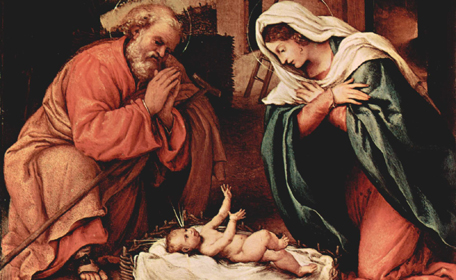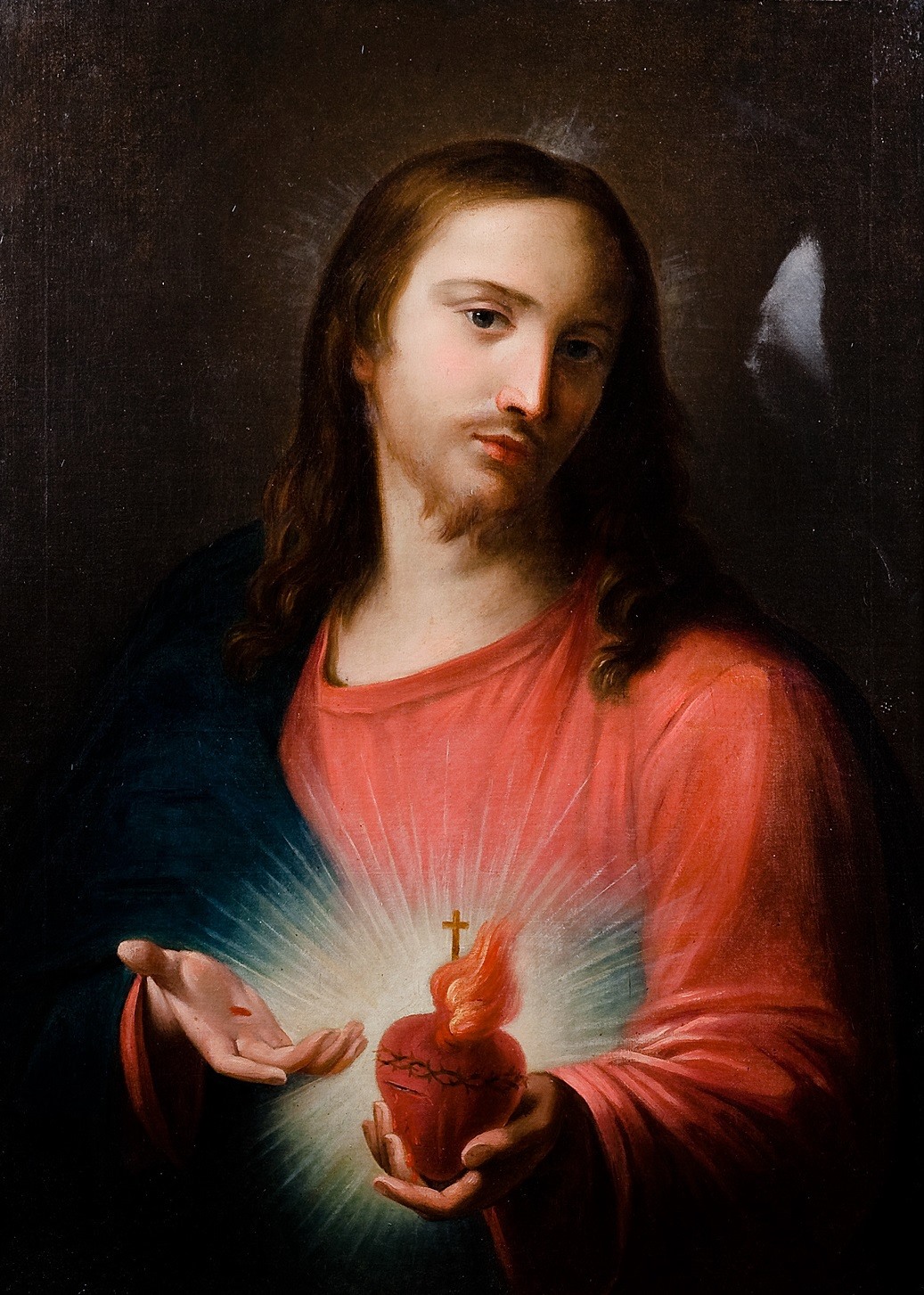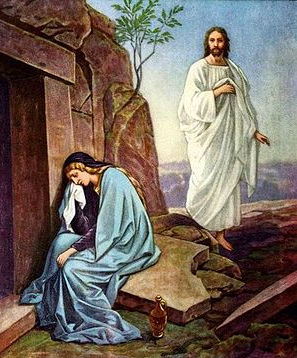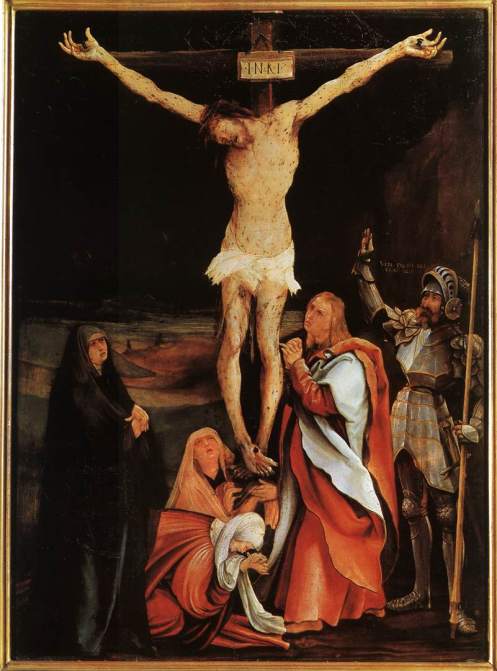
Christmas, the celebration of the birth of Jesus Christ, is quickly approaching. As we prepare for a merry celebration of his birth, let us not forget that he came to us as a Savior, destined to suffer agony and death for you and for me. Jesus is the “lamb of God who takes away the sin of the world” (John 1:29). God did not send us his only begotten son out of pity for mankind. He was sent because only God’s son was a sufficient sacrifice to take away the sin that dwells in all of us. “But he was pierced for our transgressions; he was crushed for our iniquities; upon him was the chastisement that brought us peace, and with his wounds we are healed” (Isaiah 53:5). Everyone needs a savior. I hope you enjoy this reblog from December 21, 2017.
Archive for the ‘Sin’ Category
29 Oct
The Triumphant God

The triumphal entry of Jesus into Jerusalem, Matthew 21:1-11
The dominance of Rome
As a retired Army Officer, I find Roman history fascinating. The Roman Empire’s territory in Jesus’ time completely enveloped the Mediterranean Sea. Roman society was very militaristic. The military played a central role in the empire’s territorial expansion, governance, and social structure. Rome aggressively employed its strong military capabilities to conquer new territories and maintain control over its sprawling empire. Military prowess was a key aspect of Roman cultural identity.
The Roman Senate sometimes granted a festive procession through the streets of Rome to pay tribute to a general who was victorious in battle. Called a Triumph or a triumphal procession, it was a grand and elaborate ceremony designed to celebrate and publicly recognize the military achievements and conquests of the general being honored.
A Triumph was a blend of religious, political, and social elements, showcasing the glory of Rome. The general being honored wore a special ceremonial toga. He rode in a chariot drawn by four horses, followed by his troops, prisoners of war in chains, strange animals from the conquered lands and wagons filled with the spoils of war. Adoring citizens lined the streets, cheering as the different elements of the Triumph passed by them. The air was full of the sounds of music and chants, creating a jubilant, reverent atmosphere. The Triumph not only honored the general but also reinforced the power and splendor of the Roman state.
Jesus’ triumphal entry into Jerusalem
In Jerusalem a large crowd of Jews gave Jesus an impromptu Triumph of His own. His triumphal entry into Jerusalem is described in all four Gospels: Matthew 21:1-11, Mark 11:1-11, Luke 19:28-44, and John 12:12-19. Each provides a slightly different perspective on the event, but they all highlight the significance of Jesus’ arrival in Jerusalem as the fulfillment of prophecy. Jesus’ triumphal entry, in Christian tradition, marks the beginning of Holy Week. It sets the stage for the events leading up to His crucifixion and resurrection, which are central to the Christian belief that Jesus is the Messiah, the son of the living God.
According to the Gospels, Jesus entered Jerusalem riding on a donkey (or colt), fulfilling a prophecy found in both Isaiah 62:11 and Zechariah 9:9. As He approached the city, a large crowd gathered, spreading their cloaks and palm branches on the road before him. They shouted “Hosanna” (loosely translated as “save us” or “help us”) and praised Him as the “Son of David” and the “King of Israel.”
The atmosphere at Jesus’ triumphal entry was one of celebration and anticipation, as the jubilant Jews who were present believed him to be the promised Messiah, who they supposed would be a military leader who would free them from Roman oppression. However, in stark contrast to a Triumph for a Roman General, Jesus’ humble entry into Jerusalem symbolized the peaceful role of His mission as Messiah, the humble King of Israel who fed the hungry, healed the sick, cleansed the lepers, gave sight to the blind, prayed for His enemies, and washed the feet of His disciples.
Sadly, most of the Jewish people and religious leaders failed to recognize Jesus as Redeemer, the sacrificial Lamb of God who would suffer and die under the orders of Pontius Pilate and after three days gloriously rise from the dead, conquering sin and death once and for all. Jesus freely sacrificed himself for the sins of the world and offers eternal life to all who believe on Him and profess that He is the son of God. We all need the Most Holy Redeemer of the world. Jesus Christ is the Triumphant God.
Prayer to the Most Holy Redeemer
(Anima Christi)
Soul of Christ, sanctify me.
Body of Christ, save me.
Blood of Christ, embolden me.
Water from the side of Christ, wash me.
Passion of Christ, strengthen me.
O good Jesus, hear me.
Within thy wounds hide me.
Never permit me to be parted from you.
From the evil Enemy defend me.
In the hour of my death call me.
and bid me come to thee,
that with your saints I may praise thee
for age upon age. Amen.
2 Corinthians 2:14 – “But thanks be to God, who in Christ always leads us in triumphal procession…”
* All Bible quotes are ESV
Bing Copilot AI was used to assist with the historical research used to write this piece.
31 Mar
Easter 2024 – He is risen

Matthew 28 (ESV) – He Is Risen
Now after the Sabbath, as the first day of the week began to dawn, Mary Magdalene and the other Mary came to see the tomb. 2 And behold, there was a great earthquake; for an angel of the Lord descended from heaven, and came and rolled back the stone from the door, and sat on it. 3 His countenance was like lightning, and his clothing as white as snow. 4 And the guards shook for fear of him, and became like dead men.
5 But the angel answered and said to the women, “Do not be afraid, for I know that you seek Jesus who was crucified. 6 He is not here; for He is risen, as He said. Come, see the place where the Lord lay. 7 And go quickly and tell His disciples that He is risen from the dead, and indeed He is going before you into Galilee; there you will see Him. Behold, I have told you.”
8 So they went out quickly from the tomb with fear and great joy, and ran to bring His disciples word.
The Women Worship the Risen Lord
9 And as they went to tell His disciples, behold, Jesus met them, saying, “Rejoice!” So they came and held Him by the feet and worshiped Him. 10
17 Mar
Forgiveness

I recently read a book that poses the question, “What about your life before you were a Christian has changed since you became a Christ follower.” I can think of so many responses, but two stand out. First of all, as a Christian I have a profound sense of personal sin that wasn’t previously there. Note that I speak of “sin,” not “sins.” My personal sins are a countless laundry list of bad, harmful things I have done during my life. Many people are repulsed by being called a sinner. Yet sin (without an “s” on the end), is a condition we all live in. Martin Luther described it eloquently in a letter to Philip Melanchthon on August 1, 1521:
“Be a sinner, and let your sins be strong, but let your trust in Christ be stronger, and rejoice in Christ who is the victor over sin, death, and the world. We will commit sins while we are here, for this life is not a place where justice resides. We, however, says Peter (2 Peter 3:13) are looking forward to a new heaven and a new earth where justice will reign. It suffices that through God’s glory we have recognized the Lamb who takes away the sin of the world. No sin can separate us from Him, even if we were to kill or commit adultery thousands of times each day. Do you think such an exalted Lamb paid merely a small price with a meager sacrifice for our sins? Pray hard for you are quite a sinner.”
My second response to the question is that as a Christian I have a tremendous sense of gratitude that God has forgiven all my sins through Jesus Christ. Before becoming a Christian, I didn’t recognize my need for forgiveness. Now I understand that Jesus suffered, bled, and died on the cross as an atonement for not only my sins, but the sins of the entire world. Hebrews 9:15 tells us that Christ’s blood inaugurated a new covenant. Through His sacrifice, He became the mediator between God and humanity. The old system of blood offerings through sacrificing animals could only cover sin temporarily, but Christ’s blood provides complete forgiveness. His death on the cross bridged the gap between the holy God and fallen humanity. Jesus the risen Lord is now seated at the right hand of the Father, where he intercedes on our behalf, our great High Priest.
The process of forgiveness begins with repentance. Acknowledging our sins, we turn to God, seeking His mercy. Acts 2:38 stresses baptism in the name of Jesus Christ for the remission of sins. More than a mere ritual; it symbolizes our identification with Christ’s death and resurrection. Through faith in Jesus as the risen Son of God, we receive forgiveness—the slate is wiped clean and our sins are remembered no more.
As the season of Lent winds down and Easter approaches, let us all consider Christ’s atonement for our sins. Through His death on the cross, Jesus atoned for the sins all mankind, satisfying God’s demand for justice, and accomplishing reconciliation for all who seek redemption through Him. The obedience and selfless sacrifice of Christ, who felt human emotions and pain just like you and me, serve as the foundation of our salvation. The shedding of Jesus’s blood on the cross symbolizes the ultimate atonement, restoring us to God’s favor and demonstrating the Father’s divine love and mercy. Jesus willingly gave His life for our sins, bridging the gap between humanity and God. His sacrifice on Calvary’s cross paid the price for our transgressions, conquered sin and death, and brought about the resurrection from the dead, not just for Jesus, but eventually for all of His followers.
God proved His love on the Cross. When Christ hung, and bled, and died, it was God saying to the world, ‘I love you.’ –Billy Graham
6 Jan
A God of second chances

As I began penning this piece, it was January 1st, a day traditionally associated with resolutions. According to the American Heritage dictionary, a resolution is “a firm decision to do something.” Common resolutions people make for the New Year include exercising more, losing weight, curbing alcohol consumption, and paying off credit cards. Making a New Year’s resolution requires one to recognize they’ve failed in some facet of their life and need a second chance to set things right.
Everybody needs a second chance at one time or another. Fortunately for Christians, we serve a God of second chances, who shows His grace and mercy to sinners who repent and turn to Him. The Bible is full of second chance stories. Here are just a few, starting with the book of Genesis.
In Genesis 2, we are introduced to Adam and Eve, who God created man and woman and placed in a beautiful garden in Eden. There they tended the garden and enjoyed its magnificent food and natural beauty. God made only one rule for the garden. The couple was not to eat from the tree of the Knowledge of Good and Evil. You’ve likely heard the story—in Genesis 3, Adam and Eve break the rule and as punishment they are forever cast out of the garden and forced to work the soil to raise food by the sweat of their labor. In chapter 4, Eve gave birth to two sons, Cain and Abel. Out of jealousy, the older brother Cain murdered his brother Abel. Yet by the end of chapter 4, Eve gives birth to another son named Seth, to replace Abel. Seth was surely a second chance for Adam and Eve, even though there is no evidence they ever repented of their sins against God.
In Genesis 6, begins the story of Noah and the great flood. By this point in time mankind has become evil and rebellious towards God. It is so bad that God actually regrets having made man. Yet there remains Noah, a righteous man who is favored by God. God tells Noah he is going to cause a flood to destroy every living thing on the surface of the Earth. He instructs Noah to build a giant ark (or ship) and to fill it with certain animals that will repopulate the Earth after the flood waters recede. Noah obeys God’s instructions. In addition to the animals, Noah takes his wife, his sons, and his sons’ wives into the ark. Noah’s entire family received a second chance and survived the flood. From this small group, the entire Earth was repopulated with humans.
In Genesis 12, God calls Abram, a keeper of flocks and herds, out of Babylon to go to the land of Caanan, which God pledges to give Abram’s descendants. Abram takes his wife Sarai and brother-in-law Lot and departs for Caanan along with his animals and servants. Sarah was barren and could not give Abraham an heir. Years later, with Sarai and Abram growing old and fearful Abram might die without an heir, Sarai convinces him to take Sarai’s Egyptian slave Hagar as his wife to bear an heir for Abram. Hagar bore him a son named Ishmael when Abram was 86 years old.
But God had plans for Abram and Sarai. When Abram was 99 years old, God made a covenant with him, changing his name to Abraham, meaning “father of many nations.” God also changed Sarai’s name to Sarah, meaning “princess” and promised that she would bear a son, Isaac, who would be the heir of the covenant. Sarah conceived in her old age. Abraham was 100 years old when Isaac was born. As a natural born heir, Isaac was a second chance for Abraham some 14 years after Ishmael, Abraham’s son by a slave, was born.
The Apostle Peter’s denial of Jesus is described in all four Gospels. Just before Jesus was arrested, He warned His disciples of what is going to happen. Peter boasts in John 13, that he would lay down his life for Jesus. Jesus counters and declares Peter will deny him three times. After Jesus’ is arrested, Peter denies Jesus three times out of fear of His captors. This is described in John 18. Jumping to John 21, the resurrected Jesus forgives Peter and reinstates him to his former position of leadership, commanding Peter to care for Jesus’ flock (people).
Like Peter, it is easy for us to believe we are more righteous than we really are. Like Jesus forgave Peter, so we ought to forgive those who sin against us. Christians serve a God of second chances. While I have given only a few examples, God gave second chances to many people in the Bible, forgiving and restoring them after they sinned or disobeyed Him. As Peter learned firsthand, God offers the ultimate second chance to all humanity through His Son Jesus Christ, who died on the cross for our sins and rose again to give us eternal life. God invites us to respond to His second chance by repenting of our sins, trusting in His grace, and following His will.
Look up from the situation you lament and let it become the pleasant place where God comes to save you. –Rev. Tim Fountain
But God demonstrates his own love for us in this: While we were still sinners, Christ died for us. –Romans 5:8 (NIV)
8 Sep
What do you believe?

King David stretches out his hands in Prayer
Late in the spring of 2022 I had highly invasive surgery that laid me low for about 90 days. It was miserable. Fast forward to the present and I’m currently recovering from another surgical procedure that left me feeling, weak, bruised and even despairing. In both instances, I found it comforting to meditate on the word of God. In my weakened state from the most recent surgery, I found time to meditate on what being a Christian means to me and how I could best explain it to an unbeliever. There are dozens of examples of similar attempts on the Internet, so please allow me to add to the discussion. If nothing else, I hope some readers might be motivated by my awkward musings and take a moment to dwell upon their own Christian beliefs.
There are several key Christian principles and values that hold great significance and guide the faith and actions of a believer, or Christ follower as I like to call myself. While interpretations and emphasis vary between various individuals and denominations, the following are some fundamental aspects of Christianity that matter to me and seem to be widely accepted amongst fellow believers.
Faith in Jesus Christ – Central to being a Christian is having faith in Jesus Christ as the Son of God and the Savior of the world (Ephesians 2:8). All believers are encouraged to confess their sins to Jesus, ask his forgiveness, and receive the free gift of salvation. The Scriptures encourage us to have a personal relationship with Jesus and to endeavor to follow His teachings (Galatians 2:20).
The Bible as the Word of God – I believe the Bible is the inspired Word of God, written by the hands of men who were guided by God’s Holy Spirit (2 Timothy 3:16). It serves as a guide for faith and practice. Studying and applying its teachings is a vital aspect of life as a Christ follower.
Prayer – Prayer is the means of communication between believers and God. Christians are encouraged to pray regularly for guidance, thanksgiving, supplication, and fellowship with God. Prayer is the pathway to God’s peace (Philippians 4:6-7). We are also taught by the Scriptures to say prayers of intercession for others. Both believers and unbelievers, both friends and enemies (Matthew 5:44).
Love and Compassion – Following Jesus’ command to love one another (John 13:34-35), Christians are called to show love and compassion to their neighbors, both fellow believers and others. This includes acts of kindness, charity, and forgiveness. These acts are not a means of earning salvation. Rather, they are an outward expression of thanksgiving for the gift of salvation I have received from God through the death of God’s Son Jesus, that purchased the forgiveness of my sins.
Worship and Fellowship – Regular worship services, communal prayer, and fellowship with other believers are important for spiritual growth and building a sense of community. As the living body of Christ, the church requires many different parts to make it function efficiently (1 Corinthians 12:12-27). There’s a role in the church for everyone.
Repentance and Forgiveness – Christians are taught to acknowledge and repent of their sins, seeking forgiveness through the grace of God. Forgiving others is also emphasized as a key aspect of Christian life (Matthew 18:21-22).
The Great Commission – Following Jesus’ command to “go and make disciples of all nations” (Matthew 28:19-20), I and many other Christians consider evangelism and spreading the Gospel as a central mission. This is one reason I write this blog.
Stewardship – Believers are encouraged to be responsible stewards (Matthew 25:14-30). This includes not only stewardship of our finances, but stewardship of God’s creation.
Mysteries – There are many mysteries in Christianity that remind us faith is not about having all the answers. Among these are the virgin birth of Jesus; whether Christ is physically present in the Holy Communion; and the doctrine of the Holy Trinity. These mysteries invite believers to explore the unknown and cultivate a deeper trust in God. They stretch the limits of human reason and promote a realization that there are aspects of God’s nature and plan that exceed our understanding. These will be explained to us in heaven one day. Paul sums it up in 1 Corinthians 13:12 like this, “For now we see only a reflection as in a mirror; then we shall see face to face. Now I know in part; then I shall know fully, even as I am fully known.” I challenge fellow Christians to explore these mysteries and consider how you would attempt to explain them to a non-believer.
Thanks for taking the time to read this. I hope it encourages you to explore your own faith.
*All Bible quotes are NIV.
21 May
A psalm for facing adversity

David Praying – Hungarian Gradual 1500-1520
Along the wilderness journey we call life, one will inevitably face periods of adversity. They can begin in a multitude of ways. Some of the most common causes are the death of a loved one, a bad medical diagnosis, the breakup of a love relationship, losing a job, or a personal financial crisis just to name a few. In extreme cases, severe adversity can make one wonder whether their life is worth living anymore.
My life has been overflowing with adversity recently, including the deaths of a beloved uncle and a beloved brother-in-law in rapid succession, and my own health concerns. Prayer and meditation on God’s word can be a great source of comfort when facing adversity. The Lord Jesus has given his followers a model for prayer in what today we generally refer to as “the Lord’s Prayer.” The most familiar form of His prayer is found in chapter 11 of Luke’s Gospel.
It is Jesus model for daily prayer and focuses on approaching life with faith in God, one day at a time. I suspect that Jesus prayed a similar prayer daily. I have found Psalm 143 to be a wonderful companion to the Lord’s Prayer, particularly when believers are navigating periods of adversity. This psalm is attributed to David and is one of the Seven Penitential Prayers found in the Book of Psalms. Below I share some thoughts on how this psalm speaks to me.
Psalm 143 (a form used in the Scottish Episcopal Church)
1 Lord, hear my prayer, and in your faithfulness heed my supplications;
answer me in your righteousness.
This is an opening petition acknowledging that God listens to my prayers and takes them to heart. Our God is a good listener and is never too busy to pay attention when one of His children prays. He seriously considers each prayer I lift up to Him, and he answers each according to His holy will.
2 Enter not into judgement with your servant, for in your sight shall no one living be justified. Verse 2 asks God not to judge me by my actions, as all have sinned against Him and fallen short of the total obedience He requires. I can rest assured that I don’t have to earn the right to pray to God. Christ has already paid the price of admission for a space where I may kneel before the throne of God the Father and offer my heartfelt prayers. Jesus is my advocate before the Father and the Holy Spirit prays for me when I lack the proper words to make my own petitions.
3 For my enemy has sought my life; he has crushed me to the ground; he has made me live in dark places like those who are long dead. 4 My spirit faints within me; my heart within me is desolate.
These verses remind me of 1 Peter 5, which describes Satan as a roaring lion that is on the prowl looking for someone to devour. For me it paints a dark picture of the adversity I am facing, as if I were hiding in a tomb, filled with a spirit of fear and hopelessness, abandoned by God. Jesus must have felt like this hanging on the cross, asking why God had forsaken him.
5 I remember the time past; I muse upon all your deeds; I consider the works of your hands.
Verse 5 steps back and from the darkness and depression of the two preceding verses as the Psalmist recalls how God has led him through adversity and saved him. As I read this verse, I recall the many times in my life God has rescued me from adversity.
6 I spread out my hands to you; my soul gasps to you like a thirsty land.7 O Lord, make haste to answer me; my spirit fails me; do not hide your face from me or I shall be like those who go down to the Pit.
Like a small child reaching for the outstretched hands of a loving parent, I trust in my God for comfort and sustenance. My spirit thirsts for God like the desert thirsts for water. I ask God to respond quickly, as I feel like I’m standing on the brink of disaster.
8 Let me hear of your loving-kindness in the morning, for I put my trust in you; show me the road that I must walk, for I lift up my soul to you.
As I begin a new day, I ask God to reassure me of his loving presence. I trust in God to sustain me throughout the day.
9 Deliver me from my enemies, O Lord, for I flee to you for refuge.
I ask God to foil the plans of my enemies, both spiritual and physical ones. Seeking refuge from my enemies, I turn to God’s word and prayer for comfort.
10 Teach me to do what pleases you, for you are my God; let your good Spirit lead me on level ground.
I ask the Holy Spirit to lead me along a safe path where I may understand God’s will for my life and learn how to do His will. I pray that the Holy Spirit will move the mountains of adversity that are in my way.
11 Revive me, O Lord, for your name’s sake; for your righteousness’ sake, bring me out of trouble.
My spirit grows weary and I need God to renew and refresh me. In accordance with His holy will, I ask him to rescue me from all adversity that troubles me.
12 Of your goodness, destroy my enemies and bring all my foes to naught, for truly I am your servant.
This closing verse echoes verse 9, reiterating my need for God’s protection from my enemies. I am reminded that as God’s servant, I am owned and protected in His holy service.
So do not fear, for I am with you;
do not be dismayed, for I am your God.
I will strengthen you and help you;
I will uphold you with my righteous right hand.
—Isaiah 41:10
23 Apr
The God of second chances

This is the word that came to Jeremiah from the Lord: “Go down to the potter’s house, and there I will give you my message.” So I went down to the potter’s house, and I saw him working at the wheel. But the pot he was shaping from the clay was marred in his hands; so the potter formed it into another pot, shaping it as seemed best to him. Then the word of the Lord came to me. He said, “Can I not do with you, Israel, as this potter does?” declares the Lord. “Like clay in the hand of the potter, so are you in my hand, Israel. If at any time I announce that a nation or kingdom is to be uprooted, torn down and destroyed, and if that nation I warned repents of its evil, then I will relent and not inflict on it the disaster I had planned. –Jeremiah 18:1-8
If you have ever watched an artisan blowing glass you will probably agree that it is an amazing skill. If you walk around a glass blowing studio, you are likely to see a lot of beautiful finished examples of the artisan’s craft. You are also likely to see are a lot of broken glass fragments from failed attempts to craft a work of art. Glass blowing is very unforgiving and correcting a mistake often proves impossible.
Making clay pottery, on the other hand, is very forgiving. When a skillful potter makes an error, it can often be corrected without abandoning the piece and having to start over. Even when a piece is a total flop the fresh clay can be rolled into a ball and used to start a new piece. Like the potter reshaping a new piece of pottery from a failed one, so is the loving Savior I serve. Jesus is truly a God of the second chance. The bible abounds with examples of people given second chances. Here are just a few from the New Testament.
A woman caught in the act of adultery
John chapter 8 tells of a Jewish woman was caught in the act of adultery. Her accusers—teachers of the law and Pharisees—brought her to Jesus, asserting that the law of Moses dictated she should be stoned for her transgressions. Hoping to trap Jesus with his own words, they asked him what they should do with her. Jesus remains silent for a long time, stooping down and writing in the dirt. He finally responds, “Let any one of you who is without sin be the first to throw a stone at her.” Slowly her accusers departed one by one until there was none remaining. Neither did Jesus accuse her. Instead, he commanded her, “Go now and leave your life of sin.”
Jesus raises the son of a widow from the dead
In Luke chapter 7, beginning at verse 11, we find Jesus traveling through a city called Na’in. Along the way, Jesus observed a funeral procession carry a funeral bier bearing the body of a man who was the only son of a widow. In Jewish society of the day, the man’s death would almost certainly have sentenced his mother to a life of poverty of worse. Having compassion for her, Jesus stopped the procession, touched the bier, and commanded the dead man to rise, upon which the man sat up and began to speak. The people in the crowd were astonished and said, “A great prophet has arisen among us!” and “God has visited his people!”
The demon possessed man
Luke 8:25 begins the story of a demon possessed man. Upon arriving in the country of the Ger′asenes, which is opposite Galilee, Jesus encountered the man, who was naked. We are told he lived among the tombs and was possessed by many demons. When Jesus approached the man, the demons recognized the Son of God and cast the man to the ground while begging Jesus not to destroy them. Jesus cast out the demons drove them into a herd of swine; the herd subsequently rushed down a steep slope and fell into a lake (Sea of Galilee), where they drowned. Afterwards, the formerly possessed man, now clothed and in his right mind, wanted to follow Jesus in his journey. Jesus forbade him, telling him, “Return to your home, and declare how much God has done for you.” We are told, “he went away, proclaiming throughout the whole city how much Jesus had done for him.”
A 12-year-old girl raised from the dead
Luke 8:40 begins the story of a man named Jairus, who is described as a ruler of the Synagogue. Jairus came to Jesus, falling at his feet, and begged him to go and heal his young daughter, who was very ill and near death. Before they can reach Jairus’ house, a messenger comes with news that the girl has died. Despite the news, Jesus continued to Jairus’ house. When he was led to the place where the dead girl lay, Jesus took her by the hand and commanded, “Child arise.” Immediately her spirit returned to her and she stood up.
A thief on the cross next to Jesus’ cross
Luke 23:32 begins the story of two criminals who were crucified at the same time Jesus was—one on His left and one on His right. One criminal railed against Jesus, while the other confessed his sins and pleaded, “Jesus, remember me when you come into your kingdom.” Jesus replied to him, “Truly, I say to you, today you will be with me in Paradise.”
The Prodigal Son
Luke chapter 15, beginning with verse 11, tells the familiar story of the “Prodigal Son.” The young man in the story displayed the utmost disrespect for his father, demanding that his father give him his portion of the old man’s estate while the father was still living. The father acquiesced and gave his son his inheritance. The prodigal consequently went away to a far land, where he squandered his wealth. So complete was his fall that he eventually ended up barely surviving by working a job feeding pigs. He longed to return home. One day, having reached the bottom of the abyss of poverty, he came to his senses and decided to return home and beg his father to let him live there, not as a son, but as a hired servant. Verse 20 describes how his father, who is a figurative character representing God, seeing the returning son from a long way off, ran to meet him, embraced him, and kissed him. The son said, “Father, I have sinned against heaven and before you; I am no longer worthy to be called your son.” But the father said to his servants, “Bring quickly the best robe, and put it on him; and put a ring on his hand, and shoes on his feet; and bring the fatted calf and kill it, and let us eat and make merry; for this my son was dead, and is alive again; he was lost, and is found.”
Repentance
Why does God give us second chances? Because it is His nature to forgive and it is our nature to continually sin. King David exploited Bathsheba sexually. He arranged circumstances so that her husband Uriah would be killed in battle. He betrayed the trust of the people of Israel. Despite the three offended parties, in Psalm 51:4, David confessed that he had sinned against God and God alone.
Luke 15 contains three parables describing how heaven rejoices when a sinner repents and (re)turns to God. 2 Peter 3:9 says, The Lord is not slow about his promise as some count slowness, but is forbearing toward you, not wishing that any should perish, but that all should reach repentance. Mark 1:14-15 says, “Now after John was arrested, Jesus came into Galilee, preaching the gospel of God, and saying, ‘The time is fulfilled, and the kingdom of God is at hand; repent, and believe in the gospel’.” Repentance, while not a prerequisite for receiving a second chance from God, is essential to living a Christ-like life and receiving the gift of salvation through Jesus Christ.
God is the God of the second chance—and the hundredth chance, and the thousandth chance! No matter how rebellious and sinful we’ve been, He always stands ready to forgive us and welcome us home if we truly repent and commit our lives to Jesus Christ. –Billy Graham
*All Bible references are NIV
9 Apr
Easter 2023: He is risen!

Christ is Risen: The world below lies desolate.
Christ is Risen: The spirits of evil are fallen.
Christ is Risen: The angels of God are rejoicing.
Christ is Risen: The tombs of the dead are empty.
Christ is Risen indeed from the dead, the first of the sleepers, Glory and power are his forever and ever.
— St. Hippolytus of Rome
24 Nov
A servant of all

Justification is an act of God’s free grace, wherein he pardons all our sins and accepts us as righteous in his sight, only for the righteousness of Christ imputed to us and received by faith alone. Sanctification is the work of God’s free grace, whereby we are renewed in the whole man after the image of God and are enabled more and more to die unto sin, and live unto righteousness.
–The Westminster Shorter Catechism, questions 33 and 35
The New Testament is clear on the means of salvation. Salvation from sin and death can be attained through faith alone—in Latin “Sola Fide.” Christ followers attain justification before God through faith in Jesus as their personal savior and no longer live under the condemnation of the Law. Their sins are forgiven and they are restored to a perfect relationship before God. Jesus cruel death was the perfect sacrifice for the sins of the world. “It is finished!” (John 19:30), were the final words spoken in the redemption of mankind. Through his glorious resurrection, Jesus overcame sin and death and opened the door to salvation for all who believe on His holy name.
No matter how hard one may try to attain salvation through good works, they are destined to fail. The Apostle Paul tells us, “Therefore no one will be declared righteous in God’s sight by the works of the law” (Romans 3:20a). That said, we should not be quick to underemphasize the value of good works. Paul tells us in Philippians 2, to work out our own salvation in fear and trembling. This “working out” is the process of sanctification, that lasts a lifetime, as believers are called to continually strive to become more Christ-like. Sanctification is as much about the process as it is the destination.
Many Bible critics contend that James 2:14-25 is not consistent with the doctrine of salvation through faith alone (sola fide). My understanding of James is that these critics take it out of context. Where James stresses deeds (works), he is speaking in the context of sanctification (striving to be more Christ-like) and not about justification (the forgiveness of sin and restoration into a right relationship with God).
When we consider sanctification, it would be a mistake to overlook the role of good works. One day Jesus overheard several of his disciples arguing. It turned out they were arguing about which of them was the greatest among Jesus’ disciples. Sitting down, Jesus called the Twelve and said, “Anyone who wants to be first must be the very last, and the servant of all.” (Mark 9:35). Jesus gave his disciples an example of a servant’s heart when He washed their feet, as described in John chapter 13.
Are you a Christ follower? Are you striving to become more Christ-like? I hope you answered yes to both questions. While you may not be able to cast out demons, raise the dead, give sight to the blind, or cleanse lepers, there is an abundance of good works needed in Christ’s kingdom. In Romans chapter 16, Paul’s final greetings to a handful of Christian brothers and sisters provides some clues. He tells them to greet each other with a holy kiss, that is be kind to one another. Paul repeatedly recognizes women who worked very hard for Christ. He recognizes others who have sponsored a church in their home. He cites others who have demonstrated hospitality to fellow believers. Paul even recognizes the mother of a friend who has also been like a mother to him.
Sanctification does not come without a price. Paul’s greeting mentions some friends who risked their lives for Christ, others who have withstood testing of their fidelity to Christ, and yet others who served time in prison with him. Are you ready to accept the risks of becoming more Christ-like? Are you “working out” your own sanctification? Are you willing to let your life become a doormat where others will wipe their feet? Are you ready to become a servant of all?
Sanctification means nothing less than the holiness of Jesus becoming mine and being exhibited in my life. The most wonderful secret of living a holy life does not lie in imitating Jesus, but in letting the perfect qualities of Jesus exhibit themselves in my human flesh. –Oswald Chambers
*All Bible quotations are NIV.
Recent Comments