The phrase “Help my unbelief” comes from Mark 9:24, where a desperate father pleads with Jesus to heal his son, saying, “I do believe; help my unbelief!”. This powerful request acknowledges the human struggle with doubt, while expressing a desire to be faithful.
How can anyone who is identified with Jesus Christ suffer from doubt or fear! Our lives in him should be psalms of irrepressible, triumphant belief. –Oswald Chambers
I live by faith in the Son of God, who loved me and gave himself for me. –Galatians 2:20*
So how does a Christian live by faith in Jesus? I’ve often asked myself this question as I ponder life. I think I might be getting closer to finding the answer.
“Keep the faith baby!” We’ve all heard this or something similar. So how much faith is enough? In Matthew 17, Jesus tells us that faith “the size of a mustard seed” is enough to move a mountain. Hmmm, I have a couple of pretty big mountains in my life that I want to move, but so far, they’re still there to greet me every morning when I awake. Apparently, I lack the ability to muster even a tiny mustard seed worth of faith—and this frustrates and disappoints me.
Happily, I believe I might have found the root cause of my failure. My faith lacks persistence. Paul points to persistence in 1 Thessalonians 5: 16-18, which exhorts us to, “Rejoice always, pray continually, give thanks in all circumstances; for this is God’s will for you in Christ Jesus.” If one meditates on this short passage, I believe they’ll find that it contains some pretty tough marching orders.
Persistent faith is surrendering one’s will to God’s will, not a product of personal willpower, but a result of trusting His plan for your life, even when it’s unclear to you. This act of surrender means relinquishing personal control and aligning one’s life with a higher purpose, leading to strength and peace found in God’s wisdom rather than one’s own. It is an ongoing process of daily submission, acknowledging one’s own limitations and trusting in God’s provision.
Matthew 14:29-31 is a wonderful example of impersistent faith. As Jesus is walking on the water in the Sea of Galilee, he approaches the boat where his disciples are struggling in a violent storm. “Come,” he said (to Peter). Then Peter got down out of the boat, walked on the water and came toward Jesus. But when he saw the wind, he was afraid and, beginning to sink, cried out, “Lord, save me!” Immediately Jesus reached out his hand and caught him. “You of little faith,” he said, “why did you doubt?”
In this lesson, Peter was doing fine while he focused on Jesus, but when he shifted his focus from Jesus to the great wind of the storm he began to doubt. Like a new military recruit struggling to qualify with his weapon on a rifle range, Peter failed because he took his eye off the target, Jesus.
Consider it pure joy, my brothers and sisters, whenever you face trials of many kinds,because you know that the testing of your faith produces perseverance. James1:2-3
As I’ve noted before, Jesus was and remains the God of the Impossible for those who come to him as their Lord and Savior. I believe this in my heart. Believing is easy when things are going my way. I’m trying hard to learn how to put this into action when the going gets too tough for me to handle. Every day I try to meditate on Psalm 143 as part of my daily devotions. I find verses 8 – 10 to be a great source of encouragement and comfort, especially when I feel overwhelmed by life. I hope you might find them equally useful.
Let the morning bring me word of your unfailing love, for I have put my trust in you. Show me the way I should go, for to you I entrust my life. Rescue me from my enemies, Lord, for I hide myself in you. Teach me to do your will, for you are my God; may your good Spirit lead me on level ground.
On this national holiday dedicated to giving thanks, let us give thanks to the Lord our God for all his blessings and provision in the past year and in the years to come. May He lead us all on level ground.
I was a three-sport athlete in high school. In college in 1975 I joined a “health club” called the US Army and stayed strong and fit there for the next 26 years. Through challenging “Arrrmy training” (Bill Murray fans will get it), we stayed physically and mentally ready to defend our nation. I retired from the Army in 2001. Like so many of the Army buddies I served with, I put on a few pounds after retirement. In fact, over the course of two decades I went from a retirement weight of 209 lbs. to a maximum of 242. About two years ago, through a combination of illness, dieting, and lifestyle changes, I lost a dramatic amount of weight. Today my weight hovers around a comfy 200 lbs.
Slimming down came with a lot of benefits. Among these are being able to fit into clothes I hadn’t worn for years, improved sleep, increased energy levels, and all around better physical health as indicated by my vital signs and blood chemistry tests, which today look like those of a healthy twenty-something. Slimming down has many other great benefits, more than we can cover here.
There’s another type of slimming down that’s very good for you. Commonly called “downsizing,” it refers to both reducing the amount of space one lives in and the quantity of personal possessions one owns. Such reducing can be healthy both mentally and spiritually.
Now don’t get me wrong. I’m not some overzealous lifestyle minimalist that believes in possessing only the bare essentials necessary for living and rejects the rest. I’m not the type of person who could live my life in a “Tiny Home” like one sees on HGTV. But my wife and I have downsized our living space four times since I retired from the army, slimming down from a 3,200 sq ft house to 2,000, to 1,500 and finally to 1,200 sq ft condo, which we have today. We both agree that downsizing is cathartic. Here are just a few potential benefits of lifestyle downsizing which, if you’re not ready for now, might become of greater interest to you as you grow older.
Reducing Chaos. Chaos is truly the devil’s workshop. Jesus calmed the storm on the Sea of Galilee by commanding, “Peace, be still.” He can do the same for you and me. God wants us to have peace. A beautiful car, a sleek sailboat, and a humongous house and/or garage crammed with a lot of “stuff” (substitute a gigantic storage unit crammed with stuff) can contribute to a chaotic life. Each of these comes with a price, and I’m not talking about money. Beautiful cars beg to be washed, waxed, and detailed. A sleek boat requires a lot of time and effort to keep it safe and seaworthy. Big houses typically have big lots. Big lots beg to be manicured until the grass looks as good or better than a putting green. A big house crammed with a lot of stuff can became a chaotic ball and chain for you and/or for your children who are trying to sort things out after their parents pass away. Oh yeah, and who is going to remove the snow from that lovely 50-yard curving driveway? Been there and done that! It’s not fun.
Avoiding Anxiety and Distractions. Have you ever been sitting in a pew on a Sunday morning, taking a mental inventory of all the things, you need to do when you when you get home or in the week to come, instead of listening to what was being said in the sermon? There is a time to do and a time to listen. Sermon time in church is a time to listen.
You might recall this story in Luke chapter 10. Martha and Mary were the sisters of Lasarus. On one occasion that Luke describes, Martha invited Jesus into her house. While Mary sat at Jesus’ feet, listening to him talk, Mary fluttered all about, presumably preparing a meal for Jesus. After a while Martha became annoyed and asked Jesus to tell Mary to come and help her with the work. Jesus’ response to Martha’s urging was a gentle rebuke, “Martha, Martha, you are worried and upset about many things, but few things are needed—or indeed only one. Mary has chosen what is better, and it will not be taken away from her.” (v. 41-42). Jesus wants to be the top priority in our lives. Endeavor to keep Jesus at the center of your thoughts.
Avoiding Comparison. You’ve probably heard the expression “Keeping up with the Joneses.” It refers to a selfish urge or social pressure to match or exceeded the material possessions of one’s neighbors. Colossians 3 compares covetousness to “idolatry.” When it came to material possessions, King Solomon, the presumed writer of the Book of Ecclesiastes and a man renowned for both his wisdom and his wealth, made the Joneses look like rank amateurs. Listen to what he had to say about material wealth:
I undertook great projects: I built houses for myself and planted vineyards. I made gardens and parks and planted all kinds of fruit trees in them. I made reservoirs to water groves of flourishing trees. I bought male and female slaves and had other slaves who were born in my house. I also owned more herds and flocks than anyone in Jerusalem before me. I amassed silver and gold for myself, and the treasure of kings and provinces. I acquired male and female singers, and a harem as well—the delights of a man’s heart. I became greater by far than anyone in Jerusalem before me. In all this my wisdom stayed with me. I denied myself nothing my eyes desired; I refused my heart no pleasure. My heart took delight in all my labor, and this was the reward for all my toil. Yet when I surveyed all that my hands had done and what I had toiled to achieve, everything was meaningless, a chasing after the wind; nothing was gained under the sun. –Ecclesiastes 2:4-11
After much experimentation, Soloman finally figured it out! Now see what Jesus said to his disciples:
Then he (Jesus) said to them, “Watch out! Be on your guard against all kinds of greed; life does not consist in an abundance of possessions.” –Luke 12:15
Matthew 19:16-23
Just then a man came up to Jesus and asked, “Teacher, what good thing must I do to get eternal life?”
“Why do you ask me about what is good?” Jesus replied. “There is only One who is good. If you want to enter life, keep the commandments.”
“Which ones?” he inquired.
Jesus replied, “‘You shall not murder, you shall not commit adultery, you shall not steal, you shall not give false testimony, 19 honor your father and mother,’ and ‘love your neighbor as yourself.’”
“All these I have kept,” the young man said. “What do I still lack?”
Jesus answered, “If you want to be perfect, go, sell your possessions, and give to the poor, and you will have treasure in heaven. Then come, follow me.”
When the young man heard this, he went away sad, because he had great wealth.
Then Jesus said to his disciples, “Truly I tell you; it is hard for someone who is rich to enter the kingdom of heaven. Again I tell you, it is easier for a camel to go through the eye of a needle than for someone who is rich to enter the kingdom of God.”
Leaving a Christian Legacy. To those who are believers, I ask “What is your greatest regret since you became a Christian?” I hope your response isn’t something like, “I wish I had worked more” or “I wish I had bought that 1966 Corvette when I had the chance.”
Will you leave a Christian legacy? What might that look like? Will those who come after you even know you were a Christian given the way that you lived? This is worth thinking about.
Surely everyone goes around like a mere phantom; in vain they rush about, heaping up wealth without knowing whose it will finally be. –Psalm 39:6
“‘And I (a wealthy man) will say to my soul, “Soul, you have ample goods laid up for many years; relax, eat, drink, be merry.”’ But God said to him, ‘Fool! This night your soul is required of you, and the things you have prepared, whose will they be?’”—Luke 12:18-20
But godliness with contentment is great gain. For we brought nothing into the world, and we can take nothing out of it. But if we have food and clothing, we will be content with that. —1 Timothy 6:6-8
“Let your light shine before others, that they may see your good deeds and glorify your Father in heaven.”—Matthew 5:16
Legacy isn’t measured by wealth, titles, or accolades—it’s measured by the impact your faith has on others. A Christian legacy is built day by day, through quiet obedience, generous love, and intentional discipleship. When we live with integrity, invest in relationships, and give freely of what God has entrusted to us, we leave behind more than memories—we leave behind a testimony.
A Christian legacy doesn’t end with you or me. It multiplies through the lives we touch, the prayers we pray, and the truths we pass on. And the goal isn’t to be remembered—it’s to make Christ known. May our respective legacies draw others closer to Jesus Christ.
Leaving Things Behind. Back to lifestyle downsizing, there is nothing bad about wealth in and of itself. I’ve known many Christians who were wealthy and unselfishly used their wealth for the furtherment of God’s kingdom. A problem with wealth begins when we forget that everything we possess belongs to God and we are merely stewards of what he has given us.
We are born naked and penniless and in death our physical bodies return to dust. Don’t let accumulating “stuff” become a goal in your life. Even though many have tried and failed (Egyptian Pharaohs and Viking Chieftains come to mind), you just can’t take it with you. I hope you enjoy the short poem below by Judy Dykstra-Brown
Relocation Dreams
I’ve so many things that there’s no place to stack them in. No drawers to hold them, no cupboards to pack them in. So many things stowed away from detection. My fireplace houses its own art collection.
My wardrobe suffers from costumes aplenty. I’ve boxes of sizes from nine up to twenty. My jewelry box is stuffed to the gills, my medicine drawer is spilling out pills.
When I try to cull them, they all want to stay. The only solution’s to just move away to find a small island with palm trees and sky where there is simply nothing to buy!
I’ll live in a hut with floors of swept dirt. One pair of flip flops, a simple grass skirt. I won’t feel that shopping should be my main duty. I’ll look out the window if I require beauty.
No buying new paintings whenever I please. No little nicknacks and no DVD’s. No drawers of makeup or tea towels or spoons. No tarot cards, horoscopes, Ouija boards, runes.
I will not need things to determine my fate, that day I walk out, simply locking my gate, taking one suitcase, computer and cables, and scanner and backup drives, printers and tables,
an internet router and energy backup— just these few items to locate and pack up. Then I’m off to a life that’s simpler by far if these bare necessities fit in my car.
In case you missed me, I’ve been on a health dictated hiatus from writing for about four months. This came in the wake of a medical diagnosis of a progressive condition that will impact me for the remainder of my days. I’ve had to make a lot of adjustments to my life. It also came at a time when my wife and I are in the midst of making a move back to the east coast. In a few weeks we will depart South Dakota, our home for nearly 10 years, for a new life in Maryland. By the end of the month I hope to resume writing. In the meantime I would appreciate your prayers. See you soon!
Zack
Philippians 4:13 I can do all things through Christ who strengthens me.
Afghan woman proudly displaying her purple forefinger, dipped in indelible ink at a voting station where she cast her vote in the national election. This was a way of ensuring voters voted only once.
It was sunny and warm in Louisville, Ky. on Saturday, June 28, 1975. That’s the day I boarded a bright yellow school bus at an Army recruiting station for a short journey to Fort Knox, where I was scheduled to undergo Army basic training or boot camp as it’s often called. Only a few weeks earlier I’d been a bright-eyed college student receiving his associate degree in Munich, Germany. My mother Phyllis and stepfather Ray were still in Germany—Ray was an Army officer with the rank of lieutenant colonel, assigned to the U.S. Army Europe headquarters in Heidelberg.
After what seemed like hours, the bus turned into the main gate of Fort Knox. Entering the post felt very familiar, as I’d lived there during my freshman and sophomore years of high school while Ray worked at the Armor School. About ten minutes after entering the post, the bus turned down a side street and then swung into the parking lot of Delta Company, 13th Training Battalion, 4th Training Brigade, home of the Delta Demons. Delta Company would be our home for the next several weeks.
Peering out the bus window I could see two tough looking fellows wearing olive drab fatigues and the iconic Smokey Bear hats that identified them as drill sergeants. Their fatigues were starched stiff with creases that looked sharp enough to slice an apple. Their uniforms fit like gloves. Their boots were polished to a mirror finish. Not a hair was out of place. All you needed was one look at these impressive gentlemen to know that they were pure badass!
The driver opened the bus door and we were greeted by a booming voice. “Off the bus and line up. Move it ladies!” After a clumsy exit, fumbling with our bags and bumping into each other, we school boys managed to get into something resembling a line. The empty bus quickly pulled away, leaving us feeling isolated and helpless. It was then that we were introduced to the two gentlemen who would fill the roles of father, mother, confessor, and mentor for all of us in the coming weeks, as our Drill Sergeants turned a bus full of boys into men.
Thus began my 26-year career in the United States Army, an adventure that ended in 2001 with my retirement from our nation’s “Big Green Fighting Machine.” My career led me to assignments in the United States, Western Europe, the Balkans, Africa, and the Middle East. Looking back, those were good years all in all. Sure, the hardships were many, but the adventures, excitement and camaraderie far outweighed the hardships. I can’t help growing a bit nostalgic every time I think about it.
I wish the United States still had a military draft. Even better would be three years of mandatory military service for every American girl and boy, starting at age 18. At least one year would be spent overseas, being exposed to other cultures and languages. It would be a better education than pursuing a four-year degree. It would also strengthen our nation by showing college age citizens how blessed they are to live in America.
Today’s world is full of danger. Look no farther than Ukraine or the Middle East for proof. Unfortunately, few of those in Congress have military experience as a frame of reference to help guide them when making decisions that could draw our nation into war.
The presidential election is only weeks away and the ugly political slurs are flying like bullets in a drive by shooting. Politicians from both side of the aisle are quick to tell us how bad we’ve got it and how it’s all the other side’s fault. Don’t believe it. One thing my time in the military taught me is that, despite what shifty politicians might say to the contrary, we Americans have much to be thankful for.
James 1:17 tells us, “Every good and perfect gift is from above, coming down from the Father of the heavenly lights, who does not change like shifting shadows.” Here are just a few gifts Americans should thank God for. Remember them when you lie down to go to sleep tonight.
Across the land we enjoy relative safety from the government and other people.
We enjoy the freedom to worship as we choose.
Our leaders are elected by the people.
Access to free, basic education is widely available.
Safe drinking water is usually readily available.
Sanitation services are available to help prevent sickness and disease.
We grow enough food to feed our population and have extra to export.
We have a robust transportation infrastructure to distribute the commodities we need.
We enjoy abundant natural resources to produce energy.
Electricity is generally available across the land.
The Lord bless you and keep you; the Lord make his face shine on you and be gracious to you; the Lord turn his face toward you and give you peace. –Numbers 6:24-26
The United States is a debtor nation. The US Congress regularly borrows money to keep the government running. The national debt is the grand total of money the government owes, either to investors or to itself (source: USAfacts.org). The current national debt is approaching $35 trillion. That’s 35 followed by 12 zeros!
There is an intriguing concept of debt forgiveness in Jewish law that relates to the Shemitah year, which occurs every seven years. According to the Torah, in the Shemitah year, all personal loans between Jews are canceled, and lenders must release their debtors from their obligations. This is known as Shemitat Kesafim, or “release of money.” The purpose of this law is to foster generosity, faith, and social justice among the Jewish people, and to remind them that everything ultimately belongs to God. Imagine how different our lives would be if this form of debt relief were practiced in America today.
Average American citizens are debtors. Per the website Statista.com, the average American had $21,800 in non-mortgage debt in 2023. Much of this amount was accrued on credit cards used to fund consumer spending…I just had to have that new iPhone! Unlike older generations, younger consumers today often buy on credit those things that older generations would have saved up for and purchased in cash, like a new car…Why wait, you can have it now. You deserve it!
Today, the idea of saving enough money to buy a new car is as outdated as the idea of working one’s way through college. While not impossible, the skyrocketing cost of new cars and attending a four-year college make paying cash as one goes out of reach for most people.
According to a July 2023 article on Forbes.com (https://www.forbes.com/advisor/student-loans/average-student-loan-debt-statistics/), total student loan debt was $1.75 trillion. Around 55% of students from public four-year institutions had student loans. The average student loan debt for students coming out of public four-year institutions was $28,950.
There’s an old adage that says, “The borrower is slave to the lender.” There’s a lot of truth in this. The Bible describes our sins as debts to God. Sin debt to God is a concept describing the moral obligation that humans have to obey God’s law and the penalty that they incur when they fail to obey. Sin is disobedience to God’s will and commands. King David acknowledges in Psalm 51:3-4, that his sins are offenses against God, not man:
3 For I know my transgressions, and my sin is always before me. 4 Against you, you only, have I sinned and done what is evil in your sight; so you are right in your verdict and justified when you judge.
Sin separates humans from God’s presence and favor. The consequence of sin is death, both physical and spiritual, which means eternal separation from God.
The Bible teaches that God is merciful and gracious, and He has provided a way for humans to be forgiven and reconciled to Him. God sent His Son, Jesus Christ, to die on the cross as a substitute for sinners, paying the debt that they could not pay themselves. By trusting in Christ’s death and resurrection, sinners can receive God’s forgiveness and eternal life. This is the Good News (Gospel), of God’s salvation for sinners. God cancels the sin debt of those who believe in His Son and restores them to a right relationship with Him. While you may not receive government relief from your student loans or other debts, thanks be to God that forgiveness for our sin debt against Him is available.
Ephesians 2:1-10 As for you, you were dead in your transgressions and sins, 2 in which you used to live when you followed the ways of this world and of the ruler of the kingdom of the air, the spirit who is now at work in those who are disobedient. 3 All of us also lived among them at one time, gratifying the cravings of our flesh and following its desires and thoughts. Like the rest, we were by nature deserving of wrath. 4 But because of his great love for us, God, who is rich in mercy, 5 made us alive with Christ even when we were dead in transgressions—it is by grace you have been saved. 6 And God raised us up with Christ and seated us with him in the heavenly realms in Christ Jesus, 7 in order that in the coming ages he might show the incomparable riches of his grace, expressed in his kindness to us in Christ Jesus. 8 For it is by grace you have been saved, through faith—and this is not from yourselves, it is the gift of God— 9 not by works, so that no one can boast. 10 For we are God’s handiwork, created in Christ Jesus to do good works, which God prepared in advance for us to do.
As I began penning this piece, it was January 1st, a day traditionally associated with resolutions. According to the American Heritage dictionary, a resolution is “a firm decision to do something.” Common resolutions people make for the New Year include exercising more, losing weight, curbing alcohol consumption, and paying off credit cards. Making a New Year’s resolution requires one to recognize they’ve failed in some facet of their life and need a second chance to set things right.
Everybody needs a second chance at one time or another. Fortunately for Christians, we serve a God of second chances, who shows His grace and mercy to sinners who repent and turn to Him. The Bible is full of second chance stories. Here are just a few, starting with the book of Genesis.
In Genesis 2, we are introduced to Adam and Eve, who God created man and woman and placed in a beautiful garden in Eden. There they tended the garden and enjoyed its magnificent food and natural beauty. God made only one rule for the garden. The couple was not to eat from the tree of the Knowledge of Good and Evil. You’ve likely heard the story—in Genesis 3, Adam and Eve break the rule and as punishment they are forever cast out of the garden and forced to work the soil to raise food by the sweat of their labor. In chapter 4, Eve gave birth to two sons, Cain and Abel. Out of jealousy, the older brother Cain murdered his brother Abel. Yet by the end of chapter 4, Eve gives birth to another son named Seth, to replace Abel. Seth was surely a second chance for Adam and Eve, even though there is no evidence they ever repented of their sins against God.
In Genesis 6, begins the story of Noah and the great flood. By this point in time mankind has become evil and rebellious towards God. It is so bad that God actually regrets having made man. Yet there remains Noah, a righteous man who is favored by God. God tells Noah he is going to cause a flood to destroy every living thing on the surface of the Earth. He instructs Noah to build a giant ark (or ship) and to fill it with certain animals that will repopulate the Earth after the flood waters recede. Noah obeys God’s instructions. In addition to the animals, Noah takes his wife, his sons, and his sons’ wives into the ark. Noah’s entire family received a second chance and survived the flood. From this small group, the entire Earth was repopulated with humans.
In Genesis 12, God calls Abram, a keeper of flocks and herds, out of Babylon to go to the land of Caanan, which God pledges to give Abram’s descendants. Abram takes his wife Sarai and brother-in-law Lot and departs for Caanan along with his animals and servants. Sarah was barren and could not give Abraham an heir. Years later, with Sarai and Abram growing old and fearful Abram might die without an heir, Sarai convinces him to take Sarai’s Egyptian slave Hagar as his wife to bear an heir for Abram. Hagar bore him a son named Ishmael when Abram was 86 years old.
But God had plans for Abram and Sarai. When Abram was 99 years old, God made a covenant with him, changing his name to Abraham, meaning “father of many nations.” God also changed Sarai’s name to Sarah, meaning “princess” and promised that she would bear a son, Isaac, who would be the heir of the covenant. Sarah conceived in her old age. Abraham was 100 years old when Isaac was born. As a natural born heir, Isaac was a second chance for Abraham some 14 years after Ishmael, Abraham’s son by a slave, was born.
The Apostle Peter’s denial of Jesus is described in all four Gospels. Just before Jesus was arrested, He warned His disciples of what is going to happen. Peter boasts in John 13, that he would lay down his life for Jesus. Jesus counters and declares Peter will deny him three times. After Jesus’ is arrested, Peter denies Jesus three times out of fear of His captors. This is described in John 18. Jumping to John 21, the resurrected Jesus forgives Peter and reinstates him to his former position of leadership, commanding Peter to care for Jesus’ flock (people).
Like Peter, it is easy for us to believe we are more righteous than we really are. Like Jesus forgave Peter, so we ought to forgive those who sin against us. Christians serve a God of second chances. While I have given only a few examples, God gave second chances to many people in the Bible, forgiving and restoring them after they sinned or disobeyed Him. As Peter learned firsthand, God offers the ultimate second chance to all humanity through His Son Jesus Christ, who died on the cross for our sins and rose again to give us eternal life. God invites us to respond to His second chance by repenting of our sins, trusting in His grace, and following His will.
Look up from the situation you lament and let it become the pleasant place where God comes to save you.–Rev. Tim Fountain
But God demonstrates his own love for us in this:While we were still sinners, Christ died for us. –Romans 5:8 (NIV)
“You can’t take it with you” is an adage often used in discussions surrounding money and death. Similarly, if you’ve been a church going Christian for a while, you might have heard a preacher say something akin to, “You never seen a hearse pulling a U-Haul trailer.” Well, perhaps the person in the photo never got the word, but the spirit of the idea remains valid. Naked we were born and naked we will stand before God’s judgement seat after we depart this world.
I recently heard a sermon where the preacher suggested that maybe there is something we can take with us when we die—souls. By this, he meant that in heaven we will see the one’s we’ve led to faith in Jesus Christ. I believe the preacher got it right. In death, we can take something with us after all.
Dear friends, since God so loved us, we also ought to love one another. –1 John 4:11
God has surrounded each of us with people we ought to love and want to take to heaven with us—family, loved ones, friends and other acquaintances. This got me thinking about how can we make our homes a little more heaven-like for our children.
I accepted Christ as my Savior when I was eight years old. For the next 10 years I did my best to follow Him as I was able. Then came college, where I drifted away from the church. I married just before graduating and continued my journey “in the wilderness” with my then non-Christian wife.
My period of wandering away from Christ ended abruptly some seven years after it started. It happened on the occasion of the birth of my wife’s and my first child. The first time I gazed at this tiny new human that God had gifted us was a wakeup call from the Holy Spirit. I literally heard, “she’s your responsibility.” I took this as a commission to raise our new daughter in a Christ-centered home. Like the Prodigal Son, I had come to my senses. My new insistence on raising the child in a Christian home came as a shock to my wife, but thanks be to God she slowly became a believer herself, as did our daughter.
Now I understand our greatest responsibility as Christian parents is to raise children who are Christ followers. How to go about that differs from family to family. As Christian author and radio host Susie Larson has written, “Refuse the temptation to form your children into your own image. They are the handiwork of God. He will show you how to love them, lead them and pray for them.” My advice would be that you should make decisions for your children based on Godly principles. You need search no farther than the Holy Bible to find sound child rearing instruction.
For many Christian homes, the concept of Sunday as the Sabbath has fallen by the wayside. Sundays have become days for children’s sports league competitions, watching NFL football games, doing household chores, and almost anything but worshiping our Creator. The fast-paced life found in many modern-day households is a challenge to living Christ-centered lives. Observing the Sabbath establishes the perfection conditions for enjoying the Christ-centered, fellowship that God desires for each of our families.
Be forewarned! Deciding to create a “heavenly” home environment, one that is Christ-focused, won’t come without a price. It’s almost certain to create conflict. This can be extremely challenging, as those we love the most are often the ones who hurt us the worst. Fortunately, God has given us the perfect example of forgiveness in Jesus Christ. God so loves us that he forgave all of our sins through the death and glorious resurrection of his beloved Son. The pathway to building heavenly homes begins and ends with the Son.
Start children off on the way they should go, and even when they are old, they will not turn from it. –Proverbs 22:6
Late in the spring of 2022 I had highly invasive surgery that laid me low for about 90 days. It was miserable. Fast forward to the present and I’m currently recovering from another surgical procedure that left me feeling, weak, bruised and even despairing. In both instances, I found it comforting to meditate on the word of God. In my weakened state from the most recent surgery, I found time to meditate on what being a Christian means to me and how I could best explain it to an unbeliever. There are dozens of examples of similar attempts on the Internet, so please allow me to add to the discussion. If nothing else, I hope some readers might be motivated by my awkward musings and take a moment to dwell upon their own Christian beliefs.
There are several key Christian principles and values that hold great significance and guide the faith and actions of a believer, or Christ follower as I like to call myself. While interpretations and emphasis vary between various individuals and denominations, the following are some fundamental aspects of Christianity that matter to me and seem to be widely accepted amongst fellow believers.
Faith in Jesus Christ – Central to being a Christian is having faith in Jesus Christ as the Son of God and the Savior of the world (Ephesians 2:8). All believers are encouraged to confess their sins to Jesus, ask his forgiveness, and receive the free gift of salvation. The Scriptures encourage us to have a personal relationship with Jesus and to endeavor to follow His teachings (Galatians 2:20).
The Bible as the Word of God – I believe the Bible is the inspired Word of God, written by the hands of men who were guided by God’s Holy Spirit (2 Timothy 3:16). It serves as a guide for faith and practice. Studying and applying its teachings is a vital aspect of life as a Christ follower.
Prayer – Prayer is the means of communication between believers and God. Christians are encouraged to pray regularly for guidance, thanksgiving, supplication, and fellowship with God. Prayer is the pathway to God’s peace (Philippians 4:6-7). We are also taught by the Scriptures to say prayers of intercession for others. Both believers and unbelievers, both friends and enemies (Matthew 5:44).
Love and Compassion – Following Jesus’ command to love one another (John 13:34-35), Christians are called to show love and compassion to their neighbors, both fellow believers and others. This includes acts of kindness, charity, and forgiveness. These acts are not a means of earning salvation. Rather, they are an outward expression of thanksgiving for the gift of salvation I have received from God through the death of God’s Son Jesus, that purchased the forgiveness of my sins.
Worship and Fellowship – Regular worship services, communal prayer, and fellowship with other believers are important for spiritual growth and building a sense of community. As the living body of Christ, the church requires many different parts to make it function efficiently (1 Corinthians 12:12-27). There’s a role in the church for everyone.
Repentance and Forgiveness – Christians are taught to acknowledge and repent of their sins, seeking forgiveness through the grace of God. Forgiving others is also emphasized as a key aspect of Christian life (Matthew 18:21-22).
The Great Commission – Following Jesus’ command to “go and make disciples of all nations” (Matthew 28:19-20), I and many other Christians consider evangelism and spreading the Gospel as a central mission. This is one reason I write this blog.
Stewardship – Believers are encouraged to be responsible stewards (Matthew 25:14-30). This includes not only stewardship of our finances, but stewardship of God’s creation.
Mysteries – There are many mysteries in Christianity that remind us faith is not about having all the answers. Among these are the virgin birth of Jesus; whether Christ is physically present in the Holy Communion; and the doctrine of the Holy Trinity. These mysteries invite believers to explore the unknown and cultivate a deeper trust in God. They stretch the limits of human reason and promote a realization that there are aspects of God’s nature and plan that exceed our understanding. These will be explained to us in heaven one day. Paul sums it up in 1 Corinthians 13:12 like this, “For now we see only a reflection as in a mirror; then we shall see face to face. Now I know in part; then I shall know fully, even as I am fully known.” I challenge fellow Christians to explore these mysteries and consider how you would attempt to explain them to a non-believer.
Thanks for taking the time to read this. I hope it encourages you to explore your own faith.
Canine separation anxiety is a complex psychological disorder affecting many dogs and their owners. When left alone, the otherwise wonderful pets affected by the disorder experience overwhelming distress, displaying a wide range of associated harmful behaviors. These range from incessant barking and destructive chewing to house soiling, total home wrecking and attempts to escape. Dogs are social creatures that thrive on the human companionship, which can make the absence of their owners highly disturbing.
My wife and I live in a multigenerational household comprised of grandparents, parents, children, and grandkids. It’s not uncommon for our daughter, son-in-law, and grandsons to be away for a weekend or longer vacation. When this occurs the family dog Mars, a large Labrador, is visibly moved. Mainly, he lies motionless on the floor or bed, and lets out big lonely sighs. My wife and I say that he “misses his humans.” While Mars doesn’t display destructive behaviors, family separation clearly makes him lonely for those he loves.
Loneliness is a key element of separation anxiety. It is not simply the absence of company, but rather a deep sense of isolation that can envelop practically anyone. It’s possible to feel lonely even while surrounded by a host of others. As a career Army officer, I endured multiple long deployments to Africa, the Middle East and the Balkans. In addition to the deployments, there were many other extended periods of family separation when I was required to attend training, exercises, and formal schools. In each instance, I suffered bouts of loneliness caused by being separated from those whom I love most, my wife and children. I sometimes became increasingly anxious as anticipated periods of separation approached.
The Apostle Paul looked forward to death, but not because he was depressed. He simply wished to again be in the physical presence of his first love, Jesus. In the first chapter of his letter to the Philippians (v. 21-24*) he wrote, “For to me, to live is Christ and to die is gain. If I am to go on living in the body, this will mean fruitful labor for me. Yet what shall I choose? I do not know! I am torn between the two: I desire to depart and be with Christ, which is better by far; but it is more necessary for you that I remain in the body.”
In Mark chapter 14 the disciples eat the Passover meal with Jesus and then go to the garden of Gethsemane. In Gethsemane, Jesus went off by Himself to pray. As fully man and fully God, He knew exactly what was in store for Him—torture, crucifixion, and death. Just a few days prior to this Jesus had told his disciples plainly, “We are going up to Jerusalem, and the Son of Man will be delivered over to the chief priests and the teachers of the law. They will condemn him to death and will hand him over to the Gentiles to be mocked and flogged and crucified. On the third day he will be raised to life!” (Matthew 20:18-19)
Despite this foreknowledge, Jesus’ prayer in Gethsemane shows He was not distressed over any of the coming physical violence. He was in agony knowing that when the sins of the world were laid on Him, God the Father would turn away. Jesus dreaded the coming separation from God! We are reminded of this later when we hear His impassioned cry from the cross, “My God, my God, why have you forsaken me?” (Matthew 27:46)
After the crucifixion, Jesus’ disciples suffered with separation anxiety. John 20:10 describes them hiding in fear of the Jewish leaders. No doubt they feared the Romans too! After all, they’d been hanging out with this “criminal” who was perceived by some as a threat to Roman authority. Their teacher and master had, by all practical appearances, made a bunch of empty promises and then left them alone. But it was not so. Behind the locked doors where they hid, the resurrected Jesus appears to His disciples in the flesh (John 20:19-20).
During his ministry, Jesus devoted a lot of time and effort to preparing His disciples for the day when He would be physically absent from them. He reassures them in John 14:15-18, saying “If you love me, keep my commands. And I will ask the Father, and he will give you another advocate to help you and be with you forever—the Spirit of truth. The world cannot accept him, because it neither sees him nor knows him. But you know him, for he lives with you and will be in you. I will not leave you as orphans, I will come to you.” Jesus final reassuring words to his disciples in Matthew 28:20b are, “and surely I am with you always, to the very end of the age.”
Isaiah 26:9 – “My soul yearns for you in the night; in the morning my spirit longs for you. When your judgments come upon the earth, the people of the world learn righteousness.
Psalm 42:1-2 – “As the deer pants for streams of water, so my soul pants for you, my God. My soul thirsts for God, for the living God. When can I go and meet with God?”
Psalm 143:6 – “I spread out my hands to you; I thirst for you like a parched land.”
Psalm 73:24 – “Whom have I in heaven but you? And earth has nothing I desire besides you.”
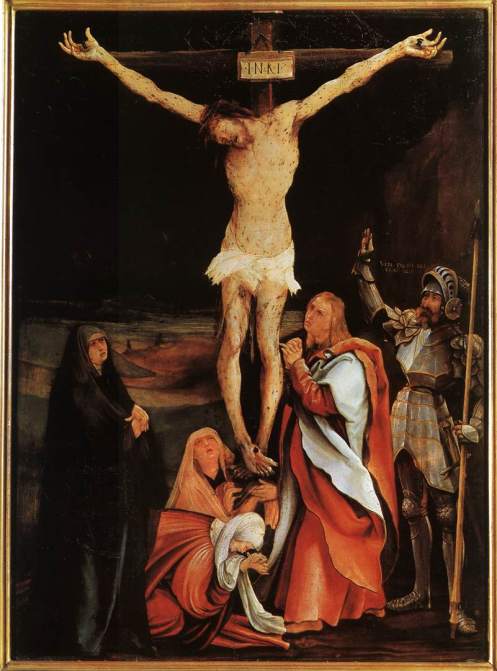
Thank God for leaving the Spirit of Truth with all believers. We need only to listen for His still, small voice to find Him. Thank God that He loves all of us so much that our foolish fears and anxieties don’t upset Him. Thank God He’s so patient with me, and that He is patient with all of us, even when we are impatient with Him. He loves us unconditionally, so much that he stretched out His arms on the cross to suffer and die for all of us. He will not send us anywhere He is not going; and when it comes to death, He’s been there and done that already. No matter how anxious, frightened, and lonely we may become, the Holy Spirit will keep us in His grip until the day Jesus bring us safely home. We are never alone.
Anyone who has spent some time in a deep swimming pool probably knows the feeling of diving a little too deep and then having to hold their breath while struggling towards the water’s surface, lungs aching for oxygen. The urge to breathe in such a situation is nearly irresistible. Breathing is such a natural part of life that most healthy people do it unconsciously. Breath and breathing hold a special place in the Bible.
2 Timothy 3:16 says, “All Scripture is God-breathed and is useful for teaching, rebuking, correcting and training in righteousness,” i.e., Scripture comes straight from the mouth of God!
In Genesis 2:7, God’s breath equates to life, “Then the Lord God formed a man from the dust of the ground and breathed into his nostrils the breath of life, and the man became a living being.”
We see this again in Ezekiel 37:9, the story of the Valley of Dry Bones. We read, “Then he said to me (Ezekiel), ‘Prophesy to the breath; prophesy, son of man, and say to it, ‘This is what the Sovereign Lord says: Come, breath, from the four winds and breathe into these slain, that they may live.’”
In Luke 23:46, the absence of God’s breath equates to death. We read, “Jesus called out with a loud voice, ‘Father, into your hands I commit my spirit.’ When he had said this, he breathed his last.” Many places in the scriptures tell us someone “breathed his last” and died.
John 20:21-22, in a passage we call the Great Commission, equates the Holy Spirit to Jesus’ breath. It reads, “Again Jesus said, ‘Peace be with you! As the Father has sent me, I am sending you.’ And with that he breathed on them and said, ‘Receive the Holy Spirit.’”
There’s no denying that there is power in the breath of God!
Breath Prayer
I have a friend who recently took a new job in counseling. A lot of his work is done via phone calls. Yesterday he told me, “I finally have a full case load and so I’m frequently very busy… but relearning to breathe and talk to the Lord as I’m dialing a call.” My friend is on to something. Wittingly or unwittingly, he has learned the value of breath prayer. I only learned this lesson recently.
Nancy S. Wiens wrote this about breath prayer:
Within the Orthodox tradition, Breath Prayer appears perhaps as early as the 3rd century. Known as the “Jesus Prayer” or “Prayer of the Heart,” it draws from Mark 10:47, where a blind man, Bartimaeus, calls Jesus to heal him. A common form is, “Jesus Christ, Son of God, have mercy on me.” By placing a few words on the inhale and a few on the exhale, it unites the prayer with the body. (Breath Prayer: An Ancient Spiritual Practice Connected with Science. As found at biologos.org)
Breath prayer focuses on speaking, aloud or silently in one’s heart, a short phrase or prayer while coordinating it with one’s breathing. It can be useful in reducing anxiety, cultivating mindfulness, centering, and forming a deeper connection with God.
To engage in breath prayer, one typically chooses a brief phrase or prayer that is personally significant to them. It can be a simple affirmation, a biblical verse, or a sacred word or name. For example, in Christianity, a common breath prayer is “Lord Jesus Christ, have mercy on me.” Below is a beginner’s list of breath prayers. I highly recommend you give them a try.
As we breathe without ceasing, so should we pray!
*Peace. Be still. – from Mark 4:39
Speak Lord. I am listening. – from 1 Samuel 3:9
You are the Potter. I am the Clay. – from Isaiah 64:8
You, Lord are my shield. And the lifter of my head. – from Psalm 3:3
I am anxious for nothing. I give thanks and make my needs known to you. – from Philippians 4:6
You satisfy me with good things. And I am renewed. – from Psalm 103:1-5
I serve with the strength God provides. To God be the glory. – from 1 Peter 4:11
My flesh and heart may fail. But God is my strength forever. – from Psalm 73:26
You are doing a new thing. Let me perceive it! – from Isaiah 43:19
Keeping my eyes on what is unseen // I do not lose heart. – from 2 Corinthians 4:16-18
Lord, shine your face on me. Lord, give me peace. – from Numbers 6:25-28
When I am afraid // I put my trust in you. – from Psalm 56:3
My heart trusts in God alone. I have no fear of bad news. – from Psalm 112:7-8
* I hope that some of my readers will find this list useful. Thanks to Rachel Mayew for providing it in her “Holistic Faith” blog.










 Divine Simplicity
Recent Comments