Christmas, the celebration of the birth of Jesus Christ, is quickly approaching. As we prepare for a merry celebration of his birth, let us not forget that he came to us as a Savior, destined to suffer agony and death for you and for me. Jesus is the “lamb of God who takes away the sin of the world” (John 1:29). God did not send us his only begotten son out of pity for mankind. He was sent because only God’s son was a sufficient sacrifice to take away the sin that dwells in all of us. “But he was pierced for our transgressions; he was crushed for our iniquities; upon him was the chastisement that brought us peace, and with his wounds we are healed” (Isaiah 53:5). Everyone needs a savior. I hope you enjoy this reblog from December 21, 2017.
Archive for the ‘Salvation’ Category
29 Oct
The Triumphant God

The triumphal entry of Jesus into Jerusalem, Matthew 21:1-11
The dominance of Rome
As a retired Army Officer, I find Roman history fascinating. The Roman Empire’s territory in Jesus’ time completely enveloped the Mediterranean Sea. Roman society was very militaristic. The military played a central role in the empire’s territorial expansion, governance, and social structure. Rome aggressively employed its strong military capabilities to conquer new territories and maintain control over its sprawling empire. Military prowess was a key aspect of Roman cultural identity.
The Roman Senate sometimes granted a festive procession through the streets of Rome to pay tribute to a general who was victorious in battle. Called a Triumph or a triumphal procession, it was a grand and elaborate ceremony designed to celebrate and publicly recognize the military achievements and conquests of the general being honored.
A Triumph was a blend of religious, political, and social elements, showcasing the glory of Rome. The general being honored wore a special ceremonial toga. He rode in a chariot drawn by four horses, followed by his troops, prisoners of war in chains, strange animals from the conquered lands and wagons filled with the spoils of war. Adoring citizens lined the streets, cheering as the different elements of the Triumph passed by them. The air was full of the sounds of music and chants, creating a jubilant, reverent atmosphere. The Triumph not only honored the general but also reinforced the power and splendor of the Roman state.
Jesus’ triumphal entry into Jerusalem
In Jerusalem a large crowd of Jews gave Jesus an impromptu Triumph of His own. His triumphal entry into Jerusalem is described in all four Gospels: Matthew 21:1-11, Mark 11:1-11, Luke 19:28-44, and John 12:12-19. Each provides a slightly different perspective on the event, but they all highlight the significance of Jesus’ arrival in Jerusalem as the fulfillment of prophecy. Jesus’ triumphal entry, in Christian tradition, marks the beginning of Holy Week. It sets the stage for the events leading up to His crucifixion and resurrection, which are central to the Christian belief that Jesus is the Messiah, the son of the living God.
According to the Gospels, Jesus entered Jerusalem riding on a donkey (or colt), fulfilling a prophecy found in both Isaiah 62:11 and Zechariah 9:9. As He approached the city, a large crowd gathered, spreading their cloaks and palm branches on the road before him. They shouted “Hosanna” (loosely translated as “save us” or “help us”) and praised Him as the “Son of David” and the “King of Israel.”
The atmosphere at Jesus’ triumphal entry was one of celebration and anticipation, as the jubilant Jews who were present believed him to be the promised Messiah, who they supposed would be a military leader who would free them from Roman oppression. However, in stark contrast to a Triumph for a Roman General, Jesus’ humble entry into Jerusalem symbolized the peaceful role of His mission as Messiah, the humble King of Israel who fed the hungry, healed the sick, cleansed the lepers, gave sight to the blind, prayed for His enemies, and washed the feet of His disciples.
Sadly, most of the Jewish people and religious leaders failed to recognize Jesus as Redeemer, the sacrificial Lamb of God who would suffer and die under the orders of Pontius Pilate and after three days gloriously rise from the dead, conquering sin and death once and for all. Jesus freely sacrificed himself for the sins of the world and offers eternal life to all who believe on Him and profess that He is the son of God. We all need the Most Holy Redeemer of the world. Jesus Christ is the Triumphant God.
Prayer to the Most Holy Redeemer
(Anima Christi)
Soul of Christ, sanctify me.
Body of Christ, save me.
Blood of Christ, embolden me.
Water from the side of Christ, wash me.
Passion of Christ, strengthen me.
O good Jesus, hear me.
Within thy wounds hide me.
Never permit me to be parted from you.
From the evil Enemy defend me.
In the hour of my death call me.
and bid me come to thee,
that with your saints I may praise thee
for age upon age. Amen.
2 Corinthians 2:14 – “But thanks be to God, who in Christ always leads us in triumphal procession…”
* All Bible quotes are ESV
Bing Copilot AI was used to assist with the historical research used to write this piece.
27 Jul
Why I continue to write

My heart is stirred by a noble theme as I recite my verses for the king; my tongue is the pen of a skillful writer. –Psalm 45:1*
A large portion of my wife’s family tree is rooted in Lancaster County, Pennsylvania. Lancaster County is Amish country. Having rejected the modern world, these plain Christians, the descendants of Swiss-German Anabaptists, struggle to maintain an 18th century existence in fast-paced, 21st century America. The county has well over 30,000 Amish residents today.
The Amish are farmers and craftsmen. Stout work horses pull their plows through the fertile fields. They build their own houses and barns and heat them with stoves fired by wood and coal. They make their own furniture. Their houses have no electricity. They have neither television, radio, cell phones, computers, cars nor tractors. They educate their children in one-room schoolhouses. They hold church services in private homes. They know their neighbors and help them when needed. They revere God!
While I’m not ready to give up 21st century conveniences, I must admit there’s a part of me that envies the simple existence of the Amish. Inspired by Amish simplicity, I began writing this Divine Simplicity blog in September 2011 as a Christ-inspired self-help guide on simplifying one’s life.
My blog has evolved considerably over the years, with the topics growing ever broader, but all the while aiming to maintain a focus on Christ and scripture. When I started this blog, I never figured I’d still be at if after a decade. I don’t have many followers, which led me to question the blog’s value. Why I should continue to write it at all. After considerable thinking on this, it all boils down to three things.
I endeavor to ensure that every entry I write honors and glorifies Jesus. I write prayerfully, hoping to inspire serious thought and holy conversation. Billy Graham had this to say:
“Our dress, our posture, our actions should all be for the honor and glory of Christ. Much of our talk as Christians is secular, not spiritual. It is easy to fall into conversational conformity of the world and spend an evening discussing politics, new cars, and the latest entertainment. We often forget that we are to edify one another with holy conversation and that our conversation should be on heavenly, and not exclusively on earthly things.”
Create in me a pure heart, O God, and renew a steadfast spirit within me. –Psalm 51:10
I also write for my own spiritual renewal. Writing a blog entry almost always causes me to search through the Bible, seeking relevant passages supporting the topic I have chosen. For me, searching and studying scripture is cathartic. It draws me closer to God by shifting my thoughts from earthly cares and concerns to Godly thoughts inspired by the Holy Spirit. Writing about the scripture passages I discover reinforces what I learn from them.
I planted the seed, Apollos watered it, but God has been making it grow. So neither the one who plants nor the one who waters is anything, but only God, who makes things grow. –1 Corinthians 3:6-7
Finally, I write to sow seed containing the Good News of Jesus Christ. Perhaps if I, through my blogging, can plant a seed with the Gospel message in a reader’s heart, then maybe another will water it so that God will make it grow. I did some rough math and figure that during the course of nearly 13 years I’ve spent around 1,500 hours researching and writing this blog. If it has helped even one person find his or her way to Christ’s salvation, then I’m satisfied that it has done its job. Soli Deo gloria.
Whatever subject I preach, I do not stop until I reach the Savior, the Lord Jesus, for in Him are all things. –Charles Spurgeon
*All Bible quotes are NIV
31 Mar
Easter 2024 – He is risen
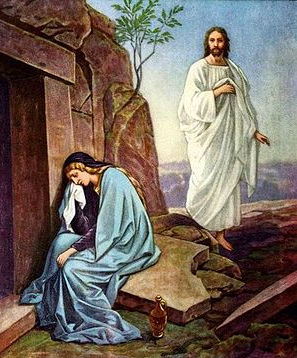
Matthew 28 (ESV) – He Is Risen
Now after the Sabbath, as the first day of the week began to dawn, Mary Magdalene and the other Mary came to see the tomb. 2 And behold, there was a great earthquake; for an angel of the Lord descended from heaven, and came and rolled back the stone from the door, and sat on it. 3 His countenance was like lightning, and his clothing as white as snow. 4 And the guards shook for fear of him, and became like dead men.
5 But the angel answered and said to the women, “Do not be afraid, for I know that you seek Jesus who was crucified. 6 He is not here; for He is risen, as He said. Come, see the place where the Lord lay. 7 And go quickly and tell His disciples that He is risen from the dead, and indeed He is going before you into Galilee; there you will see Him. Behold, I have told you.”
8 So they went out quickly from the tomb with fear and great joy, and ran to bring His disciples word.
The Women Worship the Risen Lord
9 And as they went to tell His disciples, behold, Jesus met them, saying, “Rejoice!” So they came and held Him by the feet and worshiped Him. 10
5 Feb
Debt relief

The United States is a debtor nation. The US Congress regularly borrows money to keep the government running. The national debt is the grand total of money the government owes, either to investors or to itself (source: USAfacts.org). The current national debt is approaching $35 trillion. That’s 35 followed by 12 zeros!
There is an intriguing concept of debt forgiveness in Jewish law that relates to the Shemitah year, which occurs every seven years. According to the Torah, in the Shemitah year, all personal loans between Jews are canceled, and lenders must release their debtors from their obligations. This is known as Shemitat Kesafim, or “release of money.” The purpose of this law is to foster generosity, faith, and social justice among the Jewish people, and to remind them that everything ultimately belongs to God. Imagine how different our lives would be if this form of debt relief were practiced in America today.
Average American citizens are debtors. Per the website Statista.com, the average American had $21,800 in non-mortgage debt in 2023. Much of this amount was accrued on credit cards used to fund consumer spending…I just had to have that new iPhone! Unlike older generations, younger consumers today often buy on credit those things that older generations would have saved up for and purchased in cash, like a new car…Why wait, you can have it now. You deserve it!
Today, the idea of saving enough money to buy a new car is as outdated as the idea of working one’s way through college. While not impossible, the skyrocketing cost of new cars and attending a four-year college make paying cash as one goes out of reach for most people.
According to a July 2023 article on Forbes.com (https://www.forbes.com/advisor/student-loans/average-student-loan-debt-statistics/), total student loan debt was $1.75 trillion. Around 55% of students from public four-year institutions had student loans. The average student loan debt for students coming out of public four-year institutions was $28,950.
There’s an old adage that says, “The borrower is slave to the lender.” There’s a lot of truth in this. The Bible describes our sins as debts to God. Sin debt to God is a concept describing the moral obligation that humans have to obey God’s law and the penalty that they incur when they fail to obey. Sin is disobedience to God’s will and commands. King David acknowledges in Psalm 51:3-4, that his sins are offenses against God, not man:
3 For I know my transgressions, and my sin is always before me.
4 Against you, you only, have I sinned and done what is evil in your sight; so you are right in your verdict and justified when you judge.
Sin separates humans from God’s presence and favor. The consequence of sin is death, both physical and spiritual, which means eternal separation from God.
The Bible teaches that God is merciful and gracious, and He has provided a way for humans to be forgiven and reconciled to Him. God sent His Son, Jesus Christ, to die on the cross as a substitute for sinners, paying the debt that they could not pay themselves. By trusting in Christ’s death and resurrection, sinners can receive God’s forgiveness and eternal life. This is the Good News (Gospel), of God’s salvation for sinners. God cancels the sin debt of those who believe in His Son and restores them to a right relationship with Him. While you may not receive government relief from your student loans or other debts, thanks be to God that forgiveness for our sin debt against Him is available.
Ephesians 2:1-10 As for you, you were dead in your transgressions and sins, 2 in which you used to live when you followed the ways of this world and of the ruler of the kingdom of the air, the spirit who is now at work in those who are disobedient. 3 All of us also lived among them at one time, gratifying the cravings of our flesh and following its desires and thoughts. Like the rest, we were by nature deserving of wrath. 4 But because of his great love for us, God, who is rich in mercy, 5 made us alive with Christ even when we were dead in transgressions—it is by grace you have been saved. 6 And God raised us up with Christ and seated us with him in the heavenly realms in Christ Jesus, 7 in order that in the coming ages he might show the incomparable riches of his grace, expressed in his kindness to us in Christ Jesus. 8 For it is by grace you have been saved, through faith—and this is not from yourselves, it is the gift of God— 9 not by works, so that no one can boast. 10 For we are God’s handiwork, created in Christ Jesus to do good works, which God prepared in advance for us to do.
*All Bible quotes are NIV
23 Apr
The God of second chances

This is the word that came to Jeremiah from the Lord: “Go down to the potter’s house, and there I will give you my message.” So I went down to the potter’s house, and I saw him working at the wheel. But the pot he was shaping from the clay was marred in his hands; so the potter formed it into another pot, shaping it as seemed best to him. Then the word of the Lord came to me. He said, “Can I not do with you, Israel, as this potter does?” declares the Lord. “Like clay in the hand of the potter, so are you in my hand, Israel. If at any time I announce that a nation or kingdom is to be uprooted, torn down and destroyed, and if that nation I warned repents of its evil, then I will relent and not inflict on it the disaster I had planned. –Jeremiah 18:1-8
If you have ever watched an artisan blowing glass you will probably agree that it is an amazing skill. If you walk around a glass blowing studio, you are likely to see a lot of beautiful finished examples of the artisan’s craft. You are also likely to see are a lot of broken glass fragments from failed attempts to craft a work of art. Glass blowing is very unforgiving and correcting a mistake often proves impossible.
Making clay pottery, on the other hand, is very forgiving. When a skillful potter makes an error, it can often be corrected without abandoning the piece and having to start over. Even when a piece is a total flop the fresh clay can be rolled into a ball and used to start a new piece. Like the potter reshaping a new piece of pottery from a failed one, so is the loving Savior I serve. Jesus is truly a God of the second chance. The bible abounds with examples of people given second chances. Here are just a few from the New Testament.
A woman caught in the act of adultery
John chapter 8 tells of a Jewish woman was caught in the act of adultery. Her accusers—teachers of the law and Pharisees—brought her to Jesus, asserting that the law of Moses dictated she should be stoned for her transgressions. Hoping to trap Jesus with his own words, they asked him what they should do with her. Jesus remains silent for a long time, stooping down and writing in the dirt. He finally responds, “Let any one of you who is without sin be the first to throw a stone at her.” Slowly her accusers departed one by one until there was none remaining. Neither did Jesus accuse her. Instead, he commanded her, “Go now and leave your life of sin.”
Jesus raises the son of a widow from the dead
In Luke chapter 7, beginning at verse 11, we find Jesus traveling through a city called Na’in. Along the way, Jesus observed a funeral procession carry a funeral bier bearing the body of a man who was the only son of a widow. In Jewish society of the day, the man’s death would almost certainly have sentenced his mother to a life of poverty of worse. Having compassion for her, Jesus stopped the procession, touched the bier, and commanded the dead man to rise, upon which the man sat up and began to speak. The people in the crowd were astonished and said, “A great prophet has arisen among us!” and “God has visited his people!”
The demon possessed man
Luke 8:25 begins the story of a demon possessed man. Upon arriving in the country of the Ger′asenes, which is opposite Galilee, Jesus encountered the man, who was naked. We are told he lived among the tombs and was possessed by many demons. When Jesus approached the man, the demons recognized the Son of God and cast the man to the ground while begging Jesus not to destroy them. Jesus cast out the demons drove them into a herd of swine; the herd subsequently rushed down a steep slope and fell into a lake (Sea of Galilee), where they drowned. Afterwards, the formerly possessed man, now clothed and in his right mind, wanted to follow Jesus in his journey. Jesus forbade him, telling him, “Return to your home, and declare how much God has done for you.” We are told, “he went away, proclaiming throughout the whole city how much Jesus had done for him.”
A 12-year-old girl raised from the dead
Luke 8:40 begins the story of a man named Jairus, who is described as a ruler of the Synagogue. Jairus came to Jesus, falling at his feet, and begged him to go and heal his young daughter, who was very ill and near death. Before they can reach Jairus’ house, a messenger comes with news that the girl has died. Despite the news, Jesus continued to Jairus’ house. When he was led to the place where the dead girl lay, Jesus took her by the hand and commanded, “Child arise.” Immediately her spirit returned to her and she stood up.
A thief on the cross next to Jesus’ cross
Luke 23:32 begins the story of two criminals who were crucified at the same time Jesus was—one on His left and one on His right. One criminal railed against Jesus, while the other confessed his sins and pleaded, “Jesus, remember me when you come into your kingdom.” Jesus replied to him, “Truly, I say to you, today you will be with me in Paradise.”
The Prodigal Son
Luke chapter 15, beginning with verse 11, tells the familiar story of the “Prodigal Son.” The young man in the story displayed the utmost disrespect for his father, demanding that his father give him his portion of the old man’s estate while the father was still living. The father acquiesced and gave his son his inheritance. The prodigal consequently went away to a far land, where he squandered his wealth. So complete was his fall that he eventually ended up barely surviving by working a job feeding pigs. He longed to return home. One day, having reached the bottom of the abyss of poverty, he came to his senses and decided to return home and beg his father to let him live there, not as a son, but as a hired servant. Verse 20 describes how his father, who is a figurative character representing God, seeing the returning son from a long way off, ran to meet him, embraced him, and kissed him. The son said, “Father, I have sinned against heaven and before you; I am no longer worthy to be called your son.” But the father said to his servants, “Bring quickly the best robe, and put it on him; and put a ring on his hand, and shoes on his feet; and bring the fatted calf and kill it, and let us eat and make merry; for this my son was dead, and is alive again; he was lost, and is found.”
Repentance
Why does God give us second chances? Because it is His nature to forgive and it is our nature to continually sin. King David exploited Bathsheba sexually. He arranged circumstances so that her husband Uriah would be killed in battle. He betrayed the trust of the people of Israel. Despite the three offended parties, in Psalm 51:4, David confessed that he had sinned against God and God alone.
Luke 15 contains three parables describing how heaven rejoices when a sinner repents and (re)turns to God. 2 Peter 3:9 says, The Lord is not slow about his promise as some count slowness, but is forbearing toward you, not wishing that any should perish, but that all should reach repentance. Mark 1:14-15 says, “Now after John was arrested, Jesus came into Galilee, preaching the gospel of God, and saying, ‘The time is fulfilled, and the kingdom of God is at hand; repent, and believe in the gospel’.” Repentance, while not a prerequisite for receiving a second chance from God, is essential to living a Christ-like life and receiving the gift of salvation through Jesus Christ.
God is the God of the second chance—and the hundredth chance, and the thousandth chance! No matter how rebellious and sinful we’ve been, He always stands ready to forgive us and welcome us home if we truly repent and commit our lives to Jesus Christ. –Billy Graham
*All Bible references are NIV
9 Apr
Easter 2023: He is risen!
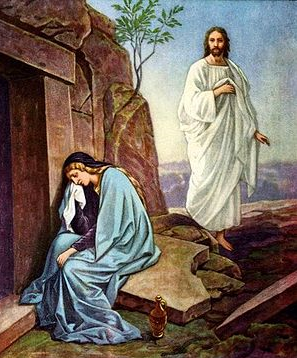
Christ is Risen: The world below lies desolate.
Christ is Risen: The spirits of evil are fallen.
Christ is Risen: The angels of God are rejoicing.
Christ is Risen: The tombs of the dead are empty.
Christ is Risen indeed from the dead, the first of the sleepers, Glory and power are his forever and ever.
— St. Hippolytus of Rome
23 Dec
Patience please

Patience: an ability or willingness to suppress restlessness or annoyance when confronted with delay (source: http://www.dictionary.com).
Followers of this blog have likely heard the adage, “Patience is a virtue.” I would add, “Patience is in short supply.” A close look at modern American society reveals that collectively we are an impatient bunch. We detest delays caused by heavy highway traffic and long stoplights. We hate standing in lines. We love express checkout lanes at the grocery store, next day delivery, and express mail. We like on demand TV programs and complain if a webpage takes a few extra seconds to load on our phones and computers. At this time of year, the Christmas season, even little kids join in anxiously counting the days until Santa arrives with his bag full of presents.
Patience has suffered in the information age, especially since the advent of the Internet. We are bombarded with a flood of information from a multitude of directions and sources. It is impossible to take it all in. Consequently, we are increasingly fed information is small, easily digestible tidbits, whether it be news articles, sports reports, and even those pesky pop-up ads trying to sell us all kinds of stuff.
There are numerous studies indicating the way information is presented in compact form today alters the human brain, making it difficult for people to focus on long articles, books, etc. Many people today, especially younger adults, simply lack the patience to read a long book like the classic War and Peace or a James A. Michener novel, preferring the CliffsNotes version to the full-length one. With patience in short supply, who among us will write the next classic novel or paint the next masterpiece like the Sistine Chapel? Who will perform the long, grueling research projects to cure human diseases? Who will travel to the planets?
My wife and I are perfect examples of patience—she being a good example and me a bad one. She is the type who will write personal notes in each of the many Christmas cards she sends. I, on the other hand, sign them and stuff them in the envelope. She can solve a difficult jigsaw puzzle in record time. I would not dream of even starting one. She is great with handling our grandkids. I quickly slip into the drill sergeant mode when their antics irritate me. She frets about practically nothing. I fret about myriad things. She follows a straight and narrow path while I zig and zag along. She has put up with me for almost 50 years—now that’s patience!
I am blessed with a patient wife, but even more blessed with a patient God. When I consider my personal transgressions and the collective transgressions of our nation, I marvel that God has spared us his wrath thus far. God’s love for us is evident in His only son Jesus Christ. He suffered a cruel death on the cross as a propitiation for our sins. Through his glorious resurrection, Jesus overcame sin and death and opened the door to salvation for all who believe on His holy name. God is patient and gives us second chances, but only through the shed blood of Christ. Oh God, continue to be patient with us I pray!
Therefore, as God’s chosen people, holy and dearly loved, clothe yourselves with compassion, kindness, humility, gentleness, and patience. –Colossians 3:12
Wishing all my readers a very blessed Christmas and a happy, healthy 2023. See you next year! Please pray for those of us in the upper Midwest where we are currently experiencing polar-like temperatures, snow, and wind.
24 Nov
A servant of all
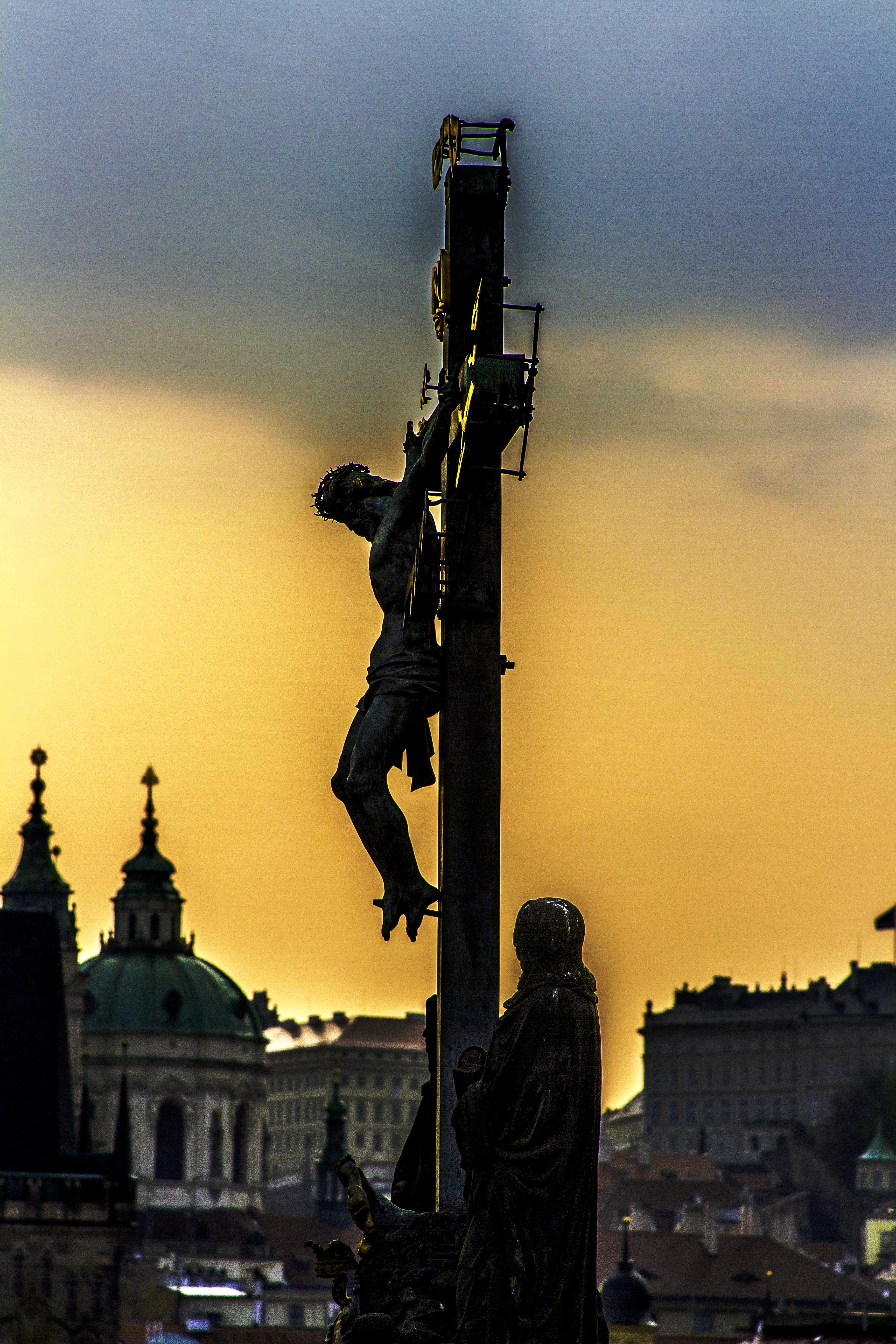
Justification is an act of God’s free grace, wherein he pardons all our sins and accepts us as righteous in his sight, only for the righteousness of Christ imputed to us and received by faith alone. Sanctification is the work of God’s free grace, whereby we are renewed in the whole man after the image of God and are enabled more and more to die unto sin, and live unto righteousness.
–The Westminster Shorter Catechism, questions 33 and 35
The New Testament is clear on the means of salvation. Salvation from sin and death can be attained through faith alone—in Latin “Sola Fide.” Christ followers attain justification before God through faith in Jesus as their personal savior and no longer live under the condemnation of the Law. Their sins are forgiven and they are restored to a perfect relationship before God. Jesus cruel death was the perfect sacrifice for the sins of the world. “It is finished!” (John 19:30), were the final words spoken in the redemption of mankind. Through his glorious resurrection, Jesus overcame sin and death and opened the door to salvation for all who believe on His holy name.
No matter how hard one may try to attain salvation through good works, they are destined to fail. The Apostle Paul tells us, “Therefore no one will be declared righteous in God’s sight by the works of the law” (Romans 3:20a). That said, we should not be quick to underemphasize the value of good works. Paul tells us in Philippians 2, to work out our own salvation in fear and trembling. This “working out” is the process of sanctification, that lasts a lifetime, as believers are called to continually strive to become more Christ-like. Sanctification is as much about the process as it is the destination.
Many Bible critics contend that James 2:14-25 is not consistent with the doctrine of salvation through faith alone (sola fide). My understanding of James is that these critics take it out of context. Where James stresses deeds (works), he is speaking in the context of sanctification (striving to be more Christ-like) and not about justification (the forgiveness of sin and restoration into a right relationship with God).
When we consider sanctification, it would be a mistake to overlook the role of good works. One day Jesus overheard several of his disciples arguing. It turned out they were arguing about which of them was the greatest among Jesus’ disciples. Sitting down, Jesus called the Twelve and said, “Anyone who wants to be first must be the very last, and the servant of all.” (Mark 9:35). Jesus gave his disciples an example of a servant’s heart when He washed their feet, as described in John chapter 13.
Are you a Christ follower? Are you striving to become more Christ-like? I hope you answered yes to both questions. While you may not be able to cast out demons, raise the dead, give sight to the blind, or cleanse lepers, there is an abundance of good works needed in Christ’s kingdom. In Romans chapter 16, Paul’s final greetings to a handful of Christian brothers and sisters provides some clues. He tells them to greet each other with a holy kiss, that is be kind to one another. Paul repeatedly recognizes women who worked very hard for Christ. He recognizes others who have sponsored a church in their home. He cites others who have demonstrated hospitality to fellow believers. Paul even recognizes the mother of a friend who has also been like a mother to him.
Sanctification does not come without a price. Paul’s greeting mentions some friends who risked their lives for Christ, others who have withstood testing of their fidelity to Christ, and yet others who served time in prison with him. Are you ready to accept the risks of becoming more Christ-like? Are you “working out” your own sanctification? Are you willing to let your life become a doormat where others will wipe their feet? Are you ready to become a servant of all?
Sanctification means nothing less than the holiness of Jesus becoming mine and being exhibited in my life. The most wonderful secret of living a holy life does not lie in imitating Jesus, but in letting the perfect qualities of Jesus exhibit themselves in my human flesh. –Oswald Chambers
*All Bible quotations are NIV.
28 Oct
Making friends

A friend to all is a friend to none. –Aristotle
I have hundreds of friends. At least that is what my social media accounts tell me. The concept of friendship has changed significantly over the years, especially since the advent of the internet and social media. Social media friendships are so easy to make—just press the “Add Friend” button. But what is a real friend?
Speaking to his disciples, Jesus explained friendship like this in John 15:13 (NIV), “Greater love has no one than this: to lay down one’s life for one’s friends.” Whoa! That rules out most of my social media friends. Real friendships, at least in Jesus’ definition, require personal relationships and a willingness to make sacrifices.
A real friend walks in when the rest of the world walks out.” –Walter Winchell
So, what is real friendship? I do not profess to have all the answers, but here are some things I have discovered about real friends:
- They are there for you when others walk away.
- They meet you where you are, warts, wrinkles and all.
- They will make time for you, even when they cannot spare it.
- They expect nothing in return and do not keep score.
- They are good listeners.
- They respect confidentiality.
- They tell you what you need to hear, not what you want to hear.
- They say, “Wow, you really screwed this up! Now how can I help you fix it?”
- They walk beside you in the demon filled valleys.
- They are at their best when you are at your worst.
For prayer is nothing else than being on terms of friendship with God. –St. Teresa of Avila
I am blessed with an abundance of friends. They know who they are. Most are fellow brothers or sisters in Christ. Thinking about what I like most about my friends makes me wonder if it is possible to be a friend of God? I believe it is. In Daniel 3, Daniel was bound and thrown into a fiery furnace because he refused to worship an image of King Nebuchadnezzar. God, presumably a preincarnate Jesus, appeared in the blazing furnace with Daniel. David, despite his many serious flaws, had such a close relationship with God that God called him, “a man after my own heart,” (Acts 13:22). God called Abraham “my friend” (Isaiah 41:8b). And God spoke to Moses face to face, “as a man speaks with a friend” (Exodus 33:11a). The closeness of God to these individuals was not due to their righteousness, as all were flawed. These friendships were a result of God’s grace and mercy.
God is eager to be your friend, but He is unlike your other friends in one important way. God wants you to be his disciple. Jesus, God the Father’s only begotten son, lived up to his own teaching that, “Greater love has no one than this: to lay down one’s life for one’s friends.” Are you ready to let God mold and shape your life like potter’s clay? Then lay down your life at his feet, pick up your cross and follow Jesus.
He (Jesus) washes us in Baptism and gives us new, clean clothes of goodness and holiness to wear—His own good clothes, to be ours forever. Finally, He gives us life—His own everlasting life, which He won for us when He rose from the dead, never to die again. –Dr. Kari Vo, The Lutheran Hour.
 Divine Simplicity
Recent Comments