The Miriam Webster Dictionary defines the word promise as “a statement telling someone that you will definitely do something or that something will definitely happen in the future.” In Western culture, a promise is not something to be taken lightly (unless perhaps you’re a politician). Anyone who has raised a child knows that a promise carries weight.
If you’ve ever planned to do something with a child—say a Saturday afternoon trip to the zoo—and subsequently had to cancel, then you have probably had a conversation like this:
Dad: “Sweetie I’m sorry, but we won’t be able to go to the zoo tomorrow. Something came up at work.”
Child: “When are you going to take me?”
Dad: “How about next Saturday?”
Child: “Do you promise?”
Dad: “We’ll see.”
The “We’ll see” response is a rather hollow attempt at not having to break a promise the dad made to the child. No parent wants to break a promise made to their child.
There is a special kind of promise called a covenant. Covenants typically entail a personal relationship between the various parties to the promises made. If you’ve ever been a member of a home owners association (HOA), you’ve probably read, or at least heard of, the HOA covenants. These are the rules and regulations that all home owners belonging to the association agree to follow. Human covenants typically contain stipulations, a condition or requirement that is specified or demanded as part of an agreement. For example, your mailbox must match the color of your house, or boats are not to be parked in driveways for more than 24 hours. For breaking or violating these covenants, there is usually some sort of penalty that must be paid. In the case of a HOA, this is often a monetary fine.
For Christ followers, marriage vows are a form of covenant and a pretty demanding, “for better or for worse…in sickness and in health…until death do us part.”
The Bible contains many covenants. While the exact number is a point of debate, there are five core covenants forming the foundation of God’s plan for the redemption of mankind through faith in Jesus Christ. These covenants were made with Noah, Abraham, Moses/Israel, David and finally the New Covenant of salvation through Jesus Christ.
Noahic Covenant– God promises to never again destroy mankind or other living creatures. This covenant was without stipulations. Instead, God will fulfill the redemptive promise of Genesis 3:15.
Abrahamic Covenant – God promises to make a great nation out of childless Abraham, assuring him that his descendants will outnumber the stars. Abraham is to forsake his land and follow God wherever he leads. All the while, Abraham and his family are to walk blamelessly before God and to follow the practice of circumcision in every Generation.
Mosaic Covenant (with Israel) – God rescues the Hebrew people from the bondage of slavery in Egypt and promises to make them his own people and a nation of priests. In turn, the people must abide by the laws given to Moses by God on Mount Sinai.
Davidic Covenant – God establishes David as Israel’s king. Through David’s royal lineage he will fulfill the promises He made to Abraham and Israel. In return, David and his lineage must remain faithful to God and obey God’s covenantal laws.
The New Covenant of Jesus Christ – Jesus is the culmination of God’s saving grace for his people. Christ is, as John the Baptist called him, “the Lamb of God who takes away the sins of the world.” This is a covenant of Grace without stipulations.
There is a major difference between the covenants of man and the covenants of God. People routinely violate the covenants, while God never breaks a promise. The covenants of God do not replace the ones that came before—they build upon them, because it is impossible for God to lie or break a promise. Before the foundation of the world, our omniscient God made a plan for the redemption of sinful mankind. Jesus is the fulfillment of God’s promise of man’s redemption, which was planned out through the five covenants discussed herein. Thanks be to God that his promises are faithful and true!
But when the set time had fully come, God sent his Son, born of a woman, born under the law, to redeem those under the law, that we might receive adoption to sonship. Because you are his sons, God sent the Spirit of his Son into our hearts, the Spirit who calls out, “Abba, Father.” So, you are no longer a slave, but God’s child; and since you are his child, God has made you also an heir. –Galatians 4:4-7
The motto of the US Infantry is “Follow Me.” From day one, infantry soldiers are taught to lead. The most effective leaders “lead from the front,” which means leading by personal example. Audie Leon Murphy was a popular Hollywood actor in the 1950’s and 1960’s, but he was a skinny, baby-faced, five-foot five-inch teenager from Texas when he joined the US Army in 1942. No one could have imagined that this lad would become his country’s most decorated service member of World War II. Time and again, Murphy proved himself fearless under fire. By October 1944, he was a highly decorated combat infantryman fighting in the European campaign. Murphy was given a battle commission to second lieutenant in the same month.
On January 26, 1945 Murphy’s conspicuous bravery would earn him the Congressional Medal of Honor (MOH). Murphy knew about leading from the front. An excerpt from his MOH citation reads as follows:
2d Lt. Murphy commanded Company B, which was attacked by six tanks and waves of infantry. 2d Lt. Murphy ordered his men to withdraw to prepared positions in a woods, while he remained forward at his command post and continued to give fire directions to the artillery by telephone. Behind him, to his right, one of our tank destroyers received a direct hit and began to burn. Its crew withdrew to the woods. 2d Lt. Murphy continued to direct artillery fire which killed large numbers of the advancing enemy infantry. With the enemy tanks abreast of his position, 2d Lt. Murphy climbed on the burning tank destroyer, which was in danger of blowing up at any moment, and employed its .50 caliber machine gun against the enemy. He was alone and exposed to German fire from three sides, but his deadly fire killed dozens of Germans and caused their infantry attack to waver. The enemy tanks, losing infantry support, began to fall back. For an hour the Germans tried every available weapon to eliminate 2d Lt. Murphy, but he continued to hold his position and wiped out a squad which was trying to creep up unnoticed on his right flank. Germans reached as close as 10 yards, only to be mowed down by his fire. He received a leg wound, but ignored it and continued the single-handed fight until his ammunition was exhausted. He then made his way to his company, refused medical attention, and organized the company in a counterattack which forced the Germans to withdraw.
Audie Murphy was a selfless, sacrificial leader who always led from the front. Time and again he put his life on line for his friends and the men he led. Although wounded multiple times, Murphy miraculously survived the war.
Jesus was the ultimate example of selfless sacrifice and leading from the front. In Matthew 4:18-22, Jesus calls his disciples for the first time with the words “follow me.” Immediately they dropped what they were doing and followed him. The call to follow Jesus means now, not later. If you hear him calling, don’t resist.
In Luke 18, a rich young man who had always tried to live a righteous life asks Jesus what he must do to inherit eternal life. Jesus responds in verse 22, “Sell all that you have and distribute to the poor, and you will have treasure in heaven; and come, follow me.” The young man went away very sad, because he was very wealthy.
Jesus restored the sight of a blind beggar named Bartimaeus in Mark 10:46-52. Mark tells us that Bartimaeus, once his vision is restored, “followed him (Jesus) on the way.
Mark 9:35 tells us that when Jesus observed his disciples arguing about their personal status in the group of disciples, Jesus told them ““If anyone would be first, he must be last of all and servant of all.”
In John 13, on the night of the Passover feast just a short time before Jesus’ crucifixion, he displays a remarkable act of servitude by washing his disciples’ feet. When he is finished, he says to them in verses 14-15, “If I then, your Lord and Teacher, have washed your feet, you also ought to wash one another’s feet. For I have given you an example, that you also should do just as I have done to you.” Jesus calls us to a sacrificial life, placing others before ourselves.
“Greater love has no one than this, that someone lay down his life for his friends.”–John 15:23
Most important of all, Jesus gave up the splendor of heaven to be born of the Virgin Mary and lived as a man among us, understanding our weaknesses and struggles, so that he could give his life to save us all from our sins and death.
“Since Adam’s sin, mankind had been separated from God, but through Christ’s sacrifice we have been reconciled to the Lord. Jesus is ’the Lamb of God,’—the final and permanent sacrifice for the sins of the whole world, and under God’s New Covenant he is now the one mediator through whom we can come to God, for God will accept and forgive everyone who professes by word and life their belief in Jesus Christ as the Son of God, and depends upon his death as the sacrifice for their personal salvation.” (Source: Bibleforce.net)
“The authority by which the Christian leader leads is not power but love, not force but example, not coercion but reasoned persuasion. Leaders have power, but power is safe only in the hands of those who humble themselves to serve.” –John Stott
Whoever gives to the poor will not want, but he who hides his eyes will get many a curse.—Proverbs 28:27*
The COVID-19 pandemic has had a devastating effect on US and global economies. Hundreds of thousands of businesses have closed for varying pandemic-related reasons. The food service industry here at home has been hit particularly hard. Thousands of restaurants have closed, with most having no hope of reopening. The middle class is shrinking, leaving a fractured nation that is increasingly becoming a land of haves and have nots. History has demonstrated that as the middle class shrinks and the lower class grows, civil unrest often increases.
To survive, many American families have had to dip into retirement savings, placing the future in question. When savings are exhausted, losing a job can mean losing nearly everything. The ability to pay a big mortgage, something common for young working couples today, often depends on the salaries of both spouses. If even one of them loses their job, foreclosure becomes a distinct possibility! To stay afloat they must negotiate with lenders, which in the long run usually means increasing the size of their mortgages and/or tapping into short term savings and retirement accounts. Early retirement withdrawals are usually accompanied by additional fees.
On top of pandemic problems, even before COVID-19 economic globalization had given rise to thousands of large companies that are loyal to neither to their country of origin nor to their employees. Workers, especially blue collar ones, are increasingly being treated like disposable commodities that are brushed into the trash bin like rubbish on a picnic table. Highly educated and skilled working professionals who lose their jobs and end up turning to the government for assistance are common today. In my job working with the unemployed, I heard many lament, “I never imagined that I could end up in this situation.” This can and must change.
Churches, especially those in large urban areas, are often unaware of the financial struggles of individuals and families in their area—even when those affected are members of the church. Many churches have lost touch with early traditions. The scriptures speak frequently about caring for those who share the faith. This is an essential part of discipleship that helps the church set its own house in order. In Acts chapter 6, the Apostles appointed seven deacons to assist in the distribution of food to local widows, who were followers of Christ. James 1:27 tell us, “Religion that is pure and undefiled before God the Father, is this: to visit orphans and widows in their affliction, and to keep oneself unstained from the world.”
Even clearer instruction comes straight from the mouth of our Lord in John 13:34-35: “A new commandment I give to you, that you love one another: just as I have loved you, you also are to love one another. By this all people will know that you are my disciples, if you have love for one another.”
Building a healthy church family is essential to serving those in need outside the church. Brett Eastman has served as the small groups champion in several of the largest mega churches in the country including Pastor Rick Warren’s Saddleback Church. Eastman writes:
“If you want to create a church community that really cares for one another, the best way to do it is through small groups. When small groups become the vehicle for care-giving, the whole church gets involved in sharing one another’s burdens—a much more personal approach than relegating the task to a committee. The whole congregation should be making hospital visits, taking meals to people when they’re sick or something’s happened, doing childcare when someone’s in crisis and giving money when somebody’s lost a job.”
Small groups in churches set the conditions for encouraging personal intimacy and trust building—essential elements of loving Christian relationships. Only by sharing our hopes, fears, cares and concerns do we really get to know other believers well.
Small groups also enable churches to develop outreach ministries. One way for small groups to quickly make a difference is by reaching out to Christian charities in their church’s local area. Charities are always in need of volunteers, financial supporters, prayer warriors and other resources. The possibilities are endless. You can’t take care of everybody, but you can take care of somebody. The closest ministry filed for any church is the one inside its doors. The largest ministry field for every church is the one just outside the church doors.
Whoever is generous to the poor lends to the Lord, and he will repay him for his deed.—Proverbs 19:17
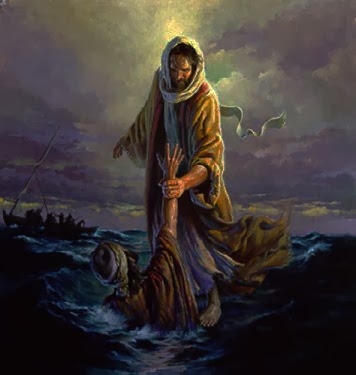
I am the Lord your God who takes hold of your right hand and says to you, Do not fear; I will help you. —Isaiah 41:13 (ESV)
Note: I periodically turn to previous blog entries for content that is relevant today. This entry is based upon an article I wrote in 2015.
Many people today are scared. Constant fear is slowly become part of the human condition. It’s running rampant right here in America. The majority of Americans now believe that their children’s lives will be harder than their own. They worry about unemployment and the economy. Many fear illegal immigrants. Others are afraid to gather in public places for fear of violence. Why wouldn’t people be afraid? Many media outlets and politicians survive by instilling fear in the public.
On a cosmic scale we hear about giant solar flares that could destroy technology, pushing humankind back into the Stone Age. A large meteor or asteroid collisions could destroy the Earth.
In the natural world, super volcanoes threaten to cause destruction on a planetary scale. Earthquakes like the recent one in Haiti and tsunamis in diverse places threaten thousands of lives. Many fear that global warming will cause killer storms, droughts, melting polar ice, coastal flooding and forest fires.
On the human plane, we have just just witnessed the rapid collapse of the US-backed government in Afghanistan and the ensuing chaos and death. Many fear the threat of terrorism in the homeland as a result of Afghanistan’s demise. Others fear home grown terrorists. Yet others worry about flesh eating bacteria, brain eating amoebas, the CORONA-virus Delta variant, and a growing list of drug resistant bacteria and viruses. Some hunker down in their homes, worried about wearing masks, riots, violence by/against the police, and mass murders making public places unsafe. Some fear that computer hackers will steal their identities and wealth. Others fear hackers will disrupt our critical national infrastructure, as we recently saw with the hack on the Colonial pipeline. There are wars and rumors of wars. Religious persecution is increasing around the globe. It can all be paralyzing.
Do not fear.
There are two types of fear mentioned in the Bible. The first is fear of the Lord. This fear is not associated with being frightened. It is a reverential awe of God and is to be encouraged. According to Psalm 111, fear of the Lord is the “beginning of wisdom” and leads to rest and peace.
The second type of fear is detrimental. In the first chapter of 2 Timothy it is described as a “spirit of fear.” A person can be completely overcome by a spirit of fear, virtually frozen and unable to function. Such fear weighs a person down physically, emotionally and mentally.
Unfortunately, many Christians have succumbed to a spirit of fear. Some fear those of other religions and are reluctant to reach out to them in Christian love. Some fear those who are different from them culturally or racially. Some of us are hesitant to invite those in need into their lives for fear they might lose something or it might cost something. Some are afraid to leave the comfort of their homes and familiar surroundings in order to reach out to the needy. Others are hesitant to give of their wealth for fear they might later find themselves in need. A few are afraid of just about everything.
Christian fears often boils down to a fear of losing something—possessions, comfort, safety, security. In Philippians chapter 3, verses 7-8 (ESV), St. Paul describes how he has let go of the things of this world in order to focus on what is truly important: ” But whatever gain I had, I counted as loss for the sake of Christ. Indeed, I count everything as loss because of the surpassing worth of knowing Christ Jesus my Lord.”
It is impossible to grasp the outstretched hand of Christ as long as we tightly cling to things of this world. David tells us in Psalm 34 verses 4-7 (ESV):
“I sought the Lord, and he answered me and delivered me from all my fears. Those who look to him are radiant, and their faces shall never be ashamed. This poor man cried, and the Lord heard him and saved him out of all his troubles. The angel of the Lord encamps around those who fear him, and delivers them.”
Take the fears before you today and give them to the Lord. You may paralyzed by a fearful nature, facing a health crisis, unemployment, divorce, a call to missionary service, or other difficult challenges. The best first step in any situation is to cast aside your fears—let go and let God!
Finally, be strong in the Lord and in the strength of his might. Put on the whole armor of God, that you may be able to stand against the schemes of the devil. For we do not wrestle against flesh and blood, but against the rulers, against the authorities, against the cosmic powers over this present darkness, against the spiritual forces of evil in the heavenly places. —Ephesians 6: 10-12 (ESV)
“The remarkable thing about God is that when you fear God, you fear nothing else, whereas if you do not fear God, you fear everything else.” —Oswald Chambers
If you’re a user of Facebook or YouTube, you’ve probably seen videos of military service members who have been on deployments reuniting with family members. These are moments of pure joy and happiness. They seem to say, “everything is going to be OK now.” This type of joy is a wonderful mountaintop experience, but it is fleeting. It’s simply not possible to sustain such temporal joy, but there is another type of joy that’s eternal.
Joy is the simplest form of gratitude. –Karl Barth
Did you ever meet somebody you just knew was a Christian without being told? There are some people whose face and disposition simply can’t hide the joy of Christ that dwells inside them. Often, this kind of person will invite you to visit their church. Christians want to share their joy with others. They are thankful for the joy that dwells within. In Galatians 5:22, the Apostle Paul calls joy a fruit of the Holy Spirit. In 2 Corinthians 2:3, Paul describes how he wants to share his joy with the people of the young church in Corinth.
Describing Christian joy to a non-believer can be difficult. When I was a young captain serving in the Army, I had a battalion commander who assigned me a special project. I listened to his instructions, but they weren’t clear to me. I asked specifically what sort of product he expected me to give him when I had completed the project. His surprising response was, “I’m not sure, but I’ll know it when I see it.” Christian joy is like that, you’ll never fully understand it until you’ve experienced it.
Joy may include happiness, but happiness is not a precondition for Christian joy. The Apostle Peter describes joy as gladness not based on circumstances (1Peter 1:8-9). Paul says in 2 Corinthians 7:4, “In all our affliction, I am overflowing with joy.” Clearly, Christian joy does not depend on being happy. It is founded in the assurance that:
Jesus has paid for all your sins, past, present, and future.
You have been freed from the power of sin and can choose to obey.
You live under God’s grace and mercy.
You are an adopted child of God.
You have eternal life.
God knows you by name and hears your prayers.
You are part of God’s church family and joined by the Holy Spirit to fellow Christians.
In Romans 15:13 Paul says, “May the God of hope fill you with all joy and peace as you trust in him, so that you may overflow with hope by the power of the Holy Spirit. Joy and peace are yours for the taking if you will put your trust in God today.
Doxology: To him who is able to keep you from stumbling and to present you before his glorious presence without fault and with great joy— to the only God our Savior be glory, majesty, power and authority, through Jesus Christ our Lord, before all ages, now and forevermore! Amen. –Jude 1:24-25
Eight years ago I wrote an article for my newspaper column with some advice for recent grads. It has become one of the most popular pieces I ever wrote. I’ve received hundreds of emails thanking me for writing it. Therefore, I decided to republish it annually around graduation time. I hope some of you might find it useful. You can view the original article in the Tribune-Democrat news at this link: http://goo.gl/LtN72
For those who are graduating high school this year and beginning the long transition into adulthood, I’d like to offer you a gift. Here are five enduring truths I have learned. They will help you through life’s journey.
Choices
“If you decide to just go with the flow, you’ll end up where the flow goes, which is usually downhill, often leading to a big pile of sludge and a life of unhappiness. You’ll end up doing what everyone else is doing.” ― Sean Covey, The 7 Habits of Highly Effective Teens
Life will deal you an endless string of choices along the way. Some will be trivial, like deciding what to wear today. Others will be weighty and their outcomes will affect you forever. Weighty decisions should always be preceded by much thought and soul searching. This includes decisions about who you date or marry, what you put into your body, bringing children into the world, what you do for a living, how much debt you incur and who you associate with.
All of these decisions will have a lasting effect on your life. Therefore, make them slowly and deliberately. Often you’ll discover that the right choice is not the easiest one. A habit of making poor choices will, as the Sean Covey quote suggests, drag your life downhill.
I was recently contacted by a young man who had just received a bad conduct discharge from the Navy. He asked me how the discharge would impact his future employability. His mistake was choosing to drive a car while intoxicated and hitting a pedestrian. Fortunately, the victim wasn’t seriously injured. Had it been otherwise, the young sailor would probably be in prison. It was my sad responsibility to inform him that with some employers the discharge would be a black mark for life. Choices matter!
Learning
“Experience is a hard teacher because she gives the test first, the lesson afterwards.” ―Vernon Saunders Law, former professional baseball pitcher and Cy Young Award winner
Some of you will go on to college or technical school. Others will enter the workforce. Even if your formal education is over, don’t quit learning. Make learning a lifelong adventure. I did my undergraduate work at the University of Kentucky. The school offers a fellowship program for individuals aged 65 and older to attend classes tuition free. Every year numerous senior citizens walk the stage to receive degrees ranging from Associate of Arts to Doctor of Philosophy. It’s never too late to learn.
Even if you don’t choose to continue formal learning, make it point to learn from life. Observe others; note their successes and failures; then learn from their experiences. More importantly, learn from your own mistakes.
Some of the greatest lessons I’ve learned, particularly those while serving in uniform, were the result of having made a terrible mistake. This sort of lesson sticks, like the first time you grab the handle of a hot iron skillet with your bare hand. The key to learning from mistakes is owning them. Admit your mistakes and then move on, having learned something from the experience. Don’t let, “It wasn’t my fault,” be part of your vocabulary.
Work
“A dream doesn’t become reality through magic; it takes sweat, determination and hard work.” ―Colin Powell, retired U.S. Army four-star general and former U.S. Secretary of State
Work isn’t always fun. If it were, they’d call it play. Work can be downright unpleasant, but it’s an essential element of life! Along the way you’re going to have jobs you won’t like. Note what you don’t like and make it a point to improve yourself, so you’ll never again have to work at such a job.
Accepting a job means submitting to the authority of those placed over you. Learn to work within this system. You’ll inevitably have bosses you don’t like. Learn to respect the position, if not the individual.
Fairness
“Life is not fair; get used to it.” ―Bill Gates, founder and former CEO, Microsoft Corporation
You will hear much discussion about fairness in this life. It’s all hot air. Life isn’t fair. Some good people die young, while some bad people live a long life. Disease sometimes strikes arbitrarily, for no apparent reason. Some people prosper while others suffer failure. A death or accident can change your life forever.
There is randomness to life that can’t be avoided. Don’t expect kindness to be returned with kindness. Don’t expect generosity to be returned with generosity. The best choice is to be fair and kind to others and learn to accept what they return to you.
A wise man named Harry Browne ran for president of the United States on the Libertarian Party ticket. On Christmas day in 1966, Browne wrote his young daughter a letter aptly titled, “A Gift for My Daughter.” I encourage every graduating senior to read it and digest it. In the letter, he explains to his daughter that, “Nobody owes you anything.” Understanding what Browne meant can truly bless you. You can find it at: https://tenthamendmentcenter.com/2009/12/22/a-gift-for-my-daughter/
Faith
“A faith is a necessity to a man. Woe to him who believes in nothing.” ―Victor Hugo
I once had a senior Army officer tell me he preferred to work with men who possessed spiritual values, regardless of their religion. He explained that having faith in a power higher than one’s self was an indicator of how one will perform under pressure; in this instance, the pressure meant combat.
Too many people place their faith in all the wrong places. It might be in wealth, celebrity, good looks, talent, or even government. Whatever the case, misplaced faith leads to disappointment after disappointment.
To avoid these disappointments, put your faith in God alone. You, your loved ones and your friends will all inevitably let you down, but God will never fail you.
Do you love God? Do you know God’s son, Jesus Christ? Do you spend time with him daily? Revelation 22:4-5 shows us a picture of the saints in heaven enjoying a “perpetual communion” with God, “They will see his face, and his name will be on their foreheads. And night will be no more. They will need no light of lamp or sun, for the Lord God will be their light, and they will reign for ever and ever.” While this passage in Revelation paints a picture of the future, the perpetual communion it describes is available to Christ followers today. But how do we get there?
In the hustle and bustle of today’s busy, fast-moving life it can be easy to pass an entire day without having even a single thought of God. At least this is true for me and I suspect many others will recognize it as true. So how does one achieve perpetual communion with God today? Here’s a clue. One of the things I admire about Muslims is their commitment to the daily prayers. Practicing Muslims pause to pray five times a day. The pause for prayer is a chance to center one’s self and refocus on their god. The prayers go like this:
First: This prayer starts off the day with the recognition of God; it takes place before sunrise.
Second: After the day’s work has begun, one breaks shortly after noon to again remember God and seek His guidance.
Third: In the late afternoon, the faithful take a few minutes to remember God and the greater meaning of their lives.
Fourth: Just after the sun goes down, one remembers God again as the day begins to come to a close.
Fifth: Before retiring for the night, the Muslim faithful pause to remember God’s presence, guidance, mercy, and forgiveness.
Whether or not you’re a Muslim, such a daily prayer schedule that keeps one focused on God is a wonderful idea. Abraham was the father of both Islam and Judaism. In Genesis 17, God appeared to Abraham and “spoke with him,” announcing the Covenant of Circumcision. Genesis chapter 5 list Adam’s descendants down to Noah. Speaking of one descendant who was named Enoch, verse 24 says, “Enoch walked with God, and he was not for God took him.”
The meaning of this cryptic passage has been heavily debated by Bible scholars. Did Enoch physically walk with God? Was he taken up to heaven without dying? The New Testament holds a clue. Hebrews 11:5 says, “By faith Enoch was taken up so that he should not see death, and he was not found, because God had taken him. Now before he was taken, he was commended as having pleased God.”
It appears that both Abraham and Enoch literally met God—stood in His presence while they lived on this Earth—pretty special to say the least. Even so, they could not have seen him face to face. Moses too had a literal meeting with God. God spoke to him in Exodus 33:20, saying, “…you cannot see my face, for man shall not see me and live.” Exodus 33:23 goes on to recount how God physically passed by Moses, showing him his back.
Like Adam and Eve before them, Abraham, Enoch and Moses were blessed to have physically communed with God. I can’t help but think how easy it would be for me to live in perpetual communion with God if I could physically meet him. God doesn’t make it that easy, however. As Jesus tells the Apostle Thomas in John 20:29, “Have you believed because you have seen me? Blessed are those who have not seen and yet have believed.”
What moves someone to believe without seeing. From Jesus’ own words spoken to “doubting Thomas,” we can extrapolate that developing a perpetual communion with God requires faith. The renowned Scottish theologian Oswald Chambers said, “The mystery of God is not in what is going to be, it is now…Realize that the Lord is here now, and the freedom you receive is immediate.” Communion with God leads to liberation—being set free from the cares and worries of the day. How can one achieve this liberation? As Chambers suggests, we must first recognize that God is here now!
How is such a close communion developed? Unlike justification, which Luther explained is achieved “through faith alone” (sole fide), developing a perpetual communion with God requires more than faith. It requires hard work. This work takes two forms: studying the Scriptures and praying without ceasing, as Paul describes in 1 Thessalonians 5:16-18. We cannot truly come to know and understand God without committing ourselves to studying the scriptures, for they are the revealed word of God. Prayer is also essential. Psalm 143 suggests we should begin each day with prayer: “Let me hear of your loving-kindness in the morning, for I put my trust in you.”
With respect to praying, one often overlooked aspect of prayer is extremely important to developing a perpetual communion with God—praying requires listening! We need to take time to be silent and listen for the voice of God. God is with us. His name is Emmanuel. Start getting to know Him today and begin the hard work of developing a perpetual communion with Him.
Amazingly, the Creator and Ruler of the universe wants to spend time with you so that you can know Him better. It’s as if He is saying, “I want you all to Myself for a little while.” Take Him up on the invitation to get away to a quiet place and learn about Him. –Dr. Charles Stanley
“Remember that you are dust and to dust you shall return.”
As I began writing this post it was the first Sunday in the church season of Lent, a 40-day period of prayer, fasting, and almsgiving that begins on Ash Wednesday and ends at sundown on Holy Thursday. Lent is a time of preparation to celebrate Christ’s resurrection on Easter day. The blessing priests pronounce at the Ash Wednesday service is a solemn reminder of our mortality—the priest draws the sign of the cross with ashes on one’s forehead while saying, “Remember that you are dust and to dust you shall return.”
On the surface, this seems like an odd sort of blessing—a reminder that you’re going to die someday. Death is an inevitable part of life, but it’s a contradiction because it wasn’t part of God’s plan for us. The Lenten ashes on one’s forehead reminds us that we are dead in our sinfulness and that our only hope is God’s saving grace, a gift offered freely through Christ’s death and resurrection.
Christ’s sacrifice on the cross, where he bore the sins of the world, revealed God’s limitless love for each of us. Death has a way of revealing love. Over the past 100 days I’ve lost three dear friends and Army pals. For me, their deaths are also a reminder of my own mortality. I miss them all and will miss them always. It’s easy to take someone for granted while they’re alive, but their death provides a stark reminder of how much they meant in one’s life. Though I miss them all, I take comfort in the knowledge that they were all Christ followers and they will see the Lord face to face on Resurrection Day.
Lent is a somber season. The focus on penance, fasting, and one’s mortality is like living Christ’s final journey to Jerusalem and His crucifixion. The beauty of the crucifixion is that it isn’t the end of the story. It is the chapter in Jesus’ life leading to the season of Easter and the celebration of His glorious resurrection, which brings a gift of eternal life to those who accept him as Savior. Lent is my favorite church season.
“(Lent) is a period of spiritual ‘combat’ which we must experience alongside Jesus, not with pride and presumption, but using the arms of faith: prayer, listening to the word of God and penance. In this way we will be able to celebrate Easter in truth, ready to renew the promises of our Baptism.” -Pope Benedict XVI
If you come from a church tradition that doesn’t celebrate Lent, I encourage you to learn more about it. There are many free resources available online from the Anglican Church in North America (ACNA). Please visit the “Gift of Lent” link below.
It is good to be last not first, Pending the present distress; It is good to hunger and thirst, So it be for righteousness. It is good to spend and be spent, It is good to watch and to pray: Life and Death make a goodly Lent, So it leads us to Easter Day.
Prayer is like a battle. The enemy is constantly placing barriers in your way to keep you from reaching your final objective.
Life is a series of continual distractions that make it difficult to find time to commune with God. Even if one manages to slip away to a quiet place for a few minutes, odds are they will find themselves distracted by thoughts about what lies ahead in their day or week. I’ve heard so many people complain, “My days are so busy I just can’t find time to pray.” In reality, if you have a busy day ahead you can’t afford not to pray. Paul’s epistle to the Church at Philippi says:
Do not be anxious about anything, but in every situation, by prayer and petition, with thanksgiving, present your requests to God. And the peace of God, which transcends all understanding, will guard your hearts and your minds in Christ Jesus. –Philippians 4:6-7
This is tough advice! Who, after all, is not anxious about something, especially in the midst of the COVID-19 pandemic? And how difficult is it to present your prayers to God with thanksgiving in every situation? “Dear God, I thank you for allowing me to crash my car into that tree yesterday.” Prayer is tough work indeed.
The nation has just gone through a painful, extraordinarily divisive presidential election process. The political rhetoric is still turned up to near the boiling point. Political disagreements have resulted in many friendships ending and have even caused divorces. Sometime it feels like the entire world has gone mad amidst the name calling, threats, riots, burning and looting. Many politicians will tell you that they have the answers to all our problems, but they don’t. Only God can fix this mess!
I lift up my eyes to the mountains—where does my help come from? My help comes from the Lord, the Maker of heaven and earth. —Psalm 121:1-2
More than any time in recent history, America’s Christians need to join together in praying for our nation and those whom have been elected to serve. So, what about that politician from the “other” party? Should you pray for him or her? “God, please help this idiot to see how wrong he is.” Well, not exactly. You can certainly pray that the Holy Spirit would convict the individual politician to make decisions that honor God, especially politicians who profess to be Christ followers.
If you have a beef with a particular politician—get over it. I don’t mean this in the traditional fashion that contemporary culture says “get over it.” I mean that, as Christians, we are obliged to forgive those who have trespassed against us, just as we pray to God to forgive us our own sins.
“In Jesus, we experience freedom not only from sin and its hold on us but also from guilt, shame, worry, Satan’s lies, superstitions, false teaching, and eternal death. No longer hostages, we have freedom to show love to enemies, walk in kindness, live with hope, and love our neighbors. As we follow the Holy Spirit’s leading, we can forgive as we’ve been forgiven” —Patricia Raybon, Our Daily Bread
Now here’s where it really gets difficult. Not only are we told to “forgive as we’ve been forgiven,” but in Matthew 5, Jesus tells us to love our enemies:
You have heard that it was said, ‘Love your neighbor and hate your enemy.’ But I tell you, love your enemies and pray for those who persecute you, that you may be children of your Father in heaven. He causes his sun to rise on the evil and the good, and sends rain on the righteous and the unrighteous. —Matthew 5:43-45
Is there a politician or other leader whose behavior absolutely disgusts you? If so, think of that person, then pray for him or her. Really! Pray that God will soften their heart. It they profess to be a Christian, ask God to fill them with the Holy Spirit.
Since 2001, The Presidential Prayer Team has been the source thousands of Americans have turned to for encouragement and inspiration to pray for America’s leaders. It is a non-partisan organization. I encourage you click the “About Us” link below to visit their website and sign up for the daily prayer alerts.
Father God, good leaders, come from you. Lord, this nation needs leaders with discerning hearts and wise minds. I beseech you today asking you today to give us wise leaders that will lead this nation in the right direction. Remove wrong people that are corrupt and living against your word from influential positions. Let our leaders be people who honor your holy name for it is only from you that they will get true wisdom. It is in the mighty name of Jesus that we believe and pray, Amen. —Anonymous
“What are we to make of Christ?” There is no question of what we can make of Him; it is entirely a question of what He intends to make of us. You must accept or reject the story.
—C.S. Lewis
I’m a member of a parish of the Anglican Church in North America (ACNA). Each week during Sunday worship we recite the words of the Nicene Creed, a widely accepted collective statement of faith in the triune God. I’ve been reciting the creed for so many years that now it is memorized and literally flows effortlessly out of my mouth each Sunday.
I enjoy communal prayers, but with this form of prayer comes a risk—the words become so familiar they can lose personal meaning. The renowned Scottish theologian Oswald Chambers said, “When we become advocates of a creed, something dies; we do not believe God, we only believe our belief about Him.”
This begs the question, “What does it mean to believe something?” I’ve provided two definitions above. I prefer the second one. This leads to another question, “What is the difference in believing something and believing in something.” Surely Satan believes in God, as he has seen God face to face.
“You believe that there is one God. Good! Even the demons believe that—and shudder.” James 2:19 (NIV)
With all this in mind, I’d like to challenge each reader who calls him- or herself a Christian to examine your beliefs in the coming year. Do you believe God? If so, what exactly do you believe and what is the source of your beliefs? Let me preface the remaining discussion by confessing that I have many more questions on this subject than answers.
A Gallup poll conducted in May 2017 indicated that a record few Americans (24%) believe the Bible is the literal word of God (Gallup poll). A 2020 Barna Group survey published by the American Bible Society indicated that “Mainline Protestant denominations had the largest proportion of unchurched adherents (50%) with one in every two members being unchurched, followed by 46% of Catholics, 37% of Evangelicals, and 36% of Historically Black Protestants.” (Barna Group Survey).
Where do you stand on this? If you believe the Bible is the inspired word of God, do you read it frequently? If you answered “no,” why not? How well versed are you in the scriptures? If the Bible isn’t the source of your Christian beliefs, what is? If you profess to be a Christian and don’t regularly attend church, why don’t you?
The bottom line of my thought process can be summed up like this: “If you can’t articulate what you believe, how can you live what you believe?” In the coming year, I challenge each reader to answer the following questions for themselves. Take time to research the scriptures and other authoritative sources as you formulate your answers. Try to discuss “why” or “why not” in each of your answers.
Do you “believe” God or do you “believe in” God?
Do you believe the Bible is the inspired word of God or just a book of wisdom?
Proverbs 9:10 says, “The fear of the Lord is the beginning of wisdom.” What does it mean to fear the Lord?
Do you believe the creation story in Genesis 1 is literal or figurative?
Is Jesus the son of God or simply a great moral teacher?
Do you believe in the virgin birth?
What is sin and what is salvation?
Do you believe Jesus died for your sins?
Did Jesus really rise from the dead?
Is Jesus the only pathway to God, as He said, or are there other paths?
Many people claim we’re presently living in a “post-Christian” era today, where Western cultures are increasingly embracing secularism and turning their backs on their original Judeo-Christian roots. More and more, we see Christians accused of being racists, bigots, homophobes, transphobes and a host of other slurs because of their beliefs. This is occurring both before the law, in the media, and in the court of public opinion. When your faith is eventually questioned by a non-Christian, as it inevitably will be, will you be prepared to articulate what you believe or will you silently submit to their accusations?
I sought the Lord, and he answered me;he delivered me from all my fears.
Those who look to him are radiant; their faces are never covered with shame.
This poor man called, and the Lord heard him; he saved him out of all his troubles.
The angel of the Lord encamps around those who fear him,and he delivers them.
Taste and see that the Lord is good;blessed is the one who takes refuge in him.
—Psalm 34:4-8 (NIV)
Until I come, devote yourself to the public reading of Scripture, to preaching and to teaching. Do not neglect your gift, which was given you through prophecy when the body of elders laid their hands on you. Be diligent in these matters; give yourself wholly to them, so that everyone may see your progress. Watch your life and doctrine closely. Persevere in them, because if you do, you will save both yourself and your hearers. —1 Timothy 4:13-16 (NIV)






 Divine Simplicity
Recent Comments