Archive for the ‘Prayer’ Category

Managing Change

Changes“There are far better things ahead than any we leave behind.” –C.S. Lewis


(Note: All Bible quotes are NIV.)

Most people naturally resist change. Some scientists have theorized this is caused by an innate survival response programmed into human beings at the genetic level. Businesses desiring to grow and remain competitive are often forced to change or face failure.   Change Management is a business discipline used to bring about organizational change while minimizing the impact on the affected individuals (employees, suppliers,  customers etc.).  Dr. Rosabeth Moss Kanter is a professor at the Harvard Business School.  She has written about the 10 common reasons people resist business change. They are:

  1. Loss of Control – Change interferes with autonomy and can make people feel that they’ve lost control over their territory.
  2. Excess Uncertainty – If change feels like walking off a cliff blindfolded, then people will reject it.
  3. Surprise, Surprise – Decisions imposed on people suddenly, with no time to get used to the idea or prepare for the consequences, are generally resisted.
  4. Everything Seems Different – Change is meant to bring something different, but how different? We are creatures of habit.
  5. Loss of Face (dignity) – By definition, change is a departure from the past.
  6. Concerns About Competence – Can I do it? Change is resisted when it makes people feel stupid.
  7. More Work – Here is a universal challenge. Change is indeed more work.
  8. Ripple Effects – Like tossing a pebble into a pond, change creates ripples, reaching distant spots in ever-widening circles.
  9. Past Resentment – The ghosts of the past are always lying in wait to haunt us. As long as everything is steady state, they remain out of sight.
  10. Real Threats – Now we get to true pain and politics. Change is resisted because it can hurt.

Fortunately, the business world has amassed a substantial body of knowledge describing effective methods for managing organizational change. Change Management consulting is a lucrative field of business and can be very effective in ushering in change.   

The seasons of our lives are full of changes as well. People resist life changes for many of the same reasons they resist business change. Human lives are in a constant state of flux. Ecclesiastes 3:1-8 describes this quite poetically:

There is a time for everything,

and a season for every activity under the heavens:

a time to be born and a time to die,

a time to plant and a time to uproot,

a time to kill and a time to heal,

a time to tear down and a time to build,

a time to weep and a time to laugh,

a time to mourn and a time to dance,

a time to scatter stones and a time to gather them,

a time to embrace and a time to refrain from embracing,

a time to search and a time to give up,

a time to keep and a time to throw away,

a time to tear and a time to mend,

a time to be silent and a time to speak,

a time to love and a time to hate,

 a time for war and a time for peace.  

Life changes come in two overarching categories. The first encompasses personal lifestyle changes one might need to make, like losing weight, exercising more, eating healthier, quitting tobacco, eliminating or reducing alcohol consumption, getting more sleep, spending more time with family, reducing social media time and the like. These changes often never come about because they usually involve great individual effort, sacrifice and self-discipline. When one accomplishes such a change, it can be one of the most exhilarating experiences in their life.

The second category of life changes consists of unplanned/unexpected events that life seems to drop on one’s head. Each morning one awakes never knowing what the day might bring—a serious accident, grim medical diagnosis, stroke, heart attack or other life changing event might occur. This category also includes external influences such as political upheaval and societal changes. Unfortunately, the body of knowledge for managing this sort of change is very broad, continually evolving and is riddled with disagreements between the so-called “experts.”  Several fields of study offer solutions for managing the changes of life. These include psychology, psychiatry, sociology and their related disciplines.  

Fortunately, for believers there is a body of knowledge for managing life changes that is totally reliable, one-hundred percent accurate, and immutable. Of course, I’m referring to the Bible. Biblical truth never changes because God never changes. Jesus Christ is a solid rock, an unalterable holy alter upon which we may lay all our hopes and fears.

Every good and perfect gift is from above, coming down from the Father of the heavenly lights, who does not change like shifting shadows.  James 1:17

God is not human, that he should lie, not a human being, that he should change his mind.  Does he speak and then not act?  Does he promise and not fulfill?  Numbers 23:19

Jesus Christ is the same yesterday and today and forever.  Hebrews 13:8

Believers have no reason to fear changes in their circumstances.  Scripture assures of this:

Have I not commanded you? Be strong and courageous. Do not be afraid; do not be discouraged, for the Lord your God will be with you wherever you go. Joshua 1:9

The Lord himself goes before you and will be with you; He will never leave you nor forsake you. Do not be afraid; do not be discouraged.  Deuteronomy 31:8   

Trust in the Lord with all your heart and lean not on your own understanding; in all your ways submit to him, and he will make your paths straight.  Proverbs 3:5-6

The Lord is my rock, my fortress and my deliverer; my God is my rock, in whom I take refuge, my shield and the horn of my salvation, my stronghold. Psalm 18:2

Peace I leave with you; my peace I give you. I do not give to you as the world gives. Do not let your hearts be troubled and do not be afraid. John 14:27

Do not be anxious about anything, but in every situation, by prayer and petition, with thanksgiving, present your requests to God. And the peace of God, which transcends all understanding, will guard your hearts and your minds in Christ Jesus. Philippians 4:6-7

As children of God, believers have no reason be afraid of life changes. Oswald Chambers said it like this, “If your faith is in experiences, anything that happens is likely to upset that faith. But nothing can ever change God or the reality of redemption. Base your faith on that, and you are as eternally secure as God Himself. Once you have a personal relationship with Jesus Christ, you will never be moved again.” 

Blessed is the one who trusts in the Lord, who does not look to the proud, to those who turn aside to false gods.  Psalm 40:4

Pressing Towards the Goal

Pressing Towards the Goal

Brothers and sisters, I do not consider myself yet to have taken hold of it. But one thing I do:  Forgetting what is behind and straining toward what is ahead, I press on toward the goal to win the prize for which God has called me heavenward in Christ Jesus.  —Philippians 3:13-14

Aging provides a multitude of reality checks, reminding one they’re not the same person he/she used to be. These reminders come in many forms, for example waning physical strength, dimming eyesight, thinning hairlines, dental challenges, gaining unwanted weight, and a host of other complaints.  I recently received such a reminder when my Medicare card arrived in the mail. I started feeling older when people began automatically offering me senior discounts at restaurants and movies.  But a Medicare care? Yep, I’m getting old.

When young it’s easy to be carefree.  Just look at the videos of college students frolicking on Florida’s beaches during spring break 2020, at the height of the COVID-19 outbreak.  Many of those interviewed in the media appeared to have no cares in this world.  Acknowledging one’s mortality is an important step in life. Realizing there’s an end in sight encourages people to take stock of what they’ve done and what remains.

Leaving a legacy behind is important. I believe my greatest accomplishment is having helped instruct my children in the knowledge of Jesus Christ as their personal savior.  However, I fear that when history judges me and my generation, we will be most remembered for abandoning Judeo-Christian values and leading the United States into the post-Christian era. These values shaped the great experiment we call America. As the values go, so goes the country.  The Christians of my generation have let our values be replaced by a cultural relativism that says “anything goes.”

Blessed are the peacemakers, for they will be called children of God. –Psalm 5:9

The violence and rioting we’ve seen in many American cities in the wake of the George Floyd murder sadden me, because these acts will not lead to greater social justice. The most successful social justice movement in America was exemplified in the teaching of the Reverend Dr. Martin Luther King Jr., who advocated peaceful change.  The divisions in American society today are caused not as much by racial injustice as by sin. Today’s racial injustice is one of many symptoms of our sin. 

As I have written in the past, most people are repulsed by being called a sinner.  Yet sin is a condition we all live in. Martin Luther described it eloquently in a letter to his fellow theologian Philip Melanchthon on August 1, 1521:

Be a sinner, and let your sins be strong, but let your trust in Christ be stronger, and rejoice in Christ who is the victor over sin, death, and the world.  We will commit sins while we are here, for this life is not a place where justice resides.  We, however, says Peter (2 Peter 3:13) are looking forward to a new heaven and a new earth where justice will reign.  It suffices that through God’s glory we have recognized the Lamb who takes away the sin of the world. No sin can separate us from Him, even if we were to kill or commit adultery thousands of times each day.  Do you think such an exalted Lamb paid merely a small price with a meager sacrifice for our sins?  Pray hard for you are quite a sinner.

I wish more of our church leaders would speak up about sin and forgiveness.  Rioting and tearing down statues cannot heal our country—prayer, repentance and turning back towards Christ can. President Mike Pence recently spoke at the First Baptist Church of Dallas.  He said, “Even when things don’t seem like they’re going the way we expected, they’re going a way [God] expected.” He continued, “if we will but hold fast to Him, we’ll see our way through these challenging times, we will restore our nation’s health, we will renew our freedom, and we will inspire people across this land with our witness of the love and compassion and strength that comes in a personal relationship with Jesus Christ.” 

While the past is important, what happens today and beyond is what matters the most in our lives. I pray that every Christian in America would strive to lead a Christ-like life—one reflecting the glory of our Savior. This is the surest and shortest path to healing the nation.  

Since my youth, God, you have taught me, and to this day I declare your marvelous deeds. Even when I am old and gray, do not forsake me, my God, till I declare your power to the next generation, your mighty acts to all who are to come.  Psalm 71:17-18

Please see: Undermining Racism, a talk by English theologian N.T. Wright.

*All Bible quotes are NIV

The blessings of quarantine (and being out of control)

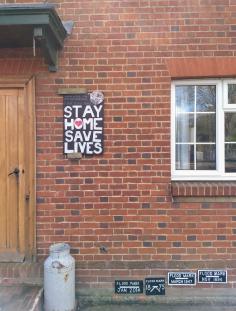
Quarantine

Just as every dark cloud has a silver lining, so too does a COVID-19 quarantine have its own hidden blessings.  Without question, the greatest blessing I’ve received so far in a self-imposed quarantine is the daily reminder that I’m not in control of my situation.  The Army trained me as a planner—to plan every detail and for every imaginable contingency.  But who could have anticipated this?  Remembering that I’m no longer in control helps me focus on almighty God, the source of all goodness and blessings in our lives.  

The gift of time is a common topic for many people these days.  I’ve heard numerous folks commenting on this—more time to read a book; to clean up clutter in garages, storerooms, and drawers; cook healthy meals; exercise; write letters and cards; sleep; and pray.

I’ve also heard a lot of discussion about more time spent together with loved ones—having sit down dinners with the family; helping the kids with their school lessons; taking family walks; popping popcorn and having a movie night; playing board games around a table; playing outdoor games in the backyard; having long phone calls with family and friends; and simply walking the dog.

I’ve been reminded how fortunate we Americans are that, even in the midst of this major crisis, our supply chains and critical infrastructures continue to function, providing for our basic needs like groceries, pharmaceuticals, telecommunications, electricity, water, and fuel. During my military career I witnessed firsthand in the Hurricane Andrew aftermath, Somalia, and Bosnia how quickly social order deteriorates when supply chains and critical infrastructures are disrupted and a population must depend upon the government, military and relief agencies for their basic needs.

I’ve also been reminded of the many wonderful people it takes to keep our daily lives running smoothly. I live in a household with three generations.  It’s been wonderful watching my daughter teach her middle school science students online while she sits on a bar stool at the island in the kitchen.  It’s been delightful watching our grand kids busily doing their school lessons on iPads while sitting around the dining room table. It’s been amazing watching my tireless wife keeping the grand kids focused, helping them with their lessons, and refereeing their occasional bouts.

I’ve also been reminded how many people are placing their own lives on the line to ensure we beat this pandemic.  Let us lift up our voices in prayer for all of them:

O Holy Spirit, we thank you for the advancements that have led to improving the health of so many. We beg you to inspire new breakthroughs in overcoming the coronavirus and all serious flu viruses. Protect, we pray, health care professionals from the illnesses they are treating, and make them instruments of your healing. Protect, we pray, emergency medical workers on the front line of the Coronavirus battle.  Protect, we pray, police, firefighters and other first responders engaged in this battle. Protect, we pray, the men and women of the armed forces who are daily receiving orders to join this battle. Pray for those who fly the planes, drive the trains, the trucks and work in the grocery stores to keep us fed and keep critical supplies moving. Dear God, as you led Moses, Joshua and David in battles against the Israel’s enemies, guide our leaders and all of us today as we fight this unseen enemy. Amen.

As we prepare to observe the most Holy Christian day of Easter and celebrate the resurrection of Jesus Christ from the dead, I pray that God will bless, protect, comfort and strengthen you all.  Lift up your voices in prayer to the Most Holy Redeemer.

Prayer to the Most Holy Redeemer

 (Anima Christi)

Soul of Christ, sanctify me.

Body of Christ, save me.

Blood of Christ, embolden me.

Water from the side of Christ, wash me.

Passion of Christ, strengthen me.

O good Jesus, hear me.

Within thy wounds hide me.

Never permit me to be parted from you.

From the evil Enemy defend me.

In the hour of my death call me.

and bid me come to thee,

that with your saints I may praise thee

for age upon age. Amen.

May the Lord God strengthen your faith as we pass through these troubled waters. I offer you this prayer in closing.

A Celtic Prayer of Faith

We arise each day through a mighty strength:

God’s power to guide us,

God’s might to uphold us,

God’s eyes to watch over us,

God’s ear to hear us,

God’s word to give us speech,

God’s hand to guard us,

God’s way to lie before us,

God’s shield to shelter us,

God’s host to secure us.

—St. Brigid of Gael, (c.451–525)

Distracted Living

Zombie ApocalypseHas the Zombie apocalypse begun!

We’ve all heard tragic stories about distracted driving, where someone texting on a cell phone lost control of their car and caused a great tragedy. When driving, it’s absolutely crucial to keep one’s eye on the road ahead.  The advent of the internet and subsequently cell phones has created millions of distracted people.  You’ve probably seen some of them sitting at a family dinner in a restaurant—all heads down, focused on their phones and no family interaction at all.  How very sad!

According to a January 2020 article in The Guardian, a study conducted in 2014 indicated that mobile phone users receive an average of 63.5 alerts every day, most viewed within minutes whether the phone is on silenced or not. A 2016 study by Deloitte corporation found that people checked their phones an average 47 times a day, often in response to alerts. Many people are bombarded by cell phone beeps, blips and buzzes nearly every waking moment.  These distractions can even continue through the night for those who sleep with cell phones by their beds.

Unfortunately, many Christians today suffer from another form of distraction—distracted living. Distracted living is a byproduct of other distractions and cares of this world, for example partying, obsessive fitness, substance abuse, emails, texting, internet browsing, social media, television, movies, sports, and many others that that steal our time daily.

The Bible story of Mary and Martha is a perfect example of distracted living (Luke 10:38-42).  Mary and Martha were the sisters of Lazarus, whom Jesus raised from the dead. They were all beloved friends of Jesus. On one particular occasion, Jesus visited their home in Bethany. There were others present as well. Mary chose to sit at Jesus’ feet and listen to him teach, while her sister Martha busied herself serving their guests. Martha became irritated with Mary and asked Jesus to send Mary to help her. Jesus responded with a mild rebuke, saying, “Martha, Martha, you are worried and troubled about many things. But one thing is needed, and Mary has chosen that good part, which will not be taken away from her.” Mary was laser focused on Jesus, while Martha was living a distracted life.

People with distracted lives may become easily agitated, they often feel overwhelmed, and they frequently neglect the essential “four-F’s” of things that really matter in this life—faith, family, friends and freedom.  Christians shouldn’t allow any of these areas to suffer neglect, but they must be especially cautious about neglecting their faith. Renowned Scottish theologian Oswald Chambers said, “Starvation of the mind, caused by neglect, is one of the chief sources of exhaustion and weakness in a servant’s life.” Evidence of faith neglect often includes finding reasons to skip church, not finding the time to read and study scripture, not praying, feeling rushed while praying, and even sometimes falling asleep while praying.

Christian churches around the globe will soon begin commemorating the holy season of Lent, which begins on Ash Wednesday (2/26/2020) and runs through sunset on Holy Saturday, the day before Easter.  I blogged about this very special church season in February last year  (https://divinesimplicity.wordpress.com/2019/02/26/lent-a-season-of-penitence-and-prayer/).   

For Christians, Lent is traditionally a season of fasting, penitence and prayer. It’s a wonderful time for Christians to practice disciplines to help them reconnect with their faith.  One of my Lenten disciplines is to prayerfully read the Seven Penitential Psalms the first thing each morning during Lent. I also find a good Lenten devotional and read a morning devotion daily. A wonderful version of the Seven Penitential Psalms can be found at this link: http://www.edgeofenclosure.org/intro7penitentialpsalms.html.  Lutheran Hour Ministries provides a new series of daily Lenten devotions each year.  Beginning on February 26, they can be found at this link: https://www.lhm.org/dailydevotions/default.asp.  I encourage you to take part in a Lenten discipline this year and, if you’re leading a distracted life, begin turning your attention back to God.

A Heart of Stone

Heart of Stone

Political discourse in America today has become vitriolic — constant lying, name-calling, bickering, accusations and spewing pent up anger. Indeed it has gotten so bad that even the president has joined the fray.  Social media outlets like Twitter, Instagram and Facebook only serve to exacerbate the situation, as they have become bully pulpits for angry politicians and journalists.  It’s gotten to the point where I dread looking at social media or reading/listening to the news, as there is a paucity of objective discussion and reporting everywhere. Personal civility and decorum in America is rapidly declining, particularly in the political realm.  

           Gracious words are a honeycomb, sweet to the soul and healing to the bones.                                           –Proverbs 16:24*

 Words are like bullets—once they’re let fly there’s no taking them back. The Epistle of James calls the tongue “a restless evil, full of deadly poison” (James 3:8).  By using this  strong comparison, James emphasizes that Christians must be mindful of the colossal power of what proceeds from their mouths.  The epistle goes on to note the inconsistency of praising God with one breath and cursing people made in God’s image with the next (vv. 9–10). Words can demean and destroy.

When you have learned to walk in the light of the Lord, bitterness and contention are impossible.”  —Oswald Chambers

This leads me to ask the question, “How radically would America change if suddenly all the politicians who profess to be Christians started behaving like Christ followers, becoming beacons of light in the dark political landscape?”

In January 2017, the New York Times reported that 91 percent of the new Congress identified as Christian.1 The Times went on to say that this figure was only slightly less than the 95 percent reported in 1961. Allmost all US presidents, including President Trump, have been Christians according to Pew Research.2

Christianity isn’t a label or tag; it’s a life, guided by the Holy Spirit, where an individual endeavors to be Christ-like in thoughts, words and deeds.  Inevitably, all Christians transgress and fall short of the glory of God along the way, but striving towards the ultimate goal of Christ-likeness remains a constant.

Restoration and transformation are two recurring themes in the Book of Ezekiel. Restoration is displayed in God saving the people of Israel from bad shepherds, giving them societal safety, reuniting tribes, and God’s children being restored to a right relationship with Him.  God’s ultimate restoration of his people is exemplified by Jesus’ crucifixion and resurrection. 

On the other hand, Ezekiel describes transformation as a personal, spiritual experience. To the ancient Hebrews, the heart was the locus of a person’s being, their mental processes, emotions and personal will. The Miriam Webster Dictionary defines hard-hearted as, “having or showing no kindness or sympathy for other people.”  In the passage from Ezekiel 36 below, evidence of spiritual transformation in God’s children is the softening of their hearts. 

I will give you a new heart and put a new spirit in you; I will remove from you your heart of stone and give you a heart of flesh. And I will put my Spirit in you and move you to follow my decrees and be careful to keep my laws.  —Ezekiel 36:26-27

One of those laws referred to in the Ezekiel passage is, “Love the Lord your God with all your heart and with all your soul and with all your strength. (Deuteronomy 6:5). Jesus quotes this verse in Mark 30:5, after being asked, “What is the greatest commandment?” In the next verse, Mark 30:6, Jesus adds to this, “Love your neighbor as yourself. There is no commandment greater than these.”   

This brings me back to politics.  Christians who also happen to be politicians don’t get a free pass when it comes to loving their neighbors.  Christian politicians contributing to the Capitol Hill vitriol need to take a long look in the mirror and ask themselves whether their actions glorify God. Are they being patient, humble, pure and obedient to God?

In Colossians 3:8, Paul tells us to put away anger, wrath, and malice; instead, he says in verse 12, we must, “…put on tender mercies, kindness, humility, meekness, longsuffering.”  This is the model Christ gave his followers through many examples in his own life; it’s the model all Christians should strive to adhere to in their actions towards believers and nonbelievers alike.

Christian politicians should display a Christ-like heart—Ezekiel’s “heart of flesh.”  Christians behaving like Christ can bring real healing transformation. Around 312 A.D, during the reign of Emperor Constantine, Rome recognized Christianity as a legal religion.   This remarkable feat, going from persecuted underground church to a legal religion, recognized by the Empire, was accomplished not by violent revolution, but through years of adhering to the tenets of the faith while suffering terrible persecution.

It was not political or military power that ultimately convinced Rome to accept Christianity, but the perseverance and faithfulness to Christ’s teachings by the early Christians. The tender mercies, kindness, humility, meekness, and longsuffering displayed by Christians prevailed over Roman cruelty and oppression. American politicians could achieve a lot by following their example.

 Most merciful God, we confess that we have sinned against you in thought, word, and deed, by what we have done, and by what we have left undone. We have not loved you with our whole heart; we have not loved our neighbors as ourselves. We are truly sorry and we humbly repent. For the sake of your Son Jesus Christ, have mercy on us and forgive us; that we may delight in your will, and walk in your ways, to the glory of your Name. Amen.  —from an Anglican Prayer of Confession

 1 https://www.nytimes.com/2017/01/03/us/politics/congress-religion-christians.html

2 https://www.pewresearch.org/fact-tank/2017/01/20/almost-all-presidents-have-been-christians/

* All Bible quotes are taken from the NIV Bible.


An Unshakeable Kingdom

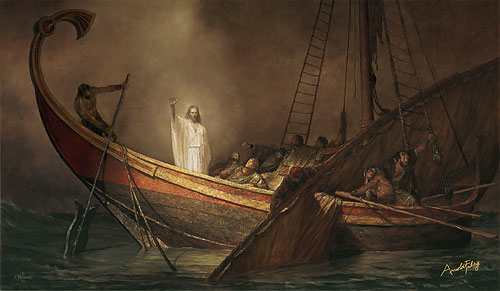
Peace be Still by Arnold Friberg

“Peace, be still,” by Arnold Friberg

The tragic mass shootings in El Paso and Dayton have many Americans on edge, as they struggle to understand what is causing it all. Sadly, such tragedies have become common in our country. The public and government responses to these shootings are predictable: the left calls for stricter gun control laws, while the right emphasizes the Constitutional right to bear arms and attributes the shootings to mental health problems. Unfortunately, most Americans fail to recognize the root cause of the problem. Why is this?  Perhaps it’s because we live in a country where, for many, the idea of good and evil has become an archaic concept, something associated with ancient religious superstitions.   

The Rev. Canon Phil Ashley of the American Anglican Council explained it like this. We face a culture that is “…increasingly shaped by the forces of aggressive secularism, moral relativism, religious pluralism, individual autonomy and a utopian hope in secular authority.” As more and more Americans push God out of their lives, social, cultural and spiritual chaos is filling the vacuum. When a country or society pushes God out, it opens the door for the enemy to come in. 1 Peter 5:8 says, Satan “…prowls around like a roaring lion looking for someone to devour.” Those lacking a solid spiritual foundation very easily become his prey. Yes, evil is real.

Chaos often breeds isolation, which for some people means empty lives nearly devoid of human contact. Isolated and confused, they might seek meaning in their lives through narcissism—an egoistic admiration of one’s self, which is a form of idolatry. Narcissism is easily fed through social media, where one can simply manufacture a false persona in an effort to gain approval from others.

Over prolonged periods, isolated individuals can  become enveloped by darkness.  Some may seek meaning or self-purpose through infamy—mass shooters are not soon forgotten.  Mass shootings are only one symptom of the problem however. It manifests itself in many other ways, including drug and alcohol addiction, pornography addiction, child abuse, human trafficking, suicide and countless others.

To begin to fix the problems in America, we don’t need more laws or more gun rights.  We need a spiritual revival of our Judeo-Christian roots. Dr. Jack Graham, the pastor of the Prestonwood Baptist Church in Plano, TX explains it like this, “All of us are involved in some kind of a spiritual battle—a warfare that’s going on increasing.  A battle that is getting hotter and hotter right now and predictably so.  In fact, the Bible tells us that in the final hours of human history that perilous times will come.  Difficult dangerous times will come.” Dangerous times are not exclusive to American Christians.  Persecution of Christians because of their faith is running rampant around the globe.

Of the shootings in El Paso and Dayton, the Rev. Franklin Graham wrote, “The Word of God tells us to ‘mourn with those who mourn,’ and that is what our nation is doing. We grieve the tragic and devastating loss of life in El Paso and Dayton this weekend. The number of victims of the mass shootings is much higher than the headlines reveal, because each mother, each father, each sister and brother, each wife and husband, is also a victim—a victim of the heinous and senseless evil unleashed by two murderous gunmen. Their loved ones have been stolen from them.” And “”As we mourn with these families and communities, let’s continue to sincerely lift them up in prayer before the Lord.” Despite what some politicians have said, prayer is a proper response to mass shootings.

Fortunately, Christians needn’t despair at what they see happening around them. They can be confident that God is in control of their lives, even when the world appears to be coming apart all around them. Throughout the scriptures Jesus remains as solid as a rock. We see this vividly portrayed in Mark chapter 4, when Jesus and His disciples are on a boat in the midst of a terrible storm. Jesus is asleep on a cushion when his frightened disciples wake Him, fearing they are about to perish. Jesus rises and speaks the words the simple words, “Peace, be still.”  Immediately, the wind ceases to blow and the water grows calm. His disciples then marvel that even the wind and the sea obey Him.    

The same Jesus who calmed the storm is in control of our lives today. Hebrews 12:28-29 says we live in an unshakeable kingdom. “Therefore, since we are receiving a kingdom that cannot be shaken, let us be thankful, and so worship God acceptably with reverence and awe, for our God is a consuming fire.”  

Christians have nothing to fear in the midst of today’s chaos.  As the late Rev. Dr. Billy Graham said, “I’ve read the last page of the Bible. It’s all going to turn out all right.” Christians need only do their best to imitate the life of Christ. God will take care of the rest.

The Seven Penitential Psalms


Saint Peter in Penitence by El Greco

St. Peter in Penitence, El Greco, (ca. 1580)

We are currently celebrating the church season of Lent, a 40-day period before Easter when Christians reflect upon the passion and sacrifice of Jesus Christ, who was crucified and died as atonement for our sins, setting believers free from sin and death. Easter celebrates Christ’s resurrection from the dead and the promise of eternal life for His believers.  Penitence, a solemn contemplation of one’s sins and request for God’s forgiveness, is foundational to Lent.

One Lenten discipline that I recommend is the prayerful reading of the Seven Penitential Psalms—Psalms 6, 32, 38, 51, 102, 130 and 143. These psalms (prayers) are generally attributed to David.  Psalm 51 is probably the most widely read of the seven. In Anglican and Catholic traditions, it is often recited by congregations on Ash Wednesday and at other times during the Lenten season.

Christian tradition suggests several possible reasons behind the writing of these psalms. Probably the most widely accepted explanation is they were King David’s prayers of repentance for his sins against Uriah and Uriah’s beautiful wife Bathsheba. David’s sinful lust for Bathsheba drove him to conspire to have Uriah killed in battle. With Uriah out of the way, David took Bathsheba for his wife.  She conceived and bore a baby son, but the child died shortly after birth.  Recalling the words of condemnation delivered to him by the prophet Nathan regarding David’s sin with Bathsheba (2 Samuel 12: 4-7), David believed the baby’s death was God’s punishment for his transgressions. Nathan said to David:

“Now a traveler came to the rich man, but the rich man refrained from taking one of his own sheep or cattle to prepare a meal for the traveler who had come to him. Instead, he took the ewe lamb that belonged to the poor man and prepared it for the one who had come to him.”David burned with anger against the man and said to Nathan, “As surely as the Lord lives, the man who did this must die! He must pay for that lamb four times over, because he did such a thing and had no pity.”  Then Nathan said to David, “You are the man! (NIV)

Another Christian tradition associate’s the Seven Penitential Psalms with the Seven Deadly Sins. We first encounter the Seven Deadly Sins in the writings of Pope Gregory I around the year 600.  The sins are pride, greed, lust, wrath, gluttony, envy, and sloth.

The writings of  French Roman Catholic theologian Cardinal Pierre d’Ailly (1351-1420) associates certain spiritual virtues with the Seven Penitential Psalms: Psalm 6, fear of punishment; Psalm32, sorrow and confession for sin; Psalm 38, hope;  Psalm 51, love of purity and mercy; Psalm102, longing for heaven, Psalm 130, distrust of one’s own strength and hope for mercy; and Psalm 143: joy.

During this year’s season of Lent, I’ve committed to prayerfully reading the Seven Penitential Psalms daily as part of my morning devotion.  It has been a deep spiritual experience, one that I plan to make part of my future Lenten discipline.  I encourage readers to give this a try.  You can find the Seven Penitential Psalms online at the following URL:

http://www.usccb.org/prayer-and-worship/liturgical-year/lent/seven-penitential-psalms-songs-of-suffering-servant.cfm

Lent: a Season of Penitence and Prayer

Lenten Journey 3

As an Anglican, I follow a Church liturgical calendar, celebrating each of its many seasons.  Very soon the season of Lent will be upon us.  Lent this year is the period of 40 days from Ash Wednesday (March 6th) to Easter Sunday, commemorating Christ’s 40 days of fasting and temptation in the wilderness, His final journey to Jerusalem, where He was crucified, and His last hours with His disciples before His crucifixion. For believers, it is a period of penitence and alms giving. On Ash Wednesday, many Christians have their foreheads marked with ashes in the sign of the cross.  The ashes are often collected from burning the palm fronds used in the celebration of Psalm Sunday.

The Catholic and Anglican traditions regarding Lent are very similar.  In the Anglican tradition, which I practice, Lent is sometimes called the Paschal season (relating to Passover or Easter). It is a preparation time intimately connected to the most important Festival of the Church year, Easter, which marks Christ’s resurrection from the dead and His victor over sin and death. In celebration of the so-called Easter Triduum, Christians commemorates the passion (suffering), death, and resurrection of Jesus and thus the origin of the all Christian belief and the source of our faith and salvation. So, as Jesus spent 40 days fasting and praying in the desert, Anglicans prepare for 40 days for the encounter with Him in the Easter celebration. Traditionally, the Easter season begins with Ash Wednesday and ends on Holy (or Maundy) Thursday, a day we recall Jesus washing the feet of his disciples and having his last meal with them before his crucifixion.  Maundy Thursday reminds believers of their hunger for God by refraining from food and intensifying one’s prayer life and charitable giving. 

In the Orthodox tradition, Lent is an invitation to learn the salvation story  by studying the death and the resurrection of Christ. It is an exercise in which believers partake of suffering and resurrection of the Lord. The cross and resurrection are daily realities: we die every day in all trials of life with Christ, but we experience our resurrection every day when we unite with him in faith and prayer. It is important in the Orthodox tradition to recognize that the cross is symbolic of the resurrection, not death. Fasting during Lent is an exercise of self-restraint, by which believers overcome their physical passions and win true freedom. It helps us to the internalization, especially when we pray. The believers should fast and avoid meat. They should intensify their prayer life and dig deeper into the scriptures than usual.  On Wednesdays and Fridays during Lent, many Orthodox churches celebrate an evening service called “liturgy of the pre-sanctified gifts”. During these services, no elements are sanctified for the Holy Eucharist.  Instead, the bread and wine sanctified on the precious Sunday are used.  On these days, many Orthodox believers fast until evening.

Protestant denominations observe Lent in a wide variety of ways. Sadly, many traditional Protestant denominations barely observe Lent or the Church Calendar at all.  However, for some, fasting during Lent is a time for reflecting on the essentials of Christianity. The original purpose is to prepare one’s self internally for the coming of Easter. Many Protestants avoid certain things during Lent in a quest to learn the true necessities in life. They may deprive themselves of dependency-related risks such as alcohol, chocolate and other sweets, and even the consumption of social media. The Lenten season is a good time to reorder one’s life—restacking priorities.  

For those readers who have no set way of observing Lent, I urge you to consider adopting a Lenten tradition.  One simple way to begin is to read a daily Lenten devotion.  There are many available on the web, but my favorite is published by Lutheran Hour Ministries.  Beginning March 6 you will be able to find the devotions at this link:  https://www.lhm.org/lent/.

“…special (church) holidays give rise to various liturgical calendars that suggest we should mark our days not only with the cycles of the moon and seasons, but also with occasions to tell our children the stories of our faith community’s past so that this past will have a future, and so that our ancient way and its practices will be rediscovered and renewed every year.” 
         ― Brian D. McLaren,  Finding our Way Again: The Return of Ancient Practices


Too much to pray for!

Prayer

Renowned Scottish theologian Oswald Chambers said, ‘Prayer does not equip us for greater works— prayer is the greater work. Yet we think of prayer as some commonsense exercise of our higher powers that simply prepares us for God’s work. In the teachings of Jesus Christ, prayer is the working of the miracle of redemption in me, which produces the miracle of redemption in others, through the power of God.’

The older I grow, the more it seems like I have more to pray for than I can handle.  Is this is a common dilemma for Christians as they grow older?  I’d like to hear from readers who share the same or a similar problem.  

My prayer list is getting too long to manage.  It includes numerous categories including family (spouse, children, grandchildren, siblings, cousins, aunts, uncles, in-laws and extended family members); friends; colleagues at work; clergy; those persecuted for their Christian faith; my church; my former churches; local leaders; state leaders; national leaders; military service members; and even the abused and missing children on the evening TV network news.  Where should I begin praying on a prayer like this?

 I’ve tried ‘checklist’ praying–simply going down the list and asking God’s blessing for each category, but that feels very hollow. I’ve tried lifting up specific prayers for everyone and everything on the list, but my ability to concentrate usually fails after five or 10 minutes into the prayers.  I’ve segmented my prayers to pray for one category at a time on my prayer list.

When Jesus’ disciples asked him to teach them to pray, he gave them (and us) the ‘Lord’s Prayer’. It’s a beautiful model for praying, but should not be the only prayer we pray; one of the purposes of prayer is simply for us to be with God and to listen and experience the glory of his presence. Our Lord’s prayer goes like this:

Our Father who are in heaven (recognition of God’s supreme authority in all creation),

Hallowed be thy name (affirmation of God’s perfect nature),

Thy kingdom come, Thy will be done on Earth as it is in heaven (a petition for God to restore the perfect order on Earth that he has intended since creation),

Give us this day our daily bread (recognition that God sustains us),

And forgive us our trespasses (a plea for God’s forgiveness through Jesus Christ),

As we forgive those who trespass against us (an acknowledgement that we have all sinned and fall short of the glory of God and a reminder to forgive others),

And lead us not into temptation (a plea to God to spare us from testing, as Job, Jesus and so many Christian martyrs have been tested),

But deliver us from evil (protect us from Satanic forces),

For Thine is the kingdom, and the power, and glory forever, amen (a final acknowledgement of God’s supreme authority in all creation).

The Lord’s Prayer is a beautiful way to begin or end any prayer! 

St. Paul’s epistle to the Romans (8:26-27) tells us, ‘…We do not know what we ought to pray for, but the Spirit himself intercedes for us through wordless groans. And he who searches our hearts knows the mind of the Spirit, because the Spirit intercedes for God’s people in accordance with the will of God (NIV).’  I try to apply this wisdom when I’m feeling overwhelmed.  Sometimes my daily prayer is simply, “Holy Spirit, please pray for me and my family.”  I also pray this prayer for individuals, when I feel troubled about/for them, but I don’t know how to pray for them.

One thing I’ve learned is not to pray too much for myself.  When I do pray for myself, it usually entails asking God for forgiveness.  Psalm 51 and the Lord’s Prayer are my ‘go to’ prayers when I pray for myself. They are more than sufficient!

So how should we pray?  I would love to hear your comments and ideas on prayer. Please consider leaving a comment. 

To Be a Christian without prayer is no more possible than to be alive without breathing.    —Martin Luther

Hurry up and slow down!

Slow Down

Be still, and know that I am God.  —Psalm 46:10a (ESV)

We live in a world of high-speed escape artists.  Everywhere one looks, people are rushing to and fro to get the next thing on their long list done. When they grow weary, many turn to adrenalin-pumping extremes to “relax.” There is extreme biking, extreme running (Parkour), building- and rock-climbing without safety equipment (free-climbing), half-pipe skiing and snowboarding, and base jumping, which is free fall parachuting from cliffs or high structures.

We watch extreme television entertainment, like American Ninja Warrior and Mixed Martial Arts (MMA) fighting.  If sports is not your thing, there are extreme game shows with names like Wipeout, where contestants crash and burn on crazy obstacle courses, and Fear Factor where contestants, among other feats, eat large volumes of worms and bugs.

Many escape reality through physical addictions, turning to drugs, alcohol or sex to remove them from reality. Others simply unplug from their daily grind, spending long periods of the day disconnected from the world. Video games are one way of escaping reality. The most extreme “unplugging” involves new virtual reality technology.  With this technology, one can don a pair of goggles and be instantly transported to a new 3-D “world.”  Anything goes on these virtual playgrounds, including extreme sports, extreme violence and extreme sexual fantasies.

For some, cell phone addiction provides a different kind of virtual reality.  Have you spoken with someone who constantly looks down at their phone? It’s like they don’t have time for you. It’s annoying, not to mention downright rude.  Or perhaps you’ve observed a family seated in a restaurant waiting for their orders to arrive—everyone is heads down playing with their phone instead of interacting with other family members.  In 2014, Charit Taneja wrote in “The Psychology of Excessive Cellular Phone Use” that:

Cell phones enable behavioral problems and disorders, particularly in adolescents. This fact has become more and more evident in communications media, inspiring new pathologies, such as “Nomophobia” (No-Mobile-Phobia), “FOMO” (Fear Of Missing Out) – the fear of being without a cell phone, disconnected or off the Internet, “Textaphrenia” and “Ringxiety” – the false sensation of having received a text message or call that leads to constantly checking the device, and “Textiety” – the anxiety of receiving and responding immediately to text messages. 

Some people escape auditory reality. In the fitness center where I exercise, about half of the people wear headphones or ear buds while using an exercise bike, treadmill, elliptical machine, stair-stepper or other exercise device. I assume most listen to music, hoping it will carry away them to another, less painful place as they push their bodies to the physical limit.  While such auditory isolation might reduce the agony of a heavy workout, it hinders socializing with others and can even be dangerous. At certain times of the year here in South Dakota it’s a good idea to keep one’s ears peeled for the sound of a tornado warning siren.   

A frantic pace combined with isolation can lead to perilous situations. Anyone who lives in a big city has seen drivers who dangerously weave in and out of traffic, desperately trying to get ahead a couple of car lengths while putting their own and other people’s safety at risk. Many of these drivers have so much on their “to do” lists that feel a need to constantly rush. Others live in their own private worlds where it’s all about satisfying their own needs, with no regard for the needs and safety of those around them.

 Far too often, erratic driving results in road rage.  According to analysis by performed by Trace, an independent, nonprofit news organization dedicated to expanding coverage of guns in the United States, instances of road rage where someone in a car brandished a gun or fired a gun at another driver or passenger more than doubled over the a three-year period, increasing from 247 in 2014 to a high of 620 in 2016.

The high-speed, escape mentality is tearing away the very fabric of our society. We’re becoming a bunch of one-armed jugglers with our eyes and ears covered. It’s easy to get caught up in the race and lose sight of what really matters in life.  Christians aren’t immune to this.  It’s easy to become distracted and let the day slip by without a thought of God.  I think Islam gets it right on one point—stopping to pray five times per day.  Christians would do well to adopt a similar practice. 1 Thessalonians: 5 encourages us to “pray without ceasing.” (ESV)

Psalm 46:10a (ESV) says, “Be still and know that I am God.” God wants us to slow down and focus on him in the midst of our daily hustle.  It’s during times of stillness that we can, if just for a moment, look God in the face and begin to gain a deeper understanding of Him. In Mark 4:39, Jesus is with his disciples in a small boat when a great storm occurs.  The terrified disciples appeal to Jesus to do something to save them.  He utters the simple command, “Peace! Be still.” Immediately the weather becomes calm.

This beautiful story is about much more than Jesus calming the weather.  It is about Jesus giving up a sense of Peace in Him that helps us through the storms that occur in our daily lives. In 1 Kings: 19 (ESV), God speaks to Elijah in “a low whisper.” My advice to you—slow down, be still, unplug, hear God’s whisper, and discover His peace. 

 “Rejoice in the Lord always; again I will say, rejoice. Let your reasonableness be known to everyone. The Lord is at hand; do not be anxious about anything, but in everything by prayer and supplication with thanksgiving let your requests be made known to God. And the peace of God, which surpasses all understanding, will guard your hearts and your minds in Christ Jesus.” —Philippians 4:4-7 (ESV)