Imagine, for a moment, that God really is who he says he is: the God of your days and your nights, of your future and your past; the God of all. What an impertinence worry is! Set aside your worries, and let your attitude be one of eager adventure. –Oswald Chambers, My Utmost for His Highest, Jan. 2
I was a three-sport athlete in high school. In college in 1975 I joined a “health club” called the US Army and stayed strong and fit there for the next 26 years. Through challenging “Arrrmy training” (Bill Murray fans will get it), we stayed physically and mentally ready to defend our nation. I retired from the Army in 2001. Like so many of the Army buddies I served with, I put on a few pounds after retirement. In fact, over the course of two decades I went from a retirement weight of 209 lbs. to a maximum of 242. About two years ago, through a combination of illness, dieting, and lifestyle changes, I lost a dramatic amount of weight. Today my weight hovers around a comfy 200 lbs.
Slimming down came with a lot of benefits. Among these are being able to fit into clothes I hadn’t worn for years, improved sleep, increased energy levels, and all around better physical health as indicated by my vital signs and blood chemistry tests, which today look like those of a healthy twenty-something. Slimming down has many other great benefits, more than we can cover here.
There’s another type of slimming down that’s very good for you. Commonly called “downsizing,” it refers to both reducing the amount of space one lives in and the quantity of personal possessions one owns. Such reducing can be healthy both mentally and spiritually.
Now don’t get me wrong. I’m not some overzealous lifestyle minimalist that believes in possessing only the bare essentials necessary for living and rejects the rest. I’m not the type of person who could live my life in a “Tiny Home” like one sees on HGTV. But my wife and I have downsized our living space four times since I retired from the army, slimming down from a 3,200 sq ft house to 2,000, to 1,500 and finally to 1,200 sq ft condo, which we have today. We both agree that downsizing is cathartic. Here are just a few potential benefits of lifestyle downsizing which, if you’re not ready for now, might become of greater interest to you as you grow older.
Reducing Chaos. Chaos is truly the devil’s workshop. Jesus calmed the storm on the Sea of Galilee by commanding, “Peace, be still.” He can do the same for you and me. God wants us to have peace. A beautiful car, a sleek sailboat, and a humongous house and/or garage crammed with a lot of “stuff” (substitute a gigantic storage unit crammed with stuff) can contribute to a chaotic life. Each of these comes with a price, and I’m not talking about money. Beautiful cars beg to be washed, waxed, and detailed. A sleek boat requires a lot of time and effort to keep it safe and seaworthy. Big houses typically have big lots. Big lots beg to be manicured until the grass looks as good or better than a putting green. A big house crammed with a lot of stuff can became a chaotic ball and chain for you and/or for your children who are trying to sort things out after their parents pass away. Oh yeah, and who is going to remove the snow from that lovely 50-yard curving driveway? Been there and done that! It’s not fun.
Avoiding Anxiety and Distractions. Have you ever been sitting in a pew on a Sunday morning, taking a mental inventory of all the things, you need to do when you when you get home or in the week to come, instead of listening to what was being said in the sermon? There is a time to do and a time to listen. Sermon time in church is a time to listen.
You might recall this story in Luke chapter 10. Martha and Mary were the sisters of Lasarus. On one occasion that Luke describes, Martha invited Jesus into her house. While Mary sat at Jesus’ feet, listening to him talk, Mary fluttered all about, presumably preparing a meal for Jesus. After a while Martha became annoyed and asked Jesus to tell Mary to come and help her with the work. Jesus’ response to Martha’s urging was a gentle rebuke, “Martha, Martha, you are worried and upset about many things, but few things are needed—or indeed only one. Mary has chosen what is better, and it will not be taken away from her.” (v. 41-42). Jesus wants to be the top priority in our lives. Endeavor to keep Jesus at the center of your thoughts.
Avoiding Comparison. You’ve probably heard the expression “Keeping up with the Joneses.” It refers to a selfish urge or social pressure to match or exceeded the material possessions of one’s neighbors. Colossians 3 compares covetousness to “idolatry.” When it came to material possessions, King Solomon, the presumed writer of the Book of Ecclesiastes and a man renowned for both his wisdom and his wealth, made the Joneses look like rank amateurs. Listen to what he had to say about material wealth:
I undertook great projects: I built houses for myself and planted vineyards. I made gardens and parks and planted all kinds of fruit trees in them. I made reservoirs to water groves of flourishing trees. I bought male and female slaves and had other slaves who were born in my house. I also owned more herds and flocks than anyone in Jerusalem before me. I amassed silver and gold for myself, and the treasure of kings and provinces. I acquired male and female singers, and a harem as well—the delights of a man’s heart. I became greater by far than anyone in Jerusalem before me. In all this my wisdom stayed with me. I denied myself nothing my eyes desired; I refused my heart no pleasure. My heart took delight in all my labor, and this was the reward for all my toil. Yet when I surveyed all that my hands had done and what I had toiled to achieve, everything was meaningless, a chasing after the wind; nothing was gained under the sun. –Ecclesiastes 2:4-11
After much experimentation, Soloman finally figured it out! Now see what Jesus said to his disciples:
Then he (Jesus) said to them, “Watch out! Be on your guard against all kinds of greed; life does not consist in an abundance of possessions.” –Luke 12:15
Matthew 19:16-23
Just then a man came up to Jesus and asked, “Teacher, what good thing must I do to get eternal life?”
“Why do you ask me about what is good?” Jesus replied. “There is only One who is good. If you want to enter life, keep the commandments.”
“Which ones?” he inquired.
Jesus replied, “‘You shall not murder, you shall not commit adultery, you shall not steal, you shall not give false testimony, 19 honor your father and mother,’ and ‘love your neighbor as yourself.’”
“All these I have kept,” the young man said. “What do I still lack?”
Jesus answered, “If you want to be perfect, go, sell your possessions, and give to the poor, and you will have treasure in heaven. Then come, follow me.”
When the young man heard this, he went away sad, because he had great wealth.
Then Jesus said to his disciples, “Truly I tell you; it is hard for someone who is rich to enter the kingdom of heaven. Again I tell you, it is easier for a camel to go through the eye of a needle than for someone who is rich to enter the kingdom of God.”
Leaving a Christian Legacy. To those who are believers, I ask “What is your greatest regret since you became a Christian?” I hope your response isn’t something like, “I wish I had worked more” or “I wish I had bought that 1966 Corvette when I had the chance.”
Will you leave a Christian legacy? What might that look like? Will those who come after you even know you were a Christian given the way that you lived? This is worth thinking about.
Surely everyone goes around like a mere phantom; in vain they rush about, heaping up wealth without knowing whose it will finally be. –Psalm 39:6
“‘And I (a wealthy man) will say to my soul, “Soul, you have ample goods laid up for many years; relax, eat, drink, be merry.”’ But God said to him, ‘Fool! This night your soul is required of you, and the things you have prepared, whose will they be?’”—Luke 12:18-20
But godliness with contentment is great gain. For we brought nothing into the world, and we can take nothing out of it. But if we have food and clothing, we will be content with that. —1 Timothy 6:6-8
“Let your light shine before others, that they may see your good deeds and glorify your Father in heaven.”—Matthew 5:16
Legacy isn’t measured by wealth, titles, or accolades—it’s measured by the impact your faith has on others. A Christian legacy is built day by day, through quiet obedience, generous love, and intentional discipleship. When we live with integrity, invest in relationships, and give freely of what God has entrusted to us, we leave behind more than memories—we leave behind a testimony.
A Christian legacy doesn’t end with you or me. It multiplies through the lives we touch, the prayers we pray, and the truths we pass on. And the goal isn’t to be remembered—it’s to make Christ known. May our respective legacies draw others closer to Jesus Christ.
Leaving Things Behind. Back to lifestyle downsizing, there is nothing bad about wealth in and of itself. I’ve known many Christians who were wealthy and unselfishly used their wealth for the furtherment of God’s kingdom. A problem with wealth begins when we forget that everything we possess belongs to God and we are merely stewards of what he has given us.
We are born naked and penniless and in death our physical bodies return to dust. Don’t let accumulating “stuff” become a goal in your life. Even though many have tried and failed (Egyptian Pharaohs and Viking Chieftains come to mind), you just can’t take it with you. I hope you enjoy the short poem below by Judy Dykstra-Brown
Relocation Dreams
I’ve so many things that there’s no place to stack them in. No drawers to hold them, no cupboards to pack them in. So many things stowed away from detection. My fireplace houses its own art collection.
My wardrobe suffers from costumes aplenty. I’ve boxes of sizes from nine up to twenty. My jewelry box is stuffed to the gills, my medicine drawer is spilling out pills.
When I try to cull them, they all want to stay. The only solution’s to just move away to find a small island with palm trees and sky where there is simply nothing to buy!
I’ll live in a hut with floors of swept dirt. One pair of flip flops, a simple grass skirt. I won’t feel that shopping should be my main duty. I’ll look out the window if I require beauty.
No buying new paintings whenever I please. No little nicknacks and no DVD’s. No drawers of makeup or tea towels or spoons. No tarot cards, horoscopes, Ouija boards, runes.
I will not need things to determine my fate, that day I walk out, simply locking my gate, taking one suitcase, computer and cables, and scanner and backup drives, printers and tables,
an internet router and energy backup— just these few items to locate and pack up. Then I’m off to a life that’s simpler by far if these bare necessities fit in my car.
The following people have something in common: Cleopatra, Pontius Pilate, Ernest Hemingway, Adolph Hitler, Marilyn Monroe, Freddy Prinze, Kurt Cobain, Anthony Bourdain, and Naomi Judd. Can you guess what it is? If you said all are famous dead people you would be correct, but you would be omitting a key detail. All died by suicide! The number of celebrities who kill themselves is truly astounding.
Clearly, wealth and fame do not come with a promise of personal peace or happiness. Neither does good looks or talent. Yet many people pursue all these. Some people are attracted to celebrities like flies drawn to a sweaty horse. Whether it is Megan and Harry, the Kardashians, or one of the seemingly countless reality shows that fill the nation’s television screens. Speaker of the Lutheran Hour, the Rev. Dr. Martin Zeiglar, writes, “Some people who bemoan our celebrity culture long for the old days. But were the old days any different? Modern mass media has changed our expectations for knowing others and being known by them. But our core human problem is the same. We expect humans to give us what we need-whether we are delivering ourselves to a celebrity in a crate (as a Burt Reynolds fan purportedly did) or asking for a selfie with them, whether we’re looking to fans and friends for recognition or looking to ourselves for fulfillment, the problem is the same.”
In addition to celebrities, humans are naturally drawn to feel-good experiences; the wealthier one is, the more these experiences are available. How we love to spend money on a fun week at Disney World, or going on a cruise, or basking in the sun and surf on Waikiki Beach, or maybe you would prefer a week of skiing in the Austrian Alps. Maybe your feel-good definition is a big shopping spree with credit card in hand. Perhaps you follow music, television, movie, and sports celebrities in the media and seek vicarious pleasure from following their lives. Unfortunately, many people who take so-called dream vacations experience feelings of sadness or emptiness as soon the vacation ends when they are thrust back into the realities of their daily lives. Shopping sprees may satisfy for the moment, but bring trouble when the bills come due. And following the lives of famous celebrities is as likely to make one sad as happy.
At the Transfiguration of Jesus Christ (Luke 9:28-36), Jesus’ disciples Peter, John and James did not want to their experience on the mount to end. They had just seen Jesus’ countenance transfigured, his skin and clothing taking on a radiant glow as He spoke with Moses and Elijah. And they had heard the voice of God proclaim that Jesus is His beloved son. They wanted to extend their own mountaintop experience, saying to Jesus, “Master, it is good for us to be here. Let us put up three shelters—one for you, one for Moses and one for Elijah (verse 33).”
Unlike vacationers depressed and saddened at their end of vacation, the Apostles on the mount of transfiguration understood that God is the true source of happiness, not feel-good experiences, or certain human beings. In 2 Peter 1:16-18 we read, “For we did not follow cleverly devised stories when we told you about the coming of our Lord Jesus Christ in power, but we were eyewitnesses of his majesty. He received honor and glory from God the Father when the voice came to him from the Majestic Glory, saying, ‘This is my Son, whom I love; with him I am well pleased.’ We ourselves heard this voice that came from heaven when we were with him on the sacred mountain.”
To be certain, all people are born with a natural longing that only God can truly satisfy. Putting one’s faith and hope in anything besides God and His son Jesus Christ will ultimately end in disappointment; and it is a form of idolatry. Is your mind focused on the face of an idol? Is the idol yourself? Is it your work? Are you chasing feel-good moments that fade? When one becomes mired in idolatry it impairs their ability to see God, rendering them powerless in the midst of adversity, when their soul most longs for God. Turn to God and find true fulfillment for all your inner longing.
Isaiah 26:9 – “My soul yearns for you in the night; in the morning my spirit longs for you. When your judgments come upon the earth, the people of the world learn righteousness.
Psalm 42:1-2 – “As the deer pants for streams of water, so my soul pants for you, my God. My soul thirsts for God, for the living God. When can I go and meet with God?”
Psalm 73:24 – “Whom have I in heaven but you? And earth has nothing I desire besides you.”
Psalm 143:6 – “I spread out my hands to you; I thirst for you like a parched land.”
Give thanks to the Lord, for he is good; his love endures forever. –Psalm 107:1*
Recently I’ve been pondering what it means to give thanks to God. The Bible is full of examples of thanksgiving being lifted up to the Lord. After giving it much thought, I’ve come to several conclusions. First and foremost, thanking God is my way of acknowledging His supreme authority and position in my life. God gave me life! Everything that is good in my life is a gift from Him.
I will praise God’s name in song and glorify him with thanksgiving. –Psalm 69:30
Second, there are multiple ways to give thanks to God. These include praying; through the written, recorded and spoken work; in song; in giving of one’s time and treasure; and in prayerfully doing good works for others with no motive other than serving God. I write this blog as a thank offering to God. There are many other ways of thanking God that area not listed here. It occurs to me that we can thank God in almost any situation we encounter throughout the day. Continually thanking God can help one remain cognizant of God’s endless presence in his or her life.
Rejoice always, pray continually, give thanks in all circumstances; for this is God’s will for you in Christ Jesus. –I Thessalonians 5:16-18
Third, we are to thank God in all circumstances, both the easy times, the difficult ones and those in between. In Philippians 4, the Apostle Paul tells us he has learned to be content whatever his circumstances. This is a tough one. In my lifetime I’ve had some real tragedies. When tragedy strikes, it is particularly difficult to discern any good at the time. Over the years I’ve learned to pray to God for strength to get me though the difficulties and to give me wisdom to understand. While it was difficult to discern the good at the time, in retrospect each difficult period of my life was a time of learning and spiritual growth that helped prepare me for God’s eternal kingdom.
Thanks be to God for his indescribable gift! –2 Corinthians 9:15
Finally, give thanks to the lord for his grace in offering us salvation through Jesus Christ.
Doxology
I thank you, God, for your grace, the gift of life and my salvation through Jesus Christ. Thank you for the Godly women who helped lead me to the Savior in my childhood. Thank you for loving aunts, uncles, and grandparents who helped raise and care for me after my parents divorced. Thank you for the churches and teachers who helped nurture and train me along the way. Thank you for giving me a godly wife to share my life with. Thank you for my children and grandchildren who bring joy to my life. Thank you for friends and family who have added richness to my life. Thank you for protecting and shielding me during times of trouble. Thank you for the work that enables me to sustain my family. Thank you for this day and all my days to come. Thanks be to God!
Now thank we all our God, with heart and hands and voices,
Who wondrous things has done, in Whom this world rejoices;
Who from our mothers’ arms has blessed us on our way,
With countless gifts of love, and still is ours today.
Across the country it’s graduation time. Here in South Dakota many schools have already closed for the summer. Most of those that remain open will close in the coming days. Everywhere one turns there’s another grad party. What awaits all these new grads? A decade ago I wrote an article for my newspaper column with some advice for recent graduates. While it was aimed at high school graduates, it is also highly relevant to recent college grads. The article has become one of the most popular pieces I ever wrote. I’ve received hundreds of emails thanking me for taking the time to share it. Therefore, I decided to republish it annually around graduation time. I hope some of you might find it useful. You can view the original article in the Tribune-Democrat news at this link: http://goo.gl/LtN72
For those who are graduating high school this year and beginning the long transition into adulthood, I’d like to offer you a gift. Here are five enduring truths I have learned. They will help you through life’s journey.
Choices
“If you decide to just go with the flow, you’ll end up where the flow goes, which is usually downhill, often leading to a big pile of sludge and a life of unhappiness. You’ll end up doing what everyone else is doing.” ― Sean Covey, The 7 Habits of Highly Effective Teens
Life will deal you an endless string of choices along the way. Some will be trivial, like deciding what to wear today. Others will be weighty and their outcomes will affect you forever. Weighty decisions should always be preceded by much thought and soul searching. This includes decisions about who you date or marry, what you put into your body, bringing children into the world, what you do for a living, how much debt you incur and who you associate with.
All of these decisions will have a lasting effect on your life. Therefore, make them slowly and deliberately. Often you’ll discover that the right choice is not the easiest one. A habit of making poor choices will, as the Sean Covey quote suggests, drag your life downhill.
I was recently contacted by a young man who had just received a bad conduct discharge from the Navy. He asked me how the discharge would impact his future employability. His mistake was choosing to drive a car while intoxicated and hitting a pedestrian. Fortunately, the victim wasn’t seriously injured. Had it been otherwise, the young sailor would probably be in prison. It was my sad responsibility to inform him that with some employers the discharge would be a black mark for life. Choices matter!
Learning
“Experience is a hard teacher because she gives the test first, the lesson afterwards.” ―Vernon Saunders Law, former professional baseball pitcher and Cy Young Award winner
Some of you will go on to college or technical school. Others will enter the workforce. Even if your formal education is over, don’t quit learning. Make learning a lifelong adventure. I did my undergraduate work at the University of Kentucky. The school offers a fellowship program for individuals aged 65 and older to attend classes tuition free. Every year numerous senior citizens walk the stage to receive degrees ranging from Associate of Arts to Doctor of Philosophy. It’s never too late to learn.
Even if you don’t choose to continue formal learning, make it point to learn from life. Observe others; note their successes and failures; then learn from their experiences. More importantly, learn from your own mistakes.
Some of the greatest lessons I’ve learned, particularly those while serving in uniform, were the result of having made a terrible mistake. This sort of lesson sticks, like the first time you grab the handle of a hot iron skillet with your bare hand. The key to learning from mistakes is owning them. Admit your mistakes and then move on, having learned something from the experience. Don’t let, “It wasn’t my fault,” be part of your vocabulary.
Work
“A dream doesn’t become reality through magic; it takes sweat, determination and hard work.” ―Colin Powell, retired U.S. Army four-star general and former U.S. Secretary of State
Work isn’t always fun. If it were, they’d call it play. Work can be downright unpleasant, but it’s an essential element of life! Along the way you’re going to have jobs you won’t like. Note what you don’t like and make it a point to improve yourself, so you’ll never again have to work at such a job.
Accepting a job means submitting to the authority of those placed over you. Learn to work within this system. You’ll inevitably have bosses you don’t like. Learn to respect the position, if not the individual.
Fairness
“Life is not fair; get used to it.” ―Bill Gates, founder and former CEO, Microsoft Corporation
You will hear much discussion about fairness in this life. It’s all hot air. Life isn’t fair. Some good people die young, while some bad people live a long life. Disease sometimes strikes arbitrarily, for no apparent reason. Some people prosper while others suffer failure. A death or accident can change your life forever.
There is randomness to life that can’t be avoided. Don’t expect kindness to be returned with kindness. Don’t expect generosity to be returned with generosity. The best choice is to be fair and kind to others and learn to accept what they return to you.
A wise man named Harry Browne ran for president of the United States on the Libertarian Party ticket. On Christmas day in 1966, Browne wrote his young daughter a letter aptly titled, “A Gift for My Daughter.” I encourage every graduating senior to read it and digest it. In the letter, he explains to his daughter that, “Nobody owes you anything.” Understanding what Browne meant can truly bless you. You can find it here. https://independentpoliticalreport.com/2015/12/harry-brownes-christmas-letter-to-his-daughter/
Faith
“A faith is a necessity to a man. Woe to him who believes in nothing.” ―Victor Hugo
I once had a senior Army officer tell me he preferred to work with men who possessed spiritual values, regardless of their religion. He explained that having faith in a power higher than one’s self was an indicator of how one will perform under pressure; in this instance, the pressure meant combat.
Too many people place their faith in all the wrong places. It might be in wealth, celebrity, good looks, talent, or even government. Whatever the case, misplaced faith leads to disappointment after disappointment.
To avoid these disappointments, put your faith in God alone. You, your loved ones and your friends will all inevitably let you down, but God will never fail you.
Eight years ago I wrote an article for my newspaper column with some advice for recent grads. It has become one of the most popular pieces I ever wrote. I’ve received hundreds of emails thanking me for writing it. Therefore, I decided to republish it annually around graduation time. I hope some of you might find it useful. You can view the original article in the Tribune-Democrat news at this link: http://goo.gl/LtN72
For those who are graduating high school this year and beginning the long transition into adulthood, I’d like to offer you a gift. Here are five enduring truths I have learned. They will help you through life’s journey.
Choices
“If you decide to just go with the flow, you’ll end up where the flow goes, which is usually downhill, often leading to a big pile of sludge and a life of unhappiness. You’ll end up doing what everyone else is doing.” ― Sean Covey, The 7 Habits of Highly Effective Teens
Life will deal you an endless string of choices along the way. Some will be trivial, like deciding what to wear today. Others will be weighty and their outcomes will affect you forever. Weighty decisions should always be preceded by much thought and soul searching. This includes decisions about who you date or marry, what you put into your body, bringing children into the world, what you do for a living, how much debt you incur and who you associate with.
All of these decisions will have a lasting effect on your life. Therefore, make them slowly and deliberately. Often you’ll discover that the right choice is not the easiest one. A habit of making poor choices will, as the Sean Covey quote suggests, drag your life downhill.
I was recently contacted by a young man who had just received a bad conduct discharge from the Navy. He asked me how the discharge would impact his future employability. His mistake was choosing to drive a car while intoxicated and hitting a pedestrian. Fortunately, the victim wasn’t seriously injured. Had it been otherwise, the young sailor would probably be in prison. It was my sad responsibility to inform him that with some employers the discharge would be a black mark for life. Choices matter!
Learning
“Experience is a hard teacher because she gives the test first, the lesson afterwards.” ―Vernon Saunders Law, former professional baseball pitcher and Cy Young Award winner
Some of you will go on to college or technical school. Others will enter the workforce. Even if your formal education is over, don’t quit learning. Make learning a lifelong adventure. I did my undergraduate work at the University of Kentucky. The school offers a fellowship program for individuals aged 65 and older to attend classes tuition free. Every year numerous senior citizens walk the stage to receive degrees ranging from Associate of Arts to Doctor of Philosophy. It’s never too late to learn.
Even if you don’t choose to continue formal learning, make it point to learn from life. Observe others; note their successes and failures; then learn from their experiences. More importantly, learn from your own mistakes.
Some of the greatest lessons I’ve learned, particularly those while serving in uniform, were the result of having made a terrible mistake. This sort of lesson sticks, like the first time you grab the handle of a hot iron skillet with your bare hand. The key to learning from mistakes is owning them. Admit your mistakes and then move on, having learned something from the experience. Don’t let, “It wasn’t my fault,” be part of your vocabulary.
Work
“A dream doesn’t become reality through magic; it takes sweat, determination and hard work.” ―Colin Powell, retired U.S. Army four-star general and former U.S. Secretary of State
Work isn’t always fun. If it were, they’d call it play. Work can be downright unpleasant, but it’s an essential element of life! Along the way you’re going to have jobs you won’t like. Note what you don’t like and make it a point to improve yourself, so you’ll never again have to work at such a job.
Accepting a job means submitting to the authority of those placed over you. Learn to work within this system. You’ll inevitably have bosses you don’t like. Learn to respect the position, if not the individual.
Fairness
“Life is not fair; get used to it.” ―Bill Gates, founder and former CEO, Microsoft Corporation
You will hear much discussion about fairness in this life. It’s all hot air. Life isn’t fair. Some good people die young, while some bad people live a long life. Disease sometimes strikes arbitrarily, for no apparent reason. Some people prosper while others suffer failure. A death or accident can change your life forever.
There is randomness to life that can’t be avoided. Don’t expect kindness to be returned with kindness. Don’t expect generosity to be returned with generosity. The best choice is to be fair and kind to others and learn to accept what they return to you.
A wise man named Harry Browne ran for president of the United States on the Libertarian Party ticket. On Christmas day in 1966, Browne wrote his young daughter a letter aptly titled, “A Gift for My Daughter.” I encourage every graduating senior to read it and digest it. In the letter, he explains to his daughter that, “Nobody owes you anything.” Understanding what Browne meant can truly bless you. You can find it at: https://tenthamendmentcenter.com/2009/12/22/a-gift-for-my-daughter/
Faith
“A faith is a necessity to a man. Woe to him who believes in nothing.” ―Victor Hugo
I once had a senior Army officer tell me he preferred to work with men who possessed spiritual values, regardless of their religion. He explained that having faith in a power higher than one’s self was an indicator of how one will perform under pressure; in this instance, the pressure meant combat.
Too many people place their faith in all the wrong places. It might be in wealth, celebrity, good looks, talent, or even government. Whatever the case, misplaced faith leads to disappointment after disappointment.
To avoid these disappointments, put your faith in God alone. You, your loved ones and your friends will all inevitably let you down, but God will never fail you.
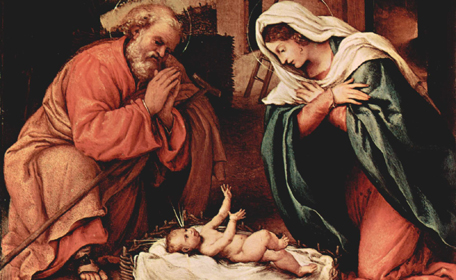
This is the month, and this the happy morn, Wherein the Son of Heav’n’s eternal King, Of wedded Maid, and Virgin Mother born, Our great redemption from above did bring; For so the holy sages once did sing, That he our deadly forfeit should release, And with his Father work us a perpetual peace. —John Milton, from his poem ‘On the Morning of Christ’s Nativity’
The word Joy is a much-overused in secular communications around Christmas time. One sees the word frequently on secular Christmas tree ornaments, gift wrapping paper, greeting cards and the like. Joy is an extremely important word for Christians; it appears frequently in the Bible, in both the Old and New Testaments. Galatians 5:22 tells us that joy is a fruit of the Holy Spirit, along with love, peace, forbearance, kindness, goodness, faithfulness, gentleness and self-control (NIV).
According to one Jesuit explanation of this, a fruit of the Holy Spirit is “an observable behavior in people who have allowed the grace of the Holy Spirit to be effective in them.” With this interpretation, two things become clear. First, the fruits of the Holy Spirit do not appear automatically once a person accepts Christ as his or her Savior. To reap the fruits, we must surrender our right to ourselves and allow the Holy Spirit to work in us. Secondly, Christian joy is not the same as happiness. Christian joy can be experienced in the midst of pain and sadness. In fact, James 1:2-3 (NIV) tells us, “Consider it pure joy, my brothers and sisters, whenever you face trials of many kinds, because you know that the testing of your faith produces perseverance.”
In Philippians 4:4, the Apostle Paul tells us to “rejoice in the Lord always.” He penned this epistle from prison. Some people confuse joy with happiness. They are not the same. Christian joy comes from within, while happiness stems from external sources. I’m happy when my wife bakes her famous apple pie. I’m joyful in the knowledge that Christ is my Savior. I can savor Christian joy even in difficult times, just like Paul writing words of encouragement from prison.
I recently visited a friend who is quickly approaching death. He’s the godfather of my children and a friend of over 35 years. While it was sad knowing I probably won’t see him again in this life, it was also joyful to know that he is secure in his salvation through Jesus Christ and we will see each other again in God’s eternal kingdom.
But the angel said to them, ‘Do not be afraid. I bring you good news that will cause great joy for all the people. Today in the town of David a Savior has been born to you; he is the Messiah, the Lord. —Luke 2: 10-11
My prayer for you is that you will allow the joy of the Holy Spirit to work in your life. May your heart be filled with the joy and peace of Jesus Christ during this Christmas Season and in the coming New Year!
What can I give Him, poor as I am? If I were a shepherd, I would bring a lamb; If I were a Wise Man, I would do my part; Yet what I can I give Him: give my heart. —Christina Rossetti from her poem ‘In the bleak midwinter’







 Divine Simplicity
Recent Comments