The phrase “Help my unbelief” comes from Mark 9:24, where a desperate father pleads with Jesus to heal his son, saying, “I do believe; help my unbelief!”. This powerful request acknowledges the human struggle with doubt, while expressing a desire to be faithful.
How can anyone who is identified with Jesus Christ suffer from doubt or fear! Our lives in him should be psalms of irrepressible, triumphant belief. –Oswald Chambers
I live by faith in the Son of God, who loved me and gave himself for me. –Galatians 2:20*
So how does a Christian live by faith in Jesus? I’ve often asked myself this question as I ponder life. I think I might be getting closer to finding the answer.
“Keep the faith baby!” We’ve all heard this or something similar. So how much faith is enough? In Matthew 17, Jesus tells us that faith “the size of a mustard seed” is enough to move a mountain. Hmmm, I have a couple of pretty big mountains in my life that I want to move, but so far, they’re still there to greet me every morning when I awake. Apparently, I lack the ability to muster even a tiny mustard seed worth of faith—and this frustrates and disappoints me.
Happily, I believe I might have found the root cause of my failure. My faith lacks persistence. Paul points to persistence in 1 Thessalonians 5: 16-18, which exhorts us to, “Rejoice always, pray continually, give thanks in all circumstances; for this is God’s will for you in Christ Jesus.” If one meditates on this short passage, I believe they’ll find that it contains some pretty tough marching orders.
Persistent faith is surrendering one’s will to God’s will, not a product of personal willpower, but a result of trusting His plan for your life, even when it’s unclear to you. This act of surrender means relinquishing personal control and aligning one’s life with a higher purpose, leading to strength and peace found in God’s wisdom rather than one’s own. It is an ongoing process of daily submission, acknowledging one’s own limitations and trusting in God’s provision.
Matthew 14:29-31 is a wonderful example of impersistent faith. As Jesus is walking on the water in the Sea of Galilee, he approaches the boat where his disciples are struggling in a violent storm. “Come,” he said (to Peter). Then Peter got down out of the boat, walked on the water and came toward Jesus. But when he saw the wind, he was afraid and, beginning to sink, cried out, “Lord, save me!” Immediately Jesus reached out his hand and caught him. “You of little faith,” he said, “why did you doubt?”
In this lesson, Peter was doing fine while he focused on Jesus, but when he shifted his focus from Jesus to the great wind of the storm he began to doubt. Like a new military recruit struggling to qualify with his weapon on a rifle range, Peter failed because he took his eye off the target, Jesus.
Consider it pure joy, my brothers and sisters, whenever you face trials of many kinds,because you know that the testing of your faith produces perseverance. James1:2-3
As I’ve noted before, Jesus was and remains the God of the Impossible for those who come to him as their Lord and Savior. I believe this in my heart. Believing is easy when things are going my way. I’m trying hard to learn how to put this into action when the going gets too tough for me to handle. Every day I try to meditate on Psalm 143 as part of my daily devotions. I find verses 8 – 10 to be a great source of encouragement and comfort, especially when I feel overwhelmed by life. I hope you might find them equally useful.
Let the morning bring me word of your unfailing love, for I have put my trust in you. Show me the way I should go, for to you I entrust my life. Rescue me from my enemies, Lord, for I hide myself in you. Teach me to do your will, for you are my God; may your good Spirit lead me on level ground.
On this national holiday dedicated to giving thanks, let us give thanks to the Lord our God for all his blessings and provision in the past year and in the years to come. May He lead us all on level ground.
I was a three-sport athlete in high school. In college in 1975 I joined a “health club” called the US Army and stayed strong and fit there for the next 26 years. Through challenging “Arrrmy training” (Bill Murray fans will get it), we stayed physically and mentally ready to defend our nation. I retired from the Army in 2001. Like so many of the Army buddies I served with, I put on a few pounds after retirement. In fact, over the course of two decades I went from a retirement weight of 209 lbs. to a maximum of 242. About two years ago, through a combination of illness, dieting, and lifestyle changes, I lost a dramatic amount of weight. Today my weight hovers around a comfy 200 lbs.
Slimming down came with a lot of benefits. Among these are being able to fit into clothes I hadn’t worn for years, improved sleep, increased energy levels, and all around better physical health as indicated by my vital signs and blood chemistry tests, which today look like those of a healthy twenty-something. Slimming down has many other great benefits, more than we can cover here.
There’s another type of slimming down that’s very good for you. Commonly called “downsizing,” it refers to both reducing the amount of space one lives in and the quantity of personal possessions one owns. Such reducing can be healthy both mentally and spiritually.
Now don’t get me wrong. I’m not some overzealous lifestyle minimalist that believes in possessing only the bare essentials necessary for living and rejects the rest. I’m not the type of person who could live my life in a “Tiny Home” like one sees on HGTV. But my wife and I have downsized our living space four times since I retired from the army, slimming down from a 3,200 sq ft house to 2,000, to 1,500 and finally to 1,200 sq ft condo, which we have today. We both agree that downsizing is cathartic. Here are just a few potential benefits of lifestyle downsizing which, if you’re not ready for now, might become of greater interest to you as you grow older.
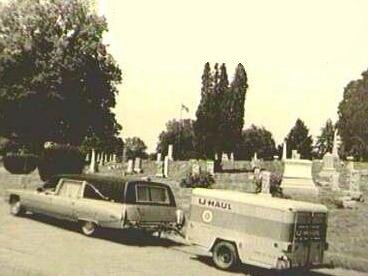
Reducing Chaos. Chaos is truly the devil’s workshop. Jesus calmed the storm on the Sea of Galilee by commanding, “Peace, be still.” He can do the same for you and me. God wants us to have peace. A beautiful car, a sleek sailboat, and a humongous house and/or garage crammed with a lot of “stuff” (substitute a gigantic storage unit crammed with stuff) can contribute to a chaotic life. Each of these comes with a price, and I’m not talking about money. Beautiful cars beg to be washed, waxed, and detailed. A sleek boat requires a lot of time and effort to keep it safe and seaworthy. Big houses typically have big lots. Big lots beg to be manicured until the grass looks as good or better than a putting green. A big house crammed with a lot of stuff can became a chaotic ball and chain for you and/or for your children who are trying to sort things out after their parents pass away. Oh yeah, and who is going to remove the snow from that lovely 50-yard curving driveway? Been there and done that! It’s not fun.
Avoiding Anxiety and Distractions. Have you ever been sitting in a pew on a Sunday morning, taking a mental inventory of all the things, you need to do when you when you get home or in the week to come, instead of listening to what was being said in the sermon? There is a time to do and a time to listen. Sermon time in church is a time to listen.
You might recall this story in Luke chapter 10. Martha and Mary were the sisters of Lasarus. On one occasion that Luke describes, Martha invited Jesus into her house. While Mary sat at Jesus’ feet, listening to him talk, Mary fluttered all about, presumably preparing a meal for Jesus. After a while Martha became annoyed and asked Jesus to tell Mary to come and help her with the work. Jesus’ response to Martha’s urging was a gentle rebuke, “Martha, Martha, you are worried and upset about many things, but few things are needed—or indeed only one. Mary has chosen what is better, and it will not be taken away from her.” (v. 41-42). Jesus wants to be the top priority in our lives. Endeavor to keep Jesus at the center of your thoughts.
Avoiding Comparison. You’ve probably heard the expression “Keeping up with the Joneses.” It refers to a selfish urge or social pressure to match or exceeded the material possessions of one’s neighbors. Colossians 3 compares covetousness to “idolatry.” When it came to material possessions, King Solomon, the presumed writer of the Book of Ecclesiastes and a man renowned for both his wisdom and his wealth, made the Joneses look like rank amateurs. Listen to what he had to say about material wealth:
I undertook great projects: I built houses for myself and planted vineyards. I made gardens and parks and planted all kinds of fruit trees in them. I made reservoirs to water groves of flourishing trees. I bought male and female slaves and had other slaves who were born in my house. I also owned more herds and flocks than anyone in Jerusalem before me. I amassed silver and gold for myself, and the treasure of kings and provinces. I acquired male and female singers, and a harem as well—the delights of a man’s heart. I became greater by far than anyone in Jerusalem before me. In all this my wisdom stayed with me. I denied myself nothing my eyes desired; I refused my heart no pleasure. My heart took delight in all my labor, and this was the reward for all my toil. Yet when I surveyed all that my hands had done and what I had toiled to achieve, everything was meaningless, a chasing after the wind; nothing was gained under the sun. –Ecclesiastes 2:4-11
After much experimentation, Soloman finally figured it out! Now see what Jesus said to his disciples:
Then he (Jesus) said to them, “Watch out! Be on your guard against all kinds of greed; life does not consist in an abundance of possessions.” –Luke 12:15
Matthew 19:16-23
Just then a man came up to Jesus and asked, “Teacher, what good thing must I do to get eternal life?”
“Why do you ask me about what is good?” Jesus replied. “There is only One who is good. If you want to enter life, keep the commandments.”
“Which ones?” he inquired.
Jesus replied, “‘You shall not murder, you shall not commit adultery, you shall not steal, you shall not give false testimony, 19 honor your father and mother,’ and ‘love your neighbor as yourself.’”
“All these I have kept,” the young man said. “What do I still lack?”
Jesus answered, “If you want to be perfect, go, sell your possessions, and give to the poor, and you will have treasure in heaven. Then come, follow me.”
When the young man heard this, he went away sad, because he had great wealth.
Then Jesus said to his disciples, “Truly I tell you; it is hard for someone who is rich to enter the kingdom of heaven. Again I tell you, it is easier for a camel to go through the eye of a needle than for someone who is rich to enter the kingdom of God.”
Leaving a Christian Legacy. To those who are believers, I ask “What is your greatest regret since you became a Christian?” I hope your response isn’t something like, “I wish I had worked more” or “I wish I had bought that 1966 Corvette when I had the chance.”
Will you leave a Christian legacy? What might that look like? Will those who come after you even know you were a Christian given the way that you lived? This is worth thinking about.
Surely everyone goes around like a mere phantom; in vain they rush about, heaping up wealth without knowing whose it will finally be. –Psalm 39:6
“‘And I (a wealthy man) will say to my soul, “Soul, you have ample goods laid up for many years; relax, eat, drink, be merry.”’ But God said to him, ‘Fool! This night your soul is required of you, and the things you have prepared, whose will they be?’”—Luke 12:18-20
But godliness with contentment is great gain. For we brought nothing into the world, and we can take nothing out of it. But if we have food and clothing, we will be content with that. —1 Timothy 6:6-8
“Let your light shine before others, that they may see your good deeds and glorify your Father in heaven.”—Matthew 5:16
Legacy isn’t measured by wealth, titles, or accolades—it’s measured by the impact your faith has on others. A Christian legacy is built day by day, through quiet obedience, generous love, and intentional discipleship. When we live with integrity, invest in relationships, and give freely of what God has entrusted to us, we leave behind more than memories—we leave behind a testimony.
A Christian legacy doesn’t end with you or me. It multiplies through the lives we touch, the prayers we pray, and the truths we pass on. And the goal isn’t to be remembered—it’s to make Christ known. May our respective legacies draw others closer to Jesus Christ.
Leaving Things Behind. Back to lifestyle downsizing, there is nothing bad about wealth in and of itself. I’ve known many Christians who were wealthy and unselfishly used their wealth for the furtherment of God’s kingdom. A problem with wealth begins when we forget that everything we possess belongs to God and we are merely stewards of what he has given us.
We are born naked and penniless and in death our physical bodies return to dust. Don’t let accumulating “stuff” become a goal in your life. Even though many have tried and failed (Egyptian Pharaohs and Viking Chieftains come to mind), you just can’t take it with you. I hope you enjoy the short poem below by Judy Dykstra-Brown
Relocation Dreams
I’ve so many things that there’s no place to stack them in. No drawers to hold them, no cupboards to pack them in. So many things stowed away from detection. My fireplace houses its own art collection.
My wardrobe suffers from costumes aplenty. I’ve boxes of sizes from nine up to twenty. My jewelry box is stuffed to the gills, my medicine drawer is spilling out pills.
When I try to cull them, they all want to stay. The only solution’s to just move away to find a small island with palm trees and sky where there is simply nothing to buy!
I’ll live in a hut with floors of swept dirt. One pair of flip flops, a simple grass skirt. I won’t feel that shopping should be my main duty. I’ll look out the window if I require beauty.
No buying new paintings whenever I please. No little nicknacks and no DVD’s. No drawers of makeup or tea towels or spoons. No tarot cards, horoscopes, Ouija boards, runes.
I will not need things to determine my fate, that day I walk out, simply locking my gate, taking one suitcase, computer and cables, and scanner and backup drives, printers and tables,
an internet router and energy backup— just these few items to locate and pack up. Then I’m off to a life that’s simpler by far if these bare necessities fit in my car.
Thirteen years ago I wrote an article for my newspaper column with some advice for recent grads. It has become one of the most popular pieces I ever wrote. I’ve received dozens of emails thanking me for writing it. Therefore, I decided to republish it annually around graduation time. I hope some of you might find it useful. Although I wrote it specifically for recent high school graduates, I believe it is equally applicable to recent college graduates.
For those who are graduating high school this year and beginning the long transition into adulthood, I’d like to offer you a gift. Here are five enduring truths I have learned. They will help you through life’s journey.
Choices
“If you decide to just go with the flow, you’ll end up where the flow goes, which is usually downhill, often leading to a big pile of sludge and a life of unhappiness. You’ll end up doing what everyone else is doing.” ― Sean Covey, The 7 Habits of Highly Effective Teens
Life will deal you an endless string of choices along the way. Some will be trivial, like deciding what to wear today. Others will be weighty and their outcomes will affect you forever. Weighty decisions should always be preceded by much thought and soul searching. This includes decisions about who you date or marry, what you put into your body, bringing children into the world, what you do for a living, how much debt you incur and who you associate with.
All of these decisions will have a lasting effect on your life. Therefore, make them slowly and deliberately. Often you’ll discover that the right choice is not the easiest one. A habit of making poor choices will, as the Sean Covey quote suggests, drag your life downhill.
I was recently contacted by a young man who had just received a bad conduct discharge from the Navy. He asked me how the discharge would impact his future employability. His mistake was choosing to drive a car while intoxicated and hitting a pedestrian. Fortunately, the victim wasn’t seriously injured. Had it been otherwise, the young sailor would probably be in prison. It was my sad responsibility to inform him that with some employers the discharge would be a black mark for life. Choices matter!
Learning
“Experience is a hard teacher because she gives the test first, the lesson afterwards.” ―Vernon Saunders Law, former professional baseball pitcher and Cy Young Award winner
Some of you will go on to college or technical school. Others will enter the workforce. Even if your formal education is over, don’t quit learning. Make learning a lifelong adventure. I did my undergraduate work at the University of Kentucky. The school offers a fellowship program for individuals aged 65 and older to attend classes tuition free. Every year numerous senior citizens walk the stage to receive degrees ranging from Associate of Arts to Doctor of Philosophy. It’s never too late to learn.
Even if you don’t choose to continue formal learning, make it point to learn from life. Observe others; note their successes and failures; then learn from their experiences. More importantly, learn from your own mistakes.
Some of the greatest lessons I’ve learned, particularly those while serving in uniform, were the result of having made a terrible mistake. This sort of lesson sticks, like the first time you grab the handle of a hot iron skillet with your bare hand. The key to learning from mistakes is owning them. Admit your mistakes and then move on, having learned something from the experience. Don’t let, “It wasn’t my fault,” be part of your vocabulary.
Work
“A dream doesn’t become reality through magic; it takes sweat, determination and hard work.” ―Colin Powell, retired U.S. Army four-star general and former U.S. Secretary of State
Work isn’t always fun. If it were, they’d call it play. Work can be downright unpleasant, but it’s an essential element of life! Along the way you’re going to have jobs you won’t like. Note what you don’t like and make it a point to improve yourself, so you’ll never again have to work at such a job.
Accepting a job means submitting to the authority of those placed over you. Learn to work within this system. You’ll inevitably have bosses you don’t like. Learn to respect the position, if not the individual.
Fairness
“Life is not fair; get used to it.” ―Bill Gates, founder and former CEO, Microsoft Corporation
You will hear much discussion about fairness in this life. It’s all hot air. Life isn’t fair. Some good people die young, while some bad people live a long life. Disease sometimes strikes arbitrarily, for no apparent reason. Some people prosper while others suffer failure. A death or accident can change your life forever.
There is randomness to life that can’t be avoided. Don’t expect kindness to be returned with kindness. Don’t expect generosity to be returned with generosity. The best choice is to be fair and kind to others and learn to accept what they return to you.
A wise man named Harry Browne ran for president of the United States on the Libertarian Party ticket. On Christmas day in 1966, Browne wrote his young daughter a letter aptly titled, “A Gift for My Daughter.” I encourage every graduating senior to read it and digest it. In the letter, he explains to his daughter that, “Nobody owes you anything.” Understanding what Browne meant can truly bless you. You can find it at: https://independentpoliticalreport.com/2015/12/harry-brownes-christmas-letter-to-his-daughter/ .
Faith
“A faith is a necessity to a man. Woe to him who believes in nothing.” ―Victor Hugo
I once had a senior Army officer tell me he preferred to work with men who possessed spiritual values, regardless of their religion. He explained that having faith in a power higher than one’s self was an indicator of how one will perform under pressure; in this instance, the pressure meant combat.
Too many people place their faith in all the wrong places. It might be in wealth, celebrity, good looks, talent, or even government. Whatever the case, misplaced faith leads to disappointment after disappointment.
To avoid these disappointments, put your faith in God alone. You, your loved ones and your friends will all inevitably let you down, but God will never fail you.
Across the country it’s graduation time. Here in South Dakota some schools have already closed for the summer. Most of those that remain open will close in the coming days. Everywhere one turns there’s another grad party. What awaits all these new grads? A decade ago I wrote an article for my newspaper column with some advice for recent graduates. While it was aimed at high school graduates, it is also highly relevant to recent college grads. The article has become one of the most popular pieces I ever wrote. I’ve received hundreds of emails thanking me for taking the time to share it. Therefore, I decided to republish it annually around graduation time. I hope some of you might find it useful. You can view the original article in the Tribune-Democrat news at this link: http://goo.gl/LtN72
For those who are graduating high school this year and beginning the long transition into adulthood, I’d like to offer you a gift. Here are five enduring truths I have learned. They will help you through life’s journey.
Choices
“If you decide to just go with the flow, you’ll end up where the flow goes, which is usually downhill, often leading to a big pile of sludge and a life of unhappiness. You’ll end up doing what everyone else is doing.” ― Sean Covey, The 7 Habits of Highly Effective Teens
Life will deal you an endless string of choices along the way. Some will be trivial, like deciding what to wear today. Others will be weighty and their outcomes will affect you forever. Weighty decisions should always be preceded by much thought and soul searching. This includes decisions about who you date or marry, what you put into your body, bringing children into the world, what you do for a living, how much debt you incur and who you associate with.
All of these decisions will have a lasting effect on your life. Therefore, make them slowly and deliberately. Often you’ll discover that the right choice is not the easiest one. A habit of making poor choices will, as the Sean Covey quote suggests, drag your life downhill.
I was recently contacted by a young man who had just received a bad conduct discharge from the Navy. He asked me how the discharge would impact his future employability. His mistake was choosing to drive a car while intoxicated and hitting a pedestrian. Fortunately, the victim wasn’t seriously injured. Had it been otherwise, the young sailor would probably be in prison. It was my sad responsibility to inform him that with some employers the discharge would be a black mark for life. Choices matter!
Learning
“Experience is a hard teacher because she gives the test first, the lesson afterwards.” ―Vernon Saunders Law, former professional baseball pitcher and Cy Young Award winner
Some of you will go on to college or technical school. Others will enter the workforce. Even if your formal education is over, don’t quit learning. Make learning a lifelong adventure. I did my undergraduate work at the University of Kentucky. The school offers a fellowship program for individuals aged 65 and older to attend classes tuition free. Every year numerous senior citizens walk the stage to receive degrees ranging from Associate of Arts to Doctor of Philosophy. It’s never too late to learn.
Even if you don’t choose to continue formal learning, make it point to learn from life. Observe others; note their successes and failures; then learn from their experiences. More importantly, learn from your own mistakes.
Some of the greatest lessons I’ve learned, particularly those while serving in uniform, were the result of having made a terrible mistake. This sort of lesson sticks, like the first time you grab the handle of a hot iron skillet with your bare hand. The key to learning from mistakes is owning them. Admit your mistakes and then move on, having learned something from the experience. Don’t let, “It wasn’t my fault,” be part of your vocabulary.
Work
“A dream doesn’t become reality through magic; it takes sweat, determination and hard work.” ―Colin Powell, retired U.S. Army four-star general and former U.S. Secretary of State
Work isn’t always fun. If it were, they’d call it play. Work can be downright unpleasant, but it’s an essential element of life! Along the way you’re going to have jobs you won’t like. Note what you don’t like and make it a point to improve yourself, so you’ll never again have to work at such a job.
Accepting a job means submitting to the authority of those placed over you. Learn to work within this system. You’ll inevitably have bosses you don’t like. Learn to respect the position, if not the individual.
Fairness
“Life is not fair; get used to it.” ―Bill Gates, founder and former CEO, Microsoft Corporation
You will hear much discussion about fairness in this life. It’s all hot air. Life isn’t fair. Some good people die young, while some bad people live a long life. Disease sometimes strikes arbitrarily, for no apparent reason. Some people prosper while others suffer failure. A death or accident can change your life forever.
There is randomness to life that can’t be avoided. Don’t expect kindness to be returned with kindness. Don’t expect generosity to be returned with generosity. The best choice is to be fair and kind to others and learn to accept what they return to you.
A wise man named Harry Browne ran for president of the United States on the Libertarian Party ticket. On Christmas day in 1966, Browne wrote his young daughter a letter aptly titled, “A Gift for My Daughter.” I encourage every graduating senior to read it and digest it. In the letter, he explains to his daughter that, “Nobody owes you anything.” Understanding what Browne meant can truly bless you. You can find it here. https://independentpoliticalreport.com/2015/12/harry-brownes-christmas-letter-to-his-daughter/
Faith
“A faith is a necessity to a man. Woe to him who believes in nothing.” ―Victor Hugo
I once had a senior Army officer tell me he preferred to work with men who possessed spiritual values, regardless of their religion. He explained that having faith in a power higher than one’s self was an indicator of how one will perform under pressure; in this instance, the pressure meant combat.
Too many people place their faith in all the wrong places. It might be in wealth, celebrity, good looks, talent, or even government. Whatever the case, misplaced faith leads to disappointment after disappointment.
To avoid these disappointments, put your faith in God alone. You, your loved ones and your friends will all inevitably let you down, but God will never fail you.
He who finds a wife finds what is good and receives favor from the Lord. –Proverbs 18:22*
*All bible quotes are NIV.
I’m old enough to get senior discounts in restaurants and movie theaters, and AARP rates on hotel rooms. These are all good, but one of the greatest benefits of getting older is that I’ve developed a clearer understanding of what really matters in my life. When I was young, most of my attention was focused inwardly, which I suppose if fairly normal.
I was commissioned a second lieutenant in the U.S. Army in May 1977, at the tender age of 21. Fresh out of college and newly married, I loved the excitement of a soldier’s life. I loved the comradery and having fun with friends. I also enjoyed playing all kinds of sports and outdoor recreation like skiing and cycling. Sadly, there were many things I neglected during this phase of my life. One of these was my sweet wife.
As I grew a bit older, I began to pay more attention to the incredible woman I married. I grew to realize that Linda’s physical beauty was exceeded by even greater inner beauty. I grew to admire her patience—especially with me and my antics—and her fortitude. When she sets her mind on something, it’s going to get done. I also began to comprehend how wise Linda is—blessed with more common sense than anyone I’ve ever known. She is also blessed with the gift of spiritual discernment. On top of all this, Linda is one of the humblest and most generous people I’ve ever known.
For me, having our first child was a wake-up call greater than any drill instructor ever delivered to a barracks full of sleepy-eyed soldiers. It was one of those ‘blinding glimpse of the obvious’ moments when selfish me suddenly realized I’m responsible for more than just myself. While a wife is easily neglected, a screaming newborn is an entirely different matter. Sad that I didn’t figure this out earlier!
My newfound sense of responsibility led me back to the Church, something I’d managed to neglect since the time I entered college some seven years earlier. This sudden change of direction came as quite a surprise to my then, non-Christian wife. Thankfully, she was eventually steered towards God. Sadly, it happened without much help on my part. Thank you, Holy Spirit!
Over the course of my 24-year Army career there were many long deployments and other periods away from home. During these busy years Linda faithfully kept the home fires burning, managing a busy household and doing the lion’s share of parenting our two daughters. My military travels around the world helped me develop a deep appreciation for the blessings we enjoy as Americans—something that many of us simply don’t recognize.
Fast forward to the present and I feel blessed. I thank God daily for my family, friends, freedom, and faith. Linda and I are reaping the benefits of having honored our marriage vows all these years; we recently celebrated our 45th wedding anniversary. Our amazing daughters are both grown and successful; we have a wonderful son-in-law who is a pastor; and we’ve been blessed with three delightful grandsons. We’re fortunate to be able to see our grandsons daily. We have loving, extended families living in diverse locations around the world. We’ve made many lifelong friends along the way, all of whom have blessed and enriched our lives. Most of all, we’ve been blessed by a loving God who was willing to sacrifice His only Son to redeem our souls.
Proverbs 31:10b-31
[b]A wife of noble character who can find? She is worth far more than rubies. 11 Her husband has full confidence in her and lacks nothing of value. 12 She brings him good, not harm, all the days of her life. 13 She selects wool and flax and works with eager hands. 14 She is like the merchant ships, bringing her food from afar. 15 She gets up while it is still night; she provides food for her family and portions for her female servants. 16 She considers a field and buys it; out of her earnings she plants a vineyard. 17 She sets about her work vigorously; her arms are strong for her tasks. 18 She sees that her trading is profitable, and her lamp does not go out at night. 19 In her hand she holds the distaff and grasps the spindle with her fingers. 20 She opens her arms to the poor and extends her hands to the needy. 21 When it snows, she has no fear for her household; for all of them are clothed in scarlet. 22 She makes coverings for her bed; she is clothed in fine linen and purple. 23 Her husband is respected at the city gate, where he takes his seat among the elders of the land. 24 She makes linen garments and sells them, and supplies the merchants with sashes. 25 She is clothed with strength and dignity; she can laugh at the days to come. 26 She speaks with wisdom, and faithful instruction is on her tongue. 27 She watches over the affairs of her household and does not eat the bread of idleness. 28 Her children arise and call her blessed; her husband also, and he praises her: 29 “Many women do noble things, but you surpass them all.” 30 Charm is deceptive, and beauty is fleeting; but a woman who fears the Lord is to be praised. 31 Honor her for all that her hands have done, and let her works bring her praise at the city gate.
We’ve all heard tragic stories about distracted driving, where someone texting on a cell phone lost control of their car and caused a great tragedy. When driving, it’s absolutely crucial to keep one’s eye on the road ahead. The advent of the internet and subsequently cell phones has created millions of distracted people. You’ve probably seen some of them sitting at a family dinner in a restaurant—all heads down, focused on their phones and no family interaction at all. How very sad!
According to a January 2020 article in The Guardian, a study conducted in 2014 indicated that mobile phone users receive an average of 63.5 alerts every day, most viewed within minutes whether the phone is on silenced or not. A 2016 study by Deloitte corporation found that people checked their phones an average 47 times a day, often in response to alerts. Many people are bombarded by cell phone beeps, blips and buzzes nearly every waking moment. These distractions can even continue through the night for those who sleep with cell phones by their beds.
Unfortunately, many Christians today suffer from another form of distraction—distracted living. Distracted living is a byproduct of other distractions and cares of this world, for example partying, obsessive fitness, substance abuse, emails, texting, internet browsing, social media, television, movies, sports, and many others that that steal our time daily.
The Bible story of Mary and Martha is a perfect example of distracted living (Luke 10:38-42). Mary and Martha were the sisters of Lazarus, whom Jesus raised from the dead. They were all beloved friends of Jesus. On one particular occasion, Jesus visited their home in Bethany. There were others present as well. Mary chose to sit at Jesus’ feet and listen to him teach, while her sister Martha busied herself serving their guests. Martha became irritated with Mary and asked Jesus to send Mary to help her. Jesus responded with a mild rebuke, saying, “Martha, Martha, you are worried and troubled about many things. But one thing is needed, and Mary has chosen that good part, which will not be taken away from her.” Mary was laser focused on Jesus, while Martha was living a distracted life.
People with distracted lives may become easily agitated, they often feel overwhelmed, and they frequently neglect the essential “four-F’s” of things that really matter in this life—faith, family, friends and freedom. Christians shouldn’t allow any of these areas to suffer neglect, but they must be especially cautious about neglecting their faith. Renowned Scottish theologian Oswald Chambers said, “Starvation of the mind, caused by neglect, is one of the chief sources of exhaustion and weakness in a servant’s life.” Evidence of faith neglect often includes finding reasons to skip church, not finding the time to read and study scripture, not praying, feeling rushed while praying, and even sometimes falling asleep while praying.
Christian churches around the globe will soon begin commemorating the holy season of Lent, which begins on Ash Wednesday (2/26/2020) and runs through sunset on Holy Saturday, the day before Easter. I blogged about this very special church season in February last year (https://divinesimplicity.wordpress.com/2019/02/26/lent-a-season-of-penitence-and-prayer/).
For Christians, Lent is traditionally a season of fasting, penitence and prayer. It’s a wonderful time for Christians to practice disciplines to help them reconnect with their faith. One of my Lenten disciplines is to prayerfully read the Seven Penitential Psalms the first thing each morning during Lent. I also find a good Lenten devotional and read a morning devotion daily. A wonderful version of the Seven Penitential Psalms can be found at this link: http://www.edgeofenclosure.org/intro7penitentialpsalms.html. Lutheran Hour Ministries provides a new series of daily Lenten devotions each year. Beginning on February 26, they can be found at this link: https://www.lhm.org/dailydevotions/default.asp. I encourage you to take part in a Lenten discipline this year and, if you’re leading a distracted life, begin turning your attention back to God.
You shall not go out with haste,…for the Lord will go before you, and the God of Israel will be your rear guard. —Isaiah 52:12
As we reflect upon the past year and look forward to the new, these words by Scottish theologian Oswald Chambers are quite appropriate:
Security from Yesterday. “…God requires an account of what is past” (Ecclesiastes 3:15). At the end of the year we turn with eagerness to all that God has for the future, and yet anxiety is apt to arise when we remember our yesterdays. Our present enjoyment of God’s grace tends to be lessened by the memory of yesterday’s sins and blunders. But God is the God of our yesterdays, and He allows the memory of them to turn the past into a ministry of spiritual growth for our future. God reminds us of the past to protect us from a very shallow security in the present.
Security for Tomorrow. “…the Lord will go before you….” This is a gracious revelation— that God will send His forces out where we have failed to do so. He will keep watch so that we will not be tripped up again by the same failures, as would undoubtedly happen if He were not our “rear guard.” And God’s hand reaches back to the past, settling all the claims against our conscience.
Security for Today. “You shall not go out with haste….” As we go forth into the coming year, let it not be in the haste of impetuous, forgetful delight, nor with the quickness of impulsive thoughtlessness. But let us go out with the patient power of knowing that the God of Israel will go before us. Our yesterdays hold broken and irreversible things for us. It is true that we have lost opportunities that will never return, but God can transform this destructive anxiety into a constructive thoughtfulness for the future. Let the past rest, but let it rest in the sweet embrace of Christ.
Leave the broken, irreversible past in His hands, and step out into the invincible future with Him. Oswald Chambers, from ‘My Utmost for His Highest’
Seven years ago I wrote an article for my newspaper column with some advice for recent grads. It has become one of the most popular pieces I ever wrote. I’ve received hundreds of emails thanking me for writing it. Therefore, I decided to republish it annually around graduation time. I hope some of you might find it useful. You can view the original article in the Tribune-Democrat news at this link: http://goo.gl/LtN72
For those who are graduating high school this year and beginning the long transition into adulthood, I’d like to offer you a gift. Here are five enduring truths I have learned. They will help you through life’s journey.
Choices
“If you decide to just go with the flow, you’ll end up where the flow goes, which is usually downhill, often leading to a big pile of sludge and a life of unhappiness. You’ll end up doing what everyone else is doing.” ― Sean Covey, The 7 Habits of Highly Effective Teens
Life will deal you an endless string of choices along the way. Some will be trivial, like deciding what to wear today. Others will be weighty and their outcomes will affect you forever. Weighty decisions should always be preceded by much thought and soul searching. This includes decisions about who you date or marry, what you put into your body, bringing children into the world, what you do for a living, how much debt you incur and who you associate with.
All of these decisions will have a lasting effect on your life. Therefore, make them slowly and deliberately. Often you’ll discover that the right choice is not the easiest one. A habit of making poor choices will, as the Sean Covey quote suggests, drag your life downhill.
I was recently contacted by a young man who had just received a bad conduct discharge from the Navy. He asked me how the discharge would impact his future employability. His mistake was choosing to drive a car while intoxicated and hitting a pedestrian. Fortunately, the victim wasn’t seriously injured. Had it been otherwise, the young sailor would probably be in prison. It was my sad responsibility to inform him that with some employers the discharge would be a black mark for life. Choices matter!
Learning
“Experience is a hard teacher because she gives the test first, the lesson afterwards.” ―Vernon Saunders Law, former professional baseball pitcher and Cy Young Award winner
Some of you will go on to college or technical school. Others will enter the workforce. Even if your formal education is over, don’t quit learning. Make learning a lifelong adventure. I did my undergraduate work at the University of Kentucky. The school offers a fellowship program for individuals aged 65 and older to attend classes tuition free. Every year numerous senior citizens walk the stage to receive degrees ranging from Associate of Arts to Doctor of Philosophy. It’s never too late to learn.
Even if you don’t choose to continue formal learning, make it point to learn from life. Observe others; note their successes and failures; then learn from their experiences. More importantly, learn from your own mistakes.
Some of the greatest lessons I’ve learned, particularly those while serving in uniform, were the result of having made a terrible mistake. This sort of lesson sticks, like the first time you grab the handle of a hot iron skillet with your bare hand. The key to learning from mistakes is owning them. Admit your mistakes and then move on, having learned something from the experience. Don’t let, “It wasn’t my fault,” be part of your vocabulary.
Work
“A dream doesn’t become reality through magic; it takes sweat, determination and hard work.” ―Colin Powell, retired U.S. Army four-star general and former U.S. Secretary of State
Work isn’t always fun. If it were, they’d call it play. Work can be downright unpleasant, but it’s an essential element of life! Along the way you’re going to have jobs you won’t like. Note what you don’t like and make it a point to improve yourself, so you’ll never again have to work at such a job.
Accepting a job means submitting to the authority of those placed over you. Learn to work within this system. You’ll inevitably have bosses you don’t like. Learn to respect the position, if not the individual.
Fairness
“Life is not fair; get used to it.” ―Bill Gates, founder and former CEO, Microsoft Corporation
You will hear much discussion about fairness in this life. It’s all hot air. Life isn’t fair. Some good people die young, while some bad people live a long life. Disease sometimes strikes arbitrarily, for no apparent reason. Some people prosper while others suffer failure. A death or accident can change your life forever.
There is randomness to life that can’t be avoided. Don’t expect kindness to be returned with kindness. Don’t expect generosity to be returned with generosity. The best choice is to be fair and kind to others and learn to accept what they return to you.
A wise man named Harry Browne ran for president of the United States on the Libertarian Party ticket. On Christmas day in 1966, Browne wrote his young daughter a letter aptly titled, “A Gift for My Daughter.” I encourage every graduating senior to read it and digest it. In the letter, he explains to his daughter that, “Nobody owes you anything.” Understanding what Browne meant can truly bless you. You can find it at: www.harrybrowne.org/articles/GiftDaughter.htm.
Faith
“A faith is a necessity to a man. Woe to him who believes in nothing.” ―Victor Hugo
I once had a senior Army officer tell me he preferred to work with men who possessed spiritual values, regardless of their religion. He explained that having faith in a power higher than one’s self was an indicator of how one will perform under pressure; in this instance, the pressure meant combat.
Too many people place their faith in all the wrong places. It might be in wealth, celebrity, good looks, talent, or even government. Whatever the case, misplaced faith leads to disappointment after disappointment.
To avoid these disappointments, put your faith in God alone. You, your loved ones and your friends will all inevitably let you down, but God will never fail you.
We are currently celebrating the church season of Lent, a 40-day period before Easter when Christians reflect upon the passion and sacrifice of Jesus Christ, who was crucified and died as atonement for our sins, setting believers free from sin and death. Easter celebrates Christ’s resurrection from the dead and the promise of eternal life for His believers. Penitence, a solemn contemplation of one’s sins and request for God’s forgiveness, is foundational to Lent.
One Lenten discipline that I recommend is the prayerful reading of the Seven Penitential Psalms—Psalms 6, 32, 38, 51, 102, 130 and 143. These psalms (prayers) are generally attributed to David. Psalm 51 is probably the most widely read of the seven. In Anglican and Catholic traditions, it is often recited by congregations on Ash Wednesday and at other times during the Lenten season.
Christian tradition suggests several possible reasons behind the writing of these psalms. Probably the most widely accepted explanation is they were King David’s prayers of repentance for his sins against Uriah and Uriah’s beautiful wife Bathsheba. David’s sinful lust for Bathsheba drove him to conspire to have Uriah killed in battle. With Uriah out of the way, David took Bathsheba for his wife. She conceived and bore a baby son, but the child died shortly after birth. Recalling the words of condemnation delivered to him by the prophet Nathan regarding David’s sin with Bathsheba (2 Samuel 12: 4-7), David believed the baby’s death was God’s punishment for his transgressions. Nathan said to David:
4 “Now a traveler came to the rich man, but the rich man refrained from taking one of his own sheep or cattle to prepare a meal for the traveler who had come to him. Instead, he took the ewe lamb that belonged to the poor man and prepared it for the one who had come to him.”5 David burned with anger against the man and said to Nathan, “As surely as the Lord lives, the man who did this must die!6 He must pay for that lamb four times over, because he did such a thing and had no pity.” 7 Then Nathan said to David, “You are the man! (NIV)
Another Christian tradition associate’s the Seven Penitential Psalms with the Seven Deadly Sins. We first encounter the Seven Deadly Sins in the writings of Pope Gregory I around the year 600. The sins are pride, greed, lust, wrath, gluttony, envy, and sloth.
The writings of French Roman Catholic theologian Cardinal Pierre d’Ailly (1351-1420) associates certain spiritual virtues with the Seven Penitential Psalms: Psalm 6, fear of punishment; Psalm32, sorrow and confession for sin; Psalm 38, hope; Psalm 51, love of purity and mercy; Psalm102, longing for heaven, Psalm 130, distrust of one’s own strength and hope for mercy; and Psalm 143: joy.
During this year’s season of Lent, I’ve committed to prayerfully reading the Seven Penitential Psalms daily as part of my morning devotion. It has been a deep spiritual experience, one that I plan to make part of my future Lenten discipline. I encourage readers to give this a try. You can find the Seven Penitential Psalms online at the following URL:
As an Anglican, I follow a Church liturgical calendar, celebrating each of its many seasons. Very soon the season of Lent will be upon us. Lent this year is the period of 40 days from Ash Wednesday (March 6th) to Easter Sunday, commemorating Christ’s 40 days of fasting and temptation in the wilderness, His final journey to Jerusalem, where He was crucified, and His last hours with His disciples before His crucifixion. For believers, it is a period of penitence and alms giving. On Ash Wednesday, many Christians have their foreheads marked with ashes in the sign of the cross. The ashes are often collected from burning the palm fronds used in the celebration of Psalm Sunday.
The Catholic and Anglican traditions regarding Lent are very similar. In the Anglican tradition, which I practice, Lent is sometimes called the Paschal season (relating to Passover or Easter). It is a preparation time intimately connected to the most important Festival of the Church year, Easter, which marks Christ’s resurrection from the dead and His victor over sin and death. In celebration of the so-called Easter Triduum, Christians commemorates the passion (suffering), death, and resurrection of Jesus and thus the origin of the all Christian belief and the source of our faith and salvation. So, as Jesus spent 40 days fasting and praying in the desert, Anglicans prepare for 40 days for the encounter with Him in the Easter celebration. Traditionally, the Easter season begins with Ash Wednesday and ends on Holy (or Maundy) Thursday, a day we recall Jesus washing the feet of his disciples and having his last meal with them before his crucifixion. Maundy Thursday reminds believers of their hunger for God by refraining from food and intensifying one’s prayer life and charitable giving.
In the Orthodox tradition, Lent is an invitation to learn the salvation story by studying the death and the resurrection of Christ. It is an exercise in which believers partake of suffering and resurrection of the Lord. The cross and resurrection are daily realities: we die every day in all trials of life with Christ, but we experience our resurrection every day when we unite with him in faith and prayer. It is important in the Orthodox tradition to recognize that the cross is symbolic of the resurrection, not death. Fasting during Lent is an exercise of self-restraint, by which believers overcome their physical passions and win true freedom. It helps us to the internalization, especially when we pray. The believers should fast and avoid meat. They should intensify their prayer life and dig deeper into the scriptures than usual. On Wednesdays and Fridays during Lent, many Orthodox churches celebrate an evening service called “liturgy of the pre-sanctified gifts”. During these services, no elements are sanctified for the Holy Eucharist. Instead, the bread and wine sanctified on the precious Sunday are used. On these days, many Orthodox believers fast until evening.
Protestant denominations observe Lent in a wide variety of ways. Sadly, many traditional Protestant denominations barely observe Lent or the Church Calendar at all. However, for some, fasting during Lent is a time for reflecting on the essentials of Christianity. The original purpose is to prepare one’s self internally for the coming of Easter. Many Protestants avoid certain things during Lent in a quest to learn the true necessities in life. They may deprive themselves of dependency-related risks such as alcohol, chocolate and other sweets, and even the consumption of social media. The Lenten season is a good time to reorder one’s life—restacking priorities.
For those readers who have no set way of observing Lent, I urge you to consider adopting a Lenten tradition. One simple way to begin is to read a daily Lenten devotion. There are many available on the web, but my favorite is published by Lutheran Hour Ministries. Beginning March 6 you will be able to find the devotions at this link: https://www.lhm.org/lent/.
“…special (church) holidays give rise to various liturgical calendars that suggest we should mark our days not only with the cycles of the moon and seasons, but also with occasions to tell our children the stories of our faith community’s past so that this past will have a future, and so that our ancient way and its practices will be rediscovered and renewed every year.” ― Brian D. McLaren,Finding our Way Again: The Return of Ancient Practices







![Graduate [2]](https://divine-simplicity.com/wp-content/uploads/2017/05/graduate-2.jpg)

 Divine Simplicity
Recent Comments