“My dear friends, on this Christmas . . . let us seek, in the Babe of Bethlehem, the One who came to us in order to bear with us everything that weighs heavily upon us. . . . God Himself has built a bridge from Himself to us! A dawn from on high has visited us!”
1But there will be no gloom for her who was in anguish. In the former time he brought into contempt the land of Zebulun and the land of Naphtali, but in the latter time he has made glorious the way of the sea, the land beyond the Jordan, Galilee of the nations.
2 The people who walked in darkness have seen a great light; those who dwelt in a land of deep darkness, on them has light shone. 3 You have multiplied the nation; you have increased its joy; they rejoice before you as with joy at the harvest, as they are glad when they divide the spoil. 4 For the yoke of his burden, and the staff for his shoulder, the rod of his oppressor, you have broken as on the day of Midian. 5 For every boot of the tramping warrior in battle tumult and every garment rolled in blood will be burned as fuel for the fire. 6 For to us a child is born, to us a son is given; and the government shall be upon[d] his shoulder, and his name shall be called[e] Wonderful Counselor, Mighty God, Everlasting Father, Prince of Peace. 7 Of the increase of his government and of peace there will be no end, on the throne of David and over his kingdom, to establish it and to uphold it with justice and with righteousness from this time forth and forevermore. The zeal of the Lord of hosts will do this.
The Apostle Paul frequently emphasized the importance of declaring Jesus as “Lord” and believing in His resurrection from the dead for salvation. This declaration might sound fairly straightforward at first, but upon closer examination it raises deep theological and spiritual questions regarding the early Church as it existed in the Roman Empire. In his letter to the Romans, Paul says plainly, “If you declare with your mouth, ‘Jesus is Lord,’ and believe in your heart that God raised him from the dead, you will be saved” (Romans 10:9*). So, what does Paul teach us about declaring Jesus as one’s personal Lord?
Context
The early Christian church grew up in a Roman-dominated world that was highly influenced by Greek literature, philosophy, art, and other lesser facets of Greek culture. The term “lord” (Greek: kyrios) was generally used to denote authority and ownership. It was a title often bestowed upon emperors, kings, gods, and other figures of ultimate authority. Those who watched Game of Thrones might recall hearing someone commanded to “bend the knee,” i.e. bow before another, often under a threat of death, and swear to faithfully serve them.
By urging believers to declare Jesus as “Lord,” Paul was challenging Roman culture and Rome’s political good order. This declaration was a direct affront to a large number of Romans who professed Caesar as the ultimate “lord.” Paul’s assertion that Jesus is Lord was a declaration of His ultimate authority, above all earthly rulers and powers.
In this context, Paul’s message becomes a threat of insurrection. To declare Jesus as “Lord” was to “bend the knee” to Him above all other authority. It demands a complete makeover of one’s life and priorities, aligning them with Jesus’ teachings and the example of how He lived. For early Christians, declaring Jesus “Lord” was much more than a public profession of faith. It was a dangerous political declaration that invited Roman persecution and risked ostracism in public, religious, and political sectors.
Pronouncing Jesus as “Lord” encompasses several key aspects of Christian beliefs. Foremost, it acknowledges Jesus’ divinity. In Philippians 2:9-11, Paul describes how God exalted Jesus and bestowed upon Him “the name that is above every name,” such that “at the name of Jesus every knee should bow… and every tongue acknowledge that Jesus Christ is Lord, to the glory of God the Father.” This passage highlights the divine authority and honor accorded to Jesus, reinforcing His central role in God’s plan of salvation that has existed from God’s foundation of the world.
Pronouncing Jesus “Lord” affirms His sovereignty over every facet of one’s life. It implies a surrender to Jesus’ will and guidance, trusting in His lordship to guide and transform one’s life. This declaration is inseparably linked to the believer’s acknowledgment of Jesus’ resurrection from the dead. Paul points to the resurrection as definitive proof of Jesus’ divine power and authority. The resurrection is a transformative truth in that it enables believers to live in accordance with Jesus’ teachings.
Personal Transformation
On an individual level, declaring Jesus as “Lord” signifies a deep internal transformation. It requires a conscious decision to turn away from sin and self-centeredness and embrace a life of discipleship. Christian discipleship is marked by love, humility, and service. Paul describes this transformation in terms of a “new creation” in 2 Corinthians 5:17 and “putting on the new self” in Ephesians 4:24. These highlight the radical change in personal priorities and purpose that occur when one becomes abandoned to Jesus.
Declaring Jesus “Lord” is the central point of unity and shared identity among believers, who are often referred to as “brothers and sisters in Christ.” With Jesus as “Lord” Christians are joined together in a common faith and mission. This communal aspect is evident in Paul’s frequent use of the metaphor of the body of Christ, where each believer is a member with unique gifts and roles, all contributing to the health and growth of the whole (1 Corinthians 12:12-27). The lordship of Jesus rises above cultural, social, racial, and ethnic divisions, creating a diverse yet highly cohesive community of faith. Praise the Lord!
Doxology
“For I am convinced that neither death nor life, neither angels nor demons, neither the present nor the future, nor any powers, neither height nor depth, nor anything else in all creation, will be able to separate us from the love of God that is in Christ Jesus our Lord.”—Romans 8:38-39
* All Bible quotations are NIV unless otherwise noted.
Copilot AI was used to assist with historical research for this article.
During this church season of Advent, Christians anxiously await the celebration of Jesus’ birth. We commemorate His arrival in this world on December 25, the Feast of the Nativity of Our Lord Jesus Christ.
As we await the arrival of the Christ child, my wife and I recently said goodbye to a departing friend who moved to another state to be near family. I’ll call him John for the sake of privacy. John was diagnosed with Autism Spectrum Disorder (ASD) about two years ago, but has displayed ASD symptoms most of his life. According to the Centers for Disease Control, an estimated 5,437,988 (2.21%) adults in the United States have ASD.
For the past three and a half years my wife and I walked alongside John, providing him companionship, counsel, and a small lifeboat to climb into during frequent storms he encountered. John first came into our lives by means of our church. One day our priest asked us if we would be willing to help a single man who had recently arrived in our community. We said yes without really knowing what to expect. I share the details below not to glorify my wife and me; give all the glory to God! I share this to make a point which I’ve discussed before—being a follower of Jesus Christ can be messy.
We answered 2 a.m. phone calls so John could rant about whatever was bothering him at the time. We shared meals with him and checked periodically on his welfare and the state of his small apartment. We tried to help smooth the situation when John irritated his neighbors. We helped him move to a new apartment.
We drove him to appointments and to help him tend to his local business affairs when something needed fixing. We provided in-person support when John’ family could not contact him because his phone was (frequently) broken or lost, or when he was simply not answering calls or emails.
We invested many conversations with some of his family members who are active stakeholders in John’s life–over lunch, dinner, coffee, phone calls, and Zoom meetings. We supported John and these same family members during the complex endeavor to have him evaluated for ASD. We coordinated the dedication of funds from our church’s rummage sale to help defer the costs of the evaluation; printed forms and obtained John’s signatures; and prayed for the process. We coordinated with our church members to provide overnight accommodations for John’s family members when they periodically visited the area to check on his welfare.
Walking with John was not easy, but it was very spiritually rewarding and has made us three new friends, including John and two very special members of his family—they know who I mean. As we anxiously await the Feast of the Nativity and the celebration of the Christ child’s birth, Christians should recall that following Christ can get messy—Just read the book of Acts and see.
Canine separation anxiety is a complex psychological disorder affecting many dogs and their owners. When left alone, the otherwise wonderful pets affected by the disorder experience overwhelming distress, displaying a wide range of associated harmful behaviors. These range from incessant barking and destructive chewing to house soiling, total home wrecking and attempts to escape. Dogs are social creatures that thrive on the human companionship, which can make the absence of their owners highly disturbing.
My wife and I live in a multigenerational household comprised of grandparents, parents, children, and grandkids. It’s not uncommon for our daughter, son-in-law, and grandsons to be away for a weekend or longer vacation. When this occurs the family dog Mars, a large Labrador, is visibly moved. Mainly, he lies motionless on the floor or bed, and lets out big lonely sighs. My wife and I say that he “misses his humans.” While Mars doesn’t display destructive behaviors, family separation clearly makes him lonely for those he loves.
Loneliness is a key element of separation anxiety. It is not simply the absence of company, but rather a deep sense of isolation that can envelop practically anyone. It’s possible to feel lonely even while surrounded by a host of others. As a career Army officer, I endured multiple long deployments to Africa, the Middle East and the Balkans. In addition to the deployments, there were many other extended periods of family separation when I was required to attend training, exercises, and formal schools. In each instance, I suffered bouts of loneliness caused by being separated from those whom I love most, my wife and children. I sometimes became increasingly anxious as anticipated periods of separation approached.
The Apostle Paul looked forward to death, but not because he was depressed. He simply wished to again be in the physical presence of his first love, Jesus. In the first chapter of his letter to the Philippians (v. 21-24*) he wrote, “For to me, to live is Christ and to die is gain. If I am to go on living in the body, this will mean fruitful labor for me. Yet what shall I choose? I do not know! I am torn between the two: I desire to depart and be with Christ, which is better by far; but it is more necessary for you that I remain in the body.”
In Mark chapter 14 the disciples eat the Passover meal with Jesus and then go to the garden of Gethsemane. In Gethsemane, Jesus went off by Himself to pray. As fully man and fully God, He knew exactly what was in store for Him—torture, crucifixion, and death. Just a few days prior to this Jesus had told his disciples plainly, “We are going up to Jerusalem, and the Son of Man will be delivered over to the chief priests and the teachers of the law. They will condemn him to death and will hand him over to the Gentiles to be mocked and flogged and crucified. On the third day he will be raised to life!” (Matthew 20:18-19)
Despite this foreknowledge, Jesus’ prayer in Gethsemane shows He was not distressed over any of the coming physical violence. He was in agony knowing that when the sins of the world were laid on Him, God the Father would turn away. Jesus dreaded the coming separation from God! We are reminded of this later when we hear His impassioned cry from the cross, “My God, my God, why have you forsaken me?” (Matthew 27:46)
After the crucifixion, Jesus’ disciples suffered with separation anxiety. John 20:10 describes them hiding in fear of the Jewish leaders. No doubt they feared the Romans too! After all, they’d been hanging out with this “criminal” who was perceived by some as a threat to Roman authority. Their teacher and master had, by all practical appearances, made a bunch of empty promises and then left them alone. But it was not so. Behind the locked doors where they hid, the resurrected Jesus appears to His disciples in the flesh (John 20:19-20).
During his ministry, Jesus devoted a lot of time and effort to preparing His disciples for the day when He would be physically absent from them. He reassures them in John 14:15-18, saying “If you love me, keep my commands. And I will ask the Father, and he will give you another advocate to help you and be with you forever—the Spirit of truth. The world cannot accept him, because it neither sees him nor knows him. But you know him, for he lives with you and will be in you. I will not leave you as orphans, I will come to you.” Jesus final reassuring words to his disciples in Matthew 28:20b are, “and surely I am with you always, to the very end of the age.”
Isaiah 26:9 – “My soul yearns for you in the night; in the morning my spirit longs for you. When your judgments come upon the earth, the people of the world learn righteousness.
Psalm 42:1-2 – “As the deer pants for streams of water, so my soul pants for you, my God. My soul thirsts for God, for the living God. When can I go and meet with God?”
Psalm 143:6 – “I spread out my hands to you; I thirst for you like a parched land.”
Psalm 73:24 – “Whom have I in heaven but you? And earth has nothing I desire besides you.”
Thank God for leaving the Spirit of Truth with all believers. We need only to listen for His still, small voice to find Him. Thank God that He loves all of us so much that our foolish fears and anxieties don’t upset Him. Thank God He’s so patient with me, and that He is patient with all of us, even when we are impatient with Him. He loves us unconditionally, so much that he stretched out His arms on the cross to suffer and die for all of us. He will not send us anywhere He is not going; and when it comes to death, He’s been there and done that already. No matter how anxious, frightened, and lonely we may become, the Holy Spirit will keep us in His grip until the day Jesus bring us safely home. We are never alone.
Have you ever experienced a wounded spirit? By that I mean something that grieves the very Holy Spirit dwelling inside you, leaving you in despair and feeling hopeless. Personal, unconfessed sin can leave a Christian wounded, as can sins committed against a Christian by a fellow believer. I imagine that Peter felt wounded when Jesus turned and looked him in the face after Peter had denied knowing Jesus three times (Luke 22). This was the same Peter who, at least for a short time, had walked on the water with Jesus (Matthew 14). Imagine what Peter must have thought at that moment he denied Jesus the third time—he had followed the Lord through thick and thin, watching, listening, and learning from Him, only to seemingly throw it all away in a brief, fearful moment. How does one overcome having made such a grave error?
I imagine that King David felt the same way when he sinned with Bathsheba. Filled with lust for Bathsheba after spying her bathing on a rooftop, David arranged to have her husband killed on the battlefield so David could have Bathsheba for himself (2 Samuel 11). David and Bathsheba’s sinful union resulted in the birth of a child (2 Samuel 12). David eventually took Bathsheba for his own wife. Not long afterwards, God struck the child with a serious illness as punishment for David’s sin. Despite his desperate pleas begging God to save the child, it eventually died. Psalm 51, which is attributed to David, clearly reveals his wounded spirit in verses 1-4, as he confessed that he had sinned against God and God alone:
1Have mercy on me, O God,
according to your unfailing love;
according to your great compassion
blot out my transgressions.
2 Wash away all my iniquity
and cleanse me from my sin.
3 For I know my transgressions,
and my sin is always before me.
4 Against you, you only, have I sinned
and done what is evil in your sight;
so you are right in your verdict
and justified when you judge.
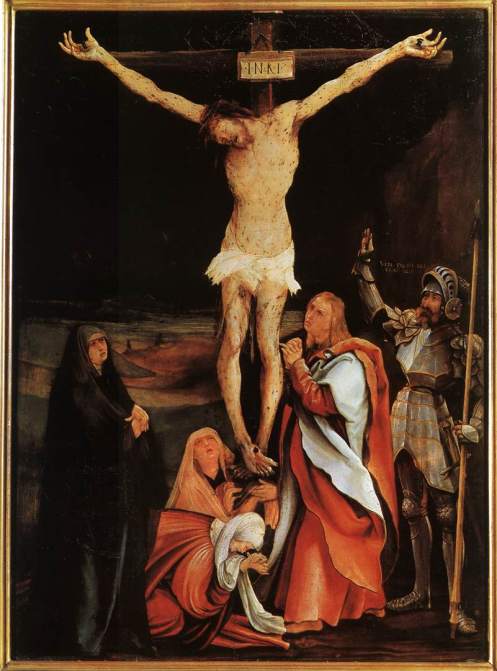
Imagine how wounded Jesus’ disciples must have felt to see him hanging on a cross, naked, bleeding, and slowly dying. They had thought He was the promised Messiah who would free the Jews from Roman oppression and restore the Kingdom of Israel. After Jesus died, they hid themselves out of fear for the Jewish authorities. Juxtapose this scene of death and despair with the joy and relief experienced when the risen Lord appeared to his disciples (John 20).
No matter how wounded your spirit is, you are never too broken to be healed by Jesus Christ. This is clear in the story of Peter’s restoration before Jesus (John 21). After having denied Jesus three times, Peter showed true repentance while declaring his love for Jesus three times; and Jesus gave immediate forgiveness. Peter was fully restored to his ministry by Jesus and just a few weeks later preached an extraordinarily powerful sermon on the day of Pentecost (Acts 2). Jesus is the Great Physician who can heal any wound, whether it was caused by a personal sin committed by you or by someone committing a grievous sin against you.
Only One can heal the spiritual wounds of mankind, rebuild broken spirits, feed famished souls—Christ, our blessed Savior. He has been down the road we’re traveling; He has experienced what it means to be human. He has “borne our griefs and carried our sorrows”; “He was crushed for our iniquities; upon Him was the chastisement that brought us peace, and with His wounds we are healed” (Isaiah 53:4a, 5b). Taken from “Christ Solves the Mystery of Our Sorrow,” a sermon by Rev. Dr. Walter A. Maier, the first Speaker of The Lutheran Hour
Justification is an act of God’s free grace, wherein he pardons all our sins and accepts us as righteous in his sight, only for the righteousness of Christ imputed to us and received by faith alone. Sanctification is the work of God’s free grace, whereby we are renewed in the whole man after the image of God and are enabled more and more to die unto sin, and live unto righteousness.
–The Westminster Shorter Catechism, questions 33 and 35
The New Testament is clear on the means of salvation. Salvation from sin and death can be attained through faith alone—in Latin “Sola Fide.” Christ followers attain justification before God through faith in Jesus as their personal savior and no longer live under the condemnation of the Law. Their sins are forgiven and they are restored to a perfect relationship before God. Jesus cruel death was the perfect sacrifice for the sins of the world. “It is finished!” (John 19:30), were the final words spoken in the redemption of mankind. Through his glorious resurrection, Jesus overcame sin and death and opened the door to salvation for all who believe on His holy name.
No matter how hard one may try to attain salvation through good works, they are destined to fail. The Apostle Paul tells us, “Therefore no one will be declared righteous in God’s sight by the works of the law” (Romans 3:20a). That said, we should not be quick to underemphasize the value of good works. Paul tells us in Philippians 2, to work out our own salvation in fear and trembling. This “working out” is the process of sanctification, that lasts a lifetime, as believers are called to continually strive to become more Christ-like. Sanctification is as much about the process as it is the destination.
Many Bible critics contend that James 2:14-25 is not consistent with the doctrine of salvation through faith alone (sola fide). My understanding of James is that these critics take it out of context. Where James stresses deeds (works), he is speaking in the context of sanctification (striving to be more Christ-like) and not about justification (the forgiveness of sin and restoration into a right relationship with God).
When we consider sanctification, it would be a mistake to overlook the role of good works. One day Jesus overheard several of his disciples arguing. It turned out they were arguing about which of them was the greatest among Jesus’ disciples. Sitting down, Jesus called the Twelve and said, “Anyone who wants to be first must be the very last, and the servant of all.” (Mark 9:35). Jesus gave his disciples an example of a servant’s heart when He washed their feet, as described in John chapter 13.
Are you a Christ follower? Are you striving to become more Christ-like? I hope you answered yes to both questions. While you may not be able to cast out demons, raise the dead, give sight to the blind, or cleanse lepers, there is an abundance of good works needed in Christ’s kingdom. In Romans chapter 16, Paul’s final greetings to a handful of Christian brothers and sisters provides some clues. He tells them to greet each other with a holy kiss, that is be kind to one another. Paul repeatedly recognizes women who worked very hard for Christ. He recognizes others who have sponsored a church in their home. He cites others who have demonstrated hospitality to fellow believers. Paul even recognizes the mother of a friend who has also been like a mother to him.
Sanctification does not come without a price. Paul’s greeting mentions some friends who risked their lives for Christ, others who have withstood testing of their fidelity to Christ, and yet others who served time in prison with him. Are you ready to accept the risks of becoming more Christ-like? Are you “working out” your own sanctification? Are you willing to let your life become a doormat where others will wipe their feet? Are you ready to become a servant of all?
Sanctification means nothing less than the holiness of Jesus becoming mine and being exhibited in my life. The most wonderful secret of living a holy life does not lie in imitating Jesus, but in letting the perfect qualities of Jesus exhibit themselves in my human flesh. –Oswald Chambers
I have hundreds of friends. At least that is what my social media accounts tell me. The concept of friendship has changed significantly over the years, especially since the advent of the internet and social media. Social media friendships are so easy to make—just press the “Add Friend” button. But what is a real friend?
Speaking to his disciples, Jesus explained friendship like this in John 15:13 (NIV), “Greater love has no one than this: to lay down one’s life for one’s friends.” Whoa! That rules out most of my social media friends. Real friendships, at least in Jesus’ definition, require personal relationships and a willingness to make sacrifices.
A real friend walks in when the rest of the world walks out.” –Walter Winchell
So, what is real friendship? I do not profess to have all the answers, but here are some things I have discovered about real friends:
They are there for you when others walk away.
They meet you where you are, warts, wrinkles and all.
They will make time for you, even when they cannot spare it.
They expect nothing in return and do not keep score.
They are good listeners.
They respect confidentiality.
They tell you what you need to hear, not what you want to hear.
They say, “Wow, you really screwed this up! Now how can I help you fix it?”
They walk beside you in the demon filled valleys.
They are at their best when you are at your worst.
For prayer is nothing else than being on terms of friendship with God. –St. Teresa of Avila
I am blessed with an abundance of friends. They know who they are. Most are fellow brothers or sisters in Christ. Thinking about what I like most about my friends makes me wonder if it is possible to be a friend of God? I believe it is. In Daniel 3, Daniel was bound and thrown into a fiery furnace because he refused to worship an image of King Nebuchadnezzar. God, presumably a preincarnate Jesus, appeared in the blazing furnace with Daniel. David, despite his many serious flaws, had such a close relationship with God that God called him, “a man after my own heart,” (Acts 13:22). God called Abraham “my friend” (Isaiah 41:8b). And God spoke to Moses face to face, “as a man speaks with a friend” (Exodus 33:11a). The closeness of God to these individuals was not due to their righteousness, as all were flawed. These friendships were a result of God’s grace and mercy.
God is eager to be your friend, but He is unlike your other friends in one important way. God wants you to be his disciple. Jesus, God the Father’s only begotten son, lived up to his own teaching that, “Greater love has no one than this: to lay down one’s life for one’s friends.” Are you ready to let God mold and shape your life like potter’s clay? Then lay down your life at his feet, pick up your cross and follow Jesus.
He (Jesus) washes us in Baptism and gives us new, clean clothes of goodness and holiness to wear—His own good clothes, to be ours forever. Finally, He gives us life—His own everlasting life, which He won for us when He rose from the dead, never to die again.–Dr. Kari Vo, The Lutheran Hour.
Give thanks to the Lord, for he is good; his love endures forever. –Psalm 107:1*
Recently I’ve been pondering what it means to give thanks to God. The Bible is full of examples of thanksgiving being lifted up to the Lord. After giving it much thought, I’ve come to several conclusions. First and foremost, thanking God is my way of acknowledging His supreme authority and position in my life. God gave me life! Everything that is good in my life is a gift from Him.
I will praise God’s name in song and glorify him with thanksgiving. –Psalm 69:30
Second, there are multiple ways to give thanks to God. These include praying; through the written, recorded and spoken work; in song; in giving of one’s time and treasure; and in prayerfully doing good works for others with no motive other than serving God. I write this blog as a thank offering to God. There are many other ways of thanking God that area not listed here. It occurs to me that we can thank God in almost any situation we encounter throughout the day. Continually thanking God can help one remain cognizant of God’s endless presence in his or her life.
Rejoice always, pray continually, give thanks in all circumstances; for this is God’s will for you in Christ Jesus. –I Thessalonians 5:16-18
Third, we are to thank God in all circumstances, both the easy times, the difficult ones and those in between. In Philippians 4, the Apostle Paul tells us he has learned to be content whatever his circumstances. This is a tough one. In my lifetime I’ve had some real tragedies. When tragedy strikes, it is particularly difficult to discern any good at the time. Over the years I’ve learned to pray to God for strength to get me though the difficulties and to give me wisdom to understand. While it was difficult to discern the good at the time, in retrospect each difficult period of my life was a time of learning and spiritual growth that helped prepare me for God’s eternal kingdom.
Thanks be to God for his indescribable gift! –2 Corinthians 9:15
Finally, give thanks to the lord for his grace in offering us salvation through Jesus Christ.
Doxology
I thank you, God, for your grace, the gift of life and my salvation through Jesus Christ. Thank you for the Godly women who helped lead me to the Savior in my childhood. Thank you for loving aunts, uncles, and grandparents who helped raise and care for me after my parents divorced. Thank you for the churches and teachers who helped nurture and train me along the way. Thank you for giving me a godly wife to share my life with. Thank you for my children and grandchildren who bring joy to my life. Thank you for friends and family who have added richness to my life. Thank you for protecting and shielding me during times of trouble. Thank you for the work that enables me to sustain my family. Thank you for this day and all my days to come. Thanks be to God!
Now thank we all our God, with heart and hands and voices,
Who wondrous things has done, in Whom this world rejoices;
Who from our mothers’ arms has blessed us on our way,
With countless gifts of love, and still is ours today.
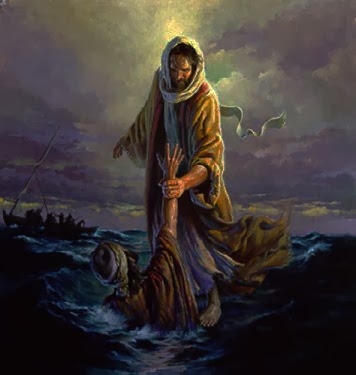
“Come,” he said. Then Peter got down out of the boat, walked on the water and came toward Jesus. But when he saw the wind, he was afraid and, beginning to sink, cried out, “Lord, save me!”Immediately Jesus reached out his hand and caught him. “You of little faith,” he said, “why did you doubt?” Matthew 14:29-31
I’m scheduled for major surgery in a few days. The procedure will necessitate a long convalescence period. While I’ve had several surgeries during my life, this marks the first time that I’ll be under general anesthesia. I’m not looking forward to it. To be truthful, my dread of this surgery has tested my faith. Yep, I’m a little bit scared.
For many years I have enjoyed the writings of Scottish theologian Oswald Chambers. I first discovered him through his famous daily devotional, “My Utmost for His Highest.” You might have noticed that I frequently quote Chambers in this blog. One of my favorite pieces of his wisdom is:
The great word of Jesus to His disciples is Abandon. When God has brought us into the relationship of disciples, we have to venture on His word; trust entirely to Him and watch that when He brings us to the venture, we take it.
The Apostle Paul is a great example of living a life abandoned to God. In Acts 20:22-24, Paul tells the elders of the Church at Ephesus, “And now, compelled by the Spirit, I am going to Jerusalem, not knowing what will happen to me there. I only know that in every city the Holy Spirit warns me that prison and hardships are facing me. However, I consider my life worth nothing to me; my only aim is to finish the race and complete the task the Lord Jesus has given me—the task of testifying to the good news of God’s grace.”
Throughout history, many people have chosen to abandon a sinking ship when the situation became so bad that an act of desperation appeared to be their only way out. Being abandoned to God is like jumping off a sinking ship and finding Jesus there, walking on the water and offering his hand to pull you above the dangerous waves as he whispers, “You of little faith, why did you doubt?”
A life of abandon is content with God, not with circumstances. That’s how I want to live. I close asking for your prayers as I undergo surgery on April 29. Until the next time!
The motto of the US Infantry is “Follow Me.” From day one, infantry soldiers are taught to lead. The most effective leaders “lead from the front,” which means leading by personal example. Audie Leon Murphy was a popular Hollywood actor in the 1950’s and 1960’s, but he was a skinny, baby-faced, five-foot five-inch teenager from Texas when he joined the US Army in 1942. No one could have imagined that this lad would become his country’s most decorated service member of World War II. Time and again, Murphy proved himself fearless under fire. By October 1944, he was a highly decorated combat infantryman fighting in the European campaign. Murphy was given a battle commission to second lieutenant in the same month.
On January 26, 1945 Murphy’s conspicuous bravery would earn him the Congressional Medal of Honor (MOH). Murphy knew about leading from the front. An excerpt from his MOH citation reads as follows:
2d Lt. Murphy commanded Company B, which was attacked by six tanks and waves of infantry. 2d Lt. Murphy ordered his men to withdraw to prepared positions in a woods, while he remained forward at his command post and continued to give fire directions to the artillery by telephone. Behind him, to his right, one of our tank destroyers received a direct hit and began to burn. Its crew withdrew to the woods. 2d Lt. Murphy continued to direct artillery fire which killed large numbers of the advancing enemy infantry. With the enemy tanks abreast of his position, 2d Lt. Murphy climbed on the burning tank destroyer, which was in danger of blowing up at any moment, and employed its .50 caliber machine gun against the enemy. He was alone and exposed to German fire from three sides, but his deadly fire killed dozens of Germans and caused their infantry attack to waver. The enemy tanks, losing infantry support, began to fall back. For an hour the Germans tried every available weapon to eliminate 2d Lt. Murphy, but he continued to hold his position and wiped out a squad which was trying to creep up unnoticed on his right flank. Germans reached as close as 10 yards, only to be mowed down by his fire. He received a leg wound, but ignored it and continued the single-handed fight until his ammunition was exhausted. He then made his way to his company, refused medical attention, and organized the company in a counterattack which forced the Germans to withdraw.
Audie Murphy was a selfless, sacrificial leader who always led from the front. Time and again he put his life on line for his friends and the men he led. Although wounded multiple times, Murphy miraculously survived the war.
Jesus was the ultimate example of selfless sacrifice and leading from the front. In Matthew 4:18-22, Jesus calls his disciples for the first time with the words “follow me.” Immediately they dropped what they were doing and followed him. The call to follow Jesus means now, not later. If you hear him calling, don’t resist.
In Luke 18, a rich young man who had always tried to live a righteous life asks Jesus what he must do to inherit eternal life. Jesus responds in verse 22, “Sell all that you have and distribute to the poor, and you will have treasure in heaven; and come, follow me.” The young man went away very sad, because he was very wealthy.
Jesus restored the sight of a blind beggar named Bartimaeus in Mark 10:46-52. Mark tells us that Bartimaeus, once his vision is restored, “followed him (Jesus) on the way.
Mark 9:35 tells us that when Jesus observed his disciples arguing about their personal status in the group of disciples, Jesus told them ““If anyone would be first, he must be last of all and servant of all.”
In John 13, on the night of the Passover feast just a short time before Jesus’ crucifixion, he displays a remarkable act of servitude by washing his disciples’ feet. When he is finished, he says to them in verses 14-15, “If I then, your Lord and Teacher, have washed your feet, you also ought to wash one another’s feet. For I have given you an example, that you also should do just as I have done to you.” Jesus calls us to a sacrificial life, placing others before ourselves.
“Greater love has no one than this, that someone lay down his life for his friends.”–John 15:23
Most important of all, Jesus gave up the splendor of heaven to be born of the Virgin Mary and lived as a man among us, understanding our weaknesses and struggles, so that he could give his life to save us all from our sins and death.
“Since Adam’s sin, mankind had been separated from God, but through Christ’s sacrifice we have been reconciled to the Lord. Jesus is ’the Lamb of God,’—the final and permanent sacrifice for the sins of the whole world, and under God’s New Covenant he is now the one mediator through whom we can come to God, for God will accept and forgive everyone who professes by word and life their belief in Jesus Christ as the Son of God, and depends upon his death as the sacrifice for their personal salvation.” (Source: Bibleforce.net)
“The authority by which the Christian leader leads is not power but love, not force but example, not coercion but reasoned persuasion. Leaders have power, but power is safe only in the hands of those who humble themselves to serve.” –John Stott







 Divine Simplicity
Recent Comments