Posts Tagged ‘religion’

In the Company of Others

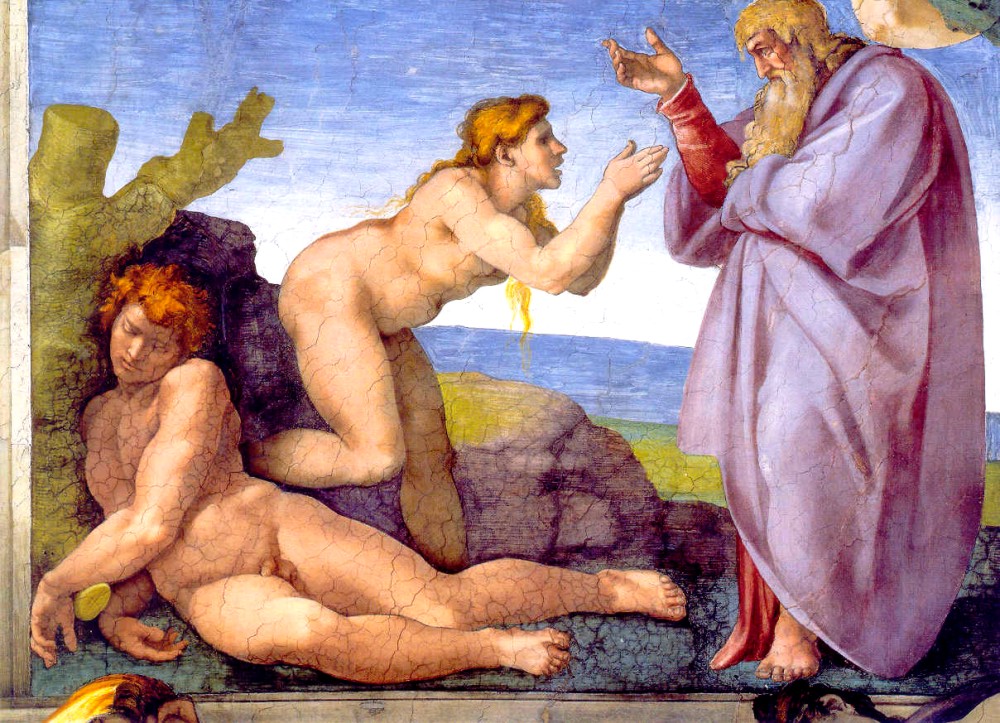
Creation of Eve in Gen_02-22 by Michelangelo

  The Creation of  Eve by Michaelangelo

Several children’s lives remain in peril in the wake of a stabbing spree in a suburban Pittsburgh high school.  On April 9, a 16 year old male student, for reasons still unknown, randomly stabbed a school guard and 21 fellow students as he quickly moved through the school’s hallways wielding a steak knife in each hand. Miraculously, no one has died from his wounds.

The incident is yet another chapter in a string of senseless acts of  violence in American schools that includes mass killings at Columbine High School in Littleton, Co.; Virginia Tech University in Blacksburg, Va. (2007); and Sandy Hook Elementary School in Newton, Ct. (2012).  Unfortunately, there are several others I have not listed here.  In almost every case there is a common thread—the perpetrator was a loner. Whether this was the case in the attacks in Pittsburgh has yet to be determined.

Medical studies abound indicating that loneliness and isolation are health risks.  Social interaction, on the other hand, can improve health.  It has been scientifically shown to decrease the likelihood of premature death, improve the immune system’s response to infection and decreases inflammation in the body.

Regardless of the task at hand, be it raking the lawn, preparing a meal, searching for a new job, or simply going to see a movie or museum, it is usually a better experience when done with another.

There is also plenty of Biblical evidence indicating isolation is not good.   In Genesis chapter 2, God declares, “It is not good for the man to be alone.”  He then creates Eve to be Adam’s mate, companion and friend.

In Exodus chapter 18, Moses is extremely weary because he tries to govern the Jewish people by himself.  His father-in-law Jethro advises Moses to appoint judges to help him with his tasks.  Moses wisely takes the advice, relieving him of the heavy burden of trying to go it alone.

Ecclesiastes 4:9-12 (NIV), tells us, Two are better than one, because they have a good reward for their toil.  For if they fall, one will lift up his fellow. But woe to him who is alone when he falls and has not another to lift him up!  Again, if two lie together, they keep warm, but how can one keep warm alone?  And though a man might prevail against one who is alone, two will withstand him—a threefold cord is not quickly broken.”  There truly is strength in numbers.

Isolation is particularly risky for Christians.  Pastor Paul David Tripp discusses the perils of isolation for the clergy in his book titled, Dangerous Calling: Confronting the Unique Challenges of Pastoral Ministry. According to Tripp’s research, many pastors feel lonely and isolated.  A study by the Schaffer Institute showed that over 1,700 pastors leave the ministry every month. Seventy percent of pastors constantly fight depression. Eighty percent of believe their pastoral work has negatively affected their families.  However, feelings of loneliness and isolation are not limited to members of the clergy.

Christians are all members of God’s church on Earth.  1 Corinthians:12 describes how individual Christians, each blessed with different gifts from God, are necessary for the proper functioning of the church. Each body part serves the others.  Christians were designed by God to function best when working with and in the presence of other Christians.

Acts 17:1-2 says it was Paul’s custom to go to the synagogue on the Sabbath day.  Luke 4:16 tells us it was Jesus’ custom to go to the synagogue on the Sabbath day.   When Paul won new converts to the faith, he gathered them into small churches, which usually met in private homes.

With so many examples before us, how can Christians do otherwise?  Yet many choose not to attend church, insisting they can worship God on their own. Many have turned sour towards the church because of some sort of hurt they experienced there.

On the night when he was betrayed by Judas, Jesus told his disciples, “A new commandment I give to you, that you love one another: just as I have loved you, you also are to love one another.  By this all people will know that you are my disciples, if you have love for one another.”  (John 13:34-34, ESV)  Obeying this commandment requires reaching out to other people.  It cannot be done living in isolation.

Hebrews 10: 24-25 (ESV) tells us, “And let us consider how to stir up one another to love and good works, not neglecting to meet together, as is the habit of some, but encouraging one another, and all the more as you see the day drawing near.”

If you’re a Christian, attending church isn’t simply that you need the church; the church needs you as well!  Fellow believers can be blessed by your participation in ways you’ll never know. Likewise, you will be blessed by just “hanging out” with your brothers and sisters in Christ.  A church is not a building; it is a collection of people who gather together to seek God.  Don’t try to go it alone.  It will lead to loneliness and isolation.  Choose to participate!

“Despite the slowness, the infidelity, the errors and sins it committed and might still commit against its members, the Church, trust me, has no other meaning and goal but to live and witness Jesus.”

                                                                                                                                                     —Pope Francis
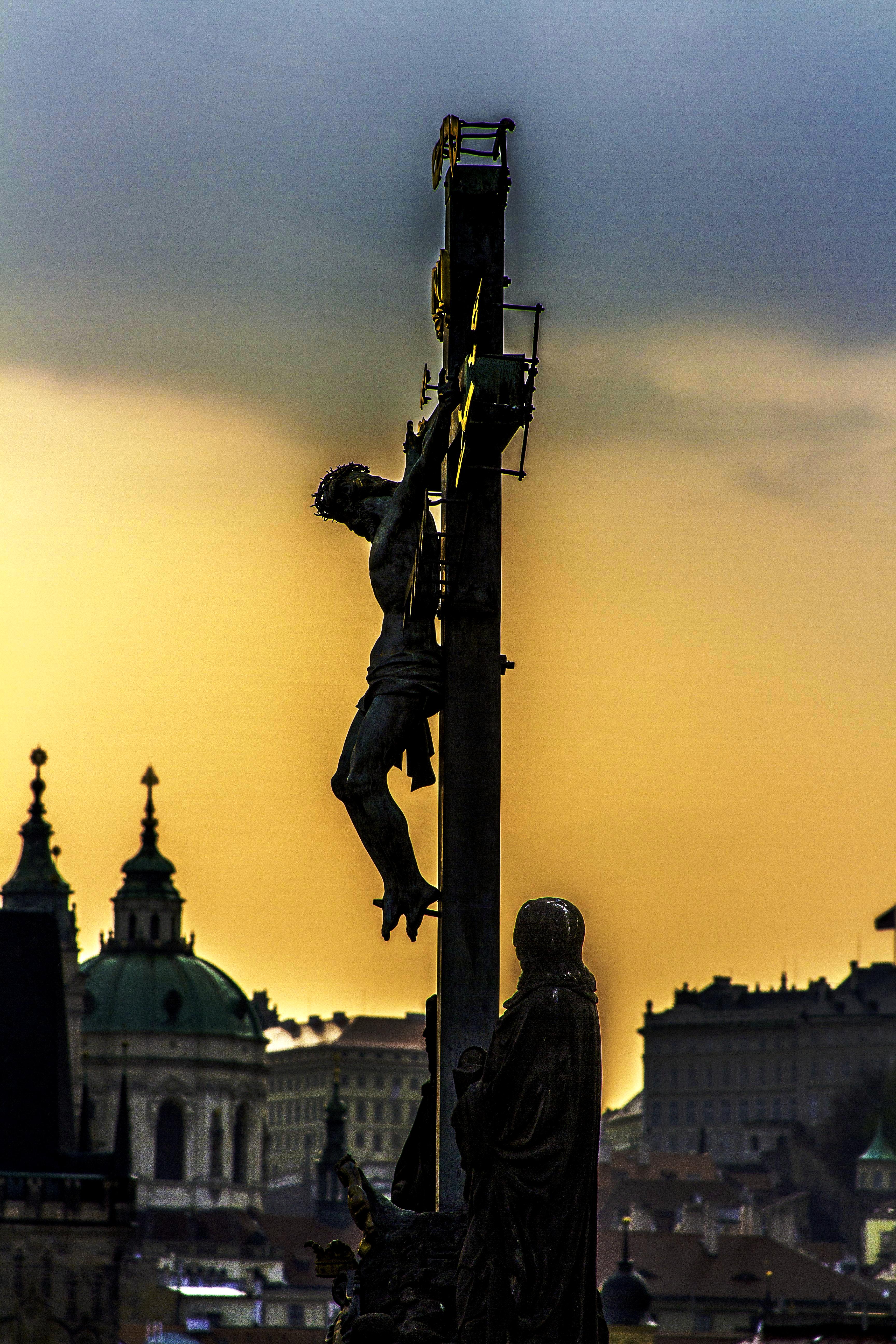
Good Friday, 2014 – The Passion of the Christ


Jesus on Cross

 Surely he has borne our griefs and carried our sorrows; yet we esteemed him stricken, smitten by God, and afflicted. But he was pierced for our transgressions; he was crushed for our iniquities; upon him was the chastisement that brought us peace, and with his wounds we are healed.


Isaiah 53 (ESV) – The Prophet Describes the Coming Messiah

Who has believed what he has heard from us?
And to whom has the arm of the Lord been revealed?
For he grew up before him like a young plant,
and like a root out of dry ground;
he had no form or majesty that we should look at him,
and no beauty that we should desire him.
He was despised and rejected by men;
a man of sorrows, and acquainted with grief;
and as one from whom men hide their faces
he was despised, and we esteemed him not.

Surely he has borne our griefs

    and carried our sorrows;
yet we esteemed him stricken,
smitten by God, and afflicted.
But he was pierced for our transgressions;
he was crushed for our iniquities;
upon him was the chastisement that brought us peace,
and with his wounds we are healed.
All we like sheep have gone astray;
we have turned—every one—to his own way;
and the Lord has laid on him
the iniquity of us all.

He was oppressed, and he was afflicted,
yet he opened not his mouth;
like a lamb that is led to the slaughter,
and like a sheep that before its shearers is silent,
so he opened not his mouth.
By oppression and judgment he was taken away;
and as for his generation, who considered
that he was cut off out of the land of the living,
stricken for the transgression of my people?
And they made his grave with the wicked
and with a rich man in his death,
although he had done no violence,
and there was no deceit in his mouth.

10 Yet it was the will of the Lord to crush him;
he has put him to grief;
when his soul makes an offering for guilt,
he shall see his offspring; he shall prolong his days;
the will of the Lord shall prosper in his hand.
11 Out of the anguish of his soul he shall see and be satisfied;
by his knowledge shall the righteous one, my servant,
make many to be accounted righteous,
and he shall bear their iniquities.
12 Therefore I will divide him a portion with the many,
and he shall divide the spoil with the strong,
because he poured out his soul to death
and was numbered with the transgressors;
yet he bore the sin of many,
and makes intercession for the transgressors.

Luke 19: 41-44 (NIV) – Jesus Weeps Over Jerusalem    

41 And when he drew near and saw the city, he wept over it, 42 saying, “Would that you, even you, had known on this day the things that make for peace! But now they are hidden from your eyes. 43 For the days will come upon you, when your enemies will set up a barricade around you and surround you and hem you in on every side 44 and tear you down to the ground, you and your children within you. And they will not leave one stone upon another in you, because you did not know the time of your visitation.”

Luke 23: (NIV) – The Crucifixion of  Jesus

26 And as they led him away, they seized one Simon of Cyrene, who was coming in from the country, and laid on him the cross, to carry it behind Jesus. 27 And there followed him a great multitude of the people and of women who were mourning and lamenting for him. 28 But turning to them Jesus said, “Daughters of Jerusalem, do not weep for me, but weep for yourselves and for your children. 29 For behold, the days are coming when they will say, ‘Blessed are the barren and the wombs that never bore and the breasts that never nursed!’ 30 Then they will begin to say to the mountains, ‘Fall on us,’ and to the hills, ‘Cover us.’ 31 For if they do these things when the wood is green, what will happen when it is dry?”  32 Two others, who were criminals, were led away to be put to death with him. 33 And when they came to the place that is called The Skull, there they crucified him, and the criminals, one on his right and one on his left. 34 And Jesus said, “Father, forgive them, for they know not what they do.” And they cast lots to divide his garments. 35 And the people stood by, watching, but the rulers scoffed at him, saying, “He saved others; let him save himself, if he is the Christ of God, his Chosen One!”36 The soldiers also mocked him, coming up and offering him sour wine 37 and saying, “If you are the King of the Jews, save yourself!” 38 There was also an inscription over him, “This is the King of the Jews.”  39 One of the criminals who were hanged railed at him, saying, “Are you not the Christ? Save yourself and us!” 40 But the other rebuked him, saying, “Do you not fear God, since you are under the same sentence of condemnation? 41 And we indeed justly, for we are receiving the due reward of our deeds; but this man has done nothing wrong.” 42 And he said, “Jesus, remember me when you come into your kingdom.” 43 And he said to him, “Truly, I say to you, today you will be with me in Paradise.”

The Death of Jesus.  44 It was now about the sixth hour, and there was darkness over the whole land until the ninth hour, 45 while the sun’s light failed. And the curtain of the temple was torn in two. 46 Then Jesus, calling out with a loud voice, said, “Father, into your hands I commit my spirit!” And having said this he breathed his last. 47 Now when the centurion saw what had taken place, he praised God, saying, “Certainly this man was innocent!” 48 And all the crowds that had assembled for this spectacle, when they saw what had taken place, returned home beating their breasts. 49 And all his acquaintances and the women who had followed him from Galilee stood at a distance watching these things.

Jesus is Buried. 50 Now there was a man named Joseph, from the Jewish town of Arimathea. He was a member of the council, a good and righteous man, 51 who had not consented to their decision and action; and he was looking for the kingdom of God. 52 This man went to Pilate and asked for the body of Jesus. 53 Then he took it down and wrapped it in a linen shroud and laid him in a tomb cut in stone, where no one had ever yet been laid. 54 It was the day of Preparation, and the Sabbath was beginning.  55 The women who had come with him from Galilee followed and saw the tomb and how his body was laid.56   Then they returned and prepared spices and ointments.  On the Sabbath they rested according to the commandment.


A New Year’s Resolution Worth Keeping

New Years Eve Time Square

“Exercise is labor without weariness.”  —Samuel Johnson

Exercise is an important part of my life that was ingrained during a 24-year career in the U.S. Army.  I enjoy a good workout and feel out of sorts when I go too long without exercising.  In January there are always a lot of new faces in my local fitness center—mostly folks who made a new year’s resolution to exercise and lose weight.

Moving into February the numbers dwindle and by March, few of the new faces are still around.  We humans are great at making promises to ourselves that we never keep.  This year I’ve made a resolution worth keeping and it’s not the usual “lose some weight.”   Instead, I’m going to slow down.

“Adopt the pace of nature.  Her secret is patience.”  —Ralph Waldo Emerson

An Army career often requires one to maintain a “hair on fire” pace for long periods of time.  Mine was no exception. After retiring from the service, I continued the fast pace in my civilian work.  I can recall my mom continually advising me to slow down, but I never made an attempt to comply until fairly recently.  A couple of years ago I came to a realization that there are better ways to spend one’s time than to dash about in a frenzy trying to get as much done as humanly possible.

Slowing down doesn’t mean getting lazy, however.   It’s more about tempering the urgency in life and finding balance.  If I succeed at this, there won’t be sufficient time to do everything I might be inclined to do.   Therefore, I aim to re-evaluate what’s important in my life and then do my best to focus on the things that matter, while sweeping aside the trivial.

“The whole point of getting things done is knowing what to leave undone.”   —Oswald Chambers

I’ve been thinking about some of the things I can sweep aside this year.  Television ranks high on the list.  As my wife often reminds me, I watch some fairly mindless shows with no redeeming social value. Shows like ”Man vs. Food” come to mind.  If you’re not familiar with it, check it out on the Travel Channel website.  It’s about a fellow who travels the country seeking “pig out” restaurants  (www.travelchannel.com/tv-shows/man-v-food).

The “Colbert Report” is also on my “fuggedaboutit” TV list.   I enjoy the show immensely, but it truly is mindless entertainment.  There are others, but I’ll spare you the laundry list.

“Time is what we want most, but what we use worst.”  —William Penn

As a management consultant, I periodically presented time management seminars.  They were very well received by every audience. Unfortunately, I constantly find myself violating the time management techniques I know to be effective.   I aim to be more disciplined with my time this year.

One of the best techniques I know to save time is by turning off the TV.  Limiting time on Facebook and other unproductive Internet sites is also advisable.  Avoiding web surfing and clicking links on the web pages one must visit will also save an enormous amount of time.

I’m also going to avoid checking emails and messages on my phone every few minutes.  At present, I’m an email version of Pavlov’s dog—grabbing my cell phone every time an email or text message alert beeps.  (For those struggling with time management, the Mindtools.com website has a simple, 10-step approach to help you get on track http://goo.gl/RsWrQ1.)

“I find television very educating. Every time somebody turns on the set, I go into the other room and read a book.”  —Groucho Marx

By reducing the time spent in front of the boob tube and on unproductive websites, I hope to make some time for reading.  I’m not talking about casual reading either.  Gibbon’s classic The Decline and Fall of the Roman Empire has been sitting on my bookshelf for about three years.  This year I plan to dust it off and dive in.  I’m also going to try to read or reread several books by C.S. Lewis.

“Prayer does not equip us for the greater work, it is the greater work.” —Oswald Chambers

At the top of my “to do” list for 2014, however, is spending more time in the scriptures and prayer. Prayer is work and I plan to work a lot in this new year.   Romans 12:12 advises us, “Rejoice in hope, be patient in tribulation, be constant in prayer” (ESV).  Now that’s a new year’s resolution worth keeping.

Divine Simplicity: Focus on the things that matter…sweep aside the things that don’t.


A Christmas Alternative

Christmas Gifts

The cornucopia (or horn of plenty), a symbol from Greek mythology, is widely recognized as representing food and abundance.  Over the years, it has become associated with certain religious holidays in Christianity, Judaism and Islam—Christmas, Hanukkah and Eid al-Fitr respectively.

Most Americans enjoy a cornucopia of blessings every day.  The majority of us have enough to eat and adequate clothing and shelter to meet our basic needs. Some have far more than they need. Unfortunately, not everyone is so blessed.

Have you ever struggled with selecting a holiday gift for a relative or friend who has almost everything he or she needs?  Far too many people end up purchasing unneeded or unwanted gifts that eventually get stuffed in a drawer, tossed in the trash or simply set aside and forgotten. There’s a better way!

Alternative Gifts International (AGI) is a way to give meaningful presents to people who have virtually everything they need.  The AGI movement was begun in 1980 by Harriet Prichard, director of a Presbyterian children’s ministry in Pasadena, Calif. AGI started in a small market where shares of goods and livestock for needy people in Third World countries were sold.

The idea was to give gifts that could make a real difference to an individual, family or village. For instance, a present of a milk cow or a means to purify water can truly change lives for impoverished people living in remote areas of Africa.

Prichard’s idea was so popular that five Pasadena-area churches held markets the next year. By 2004, there were more than 325 Alternative Gifts markets in the United States. The movement has now spread to Britain, the Netherlands, Japan and Korea.  There are opportunities to give both domestically and in foreign countries.

Here is how Alternative Gifts works:  Instead of buying that symbolic gift that might soon be put away or discarded, consider making a donation to AGI on behalf of a friend or loved one. Instructions are located on the “give a gift” tab of AGI’s website at www.alternativegifts.org.

When you make a donation through the website you can write a short message to the individual you want to honor. AGI will send that person a card announcing your alternative gift.

Perhaps you would prefer helping people in your local community; the needs are great and the opportunities plentiful in whatever town you live in.  During this Advent season, when some of us tend to overeat, there are many who haven’t enough food.  You might consider supporting a local food pantry. Many of these are experiencing significant shortages.  Many local churches host food pantries that could use your support as well.  The Salvation Army also offers gifts of food, clothing, shelter and various other services to the needy in most areas.  Donations of time and treasure are all welcome.

Even if you’re short on money, you can still give a gift of time. Consider spending Christmas day volunteering at a local soup kitchen or homeless shelter.  I promise you will find it rewarding—a gift to yourself more than a gift to others.

For those who are able, I encourage you to share your blessings with others and consider giving alternative gifts this Christmas. Make a donation to AGI or one of the many worthy charities in your area. Better yet, consider alternative gifts throughout the year and make a real difference in someone’s life the next time you give.

Whatever you do, never forget the real meaning of Christmas as expressed in John 3:16:

“For God so loved the world, that he gave his only begotten Son, that whosoever believeth on him should not perish, but have eternal life.” (ASV)

May God bless us all in the coming year!

Recalling Some Life Lessons

Traffic Jam

Normal is getting dressed in clothes you buy for work and driving through traffic in a car that you are still paying for – in order to get to the job you need to pay for the clothes and the car, and the house you leave vacant all day so you can afford to live in it.   ―Ellen Goodman

Time has been called “a great healer” because it helps ease the pain of physical and emotional wounds.  Unfortunately, time also sometimes causes us to forget some of the best lessons life teaches—lessons we ought to have held on to.

Such was the case for a life lesson I recently recalled—something I originally learned while serving as a Civil-Military Operations Officer in southern Somalia some 20 years ago.

In 1993, Somalia was engulfed in civil war, much like today.  One day I visited a refugee camp run by the United Nations. Hundreds of Bantu people were housed there in small, igloo-like huts made from long bent sticks covered with plastic sheeting.

???????????????????????????????

The Bantus were brought to Somalia as slaves in the 19th century and remain so to this day. They are a small people of very different ethnicity and appearance than the Somalis.

The Bantus I saw that day were living in absolute squalor. Yet despite their situation they seemed remarkably happy.  When I asked a UN worker about the reason for the Bantus’ apparent joy, he provided a life lesson.  “These people were once slaves,” he said, “but now they’re free, well fed and together.”  The things they held dearest were freedom, family and a full belly.  They enjoyed all of these in the squalid camp where they were living.

Over the course of my time in Somalia and several other deployments during my Army career, I learned other lessons about how little we humans truly need.  For months at a time I lived with no possessions beyond what would fit in my rucksack and duffel bag.

With no car to wash, no lawn to mow, no gutters to clean, no leaves to rake, no Internet, no TV and no long commute to work, one has freedom to discover the gift of time.  Personal productivity can increase significantly in such situations, as can relaxation and renewal.

My unscientific observations suggest that as possessions increase, freedom decreases. A multitude of possessions tend to chip away at the gift of time. While I am not a practicing minimalist, I do believe it would behoove most Americans to consider reducing their material possessions.  Garages were designed for cars, not unopened moving boxes. The primary purpose of an attic is to allow proper ventilation of a house, not to store a lot of stuff.   According to the Wall Street Journal, only about 20 percent of the clothes in a person’s closet are regularly worn. You get the picture.

Relearning Some Past Life Lessons

After each long military deployment, I returned home with renewed enthusiasm for life and a deeper appreciation for my freedom, family and the many blessings God had given us. Unfortunately, the enthusiasm and appreciation always slowly faded as I became increasingly re-engaged in the daily, mundane distractions of life and work. After awhile, many life lessons just seem to vanish.  Some of us are fortunate enough to be have an opportunity to relearn some of them.

About a year ago, two major changes in my life occurred.  First, my wife and I moved from a house in Johnstown into a condo near Pittsburgh. Then, only four weeks later, I lost my job.

I had wanted more free time and I got it.  Sometimes God has a real sense of humor!

Laughing Jesus

Two of the main reasons we moved into a condo were to reduce our material possessions and to escape the workload that accompanies owning and maintaining a house. We simply wanted more freedom to do the things we enjoy.  Losing my job wasn’t part of the plan.

However, over the course of the past year I’ve relearned some valuable life lessons, ones I should never have forgotten.

First of all, I remembered that I really don’t need a lot to make me happy.  We have a lot less space and a lot fewer possessions than a year ago, but we also have more time and more freedom to enjoy life.  It has been a great tradeoff—so much, in fact, that my wife and I are already discussing another major downsizing.

Living without abundance makes one more aware of God’s daily provisions.  Instead of asking Him for specific blessings, I’ve learned to pray each day that God will provide my family and me just enough to satisfy our needs and that His perfect will may be done in our lives.

During the past year I also remembered how little it takes to make me truly happy.  We have adjusted to living on my military pension, something that seemed nearly impossible a year ago.  I also have remembered that it doesn’t take much more than my freedom, family and a full belly to make me happy–just like the joyful Bantu people I observed in Somalia many years ago,

Well, there is one other thing. The gift of time has allowed me to dig deeper into the Scriptures than ever before, bringing me closer to the only true source of joy. As the Rev. Dr. Sam Storms so clearly explains, “Joy is not necessarily the absence of suffering, it is the presence of God.”

May you find true joy and peace in your pilgrim’s journey!

“Lay not up for yourselves treasures upon the earth, where moth and rust consume, and where thieves break through and steal: but lay up for yourselves treasures in heaven, where neither moth nor rust doth consume, and where thieves do not break through nor steal: for where thy treasure is, there will thy heart be also.”  —Matthew 6:19-21 (ASV)

Freedom Isn’t Free!

Memorial Day Flags

           Freedom isn’t free!

As a retired soldier, Memorial Day is always a special day of remembrance for me.  My stepfather and a dear friend, both of whom were also soldiers, lie buried only a few paces apart in Arlington National Cemetery, alongside thousands of our departed comrades.  It is good that we occasionally pause to remember those who served our country.

But as we memorialize departed comrades, may we never forget the true price of freedom.  No Soldier, Sailor, Airman or Marine died to set mankind free. It was a simple carpenter who walked the shores of Galilee some two thousand years ago.  Jesus paid it all!

Greater love has no one than this, than to lay down one’s life for his friends.  John 15:13 (NIV)

Jesus Crucified“For God so loved the world that he gave his only begotten son, that whosoever believes in him shall not perish, but have everlasting life.” John 3:16: NIV

Peace in Our Time

North Korea Missilew

“And the peace of God, which passeth all understanding, shall keep your hearts and minds through Christ Jesus.

                                                        —St. Paul’s letter to the Philippians (4:7) (NKJV)

    Neville Chamberlain, then Prime Minister of Great Britain, spoke to a cheering crowd in front of 10 Downing Street on September 30, 1938.  Believing he had averted war between Nazi Germany and Britain, Chamberlain boldly declared, “My good friends this is the second time in our history that there has come back from Germany to Downing Street peace with honor. I believe it is peace in our time.”

     Less than a year later, following an unprovoked Nazi invasion of Poland, Great Britain and France declared war on Germany, marking the beginning of World War II.  Approximately 60 million people died during the war. Chamberlain couldn’t have been more mistaken about peace.

     Prior to World War II, World War I was referred to as simply the World War. Lasting from from July 1914 to November 1918, up to that time in history it was unequaled in its level of material destruction and human casualties. It is estimated that as many as 10 million people lost their lives.  The tremendous scale of death and destruction led many to the conviction that it should be “the war to end all war.”  The peace following World War I lasted barely two decades.

     Only five years passed between the end of World War II and the beginning of the Korean War.  Although a tenuous ceasefire between North and South Korea stopped the fighting, the war never ended.  The two Koreas have officially been in a state of war for over 60 years.

     The United States began its involvement in Vietnam in 1960 and would remain engaged there for almost 15 years. The following year, the United States sponsored an invasion of Cuba by CIA-trained Cuban exiles, which resulted in their crushing defeat known today as the Bay of Pigs disaster. 

     The United States invaded Grenada in 1983; Panama in 1989; and Iraq in 1991, in what has become known as the Gulf War.

     Following the 9/11 terrorist attacks, the United States invaded Afghanistan in 2001 and continues in a seemingly perpetual state of war there.  America subsequently invaded Iraq in 2003 and remained there for a decade. 

     Every U.S. President since Harry Truman has tried unsuccessfully to bring peace to the Middle East, where Arab-Israeli tensions are still boiling over.

     Today, the Korean War is back in the news.  North Korean leader Kim Jong Un has been doing some serious saber rattling, threatening nuclear annihilation of Japan and the United States. Some on Capitol Hill have begun to call for preemptive military strikes against Kim’s regime. Cooler heads are calling for negotiation and peace talks. 

     War after war should come as no surprise to Christians. Jesus tells us in Matthew 24 that there will be wars and rumors of war up to the day of His return. While peace is certainly a desirable goal of politics, nations pursue periods of peace with full knowledge they are fleeting. 

     In John16, Jesus foretells His passion and describes to His apostles how they will suffer their own trials and tribulations for being His followers. After explaining what will happen, Jesus tells them in verse 33 (NKJV), “These things I have spoken to you, that in Me you may have peace. In the world you will have tribulation; but be of good cheer, I have overcome the world.”  

     The only lasting peace is an inner peace of heart and mind derived through a personal relationship with the Savior of the world. In Philippians 4:7, St. Paul describes this as, “the peace which passeth all understanding.” Such peace is vividly displayed in Acts 16, where we see Paul and Silas praying and singing hymns to God while chained inside a Roman prison. Paul behaved in this manner because, as he explains, his faith in Christ taught him to be content in any situation. In Philippians 4:12 (NKJV) Paul declares, “I know how to be abased, and I know how to abound. Everywhere and in all things I have learned both to be full and to be hungry, both to abound and to suffer need.” Such contentment is derived from an immovable sense of inner peace that is unaffected by outer circumstances. 

     The world seeks peace through politics and war. Clausewitz described war as, “an extension of politics by other means.” Unfortunately, as history has demonstrated time and again, winning at politics and war does not guarantee peace will prevail. 

     True peace comes from only one source.  It arises from a proper relationship with Jesus Christ.  The Rev. Billy Graham explains this best:

 “The happiness which brings enduring worth to life is not the superficial happiness that is dependent on circumstances. It is the happiness and contentment that fills the soul even in the midst of the most distressing circumstances and the most bitter environment. It is the kind of happiness that grins when things go wrong and smiles through the tears. The happiness for which our souls ache is one undisturbed by success or failure, one which will root deeply inside us and give inward relaxation, peace, and contentment, no matter what the surface problems may be. That kind of happiness stands in need of no outward stimulus.” 

     Peace might seem elusive to you, but it’s really quite simple to find. Seek it in the Gospel and you will quickly discover it has been waiting for you there all along!

Religion and Politics Don’t Mix

Religion that God our Father accepts as pure and faultless is this: to look after orphans and widows in their distress and to keep oneself from being polluted by the world.”     James 1:27 (NIV)

There has been much discussion about religion during the current presidential election campaign.  At one time or another, candidates from all of the parties have invoked the name of God to support their respective causes (the lone exception perhaps being the National Atheist Party).

With all of the problems in our national politics, it makes one wonder whether God could possibly support any party’s platform.  I recently heard an evangelist state unequivocally that, “neither the Democratic nor the Republican party supports the Gospel of Jesus Christ.”  During the sermon he referenced a publication called “Christ and the Needy,” a piece penned by Abraham Kuyper in 1895.

I’d never heard of Kuyper (also spelled Kuijper), so I decided to Google him.  It turns out he was a Dutch politician and theologian. Based upon my subsequent reading of “Christ and the Needy,” which I found online, he appears to have been theologian first and politician second.

Kuyper, who was a Calvanist, noted that while some politicians might support reforms closely paralleling Jesus’ teachings on social justice, there is one profound difference.  The ultimate aim of a politician’s rhetoric is to get elected and consolidate political power for his/her party; the aim of Jesus Christ’s preaching was to lead lost souls to the Kingdom of Heaven.  For this reason, religion and politics can never successfully mix.

Following Kuyper’s logic, while it’s important for Christians to be informed on key political issues and to vote accordingly, it is unwise to tie one’s Christian beliefs too closely to one political party or another.  Therefore, after careful self-examination, Christians should vote for the candidates whose positions most closely align with their own religious convictions.  This approach does not lend itself to so called “straight ticket” voting.  Each candidate should be judged on his or her own merits.

Reading “Christ and the Needy” got me thinking about a recent trip my wife and I took to Harlan County, Kentucky, my birthplace. Harlan is situated in the extreme southeastern corner of the state, in the heart of Appalachia. Its entire economy is built around coal and little else.

Many if not most of Harlan County’s citizens are in economic dire straits to say the least.  The ramshackle homes of those living in abject poverty are a poignant contradiction to the scenic beauty of the area’s mountains.  Sadly, we don’t hear our presidential candidates talking much about Harlan’s poor or the poor elsewhere in the nation.  Could this be because a large portion of them don’t vote?  James 1:27 states, “Religion that God our Father accepts as pure and faultless is this: to look after orphans and widows in their distress and to keep oneself from being polluted by the world.”(NIV)

Television comedian and entertainer Stephen Colbert, a Roman Catholic, is quick to comment on politics from a religious perspective.  He recently said of the United States, “If this is going to be a Christian nation that doesn’t help the poor, either we have to pretend that Jesus was just as selfish as we are, or we’ve got to acknowledge that He commanded us to love the poor and serve the needy without condition and then admit that we just don’t want to do it.”

It is fitting and proper for governments to help the poor and needy, but the actions of government are by their very nature “polluted” by the world of politics. Jesus calls upon all Christians to care for those who cannot care for themselves.  He doesn’t tell governments to do this.  Unfortunately, as Colbert so clearly points out, far too many Christians and Christian churches have failed to answer this call.  For the individual Christians and churches that have chosen to lift up the banner of this or that political cause, perhaps your time could be better spent lifting up the cross of Jesus and following Him.