Posts Tagged ‘fitness’

Caring for the Temple of the Holy Spirit

OverweightAaaaggh!

I spent over 24 years of my adult life as an officer in the US Army.  To say that I was in good physical condition would be a gross understatement. I served a tour of duty in the 75th Ranger Regiment, one of the Army’s elite organizations. I was a paratrooper, jumping out of perfectly good airplanes and floating to Earth under a silk canopy.  I also served in the 10th Mountain Division, one of the Army’s toughest and most respected divisions.  Since 2001, the 10th Mountain has been the most deployed division in the US Army.  The Army encourages, even demands, good physical fitness of its soldiers. 

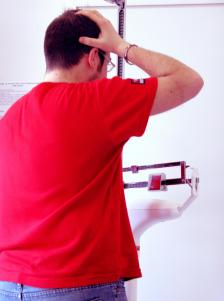
Fitness is in my DNA. I feel out of sorts if I can’t exercise three to four days per week.  Nevertheless, I find myself in a fitness conundrum today.  When I retired from the Army in 2001, I was a fit 205 pounds, well within the limits for my muscular, six-foot frame. Today I find myself about 30 pounds heavier; the extra weight can be attributed to a combination of age, indiscipline, and total knee replacement surgery, which I underwent about 11 months ago; the latter totally wrecked my physical fitness routine.  I’m still in recovery!

I’m not happy with my current weight.  Until a couple of weeks ago, I viewed my condition as purely a physical fitness challenge—a need to get back into shape to reverse the changes that have taken place since my surgery.  However, I recently experienced a healthy change of attitude. 

I credit the change to my dear friend Cliff, who also struggles with his weight.  He recently introduced me to a book called Every Body Matters, by Gary Thomas. As the book cover explains, it is about “Strengthening Your Body to Strengthen Your Soul.”

Having personally struggled with his weight, Thomas uses scripture to demonstrate that, for Christians, physical health is as important as spiritual health. Thomas demonstrates that physical fitness, rather than being something that make us more attractive to others, makes us more useful to God. I recommend his book to anyone who has struggled with physical fitness or being overweight. Thomas offers a Holy Spirit-led approach to developing a physical being that is of maximum use to God.

Thomas cites these words of St. Paul:  (All Bible citations were taken from the ESV.)

Or do you not know that your body is a temple of the Holy Spirit within you, whom you have from God?  You are not your own, for you were bought with a price. So glorify God in your body. 1 Corinthians 6:19-20

…I discipline my body and keep it under control, lest after preaching to others I myself should be disqualified. 1 Corinthians 9:27

…let us cleanse ourselves from every defilement of body and spirit, bringing holiness to completion in the fear of God. 2 Corinthians 7:1

Many Bible commentators interpret bodily sins to mean sexual sins.  While Thomas would agree with this, he goes on to discuss the need for developing discipline in what we put into our bodies (i.e. food).  As I previously noted, he frames the discussion in terms of disciplining our bodies, not to make us attractive to others, but to glorify God (…you were bought with a price. So glorify God in your body. 1 Corinthians 6:20)

I highly recommend Every Body Matters to all Christians who struggle with their weight. I promise it will change your perspective on being overweight and motivate you to do something about it.  It has led my wife and me to challenge each other.  During the upcoming season of Lent (Feb 14 – Mar 29), we will embark upon a 40-day regimen of time-restricted eating. 

In a nutshell, this means we’ll eat normally for 6 hours each day, while fasting the remaining 18 hours. By most accounts, this eating pattern is easy to adjust to and usually results in remarkable weight loss for those having the discipline to stick with it.  We’re not looking for a new diet or fad, but a lifestyle change. Wish us luck!  At some point in the future, I’ll share our experience.

Protecting your health is the same as protecting the vehicle with which God wants to change the world.  —Gary Thomas
 

Exercise for the Soul

Exercise

I’m not a big fan of reality TV, but there is one show I really enjoy.  The Biggest Loser is about helping morbidly obese people lose weight and regain their health and vigor. The contestants, all of whom are obese and suffering from multiple weight-related ailments, live at an isolated health compound and work with world class trainers throughout their stay.  It’s fascinating to watch the amount of work Biggest Loser contestants need to correct years of behavior problems like overeating and under exercising.

One phenomenon that is readily evident to viewers of the show is how former athletes—those who at one time were accustomed to vigorous exercise and discipline—seem to progress much faster than those who have never routinely exercised or disciplined their bodies.

Besides weight loss, The Biggest Loser delves into the psychological struggles waged by each contestant. Some succeed, while others never quite make it.  Now in its 10th season, the show has generated a Biggest Loser fitness movement across the country.

Many Americans are dedicated to physical fitness routines. Yet a 2013 study by the Centers for Disease Control and Prevention indicated that 80 percent of American age 18 and above do not exercise sufficiently to maintain good health.

Far fewer practice a discipline of exercise for the soul.  What a shame we can’t seem to find a way to generate a spiritual fitness movement across our country!  For Christians, exercise for the soul is more important than physical exercise, because the Holy Spirit dwells within our bodies, which St. Paul calls, “the temple of the Holy Spirit.” Left neglected, either by sin, complacency or getting buried in the business of day-to-day life, the Holy Spirit cannot speak to us.  Our bodies require daily attention on both the physical and spiritual levels. Prayer must be at the center of attention. Personally, this is an area I’ve struggled with lately.

Popular evangelist and church pastor Rev. David Jeremiah has said, “Prayer is the hard-work business of Christianity, and it nets amazing results.”  German Lutheran pastor and theologian Dietrich Bonhoeffer was very specific in promoting the benefits of prayer, saying,

The entire day receives order and discipline when it acquires unity. This unity must be sought and found in morning prayer. The morning prayer determines the day.”

 Having practiced morning prayer for many years, I appreciate its importance to a Christian’s well being.

St. Ignatius of Loyola, founder of the Jesuit order of Roman Catholicism, was a Spanish knight who lived from 1491 to 1556.  As a young man, Ignatius kept a journal of his quest to grow in unity with God and discern God’s will in his life.  As his experience grew, the journal evolved into a well-defined set of prayers, meditations, reflections, and directions that are known today as the Spiritual Exercises of St. Ignatius.

These exercises are grouped into four stages, described as weeks but not literally seven-day periods, which are designed to be led by a director, or guide.  The Spiritual Exercises are intended to serve as a sort of lesson plan for the individual leading the exercises, not as a guide for individuals.

However, even without a director many aspects of the Spiritual Exercises can be useful to individuals seeking spiritual growth and greater commitment to serving God. This is particularly so for the way the Spiritual Exercises approach prayer through meditation and contemplation.

Meditation involves praying about the good and bad words, images and ideas that guide our lives.  Contemplation is emotion-driven, rather than thought-driven.  It focuses on placing ourselves in scenes from the Gospel and trying to imagine how it might have been.  Contemplation is praying through scripture rather than studying scripture.

One of the key elements of the Spiritual Exercises is the discernment of spirits.  According to St. Ignatius, the human spirit is influenced by three forces: an inward focus on self and selfish desires; Satanic power and suggestions; and God-inspired power and suggestions. Ignatius called these the “spiritual motions.”  The purpose of discernment is to discover the source of each spiritual motion in our lives, so as to help us help make good decisions.

Many contestants on The Biggest Loser reach so-called plateaus—a weight they just can’t seem to get below.  To overcome this barrier, they change their daily exercise routines, doing something different to restart the weight loss trend.

The same approach can be applied to spiritual exercises.  I do a fair job of exercising my body, but lately I’ve felt like my prayer life has slumped—I’ve hit a plateau.  I have difficulty concentrating and find my mind wandering when I pray. In the remaining days before the beginning of Advent, I plan to try a new prayer regimen built around the Spiritual Exercises of St. Ignatius Loyola.  Have you hit a prayer plateau?  Perhaps it’s time to change your exercise routine for the soul.

 “Prayer is exhaling the spirit of man and inhaling the spirit of God.”

                                                                                       Edwin Keith

An English text of the Spiritual Exercises of St. Ignatius Loyola is available online at: http://www.jesuit.org/jesuits/wp-content/uploads/The-Spiritual-Exercises-.pdf.  The Website “Ignatian Spirituality,” a service of Loyola University Press, was the primary source for this blog entry (www.ignatianspirituality.com).

A New Year’s Resolution Worth Keeping

New Years Eve Time Square

“Exercise is labor without weariness.”  —Samuel Johnson

Exercise is an important part of my life that was ingrained during a 24-year career in the U.S. Army.  I enjoy a good workout and feel out of sorts when I go too long without exercising.  In January there are always a lot of new faces in my local fitness center—mostly folks who made a new year’s resolution to exercise and lose weight.

Moving into February the numbers dwindle and by March, few of the new faces are still around.  We humans are great at making promises to ourselves that we never keep.  This year I’ve made a resolution worth keeping and it’s not the usual “lose some weight.”   Instead, I’m going to slow down.

“Adopt the pace of nature.  Her secret is patience.”  —Ralph Waldo Emerson

An Army career often requires one to maintain a “hair on fire” pace for long periods of time.  Mine was no exception. After retiring from the service, I continued the fast pace in my civilian work.  I can recall my mom continually advising me to slow down, but I never made an attempt to comply until fairly recently.  A couple of years ago I came to a realization that there are better ways to spend one’s time than to dash about in a frenzy trying to get as much done as humanly possible.

Slowing down doesn’t mean getting lazy, however.   It’s more about tempering the urgency in life and finding balance.  If I succeed at this, there won’t be sufficient time to do everything I might be inclined to do.   Therefore, I aim to re-evaluate what’s important in my life and then do my best to focus on the things that matter, while sweeping aside the trivial.

“The whole point of getting things done is knowing what to leave undone.”   —Oswald Chambers

I’ve been thinking about some of the things I can sweep aside this year.  Television ranks high on the list.  As my wife often reminds me, I watch some fairly mindless shows with no redeeming social value. Shows like ”Man vs. Food” come to mind.  If you’re not familiar with it, check it out on the Travel Channel website.  It’s about a fellow who travels the country seeking “pig out” restaurants  (www.travelchannel.com/tv-shows/man-v-food).

The “Colbert Report” is also on my “fuggedaboutit” TV list.   I enjoy the show immensely, but it truly is mindless entertainment.  There are others, but I’ll spare you the laundry list.

“Time is what we want most, but what we use worst.”  —William Penn

As a management consultant, I periodically presented time management seminars.  They were very well received by every audience. Unfortunately, I constantly find myself violating the time management techniques I know to be effective.   I aim to be more disciplined with my time this year.

One of the best techniques I know to save time is by turning off the TV.  Limiting time on Facebook and other unproductive Internet sites is also advisable.  Avoiding web surfing and clicking links on the web pages one must visit will also save an enormous amount of time.

I’m also going to avoid checking emails and messages on my phone every few minutes.  At present, I’m an email version of Pavlov’s dog—grabbing my cell phone every time an email or text message alert beeps.  (For those struggling with time management, the Mindtools.com website has a simple, 10-step approach to help you get on track http://goo.gl/RsWrQ1.)

“I find television very educating. Every time somebody turns on the set, I go into the other room and read a book.”  —Groucho Marx

By reducing the time spent in front of the boob tube and on unproductive websites, I hope to make some time for reading.  I’m not talking about casual reading either.  Gibbon’s classic The Decline and Fall of the Roman Empire has been sitting on my bookshelf for about three years.  This year I plan to dust it off and dive in.  I’m also going to try to read or reread several books by C.S. Lewis.

“Prayer does not equip us for the greater work, it is the greater work.” —Oswald Chambers

At the top of my “to do” list for 2014, however, is spending more time in the scriptures and prayer. Prayer is work and I plan to work a lot in this new year.   Romans 12:12 advises us, “Rejoice in hope, be patient in tribulation, be constant in prayer” (ESV).  Now that’s a new year’s resolution worth keeping.

Divine Simplicity: Focus on the things that matter…sweep aside the things that don’t.