Posts Tagged ‘faith’
30
Dec
Posted by Zachary P. Hubbard in advice, Bible, depression, Faith, Fear, jobs, joy, Prayer, security, simplicity, Uncategorized, Unemployment, work. Tagged: advice, Bible, Christian, Christianity, faith, Fear, Prayer, religion, Unemployment, worry. 2 comments
![The Risen Lord [by Arnold Friberg]](https://divine-simplicity.com/wp-content/uploads/2015/12/the-risen-lord-by-arnold-friberg.jpg?w=314&h=224)
“The Risen Lord” by Arnold Friberg
Hear my cry, O God; listen to my prayer. From the ends of the earth I call to you, I call as my heart grows faint; lead me to the rock that is higher than I. –Psalm 61:1-2 (ESV)
Christmas day has passed, but many Christians around the world continue to celebrate the Christmas season through the day of Epiphany on January 6. The joy and hope of the Christ Child still shines brightly! Unfortunately, joy and hope will fade for many as the Christmas season passes and they return to their often mundane daily routines.
This can be a particularly difficult time for those who are already living with the fear, anxiety and depression that frequently accompany periods of unemployment. Fortunately, if we open our eyes and look we will see that God is present always in his Word, Holy Spirit and blessed sacraments.
While you’re job hunting, networking, sending out resumes and filling out countless job applications, don’t forget to make some extra time to spend with God in prayer and studying the Word.
Spend time with other job seekers and pray with and for them. Take time to use your God given talents to help others in need. God knows your needs before you ask and He already has a plan for you. His plan will produce fruit in your life at the time He has appointed.
Meanwhile, don’t miss out on the joy today has to offer. If you will only seek Him, God will give you joy with or without a job. Habakkuk 3:17-18 says, “Though the fig tree should not blossom, nor fruit be on the vines, the produce of the olive fail and the fields yield no food, the flock be cut off from the fold and there be no herd in the stalls,yet I will rejoice in the Lord; I will take joy in the God of my salvation.”
It is impossible for one to know what God has in store for him or her, but rest assured that He only wants the best for us all. Christians may take comfort in the knowledge that God’s love does not depend upon our success in this world. He doesn’t look at our education, work history or awards. He loves us unconditionally. While we busy ourselves with the worries and toils of this life, He is preparing us for something bigger and more glorious than we can possibly imagine.
The Bible promises that those who make seeking the Kingdom of God their top priority in life will be blessed with everything they need in this world. While you struggle with the pain of unemployment and all of the other burdens you will bear during this life, remain close to Christ and let His light show you the pathway that He would have you follow.
For God, who said, “Let light shine out of darkness,” has shone in our hearts to give the light of the knowledge of the glory of God in the face of Jesus Christ. So we do not lose heart, though our outer self is wasting away, our inner self is being renewed day by day. For this light momentary affliction is preparing for us an eternal weight of glory beyond all comparison, as we look not to the things that are seen but to the things that are unseen. For the things that are seen are transient, but the things that are unseen are eternal. –2 Corinthians 4:6, 16-18 (ESV)
Prayer: The link below leads to a website not associated with this blog.
Prayer of the Unemployed
12
Sep
Posted by Zachary P. Hubbard in advice, budgeting, Christianity, Fear, Hope, peace, rest, terrorism. Tagged: advice, Bible, Christian, Christianity, cofidence, faith, Fear, Peace, rest, terrorism. 2 comments
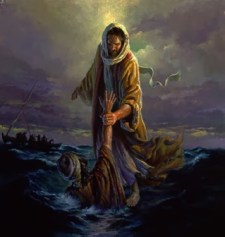
Matthew 14:22-33
I am the Lord your God who takes hold of your right hand and says to you, Do not fear; I will help you. —Isaiah 41:13 (ESV)
Many people today are afraid. Constant fear is slowly become part of the human condition. It’s running rampant right here in America.
The majority of Americans now believe that their children’s lives will be harder than their own. They worry about unemployment and the economy. Many fear illegal immigrants. Others are afraid to gather in public places for fear of violence.
Why wouldn’t people be afraid? The media and many politicians thrive on instilling fear in the public.
On a cosmic scale we hear about giant solar flares that could destroy technology, pushing humankind back into the Stone Age. A large meteor or asteroid collisions could destroy the Earth.
In our natural world, super volcanoes threaten to cause destruction on a planetary scale. Earthquakes and tsunamis in diverse places threaten thousands of lives. Global warming could cause killer storms, droughts, melting ice, coastal flooding and forest fires.
On the human plane, many people fear terrorism. Others worry about flesh eating bacteria, brain eating amoebas, and drug resistant bacteria and viruses. Some hunker down in their homes, worried about riots, violence by/against the police, and mass murders making public places unsafe. Some fear that computer hackers will steal their identities and wealth. There are wars and rumors of wars. Religious persecution is increasing around the globe.
There are two types of fear mentioned in the Bible. The first is fear of the Lord. This fear is not associated with being frightened. It is a reverential awe of God and is to be encouraged. According to Psalm 111, fear of the Lord is the beginning of wisdom and leads to rest and peace.
The second type of fear is detrimental. In the first chapter of 2 Timothy it is described as a “spirit of fear.” A person can be completely overcome by a spirit of fear, virtually frozen and unable to function. Such fear weighs a person down physically, emotionally and mentally.
Unfortunately, many Christians have succumbed to a spirit of fear. Some fear those of other religions and are reluctant to reach out to them in Christian love. Some fear those who are different from us culturally or racially. Some of us are hesitant to invite those in need into their lives for fear they might lose something or it might cost something. Some are afraid to leave the comfort of their homes and familiar surroundings in order to reach out to the needy. Others are hesitant to give of their wealth for fear they might later find themselves in need. A few are afraid of just about everything.
Christian fears often boils down to a fear of losing something—possessions, comfort, safety, security. In Philippians chapter 3, verses 7-8 (ESV), St. Paul describes how he has let go of the things of this world in order to focus on what is truly important:
But whatever gain I had, I counted as loss for the sake of Christ. Indeed, I count everything as loss because of the surpassing worth of knowing Christ Jesus my Lord.
It is impossible to grasp the outstretched hand of Christ as long as we tightly cling to things of this world. David tells us in Psalm 34 verses 4-7 (ESV):
I sought the Lord, and he answered me and delivered me from all my fears.
Those who look to him are radiant, and their faces shall never be ashamed.
This poor man cried, and the Lord heard him and saved him out of all his troubles.
The angel of the Lord encamps around those who fear him, and delivers them.
Take the fears before you today and give them to the Lord. You may be facing a health crisis, unemployment, divorce, a call to missionary service, or other difficult challenges. The best first step in any situation is to cast aside your fears—let go and let God!
“The remarkable thing about God is that when you fear God, you fear nothing else, whereas if you do not fear God, you fear everything else.” —Oswald Chambers
8
Mar
Posted by Zachary P. Hubbard in advice, Bible, Christianity, defense, evangelism, family, ISIS, Islamic State, love, Politics, Prayer, Radical Christianity, Radical Islam, Religion, spiritual. Tagged: advice, Bible, Christianity, church, faith, Fear, God, politics, Prayer, Radical Christianity, Radical Islam, religion, simplicity. 1 comment

And Jesus awoke and rebuked the wind and said to the sea,
“Peace! Be still!” And the wind ceased, and there was a great calm.
—Mark 4:39*
Today it is nearly impossible to read a newspaper or watch a TV newscast without hearing something about “radical Islam.” The images of beheadings, torture, human rights abuses of women and the ethnic cleansing of Christians and other religious minorities send chills down one’s spine.
Our political leaders can’t agree on a proper response to radical Islam, but they all seem to agree that doing nothing is not a viable option. Many push for military action—even all out war. Others see diplomacy as the answer. I believe the only effective response to radical Islam is radical Christianity.
History has shown that nothing can be more effective than Christianity in its purest form. It was radical Christianity that survived by hiding in the catacombs beneath Rome and slowly emerged to peacefully convert it from a pagan empire to a nation united under the banner of Jesus Christ. It was radical Christianity that led a small group of religiously oppressed pilgrims to establish a colony near Plymouth Rock.
Today it is radical Christianity that leads missionaries to leave the comforts of life in America to spread the Gospel in places where they face persecution and even death. It drives some men and women to refuse to renounce their faith in Christ, even if it means being tortured or killed.
Radical Christianity can counter radical Islam. What could be more radical than a religion that professes God became incarnate in human flesh, born of a virgin for the sole purpose of suffering a hideous death to set mankind free from sin?
For one will scarcely die for a righteous person—though perhaps for a good person one would dare even to die— but God shows his love for us in that while we were still sinners, Christ died for us. —Romans 5: 7-8
What could be more radical than a religion that professes that there are no “good” people; that all men have sinned and fall short in the eyes of God; that it is impossible to earn one’s way into heaven?
…as it is written, “None is righteous, no, not one; no one understands; no one seeks for God. All have turned aside; together they have become worthless; no one does good, not even one.” —Roman: 7-8
What could be more radical than a religion that professes that salvation and eternal life are given freely by God to those who accept Jesus as their personal savior, profess that He is the son of God, believe that he died for the forgiveness of their sins and rose from the dead, and ask him into their lives?
For by grace you have been saved through faith. And this is not your own doing; it is the gift of God, not a result of works, so that no one may boast. —Ephesians 2: 8-9
A U.S. State Department spokesperson Marie Harf recently came under intense criticism when she suggested one way to counter Islamic terrorism was through helping terrorists find jobs. She went on to suggest that “We can’t kill our way out of a way.” Now perhaps this is a bit simplistic, but Jesus’ radicalism turns logic on its head when he says:
You have heard that it was said, “You shall love your neighbor and hate your enemy.” But I say to you, Love your enemies and pray for those who persecute you, so that you may be sons of your Father who is in heaven. —Matthew 5:43-45
While our elected officials seek various solutions for curbing radical Islam, radical Christians can follow Christ’s example and pray for our enemies. Adopt a Terrorist for Prayer is a radical Christian approach to countering radical Islam (www.atfp.org) through prayer. The organization’s website explains the approach as follows:
The Christian Response: Where is the Christian response to terrorism? If the struggle against violence done in the name of Islam is primarily spiritual, then defeating it requires a spiritual response.
Overcoming Fear: Terrorism inspires fear. According to Jesus, the antidote to fear is love. When we hate, we are reactive victims. When we love we have the initiative. Love for country helps soldiers to risk their lives. Love for children enables parents to discipline them without being intimidated. Love for us took Jesus to the cross. Love for enemies will give courage to face, overcome, and transform them and the environment that breeds them.
Historical Precedent: Historically, Stephen was the first fatality in terrorism directed against Jesus’ followers. As Stephen died from stoning, he prayed, “Lord, do not hold this sin against them.” Later, Paul, who had supervised Stephen’s stoning, met Jesus in a vision and repented. Can we pray today like Stephen prayed then? Would Paul have repented if Stephen hadn’t prayed?
Are you willing to get radical for Christ? Visit the ATFP website and adopt a terrorist for prayer.
*All Bible quotes are taken from the English Standard Version
25
Feb
Posted by Zachary P. Hubbard in advice, Bible, discipleship, discipline, Faith, Fear, Hope, joy, Music, Religion, Simple Living. Tagged: advice, Bible, Christianity, discipline, faith, hope, joy, simplicity, worry. Leave a comment
 “Joy to the world, the Lord is come.”
A few years ago singer-songwriter Bobby McFerrin composed a great little song titled “Don’t worry be happy.” His lyrics advise us:
In every life we have some trouble
When you worry you make it double
Don’t worry, be happy!
Sounds like some sound advice doesn’t it? However, McFerrin might have better named his tune “Don’t worry be joyful.” Joy and happiness are often used interchangeably, but there is quite a difference in their meanings—especially for Christians.
Happiness is an emotion that arises from external factors, either objects, circumstances or other people. Many people chase after happiness, often taking incredible risks to capture this elusive prey. From the beginning of time man has sought happiness through a variety of means—romance, travel, adventure, possessions, work, wealth, fame, power, good looks, drugs, sex and countless others—but all fall short. As King Solomon tells us in Ecclesiastes, all these are “vanity.”
Chasing after happiness is like chasing a wave at the beach. You might get your hands around it for a moment, but it eventually slips through your fingers because happiness is fleeting. Attaining lasting happiness is impossible in a fallen world, where decay, sickness and death visit everyone. Even Jesus is, as Isaiah tells us, a “man of sorrows.” Upon his shoulders God placed the burden of the sins of all mankind.
Joy, on the other hand, comes from within. One characteristic of Christian joy is a growing feeling of confidence in God’s promise that He will never forsake us. For mature Christians, finding joy is possible even during the unhappiest times because as our faith grows we come to understand that God will carry us through every time of tribulation. This is illustrated clearly by Paul and Silas, who we see praying and singing hymns to God in Acts 16, only a short time after they have been beaten and unjustly thrown in prison.
Along with Christian joy comes a sense of contentment. St. Paul describes this in Philippians 4:11-13:
“Not that I am speaking of being in need, for I have learned in whatever situation I am to be content. I know how to be brought low, and I know how to abound. In any and every circumstance, I have learned the secret of facing plenty and hunger, abundance and need. I can do all things through him who strengthens me.” (ESV)
As Christians mature and learn to be content in the various situations they find themselves, their worries will begin to dissipate when they place them in God’s hands. The American poet and diplomat James Russell Lowell said, “Let us be of good cheer, remembering that the misfortunes hardest to bear are those which will never happen.”
Worry is a waste of time that would be more wisely spent devoted to prayer. The next time you find yourself worrying about something, get on your knees and lift those worries up in prayer. Don’t worry, be joyful!
“May the God of hope fill you with all joy and peace in believing, so that by the power of the Holy Spirit you may abound in hope. —Romans 15-13 (ESV)
Click-to-Listen: “Don’t Worry be Happy” by Bobby McFerrin.
16
Nov
Posted by Zachary P. Hubbard in advice, Bible, Choices, Christianity, discipleship, Faith, joy, peace, Religion, Salvation, Simple Living, spiritual. Tagged: advice, Bible, Evangelism, faith, hope, Jesus, joy, religion, simplicity, St. Paul. 1 comment
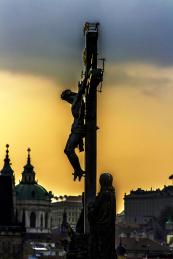
For I decided to know nothing among you, except Jesus Christ and him crucified.” 1 Corinthians 2:2 (ESV)
Life is becoming more and more complicated these days. Wherever one turns he or she is met with new challenges. Today’s new cars have more gadgets than did many airplanes just a few years ago. Simply watching television can require using several very different remote controls that must be used in a specific sequence to view the media one desires. So-called smartphones often prove smarter than their users, leaving befuddled owners struggling to figure out how to use all of their phone’s capabilities.
Politics has also grown more complex. Many private interest groups today sponsor advertising in favor of one politician or another. It’s difficult to sort out the source and motivation behind each message and even harder to discern fact from fiction. Attack ads grow more vicious each year.
Even eating has become more challenging for those concerned about health and fitness. Should you use butter or margarine? Is coffee good for you or bad? Is a little red wine really beneficial to your health? How much exercise does one really need? Is it better to walk or jog? It’s hard to sort through it all.
Unfortunately, complexity has increased in religion as well. Mainline Christian denominations are being divided by new doctrines and beliefs. Recently the National Cathedral, arguably the foremost Episcopal churches in the United States, hosted a Muslim prayer service. And don’t even try to sort out what’s going on between Muslims, Jews and Christians in the Middle East! It’s enough to drive one mad.
Fortunately for Christians, St. Paul maintains a simple view of the Gospel. Listening to his words can help us cut through much of the confusion that exists today. In his first letter to the saints in Corinth he writes, “And I, when I came to you, brothers, I did not come proclaiming to you the testimony of God with lofty speech or wisdom. For I decided to know nothing among you except Jesus Christ and him crucified.” (1 Corinthians 2:1-2, ESV)
Christ’s crucifixion for our sins and His resurrection from the dead are at the center of the Christian faith. A highly educated and intelligent man, St. Paul professed a belief in Christ built on faith, not reason. He understood that reason could never lead to a full knowledge of God, because God is too big and too awesome for a simple human mind to fully comprehend. As the psalmist tells us:
O Lord, you have searched me and known me! You know when I sit down and when I rise up; you discern my thoughts from afar. You search out my path and my lying down and are acquainted with all my ways. Even before a word is on my tongue, beholding, O Lord, you know it altogether. You hem me in, behind and before, and lay your hand upon me. Such knowledge is too wonderful for me; it is high; I cannot attain it. —Psalm 39:1-6 (ESV)
Popular Christian pastor and author Ray Stedman wrote, “The main thing about being a Christian is to see that “the main thing remains the main thing.’ That is what Paul is saying (in 2 Corinthians 11:2). The ‘main thing’ is that at the heart and center of your life is the ‘simplicity that is in Christ,’ a simple thing. I have noticed over many years of observation that when religion becomes complicated, it is always a sign that it is drifting away from the realities and centralities of faith.”
The good news about Jesus that was preached by His apostles is quite simple: (all citations taken from the ESV)
Jesus came to save all mankind. 1 Timothy 1:15 – The saying is trustworthy and deserving of full acceptance, that Christ Jesus came into the world to save sinners… —St. Paul
Jesus is mankind’s only pathway to God . Acts 4: 11-12 – This Jesus is the stone that was rejected by you, the builders, which has become the cornerstone. And there is salvation in no one else, for there is no other name under heaven or given among men by which we must be saved.” —St. Peter
All people are born in a condition of sin, separated from God. Romans 3:23 – “For all have sinned and fall short of the glory of God…” —St. Paul
There is nothing anyone can do on his own to earn God’s salvation. Romans 3:10-12 – “None is righteous, no, not one; no one understands; no one seeks for God. All have turned aside; together they have become worthless; no one does good, not even one.” —St. Paul
Christ came so save mankind from sin and death—separation from God. 1 Timothy 1:15 – “The saying is trustworthy and deserving of full acceptance, that Christ Jesus came into the world to save sinners, of whom I am the foremost.” —St. Paul
Salvation is a gift freely given to those who put their faith in Christ. Romans 10:9-10 – “…because, if you confess with your mouth that Jesus is Lord and believe in your heart that God raised him from the dead, you will be saved. For with the heart one believes and is justified, and with the mouth one confesses and is saved. —St. Paul
One needn’t be a Bible scholar to understand the Gospel. The message is quite simple. The gift of God’s salvation is free to those who, with faith and repentance, ask to receive it.
“Only through repentance and faith in Christ can anyone be saved. No religious activity will be sufficient, only true faith in Jesus Christ alone. —Ravi Zacharias
21
Oct
Posted by Zachary P. Hubbard in advice, Bible, Christianity, Consequences, discipleship, Faith, Fear, ISIS, Islamic State, peace, Religion, war. Tagged: advice, Bible, Christianity, church, Daily Devotional, faith, Fear, God, Jesus, Peace, politics, religion, war, worry. 1 comment

Today we are engaged in a deadly global struggle for those who would intimidate, torture, and murder people for exercising the most basic freedoms. If we are to win this struggle and spread those freedoms, we must keep our own moral compass pointed in a true direction. –Barack Obama
A few days ago I was on the phone with my good friend Joe, who lives in California. Joe and I have each spent a lot of time in the Middle East, so our conversations often drift into the current events there. Naturally, we couldn’t have such a discussion without mentioning the Islamic State (ISIS), the radical group currently wrecking havoc in Syria and Iraq.
I was busy bloviating about the ISIS situation when Joe interrupted with a short but cogent comment summing up the entire problem. “This is typical of what eventually happens in every society that doesn’t have Christ.”
Wow! I wish I’d thought of that. Joe is right. History is replete with examples of the same kind of godless butchery that is the ISIS trademark. Not all of it was beheadings and ethnic cleansing, but it was ruthless and chaotic nonetheless. The cruelty of ISIS appears feeble when compared to the likes of the Roman Empire, Attila the Hun, Genghis Khan, Stalin, Hitler, Pol Pot and dare I say the People’s Republic of China, the country upon which the economy of the United States so depends.
While life in the United States has yet to descend into chaos, there is little doubt that the country is in a state of moral decline. Create a vacuum and something will fill it. Take God out of our families and homes, and chaos will eventually replace the divine spirit. The evidence is all around us. American society is rapidly becoming more secular; we are entering a post-Christian era.
For Christians, this could ultimately prove to be a blessing in the final analysis. Christianity has historically endured its greatest tests and proven strongest and most effective when operating from a position of weakness within society as a whole. Jesus was the perfect example of this. The son of God allowed himself to be crucified, and in so doing took all of the sins of mankind upon himself.
His Apostles all fled in fear after Jesus’ crucifixion and remained in hiding until the resurrected Savior appeared to them in the flesh. The assurance they gained from this and the manifestation of the Holy Spirit at Pentecost empowered them to spread the Gospel around the known world. Their faith remained unbroken, even though most suffered a martyr’s death.
Like the resurrected Christ appearing to his Apostles 2,000 thousand years ago, today Christ still manifests Himself to His followers during both the best and worst of times. A good friend of mine who is a priest and former Army chaplain was fortunate enough to visit Russia back in the 1990’s to help re-establish the chaplain’s corps in the Russian army.
Like early Christians of the Roman Empire who had to meet secretly in catacombs beneath the cities, during the Soviet Union era many Russian Christians gathered in secret places to worship God. After the collapse of communism they were eager to bring the church back “above ground.” Today, the Russian Orthodox Church flourishes where only a few years ago it was suppressed.
Remarkably, Russia’s current leader and former KGB officer Vladimir Putin is being hailed by some as a defender of the Christian faith. In December 2013, Putin declared in a speech, “Many Euro-Atlantic countries have moved away from their roots, including Christian values. Policies are being pursued that place on the same level a multi-child family and a same-sex partnership, a faith in God and a belief in Satan. This is the path to degradation.” The world truly is turned upside down today!
I once had a senior Army officer tell me he preferred to work with men who possessed spiritual values, regardless of their religion. He explained that having faith in a power higher than one’s self is an indicator of how one will perform under pressure; in this instance, the pressure he was referring to was the stress of combat. However, the truth of his statement applies to every facet of life. People and nations need a moral compass—something to keep them going in the right direction. The best source of such guidance is a profound belief in God.
Nations rise and nations fall. Every nation has followed this progression from bondage to bondage. The nations of this century will be no different… As Christians we must recognize that nations will rise and fall just as individuals will be born and die. Our civilization will not last indefinitely, but will eventually pass off the scene. Only God’s Word endures forever. We should not put our trust in the things of this world for they are destined for destruction. Instead, we should put our faith in God and His word.
—Kirby Anderson, The Decline of a Nation*
*The complete text of Kirby Anderson’s “The Decline of a Nation” is available at this link:
http://www.leaderu.com/orgs/probe/docs/decline.html
7
Oct
Posted by Zachary P. Hubbard in advice, Bible, Choices, fitness, Freedom, health, peace, Prayer, Religion, Self-discipline, Simple Living, spiritual. Tagged: advice, Bible, Choices, Christianity, discipline, exercise, faith, fitness, health, Peace, Prayer, simplicity, spiritual. 1 comment

I’m not a big fan of reality TV, but there is one show I really enjoy. The Biggest Loser is about helping morbidly obese people lose weight and regain their health and vigor. The contestants, all of whom are obese and suffering from multiple weight-related ailments, live at an isolated health compound and work with world class trainers throughout their stay. It’s fascinating to watch the amount of work Biggest Loser contestants need to correct years of behavior problems like overeating and under exercising.
One phenomenon that is readily evident to viewers of the show is how former athletes—those who at one time were accustomed to vigorous exercise and discipline—seem to progress much faster than those who have never routinely exercised or disciplined their bodies.
Besides weight loss, The Biggest Loser delves into the psychological struggles waged by each contestant. Some succeed, while others never quite make it. Now in its 10th season, the show has generated a Biggest Loser fitness movement across the country.
Many Americans are dedicated to physical fitness routines. Yet a 2013 study by the Centers for Disease Control and Prevention indicated that 80 percent of American age 18 and above do not exercise sufficiently to maintain good health.
Far fewer practice a discipline of exercise for the soul. What a shame we can’t seem to find a way to generate a spiritual fitness movement across our country! For Christians, exercise for the soul is more important than physical exercise, because the Holy Spirit dwells within our bodies, which St. Paul calls, “the temple of the Holy Spirit.” Left neglected, either by sin, complacency or getting buried in the business of day-to-day life, the Holy Spirit cannot speak to us. Our bodies require daily attention on both the physical and spiritual levels. Prayer must be at the center of attention. Personally, this is an area I’ve struggled with lately.
Popular evangelist and church pastor Rev. David Jeremiah has said, “Prayer is the hard-work business of Christianity, and it nets amazing results.” German Lutheran pastor and theologian Dietrich Bonhoeffer was very specific in promoting the benefits of prayer, saying,
“The entire day receives order and discipline when it acquires unity. This unity must be sought and found in morning prayer. The morning prayer determines the day.”
Having practiced morning prayer for many years, I appreciate its importance to a Christian’s well being.
St. Ignatius of Loyola, founder of the Jesuit order of Roman Catholicism, was a Spanish knight who lived from 1491 to 1556. As a young man, Ignatius kept a journal of his quest to grow in unity with God and discern God’s will in his life. As his experience grew, the journal evolved into a well-defined set of prayers, meditations, reflections, and directions that are known today as the Spiritual Exercises of St. Ignatius.
These exercises are grouped into four stages, described as weeks but not literally seven-day periods, which are designed to be led by a director, or guide. The Spiritual Exercises are intended to serve as a sort of lesson plan for the individual leading the exercises, not as a guide for individuals.
However, even without a director many aspects of the Spiritual Exercises can be useful to individuals seeking spiritual growth and greater commitment to serving God. This is particularly so for the way the Spiritual Exercises approach prayer through meditation and contemplation.
Meditation involves praying about the good and bad words, images and ideas that guide our lives. Contemplation is emotion-driven, rather than thought-driven. It focuses on placing ourselves in scenes from the Gospel and trying to imagine how it might have been. Contemplation is praying through scripture rather than studying scripture.
One of the key elements of the Spiritual Exercises is the discernment of spirits. According to St. Ignatius, the human spirit is influenced by three forces: an inward focus on self and selfish desires; Satanic power and suggestions; and God-inspired power and suggestions. Ignatius called these the “spiritual motions.” The purpose of discernment is to discover the source of each spiritual motion in our lives, so as to help us help make good decisions.
Many contestants on The Biggest Loser reach so-called plateaus—a weight they just can’t seem to get below. To overcome this barrier, they change their daily exercise routines, doing something different to restart the weight loss trend.
The same approach can be applied to spiritual exercises. I do a fair job of exercising my body, but lately I’ve felt like my prayer life has slumped—I’ve hit a plateau. I have difficulty concentrating and find my mind wandering when I pray. In the remaining days before the beginning of Advent, I plan to try a new prayer regimen built around the Spiritual Exercises of St. Ignatius Loyola. Have you hit a prayer plateau? Perhaps it’s time to change your exercise routine for the soul.
“Prayer is exhaling the spirit of man and inhaling the spirit of God.”
Edwin Keith
An English text of the Spiritual Exercises of St. Ignatius Loyola is available online at: http://www.jesuit.org/jesuits/wp-content/uploads/The-Spiritual-Exercises-.pdf. The Website “Ignatian Spirituality,” a service of Loyola University Press, was the primary source for this blog entry (www.ignatianspirituality.com).
17
Sep
Posted by Zachary P. Hubbard in advice, Bible, budgeting, Christianity, discipleship, Faith, Hope, love, materialism, Poor, Poverty, Prayer, Religion, Simple Living, Unemployment. Tagged: advice, Bible, Christian, Christianity, church, Evangelism, faith, God, Gospel, intimacy, poor, Poverty, Prayer, small groups, trust, Unemploment, work, Works. Leave a comment

Whoever gives to the poor will not want, but he who hides his eyes will get many a curse.
—Proverbs 28:27
After enduring over 10 years with a dismal economy, many Americans today find themselves in perilous positions far exceeding anything they could have imagined. The middle class is quickly shrinking, leaving a fractured nation that is increasingly becoming a land of haves and have-nots.
The average American family has somewhere around $5,000 in savings, placing them in a position where losing a job can mean losing nearly everything. Paying big mortgages, which is common for young working couples today, often depends on the salaries of two working spouses. Only two or three missed paychecks can lead to foreclosure! To stay afloat they tap into savings and then into retirement accounts, darkening their prospects for the future while also paying the federal government large tax bills for early retirement withdrawals.
The global economy has given rise to large companies having loyalty neither to their country of origin nor to their employees. Workers are increasingly becoming disposable commodities that are brushed into the trash bin like rubbish on a picnic table.
Highly educated and experienced working professionals who lose their jobs and end up turning to the government for assistance are common today. In my job working with the unemployed, I’ve heard far too many lament, “I never imagined that I could end up in this situation.” This must change.
Churches, especially those in large urban areas, are often unaware of the financial struggles of individuals and families in their area—even when the strugglers are members of the church. Too many churches have lost touch with early traditions.
The scriptures speak frequently about caring for those who share the faith. This is an essential part of discipleship that helps the church set its own house in order. In Acts chapter 6, the Apostles appointed seven deacons to assist in the distribution of food to local widows, who were followers of Christ. James 1:27 tells us,
“Religion that is pure and undefiled before God, the Father, is this: to visit orphans and widows in their affliction, and to keep oneself unstained from the world.” (ESV)
Even clearer guidance comes straight from the mouth of our Lord in John 13:34-35:
“A new commandment I give to you, that you love one another: just as I have loved you, you also are to love one another. By this all people will know that you are my disciples, if you have love for one another.”
Building a healthy church family is essential. Brett Eastman has served as the small groups champion in several of the largest mega churches in the country including Pastor Rick Warren’s Saddleback Church. Eastman writes:
“If you want to create a church community that really cares for one another, the best way to do it is through small groups. When small groups become the vehicle for care-giving, the whole church gets involved in sharing one another’s burdens—a much more personal approach than relegating the task to a committee. The whole congregation should be making hospital visits, taking meals to people when they’re sick or something’s happened, doing childcare when someone’s in crisis and giving money when somebody’s lost a job.”
Small groups in churches set the conditions for encouraging personal intimacy and trust building—essential elements of loving Christian relationships. Only by sharing our hopes, fears, cares and concerns do we really get to know other believers well.
Small groups also enable churches to develop many outreach ministries. One way to quickly make a difference is by reaching out to Christian charities in your church’s local area. These organizations are always in need of volunteers, financial supporters, prayer warriors and other resources. The possibilities are endless. You can’t take care of everybody, but you can take care of somebody.
Look closely and see that behind the face of every downtrodden man and woman is the face of Christ.
–Oswald Chambers
17
Aug
Posted by Zachary P. Hubbard in advice, Bible, Choices, Christianity, Consequences, family, love, Movie review, Movies, peace, regrets, Religion, Simple Living, Tornados. Tagged: advice, Behavior, Bible, Choices, Christianity, Consequences, faith, Fear, hope, Into the Storm, Movie Reviews, Movies, Peace, Relationships, religion, Repentance, Sorrow. 2 comments

“Here bring your wounded hearts, here tell your anguish;
Earth has no sorrow that Heaven cannot heal.” —Saint Thomas More
If you’re a movie buff and haven’t yet made it to the theater to see “Into the Storm,” please read on. This is not a spoiler.
Fans of disaster flicks will love this movie. When it comes to special effects, it’s Twister on steroids. Because of the awesome special effects, which include a trip into the “eye” of a monster F5 tornado, seeing Into the Storm on the big screen is a must.
The movie has several story lines and shifts frequently from one to another. A common thread is woven throughout several of them—people in dire circumstances who are overcome with sorrow because of bad personal relationships with loved ones. All are emotionally wounded to the core as they find themselves facing almost certain death.
A teenage son laments that his last words with his deceased mother were harsh. The deceased woman’s husband looks back on the way he has raised his sons after her death and wishes he could start over.
A teenage girl, buried in rubble, is sorry she lied to her parents about where she was going when she left home that morning.
A single mother caught in the midst of the storm, is sorry she has allowed her work to get in the way of spending more time with her small daughter.
The sorrow displayed by these storm victims goes beyond simple regrets over situations and relationships in their lives that went wrong. Regret is what many male politicians display when the media catches them having an extramarital affair. They aren’t truly sorry about their deplorable behavior. They’re sorry they were caught. Rather than being sorry for the damage they have inflicted on themselves and others, theirs is a self-centered, worldly response. It’s a sorrow stemming from knowing they will have to deal with the public and private consequences of their transgressions.
In contrast, the sorrow displayed by the characters of Into the Storm is the sorrow of repentance—selfless sorrow acknowledging that one’s transgressions have harmed others. It is a repentant sorrow that says, “I understand my actions were wrong; I am truly sorry for the pain and hurt I have inflicted myself and others; and I want to change my bad behavior and way of thinking forever.”
This selfless sorrow is what 2 Corinthians, chapter 7 calls godly sorrow. “Godly sorrow brings repentance that leads to salvation and leaves no regret, but worldly sorrow brings death.”(NIV) Godly sorrow brings healing and life.
The Parable of the Rich Fool in Luke 12:13-21 tells the story of a wealthy man who lives a life of plenty. He has all that he needs in this world—so much wealth and so many possessions that he believes he can simply “eat, drink and be merry,” for the rest of his days. But at the precise moment the man is gushing pride and personal satisfaction, God tells him he will die that very night.
What if you knew that today was the last day of your life? Would you regret that you haven’t done enough for yourself, or would you feel godly sorrow because of the way you have managed some of your personal relationships? More importantly, how would you feel about the way you’ve managed your relationship with God?
Today truly is the first day in the rest of your life. Seize the opportunity to start setting things right today and embrace the family members, loved ones, friends and acquaintances who really matter in your life. You’ll have no regrets!
“3Do nothing out of selfish ambition or vain conceit. Rather, in humility value others above yourselves, 4not looking to your own interests but each of you to the interests of the others. 5In your relationships with one another, have the same mindset as Christ Jesus: 6Who, being in very nature God, did not consider equality with God something to be used to his own advantage; 7rather, he made himself nothing by taking the very nature of a servant, being made in human likeness. 8And being found in appearance as a man, he humbled himself by becoming obedient to death— even death on a cross! —Philippians 2:3-8 (NIV)
Also see: Recalling Some Life Lessons.
26
Jul
Posted by Zachary P. Hubbard in advice, Bible, Christianity, control, depression, Fear, Hope, isolation, peace, Politics, Religion, Unemployment, war. Tagged: advice, Bible, Christianity, control, fairness, faith, Fear, politics, religion. 3 comments

Read Psalm 42
Peace I leave with you; my peace I give to you. Not as the world gives do I give to you. Let not your hearts be troubled, neither let them be afraid. —John 14:27 (NIV)
Watching the evening news these days can be depressing. In fact, it’s getting so bad that some people try to hide themselves from what is going on around them. Recently I’ve heard several people say they no longer watch the news because they just can’t stand hearing about all of the problems in this world. Just look at what’s happening today!
- NASA recently reported its scientists have determined that a massive solar storm in 2012, which narrowly missed making contact with Earth’s atmosphere, had the potential to radically alter life on our planet. A direct hit would have disabled nearly every satellite in orbit and crippled the global electric power grid. According to NASA, we would still be “picking up the pieces” some two years later. The National Academy of Sciences estimated, “the total economic impact could exceed $2 trillion or 20 times greater than the costs of a Hurricane Katrina.”
- Things are heating up in the Ring of Fire region around the Pacific Rim. New volcanic activity and earthquakes are making headlines weekly. With every undersea earthquake comes a tsunami panic. Doomsday prophets warn of a gigantic volcanic eruption that could fill the planet’s entire atmosphere with ash and darken the skies, causing an ice age. Others warn of global warming and climate change, while still others are raising an alarm about global cooling. What is one to make of it all?
- Ukraine and Russia are on the brink of an all out war that could threaten stability throughout Eastern Europe and beyond. A Malaysian airliner was recently shot down by a surface-to-air missile over Ukraine, killing all onboard. Russia and Ukraine blame each other for the mishap. Meanwhile, there is talk of a second Cold War between Russia and NATO.
- The so-called Arab Spring uprisings, which some dreamers believed would bring a new era of peace and freedom to the people of the Middle East and North Africa, has backfired. Egypt, Libya and Syria are on the verge of implosion and total chaos. Terrorist activity in Syria is spilling across the border with Turkey, a NATO member, threatening to drag all of NATO into the fray.
- In Iraq, a hitherto little known group of Sunni Muslim militants called ISIS is conducting a rebellion that has captured large swaths of the country and threatens to collapse the government, reversing all of the gains paid for with American blood and treasure for over a decade. Christians there are increasingly being persecuted by ISIS. The growing abuse of Christians is not unique to Iraq, however. Believers are under fire in Egypt, Sudan, Libya, Syria, Pakistan, India, Vietnam and China just to name a few places. Some would even argue there is an anti-Christian movement afoot here in the United States, where it sometimes seems that Christians are the only unprotected group in our society.
- The Israeli military has moved in force into its semi-autonomous Gaza Strip territory in response to months of rockets fired by Palestinians at Israeli cities. As always, security problems in Israel have the potential to rapidly blossom into larger problems extending beyond her borders.
- China and Japan are rattling their sabers over a territorial dispute involving the Senkaku Islands, an uninhabited chain in the East China Sea. The islands are surrounded by rich fishing waters and have significant natural gas deposits. The current dispute reaches back to World War II. China, Japan and the United States have all controlled the Senkaku Islands at various times in history. The United States, which is heavily in debt to China and bound by treaty to assist in the defense of Japan, finds itself between a rock and a hard place in this argument.
- Speaking of debt, the U.S. economy is in horrible condition as a result of decades of uncontrolled borrowing and spending by federal legislators. Jobless rates across the nation are staggering. People desperately seeking work find themselves frustrated and disillusioned. With a rapidly shrinking middle class, America is quickly becoming a nation of haves and have-nots. There is growing talk of a total economic collapse that could make the Great Depression look like a walk in the park.
News like this has the potential to make anyone depressed. It sometimes appears as if the world is increasingly growing out of control—but it isn’t. It only seems out of control to those suffering from the delusion they can control it. Many politicians and businessmen are constantly planning and scheming, trying to make things go their way. Sometimes it seems as if they’re succeeding, but their victories are only illusions.
In fact, God has been in control all along. He is in control now and always will be. As Hebrews 13:8 reminds us, He is the same “yesterday, today and forever.” The Bible is filled with examples where God snatches victory from what appears to be certain defeat.
- Moses, the adopted child of Pharaoh’s daughter, was chosen by God to lead the Hebrew people from bondage in Egypt.
- As a youth, David the shepherd boy overcame the fearsome Philistine giant Goliath in direct combat, thereby saving the children of Israel from certain defeat.
- While captives in Babylon, the children of Israel were freed and allowed to return to their land by Cyrus the Great, the King of Persia, after his armies conquered Babylon.
- Saul, the greatest persecutor of the Jews in Jesus’ time, was described to Ananias by Jesus as God’s “chosen vessel” (Acts 9). Saul the great persecutor of Christians became history’s greatest evangelist.
- From the ashes of the Holocaust the modern Jewish nation of Israel arose.
- And most significantly, Jesus overcame a brutal death on the cross to rise from the dead as the Savior of all mankind.
Christians needn’t worry when they hear bad news. God has promised, “I will never leave you” (Hebrews 13). When standing in the midst of chaos, remember that He is in control.
My assurance is to be built upon God’s assurance to me. God says, “I will never leave you,” so that then I may boldly say, ’The Lord is my helper; I will not fear’ ” (Hebrews 13:5-6, NIV). In other words, I will not be obsessed with apprehension. This does not mean that I will not be tempted to fear, but I will remember God’s words of assurance. I will be full of courage, like a child who strives to reach the standard his father has set for him. The faith of many people begins to falter when apprehensions enter their thinking, and they forget the meaning of God’s assurance— they forget to take a deep spiritual breath. The only way to remove the fear from our lives is to listen to God’s assurance to us. —Oswald Chambers
“Now may our Lord Jesus Christ himself, and God our Father, who loved us and gave us eternal comfort and good hope through grace, comfort your hearts and establish them in every good work and word.” —2 Thessalonians 3:16-17 (NIV)
Twila Paris – God is in Control (Click to listen)






 Divine Simplicity
Recent Comments