Posts Tagged ‘exercise’

Prayer: the Greater Work

Prayer

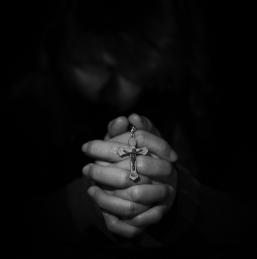
Prayer does not equip us for greater works— prayer is the greater work. Yet we think of prayer as some commonsense exercise of our higher powers that simply prepares us for God’s work. In the teachings of Jesus Christ, prayer is the working of the miracle of redemption in me, which produces the miracle of redemption in others, through the power of God. The way fruit remains firm is through prayer, but remember that it is prayer based on the agony of Christ in redemption, not on my own agony. We must go to God as His child, because only a child gets his prayers answered; a “wise” man does not.  –Oswald Chambers

As if this time of pandemic isn’t bad enough, one can hardly look at the news without seeing a “peaceful” protest turned violent in another one of our cities. The Rev. Canon Phil Ashley of the American Anglican Council has explained the situation like this. We face a culture that is “…increasingly shaped by the forces of aggressive secularism, moral relativism, religious pluralism, individual autonomy and a Utopian hope in secular authority.” As more and more Americans push God out of their lives, social, cultural and spiritual chaos is filling the vacuum. When a country or society pushes God out, it opens the door for the enemy to come in.

It’s easy to despair in situations such as this, but hopelessness is not a state of mind Christians should possess.  The same Jesus who calmed the storm by saying “Peace, be still” on the Sea of Galilee is in control of our lives today. Hebrews 12:28-29 says we live in an unshakable kingdom: “Therefore, since we are receiving a kingdom that cannot be shaken, let us be thankful, and so worship God acceptably with reverence and awe, for our God is a consuming fire.” 

Christians have nothing to fear in the midst of today’s chaos.  Our kingdom is unshakable. As the late Rev. Dr. Billy Graham said, “I’ve read the last page of the Bible. It’s all going to turn out all right.” It doesn’t matter whether you believe “Black Lives Matter,” or “Blue Lives Matter,” or “All Lives Matter.” These are all summed up in two words, “Jesus Matters.” Politicians will tell you that we need this or that, but all we need is Jesus. Now is the time for Christians to focus on the greater work and pray to almighty God for the revival of our nation, while we share our faith with those we encounter who have lost all hope.  

A Prayer for the Nation

Lord God, we have not been faithful people in these recent times. As a result, our peaceful and quiet nation has turned into a chaotic one. So many bad things are happening all around because we have given the enemy a footing over our lives and nation. O heavenly Father, turn our hearts towards you. Help us to live peaceful and quiet lives. Let our leaders advocate for peace and love instead of chaos. May the words that come from their mouths be words that edify the nation. May we find peace within our borders. In Jesus’ name, I believe and pray, Amen.
Exercise for the Soul

Exercise

I’m not a big fan of reality TV, but there is one show I really enjoy.  The Biggest Loser is about helping morbidly obese people lose weight and regain their health and vigor. The contestants, all of whom are obese and suffering from multiple weight-related ailments, live at an isolated health compound and work with world class trainers throughout their stay.  It’s fascinating to watch the amount of work Biggest Loser contestants need to correct years of behavior problems like overeating and under exercising.

One phenomenon that is readily evident to viewers of the show is how former athletes—those who at one time were accustomed to vigorous exercise and discipline—seem to progress much faster than those who have never routinely exercised or disciplined their bodies.

Besides weight loss, The Biggest Loser delves into the psychological struggles waged by each contestant. Some succeed, while others never quite make it.  Now in its 10th season, the show has generated a Biggest Loser fitness movement across the country.

Many Americans are dedicated to physical fitness routines. Yet a 2013 study by the Centers for Disease Control and Prevention indicated that 80 percent of American age 18 and above do not exercise sufficiently to maintain good health.

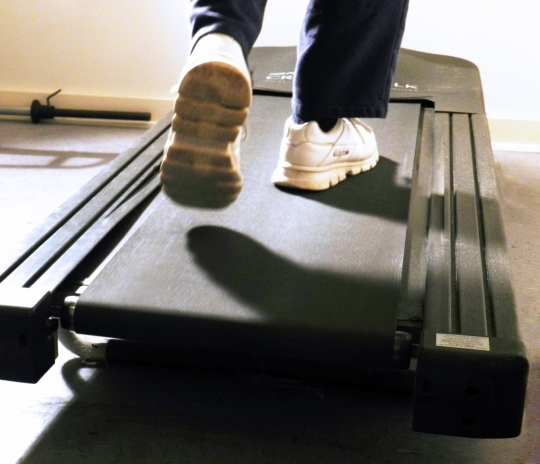
Far fewer practice a discipline of exercise for the soul.  What a shame we can’t seem to find a way to generate a spiritual fitness movement across our country!  For Christians, exercise for the soul is more important than physical exercise, because the Holy Spirit dwells within our bodies, which St. Paul calls, “the temple of the Holy Spirit.” Left neglected, either by sin, complacency or getting buried in the business of day-to-day life, the Holy Spirit cannot speak to us.  Our bodies require daily attention on both the physical and spiritual levels. Prayer must be at the center of attention. Personally, this is an area I’ve struggled with lately.

Popular evangelist and church pastor Rev. David Jeremiah has said, “Prayer is the hard-work business of Christianity, and it nets amazing results.”  German Lutheran pastor and theologian Dietrich Bonhoeffer was very specific in promoting the benefits of prayer, saying,

The entire day receives order and discipline when it acquires unity. This unity must be sought and found in morning prayer. The morning prayer determines the day.”

 Having practiced morning prayer for many years, I appreciate its importance to a Christian’s well being.

St. Ignatius of Loyola, founder of the Jesuit order of Roman Catholicism, was a Spanish knight who lived from 1491 to 1556.  As a young man, Ignatius kept a journal of his quest to grow in unity with God and discern God’s will in his life.  As his experience grew, the journal evolved into a well-defined set of prayers, meditations, reflections, and directions that are known today as the Spiritual Exercises of St. Ignatius.

These exercises are grouped into four stages, described as weeks but not literally seven-day periods, which are designed to be led by a director, or guide.  The Spiritual Exercises are intended to serve as a sort of lesson plan for the individual leading the exercises, not as a guide for individuals.

However, even without a director many aspects of the Spiritual Exercises can be useful to individuals seeking spiritual growth and greater commitment to serving God. This is particularly so for the way the Spiritual Exercises approach prayer through meditation and contemplation.

Meditation involves praying about the good and bad words, images and ideas that guide our lives.  Contemplation is emotion-driven, rather than thought-driven.  It focuses on placing ourselves in scenes from the Gospel and trying to imagine how it might have been.  Contemplation is praying through scripture rather than studying scripture.

One of the key elements of the Spiritual Exercises is the discernment of spirits.  According to St. Ignatius, the human spirit is influenced by three forces: an inward focus on self and selfish desires; Satanic power and suggestions; and God-inspired power and suggestions. Ignatius called these the “spiritual motions.”  The purpose of discernment is to discover the source of each spiritual motion in our lives, so as to help us help make good decisions.

Many contestants on The Biggest Loser reach so-called plateaus—a weight they just can’t seem to get below.  To overcome this barrier, they change their daily exercise routines, doing something different to restart the weight loss trend.

The same approach can be applied to spiritual exercises.  I do a fair job of exercising my body, but lately I’ve felt like my prayer life has slumped—I’ve hit a plateau.  I have difficulty concentrating and find my mind wandering when I pray. In the remaining days before the beginning of Advent, I plan to try a new prayer regimen built around the Spiritual Exercises of St. Ignatius Loyola.  Have you hit a prayer plateau?  Perhaps it’s time to change your exercise routine for the soul.

 “Prayer is exhaling the spirit of man and inhaling the spirit of God.”

                                                                                       Edwin Keith

An English text of the Spiritual Exercises of St. Ignatius Loyola is available online at: http://www.jesuit.org/jesuits/wp-content/uploads/The-Spiritual-Exercises-.pdf.  The Website “Ignatian Spirituality,” a service of Loyola University Press, was the primary source for this blog entry (www.ignatianspirituality.com).

A New Year’s Resolution Worth Keeping

New Years Eve Time Square

“Exercise is labor without weariness.”  —Samuel Johnson

Exercise is an important part of my life that was ingrained during a 24-year career in the U.S. Army.  I enjoy a good workout and feel out of sorts when I go too long without exercising.  In January there are always a lot of new faces in my local fitness center—mostly folks who made a new year’s resolution to exercise and lose weight.

Moving into February the numbers dwindle and by March, few of the new faces are still around.  We humans are great at making promises to ourselves that we never keep.  This year I’ve made a resolution worth keeping and it’s not the usual “lose some weight.”   Instead, I’m going to slow down.

“Adopt the pace of nature.  Her secret is patience.”  —Ralph Waldo Emerson

An Army career often requires one to maintain a “hair on fire” pace for long periods of time.  Mine was no exception. After retiring from the service, I continued the fast pace in my civilian work.  I can recall my mom continually advising me to slow down, but I never made an attempt to comply until fairly recently.  A couple of years ago I came to a realization that there are better ways to spend one’s time than to dash about in a frenzy trying to get as much done as humanly possible.

Slowing down doesn’t mean getting lazy, however.   It’s more about tempering the urgency in life and finding balance.  If I succeed at this, there won’t be sufficient time to do everything I might be inclined to do.   Therefore, I aim to re-evaluate what’s important in my life and then do my best to focus on the things that matter, while sweeping aside the trivial.

“The whole point of getting things done is knowing what to leave undone.”   —Oswald Chambers

I’ve been thinking about some of the things I can sweep aside this year.  Television ranks high on the list.  As my wife often reminds me, I watch some fairly mindless shows with no redeeming social value. Shows like ”Man vs. Food” come to mind.  If you’re not familiar with it, check it out on the Travel Channel website.  It’s about a fellow who travels the country seeking “pig out” restaurants  (www.travelchannel.com/tv-shows/man-v-food).

The “Colbert Report” is also on my “fuggedaboutit” TV list.   I enjoy the show immensely, but it truly is mindless entertainment.  There are others, but I’ll spare you the laundry list.

“Time is what we want most, but what we use worst.”  —William Penn

As a management consultant, I periodically presented time management seminars.  They were very well received by every audience. Unfortunately, I constantly find myself violating the time management techniques I know to be effective.   I aim to be more disciplined with my time this year.

One of the best techniques I know to save time is by turning off the TV.  Limiting time on Facebook and other unproductive Internet sites is also advisable.  Avoiding web surfing and clicking links on the web pages one must visit will also save an enormous amount of time.

I’m also going to avoid checking emails and messages on my phone every few minutes.  At present, I’m an email version of Pavlov’s dog—grabbing my cell phone every time an email or text message alert beeps.  (For those struggling with time management, the Mindtools.com website has a simple, 10-step approach to help you get on track http://goo.gl/RsWrQ1.)

“I find television very educating. Every time somebody turns on the set, I go into the other room and read a book.”  —Groucho Marx

By reducing the time spent in front of the boob tube and on unproductive websites, I hope to make some time for reading.  I’m not talking about casual reading either.  Gibbon’s classic The Decline and Fall of the Roman Empire has been sitting on my bookshelf for about three years.  This year I plan to dust it off and dive in.  I’m also going to try to read or reread several books by C.S. Lewis.

“Prayer does not equip us for the greater work, it is the greater work.” —Oswald Chambers

At the top of my “to do” list for 2014, however, is spending more time in the scriptures and prayer. Prayer is work and I plan to work a lot in this new year.   Romans 12:12 advises us, “Rejoice in hope, be patient in tribulation, be constant in prayer” (ESV).  Now that’s a new year’s resolution worth keeping.

Divine Simplicity: Focus on the things that matter…sweep aside the things that don’t.