Posts Tagged ‘Christianity’

Enduring Truths for Recent Graduates

Eight years ago I wrote an article  for my newspaper column with some advice for recent grads.  It has become one of the most popular pieces I ever wrote. I’ve received hundreds of emails thanking me for writing it.  Therefore, I decided to  republish it annually around graduation time.  I hope some of you might find it useful.  You can view the original article in the Tribune-Democrat news at this link: http://goo.gl/LtN72

For those who are graduating high school this year and beginning the long transition into adulthood, I’d like to offer you a gift. Here are five enduring truths I have learned. They will help you through life’s journey.

Choices

“If you decide to just go with the flow, you’ll end up where the flow goes, which is usually downhill, often leading to a big pile of sludge and a life of unhappiness. You’ll end up doing what everyone else is doing.” ― Sean Covey, The 7 Habits of Highly Effective Teens

 Life will deal you an endless string of choices along the way.  Some will be trivial, like deciding what to wear today.  Others will be weighty and their outcomes will affect you forever.  Weighty decisions should always be preceded by much thought and soul searching.  This includes decisions about who you date or marry, what you put into your body, bringing children into the world, what you do for a living, how much debt you incur and who you associate with.

All of these decisions will have a lasting effect on your life. Therefore, make them slowly and deliberately. Often you’ll discover that the right choice is not the easiest one.  A habit of making poor choices will, as the Sean Covey quote suggests, drag your life downhill.

I was recently contacted by a young man who had just received a bad conduct discharge from the Navy.  He asked me how the discharge would impact his future employability.  His mistake was choosing to drive a car while intoxicated and hitting a pedestrian. Fortunately, the victim wasn’t seriously injured. Had it been otherwise, the young sailor would probably be in prison.  It was my sad responsibility to inform him that with some employers the discharge would be a black mark for life. Choices matter!

Learning

“Experience is a hard teacher because she gives the test first, the lesson afterwards.”    ―Vernon Saunders Law, former professional baseball pitcher and Cy Young Award winner

Some of you will go on to college or technical school.  Others will enter the workforce.  Even if your formal education is over, don’t quit learning. Make learning a lifelong adventure.  I did my undergraduate work at the University of Kentucky.  The school offers a fellowship program for individuals aged 65 and older to attend classes tuition free. Every year numerous senior citizens walk the stage to receive degrees ranging from Associate of Arts to Doctor of Philosophy.  It’s never too late to learn.

Even if you don’t choose to continue formal learning, make it point to learn from life. Observe others; note their successes and failures; then learn from their experiences.  More importantly, learn from your own mistakes.

Some of the greatest lessons I’ve learned, particularly those while serving in uniform, were the result of having made a terrible mistake.  This sort of lesson sticks, like the first time you grab the handle of a hot iron skillet with your bare hand.  The key to learning from mistakes is owning them.  Admit your mistakes and then move on, having learned something from the experience.  Don’t let, “It wasn’t my fault,” be part of your vocabulary.

Work

“A dream doesn’t become reality through magic; it takes sweat, determination and hard work.”  ―Colin Powell, retired U.S. Army four-star general and former U.S. Secretary of State

Work isn’t always fun. If it were, they’d call it play.  Work can be downright unpleasant, but it’s an essential element of life! Along the way you’re going to have jobs you won’t like. Note what you don’t like and make it a point to improve yourself, so you’ll never again have to work at such a job.

Accepting a job means submitting to the authority of those placed over you.  Learn to work within this system.   You’ll inevitably have bosses you don’t like.  Learn to respect the position, if not the individual.

Fairness

“Life is not fair; get used to it.” ―Bill Gates, founder and former CEO, Microsoft Corporation

You will hear much discussion about fairness in this life. It’s all hot air.  Life isn’t fair.  Some good people die young, while some bad people live a long life.   Disease sometimes strikes arbitrarily, for no apparent reason.  Some people prosper while others suffer failure. A death or accident can change your life forever.

There is randomness to life that can’t be avoided.  Don’t expect kindness to be returned with kindness.  Don’t expect generosity to be returned with generosity.  The best choice is to be fair and kind to others and learn to accept what they return to you.

A wise man named Harry Browne ran for president of the United States on the Libertarian Party ticket. On Christmas day in 1966, Browne wrote his young daughter a letter aptly titled, “A Gift for My Daughter.”  I encourage every graduating senior to read it and digest it. In the letter, he explains to his daughter that, “Nobody owes you anything.”  Understanding what Browne meant can truly bless you. You can find it at: https://tenthamendmentcenter.com/2009/12/22/a-gift-for-my-daughter/ 

Faith

“A faith is a necessity to a man. Woe to him who believes in nothing.”  ―Victor Hugo

I once had a senior Army officer tell me he preferred to work with men who possessed spiritual values, regardless of their religion.  He explained that having faith in a power higher than one’s self was an indicator of how one will perform under pressure; in this instance, the pressure meant combat.

Too many people place their faith in all the wrong places.  It might be in wealth, celebrity, good looks, talent, or even government.  Whatever the case, misplaced faith leads to disappointment after disappointment.

To avoid these disappointments, put your faith in God alone.  You, your loved ones and your friends will all inevitably let you down, but God will never fail you.
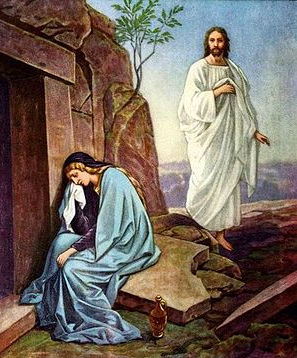
Easter 2021 – He is risen!

Jesus at His tomb with Mary Magdalene

Matthew 28 (ESV) – He Is Risen

Now after the Sabbath, as the first day of the week began to dawn, Mary Magdalene and the other Mary came to see the tomb. And behold, there was a great earthquake; for an angel of the Lord descended from heaven, and came and rolled back the stone from the door, and sat on it. His countenance was like lightning, and his clothing as white as snow. And the guards shook for fear of him, and became like dead men.

But the angel answered and said to the women, “Do not be afraid, for I know that you seek Jesus who was crucified. He is not here; for He is risen, as He said. Come, see the place where the Lord lay. And go quickly and tell His disciples that He is risen from the dead, and indeed He is going before you into Galilee; there you will see Him. Behold, I have told you.”

So they went out quickly from the tomb with fear and great joy, and ran to bring His disciples word.

The Women Worship the Risen Lord

And as they went to tell His disciples, behold, Jesus met them, saying, “Rejoice!” So they came and held Him by the feet and worshiped Him. 10

Dust in the wind: a Lenten reflection

“Remember that you are dust and to dust you shall return.”

As I began writing this post it was the first Sunday in the church season of Lent, a 40-day period of prayer, fasting, and almsgiving that begins on Ash Wednesday and ends at sundown on Holy Thursday. Lent is a time of preparation to celebrate Christ’s resurrection on Easter day. The blessing priests pronounce at the Ash Wednesday service is a solemn reminder of our mortality—the priest draws the sign of the cross with ashes on one’s forehead while saying, “Remember that you are dust and to dust you shall return.”

On the surface, this seems like an odd sort of blessing—a reminder that you’re going to die someday.  Death is an inevitable part of life, but it’s a contradiction because it wasn’t part of God’s plan for us. The Lenten ashes on one’s forehead reminds us that we are dead in our sinfulness and that our only hope is God’s saving grace, a gift offered freely through Christ’s death and resurrection.   

Christ’s sacrifice on the cross, where he bore the sins of the world, revealed God’s limitless love for each of us. Death has a way of revealing love. Over the past 100 days I’ve lost three dear friends and Army pals. For me, their deaths are also a reminder of my own mortality. I miss them all and will miss them always.  It’s easy to take someone for granted while they’re alive, but their death provides a stark reminder of how much they meant in one’s life. Though I miss them all, I take comfort in the knowledge that they were all Christ followers and they will see the Lord face to face on Resurrection Day.  

Lent is a somber season. The focus on penance, fasting, and one’s mortality is like living Christ’s final journey to Jerusalem and His crucifixion. The beauty of the crucifixion is that it isn’t the end of the story. It is the chapter in Jesus’ life leading to the season of Easter and the celebration of His glorious resurrection, which brings a gift of eternal life to those who accept him as Savior.  Lent is my favorite church season.

“(Lent) is a period of spiritual ‘combat’ which we must experience alongside Jesus, not with pride and presumption, but using the arms of faith: prayer, listening to the word of God and penance. In this way we will be able to celebrate Easter in truth, ready to renew the promises of our Baptism.”  -Pope Benedict XVI

If you come from a church tradition that doesn’t celebrate Lent, I encourage you to learn more about it. There are many free resources available online from the Anglican Church in North America (ACNA). Please visit the “Gift of Lent” link below. 

Lent
by Christina Georgina Rossetti

It is good to be last not first,
Pending the present distress;
It is good to hunger and thirst,
So it be for righteousness.
It is good to spend and be spent,
It is good to watch and to pray:
Life and Death make a goodly Lent,
So it leads us to Easter Day.

What do you believe?

“What are we to make of Christ?” There is no question of what we can make of Him; it is entirely a question of what He intends to make of us. You must accept or reject the story.

—C.S. Lewis

I’m a member of a parish of the Anglican Church in North America (ACNA).  Each week during Sunday worship we recite the words of the Nicene Creed, a widely accepted collective statement of faith in the triune God. I’ve been reciting the creed for so many years that now it is memorized and literally flows effortlessly out of my mouth each Sunday.

I enjoy communal prayers, but with this form of prayer comes a risk—the words become so familiar they can lose personal meaning. The renowned Scottish theologian Oswald Chambers said, “When we become advocates of a creed, something dies; we do not believe God, we only believe our belief about Him.”

This begs the question, “What does it mean to believe something?” I’ve provided two definitions above.  I prefer the second one. This leads to another question, “What is the difference in believing something and believing in something.”  Surely Satan believes in God, as he has seen God face to face.

  “You believe that there is one God. Good! Even the demons believe that—and shudder.” James 2:19 (NIV)

With all this in mind, I’d like to challenge each reader who calls him- or herself a Christian to examine your beliefs in the coming year. Do you believe God? If so, what exactly do you believe and what is the source of your beliefs? Let me preface the remaining discussion by confessing that I have many more questions on this subject than answers.   

A Gallup poll conducted in May 2017 indicated that a record few Americans (24%) believe the Bible is the literal word of God (Gallup poll). A 2020 Barna Group survey published by the American Bible Society indicated that “Mainline Protestant denominations had the largest proportion of unchurched adherents (50%) with one in every two members being unchurched, followed by 46% of Catholics, 37% of Evangelicals, and 36% of Historically Black Protestants.” (Barna Group Survey).  

Where do you stand on this?  If you believe the Bible is the inspired word of God, do you read it frequently? If you answered “no,” why not? How well versed are you in the scriptures?  If the Bible isn’t the source of your Christian beliefs, what is?  If you profess to be a Christian and don’t regularly attend church, why don’t you?

The bottom line of my thought process can be summed up like this: “If you can’t articulate what you believe, how can you live what you believe?”  In the coming year, I challenge each reader to answer the following questions for themselves. Take time to research the scriptures and other authoritative sources as you formulate your answers.  Try to discuss “why” or “why not” in each of your answers.

  1. Do you “believe” God or do you “believe in” God?
  2. Do you believe the Bible is the inspired word of God or just a book of wisdom?
  3. Proverbs 9:10 says, “The fear of the Lord is the beginning of wisdom.” What does it mean to fear the Lord?
  4. Do you believe the creation story in Genesis 1 is literal or figurative?
  5. Is Jesus the son of God or simply a great moral teacher?
  6. Do you believe in the virgin birth?
  7. What is sin and what is salvation?
  8. Do you believe Jesus died for your sins?
  9. Did Jesus really rise from the dead?
  10. Is Jesus the only pathway to God, as He said, or are there other paths?

Many people claim we’re presently living in a “post-Christian” era today, where Western cultures are increasingly embracing secularism and turning their backs on their original Judeo-Christian roots. More and more, we see Christians accused of being racists, bigots, homophobes, transphobes and a host of other slurs because of their beliefs. This is occurring both before the law, in the media, and in the court of public opinion. When your faith is eventually questioned by a non-Christian, as it inevitably will be, will you be prepared to articulate what you believe or will you silently submit to their accusations?

I sought the Lord, and he answered me; he delivered me from all my fears.

Those who look to him are radiant; their faces are never covered with shame.

This poor man called, and the Lord heard him; he saved him out of all his troubles.

The angel of the Lord encamps around those who fear him, and he delivers them.

Taste and see that the Lord is good; blessed is the one who takes refuge in him.

—Psalm 34:4-8 (NIV)

Until I come, devote yourself to the public reading of Scripture, to preaching and to teaching. Do not neglect your gift, which was given you through prophecy when the body of elders laid their hands on you. Be diligent in these matters; give yourself wholly to them, so that everyone may see your progress. Watch your life and doctrine closely. Persevere in them, because if you do, you will save both yourself and your hearers. —1 Timothy 4:13-16 (NIV)

Saying goodbye to a brother in arms

Until this year, Veterans Day had become a relatively mundane affair for me.  As a 24-year veteran of the US Army, I’ve had my share of “Thank you for your service,” free meals from a special menu at (name your restaurant), and 10% discounts “for one day only” at various stores.  However, after this year Veteran’s Day will never be the same, as it is henceforth the day I said goodbye to a brother in arms.

In 1981 my wife and I were assigned military quarters in a duplex on a hilltop overlooking Godman Army Airfield at Fort Knox, Kentucky. I was a young captain serving in the Field Artillery. The couple living on the other side of the unit was approaching the end of their tour of duty at Fort Knox. It wasn’t long before they were gone and a new family moved in.  Although we were unaware at the time, God’s hand was moving in our lives by giving us these new neighbors.

Bill and Susan were a unique couple.  Susan was a former Army officer and a member of the last generation of the Women’s Army Corps—the women’s element of the US Army. The WAC, as it was called, was disbanded in 1978, and all units were integrated with male units. Bill, or “Flip” as he was better known to many of his friends, was a figure larger than life. He was a soldier’s soldier—what every professional soldier aspires to be.  Commissioned as an Infantry officer, Flip was highly decorated in Vietnam, winning a Silver Star for valor in action against the enemy, two Purple Hearts in recognition of his status as a twice-wounded soldier, the Legion of Merit, and two Vietnam Crosses of Gallantry. He also earned the Ranger tab and a coveted Combat Infantryman Badge, or C.I.B., in recognition as his service as an Infantryman in combat. When I met him, Flip was an officer in the Army’s Aviation Branch, a helicopter pilot flying Bell UH-1 Iroquois helicopters, better known as “the Huey.” I was in awe!

Despite my being 10+ years younger and of lesser rank, Flip never let that stand between us.  He quickly became both a friend and mentor. Most importantly, he was a man of God.  Flip had a deep faith that he was not shy about sharing with others. He and Susan introduced my wife Linda and me to the Anglican form of liturgical worship, which eventually led to us becoming Anglicans ourselves. What a wonderful gift!  Bill and Susan would later become the godparents of our two daughters and, in turn, their two children would become like daughters to us.

My friend Flip died on August 21, 2020. During this time of pandemic, we were fortunate to participate in his online memorial service on Veterans Day.  Like too many Vietnam veterans, late in life Flip suffered numerous ailments connected with his military service.  The brave men and women who served in Vietnam are quickly declining in numbers today—many have reached their 70’s and 80’s and there are even a few in their 90’s. They deserve our thanks and admiration, as well as the Veterans Administration’s medical support and other services that a grateful nation owes them.

For those who might have served as Army officers at Ft. Knox, KY in the early 1980’s, you’ll understand when I tell you that Flip and I often shared time together at the Fiddler’s Green.  But unlike forlorn cavalrymen in the poem by the same name, who are eternally destined to quench their thirst at an old-time canteen, the passing of my friend is no cause for sorrow or melancholy.  It’s a time for celebrating a life lived for God, family and country.  As with the passing of every Christian brother in arms whom I’ve bid a similar farewell, I rest assured knowing that I’ll see Flip again on that day when Christ restores all things on Earth to the original order that God intended. His departure leaves us with an emptiness which only Flip could fill, but we take comfort in assurance of the glorious reunion to come. Until that day, rest in peace brother!

In Memoriam

Lieutenant Colonel (Ret) William John Filippini

August 26, 1944 – August 21, 2020

Fiddler’s Green

Feed My Sheep

The Good Shepherd (C.1650-60) by Philippe de Champaigne

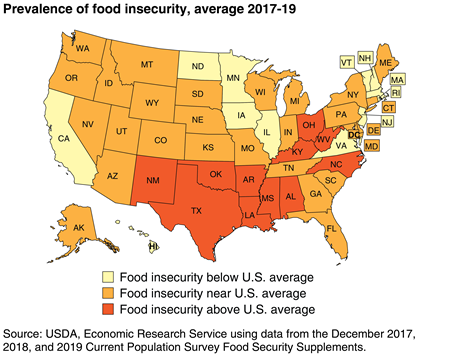
My recent work with a struggling young man in my community has provided me a stark reminder of the reality of hunger in America. The US Department of Agriculture (USDA) defines food security as “having access, at all times, to enough food for an active, healthy life for all household members.”  According to USDA figures, 10.5 percent of American households in 2019 lacked proper food security. While the government’s 2020 food security figures are not yet available, indications are that this year’s numbers will be much higher.  The primary reason for this is the sharp increase in national unemployment due to the COVID-19 pandemic. As the map below shows, the food insecurity problem is widespread.

As a state workforce developer in Pennsylvania, I worked with hundreds of clients who had recently lost their jobs.  Food security was often a major concern of these displaced workers. Many had small children at home, making their situations even more dire.  More recently, as a volunteer job coach working with the elderly, I discovered that food security is a major concern for many of my clients. My typical client is age 70 or older, dependent upon a Social Security check of less than a thousand dollars a month as their primary income, and frequently has to decide between purchasing expensive prescription drugs or food, as they lack sufficient income to pay for both with what remains after paying the rent or mortgage.  

While the mission of Christ’s church is to spread the Gospel, it’s difficult to convey the Good News to someone with a growling, empty stomach. Jesus clearly recognized this. By feeding the five thousand in the miracle of the loaves described in John 6, Jesus provided for the physical needs of the crowd.  The very next day, he called Himself the “Bread of Life.” (John 6:35). Clearly, one needs food in the belly in order to be more open to partaking of the Bread of Life.  The level of involvement in feeding the needy varies significantly from church to church.  Many get involved in collecting and distributing holiday food baskets for the needy.  While this is a wonderful thing, such baskets only cover a few days of the annual 365 that people need to eat. Much more is needed.   

Food banks and pantries exist across the country to help support food security. Typically, a food bank supports a region (such as a county), while local food pantries serve small towns or communities within larger towns/cities. According to the non-profit organization Feeding America, a food bank is a non-profit that safely stores thousands to millions of pounds of food for bulk distribution to local food programs, like food pantries. Food banks come in all different sizes. In contrast, food pantries receive food shipments from food banks and run food distribution programs where hungry families can receive food directly. Pantries feed hundreds of people per week! Because every community is different, there are many different types of pantries. It is common for a food pantry to operate from inside a community school or church. Some areas even have mobile food pantries to serve seniors with limited mobility or rural communities with little transportation.  Some pantries require the clients to demonstrate financial need, while others serve anyone who shows up. Some communities also have food kitchens, where the needy can eat a hot, nutritious meal.

Churches and individuals can help their local food banks, pantries and kitchens in a number of ways by donating money and by volunteering their time. Check directly with your local organizations to ascertain the best way to help each. A general rule of thumb is that monetary donations are preferable to food, as it enables the organization to spend where the need is greatest. Another general rule is that volunteers are always needed; this is particularly so during the COVID-19 pandemic.  Many food banks, pantries and kitchens have adopted special precautions for COVID-19.  Those who might wish to volunteer should check with their local organization(s) to determine if they are comfortable volunteering in light of the precautions that have been adopted. In any case, I encourage you to reach out as you can to support food security in America. As James 2:15-16 tells us, “Suppose a brother or a sister is without clothes and daily food. If one of you says to them, “Go in peace; keep warm and well fed,” but does nothing about their physical needs, what good is it?

Jesus feeds the five thousand, John 6:1-13 (NIV).  Some time after this, Jesus crossed to the far shore of the Sea of Galilee (that is, the Sea of Tiberias), and a great crowd of people followed him because they saw the signs he had performed by healing the sick.  Then Jesus went up on a mountainside and sat down with his disciples. The Jewish Passover Festival was near.  When Jesus looked up and saw a great crowd coming toward him, he said to Philip, “Where shall we buy bread for these people to eat?” He asked this only to test him, for he already had in mind what he was going to do.

Philip answered him, “It would take more than half a year’s wages to buy enough bread for each one to have a bite!” Another of his disciples, Andrew, Simon Peter’s brother, spoke up, “Here is a boy with five small barley loaves and two small fish, but how far will they go among so many?”

Jesus said, “Have the people sit down.” There was plenty of grass in that place, and they sat down (about five thousand men were there). Jesus then took the loaves, gave thanks, and distributed to those who were seated as much as they wanted. He did the same with the fish.

When they had all had enough to eat, he said to his disciples, “Gather the pieces that are left over. Let nothing be wasted.” So, they gathered them and filled twelve baskets with the pieces of the five barley loaves left over by those who had eaten.

Managing Change

Changes“There are far better things ahead than any we leave behind.” –C.S. Lewis


(Note: All Bible quotes are NIV.)

Most people naturally resist change. Some scientists have theorized this is caused by an innate survival response programmed into human beings at the genetic level. Businesses desiring to grow and remain competitive are often forced to change or face failure.   Change Management is a business discipline used to bring about organizational change while minimizing the impact on the affected individuals (employees, suppliers,  customers etc.).  Dr. Rosabeth Moss Kanter is a professor at the Harvard Business School.  She has written about the 10 common reasons people resist business change. They are:

  1. Loss of Control – Change interferes with autonomy and can make people feel that they’ve lost control over their territory.
  2. Excess Uncertainty – If change feels like walking off a cliff blindfolded, then people will reject it.
  3. Surprise, Surprise – Decisions imposed on people suddenly, with no time to get used to the idea or prepare for the consequences, are generally resisted.
  4. Everything Seems Different – Change is meant to bring something different, but how different? We are creatures of habit.
  5. Loss of Face (dignity) – By definition, change is a departure from the past.
  6. Concerns About Competence – Can I do it? Change is resisted when it makes people feel stupid.
  7. More Work – Here is a universal challenge. Change is indeed more work.
  8. Ripple Effects – Like tossing a pebble into a pond, change creates ripples, reaching distant spots in ever-widening circles.
  9. Past Resentment – The ghosts of the past are always lying in wait to haunt us. As long as everything is steady state, they remain out of sight.
  10. Real Threats – Now we get to true pain and politics. Change is resisted because it can hurt.

Fortunately, the business world has amassed a substantial body of knowledge describing effective methods for managing organizational change. Change Management consulting is a lucrative field of business and can be very effective in ushering in change.   

The seasons of our lives are full of changes as well. People resist life changes for many of the same reasons they resist business change. Human lives are in a constant state of flux. Ecclesiastes 3:1-8 describes this quite poetically:

There is a time for everything,

and a season for every activity under the heavens:

a time to be born and a time to die,

a time to plant and a time to uproot,

a time to kill and a time to heal,

a time to tear down and a time to build,

a time to weep and a time to laugh,

a time to mourn and a time to dance,

a time to scatter stones and a time to gather them,

a time to embrace and a time to refrain from embracing,

a time to search and a time to give up,

a time to keep and a time to throw away,

a time to tear and a time to mend,

a time to be silent and a time to speak,

a time to love and a time to hate,

 a time for war and a time for peace.  

Life changes come in two overarching categories. The first encompasses personal lifestyle changes one might need to make, like losing weight, exercising more, eating healthier, quitting tobacco, eliminating or reducing alcohol consumption, getting more sleep, spending more time with family, reducing social media time and the like. These changes often never come about because they usually involve great individual effort, sacrifice and self-discipline. When one accomplishes such a change, it can be one of the most exhilarating experiences in their life.

The second category of life changes consists of unplanned/unexpected events that life seems to drop on one’s head. Each morning one awakes never knowing what the day might bring—a serious accident, grim medical diagnosis, stroke, heart attack or other life changing event might occur. This category also includes external influences such as political upheaval and societal changes. Unfortunately, the body of knowledge for managing this sort of change is very broad, continually evolving and is riddled with disagreements between the so-called “experts.”  Several fields of study offer solutions for managing the changes of life. These include psychology, psychiatry, sociology and their related disciplines.  

Fortunately, for believers there is a body of knowledge for managing life changes that is totally reliable, one-hundred percent accurate, and immutable. Of course, I’m referring to the Bible. Biblical truth never changes because God never changes. Jesus Christ is a solid rock, an unalterable holy alter upon which we may lay all our hopes and fears.

Every good and perfect gift is from above, coming down from the Father of the heavenly lights, who does not change like shifting shadows.  James 1:17

God is not human, that he should lie, not a human being, that he should change his mind.  Does he speak and then not act?  Does he promise and not fulfill?  Numbers 23:19

Jesus Christ is the same yesterday and today and forever.  Hebrews 13:8

Believers have no reason to fear changes in their circumstances.  Scripture assures of this:

Have I not commanded you? Be strong and courageous. Do not be afraid; do not be discouraged, for the Lord your God will be with you wherever you go. Joshua 1:9

The Lord himself goes before you and will be with you; He will never leave you nor forsake you. Do not be afraid; do not be discouraged.  Deuteronomy 31:8   

Trust in the Lord with all your heart and lean not on your own understanding; in all your ways submit to him, and he will make your paths straight.  Proverbs 3:5-6

The Lord is my rock, my fortress and my deliverer; my God is my rock, in whom I take refuge, my shield and the horn of my salvation, my stronghold. Psalm 18:2

Peace I leave with you; my peace I give you. I do not give to you as the world gives. Do not let your hearts be troubled and do not be afraid. John 14:27

Do not be anxious about anything, but in every situation, by prayer and petition, with thanksgiving, present your requests to God. And the peace of God, which transcends all understanding, will guard your hearts and your minds in Christ Jesus. Philippians 4:6-7

As children of God, believers have no reason be afraid of life changes. Oswald Chambers said it like this, “If your faith is in experiences, anything that happens is likely to upset that faith. But nothing can ever change God or the reality of redemption. Base your faith on that, and you are as eternally secure as God Himself. Once you have a personal relationship with Jesus Christ, you will never be moved again.” 

Blessed is the one who trusts in the Lord, who does not look to the proud, to those who turn aside to false gods.  Psalm 40:4

Prayer: the Greater Work

Prayer

Prayer does not equip us for greater works— prayer is the greater work. Yet we think of prayer as some commonsense exercise of our higher powers that simply prepares us for God’s work. In the teachings of Jesus Christ, prayer is the working of the miracle of redemption in me, which produces the miracle of redemption in others, through the power of God. The way fruit remains firm is through prayer, but remember that it is prayer based on the agony of Christ in redemption, not on my own agony. We must go to God as His child, because only a child gets his prayers answered; a “wise” man does not.  –Oswald Chambers

As if this time of pandemic isn’t bad enough, one can hardly look at the news without seeing a “peaceful” protest turned violent in another one of our cities. The Rev. Canon Phil Ashley of the American Anglican Council has explained the situation like this. We face a culture that is “…increasingly shaped by the forces of aggressive secularism, moral relativism, religious pluralism, individual autonomy and a Utopian hope in secular authority.” As more and more Americans push God out of their lives, social, cultural and spiritual chaos is filling the vacuum. When a country or society pushes God out, it opens the door for the enemy to come in.

It’s easy to despair in situations such as this, but hopelessness is not a state of mind Christians should possess.  The same Jesus who calmed the storm by saying “Peace, be still” on the Sea of Galilee is in control of our lives today. Hebrews 12:28-29 says we live in an unshakable kingdom: “Therefore, since we are receiving a kingdom that cannot be shaken, let us be thankful, and so worship God acceptably with reverence and awe, for our God is a consuming fire.” 

Christians have nothing to fear in the midst of today’s chaos.  Our kingdom is unshakable. As the late Rev. Dr. Billy Graham said, “I’ve read the last page of the Bible. It’s all going to turn out all right.” It doesn’t matter whether you believe “Black Lives Matter,” or “Blue Lives Matter,” or “All Lives Matter.” These are all summed up in two words, “Jesus Matters.” Politicians will tell you that we need this or that, but all we need is Jesus. Now is the time for Christians to focus on the greater work and pray to almighty God for the revival of our nation, while we share our faith with those we encounter who have lost all hope.  

A Prayer for the Nation

Lord God, we have not been faithful people in these recent times. As a result, our peaceful and quiet nation has turned into a chaotic one. So many bad things are happening all around because we have given the enemy a footing over our lives and nation. O heavenly Father, turn our hearts towards you. Help us to live peaceful and quiet lives. Let our leaders advocate for peace and love instead of chaos. May the words that come from their mouths be words that edify the nation. May we find peace within our borders. In Jesus’ name, I believe and pray, Amen.

Rooted in the Word

Rooted in Christ

So then, just as you received Christ Jesus as Lord, continue to live your lives in him, rooted and built up in him, strengthened in the faith as you were taught, and overflowing with thankfulness. Colossians 2: 6-7

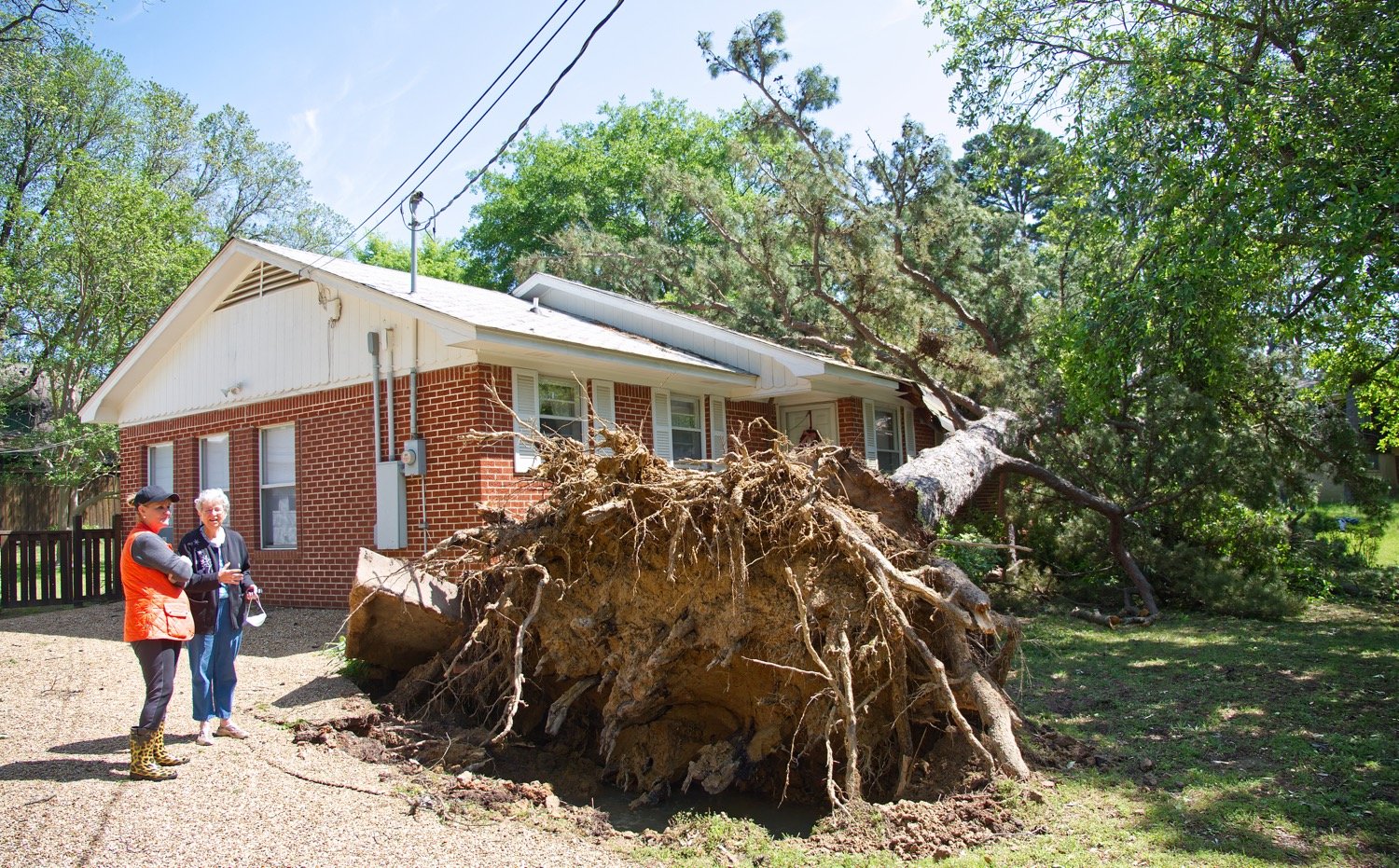
My wife and I lived near the Chesapeake Bay in the Hampton Roads area of southern Virginia for over seven years.  During our time there the region was struck by four hurricanes and a tropical storm.  All the storms caused great destruction of trees, as most trees in the area are evergreens, including many pine trees which have extremely soft wood.  Pine trees also tend to have shallow roots that run outwards near the surface of the soil.  We frequently saw massive pines that had snapped clean in two in the middle of the main trunk or ones that were blown down fully intact, because the roots were not deep enough to withstand the high wind.

Pine Tree Damage

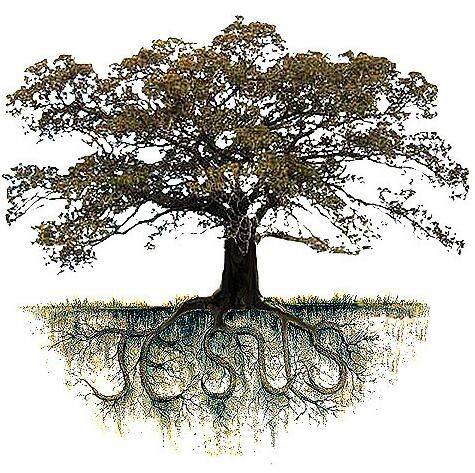
We presently live in South Dakota, in the upper Great Plains.  To say it’s windy here would be a gross understatement. The average wind speed in our region is around 12 mph.  Days with 25-35 mph gusts are not uncommon. On the windiest days in the late spring and summer it’s fascinating to watch the hardwood trees in our backyard swaying to and fro in a mesmerizing dance. Sometimes they appear ready to break in two, but they always stand up straight whenever a gust subsides.  One of the reasons hardwoods are strong is that, unlike evergreens, they have deep roots, an invisible support network that provides a firm foundation.  

How firm a foundation, ye saints of the Lord  Is laid for your faith in His excellent Word.  –From the hymn “How Firm a Foundation”

Windblown trees are a wonderful metaphor for Christians. Everybody is shaken to and fro by fear and emotions at one time or another, but not all respond in the same way.  Some are like softwoods with weak, shallow roots and some are like hardwoods, with strong, deep roots. Christians need to cultivate strong roots in Jesus.  Each of us can grow and strengthen our roots through the Word of God.

The first chapter of the book of Genesis begins with the familiar words, “In the beginning,” painting an image of two forms of the triune God, the Father and the Holy Spirit:

In the beginning God created the heavens and the earth. Now the earth was formless and empty, darkness was over the surface of the deep, and the Spirit of God was hovering over the waters.  –Genesis 1: 1-2

Chapter 1 of the Gospel of John echoes the opening words of Genesis, “In the beginning…”, and describes the preincarnate Jesus as “the Word of God,” who was there with God the Father and God the Holy Spirit at the creation.

In the beginning was the Word, and the Word was with God, and the Word was God.  He was with God in the beginning.  Through him all things were made; without him nothing was made that has been made.  In him was life, and that life was the light of all mankind.  The light shines in the darkness, and the darkness has not overcome it.   –John 1: 1-5

During these trying times of the COVID-19 pandemic, are your fears and emotions tossing you to and fro?  Do you find your faith being challenged? If so, then maybe you need to strengthen your roots in the Word of.   Immerse yourself in scripture today to cast out fear and emotions.

Humble yourselves, therefore, under God’s mighty hand, that he may lift you up in due time.  Cast all your anxiety on him because he cares for you.  Be alert and of sober mind. Your enemy the devil prowls around like a roaring lion looking for someone to devour. Resist him, standing firm in the faith, because you know that the family of believers throughout the world is undergoing the same kind of sufferings.  And the God of all grace, who called you to his eternal glory in Christ, after you have suffered a little while, will himself restore you and make you strong, firm and steadfast. To him be the power for ever and ever. Amen. –1Peter 5:6-11

*All Bible quotes in this post are from the NIV.

The blessings of quarantine (and being out of control)

Quarantine

Just as every dark cloud has a silver lining, so too does a COVID-19 quarantine have its own hidden blessings.  Without question, the greatest blessing I’ve received so far in a self-imposed quarantine is the daily reminder that I’m not in control of my situation.  The Army trained me as a planner—to plan every detail and for every imaginable contingency.  But who could have anticipated this?  Remembering that I’m no longer in control helps me focus on almighty God, the source of all goodness and blessings in our lives.  

The gift of time is a common topic for many people these days.  I’ve heard numerous folks commenting on this—more time to read a book; to clean up clutter in garages, storerooms, and drawers; cook healthy meals; exercise; write letters and cards; sleep; and pray.

I’ve also heard a lot of discussion about more time spent together with loved ones—having sit down dinners with the family; helping the kids with their school lessons; taking family walks; popping popcorn and having a movie night; playing board games around a table; playing outdoor games in the backyard; having long phone calls with family and friends; and simply walking the dog.

I’ve been reminded how fortunate we Americans are that, even in the midst of this major crisis, our supply chains and critical infrastructures continue to function, providing for our basic needs like groceries, pharmaceuticals, telecommunications, electricity, water, and fuel. During my military career I witnessed firsthand in the Hurricane Andrew aftermath, Somalia, and Bosnia how quickly social order deteriorates when supply chains and critical infrastructures are disrupted and a population must depend upon the government, military and relief agencies for their basic needs.

I’ve also been reminded of the many wonderful people it takes to keep our daily lives running smoothly. I live in a household with three generations.  It’s been wonderful watching my daughter teach her middle school science students online while she sits on a bar stool at the island in the kitchen.  It’s been delightful watching our grand kids busily doing their school lessons on iPads while sitting around the dining room table. It’s been amazing watching my tireless wife keeping the grand kids focused, helping them with their lessons, and refereeing their occasional bouts.

I’ve also been reminded how many people are placing their own lives on the line to ensure we beat this pandemic.  Let us lift up our voices in prayer for all of them:

O Holy Spirit, we thank you for the advancements that have led to improving the health of so many. We beg you to inspire new breakthroughs in overcoming the coronavirus and all serious flu viruses. Protect, we pray, health care professionals from the illnesses they are treating, and make them instruments of your healing. Protect, we pray, emergency medical workers on the front line of the Coronavirus battle.  Protect, we pray, police, firefighters and other first responders engaged in this battle. Protect, we pray, the men and women of the armed forces who are daily receiving orders to join this battle. Pray for those who fly the planes, drive the trains, the trucks and work in the grocery stores to keep us fed and keep critical supplies moving. Dear God, as you led Moses, Joshua and David in battles against the Israel’s enemies, guide our leaders and all of us today as we fight this unseen enemy. Amen.

As we prepare to observe the most Holy Christian day of Easter and celebrate the resurrection of Jesus Christ from the dead, I pray that God will bless, protect, comfort and strengthen you all.  Lift up your voices in prayer to the Most Holy Redeemer.

Prayer to the Most Holy Redeemer

 (Anima Christi)

Soul of Christ, sanctify me.

Body of Christ, save me.

Blood of Christ, embolden me.

Water from the side of Christ, wash me.

Passion of Christ, strengthen me.

O good Jesus, hear me.

Within thy wounds hide me.

Never permit me to be parted from you.

From the evil Enemy defend me.

In the hour of my death call me.

and bid me come to thee,

that with your saints I may praise thee

for age upon age. Amen.

May the Lord God strengthen your faith as we pass through these troubled waters. I offer you this prayer in closing.

A Celtic Prayer of Faith

We arise each day through a mighty strength:

God’s power to guide us,

God’s might to uphold us,

God’s eyes to watch over us,

God’s ear to hear us,

God’s word to give us speech,

God’s hand to guard us,

God’s way to lie before us,

God’s shield to shelter us,

God’s host to secure us.

—St. Brigid of Gael, (c.451–525)