Posts Tagged ‘Christian’

Helping those in need

Whoever gives to the poor will not want, but he who hides his eyes will get many a curse. —Proverbs 28:27*

The COVID-19 pandemic has had a devastating effect on US and global economies. Hundreds of thousands of businesses have closed for varying pandemic-related reasons. The food service industry here at home has been hit particularly hard.  Thousands of restaurants have closed, with most having no hope of reopening. The middle class is shrinking, leaving a fractured nation that is increasingly becoming a land of haves and have nots. History has demonstrated that as the middle class shrinks and the lower class grows, civil unrest often increases.

To survive, many American families have had to dip into retirement savings, placing the future in question.  When savings are exhausted, losing a job can mean losing nearly everything.  The ability to pay a big mortgage, something common for young working couples today, often depends on the salaries of both spouses.  If even one of them loses their job, foreclosure becomes a distinct possibility! To stay afloat they must negotiate with lenders, which in the long run usually means increasing the size of their mortgages and/or tapping into short term savings and retirement accounts. Early retirement withdrawals are usually accompanied by additional fees.

On top of pandemic problems, even before COVID-19 economic globalization had given rise to thousands of large companies that are loyal to neither to their country of origin nor to their employees.   Workers, especially blue collar ones, are increasingly being treated like disposable commodities that are brushed into the trash bin like rubbish on a picnic table. Highly educated and skilled working professionals who lose their jobs and end up turning to the government for assistance are common today.  In my job working with the unemployed, I heard many lament, “I never imagined that I could end up in this situation.”  This can and must change.

Churches, especially those in large urban areas, are often unaware of the financial struggles of individuals and families in their area—even when those affected are members of the church. Many churches have lost touch with early traditions. The scriptures speak frequently about caring for those who share the faith.  This is an essential part of discipleship that helps the church set its own house in order.  In Acts chapter 6, the Apostles appointed seven deacons to assist in the distribution of food to local widows, who were followers of Christ.  James 1:27 tell us, “Religion that is pure and undefiled before God the Father, is this: to visit orphans and widows in their affliction, and to keep oneself unstained from the world.”

Even clearer instruction comes straight from the mouth of our Lord in John 13:34-35: “A new commandment I give to you, that you love one another: just as I have loved you, you also are to love one another. By this all people will know that you are my disciples, if you have love for one another.”

Building a healthy church family is essential to serving those in need outside the church.  Brett Eastman has served as the small groups champion in several of the largest mega churches in the country including Pastor Rick Warren’s Saddleback Church.  Eastman writes:

“If you want to create a church community that really cares for one another, the best way to do it is through small groups. When small groups become the vehicle for care-giving, the whole church gets involved in sharing one another’s burdens—a much more personal approach than relegating the task to a committee.  The whole congregation should be making hospital visits, taking meals to people when they’re sick or something’s happened, doing childcare when someone’s in crisis and giving money when somebody’s lost a job.”

Small groups in churches set the conditions for encouraging personal intimacy and trust building—essential elements of loving Christian relationships.  Only by sharing our hopes, fears, cares and concerns do we really get to know other believers well.

Small groups also enable churches to develop outreach ministries. One way for small groups to quickly make a difference is by reaching out to Christian charities in their church’s local area.  Charities are always in need of volunteers, financial supporters, prayer warriors and other resources.  The possibilities are endless. You can’t take care of everybody, but you can take care of somebody.  The closest ministry filed for any church is the one inside its doors. The largest ministry field for every church is the one just outside the church doors.   

Whoever is generous to the poor lends to the Lord, and he will repay him for his deed. —Proverbs 19:17

*All Bible quotes are ESV.

Do not fear!

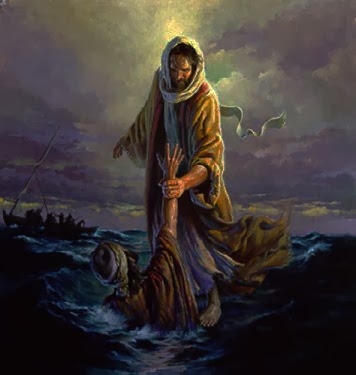
I am the Lord your God who takes hold of your right hand and says to you, Do not fear; I will help you. —Isaiah 41:13 (ESV)

Note: I periodically turn to previous blog entries for content that is relevant today. This entry is based upon an article I wrote in 2015.

Many people today are scared. Constant fear is slowly become part of the human condition. It’s running rampant right here in America. The majority of Americans now believe that their children’s lives will be harder than their own. They worry about unemployment and the economy. Many fear illegal immigrants. Others are afraid to gather in public places for fear of violence. Why wouldn’t people be afraid? Many media outlets and politicians survive by instilling fear in the public.

On a cosmic scale we hear about giant solar flares that could destroy technology, pushing humankind back into the Stone Age. A large meteor or asteroid collisions could destroy the Earth.

In the natural world, super volcanoes threaten to cause destruction on a planetary scale. Earthquakes like the recent one in Haiti and tsunamis in diverse places threaten thousands of lives. Many fear that global warming will cause killer storms, droughts, melting polar ice, coastal flooding and forest fires.

On the human plane, we have just just witnessed the rapid collapse of the US-backed government in Afghanistan and the ensuing chaos and death. Many fear the threat of terrorism in the homeland as a result of Afghanistan’s demise. Others fear home grown terrorists. Yet others worry about flesh eating bacteria, brain eating amoebas, the CORONA-virus Delta variant, and a growing list of drug resistant bacteria and viruses. Some hunker down in their homes, worried about wearing masks, riots, violence by/against the police, and mass murders making public places unsafe. Some fear that computer hackers will steal their identities and wealth.  Others fear hackers will disrupt our critical national infrastructure, as we recently saw with the hack on the Colonial pipeline.  There are wars and rumors of wars. Religious persecution is increasing around the globe. It can all be paralyzing.

Do not fear.

There are two types of fear mentioned in the Bible. The first is fear of the Lord. This fear is not associated with being frightened. It is a reverential awe of God and is to be encouraged. According to Psalm 111, fear of the Lord is the “beginning of wisdom” and leads to rest and peace.

The second type of fear is detrimental. In the first chapter of 2 Timothy it is described as a “spirit of fear.” A person can be completely overcome by a spirit of fear, virtually frozen and unable to function. Such fear weighs a person down physically, emotionally and mentally.

Unfortunately, many Christians have succumbed to a spirit of fear. Some fear those of other religions and are reluctant to reach out to them in Christian love. Some fear those who are different from them culturally or racially. Some of us are hesitant to invite those in need into their lives for fear they might lose something or it might cost something. Some are afraid to leave the comfort of their homes and familiar surroundings in order to reach out to the needy. Others are hesitant to give of their wealth for fear they might later find themselves in need. A few are afraid of just about everything.

Christian fears often boils down to a fear of losing something—possessions, comfort, safety, security. In Philippians chapter 3, verses 7-8 (ESV), St. Paul describes how he has let go of the things of this world in order to focus on what is truly important: ” But whatever gain I had, I counted as loss for the sake of Christ. Indeed, I count everything as loss because of the surpassing worth of knowing Christ Jesus my Lord.”

It is impossible to grasp the outstretched hand of Christ as long as we tightly cling to things of this world. David tells us in Psalm 34 verses 4-7 (ESV):

“I sought the Lord, and he answered me and delivered me from all my fears.
Those who look to him are radiant, and their faces shall never be ashamed.
This poor man cried, and the Lord heard him and saved him out of all his troubles.
The angel of the Lord encamps around those who fear him, and delivers them.”

Take the fears before you today and give them to the Lord. You may paralyzed by a fearful nature, facing a health crisis, unemployment, divorce, a call to missionary service, or other difficult challenges. The best first step in any situation is to cast aside your fears—let go and let God!

Finally, be strong in the Lord and in the strength of his might. Put on the whole armor of God, that you may be able to stand against the schemes of the devil. For we do not wrestle against flesh and blood, but against the rulers, against the authorities, against the cosmic powers over this present darkness, against the spiritual forces of evil in the heavenly places. Ephesians 6: 10-12 (ESV)

“The remarkable thing about God is that when you fear God, you fear nothing else, whereas if you do not fear God, you fear everything else.”    —Oswald Chambers

Guard your heart

Sacred Heart of Jesus

“When a man’s heart is right with God the mysterious utterances of the Bible are spirit and life to him. Spiritual truth is discernible only to a pure heart, not to a keen intellect. It is not a question of profundity of intellect, but of purity of heart.”  Oswald Chambers

The word “heart”, as used in the Old Testament, is frequently translated from the Hebrew “לב (sounds like “leb”). It describes a person’s inner being—specifically their will, mind, consciousness, emotions and understanding. It can also refer to moral character and determination. The Hebrew people of Biblical times believed the heart was a body’s place of knowledge, memory and thought. From a holistic viewpoint, the Hebrews saw the heart as the predominant force behind a person’s character, decisions, words and deeds.

The word “heart” as used in the Greek New Testament is καρδία” (sounds like “cardia”). It is the root of the modern English “cardiac.” Like the Hebrew word for “heart,” καρδία has multiple interpretations. It represents the origin of one’s spiritual life and includes emotions. thoughts and one’s personal will. It also describes the center of one’s longings, desires and feelings.

In Roman Catholicism, the Most Sacred Heart of Jesus devotion recalls Jesus’ infinite love for all mankind. Saint Matthew reminds us that we are to return Jesus’ love for us.  In Matthew 22:37-38(a), Jesus tells us, “You shall love the Lord your God with all your heart and with all your soul and with all your mind. This is the great and first commandment.” Christian writer Witness Lee was born to a Christian family in North China in 1905. In his book The Economy of God, which was published in 1968, Lee examines the role of the heart in a Christian’s life. He says:

“Our relationship with the Lord is always begun and maintained by the heart. Of course, to contact the Lord is a matter of the spirit, but this must be initiated and maintained by the heart, for our heart is the gateway of our whole being.” He continues, “In other words, the heart becomes both the entrance and the exit of our being. Whatever enters into us must enter through the heart. Whatever comes out from us must proceed through the heart.”

There are many worldly forces competing for our hearts. The Bible is full of examples and warnings about idols, false prophets and false teachers.  We find these deceivers all around us today. Idols manifest themselves in the forms of power, wealth, fame, celebrity, self-indulgence and the like—things we choose to worship in place of God. False prophets sometimes appear in the form of politicians, governments, religious leaders and, more recently, some social media outlets. They plant seeds of fears and confusion with words running contrary to the teaching of Christ. 18th century Welsh theologian Matthew Henry’s comprehensive Bible commentary has much to say on false prophets and teachers. For example:

“Our Saviour cautions his disciples to stand on their guard against false teachers. And he foretells wars and great commotions among nations. From the time that the Jews rejected Christ, and he left their house desolate, the sword never departed from them. See what comes of refusing the gospel. Those who will not hear the messengers of peace, shall be made to hear the messengers of war. But where the heart is fixed, trusting in God, it is kept in peace, and is not afraid. It is against the mind of Christ, that his people should have troubled hearts, even in troublous times.”  Commentary on Matthew 24

Psalm 1 tells us to meditate on the Law (instruction) of the Lord. If your heart is fixed on the Word of God, you are not likely to go astray. The Word of God is “at work” in believers who hear and meditate on it (1 Thessalonians 2:13). The Word of God helps us to work out our own salvation (Philippians 2:12). The working of the Word of God is evident in true believers.  My mom spent the last few months of her life in a dementia facility.  One of the residents was a believer who was probably close to 90 years old. This blessed man, overcome by Alzheimer’s Disease, daily recited the Roman Catholic Missal for hours on end. Even in his diminished state, the Word of God was at work in this old Saint’s heart.

The Word of God helps us avoid the temptations of idolatry and false prophets.  As Corinthians 10:13 tells us. “No temptation has overtaken you that is not common to man. God is faithful, and he will not let you be tempted beyond your ability, but with the temptation he will also provide the way of escape, that you may be able to endure it.” (ESV)

So how can Christians respond to temptations that tear at their hearts? Naturally, Jesus provides the answer.  In Matthew 4:1-11, we find the story of Jesus’s temptation by Satan. In this passage, Jesus is tempted (tested) in the wilderness and responds with the Word of God, reciting scripture to Satan:

            Man shall not live by bread alone, but by every word that comes from the mouth of God.

            You shall not put the Lord your God to the test.

            You shall worship the Lord your God and him only shall you serve.

Ephesians 6:17 calls the Word of God “the sword of the Spirit.” Like a sword, the Word can be used for both defensive and offensive purposes—defensive as when Jesus responds to the temptations of Satan in the wilderness, and offensive as when we see the triumphant Jesus, the Alpha and Omega, in Revelation 1:17-18, where he proclaims, “Fear not, I am the first and the last, and the living one. I died, and behold I am alive forevermore, and I have the keys of Death and Hades.”  Study the Holy Scriptures and receive the Word of God!

Today, Jesus calls to each of us, “Come, leave behind your life of sin and sorrow. Come to the cross, find forgiveness for your sins, and join me in resurrection victory. Come, be My disciple. Come and know the joy of a loving Father. Come, before it is too late.” –Rev. Dr. Ken Klaus, Speaker emeritus of the Lutheran Hour.

…I am not ashamed, for I know whom I have believed, and I am convinced that he is able to guard until that day what has been entrusted to me. Follow the pattern of the sound words that you have heard from me, in the faith and love that are in Christ Jesus. By the Holy Spirit who dwells within us, guard the good deposit entrusted to you. –1 Timothy 1:12(b)-14

The joy of the Lord

The Joy of the Lord

If you’re a user of Facebook or YouTube, you’ve probably seen videos of military service members who have been on deployments reuniting with family members.  These are moments of pure joy and happiness.  They seem to say, “everything is going to be OK now.” This type of joy is a wonderful mountaintop experience, but it is fleeting.  It’s simply not possible to sustain such temporal joy, but there is another type of joy that’s eternal.  

Joy is the simplest form of gratitude.  Karl Barth

Did you ever meet somebody you just knew was a Christian without being told?  There are some people whose face and disposition simply can’t hide the joy of Christ that dwells inside them. Often, this kind of person will invite you to visit their church. Christians want to share their joy with others. They are thankful for the joy that dwells within.  In Galatians 5:22, the Apostle Paul calls joy a fruit of the Holy Spirit. In 2 Corinthians 2:3, Paul describes how he wants to share his joy with the people of the young church in Corinth.

Describing Christian joy to a non-believer can be difficult. When I was a young captain serving in the Army, I had a battalion commander who assigned me a special project.  I listened to his instructions, but they weren’t clear to me.  I asked specifically what sort of product he expected me to give him when I had completed the project. His surprising response was, “I’m not sure, but I’ll know it when I see it.” Christian joy is like that, you’ll never fully understand it until you’ve experienced it.

Joy may include happiness, but happiness is not a precondition for Christian joy.  The Apostle Peter describes joy as gladness not based on circumstances (1Peter 1:8-9). Paul says in 2 Corinthians 7:4, “In all our affliction, I am overflowing with joy.”  Clearly, Christian joy does not depend on being happy.  It is founded in the assurance that:

  • Jesus has paid for all your sins, past, present, and future.
  • You have been freed from the power of sin and can choose to obey.
  • You live under God’s grace and mercy.
  • You are an adopted child of God.
  • You have eternal life.
  • God knows you by name and hears your prayers.
  • You are part of God’s church family and joined by the Holy Spirit to fellow Christians.

In Romans 15:13 Paul says, “May the God of hope fill you with all joy and peace as you trust in him, so that you may overflow with hope by the power of the Holy Spirit. Joy and peace are yours for the taking if you will put your trust in God today.

Doxology: To him who is able to keep you from stumbling and to present you before his glorious presence without fault and with great joy— to the only God our Savior be glory, majesty, power and authority, through Jesus Christ our Lord, before all ages, now and forevermore! Amen.  –Jude 1:24-25

Enduring Truths for Recent Graduates

Eight years ago I wrote an article  for my newspaper column with some advice for recent grads.  It has become one of the most popular pieces I ever wrote. I’ve received hundreds of emails thanking me for writing it.  Therefore, I decided to  republish it annually around graduation time.  I hope some of you might find it useful.  You can view the original article in the Tribune-Democrat news at this link: http://goo.gl/LtN72

For those who are graduating high school this year and beginning the long transition into adulthood, I’d like to offer you a gift. Here are five enduring truths I have learned. They will help you through life’s journey.

Choices

“If you decide to just go with the flow, you’ll end up where the flow goes, which is usually downhill, often leading to a big pile of sludge and a life of unhappiness. You’ll end up doing what everyone else is doing.” ― Sean Covey, The 7 Habits of Highly Effective Teens

 Life will deal you an endless string of choices along the way.  Some will be trivial, like deciding what to wear today.  Others will be weighty and their outcomes will affect you forever.  Weighty decisions should always be preceded by much thought and soul searching.  This includes decisions about who you date or marry, what you put into your body, bringing children into the world, what you do for a living, how much debt you incur and who you associate with.

All of these decisions will have a lasting effect on your life. Therefore, make them slowly and deliberately. Often you’ll discover that the right choice is not the easiest one.  A habit of making poor choices will, as the Sean Covey quote suggests, drag your life downhill.

I was recently contacted by a young man who had just received a bad conduct discharge from the Navy.  He asked me how the discharge would impact his future employability.  His mistake was choosing to drive a car while intoxicated and hitting a pedestrian. Fortunately, the victim wasn’t seriously injured. Had it been otherwise, the young sailor would probably be in prison.  It was my sad responsibility to inform him that with some employers the discharge would be a black mark for life. Choices matter!

Learning

“Experience is a hard teacher because she gives the test first, the lesson afterwards.”    ―Vernon Saunders Law, former professional baseball pitcher and Cy Young Award winner

Some of you will go on to college or technical school.  Others will enter the workforce.  Even if your formal education is over, don’t quit learning. Make learning a lifelong adventure.  I did my undergraduate work at the University of Kentucky.  The school offers a fellowship program for individuals aged 65 and older to attend classes tuition free. Every year numerous senior citizens walk the stage to receive degrees ranging from Associate of Arts to Doctor of Philosophy.  It’s never too late to learn.

Even if you don’t choose to continue formal learning, make it point to learn from life. Observe others; note their successes and failures; then learn from their experiences.  More importantly, learn from your own mistakes.

Some of the greatest lessons I’ve learned, particularly those while serving in uniform, were the result of having made a terrible mistake.  This sort of lesson sticks, like the first time you grab the handle of a hot iron skillet with your bare hand.  The key to learning from mistakes is owning them.  Admit your mistakes and then move on, having learned something from the experience.  Don’t let, “It wasn’t my fault,” be part of your vocabulary.

Work

“A dream doesn’t become reality through magic; it takes sweat, determination and hard work.”  ―Colin Powell, retired U.S. Army four-star general and former U.S. Secretary of State

Work isn’t always fun. If it were, they’d call it play.  Work can be downright unpleasant, but it’s an essential element of life! Along the way you’re going to have jobs you won’t like. Note what you don’t like and make it a point to improve yourself, so you’ll never again have to work at such a job.

Accepting a job means submitting to the authority of those placed over you.  Learn to work within this system.   You’ll inevitably have bosses you don’t like.  Learn to respect the position, if not the individual.

Fairness

“Life is not fair; get used to it.” ―Bill Gates, founder and former CEO, Microsoft Corporation

You will hear much discussion about fairness in this life. It’s all hot air.  Life isn’t fair.  Some good people die young, while some bad people live a long life.   Disease sometimes strikes arbitrarily, for no apparent reason.  Some people prosper while others suffer failure. A death or accident can change your life forever.

There is randomness to life that can’t be avoided.  Don’t expect kindness to be returned with kindness.  Don’t expect generosity to be returned with generosity.  The best choice is to be fair and kind to others and learn to accept what they return to you.

A wise man named Harry Browne ran for president of the United States on the Libertarian Party ticket. On Christmas day in 1966, Browne wrote his young daughter a letter aptly titled, “A Gift for My Daughter.”  I encourage every graduating senior to read it and digest it. In the letter, he explains to his daughter that, “Nobody owes you anything.”  Understanding what Browne meant can truly bless you. You can find it at: https://tenthamendmentcenter.com/2009/12/22/a-gift-for-my-daughter/ 

Faith

“A faith is a necessity to a man. Woe to him who believes in nothing.”  ―Victor Hugo

I once had a senior Army officer tell me he preferred to work with men who possessed spiritual values, regardless of their religion.  He explained that having faith in a power higher than one’s self was an indicator of how one will perform under pressure; in this instance, the pressure meant combat.

Too many people place their faith in all the wrong places.  It might be in wealth, celebrity, good looks, talent, or even government.  Whatever the case, misplaced faith leads to disappointment after disappointment.

To avoid these disappointments, put your faith in God alone.  You, your loved ones and your friends will all inevitably let you down, but God will never fail you.

The Simplicity that is in Christ


Simplify: (transitive verb) to make something easier to do or understand

It has been nearly a decade since I started this blog.  It owes its existence to Smicksburg, a small, quaint village in the Amish country of rural Indiana County, Pennsylvania. My wife and I visited there one day in the summer of 2011. While rummaging through a tiny gift shop on the village’s main street, I discovered a small, heart-shaped wooden Christmas ornament decorated in tole painting bearing the word, “Simplify.”  

The ornament got me thinking about the simplicity of the Amish lifestyle compared to my own. Despite their lack of cars, electricity, television, the internet and many other modern conveniences, I find the Amish lifestyle attractive in many ways. I long for a simpler life myself, one devoid of planning committees, investment portfolios, tax returns, oil changes, tire rotations, weed killing, student loans, long term care insurance, social media, Netflix and the like. Researcher, author and Cato Institute Fellow, Brink Lindsey has written extensively on human capital. He has noted about Western societies, “…as we get richer, the personal choices we face keep multiplying from the most trivial to the most profound and life-altering.” The mental capacity to deal with an ever-increasing onslaught of important information and decisions differs from person to person, but everyone has a tipping point where mental overload leads to some degree of cognitive incapacitation.

I purchased the ornament and placed it in a prominent position in my home office, to serve as a constant reminder of life’s simpler possibilities.  I started this blog a few months afterwards. At first my topics focused on simplifying one’s lifestyle. However, the discussion gradually drifted towards Christian topics associated with simplicity, where it remains today. As a wannabe theologian, I know I miss the mark on many things when composing my blog entries.  But there is one thing I’ve learned about Christianity over the years and I’m certain of it—the Gospel message of Jesus Christ is really quite simple!

 “For God so loved the world, that he gave his only Son, that whoever believes in him should not perish but have eternal life. –John 3:16

Everything in Jesus life, death, and resurrection points towards one thing—the cross.  This is spelled out clearly in the first chapter of Paul’s first epistle to the Corinthians. In 1 Corinthians 1:18 Paul said, “…the word of the cross is folly to those who are perishing, but to us who are being saved it is the power of God.”

From the outside looking in, the cross is nonsense. The Romans of the time could not have imagined that Jesus’ crucifixion would be the defining moment in human history and lead to a social and religious revolution in the Empire. The Jewish leaders, on the other hand, were seeking a powerful Messiah who would lead a military overthrow of Roman rule in the area that was once the Kingdom of Israel. Jesus didn’t fit their job description. Of His agonizing death on the cross, Jesus says in John 12:27, “…it was for this very reason I came to this hour.”

We are nearing the end of the Church season of Lent, where we commemorate Christ’s final journey to Jerusalem to suffer torture and death on the cross. Tomorrow we will celebrate Palm Sunday, the commemoration of Christ’s triumphal entry into Jerusalem—not as a powerful military warrior, but as humble, unlikely Savior-servant riding on a donkey.  Palm Sunday marks the beginning of Holy Week. On Good Friday we will commemorate Christ’s crucifixion. And on the following Sunday we will celebrate Easter, when all Christendom rejoices over Jesus’ glorious resurrection from the dead. 

Jesus’ crucifixion and death on Good Friday was the defining moment when He defeated death and opened the doorway leading to eternal life for all who confess their sins to God and accept Jesus as Savior. As he breathed his last breath, Jesus said “It is finished.” His reason for being—to bear the burden of our sins—was accomplished on the Cross of Calvary. Acts 10:43 tells us, “To him all the prophets bear witness that everyone who believes in him receives forgiveness of sins through his name.”  Jesus’ resurrection from the dead, which we celebrate on Easter, reminds His followers of the promise of their own resurrection, when they will see their Lord face-to-face. That’s the Gospel story in a nutshell. It’s really simple! 

“Simple Gifts, a traditional Shaker tune by Elder Joseph Brackett, Jr., 1848) as performed by Yo Yo Ma on cello, with vocals by Alison Kraus.

Tis the gift to be simple, ’tis the gift to be free

’tis the gift to come down where you ought to be

And when we find ourselves in the place just right

‘Twill be in the valley of love and delight.

When true simplicity is gained

To bow and to bend we will not be ashamed

To turn, turn will be our delight

‘Till by turning, turning we come round right.

‘Tis the gift to be simple, ’tis the gift to be free

’tis the gift to come down where you ought to be

And when we find ourselves in the place just right

‘Twill be in the valley of love and delight.

Dust in the wind: a Lenten reflection

“Remember that you are dust and to dust you shall return.”

As I began writing this post it was the first Sunday in the church season of Lent, a 40-day period of prayer, fasting, and almsgiving that begins on Ash Wednesday and ends at sundown on Holy Thursday. Lent is a time of preparation to celebrate Christ’s resurrection on Easter day. The blessing priests pronounce at the Ash Wednesday service is a solemn reminder of our mortality—the priest draws the sign of the cross with ashes on one’s forehead while saying, “Remember that you are dust and to dust you shall return.”

On the surface, this seems like an odd sort of blessing—a reminder that you’re going to die someday.  Death is an inevitable part of life, but it’s a contradiction because it wasn’t part of God’s plan for us. The Lenten ashes on one’s forehead reminds us that we are dead in our sinfulness and that our only hope is God’s saving grace, a gift offered freely through Christ’s death and resurrection.   

Christ’s sacrifice on the cross, where he bore the sins of the world, revealed God’s limitless love for each of us. Death has a way of revealing love. Over the past 100 days I’ve lost three dear friends and Army pals. For me, their deaths are also a reminder of my own mortality. I miss them all and will miss them always.  It’s easy to take someone for granted while they’re alive, but their death provides a stark reminder of how much they meant in one’s life. Though I miss them all, I take comfort in the knowledge that they were all Christ followers and they will see the Lord face to face on Resurrection Day.  

Lent is a somber season. The focus on penance, fasting, and one’s mortality is like living Christ’s final journey to Jerusalem and His crucifixion. The beauty of the crucifixion is that it isn’t the end of the story. It is the chapter in Jesus’ life leading to the season of Easter and the celebration of His glorious resurrection, which brings a gift of eternal life to those who accept him as Savior.  Lent is my favorite church season.

“(Lent) is a period of spiritual ‘combat’ which we must experience alongside Jesus, not with pride and presumption, but using the arms of faith: prayer, listening to the word of God and penance. In this way we will be able to celebrate Easter in truth, ready to renew the promises of our Baptism.”  -Pope Benedict XVI

If you come from a church tradition that doesn’t celebrate Lent, I encourage you to learn more about it. There are many free resources available online from the Anglican Church in North America (ACNA). Please visit the “Gift of Lent” link below. 

Lent
by Christina Georgina Rossetti

It is good to be last not first,
Pending the present distress;
It is good to hunger and thirst,
So it be for righteousness.
It is good to spend and be spent,
It is good to watch and to pray:
Life and Death make a goodly Lent,
So it leads us to Easter Day.

The tough work of prayer

Prayer is like a battle. The enemy is constantly placing barriers in your way to keep you from reaching your final objective.

Life is a series of continual distractions that make it difficult to find time to commune with God. Even if one manages to slip away to a quiet place for a few minutes, odds are they will find themselves distracted by thoughts about what lies ahead in their day or week. I’ve heard so many people complain, “My days are so busy I just can’t find time to pray.”  In reality, if you have a busy day ahead you can’t afford not to pray. Paul’s epistle to the Church at Philippi says:

Do not be anxious about anything, but in every situation, by prayer and petition, with thanksgiving, present your requests to God. And the peace of God, which transcends all understanding, will guard your hearts and your minds in Christ Jesus. –Philippians 4:6-7

This is tough advice!  Who, after all, is not anxious about something, especially in the midst of the COVID-19 pandemic?  And how difficult is it to present your prayers to God with thanksgiving in every situation? “Dear God, I thank you for allowing me to crash my car into that tree yesterday.”  Prayer is tough work indeed.

The nation has just gone through a painful, extraordinarily divisive presidential election process. The political rhetoric is still turned up to near the boiling point. Political disagreements have resulted in many friendships ending and have even caused divorces. Sometime it feels like the entire world has gone mad amidst the name calling, threats, riots, burning and looting. Many politicians will tell you that they have the answers to all our problems, but they don’t. Only God can fix this mess!

I lift up my eyes to the mountains—where does my help come from? My help comes from the Lord, the Maker of heaven and earth.  —Psalm 121:1-2

More than any time in recent history, America’s Christians need to join together in praying for our nation and those whom have been elected to serve. So, what about that politician from the “other” party?  Should you pray for him or her?  “God, please help this idiot to see how wrong he is.”  Well, not exactly.  You can certainly pray that the Holy Spirit would convict the individual politician to make decisions that honor God, especially politicians who profess to be Christ followers.   

If you have a beef with a particular politician—get over it.  I don’t mean this in the traditional fashion that contemporary culture says “get over it.”  I mean that, as Christians, we are obliged to forgive those who have trespassed against us, just as we pray to God to forgive us our own sins.      

“In Jesus, we experience freedom not only from sin and its hold on us but also from guilt, shame, worry, Satan’s lies, superstitions, false teaching, and eternal death. No longer hostages, we have freedom to show love to enemies, walk in kindness, live with hope, and love our neighbors. As we follow the Holy Spirit’s leading, we can forgive as we’ve been forgiven” —Patricia Raybon, Our Daily Bread

Now here’s where it really gets difficult.  Not only are we told to “forgive as we’ve been forgiven,” but in Matthew 5, Jesus tells us to love our enemies:

You have heard that it was said, ‘Love your neighbor and hate your enemy.’ But I tell you, love your enemies and pray for those who persecute you, that you may be children of your Father in heaven. He causes his sun to rise on the evil and the good, and sends rain on the righteous and the unrighteous. —Matthew 5:43-45

Is there a politician or other leader whose behavior absolutely disgusts you?  If so, think of that person, then pray for him or her. Really!  Pray that God will soften their heart.  It they profess to be a Christian, ask God to fill them with the Holy Spirit.

Since 2001, The Presidential Prayer Team has been the source thousands of Americans have turned to for encouragement and inspiration to pray for America’s leaders. It is a non-partisan organization.  I encourage you click the “About Us” link below to visit their website and sign up for the daily prayer alerts.

A Prayer for Good Leaders

Father God, good leaders, come from you. Lord, this nation needs leaders with discerning hearts and wise minds. I beseech you today asking you today to give us wise leaders that will lead this nation in the right direction. Remove wrong people that are corrupt and living against your word from influential positions. Let our leaders be people who honor your holy name for it is only from you that they will get true wisdom. It is in the mighty name of Jesus that we believe and pray, Amen. —Anonymous

What do you believe?

“What are we to make of Christ?” There is no question of what we can make of Him; it is entirely a question of what He intends to make of us. You must accept or reject the story.

—C.S. Lewis

I’m a member of a parish of the Anglican Church in North America (ACNA).  Each week during Sunday worship we recite the words of the Nicene Creed, a widely accepted collective statement of faith in the triune God. I’ve been reciting the creed for so many years that now it is memorized and literally flows effortlessly out of my mouth each Sunday.

I enjoy communal prayers, but with this form of prayer comes a risk—the words become so familiar they can lose personal meaning. The renowned Scottish theologian Oswald Chambers said, “When we become advocates of a creed, something dies; we do not believe God, we only believe our belief about Him.”

This begs the question, “What does it mean to believe something?” I’ve provided two definitions above.  I prefer the second one. This leads to another question, “What is the difference in believing something and believing in something.”  Surely Satan believes in God, as he has seen God face to face.

  “You believe that there is one God. Good! Even the demons believe that—and shudder.” James 2:19 (NIV)

With all this in mind, I’d like to challenge each reader who calls him- or herself a Christian to examine your beliefs in the coming year. Do you believe God? If so, what exactly do you believe and what is the source of your beliefs? Let me preface the remaining discussion by confessing that I have many more questions on this subject than answers.   

A Gallup poll conducted in May 2017 indicated that a record few Americans (24%) believe the Bible is the literal word of God (Gallup poll). A 2020 Barna Group survey published by the American Bible Society indicated that “Mainline Protestant denominations had the largest proportion of unchurched adherents (50%) with one in every two members being unchurched, followed by 46% of Catholics, 37% of Evangelicals, and 36% of Historically Black Protestants.” (Barna Group Survey).  

Where do you stand on this?  If you believe the Bible is the inspired word of God, do you read it frequently? If you answered “no,” why not? How well versed are you in the scriptures?  If the Bible isn’t the source of your Christian beliefs, what is?  If you profess to be a Christian and don’t regularly attend church, why don’t you?

The bottom line of my thought process can be summed up like this: “If you can’t articulate what you believe, how can you live what you believe?”  In the coming year, I challenge each reader to answer the following questions for themselves. Take time to research the scriptures and other authoritative sources as you formulate your answers.  Try to discuss “why” or “why not” in each of your answers.

  1. Do you “believe” God or do you “believe in” God?
  2. Do you believe the Bible is the inspired word of God or just a book of wisdom?
  3. Proverbs 9:10 says, “The fear of the Lord is the beginning of wisdom.” What does it mean to fear the Lord?
  4. Do you believe the creation story in Genesis 1 is literal or figurative?
  5. Is Jesus the son of God or simply a great moral teacher?
  6. Do you believe in the virgin birth?
  7. What is sin and what is salvation?
  8. Do you believe Jesus died for your sins?
  9. Did Jesus really rise from the dead?
  10. Is Jesus the only pathway to God, as He said, or are there other paths?

Many people claim we’re presently living in a “post-Christian” era today, where Western cultures are increasingly embracing secularism and turning their backs on their original Judeo-Christian roots. More and more, we see Christians accused of being racists, bigots, homophobes, transphobes and a host of other slurs because of their beliefs. This is occurring both before the law, in the media, and in the court of public opinion. When your faith is eventually questioned by a non-Christian, as it inevitably will be, will you be prepared to articulate what you believe or will you silently submit to their accusations?

I sought the Lord, and he answered me; he delivered me from all my fears.

Those who look to him are radiant; their faces are never covered with shame.

This poor man called, and the Lord heard him; he saved him out of all his troubles.

The angel of the Lord encamps around those who fear him, and he delivers them.

Taste and see that the Lord is good; blessed is the one who takes refuge in him.

—Psalm 34:4-8 (NIV)

Until I come, devote yourself to the public reading of Scripture, to preaching and to teaching. Do not neglect your gift, which was given you through prophecy when the body of elders laid their hands on you. Be diligent in these matters; give yourself wholly to them, so that everyone may see your progress. Watch your life and doctrine closely. Persevere in them, because if you do, you will save both yourself and your hearers. —1 Timothy 4:13-16 (NIV)

Feed My Sheep

The Good Shepherd (C.1650-60) by Philippe de Champaigne

My recent work with a struggling young man in my community has provided me a stark reminder of the reality of hunger in America. The US Department of Agriculture (USDA) defines food security as “having access, at all times, to enough food for an active, healthy life for all household members.”  According to USDA figures, 10.5 percent of American households in 2019 lacked proper food security. While the government’s 2020 food security figures are not yet available, indications are that this year’s numbers will be much higher.  The primary reason for this is the sharp increase in national unemployment due to the COVID-19 pandemic. As the map below shows, the food insecurity problem is widespread.

As a state workforce developer in Pennsylvania, I worked with hundreds of clients who had recently lost their jobs.  Food security was often a major concern of these displaced workers. Many had small children at home, making their situations even more dire.  More recently, as a volunteer job coach working with the elderly, I discovered that food security is a major concern for many of my clients. My typical client is age 70 or older, dependent upon a Social Security check of less than a thousand dollars a month as their primary income, and frequently has to decide between purchasing expensive prescription drugs or food, as they lack sufficient income to pay for both with what remains after paying the rent or mortgage.  

While the mission of Christ’s church is to spread the Gospel, it’s difficult to convey the Good News to someone with a growling, empty stomach. Jesus clearly recognized this. By feeding the five thousand in the miracle of the loaves described in John 6, Jesus provided for the physical needs of the crowd.  The very next day, he called Himself the “Bread of Life.” (John 6:35). Clearly, one needs food in the belly in order to be more open to partaking of the Bread of Life.  The level of involvement in feeding the needy varies significantly from church to church.  Many get involved in collecting and distributing holiday food baskets for the needy.  While this is a wonderful thing, such baskets only cover a few days of the annual 365 that people need to eat. Much more is needed.   

Food banks and pantries exist across the country to help support food security. Typically, a food bank supports a region (such as a county), while local food pantries serve small towns or communities within larger towns/cities. According to the non-profit organization Feeding America, a food bank is a non-profit that safely stores thousands to millions of pounds of food for bulk distribution to local food programs, like food pantries. Food banks come in all different sizes. In contrast, food pantries receive food shipments from food banks and run food distribution programs where hungry families can receive food directly. Pantries feed hundreds of people per week! Because every community is different, there are many different types of pantries. It is common for a food pantry to operate from inside a community school or church. Some areas even have mobile food pantries to serve seniors with limited mobility or rural communities with little transportation.  Some pantries require the clients to demonstrate financial need, while others serve anyone who shows up. Some communities also have food kitchens, where the needy can eat a hot, nutritious meal.

Churches and individuals can help their local food banks, pantries and kitchens in a number of ways by donating money and by volunteering their time. Check directly with your local organizations to ascertain the best way to help each. A general rule of thumb is that monetary donations are preferable to food, as it enables the organization to spend where the need is greatest. Another general rule is that volunteers are always needed; this is particularly so during the COVID-19 pandemic.  Many food banks, pantries and kitchens have adopted special precautions for COVID-19.  Those who might wish to volunteer should check with their local organization(s) to determine if they are comfortable volunteering in light of the precautions that have been adopted. In any case, I encourage you to reach out as you can to support food security in America. As James 2:15-16 tells us, “Suppose a brother or a sister is without clothes and daily food. If one of you says to them, “Go in peace; keep warm and well fed,” but does nothing about their physical needs, what good is it?

Jesus feeds the five thousand, John 6:1-13 (NIV).  Some time after this, Jesus crossed to the far shore of the Sea of Galilee (that is, the Sea of Tiberias), and a great crowd of people followed him because they saw the signs he had performed by healing the sick.  Then Jesus went up on a mountainside and sat down with his disciples. The Jewish Passover Festival was near.  When Jesus looked up and saw a great crowd coming toward him, he said to Philip, “Where shall we buy bread for these people to eat?” He asked this only to test him, for he already had in mind what he was going to do.

Philip answered him, “It would take more than half a year’s wages to buy enough bread for each one to have a bite!” Another of his disciples, Andrew, Simon Peter’s brother, spoke up, “Here is a boy with five small barley loaves and two small fish, but how far will they go among so many?”

Jesus said, “Have the people sit down.” There was plenty of grass in that place, and they sat down (about five thousand men were there). Jesus then took the loaves, gave thanks, and distributed to those who were seated as much as they wanted. He did the same with the fish.

When they had all had enough to eat, he said to his disciples, “Gather the pieces that are left over. Let nothing be wasted.” So, they gathered them and filled twelve baskets with the pieces of the five barley loaves left over by those who had eaten.