Our nation has endured an extraordinary series of natural disasters over the past few months, including hurricanes, tornados, torrential rains, devastating floods, and enormous wildfires. If you’ve tuned in to the evening news lately you’ve probably seen disaster victims who have lost nearly all of their material possessions. Despite suffering tremendously, many of these people express gratitude for the simple fact that they are alive and still have their family and friends. They get it!
As I grow older, the things that truly matter in my life have become crystal clear. These are Faith, Family, Friends, and Freedom. I call them the 4Fs and I’ve written about them several times over the decade that I’ve written this blog.
Today, as we mark the annual Thanksgiving holiday, I’m offering a special thanks for my friends. I’ve heard it said that families are issued to you, but you choose your friends. This is just one of the many things that makes true friends so special.
So, what is a true friend? I don’t have all the answers, but here are some characteristics of my true friends that I’ve observed over the years:
They are there for you when others walk away.
They meet you where you are, warts, wrinkles, and all.
They are forgiving.
They will make time for you, even when they haven’t the time to spare.
They expect nothing in return and do not keep score.
They are good listeners.
They respect confidentiality.
They tell you what you need to hear, not what you want to hear.
They say, “Wow, you really made a mess of this! Now how can I help you fix it?”
They walk beside you in the demon filled valleys, propping you up.
They are at their best when you are at your worst.
A number of my dear friends are currently struggling with serious life challenges. These include the early onset of dementia, the death of a spouse, a spouse developing dementia, a spouse with cancer, a child abusing alcohol, and a child suffering with seizures. The longer one lives the more frequently such challenges seem to occur. So now I lift them up to the Lord.
Lord, hear my prayer. Father God, I pray for my friends who are struggling. I pray that you will grant them mercy and peace. You know exactly what they need at this moment. Draw near to them and let them feel your presence. Open their eyes, ears, and hearts to you. Protect them from the attacks of the evil one and shelter them in your loving arms. I pray this in the name of the Father, and the Son, and the Holy Spirit. Amen.
Sirach 6:14-16 (RSV)
Faithful friends are a sturdy shelter: whoever finds one has found a treasure. Faithful friends are beyond price; no amount can balance their worth. Faithful friends are life-saving medicine; and those who fear the Lord will find them.
The triumphal entry of Jesus into Jerusalem, Matthew 21:1-11
The dominance of Rome
As a retired Army Officer, I find Roman history fascinating. The Roman Empire’s territory in Jesus’ time completely enveloped the Mediterranean Sea. Roman society was very militaristic. The military played a central role in the empire’s territorial expansion, governance, and social structure. Rome aggressively employed its strong military capabilities to conquer new territories and maintain control over its sprawling empire. Military prowess was a key aspect of Roman cultural identity.
The Roman Senate sometimes granted a festive procession through the streets of Rome to pay tribute to a general who was victorious in battle. Called a Triumph or a triumphal procession, it was a grand and elaborate ceremony designed to celebrate and publicly recognize the military achievements and conquests of the general being honored.
A Triumph was a blend of religious, political, and social elements, showcasing the glory of Rome. The general being honored wore a special ceremonial toga. He rode in a chariot drawn by four horses, followed by his troops, prisoners of war in chains, strange animals from the conquered lands and wagons filled with the spoils of war. Adoring citizens lined the streets, cheering as the different elements of the Triumph passed by them. The air was full of the sounds of music and chants, creating a jubilant, reverent atmosphere. The Triumph not only honored the general but also reinforced the power and splendor of the Roman state.
Jesus’ triumphal entry into Jerusalem
In Jerusalem a large crowd of Jews gave Jesus an impromptu Triumph of His own. His triumphal entry into Jerusalem is described in all four Gospels: Matthew 21:1-11, Mark 11:1-11, Luke 19:28-44, and John 12:12-19. Each provides a slightly different perspective on the event, but they all highlight the significance of Jesus’ arrival in Jerusalem as the fulfillment of prophecy. Jesus’ triumphal entry, in Christian tradition, marks the beginning of Holy Week. It sets the stage for the events leading up to His crucifixion and resurrection, which are central to the Christian belief that Jesus is the Messiah, the son of the living God.
According to the Gospels, Jesus entered Jerusalem riding on a donkey (or colt), fulfilling a prophecy found in both Isaiah 62:11 and Zechariah 9:9. As He approached the city, a large crowd gathered, spreading their cloaks and palm branches on the road before him. They shouted “Hosanna” (loosely translated as “save us” or “help us”) and praised Him as the “Son of David” and the “King of Israel.”
The atmosphere at Jesus’ triumphal entry was one of celebration and anticipation, as the jubilant Jews who were present believed him to be the promised Messiah, who they supposed would be a military leader who would free them from Roman oppression. However, in stark contrast to a Triumph for a Roman General, Jesus’ humble entry into Jerusalem symbolized the peaceful role of His mission as Messiah, the humble King of Israel who fed the hungry, healed the sick, cleansed the lepers, gave sight to the blind, prayed for His enemies, and washed the feet of His disciples.
Sadly, most of the Jewish people and religious leaders failed to recognize Jesus as Redeemer, the sacrificial Lamb of God who would suffer and die under the orders of Pontius Pilate and after three days gloriously rise from the dead, conquering sin and death once and for all. Jesus freely sacrificed himself for the sins of the world and offers eternal life to all who believe on Him and profess that He is the son of God. We all need the Most Holy Redeemer of the world. Jesus Christ is the Triumphant God.
Prayer to the Most Holy Redeemer
(Anima Christi)
Soul of Christ, sanctify me.
Body of Christ, save me.
Blood of Christ, embolden me.
Water from the side of Christ, wash me.
Passion of Christ, strengthen me.
O good Jesus, hear me.
Within thy wounds hide me.
Never permit me to be parted from you.
From the evil Enemy defend me.
In the hour of my death call me.
and bid me come to thee,
that with your saints I may praise thee
for age upon age. Amen.
2 Corinthians 2:14 – “But thanks be to God, who in Christ always leads us in triumphal procession…”
* All Bible quotes are ESV
Bing Copilot AI was used to assist with the historical research used to write this piece.
Afghan woman proudly displaying her purple forefinger, dipped in indelible ink at a voting station where she cast her vote in the national election. This was a way of ensuring voters voted only once.
It was sunny and warm in Louisville, Ky. on Saturday, June 28, 1975. That’s the day I boarded a bright yellow school bus at an Army recruiting station for a short journey to Fort Knox, where I was scheduled to undergo Army basic training or boot camp as it’s often called. Only a few weeks earlier I’d been a bright-eyed college student receiving his associate degree in Munich, Germany. My mother Phyllis and stepfather Ray were still in Germany—Ray was an Army officer with the rank of lieutenant colonel, assigned to the U.S. Army Europe headquarters in Heidelberg.
After what seemed like hours, the bus turned into the main gate of Fort Knox. Entering the post felt very familiar, as I’d lived there during my freshman and sophomore years of high school while Ray worked at the Armor School. About ten minutes after entering the post, the bus turned down a side street and then swung into the parking lot of Delta Company, 13th Training Battalion, 4th Training Brigade, home of the Delta Demons. Delta Company would be our home for the next several weeks.
Peering out the bus window I could see two tough looking fellows wearing olive drab fatigues and the iconic Smokey Bear hats that identified them as drill sergeants. Their fatigues were starched stiff with creases that looked sharp enough to slice an apple. Their uniforms fit like gloves. Their boots were polished to a mirror finish. Not a hair was out of place. All you needed was one look at these impressive gentlemen to know that they were pure badass!
The driver opened the bus door and we were greeted by a booming voice. “Off the bus and line up. Move it ladies!” After a clumsy exit, fumbling with our bags and bumping into each other, we school boys managed to get into something resembling a line. The empty bus quickly pulled away, leaving us feeling isolated and helpless. It was then that we were introduced to the two gentlemen who would fill the roles of father, mother, confessor, and mentor for all of us in the coming weeks, as our Drill Sergeants turned a bus full of boys into men.
Thus began my 26-year career in the United States Army, an adventure that ended in 2001 with my retirement from our nation’s “Big Green Fighting Machine.” My career led me to assignments in the United States, Western Europe, the Balkans, Africa, and the Middle East. Looking back, those were good years all in all. Sure, the hardships were many, but the adventures, excitement and camaraderie far outweighed the hardships. I can’t help growing a bit nostalgic every time I think about it.
I wish the United States still had a military draft. Even better would be three years of mandatory military service for every American girl and boy, starting at age 18. At least one year would be spent overseas, being exposed to other cultures and languages. It would be a better education than pursuing a four-year degree. It would also strengthen our nation by showing college age citizens how blessed they are to live in America.
Today’s world is full of danger. Look no farther than Ukraine or the Middle East for proof. Unfortunately, few of those in Congress have military experience as a frame of reference to help guide them when making decisions that could draw our nation into war.
The presidential election is only weeks away and the ugly political slurs are flying like bullets in a drive by shooting. Politicians from both side of the aisle are quick to tell us how bad we’ve got it and how it’s all the other side’s fault. Don’t believe it. One thing my time in the military taught me is that, despite what shifty politicians might say to the contrary, we Americans have much to be thankful for.
James 1:17 tells us, “Every good and perfect gift is from above, coming down from the Father of the heavenly lights, who does not change like shifting shadows.” Here are just a few gifts Americans should thank God for. Remember them when you lie down to go to sleep tonight.
Across the land we enjoy relative safety from the government and other people.
We enjoy the freedom to worship as we choose.
Our leaders are elected by the people.
Access to free, basic education is widely available.
Safe drinking water is usually readily available.
Sanitation services are available to help prevent sickness and disease.
We grow enough food to feed our population and have extra to export.
We have a robust transportation infrastructure to distribute the commodities we need.
We enjoy abundant natural resources to produce energy.
Electricity is generally available across the land.
The Lord bless you and keep you; the Lord make his face shine on you and be gracious to you; the Lord turn his face toward you and give you peace. –Numbers 6:24-26
My home is in heaven. I’m just traveling through this world. –Billy Graham
I served 24 years of active duty in the US Army. For my entire career my sweet wife stood by my side, sacrificing her own career in order to accommodate my needs. I was gone a lot, but somehow along the way we managed to birth and raise two children. We moved over a dozen times during my career. More than once we moved three times in a single year. This was done so that I could attend short, specialized training courses and schools between my permanent changes of station.
We lived in some wonderful locations, saw some incredible things, and had some great times. One thing we never had, however, was a place to call home. The idea of a place called home is almost magical for some people. Recall Dorothy’s most memorable line in the Wizard of Oz as she yearns to return to friends, family, and a little farm in Kansas, “There’s no place like home.” Or as American pioneer and writer Laura Ingalls Wilder said, “Home is the nicest word there is.
Then there’s this from Oliver Wendell Holmes Sr., “For there we loved, and where we love is home, home that our feet may leave, but not our hearts.” Home means different things to people, but a common thread is the thought of being in a safe, comfortable place surrounded by those we love the most.
Unfortunately, many people yearn for home during their lives, but never find it. Saint Paul often spoke of heaven as every believer’s true home. In Corinthians 2 5:1* he says:
“For we know that if the earthly tent we live in is destroyed, we have a building from God, an eternal house in heaven, not built by human hands.”
Here, Paul compares our temporary physical bodies to a tent and contrasts it with an “eternal house in heaven,” highlighting the permanence and divine nature of our heavenly home.
In Philippians 1:23-24, Paul writes:
“I am torn between the two: I desire to depart and be with Christ, which is better by far; but it is more necessary for you that I remain in the body.”
And in Philippians 3:20, he writes:
“But our citizenship is in heaven. And we eagerly await a Savior from there, the Lord Jesus Christ.”
This verse emphasizes that our true citizenship is in heaven; it reinforces the idea that our ultimate home is with God.
The ache for home lives in all of us. The safe place where we can go as we are and not be questioned.” — Maya Angelou
Taken together, the preceding passages from Paul show he understood that while we live on earth temporarily, our true eternal home is in heaven with God. And like the prodigal son’s return to his father’s house, our Father in heaven eagerly awaits the day when all his children will return to their heavenly home. So, if you’re a believer with an unquenchable ache to go home and be at peace, rest assured in the knowledge that the Father is eagerly awaiting your return and will run to embrace you when you come home to your rightful place in heaven at His appointed time.
I’m just a poor wayfaring stranger Traveling through this world below There is no sickness, no toil, no danger In that bright land to which I go I’m going there to see my father And all my loved ones who’ve gone on
I’m just going over Jordan I’m just going over home
My heart is stirred by a noble theme as I recite my verses for the king; my tongue is the pen of a skillful writer. –Psalm 45:1*
A large portion of my wife’s family tree is rooted in Lancaster County, Pennsylvania. Lancaster County is Amish country. Having rejected the modern world, these plain Christians, the descendants of Swiss-German Anabaptists, struggle to maintain an 18th century existence in fast-paced, 21st century America. The county has well over 30,000 Amish residents today.
The Amish are farmers and craftsmen. Stout work horses pull their plows through the fertile fields. They build their own houses and barns and heat them with stoves fired by wood and coal. They make their own furniture. Their houses have no electricity. They have neither television, radio, cell phones, computers, cars nor tractors. They educate their children in one-room schoolhouses. They hold church services in private homes. They know their neighbors and help them when needed. They revere God!
While I’m not ready to give up 21st century conveniences, I must admit there’s a part of me that envies the simple existence of the Amish. Inspired by Amish simplicity, I began writing this Divine Simplicity blog in September 2011 as a Christ-inspired self-help guide on simplifying one’s life.
My blog has evolved considerably over the years, with the topics growing ever broader, but all the while aiming to maintain a focus on Christ and scripture. When I started this blog, I never figured I’d still be at if after a decade. I don’t have many followers, which led me to question the blog’s value. Why I should continue to write it at all. After considerable thinking on this, it all boils down to three things.
I endeavor to ensure that every entry I write honors and glorifies Jesus.I write prayerfully, hoping to inspire serious thought and holy conversation. Billy Graham had this to say:
“Our dress, our posture, our actions should all be for the honor and glory of Christ. Much of our talk as Christians is secular, not spiritual. It is easy to fall into conversational conformity of the world and spend an evening discussing politics, new cars, and the latest entertainment. We often forget that we are to edify one another with holy conversation and that our conversation should be on heavenly, and not exclusively on earthly things.”
Create in me a pure heart, O God, and renew a steadfast spirit within me. –Psalm 51:10
I also write for my own spiritual renewal. Writing a blog entry almost always causes me to search through the Bible, seeking relevant passages supporting the topic I have chosen. For me, searching and studying scripture is cathartic. It draws me closer to God by shifting my thoughts from earthly cares and concerns to Godly thoughts inspired by the Holy Spirit. Writing about the scripture passages I discover reinforces what I learn from them.
I planted the seed, Apollos watered it, but God has been making it grow. So neither the one who plants nor the one who waters is anything, but only God, who makes things grow. –1 Corinthians 3:6-7
Finally, I write to sow seed containing the Good News of Jesus Christ. Perhaps if I, through my blogging, can plant a seed with the Gospel message in a reader’s heart, then maybe another will water it so that God will make it grow. I did some rough math and figure that during the course of nearly 13 years I’ve spent around 1,500 hours researching and writing this blog. If it has helped even one person find his or her way to Christ’s salvation, then I’m satisfied that it has done its job. Soli Deo gloria.
Whatever subject I preach, I do not stop until I reach the Savior, the Lord Jesus, for in Him are all things. –Charles Spurgeon
I am the Lord your God who takes hold of your right hand and says to you, Do not fear; I will help you. —Isaiah 41:13
Many people today fear a wide variety of things they see and hear around them. Fear is running rampant right here in America. Polls indicate that the majority of Americans now believe that their children’s lives will be harder than their own. They worry about unemployment and the economy. Many fear illegal immigration. Others are afraid to gather in public places for fear of violence. We see campus protests turn violent. School shootings don’t surprise us anymore.
On a cosmic scale we hear about giant solar flares that could destroy technology, pushing humankind back into the Stone Age. A large meteor or asteroid collision could destroy life on Earth.
In the natural world, we hear that a major eruption of a super volcano, like the one beneath Yellowstone National Park, could cause destruction and death on a planetary scale. Earthquakes and tsunamis in diverse places threaten millions of people. Climate change is blamed for killer storms, droughts, melting polar ice, coastal flooding, wildfires and more.
On the human plane, we read and hear about flesh eating bacteria, brain eating amoebas, and drug resistant bacteria and viruses. Abortion rights are a hot button topic that can trigger anger and rage. Some people hunker down in their homes, worried about riots, violence by and against the police, and other street violence. Others fear that computer hackers or scammers will steal their identities and wealth.
There are wars in Ukraine and Gaza, and rumors of a global war that’s coming. Religious persecution is increasing around the globe. There is a growing wave of antisemitism right here in America. There are ample reasons for fear.
The Bible mentions two very different types of fear. The first is fear of the Lord. This fear is not associated with being scared. It is an awe and reverence of God and is to be encouraged. According to Psalm 111, fear of the Lord is the beginning of wisdom and leads to rest and peace.
The second type of fear is detrimental. In the first chapter of 2 Timothy it is described as a “spirit of fear.” A person can be completely overcome by a spirit of fear, virtually frozen and unable to function. Such fear weighs a person down physically, emotionally and/or mentally.
Unfortunately, many Christians have succumbed to living with a spirit of fear. Some fear those of other religions and are reluctant to reach out to them in Christian love. Some fear those who are different from them culturally or racially. Others are hesitant to invite those in need into their lives for fear they might lose something or it might cost something. Some are afraid to leave the comfort of their homes and familiar surroundings in order to reach out to the needy. Others are hesitant to give of their wealth for fear they might later find themselves in need.
Many Christian fears boil down to a fear of losing something—possessions, comfort, safety, security. In Philippians chapter 3, verses 7-8, Paul describes how he has let go of the things of this world in order to focus on what is truly important:
But whatever gain I had, I counted as loss for the sake of Christ. Indeed, I count everything as loss because of the surpassing worth of knowing Christ Jesus my Lord.
One can’t grasp Christ’s outstretched hand while clinging to things of this world. As David tells us in Psalm 34, verses 4-7:
I sought the Lord, and he answered me and delivered me from all my fears. Those who look to him are radiant, and their faces shall never be ashamed. This poor man cried, and the Lord heard him and saved him out of all his troubles. The angel of the Lord encamps around those who fear him, and delivers them.
You may be facing a health crisis, unemployment, divorce, a call to Christian service, or other difficult challenges. Don’t live in fear. Take the fears you struggle with today and give them to the Lord in prayer. Make this a habit. I will not tell you to “let go and let God” because it makes letting go of fear sound so simple. Instead, I encourage you to explore the Bible and learn what it says about fear. Read and believe!
Begin with Psalm 23. Then read Psalm 118. Other relevant Psalms include 27, 34, 46, 61, 91, 103, and 121. Once you have read these Psalms, locate a red letter edition New Testament and read every word spoken by Jesus. Then read Paul’s epistles. Become steeped in scripture. Do this and you will be well on the way to giving your fears to the Lord.
The remarkable thing about God is that when you fear God, you fear nothing else, whereas if you do not fear God, you fear everything else. —Oswald Chambers
Unless you’ve been living in solitary confinement for a while, you’re probably aware that many federal, state, and local elections will occur on November 5th this year, including a hotly contested race for the presidency. That’s just over six months from now. Already we’re being bombarded by election news and other information/misinformation on television, radio, the internet, and print media. I was a newspaper opinion columnist for 10 years. Many of my articles discussed politics. In contrast, in this Christian-themed blog I tend to steer clear of politics. The post that follows is a rare exception. I’ll try not to step on too many toes.
But first, here’s a corny political joke to lighten things up. What’s the difference between a politician and a magician? At least the magician returns your wallet when the trick is over. On the serious side, how are a wily politician and a magician similar? Both are illusionists, masters of creating and shaping perceptions. Many politicians use the magician’s tactic of “misdirection” where a magician draws the audience’s attention in one direction with something busy, noisy or spectacular, while the real moves occur out of sight. Voters must pay attention to avoid being tricked by wily politicians.
The remainder of this post borrows from a piece I wrote in 2022. It is a reminder to Christian readers that we are obliged by the scriptures to follow a different set of election rules.
The Lord foils the plans of the nations; he thwarts the purposes of the peoples. But the plans of the Lord stand firm forever, the purposes of his heart through all generations. Blessed is the nation whose God is the Lord, the people he chose for his inheritance. –Psalm 33:10-12*
The November elections will soon be here and the political theater being played out is growing more intense by the day. We live in an age of great political division. Many national leaders and prominent politicians think that they have all the answers, but they’re wrong. As the above passage from Psalm 33 notes, “The Lord foils the plans of the nations.” God remains in charge. There are no political solutions to America’s woes. What we need is more Jesus!
Here in America, those on the political right condemn the goals and activities of the political left. Those on the left condemn the right. We hear and see it every day. “Our way is best for the American people.” “They’re weak on defense.” “They trample on the Constitution.” “They only know how to tax and spend.” “Their policies are destroying the environment.” “Their policies are destroying the economy.” Politics pits friend against friend, men against women, husbands against wives, parents against children, nation against nation, religion against religion, and Christian against Christian. The latter saddens me—it just shouldn’t be. Christians should be kind to everyone, especially fellow believers. The Apostle Paul tells us:
“There is neither Jew or Greek, slave or free, male or female, (insert Republican or Democrat), but we are one in Christ Jesus.” –Galatians 3:28
Jesus told Pontius Pilate in John 18:36, “My kingdom is not of this world.” This wisdom reminds all Christians that we, including politicians, must answer to a higher authority than the government or political leaders. In 1 Kings 22, the story is told of the time the King of Israel had to decide whether or not to go to war against Syria. Jehoshaphat, the King of Judah, advised his fellow ruler, “First seek the counsel of the Lord” before making a decision,” (verse 5). This is sound advice that Christians, and especially Christian politicians, would do well to heed. Seek God’s guidance before seeking the guidance of man. We should also note Matthew 5:16, “…let your light shine before others, that they may see your good deeds and glorify your Father in heaven.” Christians should be the living face and hands of Christ to the world.
God “makes nations great, and He destroys them; He enlarges nations, and leads them away,” (Job 12:23). Political leaders rule because God allows them to, “for there is no authority except from God, and those that exist have been instituted by God,” (Romans 13:1b). God can upset human plans, but no one can thwart His plans or purpose. God loves the world and sent His only begotten Son to suffer and die to atone for the sins of every person of every political ilk.
Pastor Eugene Cho is CEO of Bread for the World, a non-partisan, Christian advocacy organization based in the USA. I highly recommend an article he penned over a decade ago titled, “The 10 Commandments of Engaging Politics.” It contains a wealth of sound advice for Christians today as we approach the November elections. His article is available at the safe link:
Give praise to the Lord, proclaim his name;make known among the nations what he has done. Sing to him, sing praise to him;tell of all his wonderful acts. Glory in his holy name;let the hearts of those who seek the Lord rejoice. Look to the Lord and his strength;seek his face always. –Psalm 105:1-4
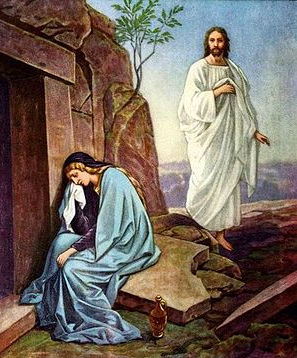
Now after the Sabbath, as the first day of the week began to dawn, Mary Magdalene and the other Mary came to see the tomb. 2 And behold, there was a great earthquake; for an angel of the Lord descended from heaven, and came and rolled back the stone from the door, and sat on it. 3 His countenance was like lightning, and his clothing as white as snow. 4 And the guards shook for fear of him, and became like dead men.
5 But the angel answered and said to the women, “Do not be afraid, for I know that you seek Jesus who was crucified. 6 He is not here; for He is risen, as He said. Come, see the place where the Lord lay. 7 And go quickly and tell His disciples that He is risen from the dead, and indeed He is going before you into Galilee; there you will see Him. Behold, I have told you.”
8 So they went out quickly from the tomb with fear and great joy, and ran to bring His disciples word.
The Women Worship the Risen Lord
9 And as they went to tell His disciples, behold, Jesus met them, saying, “Rejoice!” So they came and held Him by the feet and worshiped Him. 10
I recently read a book that poses the question, “What about your life before you were a Christian has changed since you became a Christ follower.” I can think of so many responses, but two stand out. First of all, as a Christian I have a profound sense of personal sin that wasn’t previously there. Note that I speak of “sin,” not “sins.” My personal sins are a countless laundry list of bad, harmful things I have done during my life. Many people are repulsed by being called a sinner. Yet sin (without an “s” on the end), is a condition we all live in. Martin Luther described it eloquently in a letter to Philip Melanchthon on August 1, 1521:
“Be a sinner, and let your sins be strong, but let your trust in Christ be stronger, and rejoice in Christ who is the victor over sin, death, and the world. We will commit sins while we are here, for this life is not a place where justice resides. We, however, says Peter (2 Peter 3:13) are looking forward to a new heaven and a new earth where justice will reign. It suffices that through God’s glory we have recognized the Lamb who takes away the sin of the world. No sin can separate us from Him, even if we were to kill or commit adultery thousands of times each day. Do you think such an exalted Lamb paid merely a small price with a meager sacrifice for our sins? Pray hard for you are quite a sinner.”
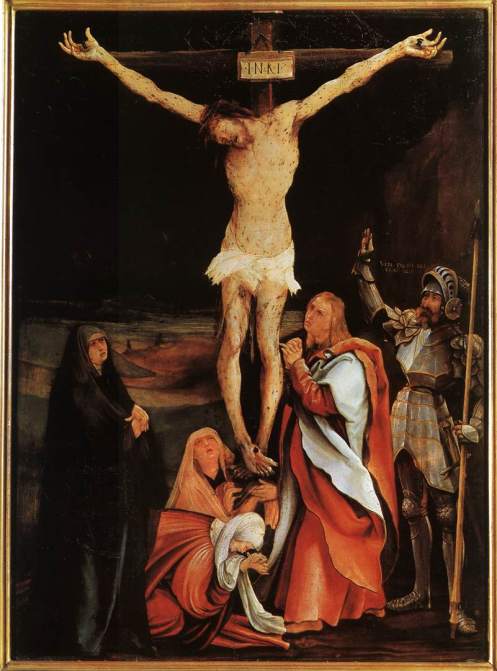
My second response to the question is that as a Christian I have a tremendous sense of gratitude that God has forgiven all my sins through Jesus Christ. Before becoming a Christian, I didn’t recognize my need for forgiveness. Now I understand that Jesus suffered, bled, and died on the cross as an atonement for not only my sins, but the sins of the entire world. Hebrews 9:15 tells us that Christ’s blood inaugurated a new covenant. Through His sacrifice, He became the mediator between God and humanity. The old system of blood offerings through sacrificing animals could only cover sin temporarily, but Christ’s blood provides complete forgiveness. His death on the cross bridged the gap between the holy God and fallen humanity. Jesus the risen Lord is now seated at the right hand of the Father, where he intercedes on our behalf, our great High Priest.
The process of forgiveness begins with repentance. Acknowledging our sins, we turn to God, seeking His mercy. Acts 2:38 stresses baptism in the name of Jesus Christ for the remission of sins. More than a mere ritual; it symbolizes our identification with Christ’s death and resurrection. Through faith in Jesus as the risen Son of God, we receive forgiveness—the slate is wiped clean and our sins are remembered no more.
As the season of Lent winds down and Easter approaches, let us all consider Christ’s atonement for our sins. Through His death on the cross, Jesus atoned for the sins all mankind, satisfying God’s demand for justice, and accomplishing reconciliation for all who seek redemption through Him. The obedience and selfless sacrifice of Christ, who felt human emotions and pain just like you and me, serve as the foundation of our salvation. The shedding of Jesus’s blood on the cross symbolizes the ultimate atonement, restoring us to God’s favor and demonstrating the Father’s divine love and mercy. Jesus willingly gave His life for our sins, bridging the gap between humanity and God. His sacrifice on Calvary’s cross paid the price for our transgressions, conquered sin and death, and brought about the resurrection from the dead, not just for Jesus, but eventually for all of His followers.
God proved His love on the Cross. When Christ hung, and bled, and died, it was God saying to the world, ‘I love you.’ –Billy Graham
As I began penning this piece, it was January 1st, a day traditionally associated with resolutions. According to the American Heritage dictionary, a resolution is “a firm decision to do something.” Common resolutions people make for the New Year include exercising more, losing weight, curbing alcohol consumption, and paying off credit cards. Making a New Year’s resolution requires one to recognize they’ve failed in some facet of their life and need a second chance to set things right.
Everybody needs a second chance at one time or another. Fortunately for Christians, we serve a God of second chances, who shows His grace and mercy to sinners who repent and turn to Him. The Bible is full of second chance stories. Here are just a few, starting with the book of Genesis.
In Genesis 2, we are introduced to Adam and Eve, who God created man and woman and placed in a beautiful garden in Eden. There they tended the garden and enjoyed its magnificent food and natural beauty. God made only one rule for the garden. The couple was not to eat from the tree of the Knowledge of Good and Evil. You’ve likely heard the story—in Genesis 3, Adam and Eve break the rule and as punishment they are forever cast out of the garden and forced to work the soil to raise food by the sweat of their labor. In chapter 4, Eve gave birth to two sons, Cain and Abel. Out of jealousy, the older brother Cain murdered his brother Abel. Yet by the end of chapter 4, Eve gives birth to another son named Seth, to replace Abel. Seth was surely a second chance for Adam and Eve, even though there is no evidence they ever repented of their sins against God.
In Genesis 6, begins the story of Noah and the great flood. By this point in time mankind has become evil and rebellious towards God. It is so bad that God actually regrets having made man. Yet there remains Noah, a righteous man who is favored by God. God tells Noah he is going to cause a flood to destroy every living thing on the surface of the Earth. He instructs Noah to build a giant ark (or ship) and to fill it with certain animals that will repopulate the Earth after the flood waters recede. Noah obeys God’s instructions. In addition to the animals, Noah takes his wife, his sons, and his sons’ wives into the ark. Noah’s entire family received a second chance and survived the flood. From this small group, the entire Earth was repopulated with humans.
In Genesis 12, God calls Abram, a keeper of flocks and herds, out of Babylon to go to the land of Caanan, which God pledges to give Abram’s descendants. Abram takes his wife Sarai and brother-in-law Lot and departs for Caanan along with his animals and servants. Sarah was barren and could not give Abraham an heir. Years later, with Sarai and Abram growing old and fearful Abram might die without an heir, Sarai convinces him to take Sarai’s Egyptian slave Hagar as his wife to bear an heir for Abram. Hagar bore him a son named Ishmael when Abram was 86 years old.
But God had plans for Abram and Sarai. When Abram was 99 years old, God made a covenant with him, changing his name to Abraham, meaning “father of many nations.” God also changed Sarai’s name to Sarah, meaning “princess” and promised that she would bear a son, Isaac, who would be the heir of the covenant. Sarah conceived in her old age. Abraham was 100 years old when Isaac was born. As a natural born heir, Isaac was a second chance for Abraham some 14 years after Ishmael, Abraham’s son by a slave, was born.
The Apostle Peter’s denial of Jesus is described in all four Gospels. Just before Jesus was arrested, He warned His disciples of what is going to happen. Peter boasts in John 13, that he would lay down his life for Jesus. Jesus counters and declares Peter will deny him three times. After Jesus’ is arrested, Peter denies Jesus three times out of fear of His captors. This is described in John 18. Jumping to John 21, the resurrected Jesus forgives Peter and reinstates him to his former position of leadership, commanding Peter to care for Jesus’ flock (people).
Like Peter, it is easy for us to believe we are more righteous than we really are. Like Jesus forgave Peter, so we ought to forgive those who sin against us. Christians serve a God of second chances. While I have given only a few examples, God gave second chances to many people in the Bible, forgiving and restoring them after they sinned or disobeyed Him. As Peter learned firsthand, God offers the ultimate second chance to all humanity through His Son Jesus Christ, who died on the cross for our sins and rose again to give us eternal life. God invites us to respond to His second chance by repenting of our sins, trusting in His grace, and following His will.
Look up from the situation you lament and let it become the pleasant place where God comes to save you.–Rev. Tim Fountain
But God demonstrates his own love for us in this:While we were still sinners, Christ died for us. –Romans 5:8 (NIV)






 Divine Simplicity
Recent Comments