Archive for the ‘regrets’ Category

Slimming down

I was a three-sport athlete in high school.  In college in 1975 I joined a “health club” called the US Army and stayed strong and fit there for the next 26 years.  Through challenging “Arrrmy training” (Bill Murray fans will get it), we stayed physically and mentally ready to defend our nation.  I retired from the Army in 2001. Like so many of the Army buddies I served with, I put on a few pounds after retirement.  In fact, over the course of two decades I went from a retirement weight of 209 lbs. to a maximum of 242. About two years ago, through a combination of illness, dieting, and lifestyle changes, I lost a dramatic amount of weight. Today my weight hovers around a comfy 200 lbs.

Slimming down came with a lot of benefits.  Among these are being able to fit into clothes I hadn’t worn for years, improved sleep, increased energy levels, and all around better physical health as indicated by my vital signs and blood chemistry tests, which today look like those of a healthy twenty-something. Slimming down has many other great benefits, more than we can cover here.

There’s another type of slimming down that’s very good for you. Commonly called “downsizing,” it refers to both reducing the amount of space one lives in and the quantity of personal possessions one owns. Such reducing can be healthy both mentally and spiritually.

Now don’t get me wrong.  I’m not some overzealous lifestyle minimalist that believes in possessing only the bare essentials necessary for living and rejects the rest. I’m not the type of person who could live my life in a “Tiny Home” like one sees on HGTV. But my wife and I have downsized our living space four times since I retired from the army, slimming down from a 3,200 sq ft house to 2,000, to 1,500 and finally to 1,200 sq ft condo, which we have today. We both agree that downsizing is cathartic. Here are just a few potential benefits of lifestyle downsizing which, if you’re not ready for now, might become of greater interest to you as you grow older.   

Reducing Chaos. Chaos is truly the devil’s workshop. Jesus calmed the storm on the Sea of Galilee by commanding, “Peace, be still.”  He can do the same for you and me. God wants us to have peace. A beautiful car, a sleek sailboat, and a humongous house and/or garage crammed with a lot of “stuff” (substitute a gigantic storage unit crammed with stuff) can contribute to a chaotic life.  Each of these comes with a price, and I’m not talking about money. Beautiful cars beg to be washed, waxed, and detailed.  A sleek boat requires a lot of time and effort to keep it safe and seaworthy. Big houses typically have big lots.  Big lots beg to be manicured until the grass looks as good or better than a putting green. A big house crammed with a lot of stuff can became a chaotic ball and chain for you and/or for your children who are trying to sort things out after their parents pass away. Oh yeah, and who is going to remove the snow from that lovely 50-yard curving driveway? Been there and done that! It’s not fun.

Avoiding Anxiety and Distractions.  Have you ever been sitting in a pew on a Sunday morning, taking a mental inventory of all the things, you need to do when you when you get home or in the week to come, instead of listening to what was being said in the sermon? There is a time to do and a time to listen. Sermon time in church is a time to listen.

You might recall this story in Luke chapter 10. Martha and Mary were the sisters of Lasarus. On one occasion that Luke describes, Martha invited Jesus into her house. While Mary sat at Jesus’ feet, listening to him talk, Mary fluttered all about, presumably preparing a meal for Jesus.  After a while Martha became annoyed and asked Jesus to tell Mary to come and help her with the work.  Jesus’ response to Martha’s urging was a gentle rebuke, “Martha, Martha, you are worried and upset about many things, but few things are needed—or indeed only one. Mary has chosen what is better, and it will not be taken away from her.” (v. 41-42). Jesus wants to be the top priority in our lives.  Endeavor to keep Jesus at the center of your thoughts.

Avoiding Comparison. You’ve probably heard the expression “Keeping up with the Joneses.” It refers to a selfish urge or social pressure to match or exceeded the material possessions of one’s neighbors.  Colossians 3 compares covetousness to “idolatry.” When it came to material possessions, King Solomon, the presumed writer of the Book of Ecclesiastes and a man renowned for both his wisdom and his wealth, made the Joneses look like rank amateurs.  Listen to what he had to say about material wealth:

I undertook great projects: I built houses for myself and planted vineyards. I made gardens and parks and planted all kinds of fruit trees in them. I made reservoirs to water groves of flourishing trees. I bought male and female slaves and had other slaves who were born in my house. I also owned more herds and flocks than anyone in Jerusalem before me. I amassed silver and gold for myself, and the treasure of kings and provinces. I acquired male and female singers, and a harem as well—the delights of a man’s heart. I became greater by far than anyone in Jerusalem before me. In all this my wisdom stayed with me. I denied myself nothing my eyes desired; I refused my heart no pleasure. My heart took delight in all my labor, and this was the reward for all my toil. Yet when I surveyed all that my hands had done and what I had toiled to achieve, everything was meaningless, a chasing after the wind; nothing was gained under the sun. –Ecclesiastes 2:4-11

After much experimentation, Soloman finally figured it out! Now see what Jesus said to his disciples:

Then he (Jesus) said to them, “Watch out! Be on your guard against all kinds of greed; life does not consist in an abundance of possessions.” –Luke 12:15

Matthew 19:16-23

Just then a man came up to Jesus and asked, “Teacher, what good thing must I do to get eternal life?”

“Why do you ask me about what is good?” Jesus replied. “There is only One who is good. If you want to enter life, keep the commandments.”

“Which ones?” he inquired.

Jesus replied, “‘You shall not murder, you shall not commit adultery, you shall not steal, you shall not give false testimony, 19 honor your father and mother,’ and ‘love your neighbor as yourself.’”

“All these I have kept,” the young man said. “What do I still lack?”

Jesus answered, “If you want to be perfect, go, sell your possessions, and give to the poor, and you will have treasure in heaven. Then come, follow me.”

When the young man heard this, he went away sad, because he had great wealth.

Then Jesus said to his disciples, “Truly I tell you; it is hard for someone who is rich to enter the kingdom of heaven. Again I tell you, it is easier for a camel to go through the eye of a needle than for someone who is rich to enter the kingdom of God.”

Leaving a Christian Legacy. To those who are believers, I ask “What is your greatest regret since you became a Christian?”  I hope your response isn’t something like, “I wish I had worked more” or “I wish I had bought that 1966 Corvette when I had the chance.”

Will you leave a Christian legacy? What might that look like? Will those who come after you even know you were a Christian given the way that you lived? This is worth thinking about.    

Surely everyone goes around like a mere phantom; in vain they rush about, heaping up wealth without knowing whose it will finally be.  –Psalm 39:6

“‘And I (a wealthy man) will say to my soul, “Soul, you have ample goods laid up for many years; relax, eat, drink, be merry.”’ But God said to him, ‘Fool! This night your soul is required of you, and the things you have prepared, whose will they be?’”—Luke 12:18-20

But godliness with contentment is great gain. For we brought nothing into the world, and we can take nothing out of it. But if we have food and clothing, we will be content with that. —1 Timothy 6:6-8

“Let your light shine before others, that they may see your good deeds and glorify your Father in heaven.” —Matthew 5:16

Legacy isn’t measured by wealth, titles, or accolades—it’s measured by the impact your faith has on others. A Christian legacy is built day by day, through quiet obedience, generous love, and intentional discipleship. When we live with integrity, invest in relationships, and give freely of what God has entrusted to us, we leave behind more than memories—we leave behind a testimony.

A Christian legacy doesn’t end with you or me. It multiplies through the lives we touch, the prayers we pray, and the truths we pass on. And the goal isn’t to be remembered—it’s to make Christ known.  May our respective legacies draw others closer to Jesus Christ.

Leaving Things Behind. Back to lifestyle downsizing, there is nothing bad about wealth in and of itself.  I’ve known many Christians who were wealthy and unselfishly used their wealth for the furtherment of God’s kingdom.  A problem with wealth begins when we forget that everything we possess belongs to God and we are merely stewards of what he has given us. 
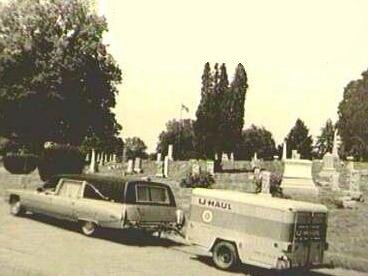
 We are born naked and penniless and in death our physical bodies return to dust. Don’t let accumulating “stuff” become a goal in your life. Even though many have tried and failed (Egyptian Pharaohs and Viking Chieftains come to mind), you just can’t take it with you. I hope you enjoy the short poem below by Judy Dykstra-Brown

Relocation Dreams

I’ve so many things that there’s no place to stack them in.
No drawers to hold them, no cupboards to pack them in.
So many things stowed away from detection.
My fireplace houses its own art collection.

My wardrobe suffers from costumes aplenty.
I’ve boxes of sizes from nine up to twenty.
My jewelry box is stuffed to the gills,
my medicine drawer is spilling out pills.

When I try to cull them, they all want to stay.
The only solution’s to just move away
to find a small island with palm trees and sky
where there is simply nothing to buy!

I’ll live in a hut with floors of swept dirt.
One pair of flip flops, a simple grass skirt.
I won’t feel that shopping should be my main duty.
I’ll look out the window if I require beauty.

No buying new paintings whenever I please.
No little nicknacks and no DVD’s.
No drawers of makeup or tea towels or spoons.
No tarot cards, horoscopes, Ouija boards, runes.

I will not need things to determine my fate,
that day I walk out, simply locking my gate,
taking one suitcase, computer and cables,
and scanner and backup drives, printers and tables,

an internet router and energy backup—
just these few items to locate and pack up.
Then I’m off to a life that’s simpler by far
if these bare necessities fit in my car.

*All Bible quotations are NIV

Enduring Truths for Recent Graduates

Across the country it’s graduation time. Here in South Dakota some schools have already closed for the summer. Most of those that remain open will close in the coming days. Everywhere one turns there’s another grad party. What awaits all these new grads? A decade ago I wrote an article  for my newspaper column with some advice for recent graduates. While it was aimed at high school graduates, it is also highly relevant to recent college grads. The article has become one of the most popular pieces I ever wrote. I’ve received hundreds of emails thanking me for taking the time to share it.  Therefore, I decided to  republish it annually around graduation time.  I hope some of you might find it useful.  You can view the original article in the Tribune-Democrat news at this link: http://goo.gl/LtN72

For those who are graduating high school this year and beginning the long transition into adulthood, I’d like to offer you a gift. Here are five enduring truths I have learned. They will help you through life’s journey.

Choices

“If you decide to just go with the flow, you’ll end up where the flow goes, which is usually downhill, often leading to a big pile of sludge and a life of unhappiness. You’ll end up doing what everyone else is doing.” ― Sean Covey, The 7 Habits of Highly Effective Teens

 Life will deal you an endless string of choices along the way.  Some will be trivial, like deciding what to wear today.  Others will be weighty and their outcomes will affect you forever.  Weighty decisions should always be preceded by much thought and soul searching.  This includes decisions about who you date or marry, what you put into your body, bringing children into the world, what you do for a living, how much debt you incur and who you associate with.

All of these decisions will have a lasting effect on your life. Therefore, make them slowly and deliberately. Often you’ll discover that the right choice is not the easiest one.  A habit of making poor choices will, as the Sean Covey quote suggests, drag your life downhill.

I was recently contacted by a young man who had just received a bad conduct discharge from the Navy.  He asked me how the discharge would impact his future employability.  His mistake was choosing to drive a car while intoxicated and hitting a pedestrian. Fortunately, the victim wasn’t seriously injured. Had it been otherwise, the young sailor would probably be in prison.  It was my sad responsibility to inform him that with some employers the discharge would be a black mark for life. Choices matter!

 Learning

“Experience is a hard teacher because she gives the test first, the lesson afterwards.”    ―Vernon Saunders Law, former professional baseball pitcher and Cy Young Award winner

Some of you will go on to college or technical school.  Others will enter the workforce.  Even if your formal education is over, don’t quit learning. Make learning a lifelong adventure.  I did my undergraduate work at the University of Kentucky.  The school offers a fellowship program for individuals aged 65 and older to attend classes tuition free. Every year numerous senior citizens walk the stage to receive degrees ranging from Associate of Arts to Doctor of Philosophy.  It’s never too late to learn.

Even if you don’t choose to continue formal learning, make it point to learn from life. Observe others; note their successes and failures; then learn from their experiences.  More importantly, learn from your own mistakes.

Some of the greatest lessons I’ve learned, particularly those while serving in uniform, were the result of having made a terrible mistake.  This sort of lesson sticks, like the first time you grab the handle of a hot iron skillet with your bare hand.  The key to learning from mistakes is owning them.  Admit your mistakes and then move on, having learned something from the experience.  Don’t let, “It wasn’t my fault,” be part of your vocabulary.

 Work

“A dream doesn’t become reality through magic; it takes sweat, determination and hard work.”  ―Colin Powell, retired U.S. Army four-star general and former U.S. Secretary of State

Work isn’t always fun. If it were, they’d call it play.  Work can be downright unpleasant, but it’s an essential element of life! Along the way you’re going to have jobs you won’t like. Note what you don’t like and make it a point to improve yourself, so you’ll never again have to work at such a job.

Accepting a job means submitting to the authority of those placed over you.  Learn to work within this system.   You’ll inevitably have bosses you don’t like.  Learn to respect the position, if not the individual.

Fairness

Life is not fair; get used to it.” ―Bill Gates, founder and former CEO, Microsoft Corporation

You will hear much discussion about fairness in this life. It’s all hot air.  Life isn’t fair.  Some good people die young, while some bad people live a long life.   Disease sometimes strikes arbitrarily, for no apparent reason.  Some people prosper while others suffer failure. A death or accident can change your life forever.

There is randomness to life that can’t be avoided.  Don’t expect kindness to be returned with kindness.  Don’t expect generosity to be returned with generosity.  The best choice is to be fair and kind to others and learn to accept what they return to you.

A wise man named Harry Browne ran for president of the United States on the Libertarian Party ticket. On Christmas day in 1966, Browne wrote his young daughter a letter aptly titled, “A Gift for My Daughter.”  I encourage every graduating senior to read it and digest it. In the letter, he explains to his daughter that, “Nobody owes you anything.”  Understanding what Browne meant can truly bless you. You can find it here. https://independentpoliticalreport.com/2015/12/harry-brownes-christmas-letter-to-his-daughter/

Faith

“A faith is a necessity to a man. Woe to him who believes in nothing.”  ―Victor Hugo

I once had a senior Army officer tell me he preferred to work with men who possessed spiritual values, regardless of their religion.  He explained that having faith in a power higher than one’s self was an indicator of how one will perform under pressure; in this instance, the pressure meant combat.

Too many people place their faith in all the wrong places.  It might be in wealth, celebrity, good looks, talent, or even government.  Whatever the case, misplaced faith leads to disappointment after disappointment.

To avoid these disappointments, put your faith in God alone.  You, your loved ones and your friends will all inevitably let you down, but God will never fail you.

Enduring Truths for Recent Graduates

Eight years ago I wrote an article  for my newspaper column with some advice for recent grads.  It has become one of the most popular pieces I ever wrote. I’ve received hundreds of emails thanking me for writing it.  Therefore, I decided to  republish it annually around graduation time.  I hope some of you might find it useful.  You can view the original article in the Tribune-Democrat news at this link: http://goo.gl/LtN72

For those who are graduating high school this year and beginning the long transition into adulthood, I’d like to offer you a gift. Here are five enduring truths I have learned. They will help you through life’s journey.

Choices

“If you decide to just go with the flow, you’ll end up where the flow goes, which is usually downhill, often leading to a big pile of sludge and a life of unhappiness. You’ll end up doing what everyone else is doing.” ― Sean Covey, The 7 Habits of Highly Effective Teens

 Life will deal you an endless string of choices along the way.  Some will be trivial, like deciding what to wear today.  Others will be weighty and their outcomes will affect you forever.  Weighty decisions should always be preceded by much thought and soul searching.  This includes decisions about who you date or marry, what you put into your body, bringing children into the world, what you do for a living, how much debt you incur and who you associate with.

All of these decisions will have a lasting effect on your life. Therefore, make them slowly and deliberately. Often you’ll discover that the right choice is not the easiest one.  A habit of making poor choices will, as the Sean Covey quote suggests, drag your life downhill.

I was recently contacted by a young man who had just received a bad conduct discharge from the Navy.  He asked me how the discharge would impact his future employability.  His mistake was choosing to drive a car while intoxicated and hitting a pedestrian. Fortunately, the victim wasn’t seriously injured. Had it been otherwise, the young sailor would probably be in prison.  It was my sad responsibility to inform him that with some employers the discharge would be a black mark for life. Choices matter!

Learning

“Experience is a hard teacher because she gives the test first, the lesson afterwards.”    ―Vernon Saunders Law, former professional baseball pitcher and Cy Young Award winner

Some of you will go on to college or technical school.  Others will enter the workforce.  Even if your formal education is over, don’t quit learning. Make learning a lifelong adventure.  I did my undergraduate work at the University of Kentucky.  The school offers a fellowship program for individuals aged 65 and older to attend classes tuition free. Every year numerous senior citizens walk the stage to receive degrees ranging from Associate of Arts to Doctor of Philosophy.  It’s never too late to learn.

Even if you don’t choose to continue formal learning, make it point to learn from life. Observe others; note their successes and failures; then learn from their experiences.  More importantly, learn from your own mistakes.

Some of the greatest lessons I’ve learned, particularly those while serving in uniform, were the result of having made a terrible mistake.  This sort of lesson sticks, like the first time you grab the handle of a hot iron skillet with your bare hand.  The key to learning from mistakes is owning them.  Admit your mistakes and then move on, having learned something from the experience.  Don’t let, “It wasn’t my fault,” be part of your vocabulary.

Work

“A dream doesn’t become reality through magic; it takes sweat, determination and hard work.”  ―Colin Powell, retired U.S. Army four-star general and former U.S. Secretary of State

Work isn’t always fun. If it were, they’d call it play.  Work can be downright unpleasant, but it’s an essential element of life! Along the way you’re going to have jobs you won’t like. Note what you don’t like and make it a point to improve yourself, so you’ll never again have to work at such a job.

Accepting a job means submitting to the authority of those placed over you.  Learn to work within this system.   You’ll inevitably have bosses you don’t like.  Learn to respect the position, if not the individual.

Fairness

“Life is not fair; get used to it.” ―Bill Gates, founder and former CEO, Microsoft Corporation

You will hear much discussion about fairness in this life. It’s all hot air.  Life isn’t fair.  Some good people die young, while some bad people live a long life.   Disease sometimes strikes arbitrarily, for no apparent reason.  Some people prosper while others suffer failure. A death or accident can change your life forever.

There is randomness to life that can’t be avoided.  Don’t expect kindness to be returned with kindness.  Don’t expect generosity to be returned with generosity.  The best choice is to be fair and kind to others and learn to accept what they return to you.

A wise man named Harry Browne ran for president of the United States on the Libertarian Party ticket. On Christmas day in 1966, Browne wrote his young daughter a letter aptly titled, “A Gift for My Daughter.”  I encourage every graduating senior to read it and digest it. In the letter, he explains to his daughter that, “Nobody owes you anything.”  Understanding what Browne meant can truly bless you. You can find it at: https://tenthamendmentcenter.com/2009/12/22/a-gift-for-my-daughter/ 

Faith

“A faith is a necessity to a man. Woe to him who believes in nothing.”  ―Victor Hugo

I once had a senior Army officer tell me he preferred to work with men who possessed spiritual values, regardless of their religion.  He explained that having faith in a power higher than one’s self was an indicator of how one will perform under pressure; in this instance, the pressure meant combat.

Too many people place their faith in all the wrong places.  It might be in wealth, celebrity, good looks, talent, or even government.  Whatever the case, misplaced faith leads to disappointment after disappointment.

To avoid these disappointments, put your faith in God alone.  You, your loved ones and your friends will all inevitably let you down, but God will never fail you.

Wounded Hearts

 Sorrow

“Here bring your wounded hearts, here tell your anguish; 

Earth has no sorrow that Heaven cannot heal.”   —Saint Thomas More


If you’re a movie buff and haven’t yet made it to the theater to see “Into the Storm,” please read on.  This is not a spoiler.

Fans of disaster flicks will love this movie.  When it comes to special effects, it’s Twister on steroids. Because of the awesome special effects, which include a trip into the “eye” of a monster F5 tornado, seeing Into the Storm on the big screen is a must.

The movie has several story lines and shifts frequently from one to another. A common thread is woven throughout several of them—people in dire circumstances who are overcome with sorrow because of bad personal relationships with loved ones. All are emotionally wounded to the core as they find themselves facing almost certain death.

A teenage son laments that his last words with his deceased mother were harsh. The deceased woman’s husband looks back on the way he has raised his sons after her death and wishes he could start over.

A teenage girl, buried in rubble, is sorry she lied to her parents about where she was going when she left home that morning.

A single mother caught in the midst of the storm, is sorry she has allowed her work to get in the way of spending more time with her small daughter.

The sorrow displayed by these storm victims goes beyond simple regrets over situations and relationships in their lives that went wrong. Regret is what many male politicians display when the media catches them having an extramarital affair. They aren’t truly sorry about their deplorable behavior. They’re sorry they were caught.  Rather than being sorry for the damage they have inflicted on themselves and others, theirs is a self-centered, worldly response.  It’s a sorrow stemming from knowing they will have to deal with the public and private consequences of their transgressions.

In contrast, the sorrow displayed by the characters of Into the Storm is the sorrow of repentance—selfless sorrow acknowledging that one’s transgressions have harmed others.  It is a repentant sorrow that says, “I understand my actions were wrong; I am truly sorry for the pain and hurt I have inflicted myself and others; and I want to change my bad behavior and way of thinking forever.”

This selfless sorrow is what 2 Corinthians, chapter 7 calls godly sorrow.  “Godly sorrow brings repentance that leads to salvation and leaves no regret, but worldly sorrow brings death.”(NIV)  Godly sorrow brings healing and life.

The Parable of the Rich Fool in Luke 12:13-21 tells the story of a wealthy man who lives a life of plenty.  He has all that he needs in this world—so much wealth and so many possessions that he believes he can simply “eat, drink and be merry,” for the rest of his days.  But at  the precise moment the man is gushing pride and personal satisfaction, God tells him he will die that very night.

What if you knew that today was the last day of your life? Would you regret that you haven’t done enough for yourself, or would you feel godly sorrow because of the way you have managed some of your personal relationships? More importantly, how would you feel about the way you’ve managed your relationship with God?

Today truly is the first day in the rest of your life.  Seize the opportunity to start setting things right today and embrace the family members, loved ones, friends and acquaintances who really matter in your life. You’ll have no regrets!

3Do nothing out of selfish ambition or vain conceit. Rather, in humility value others above yourselves, 4not looking to your own interests but each of you to the interests of the others. 5In your relationships with one another, have the same mindset as Christ Jesus: 6Who, being in very nature God, did not consider equality with God something to be used to his own advantage; 7rather, he made himself nothing by taking the very nature of a servant, being made in human likeness. 8And being found in appearance as a man, he humbled himself by becoming obedient to death— even death on a cross!  —Philippians 2:3-8 (NIV)

Also see: Recalling Some Life Lessons.

Things That Matter

Image

“Men, for the sake of getting a living, forget to live.”    —Margaret Fuller

Many things in life compete for one’s attention and time.  There rarely seems to be enough time in a day to address everything tugging at your life.   At work, at school or at home it seems that nobody ever attains that elusive state of existence we call being, “caught up.”  The fact is it’s never possible to be caught up.  As soon as you complete one “to do” list, you’ll find that another list has emerged to take its place.  Life in America is busy, in many instances even for retirees.

With all of the hustle and bustle, it’s quite easy to allow each day to blend in with the next.  The end result is we get caught up in routines that often result in our missing out on the things that really matter in our lives.  If you’ve seen Bill Murray’s movie “Groundhog Day,” you’ll get the picture.  Each day becomes a replay of the previous one, like being caught in an endless circle of the mundane.

The end product of such routines is missed events, missed occasions and missed opportunities.  Think about those things you most regret having missed out on in your life.  It might be a birthday, anniversary, wedding, baptism, funeral, recital, ball game, a move to a new location or job, or something entirely different.  Each of us has a list of personal regrets weighing on our respective souls. Sometimes the weight becomes too much to bear.

As a management consultant, one of my services entails helping people make the most of their time and other resources.  In order to do this, I recommend a reflective exercise called “imagine.”  It goes like this.  Imagine that today you learned you have three months to live.  Make a list of the things you’d like to do with your remaining time?

Many people playfully compile something called a bucket list—a list of things they’d like to do before they die (kick the bucket).  It usually includes a lot of exciting activities, like skydiving, climbing Mount Everest, traveling in outer space and other great adventures.  However, people who partake in the “imagine” exercise tend to be more serious in compiling their lists.

Common answers to the “imagine” exercise include spending more time with one’s family and loved ones, apologizing to someone you’ve offended, helping someone in need and spending more time in prayer and spiritual pursuits. “Working more” rarely appears on such lists! Doing the “imagine” exercise produces a list of the things that really matter in one’s life.

It’s useful for anyone to develop a personal list of the things that matter.  Life is short and our time and other resources are limited.  Knowing what matters in your life will help you be a good steward of your resources.

Colossians 3:23 tells us, “Whatever you do, work heartily, as for the Lord and not for men.”  I urge you to take time to reflect on what truly matters in your life and work heartily at being a good steward with the time and other resources you dedicate to the things that matter.  Concurrently, work earnestly to eliminate as many as possible of the distracting things that don’t really matter.

As the popular Johnny Mercer song goes, “You’ve got to accentuate the positive, eliminate the negative,
and latch on to the affirmative, don’t mess with Mister In-Between.  Just for grins, here’s a link to the original Johnny Mercer recording.  http://www.youtube.com/watch?v=f3jdbFOidds

Wikipedia: H is the eighth letter in the ISO basic Latin alphabet.