This piece was originally posted to my blog on February 26, 2019. The church season of Lent in 2024 runs from Ash Wednesday (February 14) to Easter Sunday (March 31).
Archive for the ‘Lent’ Category
22 Feb
Out of the depths I cry to You, oh Lord!

Out of the depths I cry to You, O LORD! O Lord, hear my voice! Let Your ears be attentive to the voice of my pleas for mercy! If You, O LORD, should mark iniquities, O Lord, who could stand? But with You there is forgiveness, that You may be feared. I wait for the LORD, my soul waits, and in His Word I hope; my soul waits for the Lord more than watchmen for the morning, more than watchmen for the morning. O Israel, hope in the LORD! For with the LORD there is steadfast love, and with Him is plentiful redemption. And He will redeem Israel from all his iniquities. (Psalm 130)
Lent begins today, a 40 day season of penitence and prayer. It’s a good time to meditate on the Seven Penitential Psalms:http://www.edgeofenclosure.org/intro7penitentialpsalms.html.
23 Feb
Dust in the wind: a Lenten reflection
As I began writing this post it was the first Sunday in the church season of Lent, a 40-day period of prayer, fasting, and almsgiving that begins on Ash Wednesday and ends at sundown on Holy Thursday. Lent is a time of preparation to celebrate Christ’s resurrection on Easter day. The blessing priests pronounce at the Ash Wednesday service is a solemn reminder of our mortality—the priest draws the sign of the cross with ashes on one’s forehead while saying, “Remember that you are dust and to dust you shall return.”
On the surface, this seems like an odd sort of blessing—a reminder that you’re going to die someday. Death is an inevitable part of life, but it’s a contradiction because it wasn’t part of God’s plan for us. The Lenten ashes on one’s forehead reminds us that we are dead in our sinfulness and that our only hope is God’s saving grace, a gift offered freely through Christ’s death and resurrection.
Christ’s sacrifice on the cross, where he bore the sins of the world, revealed God’s limitless love for each of us. Death has a way of revealing love. Over the past 100 days I’ve lost three dear friends and Army pals. For me, their deaths are also a reminder of my own mortality. I miss them all and will miss them always. It’s easy to take someone for granted while they’re alive, but their death provides a stark reminder of how much they meant in one’s life. Though I miss them all, I take comfort in the knowledge that they were all Christ followers and they will see the Lord face to face on Resurrection Day.
Lent is a somber season. The focus on penance, fasting, and one’s mortality is like living Christ’s final journey to Jerusalem and His crucifixion. The beauty of the crucifixion is that it isn’t the end of the story. It is the chapter in Jesus’ life leading to the season of Easter and the celebration of His glorious resurrection, which brings a gift of eternal life to those who accept him as Savior. Lent is my favorite church season.
“(Lent) is a period of spiritual ‘combat’ which we must experience alongside Jesus, not with pride and presumption, but using the arms of faith: prayer, listening to the word of God and penance. In this way we will be able to celebrate Easter in truth, ready to renew the promises of our Baptism.” -Pope Benedict XVI
If you come from a church tradition that doesn’t celebrate Lent, I encourage you to learn more about it. There are many free resources available online from the Anglican Church in North America (ACNA). Please visit the “Gift of Lent” link below.
Lent
by Christina Georgina Rossetti
It is good to be last not first,
Pending the present distress;
It is good to hunger and thirst,
So it be for righteousness.
It is good to spend and be spent,
It is good to watch and to pray:
Life and Death make a goodly Lent,
So it leads us to Easter Day.
22 Feb
Distracted Living
 Has the Zombie apocalypse begun!
We’ve all heard tragic stories about distracted driving, where someone texting on a cell phone lost control of their car and caused a great tragedy. When driving, it’s absolutely crucial to keep one’s eye on the road ahead. The advent of the internet and subsequently cell phones has created millions of distracted people. You’ve probably seen some of them sitting at a family dinner in a restaurant—all heads down, focused on their phones and no family interaction at all. How very sad!
According to a January 2020 article in The Guardian, a study conducted in 2014 indicated that mobile phone users receive an average of 63.5 alerts every day, most viewed within minutes whether the phone is on silenced or not. A 2016 study by Deloitte corporation found that people checked their phones an average 47 times a day, often in response to alerts. Many people are bombarded by cell phone beeps, blips and buzzes nearly every waking moment. These distractions can even continue through the night for those who sleep with cell phones by their beds.
Unfortunately, many Christians today suffer from another form of distraction—distracted living. Distracted living is a byproduct of other distractions and cares of this world, for example partying, obsessive fitness, substance abuse, emails, texting, internet browsing, social media, television, movies, sports, and many others that that steal our time daily.
The Bible story of Mary and Martha is a perfect example of distracted living (Luke 10:38-42). Mary and Martha were the sisters of Lazarus, whom Jesus raised from the dead. They were all beloved friends of Jesus. On one particular occasion, Jesus visited their home in Bethany. There were others present as well. Mary chose to sit at Jesus’ feet and listen to him teach, while her sister Martha busied herself serving their guests. Martha became irritated with Mary and asked Jesus to send Mary to help her. Jesus responded with a mild rebuke, saying, “Martha, Martha, you are worried and troubled about many things. But one thing is needed, and Mary has chosen that good part, which will not be taken away from her.” Mary was laser focused on Jesus, while Martha was living a distracted life.
People with distracted lives may become easily agitated, they often feel overwhelmed, and they frequently neglect the essential “four-F’s” of things that really matter in this life—faith, family, friends and freedom. Christians shouldn’t allow any of these areas to suffer neglect, but they must be especially cautious about neglecting their faith. Renowned Scottish theologian Oswald Chambers said, “Starvation of the mind, caused by neglect, is one of the chief sources of exhaustion and weakness in a servant’s life.” Evidence of faith neglect often includes finding reasons to skip church, not finding the time to read and study scripture, not praying, feeling rushed while praying, and even sometimes falling asleep while praying.
Christian churches around the globe will soon begin commemorating the holy season of Lent, which begins on Ash Wednesday (2/26/2020) and runs through sunset on Holy Saturday, the day before Easter. I blogged about this very special church season in February last year (https://divinesimplicity.wordpress.com/2019/02/26/lent-a-season-of-penitence-and-prayer/).
For Christians, Lent is traditionally a season of fasting, penitence and prayer. It’s a wonderful time for Christians to practice disciplines to help them reconnect with their faith. One of my Lenten disciplines is to prayerfully read the Seven Penitential Psalms the first thing each morning during Lent. I also find a good Lenten devotional and read a morning devotion daily. A wonderful version of the Seven Penitential Psalms can be found at this link: http://www.edgeofenclosure.org/intro7penitentialpsalms.html. Lutheran Hour Ministries provides a new series of daily Lenten devotions each year. Beginning on February 26, they can be found at this link: https://www.lhm.org/dailydevotions/default.asp. I encourage you to take part in a Lenten discipline this year and, if you’re leading a distracted life, begin turning your attention back to God.
11 Mar
The Seven Penitential Psalms
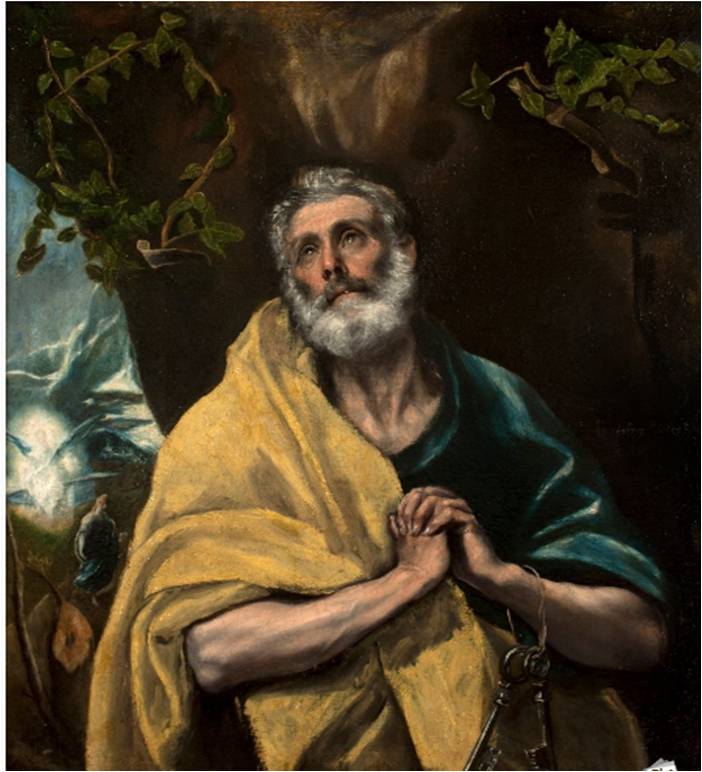
St. Peter in Penitence, El Greco, (ca. 1580)
We are currently celebrating the church season of Lent, a 40-day period before Easter when Christians reflect upon the passion and sacrifice of Jesus Christ, who was crucified and died as atonement for our sins, setting believers free from sin and death. Easter celebrates Christ’s resurrection from the dead and the promise of eternal life for His believers. Penitence, a solemn contemplation of one’s sins and request for God’s forgiveness, is foundational to Lent.
One Lenten discipline that I recommend is the prayerful reading of the Seven Penitential Psalms—Psalms 6, 32, 38, 51, 102, 130 and 143. These psalms (prayers) are generally attributed to David. Psalm 51 is probably the most widely read of the seven. In Anglican and Catholic traditions, it is often recited by congregations on Ash Wednesday and at other times during the Lenten season.
Christian tradition suggests several possible reasons behind the writing of these psalms. Probably the most widely accepted explanation is they were King David’s prayers of repentance for his sins against Uriah and Uriah’s beautiful wife Bathsheba. David’s sinful lust for Bathsheba drove him to conspire to have Uriah killed in battle. With Uriah out of the way, David took Bathsheba for his wife. She conceived and bore a baby son, but the child died shortly after birth. Recalling the words of condemnation delivered to him by the prophet Nathan regarding David’s sin with Bathsheba (2 Samuel 12: 4-7), David believed the baby’s death was God’s punishment for his transgressions. Nathan said to David:
4 “Now a traveler came to the rich man, but the rich man refrained from taking one of his own sheep or cattle to prepare a meal for the traveler who had come to him. Instead, he took the ewe lamb that belonged to the poor man and prepared it for the one who had come to him.”5 David burned with anger against the man and said to Nathan, “As surely as the Lord lives, the man who did this must die! 6 He must pay for that lamb four times over, because he did such a thing and had no pity.” 7 Then Nathan said to David, “You are the man! (NIV)
Another Christian tradition associate’s the Seven Penitential Psalms with the Seven Deadly Sins. We first encounter the Seven Deadly Sins in the writings of Pope Gregory I around the year 600. The sins are pride, greed, lust, wrath, gluttony, envy, and sloth.
The writings of French Roman Catholic theologian Cardinal Pierre d’Ailly (1351-1420) associates certain spiritual virtues with the Seven Penitential Psalms: Psalm 6, fear of punishment; Psalm32, sorrow and confession for sin; Psalm 38, hope; Psalm 51, love of purity and mercy; Psalm102, longing for heaven, Psalm 130, distrust of one’s own strength and hope for mercy; and Psalm 143: joy.
During this year’s season of Lent, I’ve committed to prayerfully reading the Seven Penitential Psalms daily as part of my morning devotion. It has been a deep spiritual experience, one that I plan to make part of my future Lenten discipline. I encourage readers to give this a try. You can find the Seven Penitential Psalms online at the following URL:
26 Feb
Lent: a Season of Penitence and Prayer

As an Anglican, I follow a Church liturgical calendar, celebrating each of its many seasons. Very soon the season of Lent will be upon us. Lent this year is the period of 40 days from Ash Wednesday (March 6th) to Easter Sunday, commemorating Christ’s 40 days of fasting and temptation in the wilderness, His final journey to Jerusalem, where He was crucified, and His last hours with His disciples before His crucifixion. For believers, it is a period of penitence and alms giving. On Ash Wednesday, many Christians have their foreheads marked with ashes in the sign of the cross. The ashes are often collected from burning the palm fronds used in the celebration of Psalm Sunday.
The Catholic and Anglican traditions regarding Lent are very similar. In the Anglican tradition, which I practice, Lent is sometimes called the Paschal season (relating to Passover or Easter). It is a preparation time intimately connected to the most important Festival of the Church year, Easter, which marks Christ’s resurrection from the dead and His victor over sin and death. In celebration of the so-called Easter Triduum, Christians commemorates the passion (suffering), death, and resurrection of Jesus and thus the origin of the all Christian belief and the source of our faith and salvation. So, as Jesus spent 40 days fasting and praying in the desert, Anglicans prepare for 40 days for the encounter with Him in the Easter celebration. Traditionally, the Easter season begins with Ash Wednesday and ends on Holy (or Maundy) Thursday, a day we recall Jesus washing the feet of his disciples and having his last meal with them before his crucifixion. Maundy Thursday reminds believers of their hunger for God by refraining from food and intensifying one’s prayer life and charitable giving.
In the Orthodox tradition, Lent is an invitation to learn the salvation story by studying the death and the resurrection of Christ. It is an exercise in which believers partake of suffering and resurrection of the Lord. The cross and resurrection are daily realities: we die every day in all trials of life with Christ, but we experience our resurrection every day when we unite with him in faith and prayer. It is important in the Orthodox tradition to recognize that the cross is symbolic of the resurrection, not death. Fasting during Lent is an exercise of self-restraint, by which believers overcome their physical passions and win true freedom. It helps us to the internalization, especially when we pray. The believers should fast and avoid meat. They should intensify their prayer life and dig deeper into the scriptures than usual. On Wednesdays and Fridays during Lent, many Orthodox churches celebrate an evening service called “liturgy of the pre-sanctified gifts”. During these services, no elements are sanctified for the Holy Eucharist. Instead, the bread and wine sanctified on the precious Sunday are used. On these days, many Orthodox believers fast until evening.
Protestant denominations observe Lent in a wide variety of ways. Sadly, many traditional Protestant denominations barely observe Lent or the Church Calendar at all. However, for some, fasting during Lent is a time for reflecting on the essentials of Christianity. The original purpose is to prepare one’s self internally for the coming of Easter. Many Protestants avoid certain things during Lent in a quest to learn the true necessities in life. They may deprive themselves of dependency-related risks such as alcohol, chocolate and other sweets, and even the consumption of social media. The Lenten season is a good time to reorder one’s life—restacking priorities.
For those readers who have no set way of observing Lent, I urge you to consider adopting a Lenten tradition. One simple way to begin is to read a daily Lenten devotion. There are many available on the web, but my favorite is published by Lutheran Hour Ministries. Beginning March 6 you will be able to find the devotions at this link: https://www.lhm.org/lent/.
“…special (church) holidays give rise to various liturgical calendars that suggest we should mark our days not only with the cycles of the moon and seasons, but also with occasions to tell our children the stories of our faith community’s past so that this past will have a future, and so that our ancient way and its practices will be rediscovered and renewed every year.”
― Brian D. McLaren, Finding our Way Again: The Return of Ancient Practices
28 Feb
Living by the Calendar

The here-and-now is no mere filling of time, but a filling of time with God.
I work in the tech industry on a virtual business team. We have people located across the country from Virginia to Hawaii and many places in between. The team is run by the calendar. It’s difficult scheduling conference calls with a team spread across five time zones, so we have to schedule carefully and stick closely to the schedule.
Personally, I would be pretty lost without the Microsoft Outlook calendar on my laptop. Between my work, volunteering, doctor appointments, shuttling grand kids around, birthday reminders, weddings, funerals and the like I simply couldn’t keep track of where to be when without a calendar.
While most adults in the Western World are familiar with calendars, there is one calendar that’s terribly overlooked in many circles. I’m speaking about the Christian liturgical calendar. The liturgical year (or Church year) is a continuous cycle of Christian seasons that include various feast days that mark celebrations of the Church. The liturgical year also has a set list of readings for every day of the year. Observing the liturgical calendar is highly enriching, providing a continuous commemoration of key events in the life of Christ and the church. Sadly, many Christian denominations hardly recognize the liturgical calendar at all.
According to the website The Voice, “The Christian calendar is organized around two major centers of Sacred Time: Advent, Christmas, and Epiphany; and Lent, Holy Week, and Easter, concluding at Pentecost. The rest of the year following Pentecost is known as Ordinary Time, from the word “ordinal,” which simply means counted time (First Sunday after Pentecost, etc.) (http://www.crivoice.org/chyear.html).

Let’s take a short tour of the Church liturgical year. It begins with Advent, which occurs in December. Advent commemorates Israel’s wait for the birth of the Messiah, which was promised in prophecy. For modern Christians, it is symbolic of our waiting for Christ to “come again in glory to judge the living and the dead,” as many Christians frequently recite in the words of the Nicene Creed.
Advent is followed by Christmas on December 25, and Epiphany in January. Christmas is the celebration of the birth of Jesus Christ, Israel’s promised Messiah and God’s only begotten son–the savior of the world. It is followed by Epiphany, which is translated “appearance.” Epiphany commemorates the visit by the Magi (or three wise men) to baby Jesus, when they reveal that Jesus is the Messiah and bring him gifts of gold, frankincense and myrrh. Gold represents the kingship of Jesus. Frankincense, which is sweet incense, represents His earthly priesthood. Myrrh, a sweet spice used in preparing bodies for burial, represents Jesus’ coming crucifixion and death on the cross for the forgiveness of the sins of the world. The later part of January and the month of February are ordinary time on the liturgical calendar.
Lent, Easter and Pentecost follow the ordinary time in February. Lent is the period of 40 days from Ash Wednesday to Easter Sunday, commemorating Christ’s final journey to Jerusalem, where he will be crucified. It is a period of penitence and alms giving for the church. On Ash Wednesday, many Christians have their foreheads marked with ashes in the sign of the cross.
Palm Sunday occurs the Sunday before Easter. It commemorates Jesus’ Triumphal Entry into Jerusalem and his final journey to the cross. He rode into the city on a donkey while the crowds shouted “Hosanna,” which is translated “save us,” and they laid palm leaves in his path. Modern day Christians often celebrate Palm Sunday by waving palm leaves during a processional at the beginning of their church service. Palm leaves from the Palm Sunday service are burned and the ashes collected to be used during Ash Wednesday of the following year.
At the end of Lent comes a period of three days called the Paschal Triduum, which begins on Maundy Thursday, proceeds through Good Friday, and ends with a liturgy on the evening of Easter Sunday. These all fall inside Holy Week, the week ending with Easter.
Maundy Thursday marks the night before Christ’s crucifixion, when he celebrates the Last Supper with his disciples, giving us the gift of the Holy Eucharist. Good Friday commemorates the crucifixion of Christ for the forgiveness of our sins and his burial. Easter celebrates Christ’s glorious resurrection and his victory over sin and death. Christ taught his disciples for 40 days following the resurrection, then he miraculously allowed them to see his Ascension into heaven, which occurred before their eyes; meanwhile, angels promised the disciples that just as they saw him ascend into heaven, they will also him descend back to the Earth to reign in glory forever.
Following the Ascension comes Pentecost. Pentecost commemorates God’s gift of the Holy Spirit to his disciples and marks the beginning of the Church. Following the season of Pentecost, the months of June through November are ordinary time on the liturgical calendar. At the end of November, on the Sunday before Advent begins, we celebrate Christ the King Sunday, a day reminding Christians that they owe their first allegiance to Christ, not earthly powers or rulers.
So there you have it. Observing the Church liturgical calendar is a beautiful way of celebrating Christ’s birth, crucifixion, resurrection and the establishment of Christ’s Church on Earth. If your personal tradition doesn’t observe the liturgical calendar, consider adopting it to add a new level of richness to your worship. In doing so you you’ll find inspiration and hope.
12 Mar
My Lenten Journey

I thank God for my Lenten journey this year. I’ve learned so much already. It began with a total knee replacement surgery on February 28, which was Shrove Tuesday. Shrove Tuesday is the first Tuesday before Ash Wednesday. It officially ends the season of Epiphany and is the vigil for the beginning of Lent.
The surgery went well, but there were complications that nearly landed me in the intensive care unit. Consequently, I suffered three days of migraines and severe nausea, which left me exhausted and unable to eat. My anticipated three-day hospital stay for surgery ended up being six days instead.
Among the lessons and reminders of my journey, it was comforting to see so many caring people on the hospital staff. It reassured me that there are still many good and loving people in our society, despite all the violence and hatred we see every evening on the news.
It has given me insight into the pain and suffering so many handicapped and elderly people endure every day. I have to use a walker and my physical therapy has, at times, been torturous.
I’ve been so happy and encouraged to see how concerned and eager to assist our eldest grandson (age 9) is. It’s a sure sign that the hard work of his parents is paying of.
It has reminded me how blessed I am to have a loving wife and a marriage that has endured 40 years. Marriage is a lot of work, but the rewards of persevering are tremendous.
It has helped me begin some very healthy lifestyle changes. I’m an active person who enjoys exercise. At present, I won’t be able to do any serious exercising for several more weeks. I’ve had to closely watch what I eat and drink while incapacitated–something I should have been doing all along.
But most of all, it’s reminded me that, no matter how much I try, I can’t handle everything by myself. How comforting it is to have a loving God to help me with every aspect of my life. We’re only 12 days into the 40 days of Lent and I pray the lessons will keep coming as I recover at home and dig deeper into the scriptures.
Do not worry about anything, but in everything by prayer and supplication with thanksgiving let your requests be made known to God. And the peace of God, which surpasses all understanding, will guard your hearts and your minds in Christ Jesus. Philippians 4:6-7
Bless the Lord, O my soul,
and all that is within me,
bless his holy name.
Bless the Lord, O my soul,
and do not forget all his benefits․
who forgives all your iniquity,
who heals all your diseases,
who redeems your life from the Pit,
who crowns you with steadfast love and mercy,
who satisfies you with good as long as you live
so that your youth is renewed like the eagle’s. Psalm 103:1-5
Give ear to my words, O Lord;
give heed to my sighing.
Listen to the sound of my cry,
my King and my God,
for to you I pray.
O Lord, in the morning you hear my voice;
in the morning I plead my case to you, and watch. Psalm 5:1-3
How sweet are your words to my taste,
sweeter than honey to my mouth!
Through your precepts I get understanding;
therefore I hate every false way.
Your word is a lamp to my feet
and a light to my path. Psalm 119:103–105
28 Feb
Take a Lenten Journey

Tomorrow, Ash Wednesday, marks the beginning of the season of Lent. For many Christians, Lent is little more than a period of 40 days on the church calendar. But for others, it is a solemn time of preparation and reflection looking forward to Easter, the most holy day of the Christian faith on which we celebrate the resurrection of Jesus and his victory over death and sin.
If you’re a Christian for whom Lent has no special significance, I challenge you to take a Lenten journey beginning tomorrow. The journey doesn’t have to be anything extravagant—I’m not suggesting that you give up coffee or chocolate for 40 days (although that might not be a bad idea). I recommend simply beginning each day during Lent by spending a half hour reading scripture, praying and reflecting (something I hope you’re already doing) on Christ’s final journey to the cross. You might begin by reading a brief Lenten Primer, which was written a few years ago. It’s located at this link: http://visitor.stcdio.org/primer-season/
After reading the Primer, I suggest using a Lenten devotional to guide you on your journey. The devotional will provide a reading for each day of Lent. There are many good ones available online at no cost. If you have trouble choosing one, here are a couple of suggestions. The Bible Gateway website is offering a Lenten devotional focusing on the writing of renowned German Theologian Dietrich Bonhoeffer. Because Bonhoeffer resisted the Nazi regime, he was incarcerated in a concentration camp. He was executed near the end of World War II. You can sign up at this link to have each daily devotion emailed to you:
https://www.biblegateway.com/landing/easter/?utm_source=bg&utm_medium=alert&utm_campaign=easter
The Lutheran Hour Ministries is also offering a Lenten devotional. You can find it online at this link beginning March 1. https://www.lhm.org/lent/dailydevotions.asp
Starting this year, let Lent become a special church season for you!
Almighty and Everlasting God,
You have given the human race
Jesus Christ our Savior as a model of humility.
He fulfilled Your Will by becoming Man
and giving His life on the Cross.
Help us to bear witness to You
By following His example of suffering
and make us worthy to share in His Resurrection.
We ask this through our Lord Jesus Christ, Your Son.
Amen.
18 Apr
Good Friday, 2014 – The Passion of the Christ
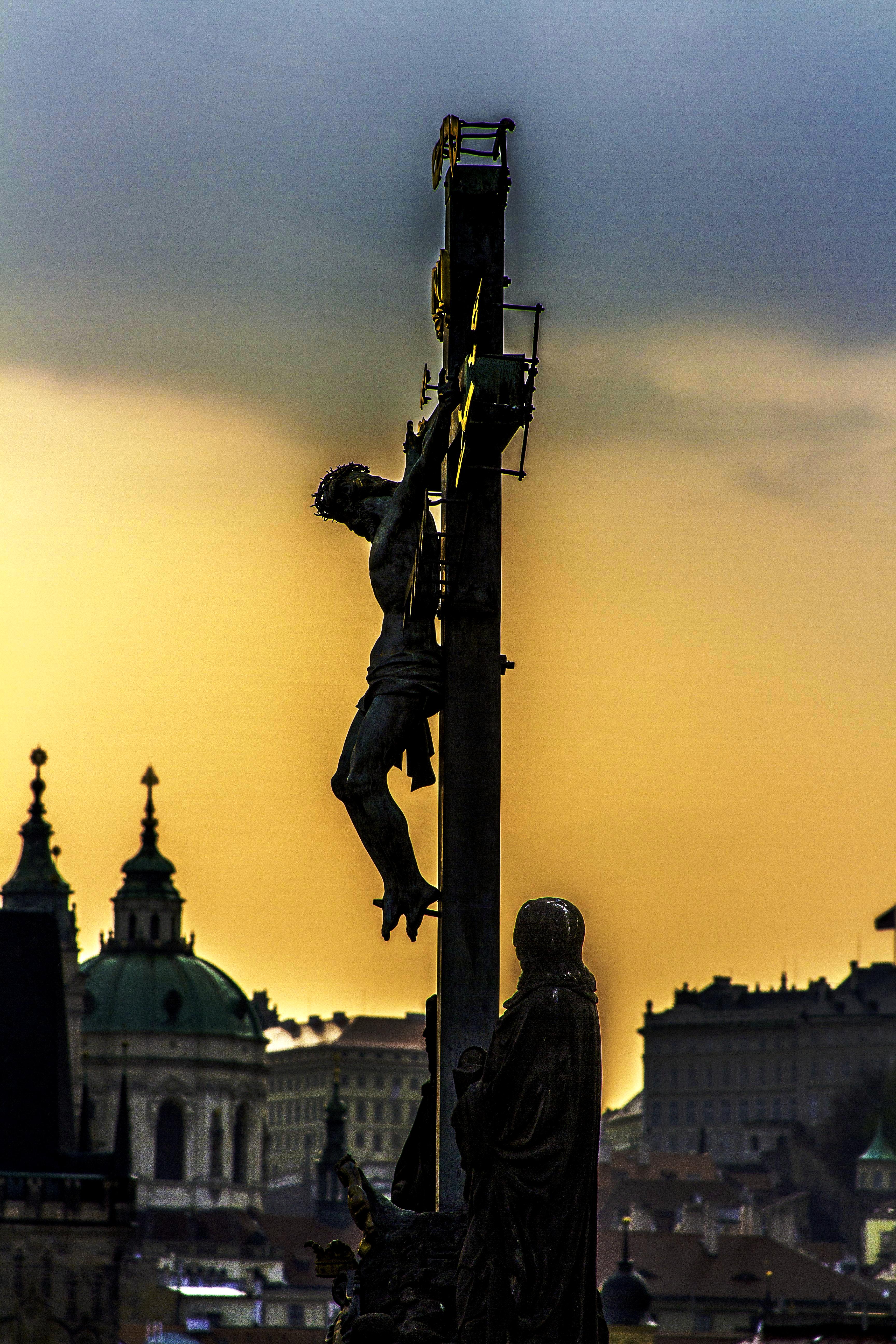
Surely he has borne our griefs and carried our sorrows; yet we esteemed him stricken, smitten by God, and afflicted. But he was pierced for our transgressions; he was crushed for our iniquities; upon him was the chastisement that brought us peace, and with his wounds we are healed.
Isaiah 53 (ESV) – The Prophet Describes the Coming Messiah
Who has believed what he has heard from us?
And to whom has the arm of the Lord been revealed?
2 For he grew up before him like a young plant,
and like a root out of dry ground;
he had no form or majesty that we should look at him,
and no beauty that we should desire him.
3 He was despised and rejected by men;
a man of sorrows, and acquainted with grief;
and as one from whom men hide their faces
he was despised, and we esteemed him not.
4 Surely he has borne our griefs
and carried our sorrows;
yet we esteemed him stricken,
smitten by God, and afflicted.
5 But he was pierced for our transgressions;
he was crushed for our iniquities;
upon him was the chastisement that brought us peace,
and with his wounds we are healed.
6 All we like sheep have gone astray;
we have turned—every one—to his own way;
and the Lord has laid on him
the iniquity of us all.
7 He was oppressed, and he was afflicted,
yet he opened not his mouth;
like a lamb that is led to the slaughter,
and like a sheep that before its shearers is silent,
so he opened not his mouth.
8 By oppression and judgment he was taken away;
and as for his generation, who considered
that he was cut off out of the land of the living,
stricken for the transgression of my people?
9 And they made his grave with the wicked
and with a rich man in his death,
although he had done no violence,
and there was no deceit in his mouth.
10 Yet it was the will of the Lord to crush him;
he has put him to grief;
when his soul makes an offering for guilt,
he shall see his offspring; he shall prolong his days;
the will of the Lord shall prosper in his hand.
11 Out of the anguish of his soul he shall see and be satisfied;
by his knowledge shall the righteous one, my servant,
make many to be accounted righteous,
and he shall bear their iniquities.
12 Therefore I will divide him a portion with the many,
and he shall divide the spoil with the strong,
because he poured out his soul to death
and was numbered with the transgressors;
yet he bore the sin of many,
and makes intercession for the transgressors.
Luke 19: 41-44 (NIV) – Jesus Weeps Over Jerusalem
41 And when he drew near and saw the city, he wept over it, 42 saying, “Would that you, even you, had known on this day the things that make for peace! But now they are hidden from your eyes. 43 For the days will come upon you, when your enemies will set up a barricade around you and surround you and hem you in on every side 44 and tear you down to the ground, you and your children within you. And they will not leave one stone upon another in you, because you did not know the time of your visitation.”
Luke 23: (NIV) – The Crucifixion of Jesus
26 And as they led him away, they seized one Simon of Cyrene, who was coming in from the country, and laid on him the cross, to carry it behind Jesus. 27 And there followed him a great multitude of the people and of women who were mourning and lamenting for him. 28 But turning to them Jesus said, “Daughters of Jerusalem, do not weep for me, but weep for yourselves and for your children. 29 For behold, the days are coming when they will say, ‘Blessed are the barren and the wombs that never bore and the breasts that never nursed!’ 30 Then they will begin to say to the mountains, ‘Fall on us,’ and to the hills, ‘Cover us.’ 31 For if they do these things when the wood is green, what will happen when it is dry?” 32 Two others, who were criminals, were led away to be put to death with him. 33 And when they came to the place that is called The Skull, there they crucified him, and the criminals, one on his right and one on his left. 34 And Jesus said, “Father, forgive them, for they know not what they do.” And they cast lots to divide his garments. 35 And the people stood by, watching, but the rulers scoffed at him, saying, “He saved others; let him save himself, if he is the Christ of God, his Chosen One!”36 The soldiers also mocked him, coming up and offering him sour wine 37 and saying, “If you are the King of the Jews, save yourself!” 38 There was also an inscription over him, “This is the King of the Jews.” 39 One of the criminals who were hanged railed at him, saying, “Are you not the Christ? Save yourself and us!” 40 But the other rebuked him, saying, “Do you not fear God, since you are under the same sentence of condemnation? 41 And we indeed justly, for we are receiving the due reward of our deeds; but this man has done nothing wrong.” 42 And he said, “Jesus, remember me when you come into your kingdom.” 43 And he said to him, “Truly, I say to you, today you will be with me in Paradise.”
The Death of Jesus. 44 It was now about the sixth hour, and there was darkness over the whole land until the ninth hour, 45 while the sun’s light failed. And the curtain of the temple was torn in two. 46 Then Jesus, calling out with a loud voice, said, “Father, into your hands I commit my spirit!” And having said this he breathed his last. 47 Now when the centurion saw what had taken place, he praised God, saying, “Certainly this man was innocent!” 48 And all the crowds that had assembled for this spectacle, when they saw what had taken place, returned home beating their breasts. 49 And all his acquaintances and the women who had followed him from Galilee stood at a distance watching these things.
Jesus is Buried. 50 Now there was a man named Joseph, from the Jewish town of Arimathea. He was a member of the council, a good and righteous man, 51 who had not consented to their decision and action; and he was looking for the kingdom of God. 52 This man went to Pilate and asked for the body of Jesus. 53 Then he took it down and wrapped it in a linen shroud and laid him in a tomb cut in stone, where no one had ever yet been laid. 54 It was the day of Preparation, and the Sabbath was beginning. 55 The women who had come with him from Galilee followed and saw the tomb and how his body was laid.56 Then they returned and prepared spices and ointments. On the Sabbath they rested according to the commandment.
 Divine Simplicity
Recent Comments