Archive for the ‘advice’ Category

Scary times

I am the Lord your God who takes hold of your right hand and says to you, Do not fear; I will help you. —Isaiah 41:13

Many people today fear a wide variety of things they see and hear around them. Fear is running rampant right here in America. Polls indicate that the majority of Americans now believe that their children’s lives will be harder than their own. They worry about unemployment and the economy. Many fear illegal immigration. Others are afraid to gather in public places for fear of violence. We see campus protests turn violent. School shootings don’t surprise us anymore.

On a cosmic scale we hear about giant solar flares that could destroy technology, pushing humankind back into the Stone Age. A large meteor or asteroid collision could destroy life on Earth.

In the natural world, we hear that a major eruption of a super volcano, like the one beneath Yellowstone National Park, could cause destruction and death on a planetary scale. Earthquakes and tsunamis in diverse places threaten millions of people. Climate change is blamed for killer storms, droughts, melting polar ice, coastal flooding, wildfires and more.

On the human plane, we read and hear about flesh eating bacteria, brain eating amoebas, and drug resistant bacteria and viruses. Abortion rights are a hot button topic that can trigger anger and rage. Some people hunker down in their homes, worried about riots, violence by and against the police, and other street violence. Others fear that computer hackers or scammers will steal their identities and wealth.  

There are wars in Ukraine and Gaza, and rumors of a global war that’s coming. Religious persecution is increasing around the globe. There is a growing wave of antisemitism right here in America. There are ample reasons for fear.

The Bible mentions two very different types of fear. The first is fear of the Lord. This fear is not associated with being scared. It is an awe and reverence of God and is to be encouraged. According to Psalm 111, fear of the Lord is the beginning of wisdom and leads to rest and peace.

The second type of fear is detrimental. In the first chapter of 2 Timothy it is described as a “spirit of fear.” A person can be completely overcome by a spirit of fear, virtually frozen and unable to function. Such fear weighs a person down physically, emotionally and/or mentally.

Unfortunately, many Christians have succumbed to living with a spirit of fear. Some fear those of other religions and are reluctant to reach out to them in Christian love. Some fear those who are different from them culturally or racially. Others are hesitant to invite those in need into their lives for fear they might lose something or it might cost something. Some are afraid to leave the comfort of their homes and familiar surroundings in order to reach out to the needy. Others are hesitant to give of their wealth for fear they might later find themselves in need.

Many Christian fears boil down to a fear of losing something—possessions, comfort, safety, security. In Philippians chapter 3, verses 7-8, Paul describes how he has let go of the things of this world in order to focus on what is truly important:

But whatever gain I had, I counted as loss for the sake of Christ. Indeed, I count everything as loss because of the surpassing worth of knowing Christ Jesus my Lord.

One can’t grasp Christ’s outstretched hand while clinging to things of this world. As David tells us in Psalm 34, verses 4-7:

I sought the Lord, and he answered me and delivered me from all my fears.
Those who look to him are radiant, and their faces shall never be ashamed.
This poor man cried, and the Lord heard him and saved him out of all his troubles.
The angel of the Lord encamps around those who fear him, and delivers them
.

You may be facing a health crisis, unemployment, divorce, a call to Christian service, or other difficult challenges. Don’t live in fear. Take the fears you struggle with today and give them to the Lord in prayer. Make this a habit. I will not tell you to “let go and let God” because it makes letting go of fear sound so simple. Instead, I encourage you to explore the Bible and learn what it says about fear. Read and believe!

Begin with Psalm 23. Then read Psalm 118. Other relevant Psalms include 27, 34, 46, 61, 91, 103, and 121. Once you have read these Psalms, locate a red letter edition New Testament and read every word spoken by Jesus. Then read Paul’s epistles. Become steeped in scripture. Do this and you will be well on the way to giving your fears to the Lord.

The remarkable thing about God is that when you fear God, you fear nothing else, whereas if you do not fear God, you fear everything else.   —Oswald Chambers

*All Bible quotes are ESV.

Enduring Truths for Recent Graduates

Across the country it’s graduation time. Here in South Dakota some schools have already closed for the summer. Most of those that remain open will close in the coming days. Everywhere one turns there’s another grad party. What awaits all these new grads? A decade ago I wrote an article  for my newspaper column with some advice for recent graduates. While it was aimed at high school graduates, it is also highly relevant to recent college grads. The article has become one of the most popular pieces I ever wrote. I’ve received hundreds of emails thanking me for taking the time to share it.  Therefore, I decided to  republish it annually around graduation time.  I hope some of you might find it useful.  You can view the original article in the Tribune-Democrat news at this link: http://goo.gl/LtN72

For those who are graduating high school this year and beginning the long transition into adulthood, I’d like to offer you a gift. Here are five enduring truths I have learned. They will help you through life’s journey.

Choices

“If you decide to just go with the flow, you’ll end up where the flow goes, which is usually downhill, often leading to a big pile of sludge and a life of unhappiness. You’ll end up doing what everyone else is doing.” ― Sean Covey, The 7 Habits of Highly Effective Teens

 Life will deal you an endless string of choices along the way.  Some will be trivial, like deciding what to wear today.  Others will be weighty and their outcomes will affect you forever.  Weighty decisions should always be preceded by much thought and soul searching.  This includes decisions about who you date or marry, what you put into your body, bringing children into the world, what you do for a living, how much debt you incur and who you associate with.

All of these decisions will have a lasting effect on your life. Therefore, make them slowly and deliberately. Often you’ll discover that the right choice is not the easiest one.  A habit of making poor choices will, as the Sean Covey quote suggests, drag your life downhill.

I was recently contacted by a young man who had just received a bad conduct discharge from the Navy.  He asked me how the discharge would impact his future employability.  His mistake was choosing to drive a car while intoxicated and hitting a pedestrian. Fortunately, the victim wasn’t seriously injured. Had it been otherwise, the young sailor would probably be in prison.  It was my sad responsibility to inform him that with some employers the discharge would be a black mark for life. Choices matter!

 Learning

“Experience is a hard teacher because she gives the test first, the lesson afterwards.”    ―Vernon Saunders Law, former professional baseball pitcher and Cy Young Award winner

Some of you will go on to college or technical school.  Others will enter the workforce.  Even if your formal education is over, don’t quit learning. Make learning a lifelong adventure.  I did my undergraduate work at the University of Kentucky.  The school offers a fellowship program for individuals aged 65 and older to attend classes tuition free. Every year numerous senior citizens walk the stage to receive degrees ranging from Associate of Arts to Doctor of Philosophy.  It’s never too late to learn.

Even if you don’t choose to continue formal learning, make it point to learn from life. Observe others; note their successes and failures; then learn from their experiences.  More importantly, learn from your own mistakes.

Some of the greatest lessons I’ve learned, particularly those while serving in uniform, were the result of having made a terrible mistake.  This sort of lesson sticks, like the first time you grab the handle of a hot iron skillet with your bare hand.  The key to learning from mistakes is owning them.  Admit your mistakes and then move on, having learned something from the experience.  Don’t let, “It wasn’t my fault,” be part of your vocabulary.

 Work

“A dream doesn’t become reality through magic; it takes sweat, determination and hard work.”  ―Colin Powell, retired U.S. Army four-star general and former U.S. Secretary of State

Work isn’t always fun. If it were, they’d call it play.  Work can be downright unpleasant, but it’s an essential element of life! Along the way you’re going to have jobs you won’t like. Note what you don’t like and make it a point to improve yourself, so you’ll never again have to work at such a job.

Accepting a job means submitting to the authority of those placed over you.  Learn to work within this system.   You’ll inevitably have bosses you don’t like.  Learn to respect the position, if not the individual.

Fairness

Life is not fair; get used to it.” ―Bill Gates, founder and former CEO, Microsoft Corporation

You will hear much discussion about fairness in this life. It’s all hot air.  Life isn’t fair.  Some good people die young, while some bad people live a long life.   Disease sometimes strikes arbitrarily, for no apparent reason.  Some people prosper while others suffer failure. A death or accident can change your life forever.

There is randomness to life that can’t be avoided.  Don’t expect kindness to be returned with kindness.  Don’t expect generosity to be returned with generosity.  The best choice is to be fair and kind to others and learn to accept what they return to you.

A wise man named Harry Browne ran for president of the United States on the Libertarian Party ticket. On Christmas day in 1966, Browne wrote his young daughter a letter aptly titled, “A Gift for My Daughter.”  I encourage every graduating senior to read it and digest it. In the letter, he explains to his daughter that, “Nobody owes you anything.”  Understanding what Browne meant can truly bless you. You can find it here. https://independentpoliticalreport.com/2015/12/harry-brownes-christmas-letter-to-his-daughter/

Faith

“A faith is a necessity to a man. Woe to him who believes in nothing.”  ―Victor Hugo

I once had a senior Army officer tell me he preferred to work with men who possessed spiritual values, regardless of their religion.  He explained that having faith in a power higher than one’s self was an indicator of how one will perform under pressure; in this instance, the pressure meant combat.

Too many people place their faith in all the wrong places.  It might be in wealth, celebrity, good looks, talent, or even government.  Whatever the case, misplaced faith leads to disappointment after disappointment.

To avoid these disappointments, put your faith in God alone.  You, your loved ones and your friends will all inevitably let you down, but God will never fail you.

Politics: don’t get tricked

Unless you’ve been living in solitary confinement for a while, you’re probably aware that many federal, state, and local elections will occur on November 5th this year, including a hotly contested race for the presidency. That’s just over six months from now. Already we’re being bombarded by election news and other information/misinformation on television, radio, the internet, and print media. I was a newspaper opinion columnist for 10 years. Many of my articles discussed politics. In contrast, in this Christian-themed blog I tend to steer clear of politics. The post that follows is a rare exception. I’ll try not to step on too many toes.

But first, here’s a corny political joke to lighten things up. What’s the difference between a politician and a magician? At least the magician returns your wallet when the trick is over. On the serious side, how are a wily politician and a magician similar? Both are illusionists, masters of creating and shaping perceptions. Many politicians use the magician’s tactic of “misdirection” where a magician draws the audience’s attention in one direction with something busy, noisy or spectacular, while the real moves occur out of sight. Voters must pay attention to avoid being tricked by wily politicians.

The remainder of this post borrows from a piece I wrote in 2022. It is a reminder to Christian readers that we are obliged by the scriptures to follow a different set of election rules.

The Lord foils the plans of the nations; he thwarts the purposes of the peoples. But the plans of the Lord stand firm forever, the purposes of his heart through all generations. Blessed is the nation whose God is the Lord, the people he chose for his inheritance.  –Psalm 33:10-12*

The November elections will soon be here and the political theater being played out is growing more intense by the day. We live in an age of great political division. Many national leaders and prominent politicians think that they have all the answers, but they’re wrong. As the above passage from Psalm 33 notes, “The Lord foils the plans of the nations.” God remains in charge. There are no political solutions to America’s woes.  What we need is more Jesus!

Here in America, those on the political right condemn the goals and activities of the political left. Those on the left condemn the right.  We hear and see it every day.  “Our way is best for the American people.” “They’re weak on defense.” “They trample on the Constitution.” “They only know how to tax and spend.”  “Their policies are destroying the environment.” “Their policies are destroying the economy.”  Politics pits friend against friend, men against women, husbands against wives, parents against children, nation against nation, religion against religion, and Christian against Christian.  The latter saddens me—it just shouldn’t be. Christians should be kind to everyone, especially fellow believers. The Apostle Paul tells us:

“There is neither Jew or Greek, slave or free, male or female, (insert Republican or Democrat), but we are one in Christ Jesus.”  –Galatians 3:28

Jesus told Pontius Pilate in John 18:36, “My kingdom is not of this world.” This wisdom reminds all Christians that we, including politicians, must answer to a higher authority than the government or political leaders.  In 1 Kings 22, the story is told of the time the King of Israel had to decide whether or not to go to war against Syria. Jehoshaphat, the King of Judah, advised his fellow ruler, “First seek the counsel of the Lord” before making a decision,” (verse 5). This is sound advice that Christians, and especially Christian politicians, would do well to heed. Seek God’s guidance before seeking the guidance of man.  We should also note Matthew 5:16, “…let your light shine before others, that they may see your good deeds and glorify your Father in heaven.” Christians should be the living face and hands of Christ to the world.

God “makes nations great, and He destroys them; He enlarges nations, and leads them away,” (Job 12:23). Political leaders rule because God allows them to, “for there is no authority except from God, and those that exist have been instituted by God,” (Romans 13:1b). God can upset human plans, but no one can thwart His plans or purpose. God loves the world and sent His only begotten Son to suffer and die to atone for the sins of every person of every political ilk.

Pastor Eugene Cho is CEO of Bread for the World, a non-partisan, Christian advocacy organization based in the USA. I highly recommend an article he penned over a decade ago titled, “The 10 Commandments of Engaging Politics.” It contains a wealth of sound advice for Christians today as we approach the November elections. His article is available at the safe link:

Give praise to the Lord, proclaim his name; make known among the nations what he has done. Sing to him, sing praise to him; tell of all his wonderful acts. Glory in his holy name; let the hearts of those who seek the Lord rejoice. Look to the Lord and his strength; seek his face always.  –Psalm 105:1-4

*All Bible quotes are NIV.

Forgiveness

I recently read a book that poses the question, “What about your life before you were a Christian has changed since you became a Christ follower.”  I can think of so many responses, but two stand out. First of all, as a Christian I have a profound sense of personal sin that wasn’t previously there. Note that I speak of “sin,” not “sins.”  My personal sins are a countless laundry list of bad, harmful things I have done during my life. Many people are repulsed by being called a sinner.  Yet sin (without an “s” on the end), is a condition we all live in. Martin Luther described it eloquently in a letter to Philip Melanchthon on August 1, 1521:

 “Be a sinner, and let your sins be strong, but let your trust in Christ be stronger, and rejoice in Christ who is the victor over sin, death, and the world.  We will commit sins while we are here, for this life is not a place where justice resides.  We, however, says Peter (2 Peter 3:13) are looking forward to a new heaven and a new earth where justice will reign.  It suffices that through God’s glory we have recognized the Lamb who takes away the sin of the world. No sin can separate us from Him, even if we were to kill or commit adultery thousands of times each day.  Do you think such an exalted Lamb paid merely a small price with a meager sacrifice for our sins?  Pray hard for you are quite a sinner.”

My second response to the question is that as a Christian I have a tremendous sense of gratitude that God has forgiven all my sins through Jesus Christ. Before becoming a Christian, I didn’t recognize my need for forgiveness. Now I understand that Jesus suffered, bled, and died on the cross as an atonement for not only my sins, but the sins of the entire world.  Hebrews 9:15 tells us that Christ’s blood inaugurated a new covenant. Through His sacrifice, He became the mediator between God and humanity. The old system of blood offerings through sacrificing animals could only cover sin temporarily, but Christ’s blood provides complete forgiveness. His death on the cross bridged the gap between the holy God and fallen humanity. Jesus the risen Lord is now seated at the right hand of the Father, where he intercedes on our behalf, our great High Priest.

The process of forgiveness begins with repentance. Acknowledging our sins, we turn to God, seeking His mercy. Acts 2:38 stresses baptism in the name of Jesus Christ for the remission of sins. More than a mere ritual; it symbolizes our identification with Christ’s death and resurrection. Through faith in Jesus as the risen Son of God, we receive forgiveness—the slate is wiped clean and our sins are remembered no more.

As the season of Lent winds down and Easter approaches, let us all consider Christ’s atonement for our sins. Through His death on the cross, Jesus atoned for the sins all mankind, satisfying God’s demand for justice, and accomplishing reconciliation for all who seek redemption through Him. The obedience and selfless sacrifice of Christ, who felt human emotions and pain just like you and me, serve as the foundation of our salvation. The shedding of Jesus’s blood on the cross symbolizes the ultimate atonement, restoring us to God’s favor and demonstrating the Father’s divine love and mercy. Jesus willingly gave His life for our sins, bridging the gap between humanity and God. His sacrifice on Calvary’s cross paid the price for our transgressions, conquered sin and death, and brought about the resurrection from the dead, not just for Jesus, but eventually for all of His followers.

God proved His love on the Cross. When Christ hung, and bled, and died, it was God saying to the world, ‘I love you.’ –Billy Graham

Debt relief

The United States is a debtor nation. The US Congress regularly borrows money to keep the government running.  The national debt is the grand total of money the government owes, either to investors or to itself (source: USAfacts.org). The current national debt is approaching $35 trillion. That’s 35 followed by 12 zeros! 

There is an intriguing concept of debt forgiveness in Jewish law that relates to the Shemitah year, which occurs every seven years. According to the Torah, in the Shemitah year, all personal loans between Jews are canceled, and lenders must release their debtors from their obligations. This is known as Shemitat Kesafim, or “release of money.” The purpose of this law is to foster generosity, faith, and social justice among the Jewish people, and to remind them that everything ultimately belongs to God. Imagine how different our lives would be if this form of debt relief were practiced in America today.

Average American citizens are debtors. Per the website Statista.com, the average American had $21,800 in non-mortgage debt in 2023. Much of this amount was accrued on credit cards used to fund consumer spending…I just had to have that new iPhone!  Unlike older generations, younger consumers today often buy on credit those things that older generations would have saved up for and purchased in cash, like a new car…Why wait, you can have it now.  You deserve it!

Today, the idea of saving enough money to buy a new car is as outdated as the idea of working one’s way through college.  While not impossible, the skyrocketing cost of new cars and attending a four-year college make paying cash as one goes out of reach for most people.

According to a July 2023 article on Forbes.com (https://www.forbes.com/advisor/student-loans/average-student-loan-debt-statistics/), total student loan debt was $1.75 trillion.  Around 55% of students from public four-year institutions had student loans. The average student loan debt for students coming out of public four-year institutions was $28,950.   

There’s an old adage that says, “The borrower is slave to the lender.” There’s a lot of truth in this. The Bible describes our sins as debts to God. Sin debt to God is a concept describing the moral obligation that humans have to obey God’s law and the penalty that they incur when they fail to obey. Sin is disobedience to God’s will and commands. King David acknowledges in Psalm 51:3-4, that his sins are offenses against God, not man:

For I know my transgressions, and my sin is always before me.
Against you, you only, have I sinned and done what is evil in your sight; so you are right in your verdict and justified when you judge.

Sin separates humans from God’s presence and favor. The consequence of sin is death, both physical and spiritual, which means eternal separation from God.

The Bible teaches that God is merciful and gracious, and He has provided a way for humans to be forgiven and reconciled to Him. God sent His Son, Jesus Christ, to die on the cross as a substitute for sinners, paying the debt that they could not pay themselves. By trusting in Christ’s death and resurrection, sinners can receive God’s forgiveness and eternal life. This is the Good News (Gospel), of God’s salvation for sinners. God cancels the sin debt of those who believe in His Son and restores them to a right relationship with Him. While you may not receive government relief from your student loans or other debts, thanks be to God that forgiveness for our sin debt against Him is available.

Ephesians 2:1-10   As for you, you were dead in your transgressions and sins, in which you used to live when you followed the ways of this world and of the ruler of the kingdom of the air, the spirit who is now at work in those who are disobedient. All of us also lived among them at one time, gratifying the cravings of our flesh and following its desires and thoughts. Like the rest, we were by nature deserving of wrath. But because of his great love for us, God, who is rich in mercy, made us alive with Christ even when we were dead in transgressions—it is by grace you have been saved. And God raised us up with Christ and seated us with him in the heavenly realms in Christ Jesus, in order that in the coming ages he might show the incomparable riches of his grace, expressed in his kindness to us in Christ Jesus. For it is by grace you have been saved, through faith—and this is not from yourselves, it is the gift of God— not by works, so that no one can boast. 10 For we are God’s handiwork, created in Christ Jesus to do good works, which God prepared in advance for us to do.

*All Bible quotes are NIV

A God of second chances

As I began penning this piece, it was January 1st, a day traditionally associated with resolutions. According to the American Heritage dictionary, a resolution is “a firm decision to do something.” Common resolutions people make for the New Year include exercising more, losing weight, curbing alcohol consumption, and paying off credit cards. Making a New Year’s resolution requires one to recognize they’ve failed in some facet of their life and need a second chance to set things right.

Everybody needs a second chance at one time or another.  Fortunately for Christians, we serve a God of second chances, who shows His grace and mercy to sinners who repent and turn to Him. The Bible is full of second chance stories.  Here are just a few, starting with the book of Genesis.

In Genesis 2, we are introduced to Adam and Eve, who God created man and woman and placed in a beautiful garden in Eden.  There they tended the garden and enjoyed its magnificent food and natural beauty. God made only one rule for the garden.  The couple was not to eat from the tree of the Knowledge of Good and Evil. You’ve likely heard the story—in Genesis 3, Adam and Eve break the rule and as punishment they are forever cast out of the garden and forced to work the soil to raise food by the sweat of their labor. In chapter 4, Eve gave birth to two sons, Cain and Abel.  Out of jealousy, the older brother Cain murdered his brother Abel. Yet by the end of chapter 4, Eve gives birth to another son named Seth, to replace Abel. Seth was surely a second chance for Adam and Eve, even though there is no evidence they ever repented of their sins against God.

In Genesis 6, begins the story of Noah and the great flood. By this point in time mankind has become evil and rebellious towards God.  It is so bad that God actually regrets having made man.  Yet there remains Noah, a righteous man who is favored by God. God tells Noah he is going to cause a flood to destroy every living thing on the surface of the Earth.  He instructs Noah to build a giant ark (or ship) and to fill it with certain animals that will repopulate the Earth after the flood waters recede. Noah obeys God’s instructions. In addition to the animals, Noah takes his wife, his sons, and his sons’ wives into the ark. Noah’s entire family received a second chance and survived the flood.  From this small group, the entire Earth was repopulated with humans.

In Genesis 12, God calls Abram, a keeper of flocks and herds, out of Babylon to go to the land of Caanan, which God pledges to give Abram’s descendants. Abram takes his wife Sarai and brother-in-law Lot and departs for Caanan along with his animals and servants. Sarah was barren and could not give Abraham an heir. Years later, with Sarai and Abram growing old and fearful Abram might die without an heir, Sarai convinces him to take Sarai’s Egyptian slave Hagar as his wife to bear an heir for Abram. Hagar bore him a son named Ishmael when Abram was 86 years old.

But God had plans for Abram and Sarai. When Abram was 99 years old, God made a covenant with him, changing his name to Abraham, meaning “father of many nations.” God also changed Sarai’s name to Sarah, meaning “princess” and promised that she would bear a son, Isaac, who would be the heir of the covenant. Sarah conceived in her old age. Abraham was 100 years old when Isaac was born. As a natural born heir, Isaac was a second chance for Abraham some 14 years after Ishmael, Abraham’s son by a slave, was born.

The Apostle Peter’s denial of Jesus is described in all four Gospels.  Just before Jesus was arrested, He warned His disciples of what is going to happen. Peter boasts in John 13, that he would lay down his life for Jesus.  Jesus counters and declares Peter will deny him three times. After Jesus’ is arrested, Peter denies Jesus three times out of fear of His captors. This is described in John 18. Jumping to John 21, the resurrected Jesus forgives Peter and reinstates him to his former position of leadership, commanding Peter to care for Jesus’ flock (people).

Like Peter, it is easy for us to believe we are more righteous than we really are. Like Jesus forgave Peter, so we ought to forgive those who sin against us. Christians serve a God of second chances. While I have given only a few examples, God gave second chances to many people in the Bible, forgiving and restoring them after they sinned or disobeyed Him. As Peter learned firsthand, God offers the ultimate second chance to all humanity through His Son Jesus Christ, who died on the cross for our sins and rose again to give us eternal life. God invites us to respond to His second chance by repenting of our sins, trusting in His grace, and following His will.

Look up from the situation you lament and let it become the pleasant place where God comes to save you.–Rev. Tim Fountain

But God demonstrates his own love for us in this: While we were still sinners, Christ died for us. –Romans 5:8 (NIV)

Walking alongside a friend

During this church season of Advent, Christians anxiously await the celebration of Jesus’ birth. We commemorate His arrival in this world on December 25, the Feast of the Nativity of Our Lord Jesus Christ.

As we await the arrival of the Christ child, my wife and I recently said goodbye to a departing friend who moved to another state to be near family. I’ll call him John for the sake of privacy. John was diagnosed with Autism Spectrum Disorder (ASD) about two years ago, but has displayed ASD symptoms most of his life. According to the Centers for Disease Control, an estimated 5,437,988 (2.21%) adults in the United States have ASD.

For the past three and a half years my wife and I walked alongside John, providing him companionship, counsel, and a small lifeboat to climb into during frequent storms he encountered. John first came into our lives by means of our church. One day our priest asked us if we would be willing to help a single man who had recently arrived in our community. We said yes without really knowing what to expect. I share the details below not to glorify my wife and me; give all the glory to God! I share this to make a point which I’ve discussed before—being a follower of Jesus Christ can be messy.

We answered 2 a.m. phone calls so John could rant about whatever was bothering him at the time. We shared meals with him and checked periodically on his welfare and the state of his small apartment. We tried to help smooth the situation when John irritated his neighbors. We helped him move to a new apartment.

We drove him to appointments and to help him tend to his local business affairs when something needed fixing. We provided in-person support when John’ family could not contact him because his phone was (frequently) broken or lost, or when he was simply not answering calls or emails. 

We invested many conversations with some of his family members who are active stakeholders in John’s life–over lunch, dinner, coffee, phone calls, and Zoom meetings. We supported John and these same family members during the complex endeavor to have him evaluated for ASD. We coordinated the dedication of funds from our church’s rummage sale to help defer the costs of the evaluation; printed forms and obtained John’s signatures; and prayed for the process.  We coordinated with our church members to provide overnight accommodations for John’s family members when they periodically visited the area to check on his welfare.

Walking with John was not easy, but it was very spiritually rewarding and has made us three new friends, including John and two very special members of his family—they know who I mean. As we anxiously await the Feast of the Nativity and the celebration of the Christ child’s birth, Christians should recall that following Christ can get messy—Just read the book of Acts and see. 

In June, 2019 I published a blog piece titled “Messy Christianity.”  I invite the readers to read it again or discover it for the first time. https://divine-simplicity.com/2019/06/08/messy-christianity/

I wish you all a very blessed Christmas and a prosperous New Year. –Zack

Finding work is hard work

Prayer does not fit us for the greater works; prayer is the greater work. –Oswald Chambers

I once was employed under contract as a workforce developer for the Commonwealth of Pennsylvania. During the course of serving in this role I performed as a case manager for several hundred men and women who had lost their jobs. For the most part, my clients were blue collar workers from manufacturing industries in the Greater Pittsburgh area. If there’s one lesson I learned from this experience, it is that the only thing a worker complains more about than his or job is complaining about not having a job to go to each day.

For the past 12 years I’ve helped job seekers as a volunteer job coach. Many of those I assist are Christians.  I encourage believers to put God at the center of their job search. Christians job seekers can approach the process with the same principles that guide their faith and values. The following discusses some tips and guidance I give them.

Prayer: Begin by seeking God’s guidance through prayer. Ask for wisdom, discernment, and clarity in your job search. Pray for guidance on what kind of work aligns with your skills, interests, and values.

A prayer – Heavenly Father, you know my needs before I speak them. I come to You humbly seeking guidance and mercy in my job search. Provide suitable opportunities and lead me through a journey aligned with Your will. Grant me strength, wisdom, and favor as I seek employment.

When you are unemployed: I encourage unemployed job seekers to make the job search process their full-time job. Try to work at it at least six hours per day, five days per week. Make church, prayer and scripture reading part of your routine. Set aside time for family, fitness, recreation, and rest.   

Reflection: Reflect on your skills, interests, and values. Consider what type of work aligns with your talents and passions. This self-assessment can help you identify job opportunities that resonate with your God-given abilities.

Networking: Build and leverage your network of friends, family, and fellow believers. Networking can often lead to job opportunities and provide valuable insights into companies and industries. Attend church events and gatherings to connect with others who might have job leads or advice. Search the Internet for job networking groups near you.

A prayer – Heavenly Father, Guide and bless me as I network for my job search. May the connections I make be in accordance with Your will for my life. Help me to build meaningful relationships leading to opportunities.

Resume and cover letter: Build a well-written resume and cover letter that highlight your skills and experience. Be honest and accurate about yourself.

Online job search: Use online job search platforms to find job openings. Websites like LinkedIn, Indeed, and others can help you identify job opportunities matching your qualifications.

Employer values: Research potential employers to ensure their corporate values and culture align with your beliefs and principles. Investigate their mission statement, corporate social responsibility, and work environment.

Christian Ethics Check: Ensure that the job you’re pursuing doesn’t involve unethical practices or conflicts with your Christian beliefs. For example, consider the ethical implications of the products or services the company provides.

Interview preparation: Prepare for job interviews by practicing common interview questions and formulating answers that reflect your values and experiences. Be honest and transparent during the interview process.

A prayer – God of all wisdom, you have promised to give wisdom to anyone who asks. As I approach my interview, please give me wisdom in my speech. Guide my thoughts and direct my steps. When I experience uncertainty and confusion, may I lean on your limitless wisdom. May your Holy Spirit be at work in me like a lamp to my feet and shield to my mind. Help me to think clearly and calmly. Help me to speak with confidence and clarity. Help me to glorify you in this interview.

Work-life balance: Prioritize work-life balance. Overworking can be detrimental to your spiritual and personal lives. Seek employers who offer flexibility and understand the importance of maintaining a healthy work-life balance.

Patience and Trust: Job searches are marathons, not sprints. Trust in God’s plan for your life and exercise patience in the job search process. Sometimes, it may take time to find the right opportunity that aligns with your values and skills.

Seek advice: Consult with mentors, pastors, or other trusted individuals in your Christian circles for guidance and support during your job search. They can provide valuable insights and spiritual advice.

Remember that the job search process can be challenging, and it’s important to remain faithful to your principles and values throughout. Seek opportunities that allow you to be a positive influence in your workplace and community, and always strive to honor God in your work.

A prayer – Heavenly Father, help me to remain diligent in my job search because I know it is only with Your guidance that I can truly succeed.  Thank You, Holy Father, because I have faith that you are leading me toward the perfect employment opportunity.

*AI was used to search for the prayers used in this piece.

What do you believe?

King David stretches out his hands in Prayer

Late in the spring of 2022 I had highly invasive surgery that laid me low for about 90 days.  It was miserable. Fast forward to the present and I’m currently recovering from another surgical procedure that left me feeling, weak, bruised and even despairing. In both instances, I found it comforting to meditate on the word of God. In my weakened state from the most recent surgery, I found time to meditate on what being a Christian means to me and how I could best explain it to an unbeliever. There are dozens of examples of similar attempts on the Internet, so please allow me to add to the discussion. If nothing else, I hope some readers might be motivated by my awkward musings and take a moment to dwell upon their own Christian beliefs.   

There are several key Christian principles and values that hold great significance and guide the faith and actions of a believer, or Christ follower as I like to call myself. While interpretations and emphasis vary between various individuals and denominations, the following are some fundamental aspects of Christianity that matter to me and seem to be widely accepted amongst fellow believers.

Faith in Jesus Christ – Central to being a Christian is having faith in Jesus Christ as the Son of God and the Savior of the world (Ephesians 2:8). All believers are encouraged to confess their sins to Jesus, ask his forgiveness, and receive the free gift of salvation. The Scriptures encourage us to have a personal relationship with Jesus and to endeavor to follow His teachings (Galatians 2:20).

The Bible as the Word of God – I believe the Bible is the inspired Word of God, written by the hands of men who were guided by God’s Holy Spirit (2 Timothy 3:16). It serves as a guide for faith and practice. Studying and applying its teachings is a vital aspect of life as a Christ follower.

Prayer – Prayer is the means of communication between believers and God. Christians are encouraged to pray regularly for guidance, thanksgiving, supplication, and fellowship with God. Prayer is the pathway to God’s peace (Philippians 4:6-7). We are also taught by the Scriptures to say prayers of intercession for others. Both believers and unbelievers, both friends and enemies (Matthew 5:44). 

Love and Compassion – Following Jesus’ command to love one another (John 13:34-35), Christians are called to show love and compassion to their neighbors, both fellow believers and others. This includes acts of kindness, charity, and forgiveness. These acts are not a means of earning salvation.  Rather, they are an outward expression of thanksgiving for the gift of salvation I have received from God through the death of God’s Son Jesus, that purchased the forgiveness of my sins.

Worship and Fellowship – Regular worship services, communal prayer, and fellowship with other believers are important for spiritual growth and building a sense of community. As the living body of Christ, the church requires many different parts to make it function efficiently (1 Corinthians 12:12-27).  There’s a role in the church for everyone.

Repentance and Forgiveness – Christians are taught to acknowledge and repent of their sins, seeking forgiveness through the grace of God. Forgiving others is also emphasized as a key aspect of Christian life (Matthew 18:21-22).

The Great Commission – Following Jesus’ command to “go and make disciples of all nations” (Matthew 28:19-20), I and many other Christians consider evangelism and spreading the Gospel as a central mission. This is one reason I write this blog.

Stewardship – Believers are encouraged to be responsible stewards (Matthew 25:14-30). This includes not only stewardship of our finances, but stewardship of God’s creation.

Mysteries – There are many mysteries in Christianity that remind us faith is not about having all the answers. Among these are the virgin birth of Jesus; whether Christ is physically present in the Holy Communion; and the doctrine of the Holy Trinity. These mysteries invite believers to explore the unknown and cultivate a deeper trust in God. They stretch the limits of human reason and promote a realization that there are aspects of God’s nature and plan that exceed our understanding. These will be explained to us in heaven one day.  Paul sums it up in 1 Corinthians 13:12 like this, “For now we see only a reflection as in a mirror; then we shall see face to face. Now I know in part; then I shall know fully, even as I am fully known.” I challenge fellow Christians to explore these mysteries and consider how you would attempt to explain them to a non-believer.

Thanks for taking the time to read this.  I hope it encourages you to explore your own faith.

*All Bible quotes are NIV.

Separation Anxiety

Canine separation anxiety is a complex psychological disorder affecting many dogs and their owners. When left alone, the otherwise wonderful pets affected by the disorder experience overwhelming distress, displaying a wide range of associated harmful behaviors. These range from incessant barking and destructive chewing to house soiling, total home wrecking and attempts to escape. Dogs are social creatures that thrive on the human companionship, which can make the absence of their owners highly disturbing.

My wife and I live in a multigenerational household comprised of grandparents, parents, children, and grandkids. It’s not uncommon for our daughter, son-in-law, and grandsons to be away for a weekend or longer vacation. When this occurs the family dog Mars, a large Labrador, is visibly moved. Mainly, he lies motionless on the floor or bed, and lets out big lonely sighs. My wife and I say that he “misses his humans.” While Mars doesn’t display destructive behaviors, family separation clearly makes him lonely for those he loves.

Loneliness is a key element of separation anxiety. It is not simply the absence of company, but rather a deep sense of isolation that can envelop practically anyone. It’s possible to feel lonely even while surrounded by a host of others. As a career Army officer, I endured multiple long deployments to Africa, the Middle East and the Balkans.  In addition to the deployments, there were many other extended periods of family separation when I was required to attend training, exercises, and formal schools. In each instance, I suffered bouts of loneliness caused by being separated from those whom I love most, my wife and children. I sometimes became increasingly anxious as anticipated periods of separation approached.

The Apostle Paul looked forward to death, but not because he was depressed.  He simply wished to again be in the physical presence of his first love, Jesus. In the first chapter of his letter to the Philippians (v. 21-24*) he wrote, “For to me, to live is Christ and to die is gain. If I am to go on living in the body, this will mean fruitful labor for me. Yet what shall I choose? I do not know! I am torn between the two: I desire to depart and be with Christ, which is better by far; but it is more necessary for you that I remain in the body.”   

In Mark chapter 14 the disciples eat the Passover meal with Jesus and then go to the garden of Gethsemane. In Gethsemane, Jesus went off by Himself to pray. As fully man and fully God, He knew exactly what was in store for Him—torture, crucifixion, and death. Just a few days prior to this Jesus had told his disciples plainly, “We are going up to Jerusalem, and the Son of Man will be delivered over to the chief priests and the teachers of the law. They will condemn him to death and will hand him over to the Gentiles to be mocked and flogged and crucified. On the third day he will be raised to life!” (Matthew 20:18-19)

Despite this foreknowledge, Jesus’ prayer in Gethsemane shows He was not distressed over any of the coming physical violence. He was in agony knowing that when the sins of the world were laid on Him, God the Father would turn away. Jesus dreaded the coming separation from God!  We are reminded of this later when we hear His impassioned cry from the cross, “My God, my God, why have you forsaken me?” (Matthew 27:46)

After the crucifixion, Jesus’ disciples suffered with separation anxiety. John 20:10 describes them hiding in fear of the Jewish leaders. No doubt they feared the Romans too!  After all, they’d been hanging out with this “criminal” who was perceived by some as a threat to Roman authority. Their teacher and master had, by all practical appearances, made a bunch of empty promises and then left them alone. But it was not so.  Behind the locked doors where they hid, the resurrected Jesus appears to His disciples in the flesh (John 20:19-20).

During his ministry, Jesus devoted a lot of time and effort to preparing His disciples for the day when He would be physically absent from them. He reassures them in John 14:15-18, saying “If you love me, keep my commands. And I will ask the Father, and he will give you another advocate to help you and be with you forever—the Spirit of truth. The world cannot accept him, because it neither sees him nor knows him. But you know him, for he lives with you and will be in you. I will not leave you as orphans, I will come to you.” Jesus final reassuring words to his disciples in Matthew 28:20b are, “and surely I am with you always, to the very end of the age.”

Isaiah 26:9 – “My soul yearns for you in the night; in the morning my spirit longs for you. When your judgments come upon the earth, the people of the world learn righteousness.

Psalm 42:1-2 – “As the deer pants for streams of water, so my soul pants for you, my God. My soul thirsts for God, for the living God. When can I go and meet with God?”

Psalm 143:6 – “I spread out my hands to you; I thirst for you like a parched land.”

Psalm 73:24 – “Whom have I in heaven but you? And earth has nothing I desire besides you.”

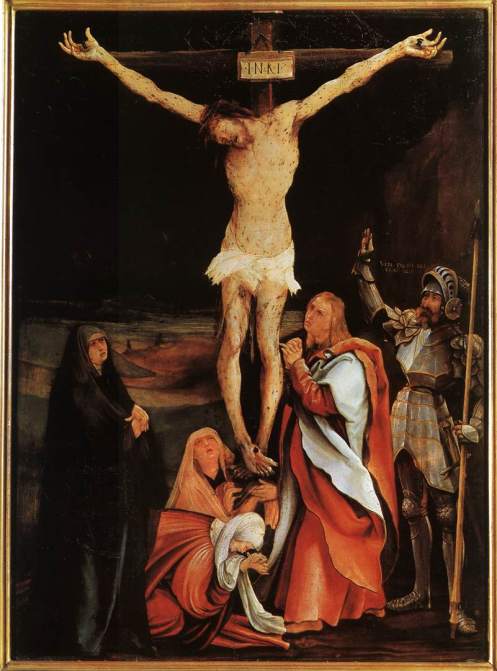
Thank God for leaving the Spirit of Truth with all believers. We need only to listen for His still, small voice to find Him. Thank God that He loves all of us so much that our foolish fears and anxieties don’t upset Him. Thank God He’s so patient with me, and that He is patient with all of us, even when we are impatient with Him. He loves us unconditionally, so much that he stretched out His arms on the cross to suffer and die for all of us. He will not send us anywhere He is not going; and when it comes to death, He’s been there and done that already. No matter how anxious, frightened, and lonely we may become, the Holy Spirit will keep us in His grip until the day Jesus bring us safely home. We are never alone.

*All Bible quotations are NIV