
Posts Tagged ‘Unemploment’

Unemployed? Seek the Lord in Your Day of Trouble.

Prayer

In the Day of Trouble I Seek the Lord

Today millions of Americans are facing the challenges of unemployment or under employment. These can lead to fear, frustration, depression and even physical illness. However, they also present opportunities for growth.

When you’ve lost your job or find yourself in a job that is not self-sustaining, a whole-person approach is needed as you strive to improve your situation. I like to use the “Wheel of Life” to help illustrate this. The circles on the outside of the wheel represent six areas of one’s life that contribute to the whole we refer to as “self.” Neglecting any of these puts the entire wheel out of balance, leaving one struggling and feeling out of sorts.
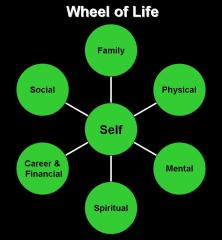
Wheel of Life

 Wheel of Life

Family and Social Life.  A period of unemployment or underemployment opens the door to opportunities in each the six areas on the wheel of life. It is a good time to spend extra time with family, renew old connections with friends and build your social network (which will improve your chances of finding self-sustaining employment).  Don’t forget to have some fun!

Physical Conditioning. It also provides an opportunity to improve your physical condition through proper exercise, sleep and nutrition. It is a wonderful chance to shed a few pounds and look your best for your next interview..

Career and Financial.  Dedicate some of your extra time towards education. You don’t necessarily need to pick up another degree or certification. Focus on learning something that will help make you more employable. Perhaps you can focus on improving your Microsoft Office software skills. There are free training courses galore on the Internet. If you need to improve your speaking skills, you could join the local Toastmasters chapter. The possibilities are endless.

Finances.  Being unemployed or underemployed is also the perfect time to work on improving your finances. Perhaps you’ve been talking about downsizing your household.  Start by selling off things you don’t really need.  Put together a new budget, trying to reduce frivolous spending. Try keeping close track of where your money actually goes. You might be surprised at how most of it gets spent.

Mental.  Take time to relax and stretch your mind.  Put down your phone, turn off the computer and TV, and pick up a challenging book that you’ve always wanted to read.  Spend some time with people who challenge your way of thinking. Visit an art gallery or museum that would not normally be of interest to you.

(Read Psalm 77: https://www.biblegateway.com/passage/?search=Psalm%2077&version=ESV)

Spiritual.  Lastly, Psalm 77 provides a simple, yet perfect framework for approaching the spiritual realm when you’re unemployed or under employed. When things aren’t going your way, it’s comforting to be reminded God has not and will not abandon you. The Psalmist finds comfort in reflecting on how God helped his people in the past. We should follow his example.

Pray fervently—then pray again. The Psalmist prayed throughout the entire night. He felt abandoned by God. He spoke what was on his mind. We can be totally honest and open with God, telling him about our feelings, our fears, our doubts and our desires. We can ask him any question. Because Jesus suffered every temptation we have faced and felt every emotion that we have felt, we are free to discuss our deepest thoughts and feelings with God. Through Jesus’ experiences, God the Father has firsthand experience with everything we might face in our lives (v.9-10)

“We tend to use prayer as a last resort, but God wants it to be our first line of defense. We pray when there’s nothing else we can do, but God wants us to pray before we do anything at all. Most of us would prefer, however, to spend our time doing something that will get immediate results. We don’t want to wait for God to resolve matters in His good time because His idea of ‘good time’ is seldom in sync with ours.” ― Oswald Chambers                                              

Recall how God has blessed you in the past. The Psalmist did not simply spill his heart out to God. He thought about everything the scriptures say regarding what God has done for his people in the past. God blesses those who have faith in him (v. 11).  Too often we dwell on what God hasn’t done for us rather than being thankful for the multitude of blessings he has provided.

Focus on the future. Think positively about your situation, hopes and desires. What is God teaching you? What is His will for your life? Make a list of Biblical promises you can identify about your future? (v. 13)

Reconsider your present circumstances. Ask God to strengthen your faith as you strive to cope with unemployment. Remind yourself that you can always trust  His promises (v. 14). Share your experience with others.

Let us then with confidence draw near to the throne of grace,  that we may receive mercy and find grace to help in time of need.   ―Hebrews 4:16

 

Rescue the Weak and Needy

Homeless

 Whoever gives to the poor will not want, but he who hides his eyes will get many a curse.

                                                                                                                                   —Proverbs 28:27

After enduring over 10 years with a dismal economy, many Americans today find themselves in perilous positions far exceeding anything they could have imagined. The middle class is quickly shrinking, leaving a fractured nation that is increasingly becoming a land of haves and have-nots.

The average American family has somewhere around $5,000 in savings, placing them in a position where losing a job can mean losing nearly everything.  Paying big mortgages, which is common for young working couples today, often depends on the salaries of two working spouses. Only two or three missed paychecks can lead to foreclosure! To stay afloat they tap into savings and then into retirement accounts, darkening their prospects for the future while also paying the federal government large tax bills for early retirement withdrawals.

The global economy has given rise to large companies having loyalty neither to their country of origin nor to their employees.   Workers are increasingly becoming disposable commodities that are brushed into the trash bin like rubbish on a picnic table.

Highly educated and experienced working professionals who lose their jobs and end up turning to the government for assistance are common today.  In my job working with the unemployed, I’ve heard far too many lament, “I never imagined that I could end up in this situation.”  This must change.

Churches, especially those in large urban areas, are often unaware of the financial struggles of individuals and families in their area—even when the strugglers are members of the church. Too many churches have lost touch with early traditions.

The scriptures speak frequently about caring for those who share the faith.  This is an essential part of discipleship that helps the church set its own house in order.  In Acts chapter 6, the Apostles appointed seven deacons to assist in the distribution of food to local widows, who were followers of Christ.  James 1:27 tells us,

Religion that is pure and undefiled before God, the Father, is this: to visit orphans and widows in their affliction, and to keep oneself unstained from the world.” (ESV)

Even clearer guidance comes straight from the mouth of our Lord in John 13:34-35:

 “A new commandment I give to you, that you love one another: just as I have loved you, you also are to love one another. By this all people will know that you are my disciples, if you have love for one another.”

Building a healthy church family is essential.  Brett Eastman has served as the small groups champion in several of the largest mega churches in the country including Pastor Rick Warren’s Saddleback Church.  Eastman writes:

“If you want to create a church community that really cares for one another, the best way to do it is through small groups. When small groups become the vehicle for care-giving, the whole church gets involved in sharing one another’s burdens—a much more personal approach than relegating the task to a committee.  The whole congregation should be making hospital visits, taking meals to people when they’re sick or something’s happened, doing childcare when someone’s in crisis and giving money when somebody’s lost a job.”

Small groups in churches set the conditions for encouraging personal intimacy and trust building—essential elements of loving Christian relationships.  Only by sharing our hopes, fears, cares and concerns do we really get to know other believers well.

Small groups also enable churches to develop many outreach ministries. One way to quickly make a difference is by reaching out to Christian charities in your church’s local area.  These organizations are always in need of volunteers, financial supporters, prayer warriors and other resources.  The possibilities are endless. You can’t take care of everybody, but you can take care of somebody.

Look closely and see that behind the face of every downtrodden man and woman is the face of Christ.

                                                                                                                                        –Oswald Chambers

Peace through Weakness

??????????????????

USS Dwight D. Eisenhower, CVN-69

As someone who served 24 years in the military, I naturally favor a strong national defense.  But I have to ask, just how much defense is enough?  Practically every day we hear one politician or another warning there’s not enough money for Obamacare, Medicare, Medicaid, Social Security, education, job creation and a host of other programs.  Even worse, there’s not enough money to help feed hungry Americans, so many children go to bed hungry every night.

The popular TV comedian Stephen Colbert, who is also an outspoken Christian, said of America, “If this is going to be a Christian nation that doesn’t help the poor, either we have to pretend that Jesus was just as selfish as we are, or we’ve got to acknowledge that He commanded us to love the poor and serve the needy without condition and then admit that we just don’t want to do it.”  Among the needy I include those who lack the health care, education and jobs that are essential to growing self-sufficient, productive citizens.

Despite our country’s perilous economic condition, some politicians wail and moan that we need to spend more on defense.  They warn that China is going to overtake us in military capacity.  Iran and Syria are threats to the world.  North Korea has the ability to strike America’s west coast with a nuclear missile. And the list goes on!  These are the talking points of the war hawks—and the hawks aren’t limited to those on the political right.

Many liberal politicians have joined the war hawk ranks on the premise that growing the defense industry can help bring jobs to their respective districts.  Perhaps that’s true, but manufacturing televisions or a host of other products that are no longer made in America would also create jobs.

According to the Center for Arms Control and Non-Proliferation, in 2012 (the last year for which full records are available), the United States spent 4.12 percent of its GDP ($645.7 billion) on defense.  China spent 1.24 percent ($102.4 billion).  In fact, the United States outspent all Asian countries combined, which had a total defense expenditure of $314.9 billion, less than half of America’s total.  In 2012, the United States accounted for 41 percent of global defense spending.  How much is enough?

“Every gun that is made, every warship launched, every rocket fired, signifies in the final sense a theft from those who hunger and are not fed, those who are cold and are not clothed.”                                                                                                                                                           —Dwight D. Eisenhower

I believe we need a strong national defense, but we have to balance defense with domestic needs.  If we can’t maintain a healthy, well educated, well nourished and self-sufficient population, then what is left to defend?

America is truly threatened from many directions, but the greatest threats stem from internal problems, not foreign countries or transnational groups.  Perhaps the biggest threat is our ignorance of history.  American society seems to have lost site of a key historical fact—the farther a nation separates itself from God, the more imperiled it becomes.

The Bible is full of examples validating this.  Those who don’t care to read the Bible should try reading Edward Gibbon’s “Decline and fall of the Roman Empire.”  The similarities between Rome’s decline and what is occurring in America today are astonishing.  (Sharie Pyke comments on this topic in an informative piece titled, “Is America like Rome in decline.”  http://goo.gl/7BgZFS)

“God is present in the places where our fears live.”   —Randy Kilgore, Our Daily Bread

Just as our nation is imperiled by pulling away from God, the more we humble ourselves before God the stronger we become.  1 Peter 5:6-7 says, “6Humble yourselves, therefore, under the mighty hand of God so that at the proper time he may exalt you, 7casting all your anxieties on him, because he cares for you.” (ESV)

Chapters 6 and 7 of the book of Judges provide a wonderful example of this. The Midianite people had impoverished the land of Israel through constant raids and pillaging of the countryside.  God chose Gideon to defeat the Midianites at a time when they were encamped in the land of Israel with a large Army.  From across the land, Gideon raised a great Army to defeat them.  But God had other plans.

God knew that Gideon’s army would overwhelm the Midianites, increasing their confidence in their own abilities to take care of themselves.   God wanted to teach Gideon’s followers to trust in Him, not in their own abilities.  He had Gideon select 300 of his best men and instructed him to have them surround the Midianite encampment.  With these 300 men and through a clever ruse God enabled Gideon to crush the Midianite force.  God delivers strength from our weakness.

I can do all things through Him who strengthens me.  —Philippians 4:13 (ESV)

Just as God wanted the Children of Israel to trust in him, he also wants us as individuals to trust in him. The law given under the Mosaic Covenant does not consider the moral weaknesses or infirmities of humans in their natural, fallen condition.  God’s law is absolute, demanding absolute morality and obedience before Him.  The law accepts no excuses.  When a person comes to this realization, his life seems an inescapable, fatal tragedy.

St. Paul describes this in Romans 7:9, “I was once alive apart from the law, but when the commandment came, sin came alive and I died.”  (ESV)  This is the powerful conviction of sin—a person coming to grips with his or her absolute weakness and inability to please God through works.  The cross of Christ is just a foolish notion to anyone who has never come to this realization. To believers, however, the cross is the only logical remedy for sin.

“A nation that continues year after year to spend more money on military defense than on programs of social uplift is approaching spiritual doom.”  —Rev. Dr. Martin Luther King, Jr.

Likewise, the cross of Christ is a foolish notion to anyone who believes our nation can prosper without God. Jesus doesn’t command us to have a strong national defense, but in the Sermon on the Mount (Matthew 5-7), he does say He will bless us if we are merciful, pure in heart, peacemakers, and hungry and thirsty for righteousness.  He also tells us to give to the needy, love our enemies and pray for those who persecute us.

The best form of national defense is unquestioning trust in God.  God will allow us to push him away from our government, schools, businesses, social organizations, sports teams, televisions, movies, homes and lives.  Unfortunately, those pushing God away do not understand that every vacuum created by God’s departure is filled by something less desirable.

Beyond Thanksgiving

Army field worship service

Read:  Job chapter 1.

Tomorrow millions of Americans will gather with friends and family to give thanks for the blessings of the past year. Thanks will be voiced for many things—family, friends, gifts, wealth, and acts of kindness by others just to name a few.

Sometimes personal adversity makes it is hard to give thanks though.  Death, job loss, divorce, failing health and many other adverse circumstances can rob us of joy.   Yet we always have the assurance of Romans 8:28, “And we know that in all things God works for the good of those who love him, who have been called according to his purpose.”  Even when our personal lives become chaotic, we have the assurance that God remains in control.  According to St. Paul, we suffer, “…that we might not rely on ourselves but on God, who raises the dead.”  (2 Corinthians 1:9, NIV).

Regarding the promise of Romans 8:28, John Piper has observed, “So the rugged hope of the believer is not that we will escape distress or peril or hunger or slaughter, but that Almighty God will make every one of our agonies an instrument of his mercy to do us good. ‘You meant it for evil,’ Joseph said to his brothers who had sold him into slavery, ‘but God meant it for good.’  (Genesis 50:18-20) And so it is with every calamity of those who love God. God meant it for good!”

While it might be difficult to see the good in today’s circumstances, someday it will be perfectly clear. During our lives we have an imperfect understanding of divine things. But as 1Corinthians 13:12 promises,For now we see only a reflection as in a mirror; then we shall see face to face. Now I know in part; then I shall know fully, even as I am fully known.”

Even when our personal circumstances are tough we should always give thanks to God for the cross—that while we were yet sinners Christ died for us.  Jesus became sin for us and in our stead suffered the punishment we all deserve.

Beyond mere thanksgiving though, God is worthy of our worship.  Worship is an act of awe and reverence done in recognition of God for whom and what He is, not what he has done.  We can follow the example of Job, who remained blameless before God even as his personal world was caving in around him:

While he was still speaking, yet another messenger came and said, “Your sons and daughters were feasting and drinking wine at the oldest brother’s house, when suddenly a mighty wind swept in from the desert and struck the four corners of the house. It collapsed on them and they are dead, and I am the only one who has escaped to tell you!” At this, Job got up and tore his robe and shaved his head. Then he fell to the ground in worship and said: “Naked I came from my mother’s womb, and naked I will depart. The Lord gave and the Lord has taken away; may the name of the Lord be praised.” —Job 1:18-21 (NIV)

King David provided another example for us to follow. When his infant son grew ill, he fasted and prayed to God throughout the night to spare the child.  But, when he learned that the child has died, rather than having an emotional breakdown, David arose, bathed himself, put on clean clothes and then went to the Lord’s house to worship.   (2 Samuel 12:15-20).

In John 16:33 (NIV), Jesus tells us, “In this world you will have trouble. But take heart! I have overcome the world.”   In John 17, Jesus’ prayer reminds us that his followers are not of this world, even as He is not of this world.  We will all suffer at times during our lives, but we need look no farther than the cross to find peace amid life’s tribulations.

“There is no pit so deep that God’s love is not deeper still.”― Corrie ten Boom


Our Waning Confidence

Faith

God is our refuge and strength, a very present help in trouble.  Therefore will we not fear, though the earth do change, and though the mountains be shaken into the heart of the seas;  Though the waters thereof roar and be troubled, though the mountains tremble with the swelling thereof.    —Psalm 46: 1-3 (ASV)   

 In June of this year Gallup conducted a poll on the public’s confidence in several major institutions in American society.  The U.S. military topped the list with a 76 percent confidence rating.  Not surprisingly, the U.S. Congress ranked at the bottom with only 10 percent.

There were troubling results suggesting that less than half of Americans have confidence in many of the institutions that helped form the bedrock of our society.  Big business came in at 22 percent.  Newspapers and television tied at 23 percent.  The criminal justice system was rated 28 percent. Public schools were rated 32 percent.  The U.S. Supreme court was rated 34 percent. The presidency received a rating of 46 percent.  The public’s confidence in churches and organized religion was only 48 percent.

There are plenty of reasons to lack confidence in these institutions.  Violence and even homicides in our schools are now commonplace.  It seems like hardly a month can pass anymore before you hear about another beating or killing in a school.

The recent federal government shutdown left World War II veterans blocked from visiting their memorial in Washington D.C., national parks closed, most government employees furloughed and many federal contractors idled.

A failure of the Electronic Benefit Transfer (food stamp) computer system recently caused panic across multiple states.  The registration website for the new federal health care system is a train wreck.

On top of all this, the U.S. economy stinks.  The national debt is at 17 trillion dollars—that’s 12 zeros.  Congress narrowly averted a default on the debt earlier this month, but could not reach a definitive solution.  They merely postponed the debt argument for a few months.   Failed economic policies spanning multiple presidential administrations have left millions of Americans unemployed or underemployed.

The church has taken a lot of hits in recent times.  Just last week Pope Francis chastised a German Bishop for his lavish lifestyle. Embezzlement of  funds by church employees is becoming commonplace.   It is no longer unusual to hear about a church leader caught up in a sexual crime or other form of corruption.

When times are good it’s easy for you and me to simply drift through life without a care, but when things turn bad all kinds of troubles arise.  Just trying to comprehend all of the problems plaguing American society today can cause fear, anger, paranoia, despair and depression for some.

In Matthew chapter 17, Jesus is transfigured on the mountaintop. His apostles Peter, James and John behold the full glory of God.  It’s no surprise that immediately afterwards they ask Jesus if they should pitch tents so they can remain on the mountain.  His apostles want to stay and continue to soak in the glorious experience.  Instead Jesus leads them back down the mountain to the valley and their regular lives.

Life’s greatest lessons are rarely learned on a mountaintop.  They’re learned in the daily drudgery and pain of life. Fortunately for Christians, regardless of how bad things might look today, we know how the story ultimately ends.  As Oswald Chambers described his life, “I am in the procession of a conqueror, and it doesn’t matter what the difficulties are, for I am always led in triumph.”

Saint Paul echoes the same message in Romans 8:38-39 (ASV), “I am persuaded, that neither death, nor life, nor angels, nor principalities, nor things present, nor things to come, nor powers, nor height, nor depth, nor any other creature, shall be able to separate us from the love of God, which is in Christ Jesus our Lord.”  He goes on to challenge us in Philippians 4:6 (ASV), “In nothing be anxious; but in everything by prayer and supplication with thanksgiving let your requests be made known unto God.”

When you’ve reached wit’s end, stop, take a deep breath, lift your eyes and look.   You’ll see God standing right there.  Regardless of your present circumstances, never forget that He is the author of the story in every Christian’s life.  God stands ready for us to lift the burdens from our backs and place them squarely on His.  Therefore, guided by the Holy Spirit, let your thoughts and deeds spring from faith, not fear.

Come unto me, all ye that labor and are heavy laden, and I will give you rest.  Take my yoke upon you, and learn of me; for I am meek and lowly in heart: and ye shall find rest unto your souls. For my yoke is easy, and my burden is light.  —Matthew 11:28-30 (ASV)

I’m Tired of Waiting

Clocks - end time

Patience is in short supply in America today. We live in a culture of instant gratification, taught by the media that we needn’t wait for anything. We buy new computers that will load a web page a second or two faster than the previous model. We impatiently pace while the microwave heats a dish in 60 seconds that would have taken 20 minutes in a conventional oven. We buy with credit cards before we earn the money to pay for the things we want. We type text messages on our cell phones while driving our cars. We pound our fists waiting for the traffic signal to turn green so we can hurry to our next destination.

For the unemployed, patience is one of the first virtues to be tested. In today’s economy, it doesn’t take one long to figure out that even though he or she might be highly qualified, it takes time—sometimes many months—to find a new job. It’s best to approach a job search like a marathon, not a sprint. Slow and steady is the key to success. Patience is essential—never give up!

Fortunately, God is extraordinarily patient and doesn’t give up on us. Probably the greatest example of patience in the Bible is displayed in Jesus’ relationship with His apostles. Only a few hours before Jesus’ crucifixion, Peter, an eyewitness to the transfiguration, denied knowing him. Yet Peter became the “rock” upon which Jesus built his church here on Earth. Thomas, who had walked with Jesus and saw him perform many miracles, didn’t believe in the risen Lord until seeing the resurrected Jesus with his own eyes. Even after Jesus’ ascension into heaven, the apostles remained confused and didn’t fully understand what Jesus was really about until they received the Holy Spirit on the day of Pentecost.

During this season of Lent, make an effort to pray for patience and ask God to strengthen your faith. And don’t forget to thank Him for his patience with you!

Psalm 40 (NKJV), Faith Persevering in Trial:
I waited patiently for the LORD;
And He inclined to me,
And heard my cry.
2 He also brought me up out of a horrible pit,
Out of the miry clay,
And set my feet upon a rock,
And established my steps.
3 He has put a new song in my mouth—
Praise to our God;
Many will see it and fear,
And will trust in the LORD.
4 Blessed is that man who makes the LORD his trust,
And does not respect the proud, nor such as turn aside to lies.
5 Many, O LORD my God, are Your wonderful works
Which You have done;
And Your thoughts toward us
Cannot be recounted to You in order;
If I would declare and speak of them,
They are more than can be numbered.
6 Sacrifice and offering You did not desire;
My ears You have opened.
Burnt offering and sin offering You did not require.
7 Then I said, “Behold, I come;
In the scroll of the book it is written of me.
8 I delight to do Your will, O my God,
And Your law is within my heart.”
9 I have proclaimed the good news of righteousness
In the great assembly;
Indeed, I do not restrain my lips,
O LORD, You Yourself know.
10 I have not hidden Your righteousness within my heart;
I have declared Your faithfulness and Your salvation;
I have not concealed Your lovingkindness and Your truth
From the great assembly.
11 Do not withhold Your tender mercies from me, O LORD;
Let Your lovingkindness and Your truth continually preserve me.
12 For innumerable evils have surrounded me;
My iniquities have overtaken me, so that I am not able to look up;
They are more than the hairs of my head;
Therefore my heart fails me.
13 Be pleased, O LORD, to deliver me;
O LORD, make haste to help me!
14 Let them be ashamed and brought to mutual confusion
Who seek to destroy my life;
Let them be driven backward and brought to dishonor
Who wish me evil.
15 Let them be confounded because of their shame,
Who say to me, “Aha, aha!”
16 Let all those who seek You rejoice and be glad in You;
Let such as love Your salvation say continually,
“The LORD be magnified!”
17 But I am poor and needy;
Yet the LORD thinks upon me.
You are my help and my deliverer;
Do not delay, O my God.

Today’s Lenten Prayer:
Teach me, my Lord, to be sweet and gentle in all the events of my life, in disappointments, in the thoughtlessness of others, in the insincerity of those I trusted, in the unfaithfulness of those on whom I relied. Let me forget myself so that I may enjoy the happiness of others. Let me always hide my little pains and heartaches so that I may be the only one to suffer from them. Teach me to profit by the suffering that comes across my path. Let me so use it that it may mellow me, not harden or embitter me; that it may make me patient, not irritable; that it may make me broad in my forgiveness, not narrow or proud or overbearing. May no one be less good for having come within my influence; no one less pure, less true, less kind, less noble, for having been a fellow traveler with me on our journey towards eternal life. As I meet with one cross after another, let me whisper a word of love to You. May my life be lived in the supernatural, full of power for good, and strong in its purpose of sanctity. Amen.

Today’s Reading: James 1:2-8 Profiting through Trials
http://www.biblegateway.com/passage/?search=James 1:2-8&version=NKJV