Christmas, the celebration of the birth of Jesus Christ, is quickly approaching. As we prepare for a merry celebration of his birth, let us not forget that he came to us as a Savior, destined to suffer agony and death for you and for me. Jesus is the “lamb of God who takes away the sin of the world” (John 1:29). God did not send us his only begotten son out of pity for mankind. He was sent because only God’s son was a sufficient sacrifice to take away the sin that dwells in all of us. “But he was pierced for our transgressions; he was crushed for our iniquities; upon him was the chastisement that brought us peace, and with his wounds we are healed” (Isaiah 53:5). Everyone needs a savior. I hope you enjoy this reblog from December 21, 2017.
Posts Tagged ‘religion’
4 Dec
Happy St. Barbara’s Day
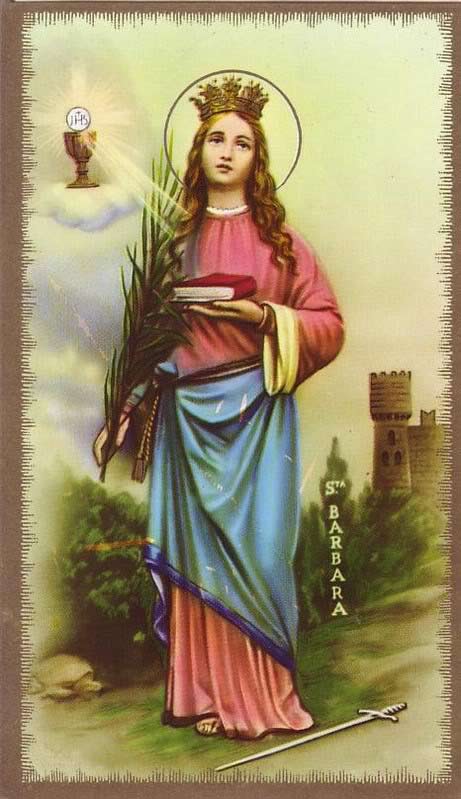
Happy St. Barbara’s Day to all of my Field Artillery brothers and sisters.
Legend has it that Saint Barbara, the patron saint of artillerymen, was tragically beheaded by her own father, a nobleman in the Roman Empire, for her devotion to Christianity. Shortly after, in a twist of fate, her father was struck down by lightning during a sudden, violent storm. Consequently, Saint Barbara is revered as the patroness of those facing thunderstorms, fire, explosions, or the risk of sudden death.
In the early days of warfare, artillerymen often encountered cannon misfires, muzzle bursts, and weapon explosions. Artillery crews turned to Saint Barbara for protection. She has been protecting artillerymen for hundreds of years and has become an integral part of the Field Artillery’s heritage. Today, she continues to be honored as the patron saint for all artillerymen, depicted standing by a cannon or holding a chalice and sacramental wafer.
1 Dec
Advent 2024

Almighty God, as we begin this season of Advent,
we thank you for your grace and mercy in sending your son Jesus
to be our Savior and Lord.
We confess that we have not always lived in the light of His coming,
and we have often wandered from your ways.
Forgive us, we pray, and renew us by your Spirit,
that we may watch and pray for His glorious return,
and follow Him in holiness and love.
Grant us, O Lord, the wisdom to discern the signs of the times,
and the courage to proclaim the good news of His kingdom
to a world in need of hope.
In Jesus name we pray. Amen.
28 Nov
So thankful

Our nation has endured an extraordinary series of natural disasters over the past few months, including hurricanes, tornados, torrential rains, devastating floods, and enormous wildfires. If you’ve tuned in to the evening news lately you’ve probably seen disaster victims who have lost nearly all of their material possessions. Despite suffering tremendously, many of these people express gratitude for the simple fact that they are alive and still have their family and friends. They get it!
As I grow older, the things that truly matter in my life have become crystal clear. These are Faith, Family, Friends, and Freedom. I call them the 4Fs and I’ve written about them several times over the decade that I’ve written this blog.
Today, as we mark the annual Thanksgiving holiday, I’m offering a special thanks for my friends. I’ve heard it said that families are issued to you, but you choose your friends. This is just one of the many things that makes true friends so special.
So, what is a true friend? I don’t have all the answers, but here are some characteristics of my true friends that I’ve observed over the years:
- They are there for you when others walk away.
- They meet you where you are, warts, wrinkles, and all.
- They are forgiving.
- They will make time for you, even when they haven’t the time to spare.
- They expect nothing in return and do not keep score.
- They are good listeners.
- They respect confidentiality.
- They tell you what you need to hear, not what you want to hear.
- They say, “Wow, you really made a mess of this! Now how can I help you fix it?”
- They walk beside you in the demon filled valleys, propping you up.
- They are at their best when you are at your worst.
A number of my dear friends are currently struggling with serious life challenges. These include the early onset of dementia, the death of a spouse, a spouse developing dementia, a spouse with cancer, a child abusing alcohol, and a child suffering with seizures. The longer one lives the more frequently such challenges seem to occur. So now I lift them up to the Lord.
Lord, hear my prayer. Father God, I pray for my friends who are struggling. I pray that you will grant them mercy and peace. You know exactly what they need at this moment. Draw near to them and let them feel your presence. Open their eyes, ears, and hearts to you. Protect them from the attacks of the evil one and shelter them in your loving arms. I pray this in the name of the Father, and the Son, and the Holy Spirit. Amen.
Sirach 6:14-16 (RSV)
Faithful friends are a sturdy shelter:
whoever finds one has found a treasure.
Faithful friends are beyond price;
no amount can balance their worth.
Faithful friends are life-saving medicine;
and those who fear the Lord will find them.
29 Oct
The Triumphant God

The triumphal entry of Jesus into Jerusalem, Matthew 21:1-11
The dominance of Rome
As a retired Army Officer, I find Roman history fascinating. The Roman Empire’s territory in Jesus’ time completely enveloped the Mediterranean Sea. Roman society was very militaristic. The military played a central role in the empire’s territorial expansion, governance, and social structure. Rome aggressively employed its strong military capabilities to conquer new territories and maintain control over its sprawling empire. Military prowess was a key aspect of Roman cultural identity.
The Roman Senate sometimes granted a festive procession through the streets of Rome to pay tribute to a general who was victorious in battle. Called a Triumph or a triumphal procession, it was a grand and elaborate ceremony designed to celebrate and publicly recognize the military achievements and conquests of the general being honored.
A Triumph was a blend of religious, political, and social elements, showcasing the glory of Rome. The general being honored wore a special ceremonial toga. He rode in a chariot drawn by four horses, followed by his troops, prisoners of war in chains, strange animals from the conquered lands and wagons filled with the spoils of war. Adoring citizens lined the streets, cheering as the different elements of the Triumph passed by them. The air was full of the sounds of music and chants, creating a jubilant, reverent atmosphere. The Triumph not only honored the general but also reinforced the power and splendor of the Roman state.
Jesus’ triumphal entry into Jerusalem
In Jerusalem a large crowd of Jews gave Jesus an impromptu Triumph of His own. His triumphal entry into Jerusalem is described in all four Gospels: Matthew 21:1-11, Mark 11:1-11, Luke 19:28-44, and John 12:12-19. Each provides a slightly different perspective on the event, but they all highlight the significance of Jesus’ arrival in Jerusalem as the fulfillment of prophecy. Jesus’ triumphal entry, in Christian tradition, marks the beginning of Holy Week. It sets the stage for the events leading up to His crucifixion and resurrection, which are central to the Christian belief that Jesus is the Messiah, the son of the living God.
According to the Gospels, Jesus entered Jerusalem riding on a donkey (or colt), fulfilling a prophecy found in both Isaiah 62:11 and Zechariah 9:9. As He approached the city, a large crowd gathered, spreading their cloaks and palm branches on the road before him. They shouted “Hosanna” (loosely translated as “save us” or “help us”) and praised Him as the “Son of David” and the “King of Israel.”
The atmosphere at Jesus’ triumphal entry was one of celebration and anticipation, as the jubilant Jews who were present believed him to be the promised Messiah, who they supposed would be a military leader who would free them from Roman oppression. However, in stark contrast to a Triumph for a Roman General, Jesus’ humble entry into Jerusalem symbolized the peaceful role of His mission as Messiah, the humble King of Israel who fed the hungry, healed the sick, cleansed the lepers, gave sight to the blind, prayed for His enemies, and washed the feet of His disciples.
Sadly, most of the Jewish people and religious leaders failed to recognize Jesus as Redeemer, the sacrificial Lamb of God who would suffer and die under the orders of Pontius Pilate and after three days gloriously rise from the dead, conquering sin and death once and for all. Jesus freely sacrificed himself for the sins of the world and offers eternal life to all who believe on Him and profess that He is the son of God. We all need the Most Holy Redeemer of the world. Jesus Christ is the Triumphant God.
Prayer to the Most Holy Redeemer
(Anima Christi)
Soul of Christ, sanctify me.
Body of Christ, save me.
Blood of Christ, embolden me.
Water from the side of Christ, wash me.
Passion of Christ, strengthen me.
O good Jesus, hear me.
Within thy wounds hide me.
Never permit me to be parted from you.
From the evil Enemy defend me.
In the hour of my death call me.
and bid me come to thee,
that with your saints I may praise thee
for age upon age. Amen.
2 Corinthians 2:14 – “But thanks be to God, who in Christ always leads us in triumphal procession…”
* All Bible quotes are ESV
Bing Copilot AI was used to assist with the historical research used to write this piece.
7 Oct
Blessed

Afghan woman proudly displaying her purple forefinger, dipped in indelible ink at a voting station where she cast her vote in the national election. This was a way of ensuring voters voted only once.
It was sunny and warm in Louisville, Ky. on Saturday, June 28, 1975. That’s the day I boarded a bright yellow school bus at an Army recruiting station for a short journey to Fort Knox, where I was scheduled to undergo Army basic training or boot camp as it’s often called. Only a few weeks earlier I’d been a bright-eyed college student receiving his associate degree in Munich, Germany. My mother Phyllis and stepfather Ray were still in Germany—Ray was an Army officer with the rank of lieutenant colonel, assigned to the U.S. Army Europe headquarters in Heidelberg.
After what seemed like hours, the bus turned into the main gate of Fort Knox. Entering the post felt very familiar, as I’d lived there during my freshman and sophomore years of high school while Ray worked at the Armor School. About ten minutes after entering the post, the bus turned down a side street and then swung into the parking lot of Delta Company, 13th Training Battalion, 4th Training Brigade, home of the Delta Demons. Delta Company would be our home for the next several weeks.
Peering out the bus window I could see two tough looking fellows wearing olive drab fatigues and the iconic Smokey Bear hats that identified them as drill sergeants. Their fatigues were starched stiff with creases that looked sharp enough to slice an apple. Their uniforms fit like gloves. Their boots were polished to a mirror finish. Not a hair was out of place. All you needed was one look at these impressive gentlemen to know that they were pure badass!
The driver opened the bus door and we were greeted by a booming voice. “Off the bus and line up. Move it ladies!” After a clumsy exit, fumbling with our bags and bumping into each other, we school boys managed to get into something resembling a line. The empty bus quickly pulled away, leaving us feeling isolated and helpless. It was then that we were introduced to the two gentlemen who would fill the roles of father, mother, confessor, and mentor for all of us in the coming weeks, as our Drill Sergeants turned a bus full of boys into men.
Thus began my 26-year career in the United States Army, an adventure that ended in 2001 with my retirement from our nation’s “Big Green Fighting Machine.” My career led me to assignments in the United States, Western Europe, the Balkans, Africa, and the Middle East. Looking back, those were good years all in all. Sure, the hardships were many, but the adventures, excitement and camaraderie far outweighed the hardships. I can’t help growing a bit nostalgic every time I think about it.
I wish the United States still had a military draft. Even better would be three years of mandatory military service for every American girl and boy, starting at age 18. At least one year would be spent overseas, being exposed to other cultures and languages. It would be a better education than pursuing a four-year degree. It would also strengthen our nation by showing college age citizens how blessed they are to live in America.
Today’s world is full of danger. Look no farther than Ukraine or the Middle East for proof. Unfortunately, few of those in Congress have military experience as a frame of reference to help guide them when making decisions that could draw our nation into war.
The presidential election is only weeks away and the ugly political slurs are flying like bullets in a drive by shooting. Politicians from both side of the aisle are quick to tell us how bad we’ve got it and how it’s all the other side’s fault. Don’t believe it. One thing my time in the military taught me is that, despite what shifty politicians might say to the contrary, we Americans have much to be thankful for.
James 1:17 tells us, “Every good and perfect gift is from above, coming down from the Father of the heavenly lights, who does not change like shifting shadows.” Here are just a few gifts Americans should thank God for. Remember them when you lie down to go to sleep tonight.
- Across the land we enjoy relative safety from the government and other people.
- We enjoy the freedom to worship as we choose.
- Our leaders are elected by the people.
- Access to free, basic education is widely available.
- Safe drinking water is usually readily available.
- Sanitation services are available to help prevent sickness and disease.
- We grow enough food to feed our population and have extra to export.
- We have a robust transportation infrastructure to distribute the commodities we need.
- We enjoy abundant natural resources to produce energy.
- Electricity is generally available across the land.
The Lord bless you and keep you; the Lord make his face shine on you and be gracious to you; the Lord turn his face toward you and give you peace. –Numbers 6:24-26
* All Bible quotes are NIV.
19 Aug
Going home

My home is in heaven. I’m just traveling through this world. –Billy Graham
I served 24 years of active duty in the US Army. For my entire career my sweet wife stood by my side, sacrificing her own career in order to accommodate my needs. I was gone a lot, but somehow along the way we managed to birth and raise two children. We moved over a dozen times during my career. More than once we moved three times in a single year. This was done so that I could attend short, specialized training courses and schools between my permanent changes of station.
We lived in some wonderful locations, saw some incredible things, and had some great times. One thing we never had, however, was a place to call home. The idea of a place called home is almost magical for some people. Recall Dorothy’s most memorable line in the Wizard of Oz as she yearns to return to friends, family, and a little farm in Kansas, “There’s no place like home.” Or as American pioneer and writer Laura Ingalls Wilder said, “Home is the nicest word there is.
Then there’s this from Oliver Wendell Holmes Sr., “For there we loved, and where we love is home, home that our feet may leave, but not our hearts.” Home means different things to people, but a common thread is the thought of being in a safe, comfortable place surrounded by those we love the most.
Unfortunately, many people yearn for home during their lives, but never find it. Saint Paul often spoke of heaven as every believer’s true home. In Corinthians 2 5:1* he says:
“For we know that if the earthly tent we live in is destroyed, we have a building from God, an eternal house in heaven, not built by human hands.”
Here, Paul compares our temporary physical bodies to a tent and contrasts it with an “eternal house in heaven,” highlighting the permanence and divine nature of our heavenly home.
In Philippians 1:23-24, Paul writes:
“I am torn between the two: I desire to depart and be with Christ, which is better by far; but it is more necessary for you that I remain in the body.”
And in Philippians 3:20, he writes:
“But our citizenship is in heaven. And we eagerly await a Savior from there, the Lord Jesus Christ.”
This verse emphasizes that our true citizenship is in heaven; it reinforces the idea that our ultimate home is with God.
The ache for home lives in all of us. The safe place where we can go as we are and not be questioned.” — Maya Angelou
Taken together, the preceding passages from Paul show he understood that while we live on earth temporarily, our true eternal home is in heaven with God. And like the prodigal son’s return to his father’s house, our Father in heaven eagerly awaits the day when all his children will return to their heavenly home. So, if you’re a believer with an unquenchable ache to go home and be at peace, rest assured in the knowledge that the Father is eagerly awaiting your return and will run to embrace you when you come home to your rightful place in heaven at His appointed time.
I’m just a poor wayfaring stranger
Traveling through this world below
There is no sickness, no toil, no danger
In that bright land to which I go
I’m going there to see my father
And all my loved ones who’ve gone on
I’m just going over Jordan
I’m just going over home
— Wayfaring Stranger, song by Johnny Cash
*All Bible quotations are NIV.
1 Jun
Scary times

I am the Lord your God who takes hold of your right hand and says to you, Do not fear; I will help you. —Isaiah 41:13
Many people today fear a wide variety of things they see and hear around them. Fear is running rampant right here in America. Polls indicate that the majority of Americans now believe that their children’s lives will be harder than their own. They worry about unemployment and the economy. Many fear illegal immigration. Others are afraid to gather in public places for fear of violence. We see campus protests turn violent. School shootings don’t surprise us anymore.
On a cosmic scale we hear about giant solar flares that could destroy technology, pushing humankind back into the Stone Age. A large meteor or asteroid collision could destroy life on Earth.
In the natural world, we hear that a major eruption of a super volcano, like the one beneath Yellowstone National Park, could cause destruction and death on a planetary scale. Earthquakes and tsunamis in diverse places threaten millions of people. Climate change is blamed for killer storms, droughts, melting polar ice, coastal flooding, wildfires and more.
On the human plane, we read and hear about flesh eating bacteria, brain eating amoebas, and drug resistant bacteria and viruses. Abortion rights are a hot button topic that can trigger anger and rage. Some people hunker down in their homes, worried about riots, violence by and against the police, and other street violence. Others fear that computer hackers or scammers will steal their identities and wealth.
There are wars in Ukraine and Gaza, and rumors of a global war that’s coming. Religious persecution is increasing around the globe. There is a growing wave of antisemitism right here in America. There are ample reasons for fear.
The Bible mentions two very different types of fear. The first is fear of the Lord. This fear is not associated with being scared. It is an awe and reverence of God and is to be encouraged. According to Psalm 111, fear of the Lord is the beginning of wisdom and leads to rest and peace.
The second type of fear is detrimental. In the first chapter of 2 Timothy it is described as a “spirit of fear.” A person can be completely overcome by a spirit of fear, virtually frozen and unable to function. Such fear weighs a person down physically, emotionally and/or mentally.
Unfortunately, many Christians have succumbed to living with a spirit of fear. Some fear those of other religions and are reluctant to reach out to them in Christian love. Some fear those who are different from them culturally or racially. Others are hesitant to invite those in need into their lives for fear they might lose something or it might cost something. Some are afraid to leave the comfort of their homes and familiar surroundings in order to reach out to the needy. Others are hesitant to give of their wealth for fear they might later find themselves in need.
Many Christian fears boil down to a fear of losing something—possessions, comfort, safety, security. In Philippians chapter 3, verses 7-8, Paul describes how he has let go of the things of this world in order to focus on what is truly important:
But whatever gain I had, I counted as loss for the sake of Christ. Indeed, I count everything as loss because of the surpassing worth of knowing Christ Jesus my Lord.
One can’t grasp Christ’s outstretched hand while clinging to things of this world. As David tells us in Psalm 34, verses 4-7:
I sought the Lord, and he answered me and delivered me from all my fears.
Those who look to him are radiant, and their faces shall never be ashamed.
This poor man cried, and the Lord heard him and saved him out of all his troubles.
The angel of the Lord encamps around those who fear him, and delivers them.
You may be facing a health crisis, unemployment, divorce, a call to Christian service, or other difficult challenges. Don’t live in fear. Take the fears you struggle with today and give them to the Lord in prayer. Make this a habit. I will not tell you to “let go and let God” because it makes letting go of fear sound so simple. Instead, I encourage you to explore the Bible and learn what it says about fear. Read and believe!
Begin with Psalm 23. Then read Psalm 118. Other relevant Psalms include 27, 34, 46, 61, 91, 103, and 121. Once you have read these Psalms, locate a red letter edition New Testament and read every word spoken by Jesus. Then read Paul’s epistles. Become steeped in scripture. Do this and you will be well on the way to giving your fears to the Lord.
The remarkable thing about God is that when you fear God, you fear nothing else, whereas if you do not fear God, you fear everything else. —Oswald Chambers
*All Bible quotes are ESV.
14 May
Enduring Truths for Recent Graduates

Across the country it’s graduation time. Here in South Dakota some schools have already closed for the summer. Most of those that remain open will close in the coming days. Everywhere one turns there’s another grad party. What awaits all these new grads? A decade ago I wrote an article for my newspaper column with some advice for recent graduates. While it was aimed at high school graduates, it is also highly relevant to recent college grads. The article has become one of the most popular pieces I ever wrote. I’ve received hundreds of emails thanking me for taking the time to share it. Therefore, I decided to republish it annually around graduation time. I hope some of you might find it useful. You can view the original article in the Tribune-Democrat news at this link: http://goo.gl/LtN72
For those who are graduating high school this year and beginning the long transition into adulthood, I’d like to offer you a gift. Here are five enduring truths I have learned. They will help you through life’s journey.
Choices
“If you decide to just go with the flow, you’ll end up where the flow goes, which is usually downhill, often leading to a big pile of sludge and a life of unhappiness. You’ll end up doing what everyone else is doing.” ― Sean Covey, The 7 Habits of Highly Effective Teens
Life will deal you an endless string of choices along the way. Some will be trivial, like deciding what to wear today. Others will be weighty and their outcomes will affect you forever. Weighty decisions should always be preceded by much thought and soul searching. This includes decisions about who you date or marry, what you put into your body, bringing children into the world, what you do for a living, how much debt you incur and who you associate with.
All of these decisions will have a lasting effect on your life. Therefore, make them slowly and deliberately. Often you’ll discover that the right choice is not the easiest one. A habit of making poor choices will, as the Sean Covey quote suggests, drag your life downhill.
I was recently contacted by a young man who had just received a bad conduct discharge from the Navy. He asked me how the discharge would impact his future employability. His mistake was choosing to drive a car while intoxicated and hitting a pedestrian. Fortunately, the victim wasn’t seriously injured. Had it been otherwise, the young sailor would probably be in prison. It was my sad responsibility to inform him that with some employers the discharge would be a black mark for life. Choices matter!
Learning
“Experience is a hard teacher because she gives the test first, the lesson afterwards.” ―Vernon Saunders Law, former professional baseball pitcher and Cy Young Award winner
Some of you will go on to college or technical school. Others will enter the workforce. Even if your formal education is over, don’t quit learning. Make learning a lifelong adventure. I did my undergraduate work at the University of Kentucky. The school offers a fellowship program for individuals aged 65 and older to attend classes tuition free. Every year numerous senior citizens walk the stage to receive degrees ranging from Associate of Arts to Doctor of Philosophy. It’s never too late to learn.
Even if you don’t choose to continue formal learning, make it point to learn from life. Observe others; note their successes and failures; then learn from their experiences. More importantly, learn from your own mistakes.
Some of the greatest lessons I’ve learned, particularly those while serving in uniform, were the result of having made a terrible mistake. This sort of lesson sticks, like the first time you grab the handle of a hot iron skillet with your bare hand. The key to learning from mistakes is owning them. Admit your mistakes and then move on, having learned something from the experience. Don’t let, “It wasn’t my fault,” be part of your vocabulary.
Work
“A dream doesn’t become reality through magic; it takes sweat, determination and hard work.” ―Colin Powell, retired U.S. Army four-star general and former U.S. Secretary of State
Work isn’t always fun. If it were, they’d call it play. Work can be downright unpleasant, but it’s an essential element of life! Along the way you’re going to have jobs you won’t like. Note what you don’t like and make it a point to improve yourself, so you’ll never again have to work at such a job.
Accepting a job means submitting to the authority of those placed over you. Learn to work within this system. You’ll inevitably have bosses you don’t like. Learn to respect the position, if not the individual.
Fairness
“Life is not fair; get used to it.” ―Bill Gates, founder and former CEO, Microsoft Corporation
You will hear much discussion about fairness in this life. It’s all hot air. Life isn’t fair. Some good people die young, while some bad people live a long life. Disease sometimes strikes arbitrarily, for no apparent reason. Some people prosper while others suffer failure. A death or accident can change your life forever.
There is randomness to life that can’t be avoided. Don’t expect kindness to be returned with kindness. Don’t expect generosity to be returned with generosity. The best choice is to be fair and kind to others and learn to accept what they return to you.
A wise man named Harry Browne ran for president of the United States on the Libertarian Party ticket. On Christmas day in 1966, Browne wrote his young daughter a letter aptly titled, “A Gift for My Daughter.” I encourage every graduating senior to read it and digest it. In the letter, he explains to his daughter that, “Nobody owes you anything.” Understanding what Browne meant can truly bless you. You can find it here. https://independentpoliticalreport.com/2015/12/harry-brownes-christmas-letter-to-his-daughter/
Faith
“A faith is a necessity to a man. Woe to him who believes in nothing.” ―Victor Hugo
I once had a senior Army officer tell me he preferred to work with men who possessed spiritual values, regardless of their religion. He explained that having faith in a power higher than one’s self was an indicator of how one will perform under pressure; in this instance, the pressure meant combat.
Too many people place their faith in all the wrong places. It might be in wealth, celebrity, good looks, talent, or even government. Whatever the case, misplaced faith leads to disappointment after disappointment.
To avoid these disappointments, put your faith in God alone. You, your loved ones and your friends will all inevitably let you down, but God will never fail you.
27 Apr
Politics: don’t get tricked

Unless you’ve been living in solitary confinement for a while, you’re probably aware that many federal, state, and local elections will occur on November 5th this year, including a hotly contested race for the presidency. That’s just over six months from now. Already we’re being bombarded by election news and other information/misinformation on television, radio, the internet, and print media. I was a newspaper opinion columnist for 10 years. Many of my articles discussed politics. In contrast, in this Christian-themed blog I tend to steer clear of politics. The post that follows is a rare exception. I’ll try not to step on too many toes.
But first, here’s a corny political joke to lighten things up. What’s the difference between a politician and a magician? At least the magician returns your wallet when the trick is over. On the serious side, how are a wily politician and a magician similar? Both are illusionists, masters of creating and shaping perceptions. Many politicians use the magician’s tactic of “misdirection” where a magician draws the audience’s attention in one direction with something busy, noisy or spectacular, while the real moves occur out of sight. Voters must pay attention to avoid being tricked by wily politicians.
The remainder of this post borrows from a piece I wrote in 2022. It is a reminder to Christian readers that we are obliged by the scriptures to follow a different set of election rules.
The Lord foils the plans of the nations; he thwarts the purposes of the peoples. But the plans of the Lord stand firm forever, the purposes of his heart through all generations. Blessed is the nation whose God is the Lord, the people he chose for his inheritance. –Psalm 33:10-12*
The November elections will soon be here and the political theater being played out is growing more intense by the day. We live in an age of great political division. Many national leaders and prominent politicians think that they have all the answers, but they’re wrong. As the above passage from Psalm 33 notes, “The Lord foils the plans of the nations.” God remains in charge. There are no political solutions to America’s woes. What we need is more Jesus!
Here in America, those on the political right condemn the goals and activities of the political left. Those on the left condemn the right. We hear and see it every day. “Our way is best for the American people.” “They’re weak on defense.” “They trample on the Constitution.” “They only know how to tax and spend.” “Their policies are destroying the environment.” “Their policies are destroying the economy.” Politics pits friend against friend, men against women, husbands against wives, parents against children, nation against nation, religion against religion, and Christian against Christian. The latter saddens me—it just shouldn’t be. Christians should be kind to everyone, especially fellow believers. The Apostle Paul tells us:
“There is neither Jew or Greek, slave or free, male or female, (insert Republican or Democrat), but we are one in Christ Jesus.” –Galatians 3:28
Jesus told Pontius Pilate in John 18:36, “My kingdom is not of this world.” This wisdom reminds all Christians that we, including politicians, must answer to a higher authority than the government or political leaders. In 1 Kings 22, the story is told of the time the King of Israel had to decide whether or not to go to war against Syria. Jehoshaphat, the King of Judah, advised his fellow ruler, “First seek the counsel of the Lord” before making a decision,” (verse 5). This is sound advice that Christians, and especially Christian politicians, would do well to heed. Seek God’s guidance before seeking the guidance of man. We should also note Matthew 5:16, “…let your light shine before others, that they may see your good deeds and glorify your Father in heaven.” Christians should be the living face and hands of Christ to the world.
God “makes nations great, and He destroys them; He enlarges nations, and leads them away,” (Job 12:23). Political leaders rule because God allows them to, “for there is no authority except from God, and those that exist have been instituted by God,” (Romans 13:1b). God can upset human plans, but no one can thwart His plans or purpose. God loves the world and sent His only begotten Son to suffer and die to atone for the sins of every person of every political ilk.
Pastor Eugene Cho is CEO of Bread for the World, a non-partisan, Christian advocacy organization based in the USA. I highly recommend an article he penned over a decade ago titled, “The 10 Commandments of Engaging Politics.” It contains a wealth of sound advice for Christians today as we approach the November elections. His article is available at the safe link:
Give praise to the Lord, proclaim his name; make known among the nations what he has done. Sing to him, sing praise to him; tell of all his wonderful acts. Glory in his holy name; let the hearts of those who seek the Lord rejoice. Look to the Lord and his strength; seek his face always. –Psalm 105:1-4
*All Bible quotes are NIV.
 Divine Simplicity
Recent Comments