Posts Tagged ‘Prayer’

Easter 2017: He is risen!

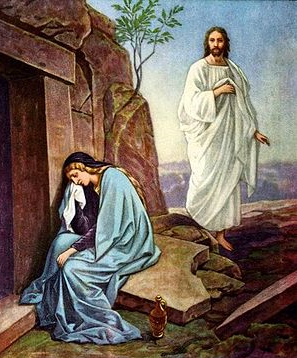
Jesus at tomb with Mary Magdalene

Jesus at the tomb with Mary Magdalene

Matthew 28 (ESV) – He Is Risen

28 Now after the Sabbath, as the first day of the week began to dawn, Mary Magdalene and the other Mary came to see the tomb. And behold, there was a great earthquake; for an angel of the Lord descended from heaven, and came and rolled back the stone from the door, and sat on it. His countenance was like lightning, and his clothing as white as snow. And the guards shook for fear of him, and became like dead men.

But the angel answered and said to the women, “Do not be afraid, for I know that you seek Jesus who was crucified. He is not here; for He is risen, as He said. Come, see the place where the Lord lay. And go quickly and tell His disciples that He is risen from the dead, and indeed He is going before you into Galilee; there you will see Him. Behold, I have told you.”

So they went out quickly from the tomb with fear and great joy, and ran to bring His disciples word.

The Women Worship the Risen Lord

And as they went to tell His disciples, behold, Jesus met them, saying, “Rejoice!” So they came and held Him by the feet and worshiped Him. 10

My Lenten Journey

Labyrinth

I thank God for my Lenten journey this year.  I’ve learned so much already. It began with a total knee replacement surgery on February 28, which was Shrove Tuesday.  Shrove Tuesday is the first Tuesday before Ash Wednesday.  It officially ends the season of Epiphany and is the vigil for the beginning of Lent. 

The surgery went well, but there were complications that nearly landed me in the intensive care unit.  Consequently, I suffered three days of migraines and severe nausea, which left me exhausted and unable to eat. My anticipated three-day hospital stay for surgery ended up being six days instead.

Among the lessons and reminders of my journey, it was comforting to see so many caring people on the hospital staff. It reassured me that there are still many good and loving people in our society, despite all the violence and hatred we see every evening on the news. 

It has given me insight into the pain and suffering so many handicapped and elderly people endure every day. I have to use a walker and my physical therapy has, at times, been torturous.

I’ve been so happy and encouraged to see how concerned and eager to assist our eldest grandson (age 9) is. It’s a sure sign that the hard work of his parents is paying of.

It has reminded me how blessed I am to have a loving wife and a marriage that has endured 40 years.  Marriage is a lot of work, but the rewards of persevering are tremendous. 

It has helped me begin some very healthy lifestyle changes. I’m an active person who enjoys exercise. At present, I won’t be able to do any serious exercising for several more weeks. I’ve had to closely watch what I eat and drink while incapacitated–something I should have been doing all along.

But most of all, it’s reminded me that, no matter how much I try,  I can’t handle everything by myself. How comforting it is to have a loving God to help me with every aspect of my life.  We’re only 12 days into the 40 days of Lent and I pray the lessons will keep coming as I recover at home and dig deeper into the scriptures.

Do not worry about anything, but in everything by prayer and supplication with thanksgiving let your requests be made known to God. And the peace of God, which surpasses all understanding, will guard your hearts and your minds in Christ Jesus. Philippians 4:6-7

Bless the Lord, O my soul,
and all that is within me,
bless his holy name.
Bless the
Lord, O my soul,
and do not forget all his benefits

who forgives all your iniquity,
who heals all your diseases,
who redeems your life from the Pit,
who crowns you with steadfast love and mercy,
who satisfies you with good as long as you live
so that your youth is renewed like the eagle’s. Psalm 103:1-5

Give ear to my words, O Lord;
give heed to my sighing.
Listen to the sound of my cry,
my King and my God,
for to you I pray.
O
Lord, in the morning you hear my voice;
in the morning I plead my case to you, and watch. Psalm 5:1-3

How sweet are your words to my taste,
   sweeter than honey to my mouth!
Through your precepts I get understanding;
   therefore I hate every false way.
Your word is a lamp to my feet
   and a light to my path. Psalm 119:103–105

Sin: the Uncomfortable Condition of Man

Praying

“Prayer is not asking. It is a longing of the soul. It is daily admission of one’s weakness. It is better in prayer to have a heart without words than words without a heart.”  –Mahatma Gandhi

Republican presidential candidate Ted Cruz has received a lot of flak in the media recently over his public displays of Christian faith. A video showing members of the clergy laying hands on him and praying was particularly troubling for some. Many people get uneasy when they see politicians displaying their religious convictions in public. For that matter, any public display of religious faith downright scares some people.

Cruz isn’t the only American politician to receive criticism for displaying his faith in public.  Presidents Jimmy Carter, Ronald Reagan and George W. Bush were criticized at one time or another over openly displaying and discussing their faith.

I’m not here to support or reject Cruz. The American voters will take care of that. I’m just fascinated by the way religion scares so many people in our society. I understand there is reason to be concerned about politicians who become overzealous about their religion. But why should seeing a politician pray, hear them speak about the role of faith in their live or discuss sin cause concern?

Remember how many people mocked President George W. Bush for referring to terrorists as “evildoers?” Bush didn’t coin that term. It appears more than two dozen times in the Old and New Testaments. Psalm 92:9 (ESV) says, “For behold, your enemies, O Lord, for behold, your enemies shall perish; all evildoers shall be scattered.

I believe that somewhere deep inside every person, as a sentient being, holds the knowledge that we owe our existence to an omnipotent, omniscient creator. For many this knowledge resides at an unconscious level, but it has to be there nonetheless.

We were created in God’s image to glorify him and dwell in his presence. Acknowledging God requires one to admit that he/she is not in charge. This flies in the face of the concept of individuality and personal freedom that so permeates the American psyche. For those who refuse to acknowledge God, the deep seeded realization of God must be an unconscious source of conflict and discomfort—a deep down sense of one’s personal inadequacy and, dare I say, sense of personal sin.

Many people are repulsed by being called a sinner.  Yet sin is a condition we all live in. Martin Luther described it eloquently in a letter to Philip Melanchthon on August 1, 1521:

 “Be a sinner, and let your sins be strong, but let your trust in Christ be stronger, and rejoice in Christ who is the victor over sin, death, and the world.  We will commit sins while we are here, for this life is not a place where justice resides.  We, however, says Peter (2 Peter 3:13) are looking forward to a new heaven and a new earth where justice will reign.  It suffices that through God’s glory we have recognized the Lamb who takes away the sin of the world. No sin can separate us from Him, even if we were to kill or commit adultery thousands of times each day.  Do you think such an exalted Lamb paid merely a small price with a meager sacrifice for our sins?  Pray hard for you are quite a sinner.”

Only when a person acknowledges his sinful nature God can begin to fully work inside him.  What a pity so many fail to understand this. Christ’s church is full of sinners—and that’s exactly where sinners need to be!


Unemployed? Seek the Lord in Your Day of Trouble.

Prayer

In the Day of Trouble I Seek the Lord

Today millions of Americans are facing the challenges of unemployment or under employment. These can lead to fear, frustration, depression and even physical illness. However, they also present opportunities for growth.

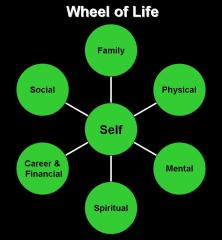
When you’ve lost your job or find yourself in a job that is not self-sustaining, a whole-person approach is needed as you strive to improve your situation. I like to use the “Wheel of Life” to help illustrate this. The circles on the outside of the wheel represent six areas of one’s life that contribute to the whole we refer to as “self.” Neglecting any of these puts the entire wheel out of balance, leaving one struggling and feeling out of sorts.

Wheel of Life

 Wheel of Life

Family and Social Life.  A period of unemployment or underemployment opens the door to opportunities in each the six areas on the wheel of life. It is a good time to spend extra time with family, renew old connections with friends and build your social network (which will improve your chances of finding self-sustaining employment).  Don’t forget to have some fun!

Physical Conditioning. It also provides an opportunity to improve your physical condition through proper exercise, sleep and nutrition. It is a wonderful chance to shed a few pounds and look your best for your next interview..

Career and Financial.  Dedicate some of your extra time towards education. You don’t necessarily need to pick up another degree or certification. Focus on learning something that will help make you more employable. Perhaps you can focus on improving your Microsoft Office software skills. There are free training courses galore on the Internet. If you need to improve your speaking skills, you could join the local Toastmasters chapter. The possibilities are endless.

Finances.  Being unemployed or underemployed is also the perfect time to work on improving your finances. Perhaps you’ve been talking about downsizing your household.  Start by selling off things you don’t really need.  Put together a new budget, trying to reduce frivolous spending. Try keeping close track of where your money actually goes. You might be surprised at how most of it gets spent.

Mental.  Take time to relax and stretch your mind.  Put down your phone, turn off the computer and TV, and pick up a challenging book that you’ve always wanted to read.  Spend some time with people who challenge your way of thinking. Visit an art gallery or museum that would not normally be of interest to you.

(Read Psalm 77: https://www.biblegateway.com/passage/?search=Psalm%2077&version=ESV)

Spiritual.  Lastly, Psalm 77 provides a simple, yet perfect framework for approaching the spiritual realm when you’re unemployed or under employed. When things aren’t going your way, it’s comforting to be reminded God has not and will not abandon you. The Psalmist finds comfort in reflecting on how God helped his people in the past. We should follow his example.

Pray fervently—then pray again. The Psalmist prayed throughout the entire night. He felt abandoned by God. He spoke what was on his mind. We can be totally honest and open with God, telling him about our feelings, our fears, our doubts and our desires. We can ask him any question. Because Jesus suffered every temptation we have faced and felt every emotion that we have felt, we are free to discuss our deepest thoughts and feelings with God. Through Jesus’ experiences, God the Father has firsthand experience with everything we might face in our lives (v.9-10)

“We tend to use prayer as a last resort, but God wants it to be our first line of defense. We pray when there’s nothing else we can do, but God wants us to pray before we do anything at all. Most of us would prefer, however, to spend our time doing something that will get immediate results. We don’t want to wait for God to resolve matters in His good time because His idea of ‘good time’ is seldom in sync with ours.” ― Oswald Chambers                                              

Recall how God has blessed you in the past. The Psalmist did not simply spill his heart out to God. He thought about everything the scriptures say regarding what God has done for his people in the past. God blesses those who have faith in him (v. 11).  Too often we dwell on what God hasn’t done for us rather than being thankful for the multitude of blessings he has provided.

Focus on the future. Think positively about your situation, hopes and desires. What is God teaching you? What is His will for your life? Make a list of Biblical promises you can identify about your future? (v. 13)

Reconsider your present circumstances. Ask God to strengthen your faith as you strive to cope with unemployment. Remind yourself that you can always trust  His promises (v. 14). Share your experience with others.

Let us then with confidence draw near to the throne of grace,  that we may receive mercy and find grace to help in time of need.   ―Hebrews 4:16


As you continue to search, remember to always follow the light!

The Risen Lord [by Arnold Friberg]

“The Risen Lord” by Arnold Friberg

Hear my cry, O God; listen to my prayer. From the ends of the earth I call to you, I call as my heart grows faint; lead me to the rock that is higher than I. –Psalm 61:1-2 (ESV)

Christmas day has passed, but many Christians around the world continue to celebrate the Christmas season through the day of Epiphany on January 6. The joy and hope of the Christ Child still shines brightly! Unfortunately, joy and hope will fade for many as the Christmas season passes and they return to their often mundane daily routines.

This can be a particularly difficult time for those who are already living with the fear, anxiety and depression that frequently accompany periods of unemployment. Fortunately, if we open our eyes and look we will see that God is present always in his Word, Holy Spirit and blessed sacraments.  

While you’re job hunting, networking, sending out resumes and filling out countless job applications, don’t forget to make some extra time to spend with God in prayer and studying the Word.

Spend time with other job seekers and pray with and for them. Take time to use your God given talents to help others in need. God knows your needs before you ask and He already has a plan for you. His plan will produce fruit in your life at the time He has appointed.

Meanwhile, don’t miss out on the joy today has to offer.  If you will only seek Him, God will give you joy with or without a job. Habakkuk 3:17-18 says, “Though the fig tree should not blossom, nor fruit be on the vines, the produce of the olive fail and the fields yield no food, the flock be cut off from the fold and there be no herd in the stalls,yet I will rejoice in the Lord; I will take joy in the God of my salvation.”

It is impossible for one to know what God has in store for him or her, but rest assured that He only wants the best for us all. Christians may take comfort in the knowledge that God’s love does not depend upon our success in this world. He doesn’t look at our education, work history or awards. He loves us unconditionally. While we busy ourselves with the worries and toils of this life, He is preparing us for something bigger and more glorious than we can possibly imagine.

The Bible promises that those who make seeking the Kingdom of God their top priority in life will be blessed with everything they need in this world. While you struggle with the pain of unemployment and all of the other burdens you will bear during this life, remain close to Christ and let His light show you the pathway that He would have you follow.

For God, who said, “Let light shine out of darkness,” has shone in our hearts to give the light of the knowledge of the glory of God in the face of Jesus Christ. So we do not lose heart, though our outer self is wasting away, our inner self is being renewed day by day.  For this light momentary affliction is preparing for us an eternal weight of glory beyond all comparison, as we look not to the things that are seen but to the things that are unseen. For the things that are seen are transient, but the things that are unseen are eternal. –2 Corinthians 4:6, 16-18 (ESV)

Prayer: The link below leads to a website not associated with this blog.

Prayer of the Unemployed

Radical Christianity

Jesus Calms the Storm

And Jesus awoke and rebuked the wind and said to the sea,

“Peace! Be still!” And the wind ceased, and there was a great calm.

                                                                           —Mark 4:39*

Today it is nearly impossible to read a newspaper or watch a TV newscast without hearing something about “radical Islam.” The images of beheadings, torture, human rights abuses of women and the ethnic cleansing of Christians and other religious minorities send chills down one’s spine.

Our political leaders can’t agree on a proper response to radical Islam, but they all seem to agree that doing nothing is not a viable option. Many push for military action—even all out war. Others see diplomacy as the answer.  I believe the only effective response to radical Islam is radical Christianity.

History has shown that nothing can be more effective than Christianity in its purest form. It was radical Christianity that survived by hiding in the catacombs beneath Rome and slowly emerged to peacefully convert it from a pagan empire to a nation united under the banner of Jesus Christ. It was radical Christianity that led a small group of religiously oppressed pilgrims to establish a colony near Plymouth Rock.

Today it is radical Christianity that leads missionaries to leave the comforts of life in America to spread the Gospel in places where they face persecution and even death. It drives some men and women to refuse to renounce their faith in Christ, even if it means being tortured or killed.

Radical Christianity can counter radical Islam. What could be more radical than a religion that professes God became incarnate in human flesh, born of a virgin for the sole purpose of suffering a hideous death to set mankind free from sin?

For one will scarcely die for a righteous person—though perhaps for a good person one would dare even to die— but God shows his love for us in that while we were still sinners, Christ died for us. —Romans 5: 7-8

What could be more radical than a religion that professes that there are no “good” people; that all men have sinned and fall short in the eyes of God; that it is impossible to earn one’s way into heaven?

…as it is written, “None is righteous, no, not one; no one understands; no one seeks for God. All have turned aside; together they have become worthless; no one does good, not even one.” —Roman: 7-8

What could be more radical than a religion that professes that salvation and eternal life are given freely by God to those who accept Jesus as their personal savior, profess that He is the son of God, believe that he died for the forgiveness of their sins and rose from the dead, and ask him into their lives?

For by grace you have been saved through faith. And this is not your own doing; it is the gift of God, not a result of works, so that no one may boast. —Ephesians 2: 8-9  

A U.S. State Department spokesperson Marie Harf recently came under intense criticism when she suggested one way to counter Islamic terrorism was through helping terrorists find jobs. She went on to suggest that “We can’t kill our way out of a way.” Now perhaps this is a bit simplistic, but Jesus’ radicalism turns logic on its head when he says:

You have heard that it was said, “You shall love your neighbor and hate your enemy.” But I say to you, Love your enemies and pray for those who persecute you, so that you may be sons of your Father who is in heaven.   —Matthew 5:43-45

While our elected officials seek various solutions for curbing radical Islam, radical Christians can follow Christ’s example and pray for our enemies. Adopt a Terrorist for Prayer is a radical Christian approach to countering radical Islam (www.atfp.org) through prayer. The organization’s website explains the approach as follows:

The Christian Response: Where is the Christian response to terrorism? If the struggle against violence done in the name of Islam is primarily spiritual, then defeating it requires a spiritual response.

Overcoming Fear: Terrorism inspires fear. According to Jesus, the antidote to fear is love. When we hate, we are reactive victims. When we love we have the initiative.  Love for country helps soldiers to risk their lives. Love for children enables parents to discipline them without being intimidated. Love for us took Jesus to the cross. Love for enemies will give courage to face, overcome, and transform them and the environment that breeds them.

Historical Precedent: Historically, Stephen was the first fatality in terrorism directed against Jesus’ followers. As Stephen died from stoning, he prayed, “Lord, do not hold this sin against them.” Later, Paul, who had supervised Stephen’s stoning, met Jesus in a vision and repented. Can we pray today like Stephen prayed then? Would Paul have repented if Stephen hadn’t prayed?

Are you willing to get radical for Christ? Visit the ATFP website and adopt a terrorist for prayer.

*All Bible quotes are taken from the English Standard Version   

Stretch Yourself

??????????

“It is perilously possible to make our conceptions of God like molten lead poured into a specially designed mould, and when it is cold and hard we fling it at the heads of the religious people who don’t agree with us.”  —Oswald Chambers

Alison J. Head and Michael B. Eisenberg are the co-principal investigators and co-directors of Project Information Literacy at the University of Washington Information School in Seattle. One of the areas they study is information overload and multi-tasking.

Since 2008 the pair has surveyed over 10,000 college students. One of their most significant findings is that, “Information is now as infinite as the universe, but finding the answers needed is harder than ever.”

In today’s complex, often confusing wilderness of digital information, it’s important that people periodically take time to slow down and think!  Scottish theologian Oswald Chambers said, “Always keep in contact with those books and those people that enlarge your horizon and make it possible for you to stretch yourself mentally.”

I have to agree with his advice. I’ve found that a good way to slow down is to turn off the laptop or smartphone.  Instead, try engaging in meaningful conversations and reading.

My most meaningful conversations usually occur with my wife Linda.  She is one of the smartest people I know. Her logic and ability to find clarity in the midst of confusion have always amazed me. If she were the only person I ever talked with, my life would never lack for interesting, meaningful dialogue.

As for books, it’s hard to know where to begin, but I’d like to suggest a few good ones for Christians hoping to stretch their minds a little.  My top five, in no particular order are:

My Utmost for His Highest, by Oswald Chambers

Oswald Chambers, who died in 1917 at age 43, is widely regarded as one of the most influential theologians of the 20th century. He wrote only three books in his lifetime, but there are many bearing his name.  They are the products of his devoted wife Gertrude, a professional stenographer who recorded all of Chambers’ sermons verbatim in shorthand.

My Utmost for His Highest is a book of daily devotions written by Mrs. Chambers. It draws from dozens of her husband’s sermons. First published in 1924, it is the most popular Christian devotional ever written.  The idea of total abandonment, i.e. completely surrendering one’s life to God, is at the center of its message. As the book’s title suggests, we must strive daily to do our utmost for God.

Chambers said, “We have the idea that we can dedicate our gifts to God. However, you cannot dedicate what is not yours. There is actually only one thing you can dedicate to God, and that is your right to yourself (see Romans 12:1). If you will give God your right to yourself, He will make a holy experiment out of you— and His experiments always succeed.”

The language of the original text is somewhat challenging for modern day readers due to its use of Scottish vernacular. Fortunately, there are versions available in modern English.  Personally, I find that working through the original version simply adds to the exercise of stretching my mind. When read as intended—one short devotion per day—this book will help you stretch yourself for an entire year.

Your God is too Small, by J.B. Phillips

J.B. Phillips was a canon of the Anglican Church.  He died in 1982.  His seminal work, Your God is Too Small, was published in 1952. According to Phillips, from childhood we are taught to package God in a tiny box conforming to our personal beliefs and preferences.  Look for all of the answers and you’ll find them by turning God into something simple and understandable. Phillips calls this “God in a box,” which is also the title of the book’s seventh chapter.

Oswald Chambers cautioned us against such shaping God in our own image, saying, “Our danger is to water down God’s word to suit ourselves. God never fits His word to suit me; He fits me to suit His word.” (Not Knowing Whither, 901 R).

David wrote in Psalm 8, “When I look at your heavens, the work of your fingers, the moon and the stars, which you have set in place, what is man that you are mindful of him, and the son of man that you care for him?”

Your God it too Small leads its readers through a series of intellectual exercises designed to expand their concept of the God who created the universe. If you find yourself marveling at God’s creation, unable to wrap your mind around it all, this book will help you see God in a totally different way.

The Screwtape Letters, by C.S. Lewis

Clive Staples Lewis (1898-1963) is one of the most popular and prolific Christian authors and apologists who ever lived. He penned over 30 books.  Today he is best known for his classic series The Chronicles of Narnia, which have been transformed into an extremely successful series of films.

Originally published in 1942, The Screwtape Letters is arguably the Lewis’s most unusual book.  It is written in the format of a series of letters from an uncle attempting to mentor his young nephew through an important task. This would be nothing unusual, were it not for the fact that Screwtape is a senior demon and servant of Satan.  The letters are written to his nephew Wormwood, a junior tempter.  Wormwood has been given the task of ensuring the damnation of a British businessman who is referred to only as “the patient.”  Screwtape provides his nephew a clear strategy on how to undermine the patient’s faith and lead him into sin.

Lewis’s book is a dissertation on the human condition—a deep analysis of man’s inner makeup, with all of its strengths, frailties, temptations and struggles. Screwtape, through his keen understanding of human behavior, explains to Wormwood the best methods for ensuring the patient’s ultimate demise. The book paints an in-depth picture of spiritual warfare and the ultimate triumph of God.  It is guaranteed to make you think about your own inner self.

Luther:  Man between God and the Devil, by Heiko A. Oberman 

Originally published in German in 1982, this book is considered by many German scholars to be the most comprehensive biography every written on Martin Luther (1483-1546).  Luther was the central figure of the Protestant Reformation and remains one of the most influential theologians in history.

Even without the discussion of Luther, Oberman’s book would be worth reading just for its political, cultural and religious discussion of the Reformation.  However, it offers much, much more. Unlike many Luther biographers before him, Oberman attempts to describe Luther’s thoughts and deeds as something much more than just a medieval German monk who rebelled against the authority of the Catholic Church.

Oberman contends that Luther was convinced of the reality of the devil and viewed his own life as a continuous struggle against evil. (Not unlike The Screwtape Letters).  Luther viewed the world as an enormous battleground where God clashes with Satan. Approaching him from this angle lends a whole new perspective to Luther’s theology. This book is guaranteed to stretch your mind!

Jesus Under Fire: Modern Scholarship Reinvents the Historical Jesus, edited by Michael J. Wilkins and J.P. Moreland

If you’re a middle-aged Christian like me you might recall hearing about a popular movement in the 80’s and 90’s centered on “the quest for the historical Jesus.” The movement, which still has some momentum today, was epitomized by the Jesus Seminar.  The Jesus Seminar was organized by the Weststar Institute in 1985.

According to the institute’s website, its purpose was to, “to renew the quest of the historical Jesus and to report the results of its research to the general public, rather than just to a handful of gospel specialists. Initially, the goal of the Seminar was to review each of the sayings and deeds attributed to Jesus in the gospels and determine which of them could be considered authentic.

The seminar began with a group of 30 Bible scholars, but eventually grew to around 200. Put simply, this movement was an attempt by Bible scholars, not necessarily Christian scholars, to refute the divinity of Jesus Christ by framing him in history as nothing more than a typical, popular Jewish teacher of his day.

Jesus Under Fire is a compilation of essays by eight prominent Christian apologists written to challenge the methodology and conclusions of the Jesus Seminar.  The book’s introduction describes the furor surrounding Jesus:

“Today some people say that Jesus never said most of what is recorded of him in the Bible.  Some pronounce further that Jesus never did most of what the Bible records he did.  They claim that Jesus of Nazareth was a far different figure than church history and the creeds have believed him to be.  Therefore, if we are to be intelligent people, even intelligent religious people, we must not simply accept what the Bible records Jesus claimed for himself and what the early church claimed him to be.  If we are to be truly modern in our religious quest, we must not simplistically hope that Jesus’ actions as they are recorded in the Bible are factual, or that they have any relevance for us today.  Jesus must be stripped of ancient myths that surround him as to what he said and did, so that the modern person can hear his true message.  Jesus must be brought down to earth from the status to which the early church elevated him, so that we can understand who he was as he walked under Palestinian skies and comprehend what, if any, religious relevance he has for us today.”

The chapter titles of Jesus Under Fire describe the authors’ response to the Jesus Seminar:

  • Where do we start studying Jesus?
  • Who is Jesus? An introduction to Jesus studies.
  • The words of Jesus in the Gospels: Live, Jive or Memorex?
  • What did Jesus do?
  • Did Jesus perform miracles?
  • Did Jesus rise from the dead?
  • Is Jesus the only way?
  • Jesus outside the New Testament: What is the Evidence?

This book is for serious mind stretchers only.  It is probably the most difficult book I have ever read…and reread.  I found each of the essays intellectually stimulating—the sort of stuff that makes me go back and reread each paragraph, underlining sentences as I go.  I spent about six months working my way through it the first time…and it was time well spent. I hope you will find it equally as enjoyable.

Give yourself a special gift this Christmas and start reading one of these wonderful books.  You won’t regret it.


Exercise for the Soul

Exercise

I’m not a big fan of reality TV, but there is one show I really enjoy.  The Biggest Loser is about helping morbidly obese people lose weight and regain their health and vigor. The contestants, all of whom are obese and suffering from multiple weight-related ailments, live at an isolated health compound and work with world class trainers throughout their stay.  It’s fascinating to watch the amount of work Biggest Loser contestants need to correct years of behavior problems like overeating and under exercising.

One phenomenon that is readily evident to viewers of the show is how former athletes—those who at one time were accustomed to vigorous exercise and discipline—seem to progress much faster than those who have never routinely exercised or disciplined their bodies.

Besides weight loss, The Biggest Loser delves into the psychological struggles waged by each contestant. Some succeed, while others never quite make it.  Now in its 10th season, the show has generated a Biggest Loser fitness movement across the country.

Many Americans are dedicated to physical fitness routines. Yet a 2013 study by the Centers for Disease Control and Prevention indicated that 80 percent of American age 18 and above do not exercise sufficiently to maintain good health.

Far fewer practice a discipline of exercise for the soul.  What a shame we can’t seem to find a way to generate a spiritual fitness movement across our country!  For Christians, exercise for the soul is more important than physical exercise, because the Holy Spirit dwells within our bodies, which St. Paul calls, “the temple of the Holy Spirit.” Left neglected, either by sin, complacency or getting buried in the business of day-to-day life, the Holy Spirit cannot speak to us.  Our bodies require daily attention on both the physical and spiritual levels. Prayer must be at the center of attention. Personally, this is an area I’ve struggled with lately.

Popular evangelist and church pastor Rev. David Jeremiah has said, “Prayer is the hard-work business of Christianity, and it nets amazing results.”  German Lutheran pastor and theologian Dietrich Bonhoeffer was very specific in promoting the benefits of prayer, saying,

The entire day receives order and discipline when it acquires unity. This unity must be sought and found in morning prayer. The morning prayer determines the day.”

 Having practiced morning prayer for many years, I appreciate its importance to a Christian’s well being.

St. Ignatius of Loyola, founder of the Jesuit order of Roman Catholicism, was a Spanish knight who lived from 1491 to 1556.  As a young man, Ignatius kept a journal of his quest to grow in unity with God and discern God’s will in his life.  As his experience grew, the journal evolved into a well-defined set of prayers, meditations, reflections, and directions that are known today as the Spiritual Exercises of St. Ignatius.

These exercises are grouped into four stages, described as weeks but not literally seven-day periods, which are designed to be led by a director, or guide.  The Spiritual Exercises are intended to serve as a sort of lesson plan for the individual leading the exercises, not as a guide for individuals.

However, even without a director many aspects of the Spiritual Exercises can be useful to individuals seeking spiritual growth and greater commitment to serving God. This is particularly so for the way the Spiritual Exercises approach prayer through meditation and contemplation.

Meditation involves praying about the good and bad words, images and ideas that guide our lives.  Contemplation is emotion-driven, rather than thought-driven.  It focuses on placing ourselves in scenes from the Gospel and trying to imagine how it might have been.  Contemplation is praying through scripture rather than studying scripture.

One of the key elements of the Spiritual Exercises is the discernment of spirits.  According to St. Ignatius, the human spirit is influenced by three forces: an inward focus on self and selfish desires; Satanic power and suggestions; and God-inspired power and suggestions. Ignatius called these the “spiritual motions.”  The purpose of discernment is to discover the source of each spiritual motion in our lives, so as to help us help make good decisions.

Many contestants on The Biggest Loser reach so-called plateaus—a weight they just can’t seem to get below.  To overcome this barrier, they change their daily exercise routines, doing something different to restart the weight loss trend.

The same approach can be applied to spiritual exercises.  I do a fair job of exercising my body, but lately I’ve felt like my prayer life has slumped—I’ve hit a plateau.  I have difficulty concentrating and find my mind wandering when I pray. In the remaining days before the beginning of Advent, I plan to try a new prayer regimen built around the Spiritual Exercises of St. Ignatius Loyola.  Have you hit a prayer plateau?  Perhaps it’s time to change your exercise routine for the soul.

 “Prayer is exhaling the spirit of man and inhaling the spirit of God.”

                                                                                       Edwin Keith

An English text of the Spiritual Exercises of St. Ignatius Loyola is available online at: http://www.jesuit.org/jesuits/wp-content/uploads/The-Spiritual-Exercises-.pdf.  The Website “Ignatian Spirituality,” a service of Loyola University Press, was the primary source for this blog entry (www.ignatianspirituality.com).

Rescue the Weak and Needy

Homeless

 Whoever gives to the poor will not want, but he who hides his eyes will get many a curse.

                                                                                                                                   —Proverbs 28:27

After enduring over 10 years with a dismal economy, many Americans today find themselves in perilous positions far exceeding anything they could have imagined. The middle class is quickly shrinking, leaving a fractured nation that is increasingly becoming a land of haves and have-nots.

The average American family has somewhere around $5,000 in savings, placing them in a position where losing a job can mean losing nearly everything.  Paying big mortgages, which is common for young working couples today, often depends on the salaries of two working spouses. Only two or three missed paychecks can lead to foreclosure! To stay afloat they tap into savings and then into retirement accounts, darkening their prospects for the future while also paying the federal government large tax bills for early retirement withdrawals.

The global economy has given rise to large companies having loyalty neither to their country of origin nor to their employees.   Workers are increasingly becoming disposable commodities that are brushed into the trash bin like rubbish on a picnic table.

Highly educated and experienced working professionals who lose their jobs and end up turning to the government for assistance are common today.  In my job working with the unemployed, I’ve heard far too many lament, “I never imagined that I could end up in this situation.”  This must change.

Churches, especially those in large urban areas, are often unaware of the financial struggles of individuals and families in their area—even when the strugglers are members of the church. Too many churches have lost touch with early traditions.

The scriptures speak frequently about caring for those who share the faith.  This is an essential part of discipleship that helps the church set its own house in order.  In Acts chapter 6, the Apostles appointed seven deacons to assist in the distribution of food to local widows, who were followers of Christ.  James 1:27 tells us,

Religion that is pure and undefiled before God, the Father, is this: to visit orphans and widows in their affliction, and to keep oneself unstained from the world.” (ESV)

Even clearer guidance comes straight from the mouth of our Lord in John 13:34-35:

 “A new commandment I give to you, that you love one another: just as I have loved you, you also are to love one another. By this all people will know that you are my disciples, if you have love for one another.”

Building a healthy church family is essential.  Brett Eastman has served as the small groups champion in several of the largest mega churches in the country including Pastor Rick Warren’s Saddleback Church.  Eastman writes:

“If you want to create a church community that really cares for one another, the best way to do it is through small groups. When small groups become the vehicle for care-giving, the whole church gets involved in sharing one another’s burdens—a much more personal approach than relegating the task to a committee.  The whole congregation should be making hospital visits, taking meals to people when they’re sick or something’s happened, doing childcare when someone’s in crisis and giving money when somebody’s lost a job.”

Small groups in churches set the conditions for encouraging personal intimacy and trust building—essential elements of loving Christian relationships.  Only by sharing our hopes, fears, cares and concerns do we really get to know other believers well.

Small groups also enable churches to develop many outreach ministries. One way to quickly make a difference is by reaching out to Christian charities in your church’s local area.  These organizations are always in need of volunteers, financial supporters, prayer warriors and other resources.  The possibilities are endless. You can’t take care of everybody, but you can take care of somebody.

Look closely and see that behind the face of every downtrodden man and woman is the face of Christ.

                                                                                                                                        –Oswald Chambers

One Journey Ends, Another Begins

Man on a JourneyI know, O Lord, that the way of man is not in himself, that it is not in man who walks to direct his steps.    —Jeremiah 10:23 (ESV)

I just completed a long journey in my life.  This particular one, an 18-month job search, was extremely wearisome.  In retrospect, however, all of the waiting was worth it.  I have been blessed with a new job that appears to be a nearly perfect match for my skills and desires.

Finding good work in the current economy is challenging, particularly for those of us who are a little gray around the temples. To make my search more difficult, I had decided to take a new direction with my work. It was therefore necessary for me to convince potential employers that my skills accumulated over some 30 years were transferable into the new line of work I was seeking in the nonprofit field.

The long journey was fraught with emotion—anticipation, hope, disappointment, rejection, self-doubt and frustration.  I applied for dozens of jobs, preparing resume after resume and spending hours online completing application after application.  Oh, that businesses would all use the same application process!

In many cases, my applications went unanswered.  For others it was rejection letters or very impersonal emails stating simply, “We have decided to pursue another candidate.”  It was a situation in which I could have easily lost hope, but I found comfort in Saint Paul’s words, from 2 Timothy 4:7, “I have fought the good fight, I have finished the race, I have kept the faith.”  (ESV)

I focused intently on trying to remain faithful, casting worry and doubt aside as I searched for employment. Of course there were lapses along the way.  I had to constantly remind myself that I was working on God’s timeline, not my own.  I found peace in the knowledge that He would provide the right job at the right time.

Sizakele Lugojolo, director of Lutheran Hour Ministries – South Africa has written that the peace of God, “is the peace we experience when we put aside the selfishness and let God be the center. This is the peace we experience when we give God the glory and not take it for our own satisfaction. This is the peace we experience when the will of God prevails, not ours.”

Just as Jesus prayed in Gethsemane, during my job search I frequently prayed that God’s will might be done—that I would end up in a place where He could use me as he sees fit.  Many dear friends offered intercessory prayers for me.  I could feel their power; it sustained me from day to day.

Along the way I came to realize that reaching one’s destination is not the prize.   The reward lies in how one handles his present circumstances—getting through each day of the journey.  For my many networking friends who are still searching I have but one piece of advice, “Let go and let God!”   As Saint Paul so eloquently wrote:

Rejoice in the Lord always; again I will say, rejoice. Let your reasonableness be known to everyone. The Lord is at hand; do not be anxious about anything, but in everything by prayer and supplication with thanksgiving let your requests be made known to God.  And the peace of God, which surpasses all understanding, will guard your hearts and your minds in Christ Jesus.                                                                                                                                                             —Philippians 4: 4-7 (ESV)

With my new job begins a new journey.  Like a good soldier,  I’m calling it my mission. Oddly enough, it entails something I’ve learned a bit about over the past 18 months.  I’ll be helping recently unemployed individuals find a new job. If I can help even one person find employment in less time than it took me, I’ll feel like I’m contributing to a worthy cause.

 Once you have a mission, you can’t go back to having a job.  —Shai Agassi