Posts Tagged ‘advice’

Discipline and Discipleship

Discipline - Boot Camp summer 1975Army Boot Camp, July 1975

It was sunny and warm in Louisville, Ky. on June 28, 1975. That’s the day I boarded a bright yellow school bus at an Army recruiting station for a short journey to Fort Knox, where I was scheduled to undergo Army basic training or boot camp as it’s commonly called. Only a few weeks earlier I’d been a bright eyed college student receiving his associate degree in Munich, Germany.  My mother Phyllis and stepfather Ray were still in Germany—Ray was an Army officer and second in command of a tank brigade in Friedberg, about an hour north of Frankfurt.

I had departed Germany in early June to visit family in my home state Kentucky before attending boot camp.  The last stop was Louisville, at the home of my favorite aunt and uncle, Sarah and Carl.  At the end of that wonderful visit, it was Aunt Sarah who drove me to the induction station and hugged me goodbye as I began a nervous, one hour journey to Fort Knox.

After what seemed like hours, the bus turned into the main gate of Fort Knox. Entering the post felt very familiar, as I’d lived there during my freshman and sophomore years of high school while Ray was assigned to the Armor School. The familiarity helped quell my sense of dread that had been increasing steadily since we departed Louisville. The post was sprawling, hilly and hot. The eclectic mix of architecture ranged from a beautiful state-of-the-art hospital to drab three-story concrete barracks to the low slung, pale yellow wooden buildings dating back to World War II.

About ten minutes after entering the post, the bus turned down a side street and then swung into the parking lot of Delta Company, 13th Training Battalion, 4th Training Brigade, home of the ‘Delta Demons’. Peering out the window I could see two tough looking fellows wearing olive drab fatigues and the iconic Smoke Bear hats that identified them as drill sergeants. Their fatigues were starched stiff with creases that looked sharp enough to slice an apple. They fit like gloves. Their boots were polished to a mirror finish. Not a hair was out of place. All you needed was one look at these impressive gentlemen to know that they were pure badass!

The driver opened the bus door and we were greeted by a booming voice.  ‘Off the bus and line up.  Move it ladies’.  After a clumsy exit fumbling with our bags and bumping into each other, we managed to get into something resembling a line. The empty bus quickly pulled away, leaving us feeling isolated and helpless.  It was then that we were introduced to the two gentlemen who would fill the roles of father, mother, confessor and mentor for all of us in the coming weeks.

Staff Sergeant Hunter, the platoon sergeant, stood about five feet ten inches tall.  He was built like an NFL linebacker. Drill Sergeant Hunter was just tall enough that he could press the stiff brim of his Smoky Bear into the bridge of my nose as I stood at attention while receiving his instructions.  The assistant platoon sergeant, Sergeant Anderson, stood about five feet seven inches.  He was lean, wiry and just mean looking. They immediately commanded our attention.

These fine men, as I would learn they both were, taught us so much: military customs and courtesies; how to wear the uniform and properly groom ourselves; how to spit shine a boot; how to polish brass; how to make a bunk; how to roll our socks and underwear and store them in our lockers; how to make a barracks GI clean; how to get physically fit; how to do close order drill; how to march and sing ‘jodies’, those sometimes naughty songs marching troops sing to help them stay in step; how to fire and clean an M-16 rifle; how to fire M-60 and 50 caliber machineguns; how to fire a recoilless rifle; how to throw hand grenades; how to do fire and maneuver without shooting your buddy; how to take out a pillbox; how to use a field telephone and radio; how to give first aid; and how to doctor blisters on our feet.

But most of all, they taught us about how to be soldiers—about responsibility, self-discipline, and respect for country, Army, unit, comrades, family and ourselves.  At first we listened to them out of fear of punishment. One small misstep could lead to running laps around the compound holding your rifle above your head with two arms while yelling ‘I’m a s#!thead’ or the dreaded ‘Drop and give me fifty’, meaning pushups. Even worse, you could end up pulling ‘KP’ in the mess hall, peeling potatoes, dicing onions and mopping floors.   But there came a point in time when we listened out of a sense of respect for our drill sergeants and our fellow soldiers in the platoon.  In the end, a soldier’s sense of responsibility, respect and self-discipline becomes a normal way of life.

It’s easy to learn military discipline in Boot Camp, where you’re isolated, restrained, focused and under the watchful eye of a drill sergeant.  Sadly, developing discipline in one’s spiritual life isn’t so easy.  I often wonder why this is so.  I was the picture of discipline during my military career, yet my Christian discipline suffers. ‘Disciple’ is the root word of discipline.  A disciple is a student or follower who is trained by a teacher and subsequently spreads the teacher’s beliefs.  I had a lot of training and learning as a Christian, but have I ever really been a disciple?  I think not and I believe I’ve finally figured out why. 

In his book, The Spirit of the Disciplines: Understanding How God Changes Lives, the late Christian scholar Dr. Dallas Willard explains that self-transformation stems, in large part, from the practice of spiritual disciplines.  He cites many disciplines, which he divides into two broad categories of ‘abstinence’ and ‘engagement’.

Under abstinence Willard includes chastity, fasting, frugality, sacrifice, secrecy, silence and solitude. These deal with our physical bodies.  Engagement includes celebration, confession, fellowship, prayer, service, study, submission and worship. These deal with our spiritual lives.  The disciplines are the means to an end; just as we practice to learn a sport, we practice the disciplines to become more Christ-like.  Willard provides many scriptural references to the disciplines in the life of Jesus and the Apostles. The abstinence disciplines focus inward and help build self-discipline and restraint; they are about habits.  The engagement disciplines look outward, helping us become servants of Christ and others; they are about building Christian character.  

Using Willard’s criteria, a quick self-analysis reveals that while I’m strong in the engagement disciplines, I have a long way to go in the abstinence disciplines before I can become a true disciple of Christ.  I have a lot of work to do, but I’m going for it.  How do you measure up? Consider leaving a reply.


Who can you trust?

Trust.jpg

In his popular play All’s Well that Ends Well, William Shakespeare said, “Love all, trust a few, do wrong to none.”  This quote could introduce a number of discussions, but today I want to focus on trust.  The Miriam Webster Dictionary has several definitions of trust.  For this discussion, I’ll focus on the first, which is “assured reliance on the character, ability, strength, or truth of someone or something.”

Think about this question for a minute and then try to answer. Who can you trust?  I’ll bet you didn’t come up with a long list of people. The fact is that most of the people reading this blog aren’t very trusting. According to polls of American voters, trust in the U.S. Congress is running at near all-time lows, as is trust in many state and local governments. 

Much of this distrust is fueled by the pending insolvency of many so-called “trust funds,” like the Social Security “lock box,” which apparently isn’t locked tight enough to keep the Congress from raiding it and depleting the funds. Then there are numerous similar lock boxes at the state and local levels established to fund the retirements of teachers, firefighters and police. It seems that politicians have raided many of these as well, causing some states and municipalities to renege on their retirement promises to employees. 

Trust in amorous relationships is on the rocks. Social media is awash in “cheater” stories and videos.  Videos about catching cheaters in the act have become a popular form of entertainment. Websites with advice on how to cheat on your significant other without getting caught abound.    

You certainly can’t trust a lot information on the Internet. Internet sexual predators take on false identities to try to lure children into sexual encounters.  Internet news sites (and news outlets in general) are awash in so-called “fake news.”  Comparing the story lines of Fox News (right-leaning) and CNN (left-leaning), for instance, gives two very different views of reality.

You can’t trust advertising, especially when it comes to products like weight loss supplements, miracle cures, and get rich quick schemes.  Environmental news is questionable—global warming advocates and so-called global warming deniers are locked in seemingly mortal combat.  Do you have a financial adviser or auto mechanic you fully trust?  Do you have complete faith in your physician or dentist?  Do you trust the attendants in the nursing home that’s caring for your parent? Do you trust the weather forecaster on your TV? Do you even trust the clergyman in the pulpit?

So amidst all this distrust in the world, who can you trust?  The great entertainer Lawrence Welk, who was better known for Polkas than proverbs, might have said it best when he advised, “Never trust anyone completely but God. Love people, but put your full trust only in God.”  Scripture is full of similar advice (references are taken from the NIV):

Proverbs 3:5-6, Trust in the Lord with all your heart and lean not on your own understanding; in all your ways submit to him, and he will make your paths straight.

Micah 7:5-6,  Do not trust a neighbor; put no confidence in a friend.  Even with the woman who lies in your embrace guard the words of your lips. For a son dishonors his father, a daughter rises up against her mother, a daughter-in-law against her mother-in-law—a man’s enemies are the members of his own household.

1 Peter 2:6, For in Scripture it says: “See, I lay a stone in Zion, a chosen and precious cornerstone, and the one who trusts in him will never be put to shame.”

There are many other examples of scripture that speak to trust. The best advice I can provide is to trust in God alone.  Your friends and loved ones will inevitably let you down, but God will never fail you. You can trust me on this! 

Check out this short video – How to trust God.   https://youtu.be/OVDaq-drUh0

Enduring Truths for Recent Grads

Graduate [2]

Several years ago I wrote an article  for my newspaper column with some advice for recent grads.  It has become one of the most popular pieces I ever wrote. I received dozens of emails thanking me for writing it.    Therefore, I decided to  republish it annually around graduation time.  I hope some of you might find it useful.  You can view the original article in The Tribune-Democrat news at this link:  http://goo.gl/LtN72

For those who are graduating high school this year and beginning the long transition into adulthood, I’d like to offer you a gift. Here are five enduring truths I have learned. They will help you through life’s journey.

Choices

“If you decide to just go with the flow, you’ll end up where the flow goes, which is usually downhill, often leading to a big pile of sludge and a life of unhappiness. You’ll end up doing what everyone else is doing.” ― Sean Covey, The 7 Habits of Highly Effective Teens

 Life will deal you an endless string of choices along the way.  Some will be trivial, like deciding what to wear today.  Others will be weighty and their outcomes will affect you forever.  Weighty decisions should always be preceded by much thought and soul searching.  This includes decisions about who you date or marry, what you put into your body, bringing children into the world, what you do for a living, how much debt you incur and who you associate with.

All of these decisions will have a lasting effect on your life. Therefore, make them slowly and deliberately. Often you’ll discover that the right choice is not the easiest one.  A habit of making poor choices will, as the Sean Covey quote suggests, drag your life downhill.

I was recently contacted by a young man who had just received a bad conduct discharge from the Navy.  He asked me how the discharge would impact his future employability.  His mistake was choosing to drive a car while intoxicated and hitting a pedestrian. Fortunately, the victim wasn’t seriously injured. Had it been otherwise, the young sailor would probably be in prison.  It was my sad responsibility to inform him that with some employers the discharge would be a black mark for life. Choices matter!

 Learning

“Experience is a hard teacher because she gives the test first, the lesson afterwards.”    ―Vernon Saunders Law, former professional baseball pitcher and Cy Young Award winner

Some of you will go on to college or technical school.  Others will enter the workforce.  Even if your formal education is over, don’t quit learning. Make learning a lifelong adventure.  I did my undergraduate work at the University of Kentucky.  The school offers a fellowship program for individuals aged 65 and older to attend classes tuition free. Every year numerous senior citizens walk the stage to receive degrees ranging from Associate of Arts to Doctor of Philosophy.  It’s never too late to learn.

Even if you don’t choose to continue formal learning, make it point to learn from life. Observe others; note their successes and failures; then learn from their experiences.  More importantly, learn from your own mistakes.

Some of the greatest lessons I’ve learned, particularly those while serving in uniform, were the result of having made a terrible mistake.  This sort of lesson sticks, like the first time you grab the handle of a hot iron skillet with your bare hand.  The key to learning from mistakes is owning them.  Admit your mistakes and then move on, having learned something from the experience.  Don’t let, “It wasn’t my fault,” be part of your vocabulary.

 Work

“A dream doesn’t become reality through magic; it takes sweat, determination and hard work.”  ―Colin Powell, retired U.S. Army four-star general and former U.S. Secretary of State

Work isn’t always fun. If it were, they’d call it play.  Work can be downright unpleasant, but it’s an essential element of life! Along the way you’re going to have jobs you won’t like. Note what you don’t like and make it a point to improve yourself, so you’ll never again have to work at such a job.

Accepting a job means submitting to the authority of those placed over you.  Learn to work within this system.   You’ll inevitably have bosses you don’t like.  Learn to respect the position, if not the individual.

Fairness

“Life is not fair; get used to it.” ―Bill Gates, founder and former CEO, Microsoft Corporation

You will hear much discussion about fairness in this life. It’s all hot air.  Life isn’t fair.  Some good people die young, while some bad people live a long life.   Disease sometimes strikes arbitrarily, for no apparent reason.  Some people prosper while others suffer failure. A death or accident can change your life forever.

There is randomness to life that can’t be avoided.  Don’t expect kindness to be returned with kindness.  Don’t expect generosity to be returned with generosity.  The best choice is to be fair and kind to others and learn to accept what they return to you.

A wise man named Harry Browne ran for president of the United States on the Libertarian Party ticket. On Christmas day in 1966, Browne wrote his young daughter a letter aptly titled, “A Gift for My Daughter.”  I encourage every graduating senior to read it and digest it. In the letter, he explains to his daughter that, “Nobody owes you anything.”  Understanding what Browne meant can truly bless you. You can find it at:  www.harrybrowne.org/articles/GiftDaughter.htm.

Faith

“A faith is a necessity to a man. Woe to him who believes in nothing.”  ―Victor Hugo

I once had a senior Army officer tell me he preferred to work with men who possessed spiritual values, regardless of their religion.  He explained that having faith in a power higher than one’s self was an indicator of how one will perform under pressure; in this instance, the pressure meant combat.

Too many people place their faith in all the wrong places.  It might be in wealth, celebrity, good looks, talent, or even government.  Whatever the case, misplaced faith leads to disappointment after disappointment.

To avoid these disappointments, put your faith in God alone.  You, your loved ones and your friends will all inevitably let you down, but God will never fail you.

Bluegrass in my Blood

Pine Mountain Kentucky

Pine Mountain, Kentucky

I was born in the small town of Harlan, deep in the Appalachian Mountains of southeastern Kentucky. Southeastern Kentucky has close ties to parts of western West Virginia, southwestern Virginia; western North Carolina; and eastern Tennessee.  The entire region has a distinct culture that includes its own spoken dialect, cuisine and music. The mountains, culture and good people living there get in your blood and they’re impossible to forget, no matter how long or far one roams.  The regional music, widely known as Bluegrass, traces its roots back to Ireland, Scotland and England.

I find the music particularly enjoyable.  Bluegrass is notable for its combination of stringed instruments—specifically the banjo, mandolin and fiddle. Acoustic guitar and upright bass are common as well.  The music is also notable for many singers who care more about belting out the lyrics than staying in tune.  My affinity for Bluegrass music is something my wife tolerates, but doesn’t quite understand.  I’m particularly fond of the Bluegrass Gospel subgenre.  I grew up hearing it at home, at church and places all around our home.

Gospel Bluegrass tells the story of Jesus Christ as only mountain people can tell it.   If you’re not familiar with this music, it’s only fitting that I introduce you to it with a piece by Bill Monroe, who is commonly recognized as the “Father of Bluegrass.”  Since this is Holy Week, a good place to begin exploring is:

Were you there (when they crucified my Lord), performed by Bill Monroe.  It describes the feelings that many of the onlookers at Jesus’ crucifixion must have felt.

https://youtu.be/5EHP5Nj2BdE

Power in the Blood, performed by Dolly Parton.  It’s impossible to discuss Bluegrass music without the name of Dolly Parton coming up.  Dolly is a Tennessee girl whose voice is perfectly suited for the genre.  Her song of redemption discusses the power of Jesus’ blood to wash away our sins. “There’s power in the blood of the Lamb.”

https://youtu.be/B1CV-HtsMvc

I’m ready to go, performed by Ricky Skaggs and Kentucky Thunder. Ricky Skaggs, a Kentucky native, is a multi-talented musician with a Bluegrass legacy dating back to the days of Lester Flat and Earl Scruggs.  Skaggs’ group Kentucky Thunder has a powerful, fast-paced style.  The group’s rendition of I’m ready to go is about salvation through Jesus Christ.  I promise it’ll get stuck in our head. “Jesus came in and saved my soul from sin, Hallelujah I’m ready to go.”

 https://youtu.be/pjrJKnVmQwQ

The darkest hour is just before dawn, performed by Emmylou Harris. Alabama native Emmylou Harris has proven herself in a variety of genres, including folk, rock, country and Bluegrass.  She slows down the tempo with a Ralph Stanley salvation song. “Lay down your soul, let Jesus in.”

https://youtu.be/_r0FtxqR9Pc

One can’t listen to Gospel Bluegrass without hearing a song about eternal life in heaven that’s promised to Christ’s believers.  Here are two examples.  The Stanley brothers slow it down with their rendition of Angel Band.   Alison Kraus and Gillian Welch pick it up with I’ll Fly Away.

Angel Band, performed by the Stanley Brothers. “Bear me away on your white wings to my immortal home.”

https://www.youtube.com/watch?v=WIHFxIQfSxc

I’ll fly away, performed by Alison Krauss and Gillian Welch. “Some glad morning when this life is o’er, I’ll fly away, to a home on God’s celestial shore.”

https://youtu.be/sdRdqp4N3Jw?list=PL3BDAEBE555FB3CBF

Go Rest High on that Mountain, performed by Vince Gill, Ricky Skaggs, and Alison Krauss. No discussion of Gospel Bluegrass music is complete without Vince Gill’s epic Go Rest High on That Mountain, a song he penned in response to the death of country music singer Keith Whitley. Gill, an Oklahoma boy, is a talented songwriter, singer and guitarist whose work spans Bluegrass, country and rock.  His Bluegrass skills come out in this performance. “Go to heaven a shoutin’ love for the Father and the Son.”

https://youtu.be/NwFiWCUkk4M

So there you go—my guided tour through some of my favorite Bluegrass music that just happens to be Gospel.  If you’re having trouble deciding how to introduce someone to the Gospel message of Jesus Christ, just head to YouTube, Spotify or one of your favorite streaming services and play them some Gospel Bluegrass music.  “Hallelujah, I’m ready to go!”

Living by the Calendar

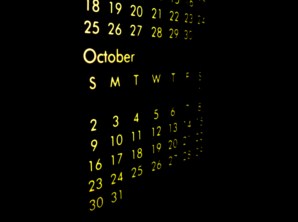
Calendar.jpg

The here-and-now is no mere filling of time, but a filling of time with God.         

I work in the tech industry on a virtual business team.  We have people located across the country from Virginia to Hawaii and many places in between.  The team is run by the calendar.  It’s difficult scheduling conference calls with a team spread across five time zones, so we have to schedule carefully and stick closely to the schedule.

Personally, I would be pretty lost without the Microsoft Outlook calendar on my laptop. Between my work, volunteering, doctor appointments, shuttling grand kids around, birthday reminders, weddings, funerals and the like I simply couldn’t keep track of where to be when without a calendar.

While most adults in the Western World are familiar with calendars, there is one calendar that’s terribly overlooked in many circles.  I’m speaking about the Christian liturgical calendar.  The liturgical year (or Church year) is a continuous cycle of Christian seasons that include various feast days that mark celebrations of the Church.  The liturgical year also has a set list of readings for every day of the year.  Observing the liturgical calendar is highly enriching, providing a continuous commemoration of key events in the life of Christ and the church.  Sadly, many Christian denominations hardly recognize the liturgical calendar at all. 

According to the website The Voice, “The Christian calendar is organized around two major centers of Sacred Time: Advent, Christmas, and Epiphany; and Lent, Holy Week, and Easter, concluding at Pentecost. The rest of the year following Pentecost is known as Ordinary Time, from the word “ordinal,” which simply means counted time (First Sunday after Pentecost, etc.)  (http://www.crivoice.org/chyear.html).

liturgical-calendar.jpg

Let’s take a short tour of the Church liturgical year.  It begins with Advent, which occurs in December.  Advent commemorates Israel’s wait for the birth of the Messiah, which was promised in prophecy.  For modern Christians, it is symbolic of our waiting for Christ to “come again in glory to judge the living and the dead,” as many Christians frequently recite in the words of the Nicene Creed.

Advent is followed by Christmas on December 25, and Epiphany in January.  Christmas is the celebration of the birth of Jesus Christ, Israel’s promised Messiah and God’s only begotten son–the savior of the world.   It is followed by Epiphany, which is translated “appearance.”  Epiphany commemorates the visit by the Magi (or three wise men) to baby Jesus, when they reveal that Jesus is the Messiah and bring him gifts of gold, frankincense and myrrh.  Gold represents the kingship of Jesus.  Frankincense, which is sweet incense, represents His earthly priesthood.  Myrrh, a sweet spice used in preparing bodies for burial, represents Jesus’ coming crucifixion and death on the cross for the forgiveness of the sins of the world. The later part of January and the month of February are ordinary time on the liturgical calendar.

Lent, Easter and Pentecost follow the ordinary time in February. Lent is the period of 40 days from Ash Wednesday to Easter Sunday, commemorating Christ’s final journey to Jerusalem, where he will be crucified. It is a period of penitence and alms giving for the church.  On Ash Wednesday, many Christians have their foreheads marked with ashes in the sign of the cross.  

Palm Sunday occurs the Sunday before Easter.  It commemorates Jesus’ Triumphal Entry into Jerusalem and his final journey to the cross. He rode into the city on a donkey while the crowds shouted “Hosanna,” which is translated “save us,” and they laid palm leaves in his path. Modern day Christians often celebrate Palm Sunday by waving palm leaves during a processional at the beginning of their church service.  Palm leaves from the Palm Sunday service are burned and the ashes collected to be used during Ash Wednesday of the following year.

At the end of Lent comes a period of three days called the Paschal Triduum, which begins on Maundy Thursday, proceeds through Good Friday, and ends with a liturgy on the evening of Easter Sunday.  These all fall inside Holy Week, the week ending with Easter.  

Maundy Thursday marks the night before Christ’s crucifixion, when he celebrates the Last Supper with his disciples, giving us the gift of the Holy Eucharist.  Good Friday commemorates the crucifixion of Christ for the forgiveness of our sins and his burial.  Easter celebrates Christ’s glorious resurrection and his victory over sin and death.  Christ taught his disciples for 40 days following the resurrection, then he miraculously allowed them to see his Ascension into heaven, which occurred before their eyes; meanwhile, angels promised the disciples that just as they saw him ascend into heaven, they will also him descend back to the Earth to reign in glory forever.

Following the Ascension comes Pentecost. Pentecost commemorates God’s gift of the Holy Spirit to his disciples and marks the beginning of the Church.  Following the season of Pentecost, the months of June through November are ordinary time on the liturgical calendar.  At the end of November, on the Sunday before Advent begins, we celebrate Christ the King Sunday, a day reminding Christians that they owe their first allegiance to Christ, not earthly powers or rulers.

So there you have it.  Observing the Church liturgical calendar is a beautiful way of celebrating Christ’s birth, crucifixion, resurrection and the establishment of Christ’s Church on Earth.  If your personal tradition doesn’t observe the liturgical calendar, consider adopting it to add a new level of richness to your worship.  In doing so you you’ll find inspiration and hope.


Caring for the Temple of the Holy Spirit

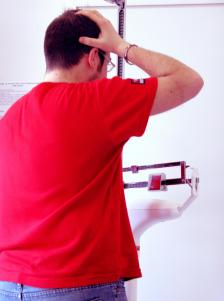
OverweightAaaaggh!

I spent over 24 years of my adult life as an officer in the US Army.  To say that I was in good physical condition would be a gross understatement. I served a tour of duty in the 75th Ranger Regiment, one of the Army’s elite organizations. I was a paratrooper, jumping out of perfectly good airplanes and floating to Earth under a silk canopy.  I also served in the 10th Mountain Division, one of the Army’s toughest and most respected divisions.  Since 2001, the 10th Mountain has been the most deployed division in the US Army.  The Army encourages, even demands, good physical fitness of its soldiers. 

Fitness is in my DNA. I feel out of sorts if I can’t exercise three to four days per week.  Nevertheless, I find myself in a fitness conundrum today.  When I retired from the Army in 2001, I was a fit 205 pounds, well within the limits for my muscular, six-foot frame. Today I find myself about 30 pounds heavier; the extra weight can be attributed to a combination of age, indiscipline, and total knee replacement surgery, which I underwent about 11 months ago; the latter totally wrecked my physical fitness routine.  I’m still in recovery!

I’m not happy with my current weight.  Until a couple of weeks ago, I viewed my condition as purely a physical fitness challenge—a need to get back into shape to reverse the changes that have taken place since my surgery.  However, I recently experienced a healthy change of attitude. 

I credit the change to my dear friend Cliff, who also struggles with his weight.  He recently introduced me to a book called Every Body Matters, by Gary Thomas. As the book cover explains, it is about “Strengthening Your Body to Strengthen Your Soul.”

Having personally struggled with his weight, Thomas uses scripture to demonstrate that, for Christians, physical health is as important as spiritual health. Thomas demonstrates that physical fitness, rather than being something that make us more attractive to others, makes us more useful to God. I recommend his book to anyone who has struggled with physical fitness or being overweight. Thomas offers a Holy Spirit-led approach to developing a physical being that is of maximum use to God.

Thomas cites these words of St. Paul:  (All Bible citations were taken from the ESV.)

Or do you not know that your body is a temple of the Holy Spirit within you, whom you have from God?  You are not your own, for you were bought with a price. So glorify God in your body. 1 Corinthians 6:19-20

…I discipline my body and keep it under control, lest after preaching to others I myself should be disqualified. 1 Corinthians 9:27

…let us cleanse ourselves from every defilement of body and spirit, bringing holiness to completion in the fear of God. 2 Corinthians 7:1

Many Bible commentators interpret bodily sins to mean sexual sins.  While Thomas would agree with this, he goes on to discuss the need for developing discipline in what we put into our bodies (i.e. food).  As I previously noted, he frames the discussion in terms of disciplining our bodies, not to make us attractive to others, but to glorify God (…you were bought with a price. So glorify God in your body. 1 Corinthians 6:20)

I highly recommend Every Body Matters to all Christians who struggle with their weight. I promise it will change your perspective on being overweight and motivate you to do something about it.  It has led my wife and me to challenge each other.  During the upcoming season of Lent (Feb 14 – Mar 29), we will embark upon a 40-day regimen of time-restricted eating. 

In a nutshell, this means we’ll eat normally for 6 hours each day, while fasting the remaining 18 hours. By most accounts, this eating pattern is easy to adjust to and usually results in remarkable weight loss for those having the discipline to stick with it.  We’re not looking for a new diet or fad, but a lifestyle change. Wish us luck!  At some point in the future, I’ll share our experience.

Protecting your health is the same as protecting the vehicle with which God wants to change the world.  —Gary Thomas


Everyone Needs a Savior

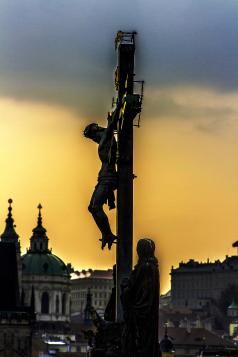
Jesus on Cross

Watching the evening news these days can be seriously disturbing.  It seems like every day there’s a new name or two on the list of politicians, Hollywood celebrities and officers of large corporations accused of sexual misbehavior of one type or another.  It sometimes seems like it will never end.

It’s easy to become angry at these individuals—to wag an accusatory finger in their direction. If the truth be told, however, few of us would survive intact after having our lives laid bare before the court of public opinion. Virtually everyone has something in their past or present that they wouldn’t want exposed to public scrutiny, or even to a spouse or other loved one.

While some of us escape public scrutiny of our lives, it’s a sobering thought to know that everything we do is seen by God. 

We are only what we are in the dark; all the rest is reputation. What God looks at is what we are in the dark—the imaginations of our minds; the thoughts of our heart; the habits of our bodies; these are the things that mark us in God’s sight. Oswald Chambers

The Apostle Paul tells us, “All have sinned and fallen short of the glory of God.” (Romans 3:23, ESV).  This begs the question, “Then who can be saved?”  It’s important to understand Romans 3:23 in context, because it answers this worried question.  Taken in context, we see:

… there is no distinction: for all have sinned and fall short of the glory of God, and are justified by His grace as a gift, through the redemption that is in Christ Jesus, whom God put forth as propitiation by His blood, to be received by faith.   Romans 3:22b-25a

An act of propitiation is a redeeming sacrifice that atones for sin.  In the Bible, this term always refers to an act of God, not a sacrifice offered by man to God. 

In a just a few days we will celebrate the nativity of our Lord Jesus Christ.  While we are taking joy in the celebration of the Lord’s birth, we must not forget that he was born for only one purpose—to redeem us from our sins and return us to a natural relationship with God. This return to the natural order as God originally planned it was made possible by Christ’s death on the cross and his resurrection from the dead. This redemption cannot be earned.  It is offered as a free gift to all that place their faith in Jesus as savior.  Through Him we are made blameless before God.

Now to him who is able to keep you from stumbling and to present you blameless before the presence of his glory with great joy,  to the only God, our Savior, through Jesus Christ our Lord, be glory, majesty, dominion, and authority, before all time and now and forever. Amen.  Jude 1:24-25

May God bless and keep us all during the coming Christmas season and New Year!

Give Thanks to God

Thanksgiving Turkey.jpg

May love and laughter light your days, and warm your heart and home.

May good and faithful friends be yours, wherever you may roam.

May peace and plenty bless your world with joy that long endures.

May all life’s passing seasons bring the best to you and yours!

                                                                             An Irish Blessing

Father Desmond O’Donnell, a Roman Catholic Priest in Northern Ireland, recently told the Belfast Telegraph newspaper that Christians should abandon the word “Christmas,” noting that the name has been “hijacked by Santa and reindeer” and commercialized to the point that it is virtually meaningless.  “We’ve lost Christmas, just like we lost Easter, and should abandon the word completely,” O’Donnell said.  

Just go to a mall today and see what he means.  You’ll find Christmas on display everywhere, even though we’ve yet to celebrate Thanksgiving. Check your mailbox today and you’re apt to find a pile of Christmas sale catalogs and flyers.  The Christmas theme is clear—buy, buy, buy!

Sadly, we can say the same thing about losing Thanksgiving.   What was originally a day set aside for Americans to thank God for our many blessings is now often referred to as “Turkey Day,” a time to overeat, over indulge in alcohol, and watch football on television. Indeed, a number of Thanksgiving Day football matches across the country are referred to as the “Turkey Bowl.” Thanksgiving has become irreversibly connected with Black Friday, the day Christmas buyers literally battle one another in malls and big box stores to get super bargain prices on anything and everything.  Some stores have even resorted to open at midnight on Thanksgiving to maximize the Black Friday “spend fest.”    

For many Americans, it might appear that there isn’t too much to be thankful for.  We see reports of multiple mass shootings; police officers are gunned down in our streets; there are dozens of reports of sexual misconduct by politicians and Hollywood celebrities; natural disasters hammer the land; and we have a government run by two feckless political parties that seemingly can’t even agree on when to hold the next meeting.  Sometimes it seems as if our whole system, our entire way of life, could be swept away in an instant (and it can, but that’s the Book of Revelation, which I won’t go into today).

So what does America have to be thankful for?  The answer is truly simple, although not necessarily obvious.  What a pity more Americans don’t travel abroad to Third World countries and countries with oppressive regimes like Afghanistan, Iran, and North Korea.  In such places it takes very little time to recognize how truly blessed we are.  I was blessed that my military career allowed me to see so much of the world. It changed me forever.

America isn’t perfect, but it is great enough that many people around the globe dream of coming here.  If you take time to thank God this coming Thursday, thank Him for these simple blessings:

  • We can go to the faucet and fill a glass with clear, clean water. In Somalia I watched people drink water drawn straight from the muddy Jubba River, where it was not uncommon to see the carcass of a hippopotamus or other large animal floating down the river. Diarrheic disease kills Somalis and other Third World citizens by the score.
  • Our country is relatively free of deadly infectious diseases like plague, cholera, and malaria that devastate many other countries.
  • We light our homes with the flip of a switch. Following the long civil war in the Former Yugoslavia, I was deployed to Sarajevo, Bosnia-Herzegovina. Most of the city was without electricity when I arrived, and much of it was still without when I returned home 13 months later.
  • We are well-fed compared with much of the world. Even many people living below the poverty level in America are better fed than people in some Third World countries.
  • One can travel freely in America. Oppressive regimes around the world control movement of the population. They use checkpoints with armed officials to prevent unrestricted movement about the country.
  • Americans can speak freely without fear of reprisal by the government. Sure, sometimes there are bad consequences for speaking freely, such as libel suites, but we aren’t silenced by the government.
  • While there is a problem with homelessness in America, most of us have a roof over our heads nevertheless. In Kuwait, Iraq, Somalia and Bosnia I saw thousands of people who had been violently forced from their homes or had their homes destroyed by war.
  • We have the freedom to worship God in the way we choose. While many Christians grumble about losing religious freedom (and some rightfully so), we enjoy more religious liberty than most of the world.

Truly America has its problems, but our country is blessed in many ways.  Despite its faults, it is still a place where many oppressed people dream of coming to.  Take time to pause and thank God for blessing America. May he continue to do so in the coming year!

‘Tis the gift to be simple, ’tis the gift to be free

‘Tis the gift to come down where we ought to be,

And when we find ourselves in the place just right,

‘Twill be in the valley of love and delight.*

*Lyrics from “Simple Gifts,” a traditional Quaker Tune

What do you believe?

Martin Luther by Ferdinand Pauwels

Martin Luther by Ferdinand Pauwels

Tomorrow much of the world will commemorate the 500th anniversary of the 95 Theses, when a brave Roman Catholic monk named Martin Luther nailed a revolutionary document to the church door in Wittenburg, Germany (see http://www.luther.de/en/95thesen.html).   The document, consisting of 95 parts, denounced his church’s practice of selling “indulgences” to absolve sin, which ran contrary to Luther’s Bible-based belief that that salvation could be attained through faith and by God’s grace alone.  I call him brave, because Luther’s act put him at risk of excommunication and possibly even death.

When called before the Catholic Council (Reichstag) in the city of Worms and ordered to renounce the document, Luther refused, saying  the famous words, “Hier stehe ich. Ich kann kein anders.” (Here I stand.  I cannot do otherwise).   Rather than renouncing his 95 Theses,  Luther eventually renounced his monastic vows and married a former nun. His act of faith rocked the Catholic church and ultimately spawned what today is known as the Protestant Reformation.

What would you do if your Christian faith were challenged?  What if someone asked you about your Christian beliefs?  How would you reply? I’d like to think I’d be as brave as Luther, but in reality I probably wouldn’t. How many people are willing to risk everything for Christ? Recently, we’ve heard stories of Christians in Iraq and Syria identifying themselves to ISIS terrorists and being executed, rather than hide their Christian faith. How would you respond?

Have you ever really thought about what your Christian faith means to you?  Sure, you might recite the Apostle’s Creed or Nicene Creed at church every week, but did you ever really stop to think what those words mean?   I’m an Anglican.  My denomination, the Anglican Church in North America (ACNA), subscribes to three creeds:  the Nicene, Apostle’s, and Athanasian.  Unless you’re a relatively new Christian, you’re probably familiar with the first two, which are worded very similarly.  The Athanasian Creed is a bit harder to digest, as it  clearly discuss the three persons comprising the Holy Trinity, one of the most controversial tenets of the Christian faith.  It is accepted by many Western churches and often read at Trinity Sunday worship services in lieu of the Apostle’s or Nicene Creed.

I challenge you to set aside some quiet time and seriously consider the question, “What do I believe?” I can assure you that of the three great world religions, Christianity, Judaism, and Islam, the average Christians is the least well-equipped to answer this question.  Islam and Judaism emphasize reading and memorizing scriptures much more than does Christianity.

Here are a few things to consider if you accept the challenge.

  • The Holy Trinity (Matthew 28:19) – Do the words of the Bible or the Athanasian Creed’s take on the Trinity cause you to question your own beliefs?
  • Your Body (1 Corinthians 6:19-20) – Do you treat your body as if it is the Temple of the Holy Spirit? (Think about what you put into it).
  • Divorce (Matthew 19) – Do you accept Jesus teaching on divorce? He opposes it.
  • Abortion (Psalm 139:13-16; Jeremiah 1:5) – What are your beliefs about the early stages of life?
  • Gay Marriage (Romans 1) – What are your beliefs on gay marriage?
  • Love the Lord your God with all your heart (Mark 12:28-34) – Do you love God above everything else, or is something (addiction, idolatry) getting in the way?
  • Love your neighbor as yourself (Mark 12:28-34) – Are you at peace with your neighbor?
  • Sin (Romans 7:14-25) – What is sin? Are you a sinner?                   

This is a tough challenge—not something you can think through in a few minutes. Matthew 9 tells the story of a man who is imploring Jesus to heal his young son, who has an unclean spirit (demon) plaguing him.  Jesus says to the man (ESV), “If you can’! All things are possible for one who believes.”  Immediately the father of the child cried out and said, “I believe; help my unbelief!” I submit that most Christians who take the challenge will find themselves crying, “Help my unbelief!”

 “Today, many churches are taking God’s laws and saying, ‘These no longer are in effect.’ In Luther’s time the Church said, ‘You need to buy indulgences to be forgiven of your sin.’ Today, more than one church says, ‘Sin? What is sin?’” 

                                                                  Ken Klaus, Pastor Emeritus, The Lutheran Hour 

Back to Scripture: The Protestant Reformation and the Five Solas   https://www.christianheadlines.com/slideshows/back-to-scripture-the-protestant-reformation-and-the-five-solas.html


Fake News and False Prophets

Flooded Road

Psalm 69:2 (ESV) – I sink in deep mire, where there is no foothold;  I have come into deep waters, and the flood sweeps over me. 

The past few weeks have seen a multitude of natural disasters.  First, Hurricane Harvey struck the Texas coastline, causing inestimable wind and flooding damage.  Hurricane Irma followed next, wrecking havoc in the Caribbean and the Florida peninsula.  Irma was followed by Hurricane Maria, which dealt another blow to the Caribbean, devastating Puerto Rico and still posing a threat to the US East Coast as I pen this blog entry.

On September 19, a powerful 7.1 magnitude earthquake struck Mexico City, collapsing buildings, burying countless victims in rubble, and creating havoc in the city whose metropolitan area is home to some 21 million souls. Since the initial quake, Mexico City has been struck by multiple large aftershocks; there was a moderate-sized earthquake in the Los Angeles area; and another moderate quake occurred near Japan’s Fukushima power plant.  Fukushima is the place where a 2011 earthquake damaged three nuclear reactors, resulting in the cores melting down and releasing high levels of radiation into the Pacific Ocean.  It remains a tremendous hazard today.

The timing of these events has been a windfall for late night radio talk shows where prophets of doom warn about the end of the world.  Their latest doomsday message predicted the world would end on September 23, when a giant, hitherto undetected planet called Nibiru would suddenly appear and pass so close to the Earth that its enormous gravitation and magnetic field would cause a planetary disaster, ending life as we know it. Well, the September 23 apocalypse has passed and we’re still here.  

In 1992, radio evangelist Harold Camping predicted Christ would return in September 1994. He had based his prediction off numbers and dates found in the Bible. When this failed to happen, Camping made several adjustments to the predicted date, the last date of which was October 21, 2011. He attributed his errors to mathematical errors in interpreting Biblical numerology.  It didn’t happen!

Richard W. Noone, in his book titled 5/5/2000 Ice: The Ultimate Disaster, predicted the world would end on May 5, 2000 when Mercury, Venus, Mars, Jupiter, and Saturn would aligned with the earth for the first time in six thousand years. Wrong!

A predicted apocalypse on December 12, 2012 also passed without incident.  That was the date that some believed the ancient Mayan calendar ended, spelling doomsday for mankind.  Didn’t happen—again!  

The Holy Scriptures are full of warnings about false prophets.  Jesus himself warns us of false prophets in Mark 13, which provides many details about the cataclysmic end times that will occur on Earth in the last days. Mark 13 ends with Jesus telling us clearly that not even he knows the day or hour when this cataclysm will occur.  Only God the Father knows when our world will end!

In truth, there have been many doomsday predictions for as long as mankind has been around; none have come to pass save the great flood that Jehovah warned Noah to prepare for. A direct warning from God–that’s something you can trust!

Unfortunately for us, false prophecies are rampant today, along with the ubiquitous fake news we hear so much talk about in the media.  This leaves Christians little remaining to believe in besides their Bible. So how historically accurate is the Bible?

It is very accurate according to Dr. Ken Boa. Boa is president of Reflections Ministries (www.kenboa.org).  His article, titled ‘How accurate is the Bible?’ originally appeared in the Winter 2009 issue of Knowing and Doing, the teaching quarterly published by the C.S. Lewis Institute. 

According to Boa, there are three lines of evidence supporting the claim that the biblical documents are reliable: 1) the bibliographic test, 2) the internal test, and 3) the external test. The first test examines the authenticity and accuracy of biblical manuscripts; the second deals with the claims made by the biblical authors, most of whom were eyewitnesses to the events they describe; and the third looks to outside historical confirmation of the biblical content. Boa explains very clearly how biblical evidence meets all three tests.  His article can be found at this link: http://www.cslewisinstitute.org/webfm_send/410.

1 Thessalonians 5:20-21 tells us, “Do not despise prophecies, but test everything; hold fast what is good,” (ESV).  The Bible passes the reliability tests as described so succinctly by Dr. Ken Boa. Christians should rely on the lens of the Bible to examine everything we hear and see today.  It’s the only certain way to avoid being misled by fake news and false prophets. Which lens are you looking through, a worldview conforming to biblical truth or one conforming to the secular world?

For more on ‘Worldview’, see Bob Burney’s article at this link:  http://www.crosswalk.com/church/pastors-or-leadership/worldview-which-lens-are-you-looking-through-11595738.html.