I’m Sick of This

Hospital Corridor

For many Americans, one of the scariest things about being unemployed is the looming threat of the loss of health care.   While many western nations have guaranteed health care to all of their citizens, the United States lags far behind in this area.  According to one study, as many as 75% of unemployed Americans have no or inadequate health care coverage.  Philippians 4:6-7 (NKJV) tells us, “Be anxious for nothing, but in everything by prayer and supplication, with thanksgiving, let your requests be made known to God;  and the peace of God, which surpasses all understanding, will guard your hearts and minds through Christ Jesus.”

God doesn’t promise us good health, but he does promise to give us the strength to carry us through any situation, including health problems.   During your Lenten journey, through prayer and fasting, place your cares on the altar of God and leave the rest to him.  Do not be afraid…He will give you the inner strength to sustain you in any situation.   As the apostle Paul tells us, “I can do all things through Christ who strengthens me.”  (Philippians 4:13, NKJV)

Psalm 23, the Shepherd Psalm:

The Lord is my shepherd;
I shall not want.
2 He makes me to lie down in green pastures;
He leads me beside the still waters.
3 He restores my soul;
He leads me in the paths of righteousness
For His name’s sake.

4 Yea, though I walk through the valley of the shadow of death,
I will fear no evil;
For You are with me;
Your rod and Your staff, they comfort me.

5 You prepare a table before me in the presence of my enemies;
You anoint my head with oil;
My cup runs over.
6 Surely goodness and mercy shall follow me
All the days of my life;
And I will dwell in the house of the Lord forever. (NKJV)

Today’s Lenten Prayer

Dear God, in his public ministry Jesus healed the sick and cured many of diseases. We pray for your compassion on the sick and also for their friends and loved ones who are anxious and worried about them.  We pray for the unemployed and others in our nation lacking basic health and dental care. We pray for those who receive inadequate treatment for their illnesses and injuries or have suffered financially from their health problems. We pray for all believers who are health care providers, recognizing that their careers serve their faith. May the conscience of all health care professionals and all health care institutions be reminded of the sacredness of human life. We ask this through Our Lord Jesus Christ, who lives and reigns with you in the unity of the Holy Spirit, one God

Today’s Reading: Luke 17:11-17  Jesus Heals Ten Lepers

http://www.biblegateway.com/passage/?search=Luke%2017:11-17&version=NKJV

Taking a Lenten Journey while Unemployed

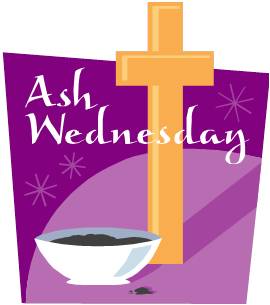
Ash Wednesday

A long period of unemployment can be one of the most trying experiences a person will ever endure. There are two paths one can take in such a situation.

The first and easiest way is to descend into self-pity. This journey ultimately leads to anger, blame and hatred aimed toward the individuals or group perceived to be responsible for one’s situation. The pathway leads into a deep pit that is difficult to climb out of. It turns toxic if followed for too long; and the poison spreads to those around you.

The second path is much more arduous, because it entails a difficult climb requiring tremendous strength, patience and faith. This journey is filled with personal reflection, introspection, forgiveness and discernment. Sticking to this pathway, call it the high road, leads to renewal, reinvigoration and healing. It makes one stronger inside and out.

The season of Lent is also a journey. Traditionally it is a period of reflection and renewal for Christians. During this season we pray and reflect upon Christ’s final journey as he prepared for and set out towards Jerusalem, where he knew he must suffer a horrible death. There, having resisted all the temptations of this world and lived a sinless life, Jesus chose the difficult pathway leading up Calvary Hill. On that bloody rock, mocked and condemned by his own people, he was nailed to a cross and died, taking upon himself all the sins of the world. The story doesn’t end there though. For at the end of Lent we celebrate Easter, the festival of the glorious resurrection of Christ when he arose from the dead, thereby setting us all free from death.

During Lent, challenge yourself to choose the difficult path. Make this a season of reflection, introspection, forgiveness and discernment. It is a wonderful time to discipline yourself through prayer and simply listen for direction from the still, small voice of God. Hope and inner peace await those who follow this pathway to the end.

A Psalm for Ash Wednesday:

Out of the depths I cry to you, O Lord. Lord, hear my voice! Let your ears be attentive to the voice of my supplications! Psalm 130:1-2

A Prayer of St. Francis:

Lord, make me an instrument of Thy peace; Where there is hatred, let me sow charity; Where there is injury, pardon; Where there is error, the truth; Where there is doubt, the faith; Where there is despair, hope; Where there is darkness, light; and Where there is sadness, joy. O, Divine Master, Grant that I may not so much seek to be consoled, as to console; To be understood as to understand; To be loved as to love; For it is in giving that we receive; It is in pardoning that we are pardoned; And it is in dying to ourselves that we are born to eternal life. Amen.

A Reading for Lent:

The Economy – Just in Time for Lent (an article by Randy Sly, associate editor of Catholic Online)
http://www.catholic.org/clife/lent/story.php?id=32514

Please visit this blog for the next six consecutive days as we begin our Lenten journey together.

Take a Lenten Journey

Image

During the first week of Lent, as part of my personal discipline, I will be writing a daily inspirational lesson for my jobseeker’s group.  Begining on Ash Wednesday, please check in for seven consecutive days to help kick off your Lenten Journey.

Zack

Don’t worry away the blessings of today!

Image

In every life we have some trouble,

                      When you worry you make it double,               

Don’t worry, be happy. 

Lyrics from “Don’t worry be happy” by Bobby McFerrin 

The Psalms tell us, “This is the day the Lord has made; we will rejoice and be glad in it.” (118:24). Well, this is a cold day in Pittsburgh.  No—on second thought it’s freezing.  When I awoke this morning it was a frigid one degree above zero and quite windy, driving the wind chill well below zero.  As I worked through my morning devotional I remembered to thank God that I was warm and snug inside my home.  By midday it had already reached the predicted high, a sweltering 12 degrees.

I’m unemployed and looking hard for a good job these days, so I spend a lot of time at my computer.  Today as I sat working on the laptop in my home office, I found myself spending long periods just staring out the window at the beautiful snow-covered woods before me.  I couldn’t help but marvel at the amount of activity outside.

Birds were fluttering about despite the brutal weather. I keep my copy of the Peterson Field Guide® for Eastern Birds nearby. With it, I was able to identify cardinals, blue jays, robins (weird for winter), wrens, house finches, creepers, titmice, chickadees, and at least three kinds of woodpeckers.  Watching so many birds going about their business despite the difficulties presented by the harsh weather was inspiring.  It made me recall the scripture:

“Therefore I say to you, do not worry about your life, what you will eat or what you will drink; nor about your body, what you will put on. Is not life more than food and the body more than clothing? Look at the birds of the air, for they neither sow nor reap nor gather into barns; yet your heavenly Father feeds them. Are you not of more value than they? Which of you by worrying can add one cubit to his stature?  Matthew 6:25-34 (NKJV)

I belong to a faith-based job networking group where there are lots of unemployed folks like me. For the unemployed, it’s easy to become overwhelmed with worry. Yet worrying about what might be tomorrow strips the joy from what is today. I find it helpful each day to review the inventory of the things I have to be thankful for.  Faith, family, and friends are always at the top of my list—blessings that unemployment can never take away and for which I will always be thankful.   

Ralph Waldo Emerson said, “Sorrow looks back, worry looks around, faith looks up.” Being unemployed can be one of the greatest tests of faith a Christian will ever endure.  Each time you find worry creeping into your thoughts, turn it into an opportunity for prayer.

Be anxious for nothing, but in everything by prayer and supplication, with thanksgiving, let your requests be made known to God.  Philippians 4:6 (NKJV)

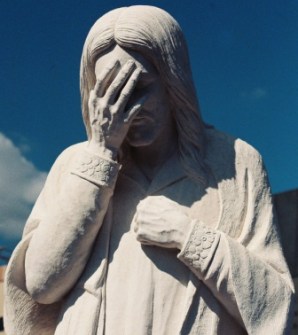
Pray for Sandy Hook and More

Jesus Praying - Dec 2012

“The world as God designed it was the best of all possible worlds, but it has now become the worst of all possible worlds; in fact, the Bible reveals that it could not be any worse than it is.  Individual men who take the wrong line can get worse, but the world itself cannot get worse. Grief brings a man to see this more quickly than anything else and he longs for an umpire who will hold the scales.”  —Oswald Chambers

The recent shootings at Sandy Hook Elementary School have left the minds of many spinning—such horrific acts defy the human mind’s ability to understand.  We’ll probably never learn the shooter’s motive or understand the thoughts that were going through his head on that terrible day.

Watching friends and family of the victims being interviewed, it’s clear that many of them are experiencing difficulty simply trying to explain their feelings in the wake of the calamity.  They just can’t seem to find the words.  At times when others are hurting and we can’t seem to find the right words, good people everywhere ought to pray.

There’s no need to be eloquent in your prayers, just pause, get in touch with God and let the Spirit do the rest.  Romans 8:26 tells us, “…the Spirit also helps in our weaknesses. For we do not know what we should pray for as we ought, but the Spirit Himself makes intercession for us with groanings which cannot be uttered” (NKJV).  Before  going to bed tonight take a minute to drop to your knees and lift up the families, friends and loved ones of all whose lives have been affected by the Sandy Hook tragedy.

While Sandy Hook might be foremost in our thoughts and prayers today, never forget that there are far more Americans elsewhere who are also suffering greatly.  For many Americans, 2013 promises only uncertainty and potential disaster.  I recently joined a local job networking group.  Although currently unemployed, I’m fortunate enough to be a military retiree with a dependable monthly paycheck and medical benefits.  Most in the group aren’t so lucky.  Many struggle to make a mortgage payment, others are facing looming homelessness and still others don’t even have enough money to pay for gas to drive to our networking meetings.

As Jesus tells us, we will always have the poor with us.  Unfortunately, there’s a new variety of the poor in America.  It’s composed of educated, middle class people who have worked for years and now find themselves struggling through long periods of unemployment.  The American middle class is shrinking while those living in poverty grows proportionately.

As our politicians bicker over taxes and spending, it appears that the federal emergency unemployment benefits that are currently in effect might be allowed to expire on December 31st.  This would place many more American families at risk.  Judging by the news, the politicians are nearly out of time and ideas as to how to reduce the massive national debt and get spending under control.  It’s time that we turned to God for ideas.

So while you’re on your knees tonight, don’t stop after saying a prayer for Sandy Hook.  Also ask God to help our nation by blessing our elected officials on both sides of the aisle and giving them the wisdom and courage to do what’s best for America in the coming year.

May you have a very merry Christmas and a blessed New Year!

The final countdown has begun…or has it?

God is our refuge and strength, a very present help in trouble. Therefore we will not fear though the earth gives way, though the mountains be moved into the heart of the sea. —Psalm 46:1-2 (NKJV)

The final countdown has begun—a global cataclysm such as man has never seen before will take place on December 21st.  At least that’s what some people believe. The blogosphere is abuzz with all sorts of doomsday stories.  The present hype is based upon the Mayan calendar, which according to some arguments ends at winter solstice in 2012.

For the Mayan faithful, the end of the calendar means that events leading to the end of the world will be put in motion in some unknown manner—perhaps by an asteroid collision with the earth; perhaps a massive earthquake will devastate the entire planet; or perhaps a giant volcanic eruption will darken the sun, causing all living things to freeze to death.

So who are these Mayans who have stirred things up so?  A quick check of the website history.com tells us the Mayans were an ancient culture whose civilization was centered in the tropical lowlands of what is modern day Guatemala. It grew and eventually spread across a large portion of what today is Central America and Southern Mexico.  The Mayan civilization peaked around the sixth century A.D. and for unknown reasons had largely vanished by around 900 A.D.

I’ve read a lot of arguments, both pro and con, surrounding Mayan calendar predictions, but there’s one point I haven’t seen discussed. If the Mayan calendar is truly prophetic, why didn’t it end more than a millennium ago when the Mayan civilization faded away? Unfortunately there are no Mayans around anymore to provide some answers, just as there are no Phoenicians around to tell us about their civilization.  We have only vague archaeological clues as to what really happened.

History is replete with doomsday predictions, all of which have been a bust thus far.  The most recent was made by Harold Camping, radio preacher and founder of the Family Radio network. Camping convinced thousands of loyal followers that the world would end on May 21st of last year. Billboards across the nation announced the coming of doomsday.  There was even one in a parking lot near my home in Johnstown, Pennsylvania.   Camping’s prediction record is now 0-2 and thankfully he has pledged to refrain from future speculation about the Earth’s demise.

Scientists nearly universally agree that the Earth will be destroyed one day by some cosmic event conforming to the recognized laws of physics. Things spinning around the sun are bound to collide with something big sooner or later. How or when this might occur, however, is anyone’s guess.

Jesus speaks of the real end times in Mark 13:32-33, telling us,  “But of that day and hour no one knows, not even the angels in heaven, nor the Son, but only the Father. Take heed, watch and pray; for you do not know when the time is.”  Christians needn’t be troubled by all of the end time chatter they’re hearing today.  We only need these reassuring words from Jesus:

“Peace I leave with you, My peace I give to you; not as the world gives do I give to you. Let not your heart be troubled, neither let it be afraid.”   —John 14:27 (NKJV)

I wish everyone a wonderful Thanksgiving holiday and a blessed Christmas season. And for any Mayan faithful out there, I encourage you to read this blog entry again on Christmas day and to ponder the reassuring words of Jesus!

Religion and Politics Don’t Mix

Religion that God our Father accepts as pure and faultless is this: to look after orphans and widows in their distress and to keep oneself from being polluted by the world.”     James 1:27 (NIV)

There has been much discussion about religion during the current presidential election campaign.  At one time or another, candidates from all of the parties have invoked the name of God to support their respective causes (the lone exception perhaps being the National Atheist Party).

With all of the problems in our national politics, it makes one wonder whether God could possibly support any party’s platform.  I recently heard an evangelist state unequivocally that, “neither the Democratic nor the Republican party supports the Gospel of Jesus Christ.”  During the sermon he referenced a publication called “Christ and the Needy,” a piece penned by Abraham Kuyper in 1895.

I’d never heard of Kuyper (also spelled Kuijper), so I decided to Google him.  It turns out he was a Dutch politician and theologian. Based upon my subsequent reading of “Christ and the Needy,” which I found online, he appears to have been theologian first and politician second.

Kuyper, who was a Calvanist, noted that while some politicians might support reforms closely paralleling Jesus’ teachings on social justice, there is one profound difference.  The ultimate aim of a politician’s rhetoric is to get elected and consolidate political power for his/her party; the aim of Jesus Christ’s preaching was to lead lost souls to the Kingdom of Heaven.  For this reason, religion and politics can never successfully mix.

Following Kuyper’s logic, while it’s important for Christians to be informed on key political issues and to vote accordingly, it is unwise to tie one’s Christian beliefs too closely to one political party or another.  Therefore, after careful self-examination, Christians should vote for the candidates whose positions most closely align with their own religious convictions.  This approach does not lend itself to so called “straight ticket” voting.  Each candidate should be judged on his or her own merits.

Reading “Christ and the Needy” got me thinking about a recent trip my wife and I took to Harlan County, Kentucky, my birthplace. Harlan is situated in the extreme southeastern corner of the state, in the heart of Appalachia. Its entire economy is built around coal and little else.

Many if not most of Harlan County’s citizens are in economic dire straits to say the least.  The ramshackle homes of those living in abject poverty are a poignant contradiction to the scenic beauty of the area’s mountains.  Sadly, we don’t hear our presidential candidates talking much about Harlan’s poor or the poor elsewhere in the nation.  Could this be because a large portion of them don’t vote?  James 1:27 states, “Religion that God our Father accepts as pure and faultless is this: to look after orphans and widows in their distress and to keep oneself from being polluted by the world.”(NIV)

Television comedian and entertainer Stephen Colbert, a Roman Catholic, is quick to comment on politics from a religious perspective.  He recently said of the United States, “If this is going to be a Christian nation that doesn’t help the poor, either we have to pretend that Jesus was just as selfish as we are, or we’ve got to acknowledge that He commanded us to love the poor and serve the needy without condition and then admit that we just don’t want to do it.”

It is fitting and proper for governments to help the poor and needy, but the actions of government are by their very nature “polluted” by the world of politics. Jesus calls upon all Christians to care for those who cannot care for themselves.  He doesn’t tell governments to do this.  Unfortunately, as Colbert so clearly points out, far too many Christians and Christian churches have failed to answer this call.  For the individual Christians and churches that have chosen to lift up the banner of this or that political cause, perhaps your time could be better spent lifting up the cross of Jesus and following Him.

Enduring Truths for Recent Grads

A couple of months ago I wrote a piece for my newspaper column with some advice for recent grads.  Several individuals have asked me to reprint the article in my blog, so here you go!  You can follow this link to a web version of the article.  http://goo.gl/LtN72

For those who are graduating high school this year and beginning the long transition into adulthood, I’d like to offer you a gift. Here are five enduring truths I’ve learned. They will help you through life’s journey.

Choices

“If you decide to just go with the flow, you’ll end up where the flow goes, which is usually downhill, often leading to a big pile of sludge and a life of unhappiness. You’ll end up doing what everyone else is doing.”
― Sean Covey, The 7 Habits of Highly Effective Teens

 Life will deal you an endless string of choices along the way.  Some will be trivial, like deciding what to wear today.  Others will be weighty and their outcomes will affect you forever.  Weighty decisions should always be preceded by much thought and soul searching.  This includes decisions about who you date or marry, what you put into your body, bringing children into the world, what you do for a living, how much debt you incur and who you associate with.

All of these decisions will have a lasting effect on your life. Therefore, make them slowly and deliberately. Often you’ll discover that the right choice is not the easiest one.  A habit of making poor choices will, as the Sean Covey quote suggests, drag your life downhill.

I was recently contacted by a young man who had just received a bad conduct discharge from the Navy.  He asked me how the discharge would impact his future employability.  His mistake was choosing to drive a car while intoxicated and hitting a pedestrian. Fortunately, the victim wasn’t seriously injured. Had it been otherwise, the young sailor would probably be in prison.  It was my sad responsibility to inform him that with some employers the discharge would be a black mark for life. Choices matter!

 Learning

“Experience is a hard teacher because she gives the test first, the lesson afterwards.”    ―Vernon Saunders Law, former professional baseball pitcher and Cy Young Award winner

Some of you will go on to college or technical school.  Others will enter the workforce.  Even if your formal education is over, don’t quit learning. Make learning a lifelong adventure.  I did my undergraduate work at the University of Kentucky.  The school offers a fellowship program for individuals aged 65 and older to attend classes tuition free. Every year numerous senior citizens walk the stage to receive degrees ranging from Associate of Arts to Doctor of Philosophy.  It’s never too late to learn.

Even if you don’t choose to continue formal learning, make it point to learn from life. Observe others; note their successes and failures; then learn from their experiences.  More importantly, learn from your own mistakes.

Some of the greatest lessons I’ve learned, particularly those while serving in uniform, were the result of having made a terrible mistake.  This sort of lesson sticks, like the first time you grab the handle of a hot iron skillet with your bare hand.  The key to learning from mistakes is owning them.  Admit your mistakes and then move on, having learned something from the experience.  Don’t let, “It wasn’t my fault,” be part of your vocabulary.

 Work

“A dream doesn’t become reality through magic; it takes sweat, determination and hard work.”
 ―Colin Powell, retired U.S. Army four-star general and former U.S. Secretary of State

Work isn’t always fun. If it were, they’d call it play.  Work can be downright unpleasant, but it’s an essential element of life! Along the way you’re going to have jobs you won’t like. Note what you don’t like and make it a point to improve yourself, so you’ll never again have to work at such a job.

Accepting a job means submitting to the authority of those placed over you.  Learn to work within this system.   You’ll inevitably have bosses you don’t like.  Learn to respect the position, if not the individual.

Fairness

“Life is not fair; get used to it.” ―Bill Gates, founder and former CEO, Microsoft Corporation

You will hear much discussion about fairness in this life. It’s all hot air.  Life isn’t fair.  Some good people die young, while some bad people live a long life.   Disease sometimes strikes arbitrarily, for no apparent reason.  Some people prosper while others suffer failure. A death or accident can change your life forever.

There is randomness to life that can’t be avoided.  Don’t expect kindness to be returned with kindness.  Don’t expect generosity to be returned with generosity.  The best choice is to be fair and kind to others and learn to accept what they return to you.

A wise man named Harry Browne ran for president of the United States on the Libertarian Party ticket. On Christmas day in 1966, Browne wrote his young daughter a letter aptly titled, “A Gift for My Daughter.”  I encourage every graduating senior to read it and digest it. In the letter, he explains to his daughter that, “Nobody owes you anything.”  Understanding what Browne meant can truly bless you. You can find it at:  www.harrybrowne.org/articles/GiftDaughter.htm.

Faith

“A faith is a necessity to a man. Woe to him who believes in nothing.”  ―Victor Hugo

I once had a senior Army officer tell me he preferred to work with men who possessed spiritual values, regardless of their religion.  He explained that having faith in a power higher than one’s self was an indicator of how one will perform under pressure; in this instance, the pressure meant combat.

Too many people place their faith in all the wrong places.  It might be in wealth, celebrity, good looks, talent, or even government.  Whatever the case, misplaced faith leads to disappointment after disappointment.

To avoid these disappointments, put your faith in God alone.  You, your loved ones and your friends will all inevitably let you down, but God will never fail you.

Wikipedia: D is the fourth letter in the basic modern Latin alphabet.

Things That Matter

Image

“Men, for the sake of getting a living, forget to live.”    —Margaret Fuller

Many things in life compete for one’s attention and time.  There rarely seems to be enough time in a day to address everything tugging at your life.   At work, at school or at home it seems that nobody ever attains that elusive state of existence we call being, “caught up.”  The fact is it’s never possible to be caught up.  As soon as you complete one “to do” list, you’ll find that another list has emerged to take its place.  Life in America is busy, in many instances even for retirees.

With all of the hustle and bustle, it’s quite easy to allow each day to blend in with the next.  The end result is we get caught up in routines that often result in our missing out on the things that really matter in our lives.  If you’ve seen Bill Murray’s movie “Groundhog Day,” you’ll get the picture.  Each day becomes a replay of the previous one, like being caught in an endless circle of the mundane.

The end product of such routines is missed events, missed occasions and missed opportunities.  Think about those things you most regret having missed out on in your life.  It might be a birthday, anniversary, wedding, baptism, funeral, recital, ball game, a move to a new location or job, or something entirely different.  Each of us has a list of personal regrets weighing on our respective souls. Sometimes the weight becomes too much to bear.

As a management consultant, one of my services entails helping people make the most of their time and other resources.  In order to do this, I recommend a reflective exercise called “imagine.”  It goes like this.  Imagine that today you learned you have three months to live.  Make a list of the things you’d like to do with your remaining time?

Many people playfully compile something called a bucket list—a list of things they’d like to do before they die (kick the bucket).  It usually includes a lot of exciting activities, like skydiving, climbing Mount Everest, traveling in outer space and other great adventures.  However, people who partake in the “imagine” exercise tend to be more serious in compiling their lists.

Common answers to the “imagine” exercise include spending more time with one’s family and loved ones, apologizing to someone you’ve offended, helping someone in need and spending more time in prayer and spiritual pursuits. “Working more” rarely appears on such lists! Doing the “imagine” exercise produces a list of the things that really matter in one’s life.

It’s useful for anyone to develop a personal list of the things that matter.  Life is short and our time and other resources are limited.  Knowing what matters in your life will help you be a good steward of your resources.

Colossians 3:23 tells us, “Whatever you do, work heartily, as for the Lord and not for men.”  I urge you to take time to reflect on what truly matters in your life and work heartily at being a good steward with the time and other resources you dedicate to the things that matter.  Concurrently, work earnestly to eliminate as many as possible of the distracting things that don’t really matter.

As the popular Johnny Mercer song goes, “You’ve got to accentuate the positive, eliminate the negative,
and latch on to the affirmative, don’t mess with Mister In-Between.  Just for grins, here’s a link to the original Johnny Mercer recording.  http://www.youtube.com/watch?v=f3jdbFOidds

Wikipedia: H is the eighth letter in the ISO basic Latin alphabet.

Simple Weddings

For the most part, I don’t like reality television shows.  At the top of my “don’t like” list is one called, Say Yes to the Dress.  In case you haven’t seen it, the show is about women selecting their wedding dresses.  It’s filmed in an upscale bridal salon where the customer is fawned over and treated like the “princess” she envisions herself being on the day of her dream wedding.

Each woman tries on a dozen or more dresses, which they parade in front of an entourage of friends and family who accompany them to the store.  The selection process is deliberate and agonizing.  Frequently, the bride-to-be to bursts into tears from the stress.  It’s not uncommon to see a customer spend two to three times more for a dress than she had budgeted for.  Dresses costing over $10,000 are common and some cost more than twice this amount.

In my opinion, the show trivializes marriage and even worse, it demeans women.  Many of the poor ladies come out of their dress buying ordeal looking like mental midgets and as emotionally distraught as a Chihuahua with its head stuck in an empty peanut butter jar.

If the bride-to-be’s family and friends would spend as much time and energy scrutinizing her future spouse as they do scrutinizing her choice of wedding dress, perhaps the divorce rate for first marriages in America wouldn’t be hovering around 50%.

I’ll never forget the wedding story a coworker shared with me.  His sister and her future husband, both in their mid-30’s, were business professionals with good jobs. It was the first marriage for both, so they decided to have a dream wedding. Their dream ended up costing over $50,000.  The reception alone accounted for over half of the cost.  They borrowed about $30,000 to help pay for the wedding and a honeymoon at a Caribbean resort.

The couple’s wedding day was everything they had hoped for.  Two years later they divorced.  When their story was shared with me, they had been divorced for three years and both were still paying off their wedding loan as part of their divorce settlement.

Sadly, their story is not unusual.  While not every wedding costs $50,000, it is not uncommon for couples and/or their parents (traditionally the bride’s parents), to spend exorbitant amounts of money for a wedding, particularly for first marriages.  Is this really a good idea?  I think not.

Typically, couples entering a first marriage don’t have a lot of money to start with.  In all practicality, wouldn’t it be better for the parents to stroke the newlyweds a check for a cool ten grand than to spend that much or more on a lavish wedding and reception that’s over in a day? And let’s dispense with the worn out tradition that the bride’s parents should bear most of the financial burden of a wedding, as if paying a dowry to be released from the responsibility of providing for their daughter.

I’m not knocking wedding celebrations.  I just believe it’s possible to have a beautiful, memorable wedding day without breaking the bank.  Americans could take a couple of lessons from the Japanese, even though a typical Japanese weddings cost over $30,000.

While some Japanese women wear modern wedding dresses, many still choose to be married in traditional, ornately hand-embroidered silk Kimonos.  Some of these are handed down from generation to generation, but more and more they are simply rented for the wedding ceremony, much as American grooms typically rent tuxedos for their weddings.

Why is it OK for men to rent tuxedos while women have to buy their wedding dresses?  It is solely because wedding marketing and advertising is aimed at women.  If the truth be told, most grooms are more eager to see their bride out of her wedding dress than in it!

If you go to a Japanese wedding reception, you won’t see a table full of beautifully wrapped boxes containing toasters, electric blenders and other gifts.  Guests attending a Japanese wedding reception are expected to bring “Oshugi,” a cash gift in an elaborately decorated envelope. What a grand tradition!  Usually, the amount of Oshugi is based upon the wedding guest’s relationship with the couple.  It can amount to the equivalent of several hundred American dollars. Sometimes the amount to bring is listed right on the wedding invitation.  In this case, accepting the invitation implies acceptance of the recommended Oshugi

Here in western Pennsylvania we have a few great wedding traditions of our own.  It is not uncommon to see wedding receptions held at the church where the marriage ceremony takes place.  Typically, women of the church help with cooking and baking for the reception, significantly lowering the wedding cost.

If you’re looking for a reception that’s awash in booze, a church probably isn’t the reception venue for you.  But who says you have to spend a fortune on alcohol for a wedding?  The bar bill, even for a modest wedding, can be enormous.

Per her request, for our oldest daughter’s wedding the only alcohol served was champagne, which was poured for the traditional toasts.  There was plenty of food and non-alcoholic drinks, lots of good music and dancing, and no drunks embarrassing themselves or bothering others. Several guests commented it was the most enjoyable reception they had ever attended.

Another common practice here in western Pennsylvania is to hold wedding receptions in fire halls or similar venues where you can arrange your own catering. Arranging your own catering can save you thousands on the cost of the reception.  As a cost cutter, you can also plan a late morning wedding followed by a lunch reception or even heavy hors d’oeuvres in lieu of a meal.

With today’s MP3 and other digital technologies, it is also becoming more common for couples to forgo a DJ and instead provide their own music.  Just remember to record the traditional entrance song and first dance music at the beginning of the tracks. You can connect to the venue’s sound system, rent a system, or bring one from home.

The bottom line for weddings is they shouldn’t cause anyone extreme financial hardship.  It’s possible to have a simple, yet elegant and memorable wedding without breaking the bank. Good planning is essential. The Internet has dozens of websites full of ideas on how to plan a low cost wedding without sacrificing quality.  Here are a few to get you started:

Cheap Ways to Have a Fabulous Reception

http://www.cbn.com/family/marriage/cheap-ways_davis.aspx

Have a Charming (and Cheap) Wedding

http://www.investopedia.com/articles/pf/08/inexpensive-weddings.asp#axzz1ufNALgN6

Seven Steps for an Awesome $2,500 Wedding

http://20somethingfinance.com/cheap-wedding

Ten Ways to Save Money and Have a Cheap Wedding

http://weddings.about.com/od/weddingplanningtools/tp/Costcutters.htm