Archive for the ‘Sin’ Category

Lent: a Season of Penitence and Prayer

Lenten Journey 3

As an Anglican, I follow a Church liturgical calendar, celebrating each of its many seasons.  Very soon the season of Lent will be upon us.  Lent this year is the period of 40 days from Ash Wednesday (March 6th) to Easter Sunday, commemorating Christ’s 40 days of fasting and temptation in the wilderness, His final journey to Jerusalem, where He was crucified, and His last hours with His disciples before His crucifixion. For believers, it is a period of penitence and alms giving. On Ash Wednesday, many Christians have their foreheads marked with ashes in the sign of the cross.  The ashes are often collected from burning the palm fronds used in the celebration of Psalm Sunday.

The Catholic and Anglican traditions regarding Lent are very similar.  In the Anglican tradition, which I practice, Lent is sometimes called the Paschal season (relating to Passover or Easter). It is a preparation time intimately connected to the most important Festival of the Church year, Easter, which marks Christ’s resurrection from the dead and His victor over sin and death. In celebration of the so-called Easter Triduum, Christians commemorates the passion (suffering), death, and resurrection of Jesus and thus the origin of the all Christian belief and the source of our faith and salvation. So, as Jesus spent 40 days fasting and praying in the desert, Anglicans prepare for 40 days for the encounter with Him in the Easter celebration. Traditionally, the Easter season begins with Ash Wednesday and ends on Holy (or Maundy) Thursday, a day we recall Jesus washing the feet of his disciples and having his last meal with them before his crucifixion.  Maundy Thursday reminds believers of their hunger for God by refraining from food and intensifying one’s prayer life and charitable giving. 

In the Orthodox tradition, Lent is an invitation to learn the salvation story  by studying the death and the resurrection of Christ. It is an exercise in which believers partake of suffering and resurrection of the Lord. The cross and resurrection are daily realities: we die every day in all trials of life with Christ, but we experience our resurrection every day when we unite with him in faith and prayer. It is important in the Orthodox tradition to recognize that the cross is symbolic of the resurrection, not death. Fasting during Lent is an exercise of self-restraint, by which believers overcome their physical passions and win true freedom. It helps us to the internalization, especially when we pray. The believers should fast and avoid meat. They should intensify their prayer life and dig deeper into the scriptures than usual.  On Wednesdays and Fridays during Lent, many Orthodox churches celebrate an evening service called “liturgy of the pre-sanctified gifts”. During these services, no elements are sanctified for the Holy Eucharist.  Instead, the bread and wine sanctified on the precious Sunday are used.  On these days, many Orthodox believers fast until evening.

Protestant denominations observe Lent in a wide variety of ways. Sadly, many traditional Protestant denominations barely observe Lent or the Church Calendar at all.  However, for some, fasting during Lent is a time for reflecting on the essentials of Christianity. The original purpose is to prepare one’s self internally for the coming of Easter. Many Protestants avoid certain things during Lent in a quest to learn the true necessities in life. They may deprive themselves of dependency-related risks such as alcohol, chocolate and other sweets, and even the consumption of social media. The Lenten season is a good time to reorder one’s life—restacking priorities.  

For those readers who have no set way of observing Lent, I urge you to consider adopting a Lenten tradition.  One simple way to begin is to read a daily Lenten devotion.  There are many available on the web, but my favorite is published by Lutheran Hour Ministries.  Beginning March 6 you will be able to find the devotions at this link:  https://www.lhm.org/lent/.

“…special (church) holidays give rise to various liturgical calendars that suggest we should mark our days not only with the cycles of the moon and seasons, but also with occasions to tell our children the stories of our faith community’s past so that this past will have a future, and so that our ancient way and its practices will be rediscovered and renewed every year.” 
         ― Brian D. McLaren,  Finding our Way Again: The Return of Ancient Practices



Transformed not Conformed

Parthenon

The Parthenon (Temple of Athena) Athens, Greece

The lines between right and wrong are growing increasingly blurry in American society today.  Modern culture encourages us to be more accepting and inclusive. Our elected officials have passed many laws at the national, state and local levels that conflict with a Christian world view. Americans are bombarded with modern culture images, messages and social mores in the broadcast, cable, print and web news sites, as well as on the ever-increasing social media and other Internet websites.   

Despite the rapid social changes and pressures to conform, for matters of Christian faith and living the deciding question remains “what does the Bible say?”  When the Apostle Paul and Silas visited the city of Berea on a missionary journey, Paul preached the Gospel in the local synagogue, where it was received with great enthusiasm. Acts 17: 11 (NIV) says that the Berean Jews “…received the message with great eagerness and examined the Scriptures every day to see if what Paul said was true.” The Bereans recognized the authority of the Scriptures. Acts 17 goes on to tell us that as a result of Paul’s preaching there, many Berean Jews believed, as well as many prominent Greek women and men.

My wife and I are currently participating in a small group study examining the collision of Christian, Jewish, Roman and Hellenistic cultures during the ministry of the Apostle Paul.  Hellenistic culture was the pervasive Greek culture that influenced the entire Mediterranean region during Paul’s time.

Paul’s journeys led him to Corinth, a flourishing, modern Roman colony that Julius Caesar had intentionally populated with second rate Roman citizens, most of whom had failed in life while living in Rome. In Paul’s day, the city was wicked and corrupt, filled with prostitutes, crooks, swindlers and lowlifes. Corinth had a Jewish synagogue and Paul was eager to share the Gospel there.

Paul arrived in Corinth with only the possessions he was carrying.  Shortly after arriving, he met a Jewish, Christian married couple named Priscilla and Aquila. Like Paul, they were tentmakers by trade and they owned a business in Corinth.  They took Paul into their business and invited him to live in their home, where Corinth’s first house church was established. 

Paul frequented the synagogue in Corinth, but met with much resistance from the Jewish leaders.  Growing weary of Paul’s message, these leaders eventually drug him before the local Roman proconsul Gallio in AD 51 and brought a series of charges against him. When Gallio learned that the dispute was about Jewish law and that Paul had not violated any Roman laws, he refused to judge the case and told the Jewish leaders to settle the matter themselves. Paul’s attempt to convert the Corinthian Jews failed.

After this, Paul turned away from the Jews in Corinth and took his message to the local gentiles.  Subsequently, many converted to the faith.  These converts included a high-level Corinthian leader named Erastus. The NIV translation of Paul’s epistle to the Romans refers to him as the “Director of Public Work” in Corinth. After Paul’s eventual departure from Corinth, he wrote to the Corinthian church, telling them that their bodies are temples of the Holy Spirit (1 Cor. 6:19). What a concept for people surrounded by pagan shrines and magnificent Greek and Roman temples!

Paul also journeyed to Athens hoping to spread the Gospel.  Athens was the center of Hellenistic culture, a city full of temples and idols.  There Paul had the opportunity to preach to the Areopagite Council (or Areopagus), a powerful, court-like body made up of Athenian aristocrats.  Despite Paul’s immense knowledge of the Scriptures and his skills in persuasive speaking, he failed to persuade the Areopagus. Paul failed to establish a church in Athens and departed the city in disappointment. 

Like Paul, Christians today will not always succeed against the tide of negative cultural change and influences, but they can remain steadfast in their beliefs without succumbing to cultural pressures. Paul succeeded in forming churches in some places and failed in others, but his approach was always based upon the same foundation—a deep knowledge of the scriptures; reliance upon the guidance of the Holy Spirit; and living in a manner that glorified Christ.

As Christians living in modern American society, we can learn a lot from Paul. We live in a culture filled with idols—people or objects we value more than God.  We may not literally bow down to these idols, but we worship them all the same.  Rather than existing as statues and shrines, today’s idols are more likely to adorn the covers of gossip and fashion magazines, make movies, play professional sports, or work in politics, i.e. modern cults of personality.  Some people idolize inanimate objects like money, expensive cars, exquisite homes, extravagant vacations, or their jobs. Others make idols of wealth, drugs, alcohol, cell phones, social media or Internet porn. I shudder to think what negative effects the advent of the sex robots will have on our culture. 

Today, in a world that’s filled with idols, Paul’s warning to the church in Rome is more relevant than ever:

Do not conform to the pattern of this world, but be transformed by the renewing of your mind.  Then you will be able to test and approve what God’s will is—his good,  pleasing and perfect will.  Romans 12:2 (NIV)

J.B. Phillips’s, author of the bestselling book Your God is Too Small, paraphrases Romans 12:2 like this: “Don’t let the world around you squeeze you into its own mould, but let God re-mould your minds from within, so that you may prove in practice that the plan of God for you is good, meets all his demands and moves towards the goal of true maturity”

Christians must let God’s spirit shape their lives, not the influences of modern culture. Let Colossians 3:12 (NIV) be your guide:

Therefore, as God’s chosen people, holy and dearly loved,  clothe yourselves with compassion, kindness, humility, gentleness and patience.

Christians in the early Church influenced the culture around them because they loved one another and cared for the sick, the homeless, orphans, widows, lepers and other disenfranchised members of society.  The conversion of Rome to Christianity didn’t occur through power and intimidation, but through weakness and self-sacrifice. Think about these words from Paul:

That is why, for Christ’s sake, I delight in weaknesses, in insults,in hardships, in persecutions, in difficulties.  For when I am weak, then I am strong. 2 Corinthians 12:10 (NIV)

Christians in America cannot stem the tide of the negative cultural influences that constantly collide with our lives and Christian world view, but we can focus on the presence of God’s Holy Spirit to shape our hearts and minds. In this politically charged era, we still have certain obligations to our laws and government that we must adhere to as the price for living in this great nation; but as  Jesus said, we must “Render unto Caesar what is Caesar’s, and render unto God what is God’s.”  We must obey the laws of the land and work to change those laws when necessary, but we must not allow our Christian beliefs to be conformed to modern culture. In every situation, remember to ask, “What does the Bible say?”


A New Beginning

new-years-resolution

The New Year has arrived and for many it’s a time for making resolutions and new beginnings—trying to set aside bad habits and/or adopt new, beneficial routines. Unfortunately, for most people it’s nearly impossible to succeed in such endeavors. 

A Forbes Magazine article published in January 2013 reported on a study conducted at the University of Scranton. It indicated that only about 8 percent of people who make New Year’s resolutions achieve their goals. Looking at this a different way, 92 percent fail!

Despite the slim chance of succeeding, many will continue to make New Year’s resolutions year after year.  I confess that I’m guilty.  Last year I made a resolution to lose 10 pounds—I now have only have 15 pounds to go (sigh).

The Bible is full of promises and stories about new beginnings. (all citations ESV)

  • Jeremiah 29:11 – “For I know the plans I have for you, declares the Lord, plans for welfare and not for evil, to give you a future and a hope.”
  • Ezekiel 36:26 – “And I will give you a new heart, and a new spirit I will put within you. And I will remove the heart of stone from your flesh and give you a heart of flesh.”
  • John 3:16 – “For God so loved the world, that he gave his only Son, that whoever believes in him should not perish but have eternal life.”
  • 2 Corinthians 5:17 – “Therefore, if anyone is in Christ, he is a new creation. The old has passed away; behold, the new has come.”
  • Ephesians 4:22-24 – “…the truth is in Jesus, to put off your old self, which belongs to your former manner of life and is corrupt through deceitful desires, and to be renewed in the spirit of your minds, and to put on the new self, created after the likeness of God in true righteousness and holiness.”
  • 1 Peter 1:3 – “Blessed be the God and Father of our Lord Jesus Christ! According to his great mercy, he has caused us to be born again to a living hope through the resurrection of Jesus Christ from the dead.”
  • Revelation 21:5 – “And he who was seated on the throne said, ‘Behold, I am making all things new.’ Also he said, ‘Write this down, for these words are trustworthy and true’.”

Fortunately for us all, God makes new beginnings and he never fails if we will simply let him do His work.  His greatest new beginning was foretold in the Old Testament, described in the Gospels, and recounted in the Epistles. It was God’s gift of His son Jesus to save us from our sins.

Christ’s salvation of mankind was completed over 2,000 years ago through Jesus’ crucifixion. His resurrection from the dead on the third day is evidence of Jesus’ victory over Sin and Death.

Jesus died to cleanse all mankind from their sins.  For those who don’t already know him, that salvation is like a beautifully wrapped present sitting beneath a Christmas tree.  The present has no owner until someone opens it, takes what is inside, and makes it their own.

St. Paul describes how to do this in his epistle to the Romans. There is no long list of do’s and don’ts.  God’s plan of salvation is beautiful in its simplicity, requiring only confession and sincere belief.

“…because, if you confess with your mouth that Jesus is Lord and believe in your heart that God raised him from the dead, you will be saved. For with the heart one believes and is justified, and with the mouth one confesses and is saved.”  Romans 10:9-10

Martin Luther wrote about what it means to be “justified” before god, saying that justification is a “… righteousness that God gives freely by His grace to people who don’t have righteousness of their own.”  Even though those who have accepted Jesus’ gift of salvation will continue to sin, because of Christ’s sacrifice they remain righteous in the eyes of God.

It is my hope that you have already received this free gift.  If not, however, please consider making it your own today!

For to us a child is born, to us a son is given;
and the government shall be upon his shoulder,
and his name shall be called Wonderful Counselor,
Mighty God, Everlasting Father, Prince of Peace.
Of the increase of his government and of peace there
will be no end, on the throne of David and over his
kingdom, to establish it and to uphold it with justice
and with righteousness from this time forth and  
forevermore. The zeal of the Lord of hosts will do this.

                                                                                            Isaiah 9:6-7

Sin: the Uncomfortable Condition of Man

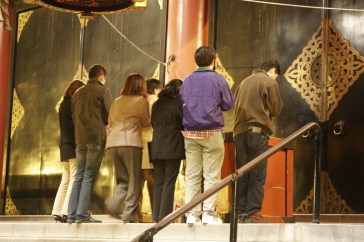
Praying

“Prayer is not asking. It is a longing of the soul. It is daily admission of one’s weakness. It is better in prayer to have a heart without words than words without a heart.”  –Mahatma Gandhi

Republican presidential candidate Ted Cruz has received a lot of flak in the media recently over his public displays of Christian faith. A video showing members of the clergy laying hands on him and praying was particularly troubling for some. Many people get uneasy when they see politicians displaying their religious convictions in public. For that matter, any public display of religious faith downright scares some people.

Cruz isn’t the only American politician to receive criticism for displaying his faith in public.  Presidents Jimmy Carter, Ronald Reagan and George W. Bush were criticized at one time or another over openly displaying and discussing their faith.

I’m not here to support or reject Cruz. The American voters will take care of that. I’m just fascinated by the way religion scares so many people in our society. I understand there is reason to be concerned about politicians who become overzealous about their religion. But why should seeing a politician pray, hear them speak about the role of faith in their live or discuss sin cause concern?

Remember how many people mocked President George W. Bush for referring to terrorists as “evildoers?” Bush didn’t coin that term. It appears more than two dozen times in the Old and New Testaments. Psalm 92:9 (ESV) says, “For behold, your enemies, O Lord, for behold, your enemies shall perish; all evildoers shall be scattered.

I believe that somewhere deep inside every person, as a sentient being, holds the knowledge that we owe our existence to an omnipotent, omniscient creator. For many this knowledge resides at an unconscious level, but it has to be there nonetheless.

We were created in God’s image to glorify him and dwell in his presence. Acknowledging God requires one to admit that he/she is not in charge. This flies in the face of the concept of individuality and personal freedom that so permeates the American psyche. For those who refuse to acknowledge God, the deep seeded realization of God must be an unconscious source of conflict and discomfort—a deep down sense of one’s personal inadequacy and, dare I say, sense of personal sin.

Many people are repulsed by being called a sinner.  Yet sin is a condition we all live in. Martin Luther described it eloquently in a letter to Philip Melanchthon on August 1, 1521:

 “Be a sinner, and let your sins be strong, but let your trust in Christ be stronger, and rejoice in Christ who is the victor over sin, death, and the world.  We will commit sins while we are here, for this life is not a place where justice resides.  We, however, says Peter (2 Peter 3:13) are looking forward to a new heaven and a new earth where justice will reign.  It suffices that through God’s glory we have recognized the Lamb who takes away the sin of the world. No sin can separate us from Him, even if we were to kill or commit adultery thousands of times each day.  Do you think such an exalted Lamb paid merely a small price with a meager sacrifice for our sins?  Pray hard for you are quite a sinner.”

Only when a person acknowledges his sinful nature God can begin to fully work inside him.  What a pity so many fail to understand this. Christ’s church is full of sinners—and that’s exactly where sinners need to be!