Archive for the ‘fitness’ Category

Discipline and Discipleship

Discipline - Boot Camp summer 1975Army Boot Camp, July 1975

It was sunny and warm in Louisville, Ky. on June 28, 1975. That’s the day I boarded a bright yellow school bus at an Army recruiting station for a short journey to Fort Knox, where I was scheduled to undergo Army basic training or boot camp as it’s commonly called. Only a few weeks earlier I’d been a bright eyed college student receiving his associate degree in Munich, Germany.  My mother Phyllis and stepfather Ray were still in Germany—Ray was an Army officer and second in command of a tank brigade in Friedberg, about an hour north of Frankfurt.

I had departed Germany in early June to visit family in my home state Kentucky before attending boot camp.  The last stop was Louisville, at the home of my favorite aunt and uncle, Sarah and Carl.  At the end of that wonderful visit, it was Aunt Sarah who drove me to the induction station and hugged me goodbye as I began a nervous, one hour journey to Fort Knox.

After what seemed like hours, the bus turned into the main gate of Fort Knox. Entering the post felt very familiar, as I’d lived there during my freshman and sophomore years of high school while Ray was assigned to the Armor School. The familiarity helped quell my sense of dread that had been increasing steadily since we departed Louisville. The post was sprawling, hilly and hot. The eclectic mix of architecture ranged from a beautiful state-of-the-art hospital to drab three-story concrete barracks to the low slung, pale yellow wooden buildings dating back to World War II.

About ten minutes after entering the post, the bus turned down a side street and then swung into the parking lot of Delta Company, 13th Training Battalion, 4th Training Brigade, home of the ‘Delta Demons’. Peering out the window I could see two tough looking fellows wearing olive drab fatigues and the iconic Smoke Bear hats that identified them as drill sergeants. Their fatigues were starched stiff with creases that looked sharp enough to slice an apple. They fit like gloves. Their boots were polished to a mirror finish. Not a hair was out of place. All you needed was one look at these impressive gentlemen to know that they were pure badass!

The driver opened the bus door and we were greeted by a booming voice.  ‘Off the bus and line up.  Move it ladies’.  After a clumsy exit fumbling with our bags and bumping into each other, we managed to get into something resembling a line. The empty bus quickly pulled away, leaving us feeling isolated and helpless.  It was then that we were introduced to the two gentlemen who would fill the roles of father, mother, confessor and mentor for all of us in the coming weeks.

Staff Sergeant Hunter, the platoon sergeant, stood about five feet ten inches tall.  He was built like an NFL linebacker. Drill Sergeant Hunter was just tall enough that he could press the stiff brim of his Smoky Bear into the bridge of my nose as I stood at attention while receiving his instructions.  The assistant platoon sergeant, Sergeant Anderson, stood about five feet seven inches.  He was lean, wiry and just mean looking. They immediately commanded our attention.

These fine men, as I would learn they both were, taught us so much: military customs and courtesies; how to wear the uniform and properly groom ourselves; how to spit shine a boot; how to polish brass; how to make a bunk; how to roll our socks and underwear and store them in our lockers; how to make a barracks GI clean; how to get physically fit; how to do close order drill; how to march and sing ‘jodies’, those sometimes naughty songs marching troops sing to help them stay in step; how to fire and clean an M-16 rifle; how to fire M-60 and 50 caliber machineguns; how to fire a recoilless rifle; how to throw hand grenades; how to do fire and maneuver without shooting your buddy; how to take out a pillbox; how to use a field telephone and radio; how to give first aid; and how to doctor blisters on our feet.

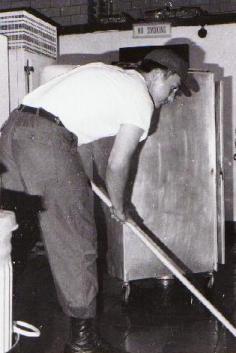
But most of all, they taught us about how to be soldiers—about responsibility, self-discipline, and respect for country, Army, unit, comrades, family and ourselves.  At first we listened to them out of fear of punishment. One small misstep could lead to running laps around the compound holding your rifle above your head with two arms while yelling ‘I’m a s#!thead’ or the dreaded ‘Drop and give me fifty’, meaning pushups. Even worse, you could end up pulling ‘KP’ in the mess hall, peeling potatoes, dicing onions and mopping floors.   But there came a point in time when we listened out of a sense of respect for our drill sergeants and our fellow soldiers in the platoon.  In the end, a soldier’s sense of responsibility, respect and self-discipline becomes a normal way of life.

It’s easy to learn military discipline in Boot Camp, where you’re isolated, restrained, focused and under the watchful eye of a drill sergeant.  Sadly, developing discipline in one’s spiritual life isn’t so easy.  I often wonder why this is so.  I was the picture of discipline during my military career, yet my Christian discipline suffers. ‘Disciple’ is the root word of discipline.  A disciple is a student or follower who is trained by a teacher and subsequently spreads the teacher’s beliefs.  I had a lot of training and learning as a Christian, but have I ever really been a disciple?  I think not and I believe I’ve finally figured out why. 

In his book, The Spirit of the Disciplines: Understanding How God Changes Lives, the late Christian scholar Dr. Dallas Willard explains that self-transformation stems, in large part, from the practice of spiritual disciplines.  He cites many disciplines, which he divides into two broad categories of ‘abstinence’ and ‘engagement’.

Under abstinence Willard includes chastity, fasting, frugality, sacrifice, secrecy, silence and solitude. These deal with our physical bodies.  Engagement includes celebration, confession, fellowship, prayer, service, study, submission and worship. These deal with our spiritual lives.  The disciplines are the means to an end; just as we practice to learn a sport, we practice the disciplines to become more Christ-like.  Willard provides many scriptural references to the disciplines in the life of Jesus and the Apostles. The abstinence disciplines focus inward and help build self-discipline and restraint; they are about habits.  The engagement disciplines look outward, helping us become servants of Christ and others; they are about building Christian character.  

Using Willard’s criteria, a quick self-analysis reveals that while I’m strong in the engagement disciplines, I have a long way to go in the abstinence disciplines before I can become a true disciple of Christ.  I have a lot of work to do, but I’m going for it.  How do you measure up? Consider leaving a reply.


Caring for the Temple of the Holy Spirit

OverweightAaaaggh!

I spent over 24 years of my adult life as an officer in the US Army.  To say that I was in good physical condition would be a gross understatement. I served a tour of duty in the 75th Ranger Regiment, one of the Army’s elite organizations. I was a paratrooper, jumping out of perfectly good airplanes and floating to Earth under a silk canopy.  I also served in the 10th Mountain Division, one of the Army’s toughest and most respected divisions.  Since 2001, the 10th Mountain has been the most deployed division in the US Army.  The Army encourages, even demands, good physical fitness of its soldiers. 

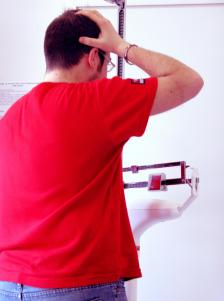
Fitness is in my DNA. I feel out of sorts if I can’t exercise three to four days per week.  Nevertheless, I find myself in a fitness conundrum today.  When I retired from the Army in 2001, I was a fit 205 pounds, well within the limits for my muscular, six-foot frame. Today I find myself about 30 pounds heavier; the extra weight can be attributed to a combination of age, indiscipline, and total knee replacement surgery, which I underwent about 11 months ago; the latter totally wrecked my physical fitness routine.  I’m still in recovery!

I’m not happy with my current weight.  Until a couple of weeks ago, I viewed my condition as purely a physical fitness challenge—a need to get back into shape to reverse the changes that have taken place since my surgery.  However, I recently experienced a healthy change of attitude. 

I credit the change to my dear friend Cliff, who also struggles with his weight.  He recently introduced me to a book called Every Body Matters, by Gary Thomas. As the book cover explains, it is about “Strengthening Your Body to Strengthen Your Soul.”

Having personally struggled with his weight, Thomas uses scripture to demonstrate that, for Christians, physical health is as important as spiritual health. Thomas demonstrates that physical fitness, rather than being something that make us more attractive to others, makes us more useful to God. I recommend his book to anyone who has struggled with physical fitness or being overweight. Thomas offers a Holy Spirit-led approach to developing a physical being that is of maximum use to God.

Thomas cites these words of St. Paul:  (All Bible citations were taken from the ESV.)

Or do you not know that your body is a temple of the Holy Spirit within you, whom you have from God?  You are not your own, for you were bought with a price. So glorify God in your body. 1 Corinthians 6:19-20

…I discipline my body and keep it under control, lest after preaching to others I myself should be disqualified. 1 Corinthians 9:27

…let us cleanse ourselves from every defilement of body and spirit, bringing holiness to completion in the fear of God. 2 Corinthians 7:1

Many Bible commentators interpret bodily sins to mean sexual sins.  While Thomas would agree with this, he goes on to discuss the need for developing discipline in what we put into our bodies (i.e. food).  As I previously noted, he frames the discussion in terms of disciplining our bodies, not to make us attractive to others, but to glorify God (…you were bought with a price. So glorify God in your body. 1 Corinthians 6:20)

I highly recommend Every Body Matters to all Christians who struggle with their weight. I promise it will change your perspective on being overweight and motivate you to do something about it.  It has led my wife and me to challenge each other.  During the upcoming season of Lent (Feb 14 – Mar 29), we will embark upon a 40-day regimen of time-restricted eating. 

In a nutshell, this means we’ll eat normally for 6 hours each day, while fasting the remaining 18 hours. By most accounts, this eating pattern is easy to adjust to and usually results in remarkable weight loss for those having the discipline to stick with it.  We’re not looking for a new diet or fad, but a lifestyle change. Wish us luck!  At some point in the future, I’ll share our experience.

Protecting your health is the same as protecting the vehicle with which God wants to change the world.  —Gary Thomas


Unemployed? Seek the Lord in Your Day of Trouble.

Prayer

In the Day of Trouble I Seek the Lord

Today millions of Americans are facing the challenges of unemployment or under employment. These can lead to fear, frustration, depression and even physical illness. However, they also present opportunities for growth.

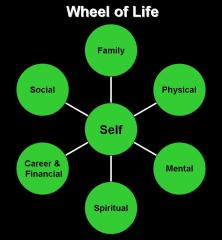
When you’ve lost your job or find yourself in a job that is not self-sustaining, a whole-person approach is needed as you strive to improve your situation. I like to use the “Wheel of Life” to help illustrate this. The circles on the outside of the wheel represent six areas of one’s life that contribute to the whole we refer to as “self.” Neglecting any of these puts the entire wheel out of balance, leaving one struggling and feeling out of sorts.

Wheel of Life

 Wheel of Life

Family and Social Life.  A period of unemployment or underemployment opens the door to opportunities in each the six areas on the wheel of life. It is a good time to spend extra time with family, renew old connections with friends and build your social network (which will improve your chances of finding self-sustaining employment).  Don’t forget to have some fun!

Physical Conditioning. It also provides an opportunity to improve your physical condition through proper exercise, sleep and nutrition. It is a wonderful chance to shed a few pounds and look your best for your next interview..

Career and Financial.  Dedicate some of your extra time towards education. You don’t necessarily need to pick up another degree or certification. Focus on learning something that will help make you more employable. Perhaps you can focus on improving your Microsoft Office software skills. There are free training courses galore on the Internet. If you need to improve your speaking skills, you could join the local Toastmasters chapter. The possibilities are endless.

Finances.  Being unemployed or underemployed is also the perfect time to work on improving your finances. Perhaps you’ve been talking about downsizing your household.  Start by selling off things you don’t really need.  Put together a new budget, trying to reduce frivolous spending. Try keeping close track of where your money actually goes. You might be surprised at how most of it gets spent.

Mental.  Take time to relax and stretch your mind.  Put down your phone, turn off the computer and TV, and pick up a challenging book that you’ve always wanted to read.  Spend some time with people who challenge your way of thinking. Visit an art gallery or museum that would not normally be of interest to you.

(Read Psalm 77: https://www.biblegateway.com/passage/?search=Psalm%2077&version=ESV)

Spiritual.  Lastly, Psalm 77 provides a simple, yet perfect framework for approaching the spiritual realm when you’re unemployed or under employed. When things aren’t going your way, it’s comforting to be reminded God has not and will not abandon you. The Psalmist finds comfort in reflecting on how God helped his people in the past. We should follow his example.

Pray fervently—then pray again. The Psalmist prayed throughout the entire night. He felt abandoned by God. He spoke what was on his mind. We can be totally honest and open with God, telling him about our feelings, our fears, our doubts and our desires. We can ask him any question. Because Jesus suffered every temptation we have faced and felt every emotion that we have felt, we are free to discuss our deepest thoughts and feelings with God. Through Jesus’ experiences, God the Father has firsthand experience with everything we might face in our lives (v.9-10)

“We tend to use prayer as a last resort, but God wants it to be our first line of defense. We pray when there’s nothing else we can do, but God wants us to pray before we do anything at all. Most of us would prefer, however, to spend our time doing something that will get immediate results. We don’t want to wait for God to resolve matters in His good time because His idea of ‘good time’ is seldom in sync with ours.” ― Oswald Chambers                                              

Recall how God has blessed you in the past. The Psalmist did not simply spill his heart out to God. He thought about everything the scriptures say regarding what God has done for his people in the past. God blesses those who have faith in him (v. 11).  Too often we dwell on what God hasn’t done for us rather than being thankful for the multitude of blessings he has provided.

Focus on the future. Think positively about your situation, hopes and desires. What is God teaching you? What is His will for your life? Make a list of Biblical promises you can identify about your future? (v. 13)

Reconsider your present circumstances. Ask God to strengthen your faith as you strive to cope with unemployment. Remind yourself that you can always trust  His promises (v. 14). Share your experience with others.

Let us then with confidence draw near to the throne of grace,  that we may receive mercy and find grace to help in time of need.   ―Hebrews 4:16


Exercise for the Soul

Exercise

I’m not a big fan of reality TV, but there is one show I really enjoy.  The Biggest Loser is about helping morbidly obese people lose weight and regain their health and vigor. The contestants, all of whom are obese and suffering from multiple weight-related ailments, live at an isolated health compound and work with world class trainers throughout their stay.  It’s fascinating to watch the amount of work Biggest Loser contestants need to correct years of behavior problems like overeating and under exercising.

One phenomenon that is readily evident to viewers of the show is how former athletes—those who at one time were accustomed to vigorous exercise and discipline—seem to progress much faster than those who have never routinely exercised or disciplined their bodies.

Besides weight loss, The Biggest Loser delves into the psychological struggles waged by each contestant. Some succeed, while others never quite make it.  Now in its 10th season, the show has generated a Biggest Loser fitness movement across the country.

Many Americans are dedicated to physical fitness routines. Yet a 2013 study by the Centers for Disease Control and Prevention indicated that 80 percent of American age 18 and above do not exercise sufficiently to maintain good health.

Far fewer practice a discipline of exercise for the soul.  What a shame we can’t seem to find a way to generate a spiritual fitness movement across our country!  For Christians, exercise for the soul is more important than physical exercise, because the Holy Spirit dwells within our bodies, which St. Paul calls, “the temple of the Holy Spirit.” Left neglected, either by sin, complacency or getting buried in the business of day-to-day life, the Holy Spirit cannot speak to us.  Our bodies require daily attention on both the physical and spiritual levels. Prayer must be at the center of attention. Personally, this is an area I’ve struggled with lately.

Popular evangelist and church pastor Rev. David Jeremiah has said, “Prayer is the hard-work business of Christianity, and it nets amazing results.”  German Lutheran pastor and theologian Dietrich Bonhoeffer was very specific in promoting the benefits of prayer, saying,

The entire day receives order and discipline when it acquires unity. This unity must be sought and found in morning prayer. The morning prayer determines the day.”

 Having practiced morning prayer for many years, I appreciate its importance to a Christian’s well being.

St. Ignatius of Loyola, founder of the Jesuit order of Roman Catholicism, was a Spanish knight who lived from 1491 to 1556.  As a young man, Ignatius kept a journal of his quest to grow in unity with God and discern God’s will in his life.  As his experience grew, the journal evolved into a well-defined set of prayers, meditations, reflections, and directions that are known today as the Spiritual Exercises of St. Ignatius.

These exercises are grouped into four stages, described as weeks but not literally seven-day periods, which are designed to be led by a director, or guide.  The Spiritual Exercises are intended to serve as a sort of lesson plan for the individual leading the exercises, not as a guide for individuals.

However, even without a director many aspects of the Spiritual Exercises can be useful to individuals seeking spiritual growth and greater commitment to serving God. This is particularly so for the way the Spiritual Exercises approach prayer through meditation and contemplation.

Meditation involves praying about the good and bad words, images and ideas that guide our lives.  Contemplation is emotion-driven, rather than thought-driven.  It focuses on placing ourselves in scenes from the Gospel and trying to imagine how it might have been.  Contemplation is praying through scripture rather than studying scripture.

One of the key elements of the Spiritual Exercises is the discernment of spirits.  According to St. Ignatius, the human spirit is influenced by three forces: an inward focus on self and selfish desires; Satanic power and suggestions; and God-inspired power and suggestions. Ignatius called these the “spiritual motions.”  The purpose of discernment is to discover the source of each spiritual motion in our lives, so as to help us help make good decisions.

Many contestants on The Biggest Loser reach so-called plateaus—a weight they just can’t seem to get below.  To overcome this barrier, they change their daily exercise routines, doing something different to restart the weight loss trend.

The same approach can be applied to spiritual exercises.  I do a fair job of exercising my body, but lately I’ve felt like my prayer life has slumped—I’ve hit a plateau.  I have difficulty concentrating and find my mind wandering when I pray. In the remaining days before the beginning of Advent, I plan to try a new prayer regimen built around the Spiritual Exercises of St. Ignatius Loyola.  Have you hit a prayer plateau?  Perhaps it’s time to change your exercise routine for the soul.

 “Prayer is exhaling the spirit of man and inhaling the spirit of God.”

                                                                                       Edwin Keith

An English text of the Spiritual Exercises of St. Ignatius Loyola is available online at: http://www.jesuit.org/jesuits/wp-content/uploads/The-Spiritual-Exercises-.pdf.  The Website “Ignatian Spirituality,” a service of Loyola University Press, was the primary source for this blog entry (www.ignatianspirituality.com).