
Across the country it’s graduation time. Here in South Dakota some schools have already closed for the summer. Most of those that remain open will close in the coming days. Everywhere one turns there’s another grad party. What awaits all these new grads? A decade ago I wrote an article for my newspaper column with some advice for recent graduates. While it was aimed at high school graduates, it is also highly relevant to recent college grads. The article has become one of the most popular pieces I ever wrote. I’ve received hundreds of emails thanking me for taking the time to share it. Therefore, I decided to republish it annually around graduation time. I hope some of you might find it useful. You can view the original article in the Tribune-Democrat news at this link: http://goo.gl/LtN72
For those who are graduating high school this year and beginning the long transition into adulthood, I’d like to offer you a gift. Here are five enduring truths I have learned. They will help you through life’s journey.
Choices
“If you decide to just go with the flow, you’ll end up where the flow goes, which is usually downhill, often leading to a big pile of sludge and a life of unhappiness. You’ll end up doing what everyone else is doing.” ― Sean Covey, The 7 Habits of Highly Effective Teens
Life will deal you an endless string of choices along the way. Some will be trivial, like deciding what to wear today. Others will be weighty and their outcomes will affect you forever. Weighty decisions should always be preceded by much thought and soul searching. This includes decisions about who you date or marry, what you put into your body, bringing children into the world, what you do for a living, how much debt you incur and who you associate with.
All of these decisions will have a lasting effect on your life. Therefore, make them slowly and deliberately. Often you’ll discover that the right choice is not the easiest one. A habit of making poor choices will, as the Sean Covey quote suggests, drag your life downhill.
I was recently contacted by a young man who had just received a bad conduct discharge from the Navy. He asked me how the discharge would impact his future employability. His mistake was choosing to drive a car while intoxicated and hitting a pedestrian. Fortunately, the victim wasn’t seriously injured. Had it been otherwise, the young sailor would probably be in prison. It was my sad responsibility to inform him that with some employers the discharge would be a black mark for life. Choices matter!
Learning
“Experience is a hard teacher because she gives the test first, the lesson afterwards.” ―Vernon Saunders Law, former professional baseball pitcher and Cy Young Award winner
Some of you will go on to college or technical school. Others will enter the workforce. Even if your formal education is over, don’t quit learning. Make learning a lifelong adventure. I did my undergraduate work at the University of Kentucky. The school offers a fellowship program for individuals aged 65 and older to attend classes tuition free. Every year numerous senior citizens walk the stage to receive degrees ranging from Associate of Arts to Doctor of Philosophy. It’s never too late to learn.
Even if you don’t choose to continue formal learning, make it point to learn from life. Observe others; note their successes and failures; then learn from their experiences. More importantly, learn from your own mistakes.
Some of the greatest lessons I’ve learned, particularly those while serving in uniform, were the result of having made a terrible mistake. This sort of lesson sticks, like the first time you grab the handle of a hot iron skillet with your bare hand. The key to learning from mistakes is owning them. Admit your mistakes and then move on, having learned something from the experience. Don’t let, “It wasn’t my fault,” be part of your vocabulary.
Work
“A dream doesn’t become reality through magic; it takes sweat, determination and hard work.” ―Colin Powell, retired U.S. Army four-star general and former U.S. Secretary of State
Work isn’t always fun. If it were, they’d call it play. Work can be downright unpleasant, but it’s an essential element of life! Along the way you’re going to have jobs you won’t like. Note what you don’t like and make it a point to improve yourself, so you’ll never again have to work at such a job.
Accepting a job means submitting to the authority of those placed over you. Learn to work within this system. You’ll inevitably have bosses you don’t like. Learn to respect the position, if not the individual.
Fairness
“Life is not fair; get used to it.” ―Bill Gates, founder and former CEO, Microsoft Corporation
You will hear much discussion about fairness in this life. It’s all hot air. Life isn’t fair. Some good people die young, while some bad people live a long life. Disease sometimes strikes arbitrarily, for no apparent reason. Some people prosper while others suffer failure. A death or accident can change your life forever.
There is randomness to life that can’t be avoided. Don’t expect kindness to be returned with kindness. Don’t expect generosity to be returned with generosity. The best choice is to be fair and kind to others and learn to accept what they return to you.
A wise man named Harry Browne ran for president of the United States on the Libertarian Party ticket. On Christmas day in 1966, Browne wrote his young daughter a letter aptly titled, “A Gift for My Daughter.” I encourage every graduating senior to read it and digest it. In the letter, he explains to his daughter that, “Nobody owes you anything.” Understanding what Browne meant can truly bless you. You can find it here. https://independentpoliticalreport.com/2015/12/harry-brownes-christmas-letter-to-his-daughter/
Faith
“A faith is a necessity to a man. Woe to him who believes in nothing.” ―Victor Hugo
I once had a senior Army officer tell me he preferred to work with men who possessed spiritual values, regardless of their religion. He explained that having faith in a power higher than one’s self was an indicator of how one will perform under pressure; in this instance, the pressure meant combat.
Too many people place their faith in all the wrong places. It might be in wealth, celebrity, good looks, talent, or even government. Whatever the case, misplaced faith leads to disappointment after disappointment.
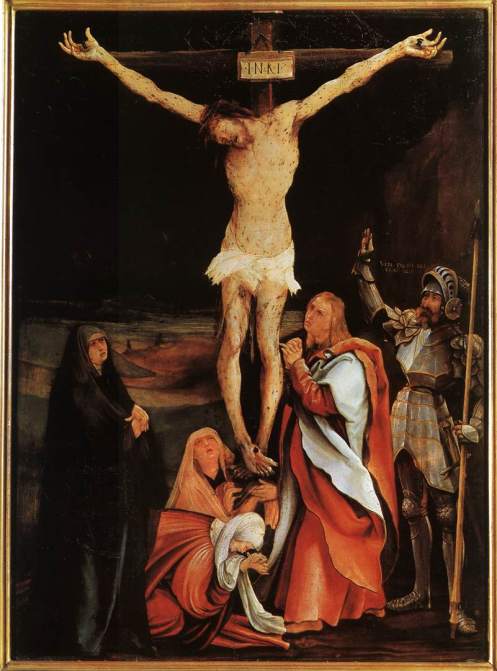
To avoid these disappointments, put your faith in God alone. You, your loved ones and your friends will all inevitably let you down, but God will never fail you.
 Divine Simplicity
Recent Comments