Archive for the ‘Choices’ Category

A New Beginning

new-years-resolution

The New Year has arrived and for many it’s a time for making resolutions and new beginnings—trying to set aside bad habits and/or adopt new, beneficial routines. Unfortunately, for most people it’s nearly impossible to succeed in such endeavors. 

A Forbes Magazine article published in January 2013 reported on a study conducted at the University of Scranton. It indicated that only about 8 percent of people who make New Year’s resolutions achieve their goals. Looking at this a different way, 92 percent fail!

Despite the slim chance of succeeding, many will continue to make New Year’s resolutions year after year.  I confess that I’m guilty.  Last year I made a resolution to lose 10 pounds—I now have only have 15 pounds to go (sigh).

The Bible is full of promises and stories about new beginnings. (all citations ESV)

  • Jeremiah 29:11 – “For I know the plans I have for you, declares the Lord, plans for welfare and not for evil, to give you a future and a hope.”
  • Ezekiel 36:26 – “And I will give you a new heart, and a new spirit I will put within you. And I will remove the heart of stone from your flesh and give you a heart of flesh.”
  • John 3:16 – “For God so loved the world, that he gave his only Son, that whoever believes in him should not perish but have eternal life.”
  • 2 Corinthians 5:17 – “Therefore, if anyone is in Christ, he is a new creation. The old has passed away; behold, the new has come.”
  • Ephesians 4:22-24 – “…the truth is in Jesus, to put off your old self, which belongs to your former manner of life and is corrupt through deceitful desires, and to be renewed in the spirit of your minds, and to put on the new self, created after the likeness of God in true righteousness and holiness.”
  • 1 Peter 1:3 – “Blessed be the God and Father of our Lord Jesus Christ! According to his great mercy, he has caused us to be born again to a living hope through the resurrection of Jesus Christ from the dead.”
  • Revelation 21:5 – “And he who was seated on the throne said, ‘Behold, I am making all things new.’ Also he said, ‘Write this down, for these words are trustworthy and true’.”

Fortunately for us all, God makes new beginnings and he never fails if we will simply let him do His work.  His greatest new beginning was foretold in the Old Testament, described in the Gospels, and recounted in the Epistles. It was God’s gift of His son Jesus to save us from our sins.

Christ’s salvation of mankind was completed over 2,000 years ago through Jesus’ crucifixion. His resurrection from the dead on the third day is evidence of Jesus’ victory over Sin and Death.

Jesus died to cleanse all mankind from their sins.  For those who don’t already know him, that salvation is like a beautifully wrapped present sitting beneath a Christmas tree.  The present has no owner until someone opens it, takes what is inside, and makes it their own.

St. Paul describes how to do this in his epistle to the Romans. There is no long list of do’s and don’ts.  God’s plan of salvation is beautiful in its simplicity, requiring only confession and sincere belief.

“…because, if you confess with your mouth that Jesus is Lord and believe in your heart that God raised him from the dead, you will be saved. For with the heart one believes and is justified, and with the mouth one confesses and is saved.”  Romans 10:9-10

Martin Luther wrote about what it means to be “justified” before god, saying that justification is a “… righteousness that God gives freely by His grace to people who don’t have righteousness of their own.”  Even though those who have accepted Jesus’ gift of salvation will continue to sin, because of Christ’s sacrifice they remain righteous in the eyes of God.

It is my hope that you have already received this free gift.  If not, however, please consider making it your own today!

For to us a child is born, to us a son is given;
and the government shall be upon his shoulder,
and his name shall be called Wonderful Counselor,
Mighty God, Everlasting Father, Prince of Peace.
Of the increase of his government and of peace there
will be no end, on the throne of David and over his
kingdom, to establish it and to uphold it with justice
and with righteousness from this time forth and  
forevermore. The zeal of the Lord of hosts will do this.

                                                                                            Isaiah 9:6-7

Unemployed? Seek the Lord in Your Day of Trouble.

Prayer

In the Day of Trouble I Seek the Lord

Today millions of Americans are facing the challenges of unemployment or under employment. These can lead to fear, frustration, depression and even physical illness. However, they also present opportunities for growth.

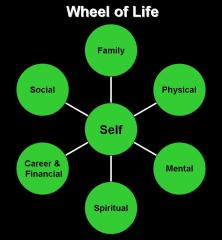
When you’ve lost your job or find yourself in a job that is not self-sustaining, a whole-person approach is needed as you strive to improve your situation. I like to use the “Wheel of Life” to help illustrate this. The circles on the outside of the wheel represent six areas of one’s life that contribute to the whole we refer to as “self.” Neglecting any of these puts the entire wheel out of balance, leaving one struggling and feeling out of sorts.

Wheel of Life

 Wheel of Life

Family and Social Life.  A period of unemployment or underemployment opens the door to opportunities in each the six areas on the wheel of life. It is a good time to spend extra time with family, renew old connections with friends and build your social network (which will improve your chances of finding self-sustaining employment).  Don’t forget to have some fun!

Physical Conditioning. It also provides an opportunity to improve your physical condition through proper exercise, sleep and nutrition. It is a wonderful chance to shed a few pounds and look your best for your next interview..

Career and Financial.  Dedicate some of your extra time towards education. You don’t necessarily need to pick up another degree or certification. Focus on learning something that will help make you more employable. Perhaps you can focus on improving your Microsoft Office software skills. There are free training courses galore on the Internet. If you need to improve your speaking skills, you could join the local Toastmasters chapter. The possibilities are endless.

Finances.  Being unemployed or underemployed is also the perfect time to work on improving your finances. Perhaps you’ve been talking about downsizing your household.  Start by selling off things you don’t really need.  Put together a new budget, trying to reduce frivolous spending. Try keeping close track of where your money actually goes. You might be surprised at how most of it gets spent.

Mental.  Take time to relax and stretch your mind.  Put down your phone, turn off the computer and TV, and pick up a challenging book that you’ve always wanted to read.  Spend some time with people who challenge your way of thinking. Visit an art gallery or museum that would not normally be of interest to you.

(Read Psalm 77: https://www.biblegateway.com/passage/?search=Psalm%2077&version=ESV)

Spiritual.  Lastly, Psalm 77 provides a simple, yet perfect framework for approaching the spiritual realm when you’re unemployed or under employed. When things aren’t going your way, it’s comforting to be reminded God has not and will not abandon you. The Psalmist finds comfort in reflecting on how God helped his people in the past. We should follow his example.

Pray fervently—then pray again. The Psalmist prayed throughout the entire night. He felt abandoned by God. He spoke what was on his mind. We can be totally honest and open with God, telling him about our feelings, our fears, our doubts and our desires. We can ask him any question. Because Jesus suffered every temptation we have faced and felt every emotion that we have felt, we are free to discuss our deepest thoughts and feelings with God. Through Jesus’ experiences, God the Father has firsthand experience with everything we might face in our lives (v.9-10)

“We tend to use prayer as a last resort, but God wants it to be our first line of defense. We pray when there’s nothing else we can do, but God wants us to pray before we do anything at all. Most of us would prefer, however, to spend our time doing something that will get immediate results. We don’t want to wait for God to resolve matters in His good time because His idea of ‘good time’ is seldom in sync with ours.” ― Oswald Chambers                                              

Recall how God has blessed you in the past. The Psalmist did not simply spill his heart out to God. He thought about everything the scriptures say regarding what God has done for his people in the past. God blesses those who have faith in him (v. 11).  Too often we dwell on what God hasn’t done for us rather than being thankful for the multitude of blessings he has provided.

Focus on the future. Think positively about your situation, hopes and desires. What is God teaching you? What is His will for your life? Make a list of Biblical promises you can identify about your future? (v. 13)

Reconsider your present circumstances. Ask God to strengthen your faith as you strive to cope with unemployment. Remind yourself that you can always trust  His promises (v. 14). Share your experience with others.

Let us then with confidence draw near to the throne of grace,  that we may receive mercy and find grace to help in time of need.   ―Hebrews 4:16


Farewell My Friend

Jesus on CrossGreater love has no one than this,  that someone lay down his life for his friends.

                                                                                                                            John 15:13 (ESV)

The digital age we live in is truly amazing. It has enabled me to land two jobs with companies I never set foot in before being hired. In both cases, I was recruited online, interviewed by phone and hired sight unseen.

I worked a total of over seven years in these positions, all the while communicating via email telephone and Skype and exchanging data through encrypted virtual private networks. I visited each company only once. When I was born in 1955, such technologies existed only in the minds of science fiction writers. Today they’re quite common.

One of the most amazing digital wonders I’ve enjoyed is having cultivated three good friendships with individuals whom I’ve never met face-to-face. I’m not speaking about Facebook friendships either. These friendships are with people whom I’ve shared things about my life and theirs of the sort that can only be shared with people you trust.

I was recently shocked to learn that one of these friends, Bob, has been diagnosed with a terminal form of cancer that will take his life in a few short months.

Bob is a good man who has spent much of his life working to make others’ lives easier.   Sadly, I know that being good isn’t enough. He has not been open to believing the Gospel message and remains to this day an agnostic.

Bob is spending his last days surrounded by family, many of whom practice the Serbian Orthodox form of the Christian faith. Please join me in praying that during this time of transition his heart might be opened to receive Christ, so that in the final hour he might say:

“The time of my departure is at hand. I have fought the good fight, I have finished the race, I have kept the faith. Finally, there is laid up for me the crown of righteousness, which the Lord, the righteous Judge, will give to me on that Day, and not to me only but also to all who have loved His appearing”                                      

                                                                                                                                2 Tim. 4:6-8 (ESV)

Postscript August 3, 2015–my friend Bob Hall passed away peacefully on July 28, 2015.

Simply Good News

Jesus on Cross

                                                            For I decided to know nothing among you,                                                                                                                  except Jesus Christ and him crucified.”                                                                                                                                        1 Corinthians 2:2 (ESV)

Life is becoming more and more complicated these days.  Wherever one turns he or she is met with new challenges.  Today’s new cars have more gadgets than did many airplanes just a few years ago. Simply watching television can require using several very different remote controls that must be used in a specific sequence to view the media one desires.  So-called smartphones often prove smarter than their users, leaving befuddled owners struggling to figure out how to use all of their phone’s capabilities.

Politics has also grown more complex. Many private interest groups today sponsor advertising in favor of one politician or another. It’s difficult to sort out the source and motivation behind each message and even harder to discern fact from fiction. Attack ads grow more vicious each year.

Even eating has become more challenging for those  concerned about health and fitness. Should you use butter or margarine?  Is coffee good for you or bad?  Is a little red wine really beneficial to your health? How much exercise does one really need?  Is it better to walk or jog? It’s hard to sort through it all.

Unfortunately, complexity has increased in religion as well.  Mainline Christian denominations are being divided by new doctrines and beliefs. Recently the National Cathedral, arguably the foremost Episcopal churches in the United States, hosted a Muslim prayer service.  And don’t even try to sort out what’s going on between Muslims, Jews and Christians in the Middle East! It’s enough to drive one mad.

Fortunately for Christians, St. Paul maintains a simple view of the Gospel. Listening to his words can help us cut through much of the confusion that exists today. In his first letter to the saints in Corinth he writes, “And I, when I came to you, brothers, I did not come proclaiming to you the testimony of God with lofty speech or wisdom. For I decided to know nothing among you except Jesus Christ and him crucified.”  (1 Corinthians 2:1-2, ESV)

Christ’s crucifixion for our sins and His resurrection from the dead are at the center of the Christian faith.  A highly educated and intelligent man, St. Paul professed a belief in Christ built on faith, not reason. He understood that reason could never lead to a full knowledge of God, because God is too big and too awesome for a simple human mind to fully comprehend. As the psalmist tells us:

O Lord, you have searched me and known me! You know when I sit down and when I rise up; you discern my thoughts from afar.  You search out my path and my lying down and are acquainted with all my ways.  Even before a word is on my tongue, beholding, O Lord, you know it altogether.  You hem me in, behind and before, and lay your hand upon me. Such knowledge is too wonderful for me; it is high; I cannot attain it.   —Psalm 39:1-6 (ESV)

Popular Christian pastor and author Ray Stedman wrote, “The main thing about being a Christian is to see that “the main thing remains the main thing.’ That is what Paul is saying (in 2 Corinthians 11:2). The ‘main thing’ is that at the heart and center of your life is the ‘simplicity that is in Christ,’ a simple thing. I have noticed over many years of observation that when religion becomes complicated, it is always a sign that it is drifting away from the realities and centralities of faith.”

The good news about Jesus that was preached by His apostles is quite simple: (all  citations taken from the ESV)

Jesus came to save all mankind.  1 Timothy 1:15 – The saying is trustworthy and deserving of full acceptance, that Christ Jesus came into the world to save sinners… —St. Paul

Jesus is mankind’s only pathway to God .  Acts 4: 11-12 – This Jesus is the stone that was rejected by you, the builders, which has become the cornerstone. And there is salvation in no one else, for there is no other name under heaven or given among men by which we must be saved.” —St. Peter

All people are born in a condition of sin, separated from God.  Romans 3:23 – “For all have sinned and fall short of the glory of God…” —St. Paul

There is nothing anyone can do on his own to earn God’s salvation.  Romans 3:10-12 – “None is righteous, no, not one; no one understands; no one seeks for God. All have turned aside; together they have become worthless; no one does good, not even one.”  —St. Paul

Christ came so save mankind from sin and death—separation from God. 1 Timothy 1:15 – “The saying is trustworthy and deserving of full acceptance, that Christ Jesus came into the world to save sinners, of whom I am the foremost.”  —St. Paul

Salvation is a gift freely given to those who put their faith in Christ.  Romans 10:9-10 – “…because, if you confess with your mouth that Jesus is Lord and believe in your heart that God raised him from the dead, you will be saved. For with the heart one believes and is justified, and with the mouth one confesses and is saved. —St. Paul

One needn’t be a Bible scholar to understand the Gospel.  The message is quite simple.  The gift of God’s salvation is free to those who, with faith and repentance, ask to receive it.

“Only through repentance and faith in Christ can anyone be saved. No religious activity will be sufficient, only true faith in Jesus Christ alone.  —Ravi Zacharias                                                                               


Exercise for the Soul

Exercise

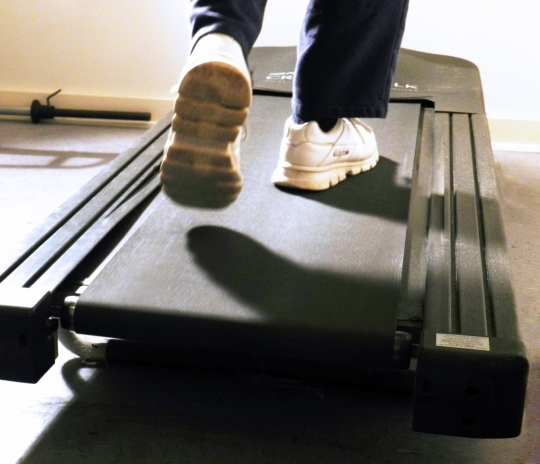
I’m not a big fan of reality TV, but there is one show I really enjoy.  The Biggest Loser is about helping morbidly obese people lose weight and regain their health and vigor. The contestants, all of whom are obese and suffering from multiple weight-related ailments, live at an isolated health compound and work with world class trainers throughout their stay.  It’s fascinating to watch the amount of work Biggest Loser contestants need to correct years of behavior problems like overeating and under exercising.

One phenomenon that is readily evident to viewers of the show is how former athletes—those who at one time were accustomed to vigorous exercise and discipline—seem to progress much faster than those who have never routinely exercised or disciplined their bodies.

Besides weight loss, The Biggest Loser delves into the psychological struggles waged by each contestant. Some succeed, while others never quite make it.  Now in its 10th season, the show has generated a Biggest Loser fitness movement across the country.

Many Americans are dedicated to physical fitness routines. Yet a 2013 study by the Centers for Disease Control and Prevention indicated that 80 percent of American age 18 and above do not exercise sufficiently to maintain good health.

Far fewer practice a discipline of exercise for the soul.  What a shame we can’t seem to find a way to generate a spiritual fitness movement across our country!  For Christians, exercise for the soul is more important than physical exercise, because the Holy Spirit dwells within our bodies, which St. Paul calls, “the temple of the Holy Spirit.” Left neglected, either by sin, complacency or getting buried in the business of day-to-day life, the Holy Spirit cannot speak to us.  Our bodies require daily attention on both the physical and spiritual levels. Prayer must be at the center of attention. Personally, this is an area I’ve struggled with lately.

Popular evangelist and church pastor Rev. David Jeremiah has said, “Prayer is the hard-work business of Christianity, and it nets amazing results.”  German Lutheran pastor and theologian Dietrich Bonhoeffer was very specific in promoting the benefits of prayer, saying,

The entire day receives order and discipline when it acquires unity. This unity must be sought and found in morning prayer. The morning prayer determines the day.”

 Having practiced morning prayer for many years, I appreciate its importance to a Christian’s well being.

St. Ignatius of Loyola, founder of the Jesuit order of Roman Catholicism, was a Spanish knight who lived from 1491 to 1556.  As a young man, Ignatius kept a journal of his quest to grow in unity with God and discern God’s will in his life.  As his experience grew, the journal evolved into a well-defined set of prayers, meditations, reflections, and directions that are known today as the Spiritual Exercises of St. Ignatius.

These exercises are grouped into four stages, described as weeks but not literally seven-day periods, which are designed to be led by a director, or guide.  The Spiritual Exercises are intended to serve as a sort of lesson plan for the individual leading the exercises, not as a guide for individuals.

However, even without a director many aspects of the Spiritual Exercises can be useful to individuals seeking spiritual growth and greater commitment to serving God. This is particularly so for the way the Spiritual Exercises approach prayer through meditation and contemplation.

Meditation involves praying about the good and bad words, images and ideas that guide our lives.  Contemplation is emotion-driven, rather than thought-driven.  It focuses on placing ourselves in scenes from the Gospel and trying to imagine how it might have been.  Contemplation is praying through scripture rather than studying scripture.

One of the key elements of the Spiritual Exercises is the discernment of spirits.  According to St. Ignatius, the human spirit is influenced by three forces: an inward focus on self and selfish desires; Satanic power and suggestions; and God-inspired power and suggestions. Ignatius called these the “spiritual motions.”  The purpose of discernment is to discover the source of each spiritual motion in our lives, so as to help us help make good decisions.

Many contestants on The Biggest Loser reach so-called plateaus—a weight they just can’t seem to get below.  To overcome this barrier, they change their daily exercise routines, doing something different to restart the weight loss trend.

The same approach can be applied to spiritual exercises.  I do a fair job of exercising my body, but lately I’ve felt like my prayer life has slumped—I’ve hit a plateau.  I have difficulty concentrating and find my mind wandering when I pray. In the remaining days before the beginning of Advent, I plan to try a new prayer regimen built around the Spiritual Exercises of St. Ignatius Loyola.  Have you hit a prayer plateau?  Perhaps it’s time to change your exercise routine for the soul.

 “Prayer is exhaling the spirit of man and inhaling the spirit of God.”

                                                                                       Edwin Keith

An English text of the Spiritual Exercises of St. Ignatius Loyola is available online at: http://www.jesuit.org/jesuits/wp-content/uploads/The-Spiritual-Exercises-.pdf.  The Website “Ignatian Spirituality,” a service of Loyola University Press, was the primary source for this blog entry (www.ignatianspirituality.com).

Wounded Hearts

 Sorrow

“Here bring your wounded hearts, here tell your anguish; 

Earth has no sorrow that Heaven cannot heal.”   —Saint Thomas More


If you’re a movie buff and haven’t yet made it to the theater to see “Into the Storm,” please read on.  This is not a spoiler.

Fans of disaster flicks will love this movie.  When it comes to special effects, it’s Twister on steroids. Because of the awesome special effects, which include a trip into the “eye” of a monster F5 tornado, seeing Into the Storm on the big screen is a must.

The movie has several story lines and shifts frequently from one to another. A common thread is woven throughout several of them—people in dire circumstances who are overcome with sorrow because of bad personal relationships with loved ones. All are emotionally wounded to the core as they find themselves facing almost certain death.

A teenage son laments that his last words with his deceased mother were harsh. The deceased woman’s husband looks back on the way he has raised his sons after her death and wishes he could start over.

A teenage girl, buried in rubble, is sorry she lied to her parents about where she was going when she left home that morning.

A single mother caught in the midst of the storm, is sorry she has allowed her work to get in the way of spending more time with her small daughter.

The sorrow displayed by these storm victims goes beyond simple regrets over situations and relationships in their lives that went wrong. Regret is what many male politicians display when the media catches them having an extramarital affair. They aren’t truly sorry about their deplorable behavior. They’re sorry they were caught.  Rather than being sorry for the damage they have inflicted on themselves and others, theirs is a self-centered, worldly response.  It’s a sorrow stemming from knowing they will have to deal with the public and private consequences of their transgressions.

In contrast, the sorrow displayed by the characters of Into the Storm is the sorrow of repentance—selfless sorrow acknowledging that one’s transgressions have harmed others.  It is a repentant sorrow that says, “I understand my actions were wrong; I am truly sorry for the pain and hurt I have inflicted myself and others; and I want to change my bad behavior and way of thinking forever.”

This selfless sorrow is what 2 Corinthians, chapter 7 calls godly sorrow.  “Godly sorrow brings repentance that leads to salvation and leaves no regret, but worldly sorrow brings death.”(NIV)  Godly sorrow brings healing and life.

The Parable of the Rich Fool in Luke 12:13-21 tells the story of a wealthy man who lives a life of plenty.  He has all that he needs in this world—so much wealth and so many possessions that he believes he can simply “eat, drink and be merry,” for the rest of his days.  But at  the precise moment the man is gushing pride and personal satisfaction, God tells him he will die that very night.

What if you knew that today was the last day of your life? Would you regret that you haven’t done enough for yourself, or would you feel godly sorrow because of the way you have managed some of your personal relationships? More importantly, how would you feel about the way you’ve managed your relationship with God?

Today truly is the first day in the rest of your life.  Seize the opportunity to start setting things right today and embrace the family members, loved ones, friends and acquaintances who really matter in your life. You’ll have no regrets!

3Do nothing out of selfish ambition or vain conceit. Rather, in humility value others above yourselves, 4not looking to your own interests but each of you to the interests of the others. 5In your relationships with one another, have the same mindset as Christ Jesus: 6Who, being in very nature God, did not consider equality with God something to be used to his own advantage; 7rather, he made himself nothing by taking the very nature of a servant, being made in human likeness. 8And being found in appearance as a man, he humbled himself by becoming obedient to death— even death on a cross!  —Philippians 2:3-8 (NIV)

Also see: Recalling Some Life Lessons.

Enduring Truths for Recent Grads

Graduate [2]

A couple of years ago I wrote an article  for my newspaper column with some advice for recent grads.  It has become one of the most popular pieces I ever wrote. I received dozens of emails thanking me for writing it.    I therefore decided to  re-publish it annually around graduation time.  I hope some of you find it useful.  You can view the original article at this link:  http://goo.gl/LtN72

For those who are graduating high school this year and beginning the long transition into adulthood, I’d like to offer you a gift. Here are five enduring truths I’ve learned. They will help you through life’s journey.

Choices

“If you decide to just go with the flow, you’ll end up where the flow goes, which is usually downhill, often leading to a big pile of sludge and a life of unhappiness. You’ll end up doing what everyone else is doing.” ― Sean Covey, The 7 Habits of Highly Effective Teens

 Life will deal you an endless string of choices along the way.  Some will be trivial, like deciding what to wear today.  Others will be weighty and their outcomes will affect you forever.  Weighty decisions should always be preceded by much thought and soul searching.  This includes decisions about who you date or marry, what you put into your body, bringing children into the world, what you do for a living, how much debt you incur and who you associate with.

All of these decisions will have a lasting effect on your life. Therefore, make them slowly and deliberately. Often you’ll discover that the right choice is not the easiest one.  A habit of making poor choices will, as the Sean Covey quote suggests, drag your life downhill.

I was recently contacted by a young man who had just received a bad conduct discharge from the Navy.  He asked me how the discharge would impact his future employability.  His mistake was choosing to drive a car while intoxicated and hitting a pedestrian. Fortunately, the victim wasn’t seriously injured. Had it been otherwise, the young sailor would probably be in prison.  It was my sad responsibility to inform him that with some employers the discharge would be a black mark for life. Choices matter!

 Learning

“Experience is a hard teacher because she gives the test first, the lesson afterwards.”    ―Vernon Saunders Law, former professional baseball pitcher and Cy Young Award winner

Some of you will go on to college or technical school.  Others will enter the workforce.  Even if your formal education is over, don’t quit learning. Make learning a lifelong adventure.  I did my undergraduate work at the University of Kentucky.  The school offers a fellowship program for individuals aged 65 and older to attend classes tuition free. Every year numerous senior citizens walk the stage to receive degrees ranging from Associate of Arts to Doctor of Philosophy.  It’s never too late to learn.

Even if you don’t choose to continue formal learning, make it point to learn from life. Observe others; note their successes and failures; then learn from their experiences.  More importantly, learn from your own mistakes.

Some of the greatest lessons I’ve learned, particularly those while serving in uniform, were the result of having made a terrible mistake.  This sort of lesson sticks, like the first time you grab the handle of a hot iron skillet with your bare hand.  The key to learning from mistakes is owning them.  Admit your mistakes and then move on, having learned something from the experience.  Don’t let, “It wasn’t my fault,” be part of your vocabulary.

 Work

“A dream doesn’t become reality through magic; it takes sweat, determination and hard work.”  ―Colin Powell, retired U.S. Army four-star general and former U.S. Secretary of State

Work isn’t always fun. If it were, they’d call it play.  Work can be downright unpleasant, but it’s an essential element of life! Along the way you’re going to have jobs you won’t like. Note what you don’t like and make it a point to improve yourself, so you’ll never again have to work at such a job.

Accepting a job means submitting to the authority of those placed over you.  Learn to work within this system.   You’ll inevitably have bosses you don’t like.  Learn to respect the position, if not the individual.

Fairness

“Life is not fair; get used to it.” ―Bill Gates, founder and former CEO, Microsoft Corporation

You will hear much discussion about fairness in this life. It’s all hot air.  Life isn’t fair.  Some good people die young, while some bad people live a long life.   Disease sometimes strikes arbitrarily, for no apparent reason.  Some people prosper while others suffer failure. A death or accident can change your life forever.

There is randomness to life that can’t be avoided.  Don’t expect kindness to be returned with kindness.  Don’t expect generosity to be returned with generosity.  The best choice is to be fair and kind to others and learn to accept what they return to you.

A wise man named Harry Browne ran for president of the United States on the Libertarian Party ticket. On Christmas day in 1966, Browne wrote his young daughter a letter aptly titled, “A Gift for My Daughter.”  I encourage every graduating senior to read it and digest it. In the letter, he explains to his daughter that, “Nobody owes you anything.”  Understanding what Browne meant can truly bless you. You can find it at:  www.harrybrowne.org/articles/GiftDaughter.htm.

Faith

“A faith is a necessity to a man. Woe to him who believes in nothing.”  ―Victor Hugo

I once had a senior Army officer tell me he preferred to work with men who possessed spiritual values, regardless of their religion.  He explained that having faith in a power higher than one’s self was an indicator of how one will perform under pressure; in this instance, the pressure meant combat.

Too many people place their faith in all the wrong places.  It might be in wealth, celebrity, good looks, talent, or even government.  Whatever the case, misplaced faith leads to disappointment after disappointment.

To avoid these disappointments, put your faith in God alone.  You, your loved ones and your friends will all inevitably let you down, but God will never fail you.

A Christmas Alternative

Christmas Gifts

The cornucopia (or horn of plenty), a symbol from Greek mythology, is widely recognized as representing food and abundance.  Over the years, it has become associated with certain religious holidays in Christianity, Judaism and Islam—Christmas, Hanukkah and Eid al-Fitr respectively.

Most Americans enjoy a cornucopia of blessings every day.  The majority of us have enough to eat and adequate clothing and shelter to meet our basic needs. Some have far more than they need. Unfortunately, not everyone is so blessed.

Have you ever struggled with selecting a holiday gift for a relative or friend who has almost everything he or she needs?  Far too many people end up purchasing unneeded or unwanted gifts that eventually get stuffed in a drawer, tossed in the trash or simply set aside and forgotten. There’s a better way!

Alternative Gifts International (AGI) is a way to give meaningful presents to people who have virtually everything they need.  The AGI movement was begun in 1980 by Harriet Prichard, director of a Presbyterian children’s ministry in Pasadena, Calif. AGI started in a small market where shares of goods and livestock for needy people in Third World countries were sold.

The idea was to give gifts that could make a real difference to an individual, family or village. For instance, a present of a milk cow or a means to purify water can truly change lives for impoverished people living in remote areas of Africa.

Prichard’s idea was so popular that five Pasadena-area churches held markets the next year. By 2004, there were more than 325 Alternative Gifts markets in the United States. The movement has now spread to Britain, the Netherlands, Japan and Korea.  There are opportunities to give both domestically and in foreign countries.

Here is how Alternative Gifts works:  Instead of buying that symbolic gift that might soon be put away or discarded, consider making a donation to AGI on behalf of a friend or loved one. Instructions are located on the “give a gift” tab of AGI’s website at www.alternativegifts.org.

When you make a donation through the website you can write a short message to the individual you want to honor. AGI will send that person a card announcing your alternative gift.

Perhaps you would prefer helping people in your local community; the needs are great and the opportunities plentiful in whatever town you live in.  During this Advent season, when some of us tend to overeat, there are many who haven’t enough food.  You might consider supporting a local food pantry. Many of these are experiencing significant shortages.  Many local churches host food pantries that could use your support as well.  The Salvation Army also offers gifts of food, clothing, shelter and various other services to the needy in most areas.  Donations of time and treasure are all welcome.

Even if you’re short on money, you can still give a gift of time. Consider spending Christmas day volunteering at a local soup kitchen or homeless shelter.  I promise you will find it rewarding—a gift to yourself more than a gift to others.

For those who are able, I encourage you to share your blessings with others and consider giving alternative gifts this Christmas. Make a donation to AGI or one of the many worthy charities in your area. Better yet, consider alternative gifts throughout the year and make a real difference in someone’s life the next time you give.

Whatever you do, never forget the real meaning of Christmas as expressed in John 3:16:

“For God so loved the world, that he gave his only begotten Son, that whosoever believeth on him should not perish, but have eternal life.” (ASV)

May God bless us all in the coming year!

Enduring Truths for Recent Grads

Graduate

About a year ago I wrote an article for my Tribune-Democrat newspaper column containing some advice for recent grads.  It has become one of the most popular pieces I ever wrote, with dozens of people requesting copies.   I therefore decided to publish it annually around graduation time.  I hope you find it useful. You can view the original article at this link:  http://goo.gl/LtN72

For those who are graduating high school this year and beginning the long transition into adulthood, I’d like to offer you a gift. Here are five enduring truths I’ve learned. They will help you through life’s journey.

Choices

“If you decide to just go with the flow, you’ll end up where the flow goes, which is usually downhill, often leading to a big pile of sludge and a life of unhappiness. You’ll end up doing what everyone else is doing.” ― Sean Covey, The 7 Habits of Highly Effective Teens

 Life will deal you an endless string of choices along the way.  Some will be trivial, like deciding what to wear today.  Others will be weighty and their outcomes will affect you forever.  Weighty decisions should always be preceded by much thought and soul-searching.  This includes decisions about who you date or marry, what you put into your body, bringing children into the world, what you do for a living, how much debt you incur and who you associate with.

All of these decisions will have a lasting effect on your life. Therefore, make them slowly and deliberately. Often you’ll discover that the right choice is not the easiest one.  A habit of making poor choices will, as the Sean Covey quote suggests, drag your life downhill.

I was recently contacted by a young man who had just received a bad conduct discharge from the Navy.  He asked me how the discharge would impact his future employability.  His mistake was choosing to drive a car while intoxicated and hitting a pedestrian. Fortunately, the victim wasn’t seriously injured. Had it been otherwise, the young sailor would probably be in prison.  It was my sad responsibility to inform him that with some employers the discharge would be a black mark for life. Choices matter!

 Learning

“Experience is a hard teacher because she gives the test first, the lesson afterwards.” ―Vernon Saunders Law, Cy Young Award winner

Some of you will go on to college or technical school.  Others will enter the workforce.  Even if your formal education is over, don’t quit learning. Make learning a lifelong adventure.  I did my undergraduate work at the University of Kentucky.  The school offers a fellowship program for individuals aged 65 and older to attend classes tuition free. Every year numerous senior citizens walk the stage to receive degrees ranging from Associate of Arts to Doctor of Philosophy.  It’s never too late to learn.

Even if you don’t choose to continue formal learning, make it point to learn from life. Observe others; note their successes and failures; then learn from their experiences.  More importantly, learn from your own mistakes.

Some of the greatest lessons I’ve learned, particularly those while serving in uniform, were the result of having made a terrible mistake.  This sort of lesson sticks, like the first time you grab the handle of a hot iron skillet with your bare hand.  The key to learning from mistakes is owning them.  Admit your mistakes and then move on, having learned something from the experience.  Don’t let, “It wasn’t my fault,” be part of your vocabulary.

 Work

“A dream doesn’t become reality through magic; it takes sweat, determination and hard work.”  ―Colin Powell, retired U.S. Army four-star general and former U.S. Secretary of State

Work isn’t always fun. If it were, they’d call it play.  Work can be downright unpleasant, but it’s an essential element of life! Along the way you’re going to have jobs you won’t like. Note what you don’t like and make it a point to improve yourself, so you’ll never again have to work at such a job.

Accepting a job means submitting to the authority of those placed over you.  Learn to work within this system.   You’ll inevitably have bosses you don’t like.  Learn to respect the position, if not the individual.

Fairness

“Life is not fair; get used to it.” ―Bill Gates, founder and former CEO, Microsoft Corporation

You will hear much discussion about fairness in this life. It’s all hot air.  Life isn’t fair.  Some good people die young, while some bad people live a long life.   Disease sometimes strikes arbitrarily, for no apparent reason.  Some people prosper while others suffer failure. A death or accident can change your life forever.

There is randomness in life that can’t be avoided.  Don’t expect kindness to be returned with kindness.  Don’t expect generosity to be returned with generosity.  The best choice is to be fair and kind to others and learn to accept what they return to you.

A wise man named Harry Browne ran for president of the United States on the Libertarian Party ticket. On Christmas day in 1966, Browne wrote his young daughter a letter aptly titled, “A Gift for My Daughter.”  I encourage every graduating senior to read it and digest it. In the letter, he explains to his daughter that, “Nobody owes you anything.”  Understanding what Browne meant can truly bless you. You can find it at:  www.harrybrowne.org/articles/GiftDaughter.htm.

Faith

“A faith is a necessity to a man. Woe to him who believes in nothing.”  ―Victor Hugo

I once had a senior Army officer tell me he preferred to work with men who possessed spiritual values, regardless of their religion.  He explained that having faith in a power higher than one’s self is an indicator of how one will perform under pressure; in this instance, the pressure meant combat.

Too many people place their faith in all the wrong places.  It might be in wealth, celebrity, good looks, talent, or even government.  Whatever the case, misplaced faith leads to disappointment after disappointment.

To avoid these disappointments, put your faith in God alone.  You, your loved ones and your friends will all inevitably let you down, but God will never fail you.

Enduring Truths for Recent Grads

A couple of months ago I wrote a piece for my newspaper column with some advice for recent grads.  Several individuals have asked me to reprint the article in my blog, so here you go!  You can follow this link to a web version of the article.  http://goo.gl/LtN72

For those who are graduating high school this year and beginning the long transition into adulthood, I’d like to offer you a gift. Here are five enduring truths I’ve learned. They will help you through life’s journey.

Choices

“If you decide to just go with the flow, you’ll end up where the flow goes, which is usually downhill, often leading to a big pile of sludge and a life of unhappiness. You’ll end up doing what everyone else is doing.”
― Sean Covey, The 7 Habits of Highly Effective Teens

 Life will deal you an endless string of choices along the way.  Some will be trivial, like deciding what to wear today.  Others will be weighty and their outcomes will affect you forever.  Weighty decisions should always be preceded by much thought and soul searching.  This includes decisions about who you date or marry, what you put into your body, bringing children into the world, what you do for a living, how much debt you incur and who you associate with.

All of these decisions will have a lasting effect on your life. Therefore, make them slowly and deliberately. Often you’ll discover that the right choice is not the easiest one.  A habit of making poor choices will, as the Sean Covey quote suggests, drag your life downhill.

I was recently contacted by a young man who had just received a bad conduct discharge from the Navy.  He asked me how the discharge would impact his future employability.  His mistake was choosing to drive a car while intoxicated and hitting a pedestrian. Fortunately, the victim wasn’t seriously injured. Had it been otherwise, the young sailor would probably be in prison.  It was my sad responsibility to inform him that with some employers the discharge would be a black mark for life. Choices matter!

 Learning

“Experience is a hard teacher because she gives the test first, the lesson afterwards.”    ―Vernon Saunders Law, former professional baseball pitcher and Cy Young Award winner

Some of you will go on to college or technical school.  Others will enter the workforce.  Even if your formal education is over, don’t quit learning. Make learning a lifelong adventure.  I did my undergraduate work at the University of Kentucky.  The school offers a fellowship program for individuals aged 65 and older to attend classes tuition free. Every year numerous senior citizens walk the stage to receive degrees ranging from Associate of Arts to Doctor of Philosophy.  It’s never too late to learn.

Even if you don’t choose to continue formal learning, make it point to learn from life. Observe others; note their successes and failures; then learn from their experiences.  More importantly, learn from your own mistakes.

Some of the greatest lessons I’ve learned, particularly those while serving in uniform, were the result of having made a terrible mistake.  This sort of lesson sticks, like the first time you grab the handle of a hot iron skillet with your bare hand.  The key to learning from mistakes is owning them.  Admit your mistakes and then move on, having learned something from the experience.  Don’t let, “It wasn’t my fault,” be part of your vocabulary.

 Work

“A dream doesn’t become reality through magic; it takes sweat, determination and hard work.”
 ―Colin Powell, retired U.S. Army four-star general and former U.S. Secretary of State

Work isn’t always fun. If it were, they’d call it play.  Work can be downright unpleasant, but it’s an essential element of life! Along the way you’re going to have jobs you won’t like. Note what you don’t like and make it a point to improve yourself, so you’ll never again have to work at such a job.

Accepting a job means submitting to the authority of those placed over you.  Learn to work within this system.   You’ll inevitably have bosses you don’t like.  Learn to respect the position, if not the individual.

Fairness

“Life is not fair; get used to it.” ―Bill Gates, founder and former CEO, Microsoft Corporation

You will hear much discussion about fairness in this life. It’s all hot air.  Life isn’t fair.  Some good people die young, while some bad people live a long life.   Disease sometimes strikes arbitrarily, for no apparent reason.  Some people prosper while others suffer failure. A death or accident can change your life forever.

There is randomness to life that can’t be avoided.  Don’t expect kindness to be returned with kindness.  Don’t expect generosity to be returned with generosity.  The best choice is to be fair and kind to others and learn to accept what they return to you.

A wise man named Harry Browne ran for president of the United States on the Libertarian Party ticket. On Christmas day in 1966, Browne wrote his young daughter a letter aptly titled, “A Gift for My Daughter.”  I encourage every graduating senior to read it and digest it. In the letter, he explains to his daughter that, “Nobody owes you anything.”  Understanding what Browne meant can truly bless you. You can find it at:  www.harrybrowne.org/articles/GiftDaughter.htm.

Faith

“A faith is a necessity to a man. Woe to him who believes in nothing.”  ―Victor Hugo

I once had a senior Army officer tell me he preferred to work with men who possessed spiritual values, regardless of their religion.  He explained that having faith in a power higher than one’s self was an indicator of how one will perform under pressure; in this instance, the pressure meant combat.

Too many people place their faith in all the wrong places.  It might be in wealth, celebrity, good looks, talent, or even government.  Whatever the case, misplaced faith leads to disappointment after disappointment.

To avoid these disappointments, put your faith in God alone.  You, your loved ones and your friends will all inevitably let you down, but God will never fail you.

Wikipedia: D is the fourth letter in the basic modern Latin alphabet.